Pokémon Black & White arrived on Nintendo DS in 2011 with Unova, more than 150 new Pokémon, and a region that changes appearance with the seasons. The pair also expanded battles with Triple and Rotation formats.
The lower screen centers on C-Gear, used for local, infrared, and online connections. At launch, the cartridge could also exchange data with Pokémon Global Link on a computer, extending some activities beyond the handheld.
The four seasons change paths and encounters in Unova
The season changes each month on the calendar, in the order of spring, summer, autumn, and winter. The change affects vegetation colors, the music of certain areas, and the form of some Pokémon without requiring a new save file.
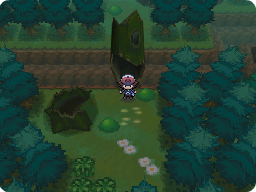
In winter, accumulated snow can form an elevation that reaches an entrance that was previously too high. In another season the pile disappears, so a visit the following month can close or open that path.
Deerling and Sawsbuck also change form with the season when they are in the party. Storing them in the PC preserves their current appearance even after the month and scenery change.
Triple battles use range; Rotation battles hide who will attack
In a Triple Battle, three Pokémon remain active at the same time. Position matters: the Pokémon at either end normally reaches the opponent in front and the center, while the central Pokémon can interact with the entire formation.
| Format | Central decision |
|---|---|
| Triple | Choose the target, range, and position of the three active Pokémon. |
| Rotation | Rotate the formation to decide who acts that turn. |
Rotation Battle also shows three Pokémon, but only the one in front performs the action. Before the attack, the player can rotate the wheel and place another member in the active position without spending a conventional switch.
In a Triple Battle, all three members act in the same turn and must respect the range of each position. In a Rotation Battle, all three options remain visible, but the opponent must predict which one will be rotated to the front.
C-Gear brings together trading, local communication, and Global Link access
C-Gear occupies the lower screen and keeps communication shortcuts available during exploration. Trading can begin with Pokémon stored in the Boxes without requiring a visit to a Pokémon Center counter.
| Channel | Documented use |
|---|---|
| Infrared | Quick trades and battles between two nearby devices. |
| Local wireless | Encounters and activities with nearby players. |
| Internet | Synchronization with Pokémon Global Link services. |
The Xtransceiver used the Nintendo DSi or DSi XL camera and microphone for calls between friends. Entralink allowed players to visit another person's area and complete communication missions.
These functions depended on different hardware and services. C-Gear still organizes the cartridge's local resources, but Nintendo ended Nintendo Wi-Fi Connection and Pokémon Global Link, so the online functions no longer operate today.
Unova used New York as a reference to feel distant
Junichi Masuda said he feared creating another generation resembling Diamond and Pearl on the same Nintendo DS. The team decided to rethink the series' habits and designed Unova as a place geographically distant from the earlier regions.
New York provided a reference for bridges, piers, skyscrapers, and the mixture of people from different backgrounds. The Japanese name Isshu grew from a wordplay between “one type†and “many types.â€
Dream World connected the browser to the cartridge through about two years of work
Dream World was a Pokémon Global Link area opened in a computer browser. Minigames rewarded items and Berries that could be sent to a Black or White save when the cartridge synchronized again.
Masuda said the connection between computer and Nintendo DS took about two years to produce results. The extension allowed players to manage game-related activities away from the handheld, but it became unavailable when those online services ended.