
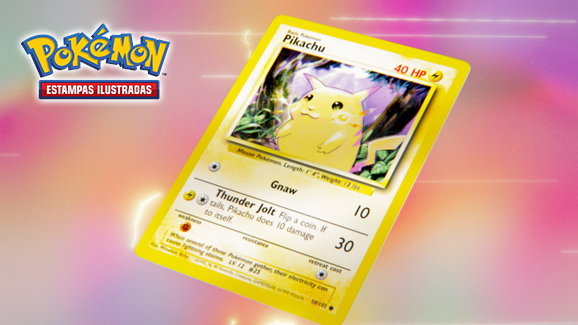
Pokémon Trading Card Game, called Pokémon Estampas Ilustradas in Brazil, is a physical trading card game released in Japan in October 1996 for matches between two people. Each player uses a 60-card deck, draws seven cards at the beginning, places a Basic Pokémon, a category that can enter play directly from the hand, in the Active Spot, and sets aside six cards face down as Prize cards. The cards in hand offer options, but only those that reach the table and receive the required preparation can produce an attack.
Before attacking, the player can build the Bench, the reserve area for up to five Pokémon, evolve cards that were already in play, use Trainer cards, attach an Energy card from the hand to pay for attacks, and retreat the Active Pokémon. Under the usual rule, only one Energy goes from the hand to the table per turn; when the attack is declared, the action window ends. The sequence begins before the match, with the 60 cards allowed by the format, and continues across from the opponent, when position, preparation, and Prize cards become dependent on one another.
The attack ends the choices between the Active Spot and the Bench
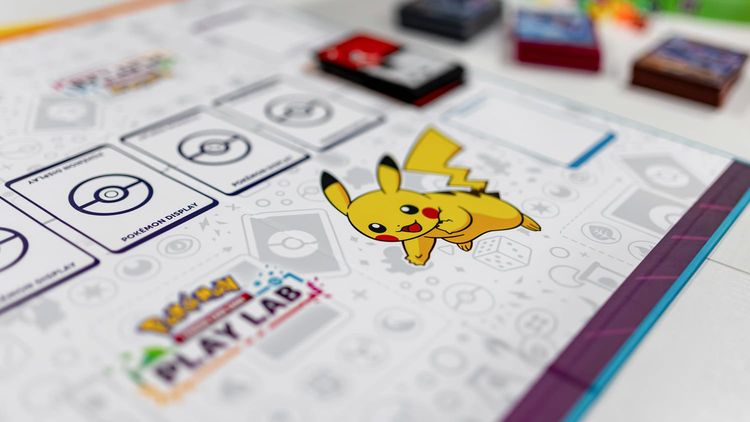
The Active Pokémon occupies the front of the table and is normally the one that attacks and takes damage; up to five Pokémon can remain on the Bench, the reserve area where they evolve, receive Energy, and wait to be switched in.
Drawing a card opens each turn. From there, Basic Pokémon can enter the Bench, cards in play can evolve, and Trainer cards can change the hand or search for pieces. Energy is attached to a Pokémon and pays the costs printed on its attacks; under the normal rule, one card of this type goes from the hand to the table each turn. Because the attack comes last, forgetting one of these actions does not leave a second window after the damage.
Retreating switches the Active Pokémon with a Pokémon on the Bench and requires discarding the amount of Energy indicated on the card. The switch can remove an injured Pokémon from the battle line, but it discards part of the Energy already attached to it. Remaining in the Active Spot preserves Energy and, at the same time, keeps that card exposed to the next attack.
When an attack Knocks Out an opposing Pokémon, the player normally takes the number of Prize cards indicated by the defeated card; winning through Prize cards requires collecting all six set aside at the beginning. The match also ends if the opponent has no Pokémon in play or cannot draw at the beginning of the turn. Before deciding which cards will occupy these positions, however, the Standard format determines which ones can enter the deck.
H, I, and J limit the 2026 Standard format
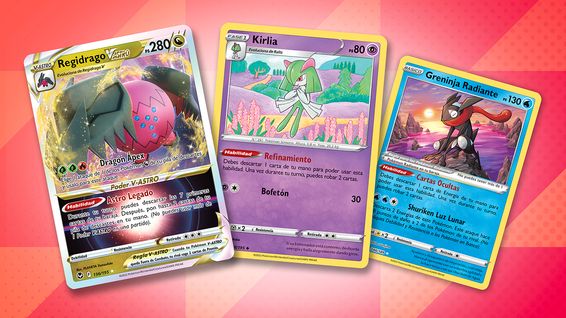
The Standard format used in tournaments does not bring together every card ever released. Rotation is the periodic, normally annual update to the authorized card pool: the oldest regulation mark ceases to be valid, while the following ones remain. This mark is the letter printed at the bottom of each card and makes it possible to check which competitive season it belongs to.
On August 9, 2026, H, I, and J were the accepted marks. Thus, a card still usable in casual play or another format could be excluded from a Standard tournament, and a deck prepared before the change needed to replace the removed pieces. A reprint with an accepted mark can keep another version of the same card legal, but the updated text takes precedence when there has been a change; errata and bans remain subject to the official rules.
Pokémon Trading Card Game Live makes it possible to practice TCG rules on a screen, while Pokémon Trading Card Game Pocket has its own cards and expansions. Neither application changes which physical cards are legal in Standard. When a mark leaves the format, the removed cards need to be replaced within the same 60 slots in the deck.
The deck needs to open paths to the right card

A constructed deck must have exactly 60 cards, include at least one Basic Pokémon, and respect the limit of four cards with the same name, except for Basic Energy cards. That limit only increases the chance of finding a piece; by itself, it does not provide the complete sequence. A play may depend on a Pokémon at each stage, Trainer cards that search for them, and the Energy needed to attack.
The opening hand exposes the first risk in this proportion. If it does not contain a Basic Pokémon, it must be shown, shuffled, and drawn again; the opponent may draw one additional card for each repetition. Putting more Basic Pokémon in the deck reduces this occurrence, but uses slots that could hold search, evolution, or recovery cards.
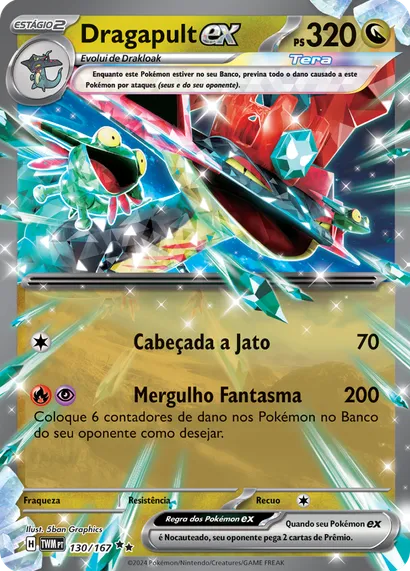
The two cards in the gallery show this deck-building contrast. On August 9, 2026, Dragapult ex was a Stage 2 Pokémon and normally required assembling its previous evolutionary line. Fezandipiti ex was Basic and could enter the Bench directly. The printed classification measures this path, not the strength of the attacks.
A Stage 2 line normally reserves slots for the earlier cards and for ways to find them. A Basic Pokémon shortens this path but still needs Energy, Bench space, and a role compatible with the rest of the deck. Speed of entry and setup cost are different measures from the amount of damage printed.
Draw and search cards create alternative routes when a piece is among the Prize cards or does not arrive on the expected turn. Excess Energy, on the other hand, can occupy the hand without offering another action. When these routes converge on a single threat, one Knock Out can remove the investment and advance the opponent's Prize count.
Two Mega Evolution Pokémon ex can give away all six Prize cards

Knocking Out a Mega Evolution Pokémon ex gives three Prize cards to the opponent. Because six Prize cards form the most common victory condition, defeating two of these Pokémon can end the match. The card concentrates power in one position and also concentrates half of the path the opponent follows if they manage to remove it.
Mega Evolution—Absolute Darkness was physically released in Brazil on July 17, 2026, and was the country's most recent expansion as of the August 9 cutoff date. The set has more than 115 cards and six Mega Evolution Pokémon ex, bringing the three-Prize rule to the collection that was then arriving on Brazilian tables.
Choosing a Mega Evolution Pokémon ex requires calculating the possible damage and the turns and cards committed to keeping it in play. On the table, protecting a Mega Evolution Pokémon ex preserves three Prize cards, while Knocking it Out cuts the distance to victory in half. From a Play Lab demonstration to a League or the World Championships, this count of three Prize cards does not change.
Play Lab, Leagues, and the World Championships use the same positions

Play Lab is an in-person experience for beginners, found mainly at conventions and major Pokémon tournaments. In the event space, participants sit facing the cards and demonstration table; the hand, Active Spot, Bench, Energy, and Prize cards are presented in a shared activity. Thus, a player's first contact with the TCG takes place in a physical location, before any commitment to a League or championship.
Leagues, in turn, maintain regular gatherings among players, League Challenges function as entry-level tournaments, and League Cups award more Championship Points. Prerelease events use cards from an expansion before its general retail release. At all these gatherings, the deck needs to be shuffled, checked, and played under rules that both participants recognize.
The season's results can lead to the Pokémon World Championships. In 2026, the event was scheduled for August 28–30 at Moscone Center in San Francisco.
The card game began in Japan in October 1996, arrived in North America and Europe in 1999, and has been part of the World Championships since the event's first edition in 2004. In Brazil, Copag has distributed the Pokémon Trading Card Game in Portuguese since 2011. Between a demonstration and the championship, each match still begins with seven cards in hand, one Active Pokémon, up to five on the Bench, and six Prize cards face down.