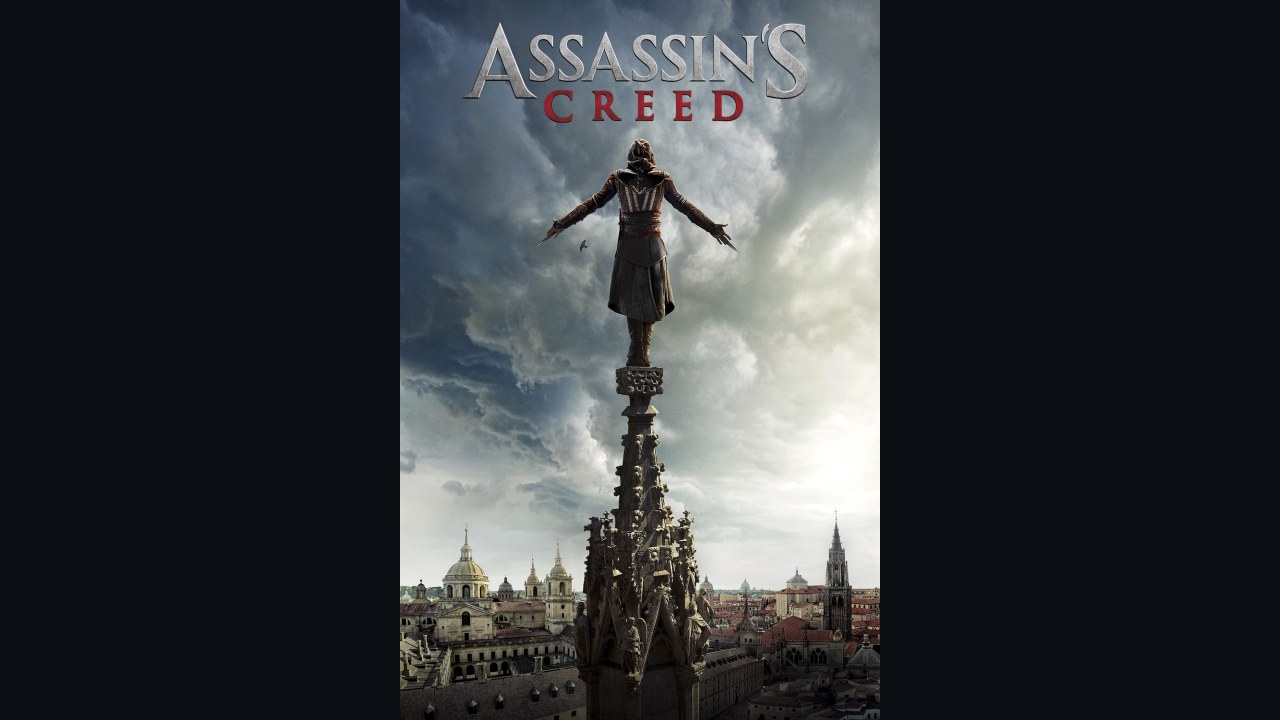
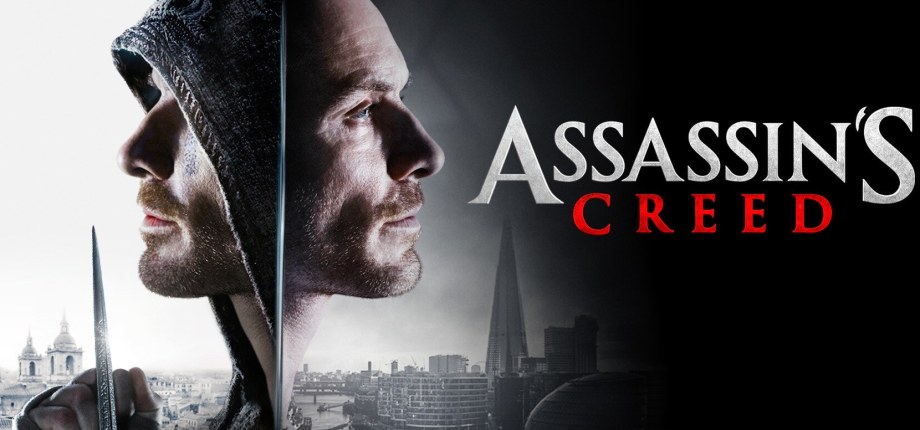
Assassin's Creed (film) is an action, adventure, and science-fiction film directed by Justin Kurzel, released on December 21, 2016, in the United States. Its concrete distinction is creating Callum Lynch for the screen, connecting death row, the Abstergo Foundation, and the memories of Aguilar de Nerha during the Spanish Inquisition instead of directly adapting a specific game protagonist.
Callum's choice of viewpoint changes the franchise's entry point because the audience follows a modern character who discovers the assassin lineage alongside them. The modern plot deepens the conflict by making Sofia Rikkin, Alan Rikkin, and the search for the Apple of Eden its driving forces, while Aguilar gives the past a physical body tied to chases, leaps, and choreographed fights.
Callum and Aguilar

Michael Fassbender plays Callum Lynch and Aguilar de Nerha, creating a clear division between the prisoner used by Abstergo and the ancestor who lives in 1492. The film uses this pair to turn genetic memory into full-body action, where every Animus session demands physical endurance and brings Callum closer to the war between Assassins and Templars.
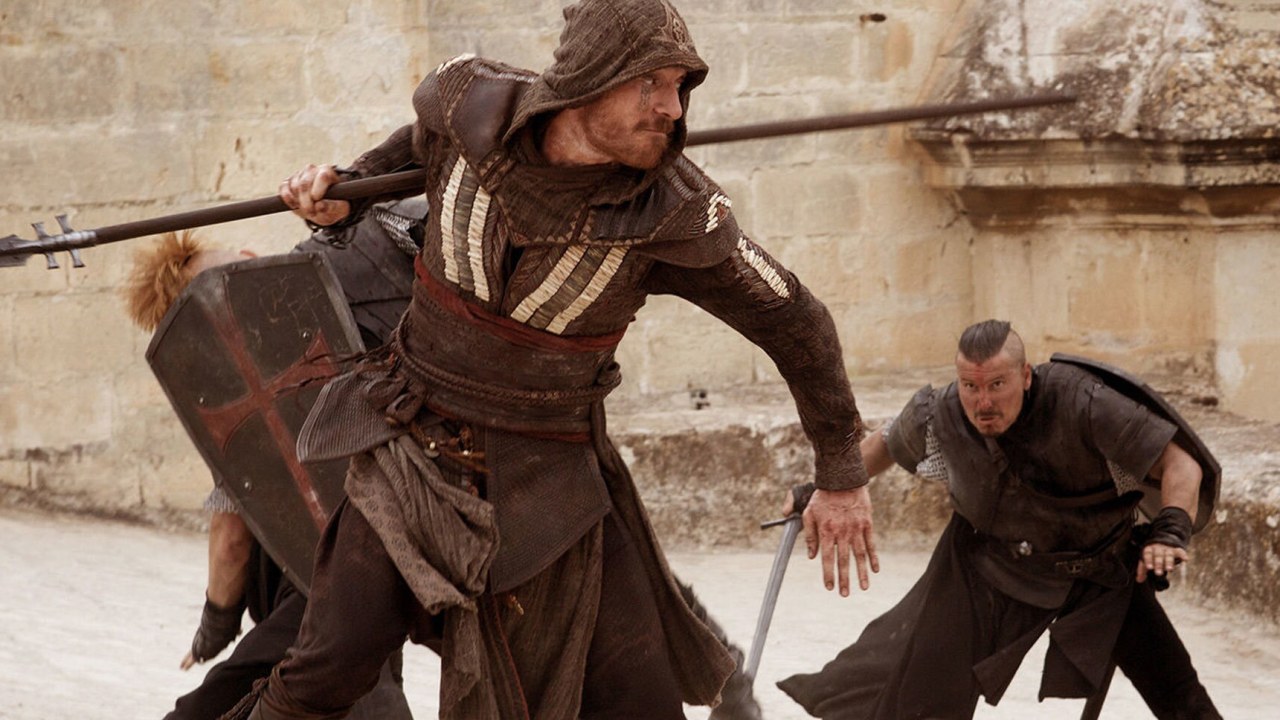
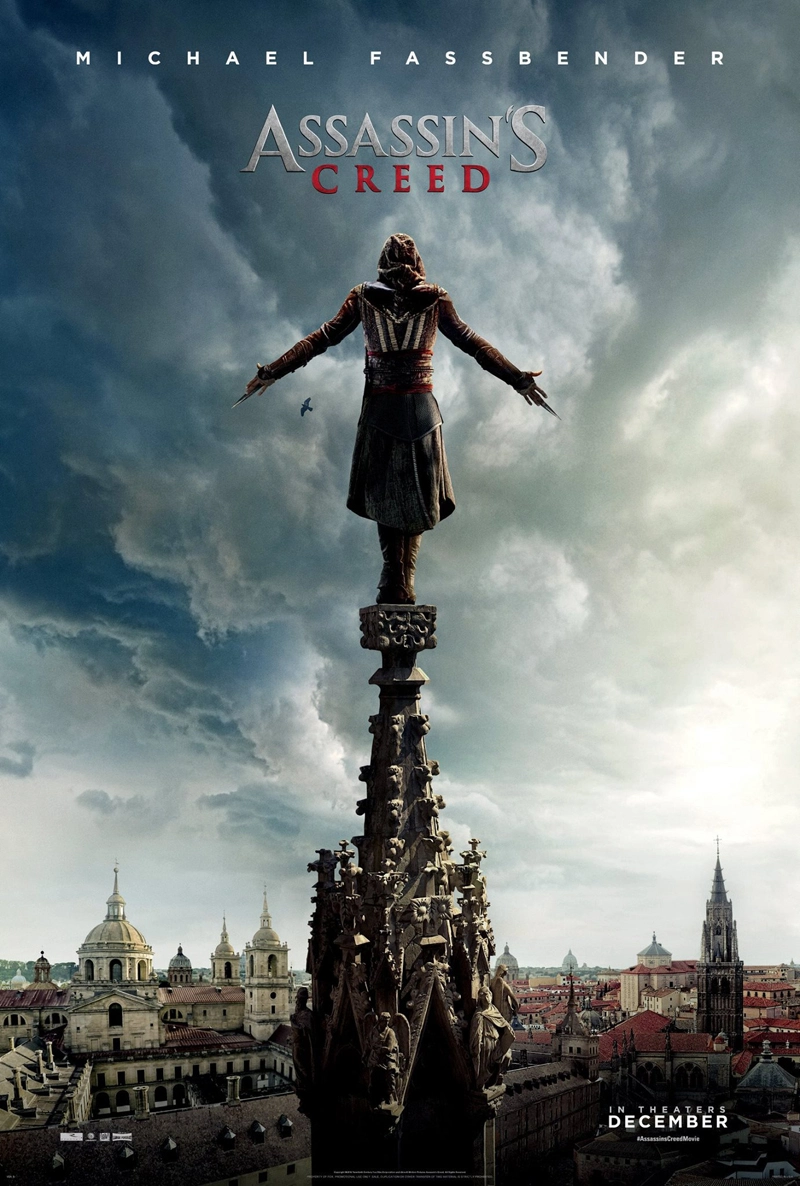
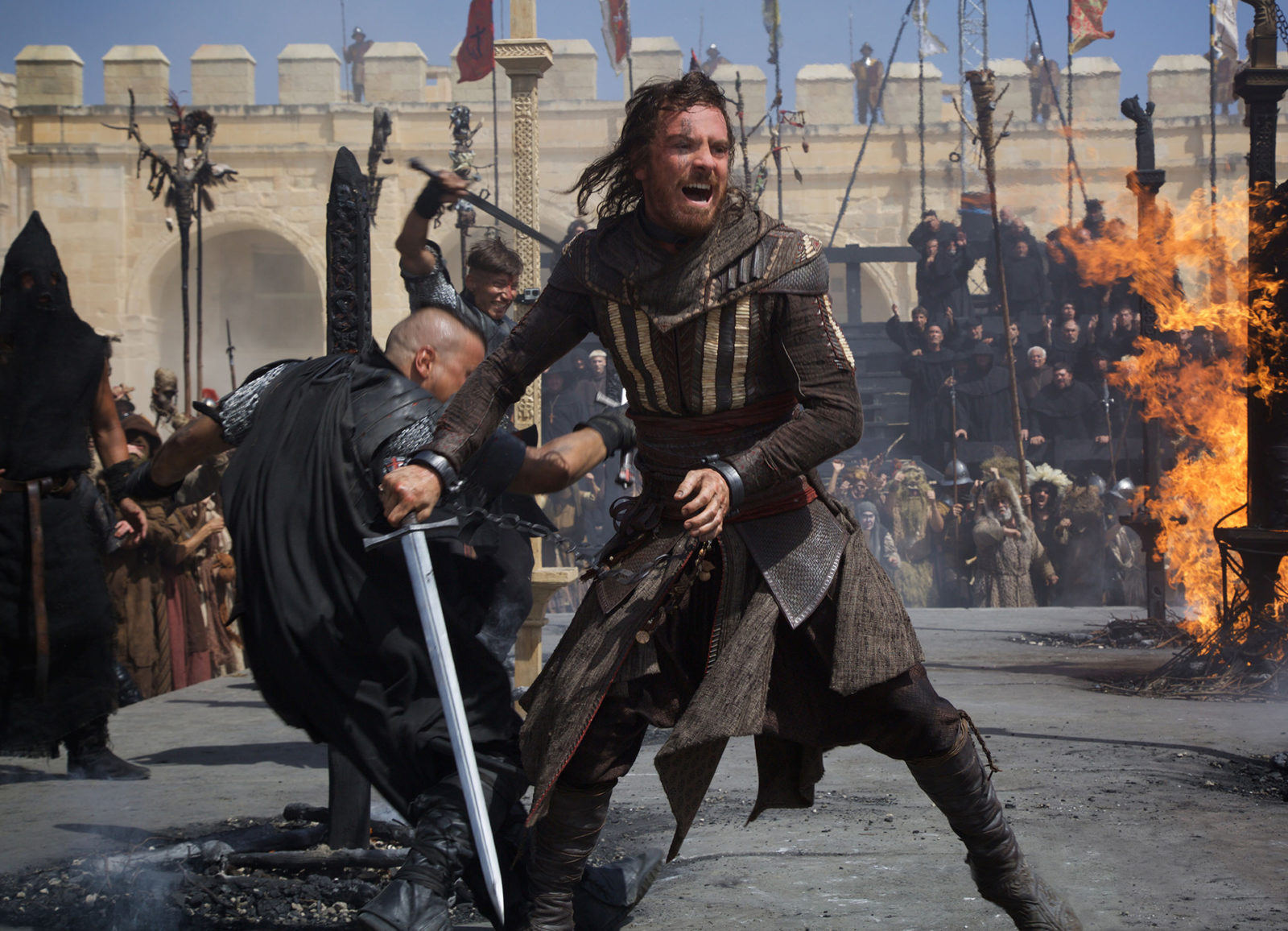
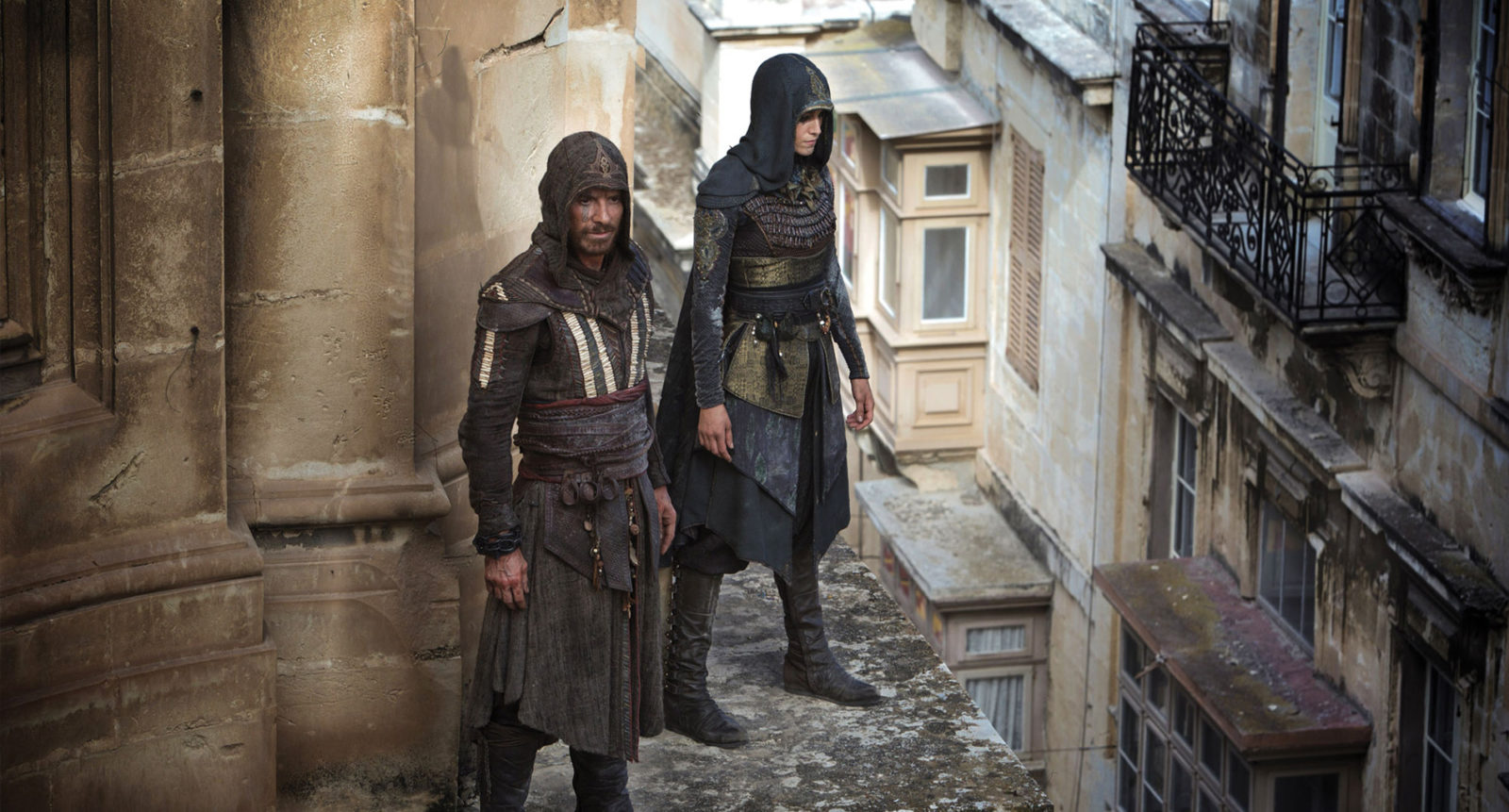
Aguilar carries the movement scenes, with parkour, combat, and escape sequences that try to translate the series' hooded silhouette to cinema. Callum, on the other hand, carries the psychological side, since his memories, his conviction, and his relationship with his father turn the Brotherhood's discovery into a personal crisis.
The alternation keeps the film from becoming a direct reenactment of Altaïr or Ezio. By creating an original hero, the screenplay preserves room to recognize the Assassin's Creed brand while still delivering a self-contained story for viewers who do not know every game.
An Animus with physical impact
The film's Animus differs from the chair or mental interface associated with many readings of the games, appearing instead as a suspended machine that replicates the ancestor's movements in Callum's body. This solution gives the concept of genetic memory immediate visual clarity, making the character run, leap, and fight inside a scientific facility.
The table separates the main pieces of this adaptation and shows how the film distributes the franchise's mythology among the laboratory, historical past, and struggle over an artifact.
| Adaptation element | In the film |
|---|---|
| Callum Lynch | begins as a convicted man recruited by Abstergo to access ancestral memories. |
| Aguilar de Nerha | lives through the Spanish past and leads the action scenes tied to the Brotherhood. |
| Sofia Rikkin | leads the scientific reading of the Animus and tries to justify Abstergo's project. |
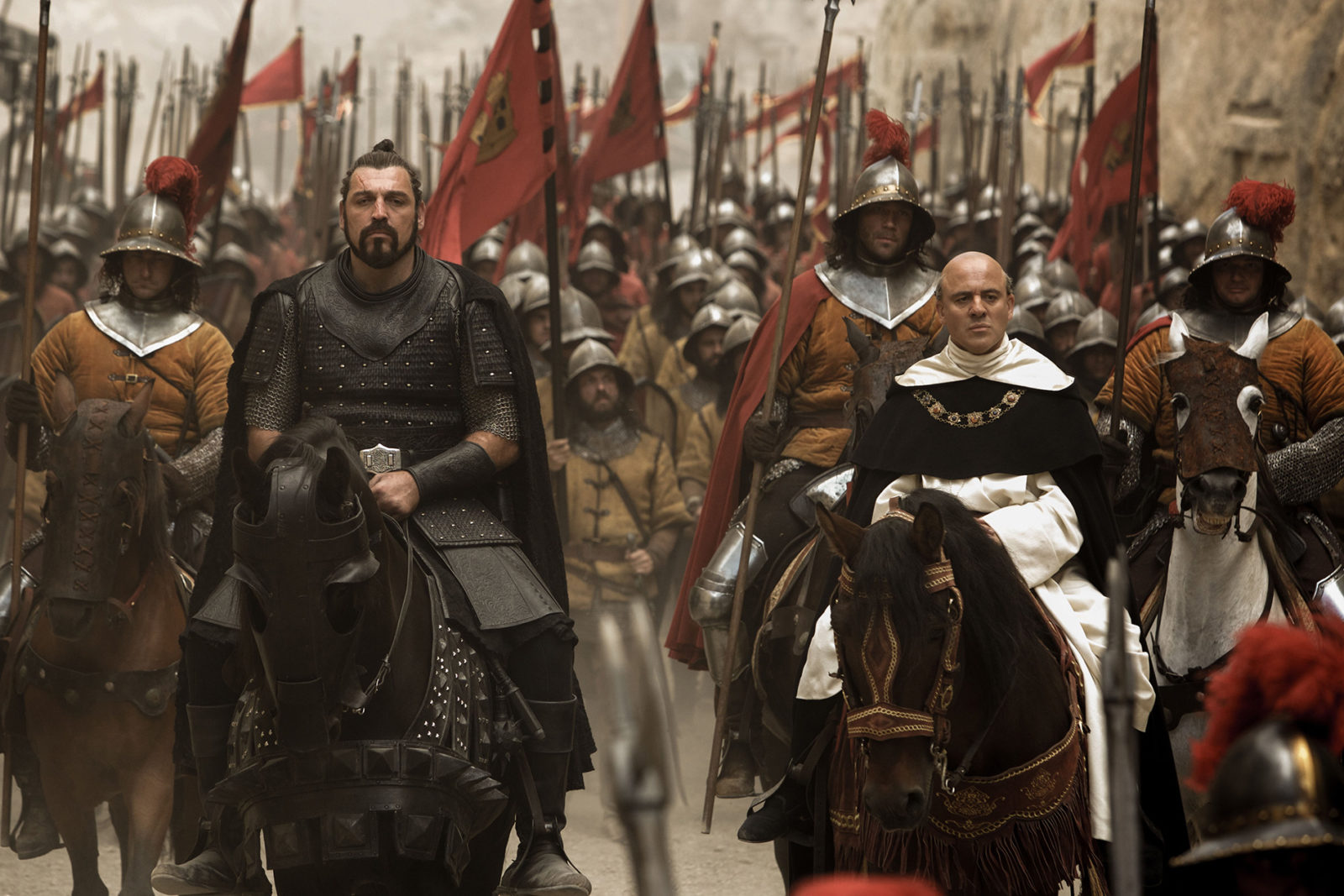
| Alan Rikkin | embodies the Templar pressure for control and the Apple of Eden. |
| Animus | turns genetic memory into physical effort visible to the audience. |
This division is useful because it keeps the film from being reduced to a period adventure. The modern section places Callum between surveillance, experiment, and family inheritance, while Aguilar's section delivers the hidden blade, rooftops, and pursuit iconography that audiences associate with the series.
The result creates an alternating rhythm between laboratory and past, with each return to the Animus testing obedience and advancing identity. When Callum begins to interpret the memories as inheritance rather than as hallucinations controlled by Abstergo, the secret war gains dramatic meaning inside his own body.
Cast and production
Justin Kurzel came from Macbeth, also starring Michael Fassbender and Marion Cotillard, and that reunion helps explain the serious tone, heavy photography, and less colorful action. Marion Cotillard plays Sofia Rikkin, Jeremy Irons plays Alan Rikkin, Brendan Gleeson plays Joseph Lynch, Charlotte Rampling appears as Ellen Kaye, and Michael K. Williams plays Moussa.
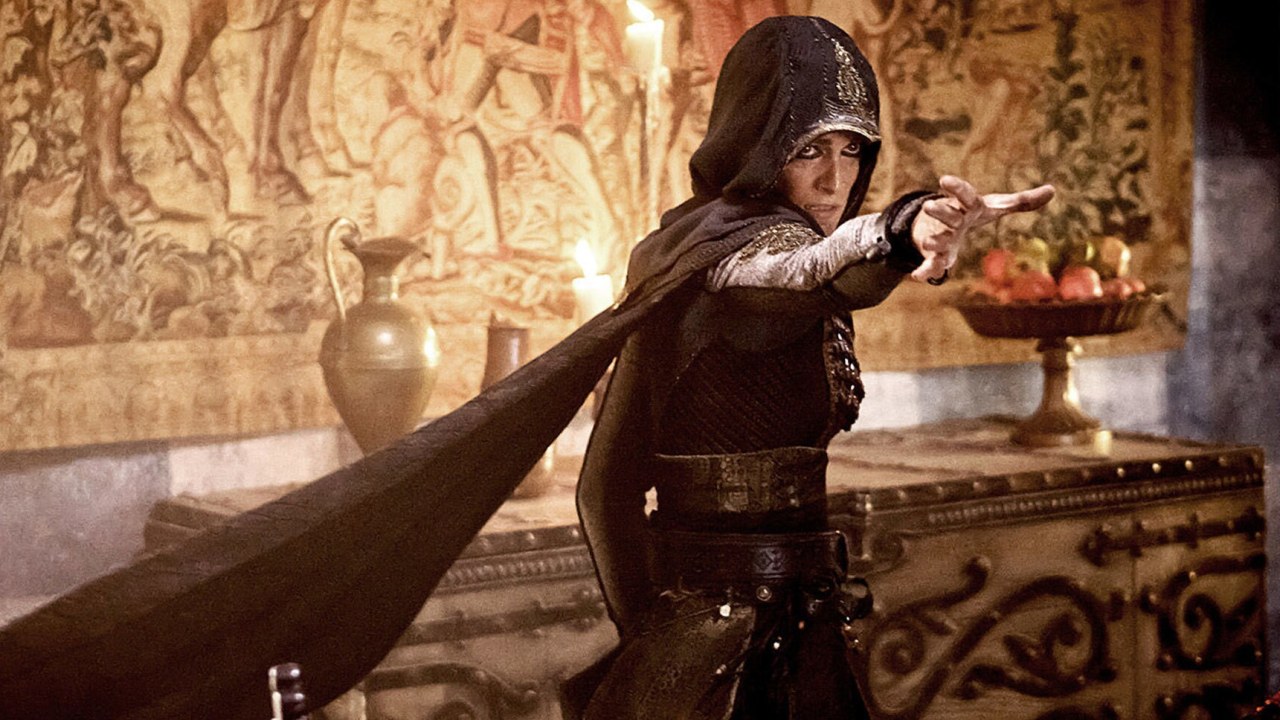
The presence of Ubisoft Motion Pictures in the production shows an attempt to keep the adaptation close to the original property, while New Regency and 20th Century Fox supported its release scale. The screenplay credited to Michael Lesslie, Adam Cooper, and Bill Collage structures this crossing of game brand, corporate thriller, and historical adventure.
This combination brings visual ambition, but it also leaves the film burdened by explanations of the Animus, lineage, Apple of Eden, and secret conflict. Its most recognizable moments arrive when cinema uses movement, leaps, and pursuit to translate the feeling of parkour instead of relying only on exposition about the mythology.
Release and reception
The presentation records a runtime of 1h55min, a PG-13 rating in the United States, and a release on December 21, 2016, while the synopsis highlights Michael Fassbender and Marion Cotillard and presents Callum as a descendant of an Assassin lineage who can gather lethal skills by accessing Aguilar's memories.
The official 20th Century Studios trailer sells the film as a large-scale action adaptation, with Abstergo, a suspended Animus, and rooftop pursuit scenes. The marketing also reinforces the link to the game franchise, but the film chooses to follow Callum as its own protagonist, separating it from a simple reenactment of familiar missions.
Reception was divided, and the film came to be remembered as an adaptation that got part of the visual language right but struggled to turn its mythology into a clear drama. That divided response places Assassin's Creed within the history of films based on games, especially because it arrived before the period when game adaptations gained greater confidence from audiences and critics.
Images, cinema, and platforms
The final list brings together points that make the adaptation easier to distinguish from the original game and from other chapters in the franchise.
- Callum Lynch is created for the film and serves as a modern entry into the Assassin lineage.
- Aguilar de Nerha occupies the Spanish past and delivers the imagery of hood, hidden blade, and parkour.
- Abstergo Foundation replaces the idea of a neutral laboratory with a space of surveillance and Templar control.
- Sofia Rikkin gives the experiment a scientific face, while Alan Rikkin embodies the ambition for power.
- Apple of Eden concentrates the search for control over human will and connects the film to the franchise's central vocabulary.
- Justin Kurzel brings the adaptation closer to a dark thriller, with physical action and heavy photography.
Seen as a whole, Assassin's Creed tries to balance an origin film, a laboratory thriller, and a historical adventure. The result is uneven, but it preserves essential elements of the brand—Animus, Brotherhood, Templars, parkour, and an ancestral artifact—giving the film a specific place in the history of game adaptations for cinema.