
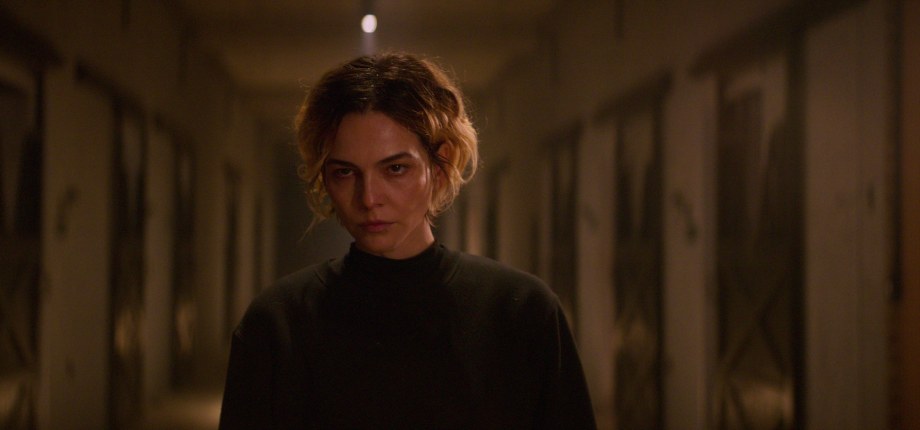
Good Morning, Veronica, released in 2020, follows Veronica Torres, a police clerk in São Paulo who begins investigating crimes involving violence against women and uncovers a network of abuse, power, and institutional silence. The concrete distinction lies in how the Brazilian Netflix series turns a police thriller into an indictment of domestic control, corruption, and religious manipulation without removing its protagonist from personal danger.
The drama deepens when Veronica stops observing isolated cases and realizes that every clue touches a police station, marriage, family, media, and church. She does not act like a shielded heroine: her investigation reaches her home, children, colleagues, and reputation, creating a conflict in which doing the right thing also destroys the normal life she was trying to preserve.
Crime, home, and a broken institution
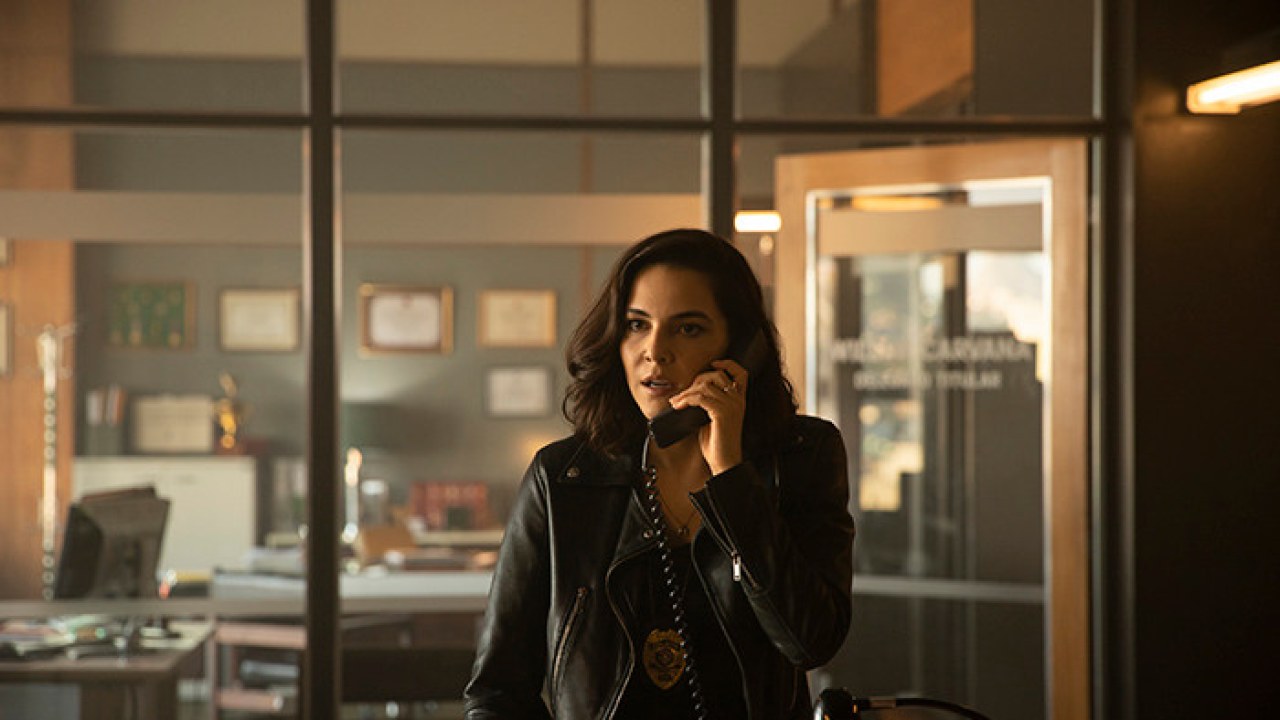
The first season gains strength by bringing domestic abuse and police investigation together, showing how violence hides inside apparently respectable routines. Janete and Brandão embody this axis, with Camila Morgado and Eduardo Moscovis sustaining a dynamic of fear, surveillance, and public image that Veronica must dismantle piece by piece.
The story also uses São Paulo as an environment of pressure, with police stations, apartments, streets, and offices serving as spaces where the truth circulates with difficulty. Crime appears close to ordinary bureaucracy, family relationships, and the decisions of people who would rather not see, without relying on a distant or isolated threat.
| Story front | What it reveals |
|---|---|
| Police station | Shows institutional limits and fear of exposure. |
| Home | Turns intimacy into a field of control. |
| Church and power | Expands the crime into networks of influence. |
The table shows where Good Morning, Veronica takes its cases, as each front pushes the protagonist toward a more protected network of aggressors.
Tainá Müller and the weight of the investigation
Tainá Müller portrays Veronica as tired and persistent, without turning her into a machine for revenge. The series depends on a protagonist who makes mistakes, improvises, and pays a price for moving forward when the institution would rather file away the discomfort.
The later seasons increase the scale of the conspiracy and bring Veronica closer to figures with public power over the victims, while preserving the series' starting point: listening to ignored women and rejecting the idea that police procedure ends the problem.
Raphael Montes and Ilana Casoy bring a direct connection to suspense and Brazilian true crime to the project. The series remains interested in investigation and psychological violence even when it accelerates into thriller territory, keeping crime close to procedures, testimonies, and choices about listening. São Paulo appears as a city of police stations and apartments, always linked to the protagonist's movement.
Netflix adaptation, book, and investigation
A central curiosity is that Good Morning, Veronica originated as a novel signed by Andrea Killmore, the pseudonym used by Raphael Montes and Ilana Casoy. This literary origin gives the series a foundation in investigative crime, but the adaptation develops its own identity by bringing the material closer to contemporary Brazilian debates.
Netflix promoted the third season as the final hunt, reinforcing the idea that Veronica's struggle against networks of power was reaching its conclusion. This communication is useful for placing the series' final phase, separating the promise of a continuing thriller from a narrative seeking to close the protagonist's emotional cycle.
Veronica's investigation brings domestic violence, abuse of power, and institutional failures together, keeping the victims at the center of the suspense and of the consequences of every discovery.