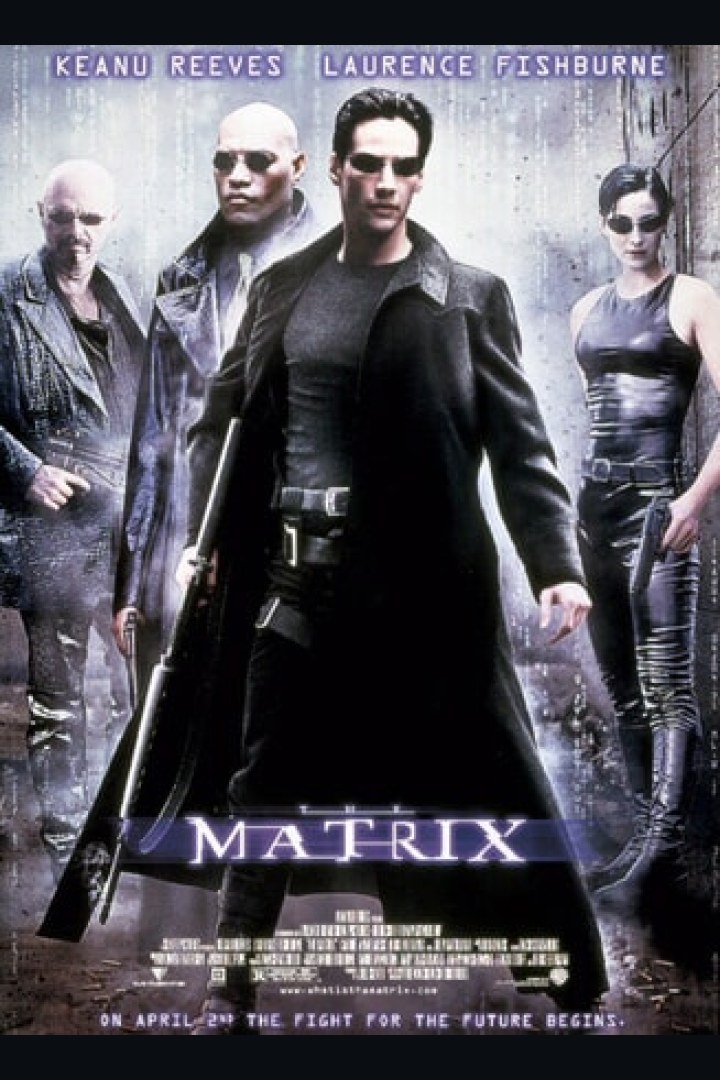

The Matrix is the 1999 cyberpunk science-fiction film written and directed by Lana and Lilly Wachowski, starring Keanu Reeves as Neo, Carrie-Anne Moss as Trinity, Laurence Fishburne as Morpheus, and Hugo Weaving as Agent Smith. Its concrete distinction is turning doubt about reality into physical action, where hackers, simulation, kung fu, urban pursuit, and philosophical choices share the same narrative machinery.
The world begins with Thomas Anderson working as a programmer and living as the hacker Neo, until Morpheus reveals that the routine he knows is a construction maintained by machines. This turn deepens the context because the rebellion fights not only armed agents but a system that controls perception, body, and destiny while using normality as a prison.
Red pill, simulation, and a city in code
Warner's official page keeps The Matrix in circulation and uses the gallery to reinforce the contrast between black suit and green code. This iconography helps the film communicate the simulation before explaining its rules, because ordinary objects begin to function as escape routes or signs of surveillance.
The red pill works as a simple gesture and a point of no return: Neo stops merely suspecting the world and starts seeing the prison built around him. From then on, each fight tests a concrete question about limits and belief, making action show that the simulation can be bent by someone who understands its rules.
Neo, Trinity, and Morpheus inside the resistance
The characters deserve a visual block because each represents a different function in Neo's journey, from initial doubt to mastery of the simulation.
 | Neo Begins divided between employment, hacker life, and a feeling that the world is false. His journey gains strength when Morpheus's choice turns curiosity into responsibility. |
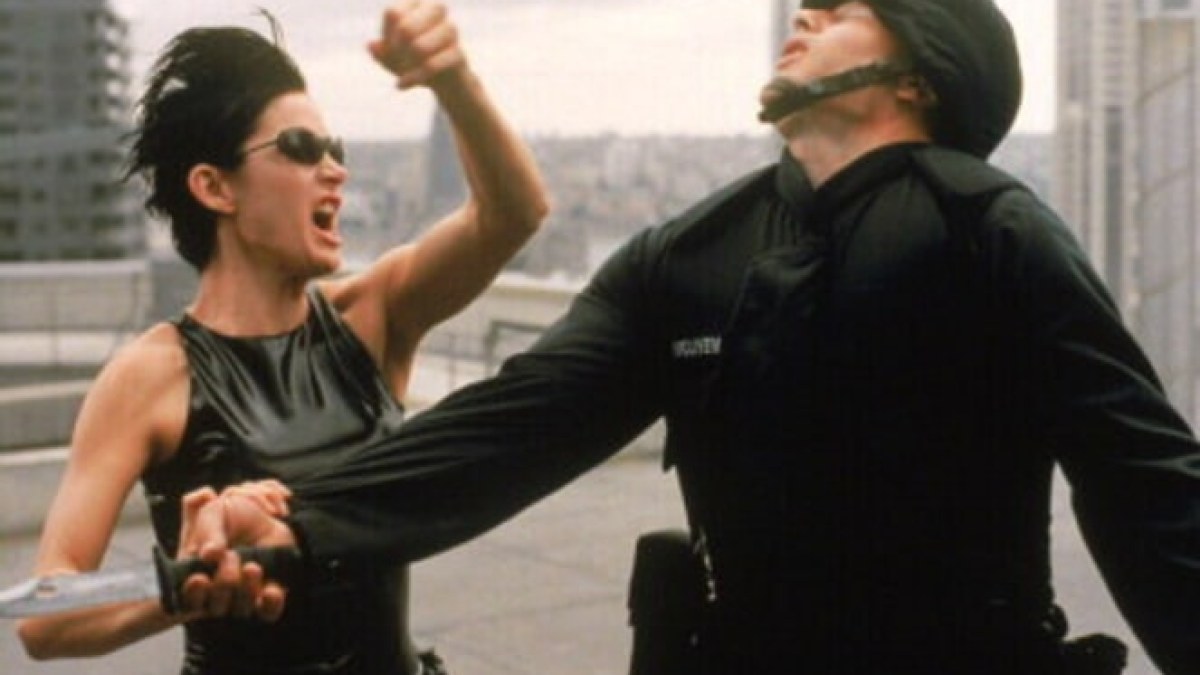 | Trinity Opens the film as action in motion and then becomes a bridge between Neo and the resistance, maintaining practical trust while the prophecy still looks like a risky bet. |
 | Morpheus Leads the revelation of the simulation and treats Neo as a political possibility, where faith, training, and leadership put the crew at risk before any certainty. |
 | Agents Function as the system's mobile defense, pursuing the resistance through ordinary bodies and making any space in the simulation potentially hostile. |
This arrangement makes the film clearer because Neo does not become the chosen one alone: Trinity, Morpheus, the crew, and Agent Smith shape the reading of destiny, sacrifice, and control at every stage.
Bullet time, kung fu, and action turned into grammar

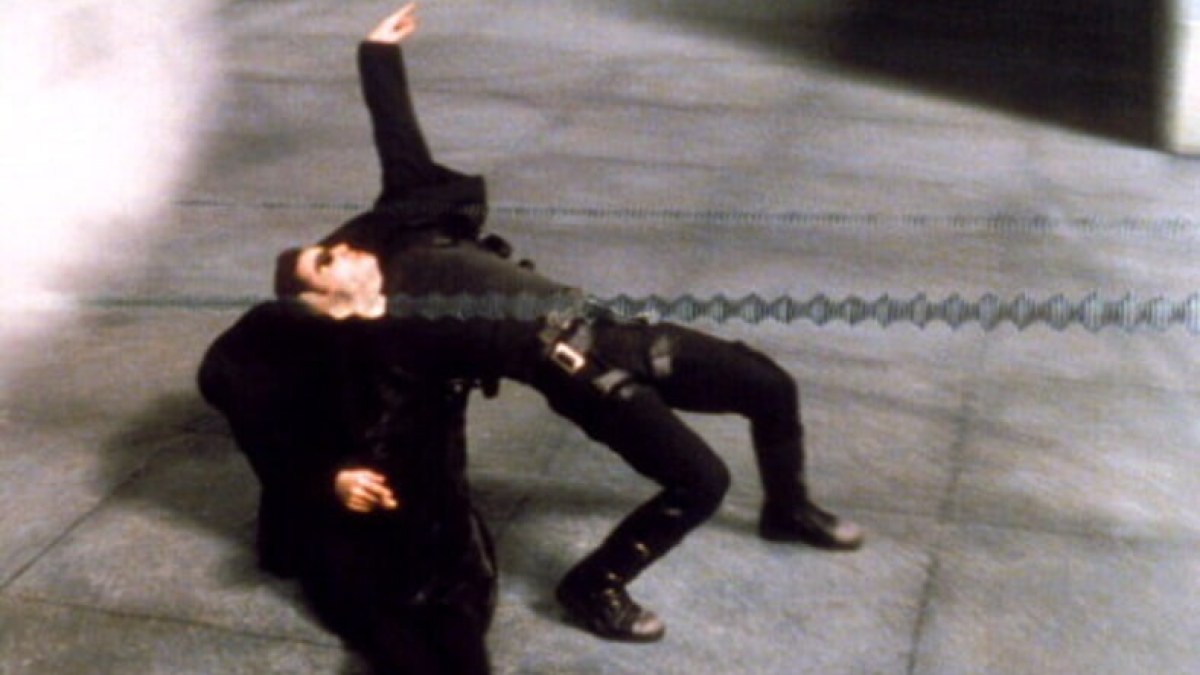
Bullet time became the film's signature image, and the sequence's strength comes from the link between technique and theme. The camera moves through an impossible action while the script asserts that the simulation obeys manipulable rules, making the effect visual proof of Neo's control over the environment.
The fights combine martial arts with gunplay and precise editing, creating a grammar that much later action cinema tried to copy. The technical impact was recognized at the 2000 Academy Awards, where The Matrix won editing, sound, sound editing, and visual effects.
Warner, franchise, and the name used in Brazil
Warner maintains official pages in English and Portuguese, with The Matrix on the North American page and Matrix on the Brazilian page. This separation resolves the local listing without erasing the original name and avoids confusing the 1999 work with sequels such as Matrix Reloaded, Matrix Revolutions, and Matrix Resurrections.
Within the franchise, the first film remains the piece that defines the visual vocabulary: green code, cables in the neck, agents, pills, and the question of reality form the basis for the rest of the universe. The work also sustains discussions of technology and identity because it uses popular adventure to talk about control, choice, and awakening without abandoning the pace of an action thriller.
Oscars, green code, and red pill
Four points help close the film's dimension without repeating the sidebar.
- The 2000 Academy Awards ceremony records 4 wins and 4 nominations for The Matrix, with a win in every category in which it competed.
- Warner's official page includes a trailer and gallery, keeping The Matrix accessible as the studio's central title.
- Warner's Brazilian page uses Matrix as the local title, while the North American material uses The Matrix.
- The contrast between red and blue pills became a cultural shortcut for choosing between remaining in comfortable illusion and facing a difficult reality.
These marks explain why Matrix remains recognizable outside the franchise, with visuals, sound, and ideas that continue to reappear when cinema, games, and technology discuss simulation and freedom.