
If there is one thing players have learned over the years, it is that trailers and publicity alone sometimes make it impossible to determine what will or will not succeed, or what will be "good." Sometimes expected failures become major successes. At other times, it seems nothing could have saved a particular production from imminent disaster.
With these gaming-industry "series of unfortunate events" in mind, we have gathered 13 examples of games that not only failed in sales but also led to their studios shutting down.
Concord (Firewalk Studios, 2024)
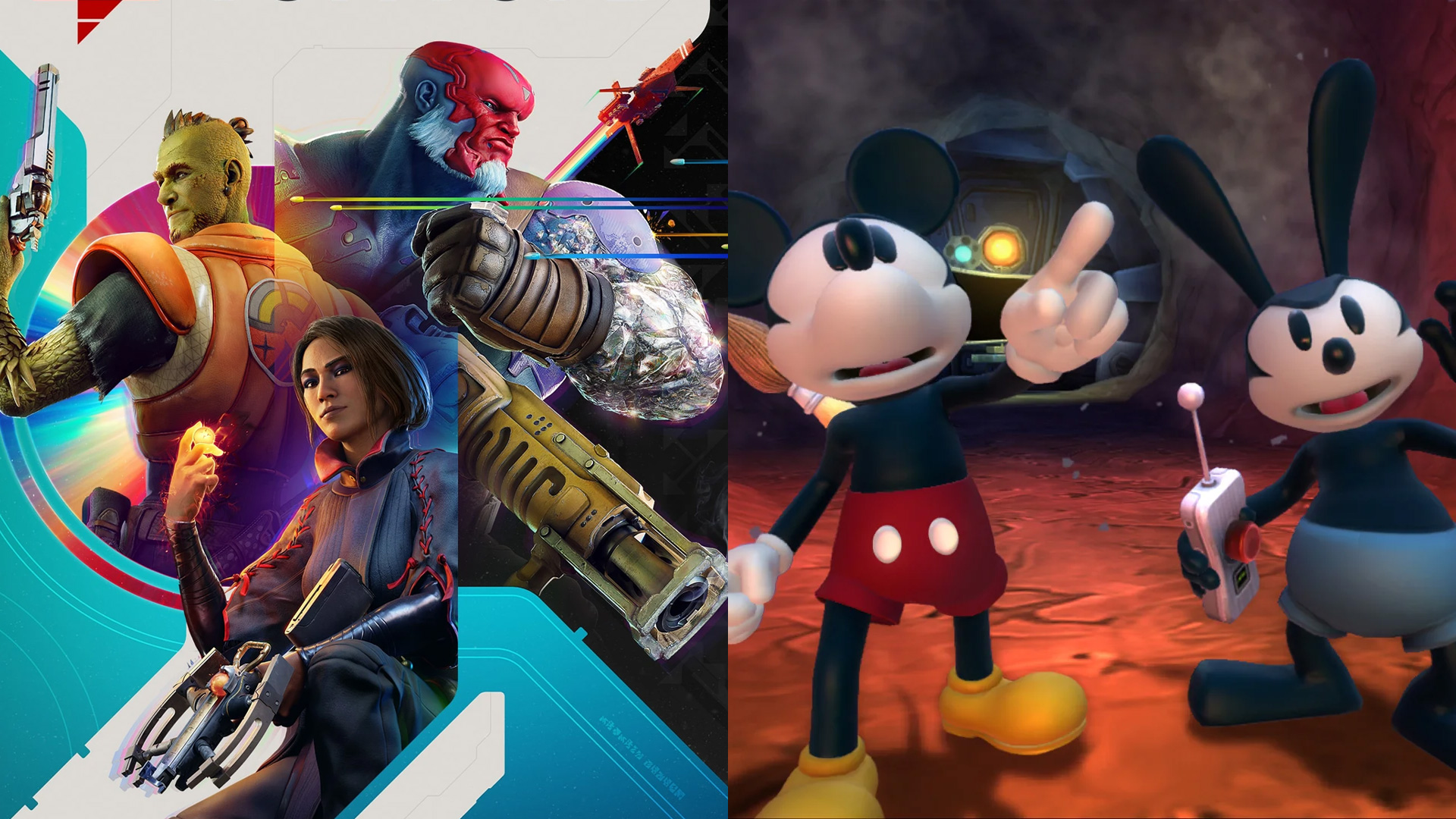
Released on August 23, 2024, Concord was a competitive multiplayer shooter developed by Firewalk Studios. It received a mixed response and posted sales below expectations, reaching a peak of only 697 concurrent players on Steam. As a result, just two weeks after release, on September 6, Sony decided to remove the game from all platforms and offer players refunds for both the game itself and items sold within it. Later, in October 2024, Sony announced the closure of Firewalk Studios, resulting in the dismissal of approximately 172 employees.
After eight years in production, Concord's development appears to have involved major investments. Reports indicate that the initial production cost was approximately US$200 million, allocated to the game's development by Firewalk Studios, plus US$400 million in marketing invested by Sony itself. Some rumors, however, suggest that the development cost may have been lower.
The Day Before (Fntastic, 2023)
Promoted as a blend of The Last of Us and DayZ, The Day Before generated great anticipation before launch, despite originally being developed by a relatively small studio. After its early-access PC release on December 7, 2023, however, the game accumulated thousands of negative Steam reviews, disappointing players by falling nowhere near the promised content. Unable to retain a solid player base after the massive criticism and refund requests, Fntastic announced that it was ceasing operations in December 2023.
Kingdoms of Amalur: Reckoning (38 Studios, 2012)
With lofty ambitions, Kingdoms of Amalur promised to be a major RPG. Despite positive reviews, the game sold about 1.2 million copies in its first 90 days, which was not enough to cover development costs estimated at US$75 million. 38 Studios faced financial difficulties and, in May 2012, dismissed all of its employees before filing for bankruptcy shortly afterward.
Epic Mickey 2: The Power of Two (Junction Point, 2012)
The sequel to Epic Mickey brought improvements and a cooperative experience. The game, however, had sold only 529,000 copies by March 2013, far below Disney's expectations. The poor sales led to Junction Point Studios closing in January 2013, also ending plans for the franchise.
Marvel's Avengers (Crystal Dynamics, 2020)
Based on one of the world's most popular brands, Marvel's Avengers failed to attract or retain a solid player base. The game faced criticism for bugs, a lack of content, and controversial design decisions. In November 2020, Square Enix reported an operating loss of approximately US$63 million, attributed in part to the game's below-expectations performance. In 2022, Square Enix sold Crystal Dynamics to Embracer Group, citing the need to invest in other areas.
The Lord of the Rings: Gollum (Daedalic Entertainment, 2023)
Considered one of 2023's worst-received games, Gollum suffered from outdated graphics and confusing gameplay. The game was widely criticized, earning an average score of 36/100 on Metacritic. Disappointing sales and the poor reception led Daedalic Entertainment to close its development division in June 2023, resulting in around 25 employees losing their jobs and the cancellation of other planned projects in The Lord of the Rings universe.
Too Human (Silicon Knights, 2008)
This game cost a great deal and took years to complete, but it failed to meet market expectations. What happened next, however, truly sealed the fate of its studio, Silicon Knights: after Too Human failed, Silicon Knights took publisher Epic Games to court, alleging that Epic had withheld funds needed for production, which in turn led to the disappointing final product. This prompted a countersuit from Epic Games. The ensuing investigation into the game's production ultimately backfired on Silicon Knights...
The judge ruled that Epic was not only innocent of the allegations, but also found that Silicon Knights had apparently stolen several lines of Epic's code for several of its games. This led to an order requiring the company to recall every copy of Too Human then on sale, remove it from online stores, and abruptly halt the studio's subsequent productions, bringing it to an end.
Sunset (Tale of Tales, 2015)
Sunset, an adventure game set amid a revolution in South America, began as a promising Kickstarter project. With sales of only about 4,000 units, including copies for backers, however, Tale of Tales could not recover its development costs. In June 2015, the founders announced the studio's closure, citing Sunset's commercial failure as the deciding factor.
Haze (Free Radical, 2008)
Dubbed a potential "Halo killer," Haze promised to be a landmark shooter. The game, however, launched exclusively for PlayStation 3 in May 2008, received negative reviews, and earned an average Metacritic score of 55/100. Both Haze's plot and characters drew clear inspiration from the Halo saga, but sales were disappointing and Free Radical faced financial difficulties, entering administration in December 2008. After the termination of its contract with LucasArts (for which the company was originally going to develop Star Wars: Battlefront 3), the studio was acquired by Crytek and renamed Crytek UK.
Blur (Bizarre Creations, 2010)
Combining realistic graphics with arcade-style gameplay, Blur appeared to offer something unique in the racing genre. Despite decent reviews, the game sold only about 31,000 copies during its debut week in the United States. Unable to find a buyer for the studio, Activision decided to close Bizarre Creations in February 2011, dismissing all of its employees.
Def Jam Rapstar (4mm Games, 2010)
Centered on hip-hop culture, Def Jam Rapstar had a promising concept and an impressive song catalog. Copyright-related legal issues, however—in which developer 4mm Games failed to properly secure the rights to the songs involved—resulted in an US$8.1 million lawsuit filed by EMI. Unable to cope with the legal battle and financial loss, 4mm Games closed its doors in 2012.
Medal of Honor: Warfighter (Danger Close, 2012)
Medal of Honor: Warfighter attempted to compete with Call of Duty, but failed by delivering a generic experience riddled with technical problems. Sales fell short of expectations, prompting EA to dismantle Danger Close Games in 2013. Part of the team was reassigned to other projects, but many employees were dismissed.
Mass Effect: Andromeda (BioWare Montreal, 2017)
While the original trilogy was beloved, Andromeda suffered from bugs, problematic animations, and criticism of its narrative. Despite initial sales of 2.5 million copies, the game was widely regarded as a failure. EA dissolved BioWare Montreal in 2017, integrating it into Motive Studios.
The merger of the two studios can nevertheless be seen in a positive light, since the next two games developed by Motive, Star Wars Battlefront II and Star Wars Squadrons, achieved strong commercial success.