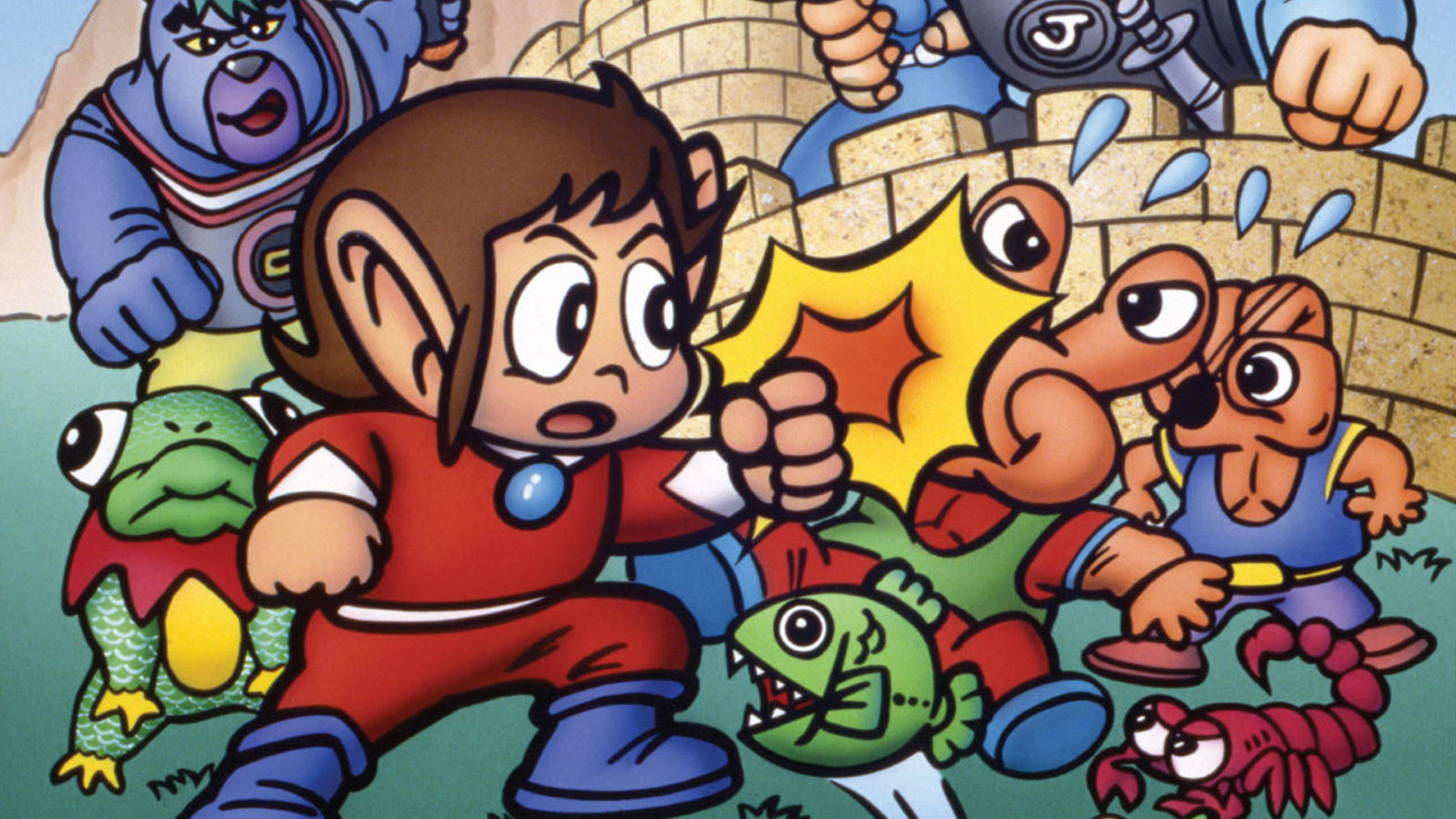
Alex Kidd in Miracle World is a game that holds a place in the hearts of Brazilians and served as many people's gateway into the vast world of video games. In Brazil, it came built into the Master System for a time, which is why it became so popular here. My Master System came with Sonic built in, but I made a point of owning this marvel at the time and still have the cartridge on my shelf today. Created in the 1980s to go head-to-head with Super Mario Bros., it did not achieve the popularity it deserved in the largest markets. Its legacy was different here, however, and many people consider this title superior to the mustachioed hero's first great adventure. I am one of them.
Below, we see the usual question: will there be a ghost?

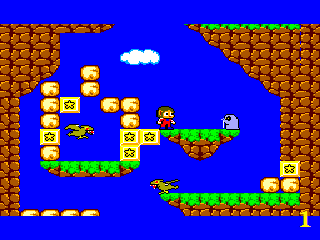
Alex Kidd in Miracle World is a platform game released for the Master System in 1986, developed and published by SEGA.
Fun fact: We all know that American Master System game covers were generally ugly, but for some reason the artists behind this one managed to make Alex blond, which is hard to understand. Another detail in this Westernization involved the classic stage-transition scene in which the protagonist ate a rice ball. It was replaced with a hamburger in the version built into Western consoles, although it remained a rice ball in cartridge versions. 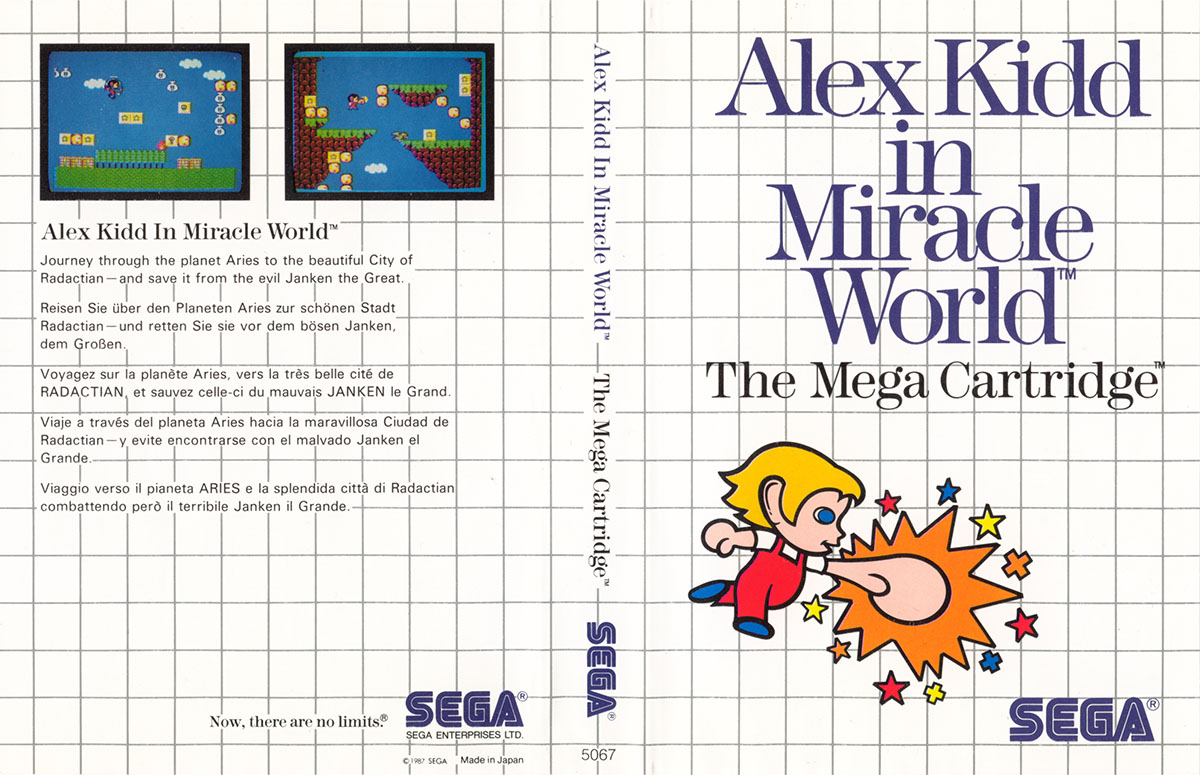 This blond Alex Kidd is difficult to understand and accept.
Behind the Scenes of the Game
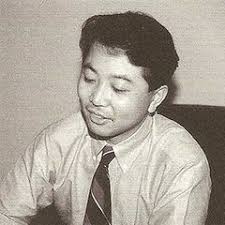 Designer Kotaro Hayashida
To discuss Alex Kidd, we must first go back to 1985, the year the Mark III, the Japanese Master System, and one of the most popular games of all time, Super Mario Bros., were released. SEGA, which had a stable position in the arcade business, had aspired to bring its games to a platform of its own so it would not have to publish its titles on third-party consoles. After a series of strategic failures involving the SG-1000 and SG-1000 II, however, the company was left with the task of developing a popular platform game for its new system, featuring a charismatic character capable of selling consoles—in other words, a new Mario.
This difficult and ambitious mission was assigned primarily to designer Kotaro Hayashida, who described the situation this way: "SEGA had just put the SEGA Mark III on the market, and I was asked to create something that could make it sell as well as the competitor's console, the NES. It was with this almost impossible mission that I began gathering ideas to develop a new action game." 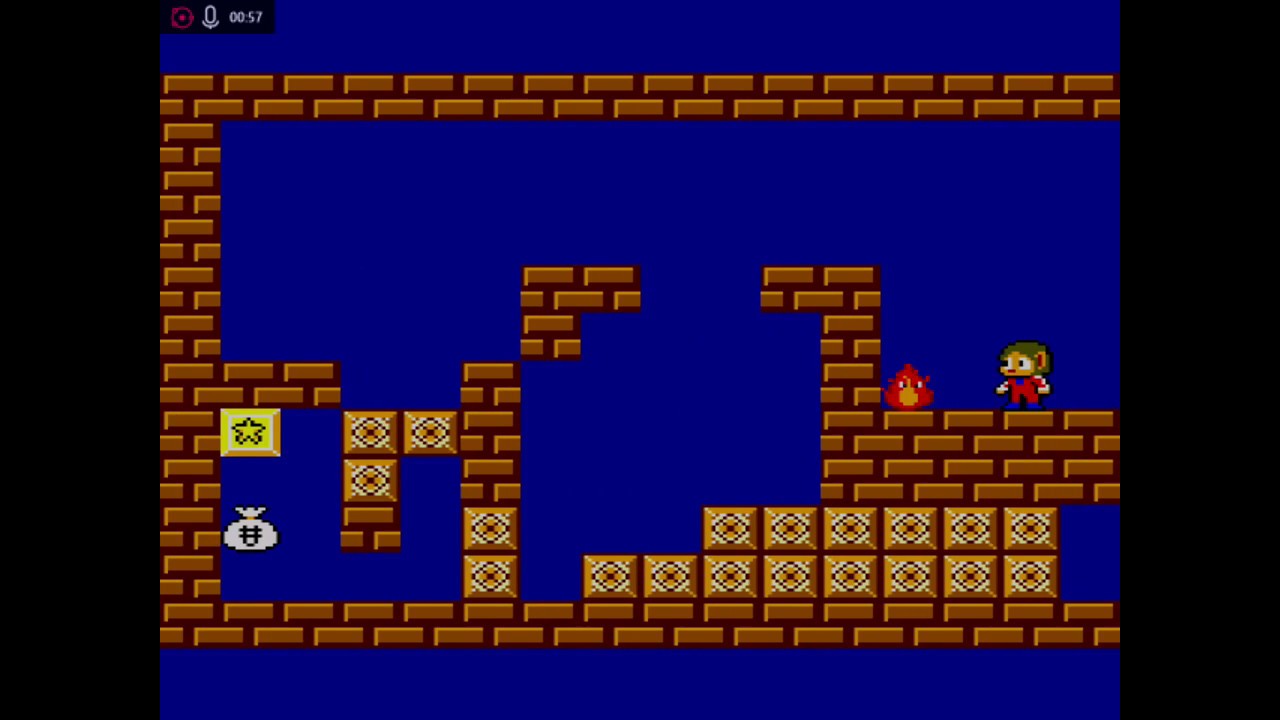 Not all of Alex's enemies can be destroyed.
The production team's main instruction was that the title should make extensive use of the Mark III's greater power compared with its competitor, while the finished product needed to persuade consumers to choose or even switch consoles after seeing it. With this in mind, Hayashida realized that magic items and vehicles would be an appealing novelty for the platform genre. The idea of the powerful punch became the main way to distinguish Alex from Mario, while the game's defining feature became the classic jan-ken-pon matches played against bosses.
The goal of surpassing Super Mario in sales and popularity may not have been achieved, but no one can deny that Master System owners had access to a good game early in the console's life.
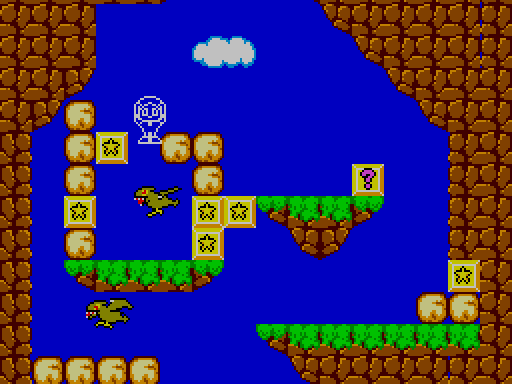 Our hero is charismatic even when dying.
Kotaro Hayashida, who uses the pseudonym Ossale Kohta, is known for being very shy and private. He began working at SEGA in 1983 and was invited to start there when he already had a job interview at Namco. His résumé includes titles such as Gang's Fighter, Ninja Princess, Zillion, Space Harrier II, and Phantasy Star. Fulfilled by his work in games, he once said: "When I saw my ideas transformed into reality on the game screen, I felt a joy I would not trade for anything in this world." Fun fact: The game's subtitle was initially going to be Miracle Land, and its gameplay would have featured more RPG elements. Alex Kidd would also have used a staff as his main weapon. After release, Western players complained that the character's action and jump buttons were reversed compared with Super Mario, even though this was the normal standard for Japanese players. When the version built into the Master System was sold, these button functions were adjusted to resemble those of other platform games from the period.
The Story of Alex Kidd in Miracle World
Alex Kidd's plot is simple but engaging and features an interesting narrative, with characters and bosses who speak to us during the campaign. Next, we will look at the protagonist's story. The spoilers are minor and do not detract from the gameplay experience at all.
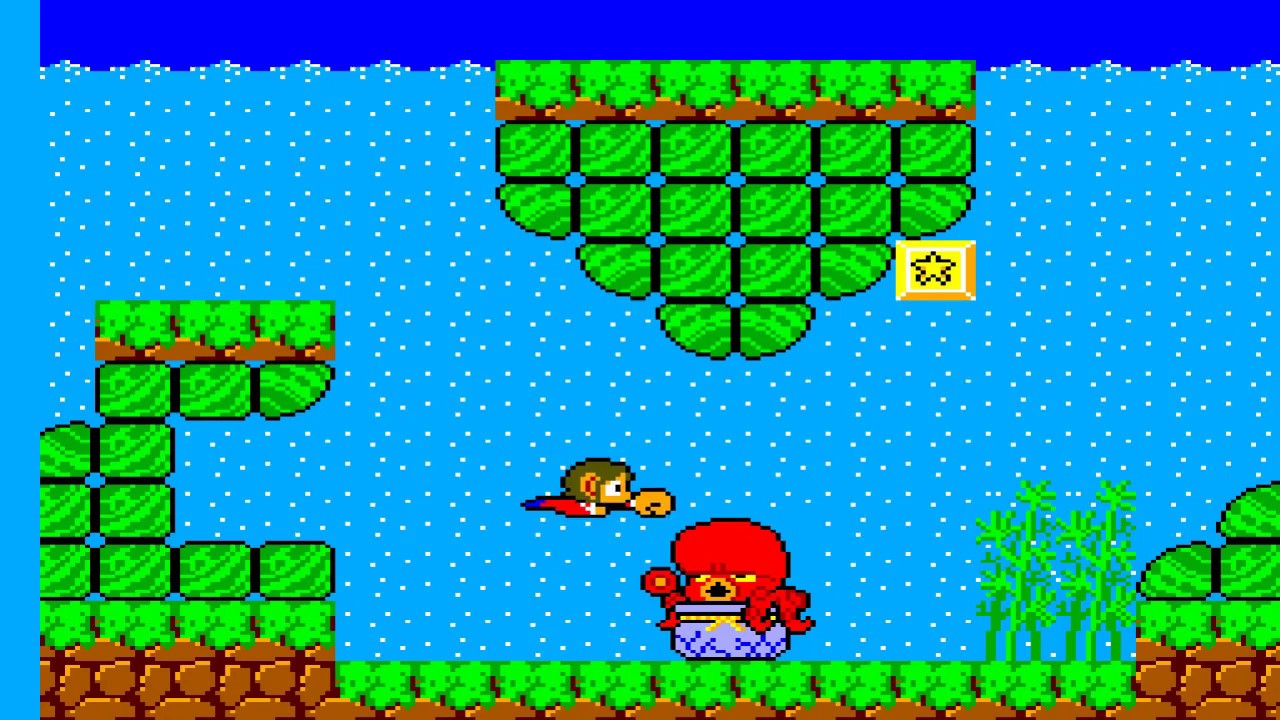 Could there be a Master System owner who does not know this secret passage?
Many centuries ago, on a planet called Aries, there lived a boy named Alex. During his childhood, he lived in a place called Mount Eternal, the game's first stage, studying a martial art known as Shellcore. This technique's main purpose was to allow its user to break large rocks without much difficulty.
Everything was going well until the day our hero encountered a dying man who made a revelation: "The peaceful city of Radactian, the game's 12th stage, was in grave danger." As he spoke these words, he gave Alex a map along with a medallion made from a piece of the mystical Sun Stone. Curious about everything he had been told, the protagonist sets out to find more information about what he witnessed. This is where the campaign of Miracle World begins.
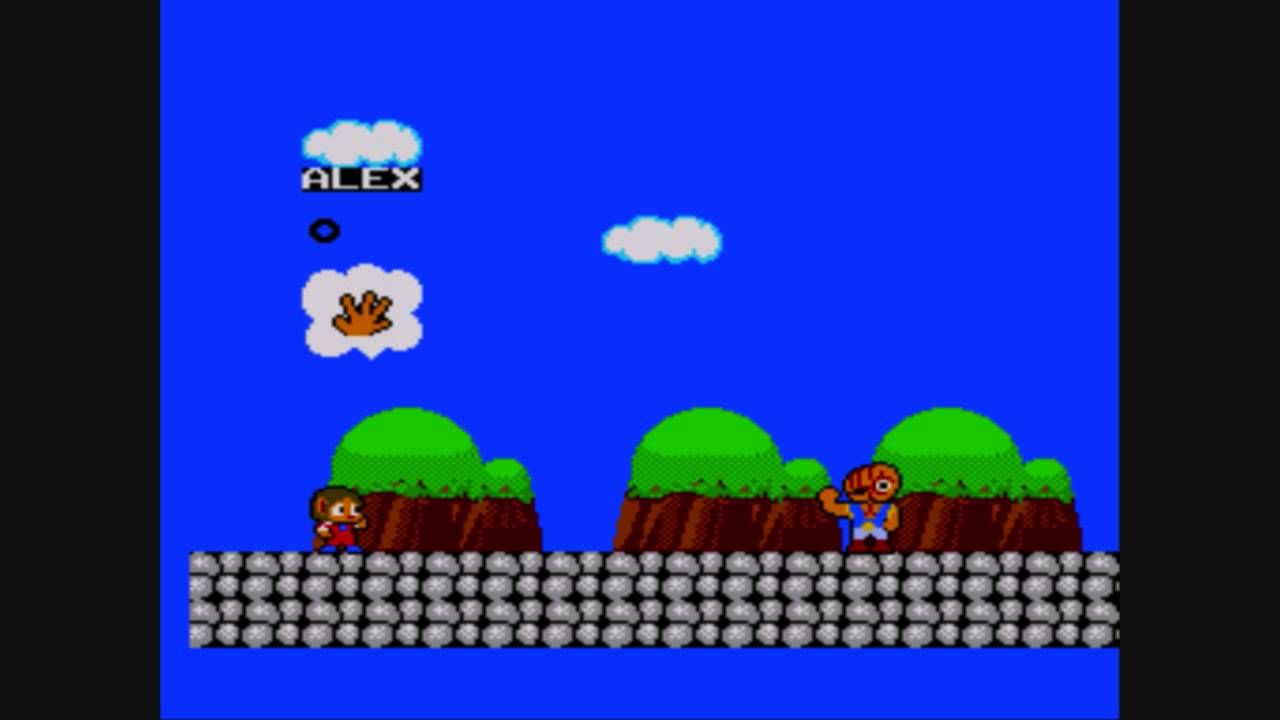 A classic game of rock, paper, scissors. Better copy down the answers for next time.
After a few events, Alex learns from an elder that an invader called Janken the Great has seized the peaceful lands of Radactian and kidnapped King Thunder, Prince Egle, and Princess Lora, as well as turning the region's inhabitants to stone. As if that were not enough, the wise man also reveals that Alex belongs to Radactian's royal family and is Egle's twin brother. The protagonist therefore sets out to rescue his unknown family and save his people.
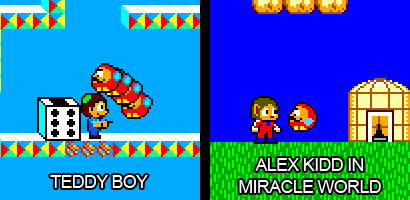
Fun fact: Some sprites in Alex Kidd in Miracle World were clearly recycled from Teddy Boy, originally released for arcades in 1985 and later ported to the Master System. In addition to the clear resemblance between the protagonists, the enemy Daruma appears identically in both titles.
Technical Review
The objectives behind the creation of Alex Kidd were highly ambitious. Hayashida wanted an original platform game with RPG elements and a strong narrative component. It was not easy, but much of this can be seen from the very beginning of a game of Miracle World. In the first stage, instead of moving from left to right, we have a vertical level in which we must descend to the water and then seek the end of the stage. At the start of the second stage, we immediately find a shop where we can spend the money collected throughout the levels, providing the desired RPG element. Combined with the use of vehicles and various items, this undoubtedly made the title a highly original game for its time.
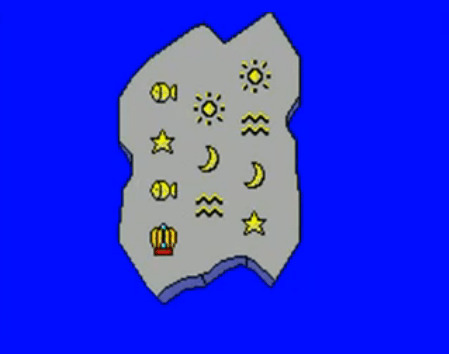
Tell the truth. Who managed to decipher the code without looking at hints? The gameplay of Alex Kidd in Miracle World is highly varied, and we can see that in its opening screen, where the protagonist appears swimming, riding his jet ski, and using his helicopter. During battles, we face enemies with punches, magic, and vehicles found during the campaign or purchased in shops. Knowing how to use the right item at the right time is part of the title's strategic element. Another highlight is the rock-paper-scissors matches, a feature that became the game's trademark. Many people criticize these bosses, whose responses we must memorize to emerge unscathed, because they "break" the adventure's rhythm. All of this is highly subjective, as it depends on the opinion of the person playing. Controlling the character is perhaps the game's greatest flaw. It often takes time for players to gain full command of Alex, since his movement is quite sensitive and the game frequently demands precision when jumping and navigating small spaces. As if that were not enough, the protagonist has no "second chance" like Mario has with mushrooms or Sonic with rings. The slightest collision kills us.
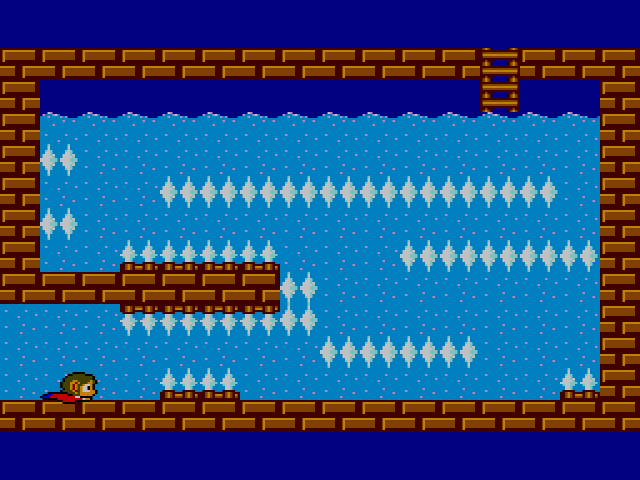
The moment when the game shows that it is not playing around.
Those elements from the previous paragraph already lead us to discuss Miracle World's high difficulty compared with most Master System games. With a fragile character, boss battles that often require luck, and a final puzzle that is nearly impossible to solve without a guide, recommending it to a child who is new to games becomes quite difficult. Yet I would say that this contributes to its replay value and motivates us to persevere through this great adventure.
The game's graphics are highly colorful throughout the campaign, demonstrating the superior hardware SEGA possessed in the third generation of consoles. The level design is genuinely original and varied, with stages below the water, stages in the air, and distinctive features such as the predominantly vertical act mentioned earlier. The backgrounds are beautiful in most stages, although a few leave something to be desired. We Master System fans know the console could do better, but we must remember that the title has a capacity of only one megabit. Even so, it was already an achievement, since it was among the first games classified as a "golden cartridge," using cartridge media instead of the lower-capacity cards sold at the time.
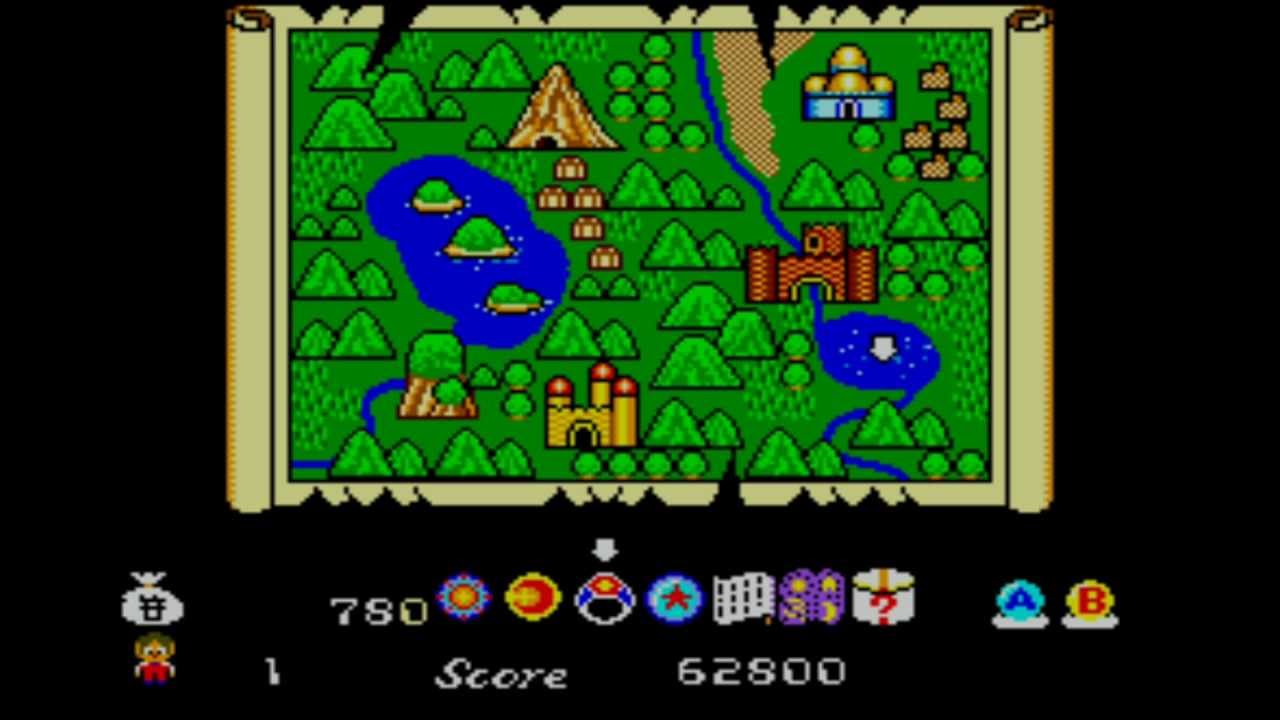 Miracle World's interesting map, with the items available for us to choose.
Speaking briefly about the items that can be used during a game, there are several, and they require players to think strategically about when to use them because each has a best moment. They are: 1) Power Bracelet: lets us launch ranged attacks; unfortunately, it does not work in water, and we lose it when moving to another area; 2) Teleport Powder: makes us "invisible," allowing us to pass through enemies; 3) Cane of Flight: gives us the ability to float for a limited time; 4) Magic Capsule A: an attack spell in which we launch eight of Alex's "friends" toward the enemy; 5) Magic Capsule B: a defensive spell that creates a shield capable of protecting us from enemy attacks; 6) Telepathy Ball: an item with unlimited uses that allows us to read bosses' minds during rock-paper-scissors matches; unfortunately, the boss switches at the very last moment in an attempt to deceive us.
Below are images of the three vehicles used during the campaign, a major distinguishing feature of Alex Kidd in Miracle World. They are: 1) Suisui Boat: a speedboat that can fire shots; 2) Peticopter: a helicopter that can fire shots, with very interesting controls because it stays airborne through Alex's pedaling; 3) Sukopako Motorcycle: a motorcycle that lets us travel through environments at high speed, running over enemies and most obstacles.
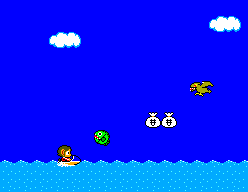
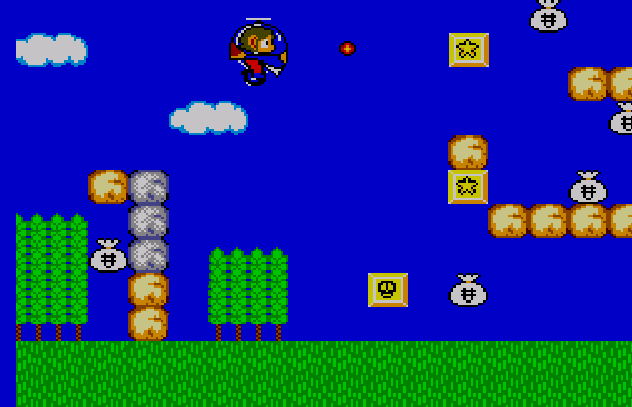
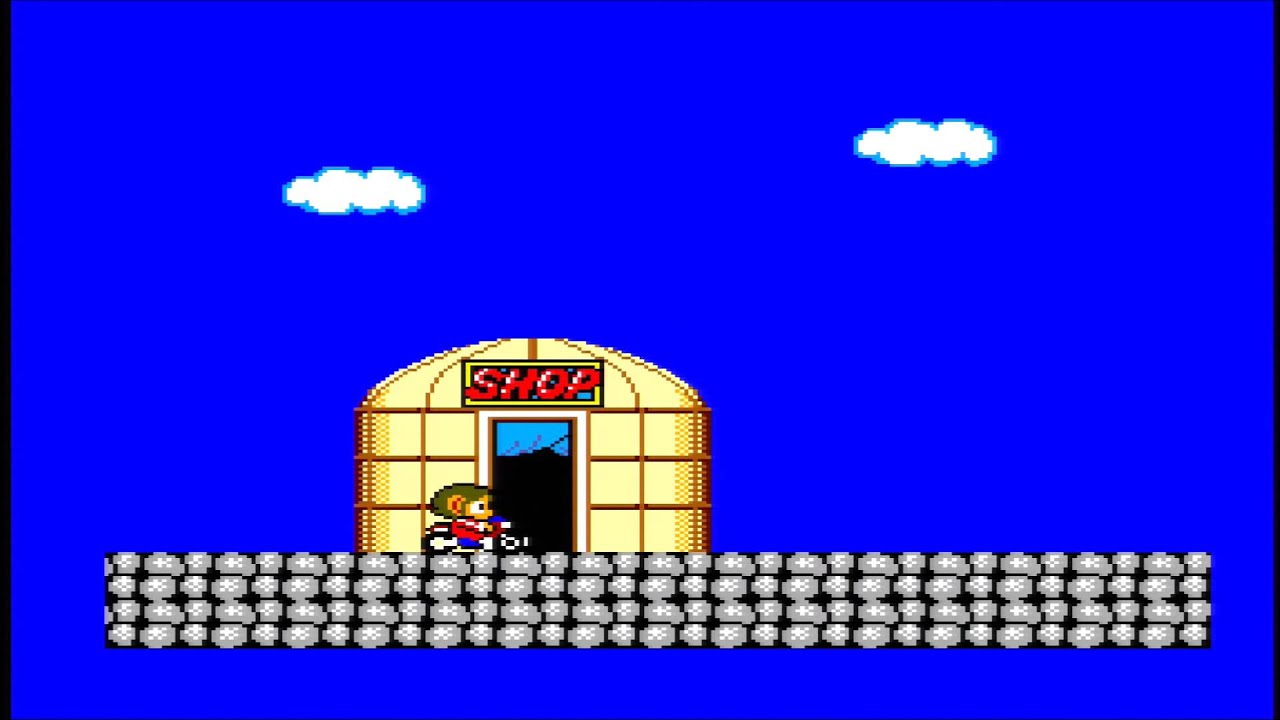
The campaign length is difficult to measure because the game is short but highly difficult. I believe, however, that after learning the bosses' patterns, solving the puzzles, and knowing how to avoid the traps, players can finish the title in under an hour.
The soundtrack was composed by Tokuhiko Uwabo, who used the pseudonym Bo, and turned out very well. Although there are not very many tracks, those that are present match the situations encountered during the campaign. Thus, when we are in the water, we hear its characteristic music, just as castles and vehicles have their own tracks. Players will easily find themselves humming the songs after a few hours of play. Bo recalls the instructions he received during the game's production: "They kept making me redo the music, saying that the game needed memorable themes that were easy to whistle." I think he succeeded, don't you?
Below is the complete soundtrack of Alex Kidd in Miracle World.
Fun fact: In 2009, a double album was released with the soundtracks from the main games in the Alex Kidd franchise. In addition to sound effects included as bonuses, it also featured a track with the theme from Miracle World sung by Takenobu Mitsuyoshi, famous for his work on games such as Shenmue, Virtua Fighter, and Daytoooonaaa USA—I hope you understood the reference. It turned out incredible, and this version appears below.
Fun fact: Although SEGA never recognized Alex Kidd as its official mascot, all of us Master System owners considered him one until Sonic arrived in 1991. Do you agree?
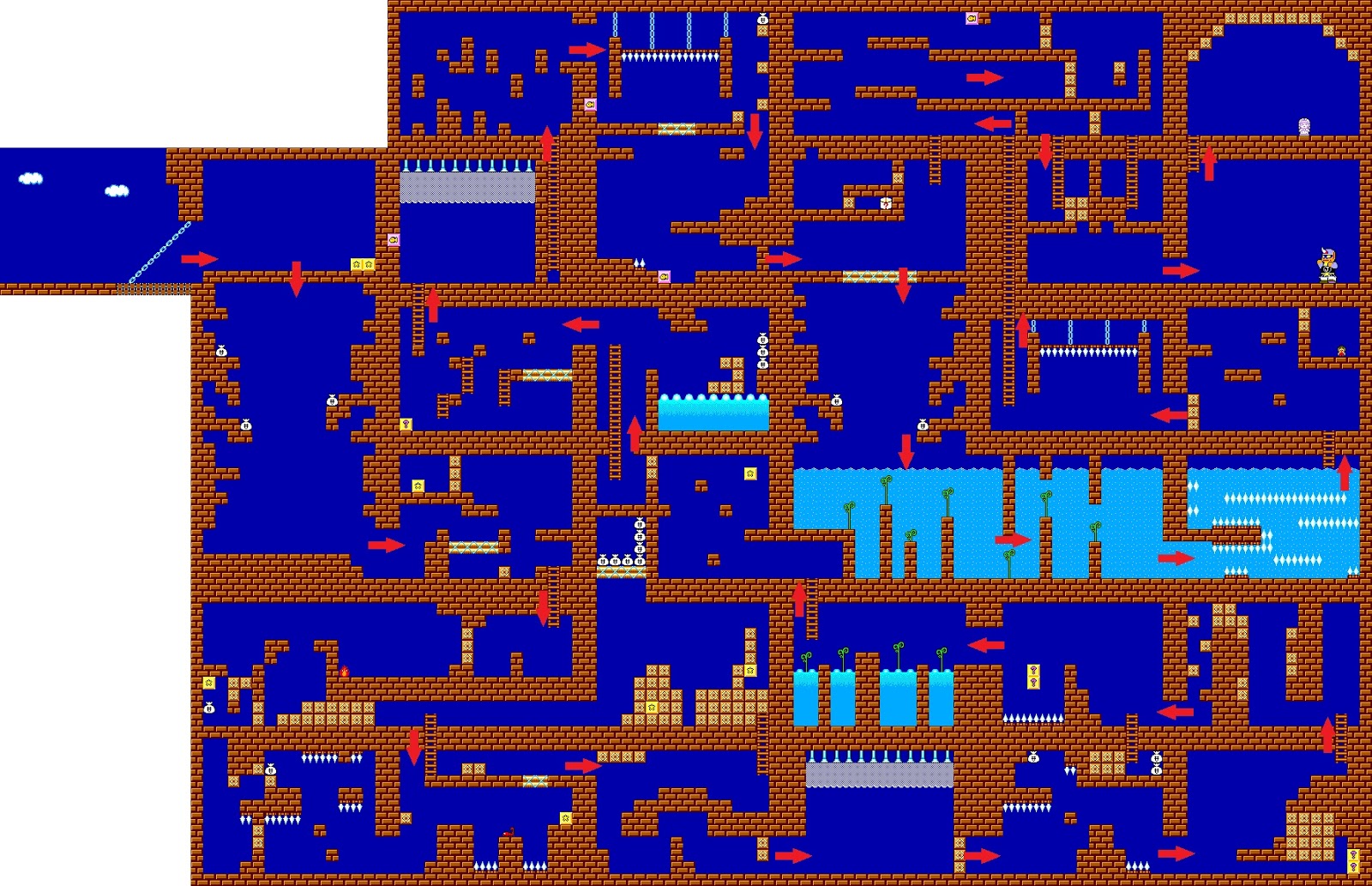 The nightmare that is the end of the game. If you have not played this Alex Kidd yet, do not look too closely.
Played on the Master System.