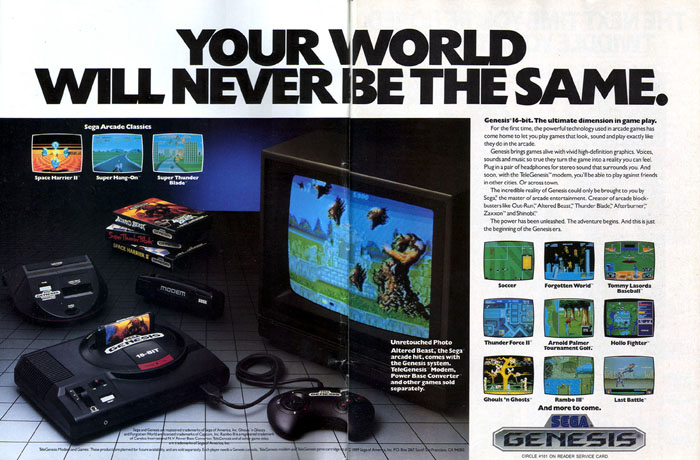
As a child, I remember stores and supermarkets with Tec Toy's Mega Drive connected to a television at high volume to attract customers' attention. And it worked, because until then those images had only been possible in arcades, places our mothers often disliked us visiting too frequently. Altered Beast was certainly many people's first encounter with that new console, a game loved by some and hated by others.
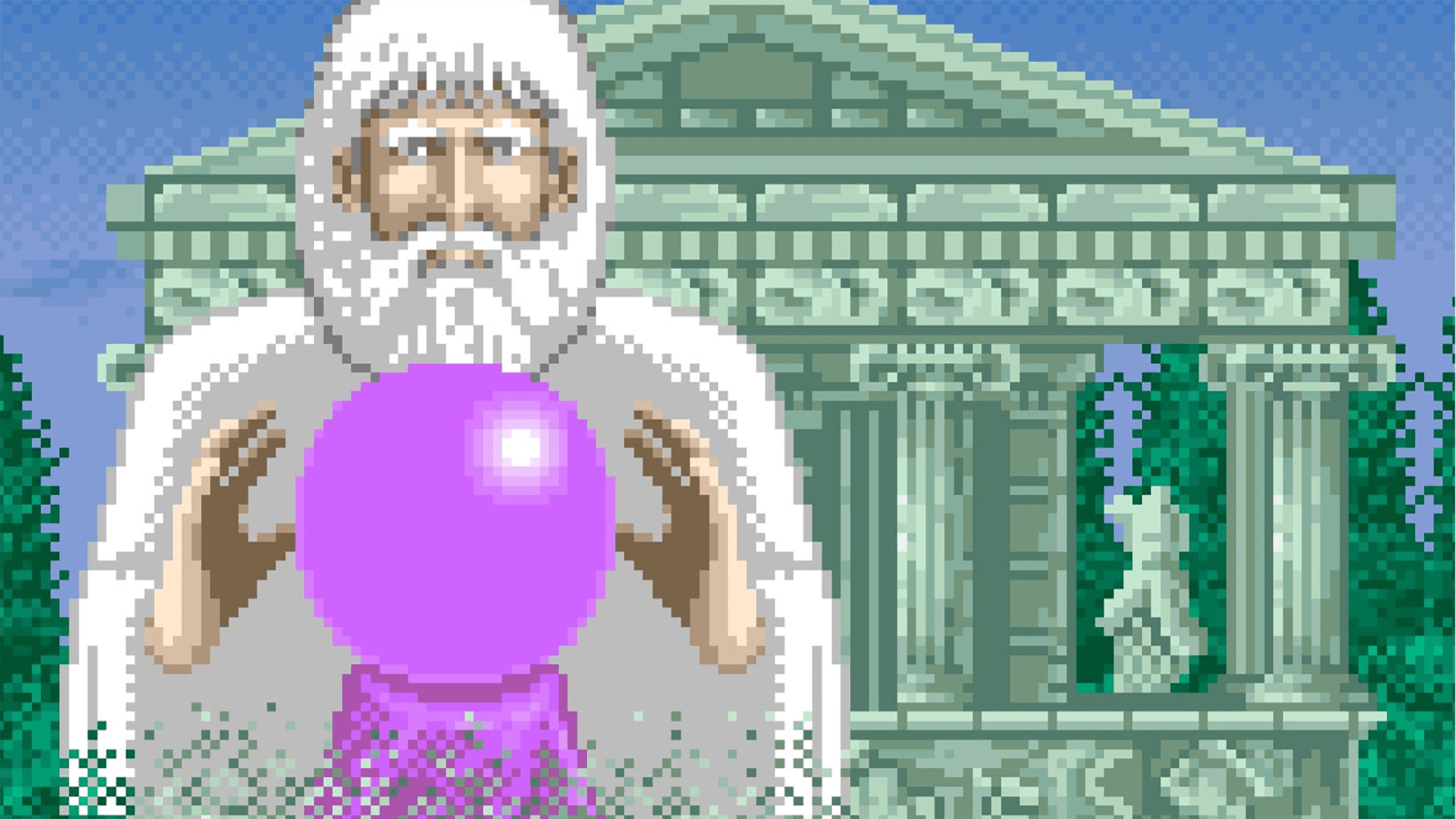
This was the first image many Mega Drive owners saw at home after receiving this wonderful gift from their parents. (Arcade image.)
Altered Beast is a beat 'em up developed by SEGA (Team Shinobi) and published by SEGA. Originally released for arcades in 1988, it received numerous conversions, including a Mega Drive version that same year, which is the version reviewed here.
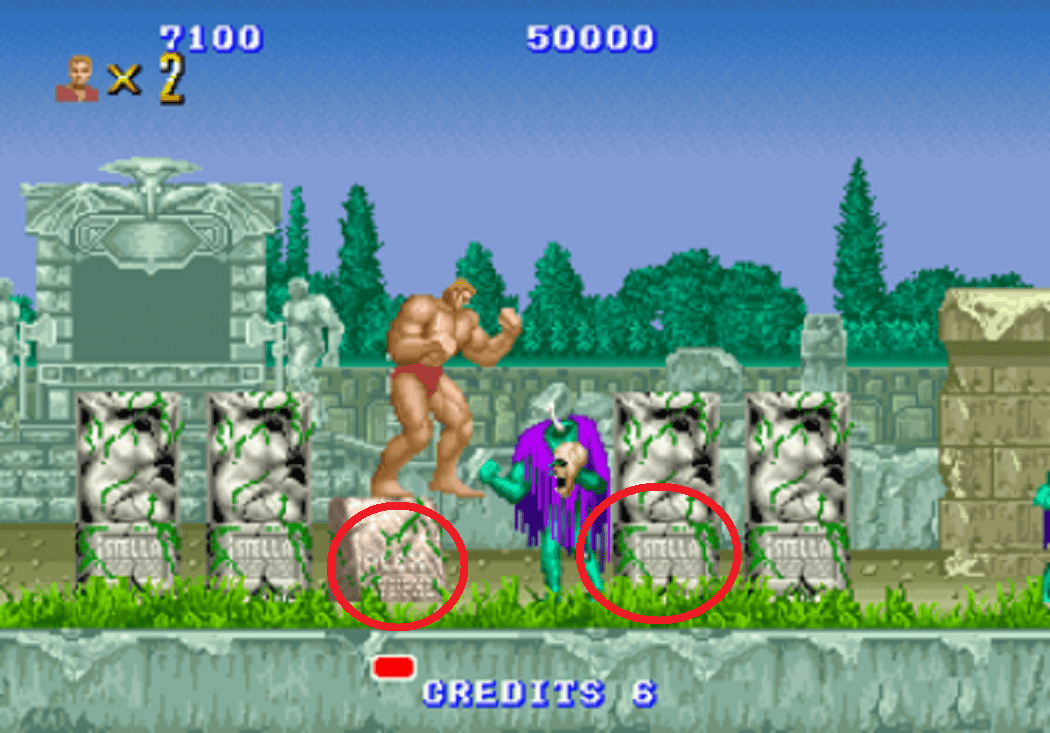
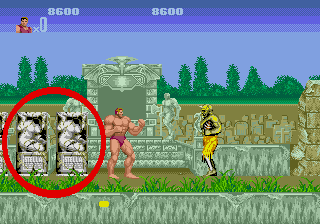
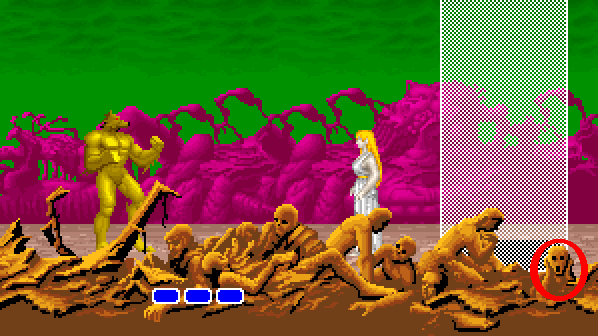
Trivia: The first stage of Altered Beast has an interesting Easter egg: tombstones bearing the names of Alex Kidd and his girlfriend Stella. Some joke that Sega was hinting at the future of its beloved mascot. It is worth noting that the Mega Drive version reviewed here shows only Stella's name. The final stage contains two other interesting references: amid the suffering bodies are images of Auguste Rodin's sculpture The Thinker and Edvard Munch's painting The Scream.
Behind the Scenes of Altered Beast
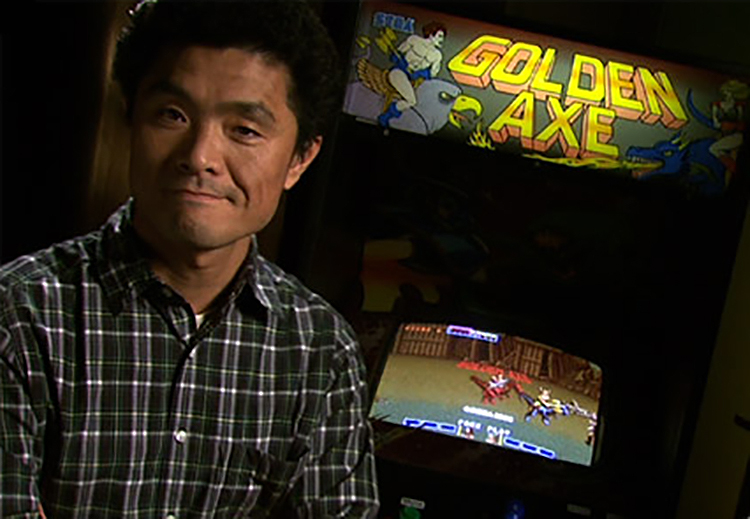
Makoto Uchida, director of Altered Beast
The director, also regarded as the father of Altered Beast, is Makoto Uchida. Responsible for several successful Sega games in the 1980s and 1990s, one of his defining traits is the direct influence of movies he enjoyed on his games. For example, Golden Axe came directly from Conan the Barbarian; Alien Storm, with weapons connected to backpacks, an urban setting, and pop music in the style of Ghostbusters; and Dynamite Deka, inspired by Die Hard.
What, then, was the main influence behind Altered Beast? There were actually several. The 1980s were full of horror movies, including successful films about lycanthropy such as An American Werewolf in London, Teen Wolf, and Silver Bullet. What most caught Uchida's attention, however, were the transformations seen in The Howling and musician Michael Jackson's Thriller music video. In the director's words: "I realized that an effort had been made to depict every detail of the alteration from man to werewolf, so my initial focus was to represent these metamorphoses through graphic animation using the capabilities of the System 16 board."
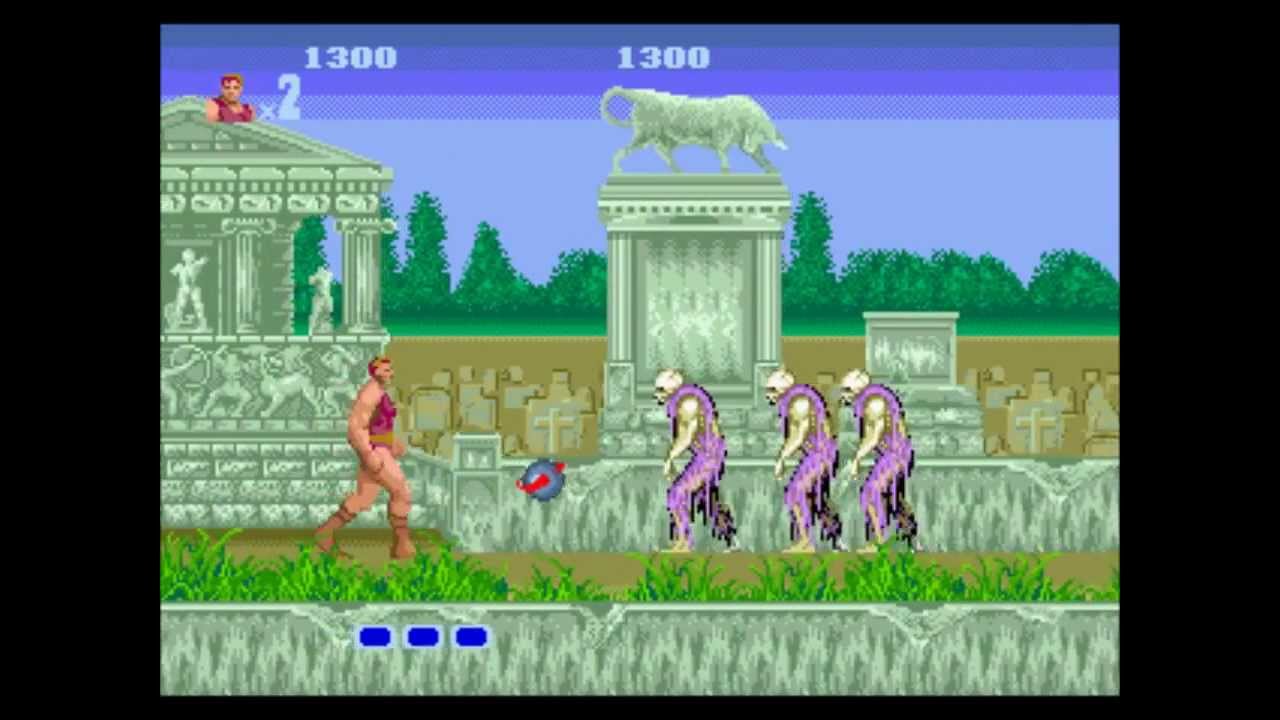
The beginning of the adventure and of life in 16 bits.
Deciding that the game would be a beat 'em up was easy, since Double Dragon was incredibly successful at the time. As for the story being set in Ancient Greece and centered on rescuing the goddess Athena, many fans believe its main influence was the anime Saint Seiya (Knights of the Zodiac), which attracted large audiences on Japanese television, although SEGA has never officially commented on that last point.
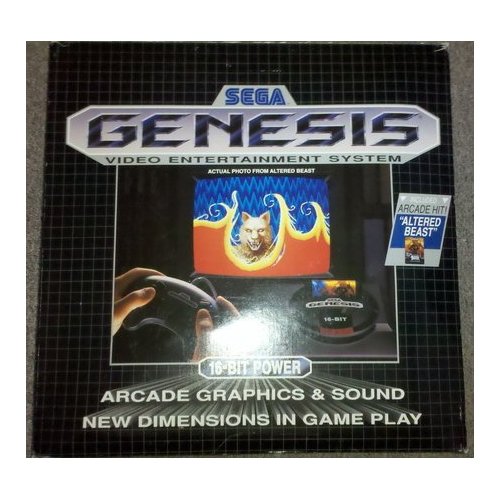
Trivia: In 1989, the Mega Drive was arriving in the United States, and Altered Beast had been chosen as the game bundled with the console. Uchida was delighted when he learned the news and could not wait to travel to the United States to see this bundle, which was never released in Japan. Unfortunately, the game's director had no luck: "When I had to go to the US three years later, I thought I should visit a store to see a console with this game, but I could not find it anywhere, only the Genesis with the Sonic cartridge. That is why I never got to see that promotional bundle." Does he know that the console is now sold in Brazil with this game pictured on the box?
The Bestiary of Altered Beast
Although Altered Beast is essentially a short game, it has a bestiary with a large number of enemies. I chose six to describe here: four commonly found throughout the stages and two bosses. As you can see, they all look frightening, recalling the horror movies that were popular in the 1980s.
1 and 2. Slow Foot and Headless Horror: These are the zombies, and this time we are not talking about Resident Evil. Slow Foot is the simplest enemy in the entire game: it walks slowly in a straight line, is easily defeated, and appears right at the beginning of the campaign. Headless Horror is its evolution, and for some unknown reason the basic zombie learns to punch when it starts carrying its head in one arm. It is not difficult to handle; players only need to strike it while crouching.
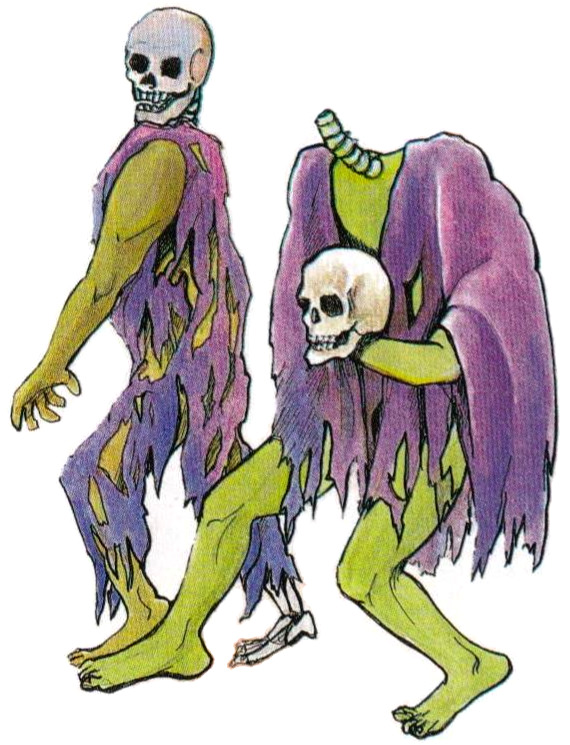
Slow Foot and Headless Horror
3. Chicken Stinger: Because it is small, this enemy requires players to attack close to the ground until they obtain their post-transformation powers. It lunges low and quickly with its tail. It first appears in the game's second stage.
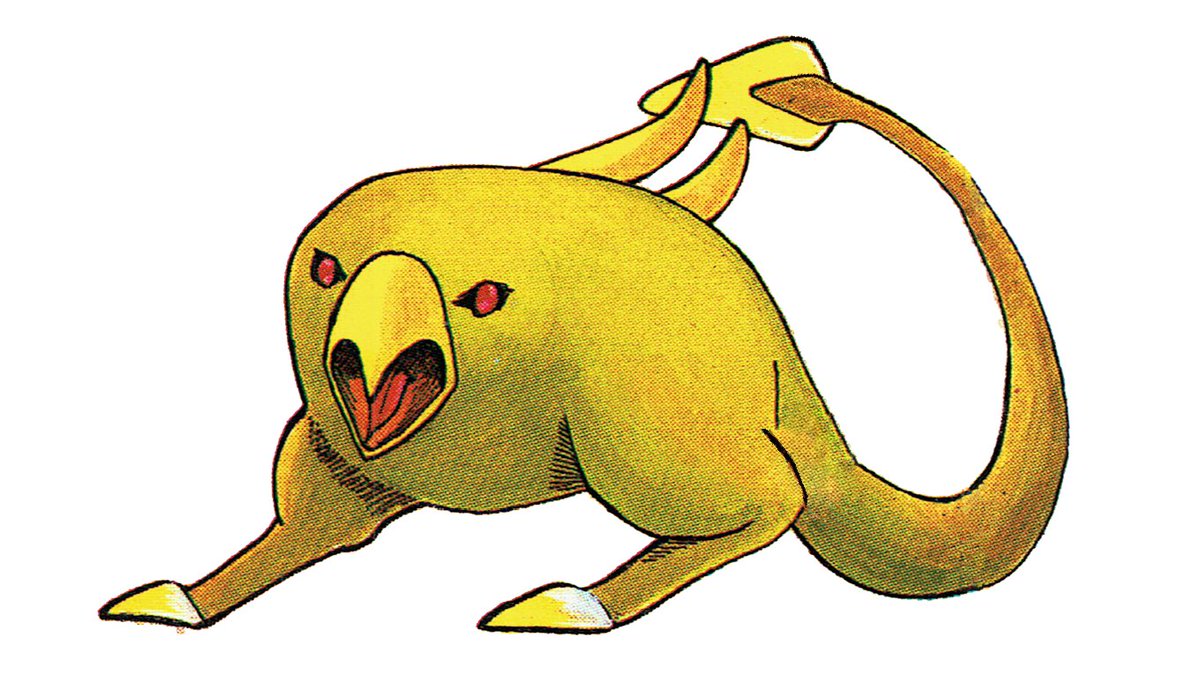
Chicken Stinger
4. Cave Needle: According to the manual, this is a mutant wasp. Its main traits are speed and moving in swarms. These enemies appear in the game's third stage and tend to push us into pits.
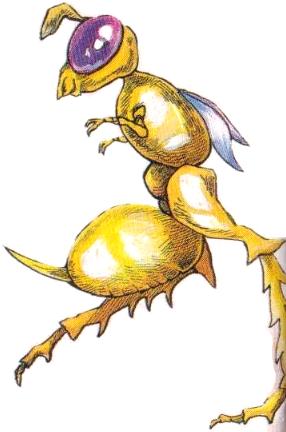
Cave Needle
5. Aggar: This is the game's first boss and probably its greatest symbol after the werewolf. In one word, the monster is grotesque. Made from the remains of decomposing corpses, it resembles bosses from the more recent Dark Souls franchise. Its weapon is hurling heads at our character. Learning to defeat it is not too difficult: simply evade its vertical attacks and strike whenever possible.
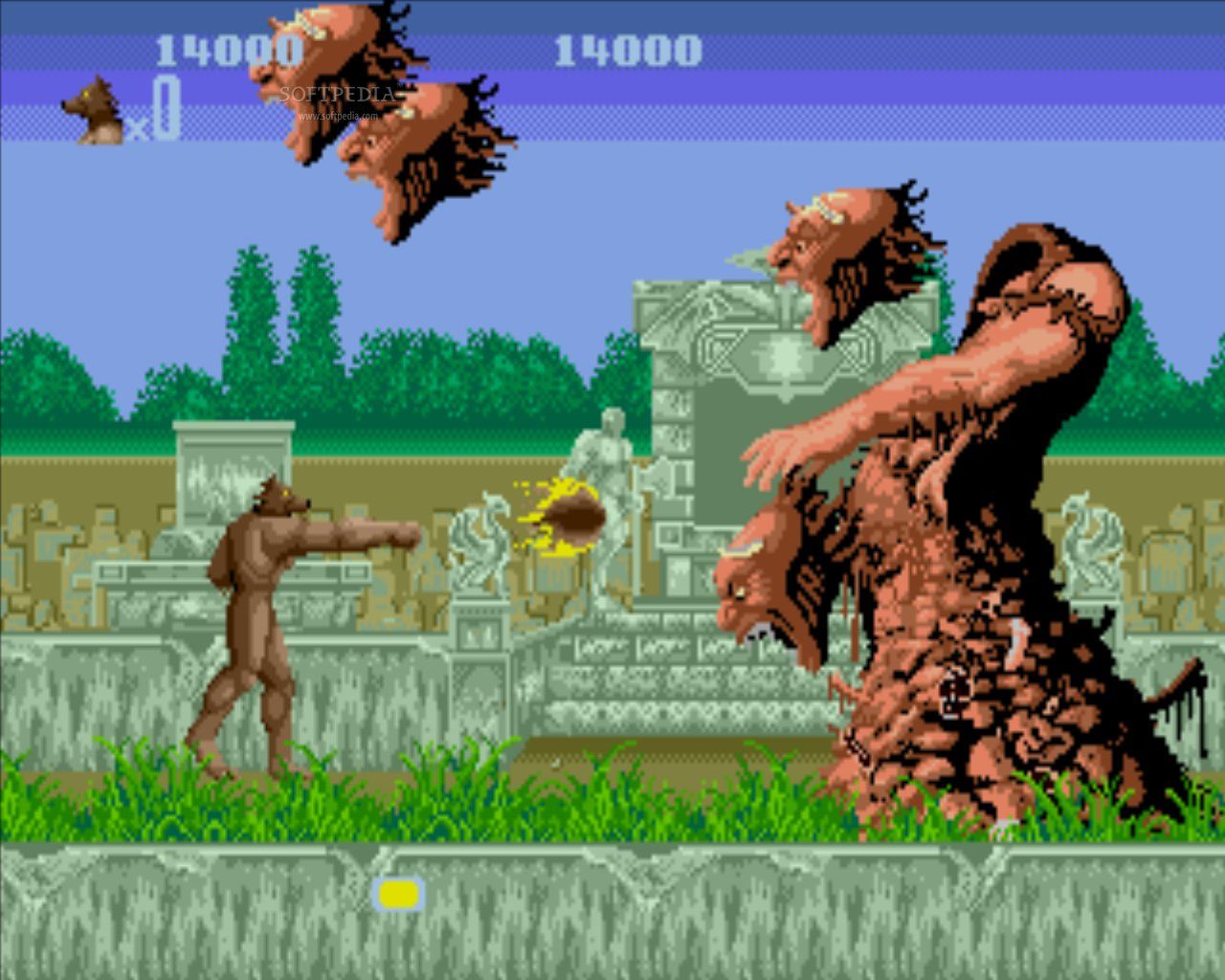
Aggar
6. Octeyes: This is the second boss in Altered Beast. It is a giant plant that fires a large number of eyes toward our character. It would be an extremely difficult boss if we were not transformed into a dragon and there were not a well-known method for defeating it easily.
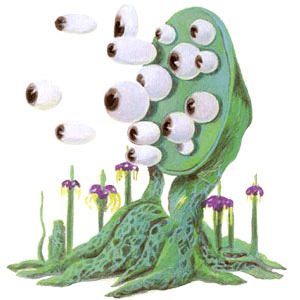
Octeyes
Trivia: One of the Altered Beast enemies described above reappeared in Golden Axe, this time as an attack mount renamed Chicken Leg. That is not too surprising, since both titles have the same director.
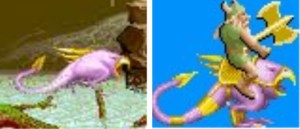
The enemy was apparently domesticated in the end.
The Stages of Altered Beast
The campaign has five stages, and after players complete them, they start over at a higher difficulty. The stages are short and all feature autoscrolling, with the screen moving automatically. I will not describe the fifth stage to avoid going too far with spoilers.
- Hades Cemetery and Acropolis: The beginning of the game, when Zeus summons us with his classic line, "Ryse from your grave." The game immediately begins at a fast pace, with several enemies surrounding us from every direction. It becomes easy once players learn how to use the character's controls. Transformation: Werewolf — it is strong, able to fire projectiles and charge forward with an attack capable of "clearing" the screen. Boss: Aggar.
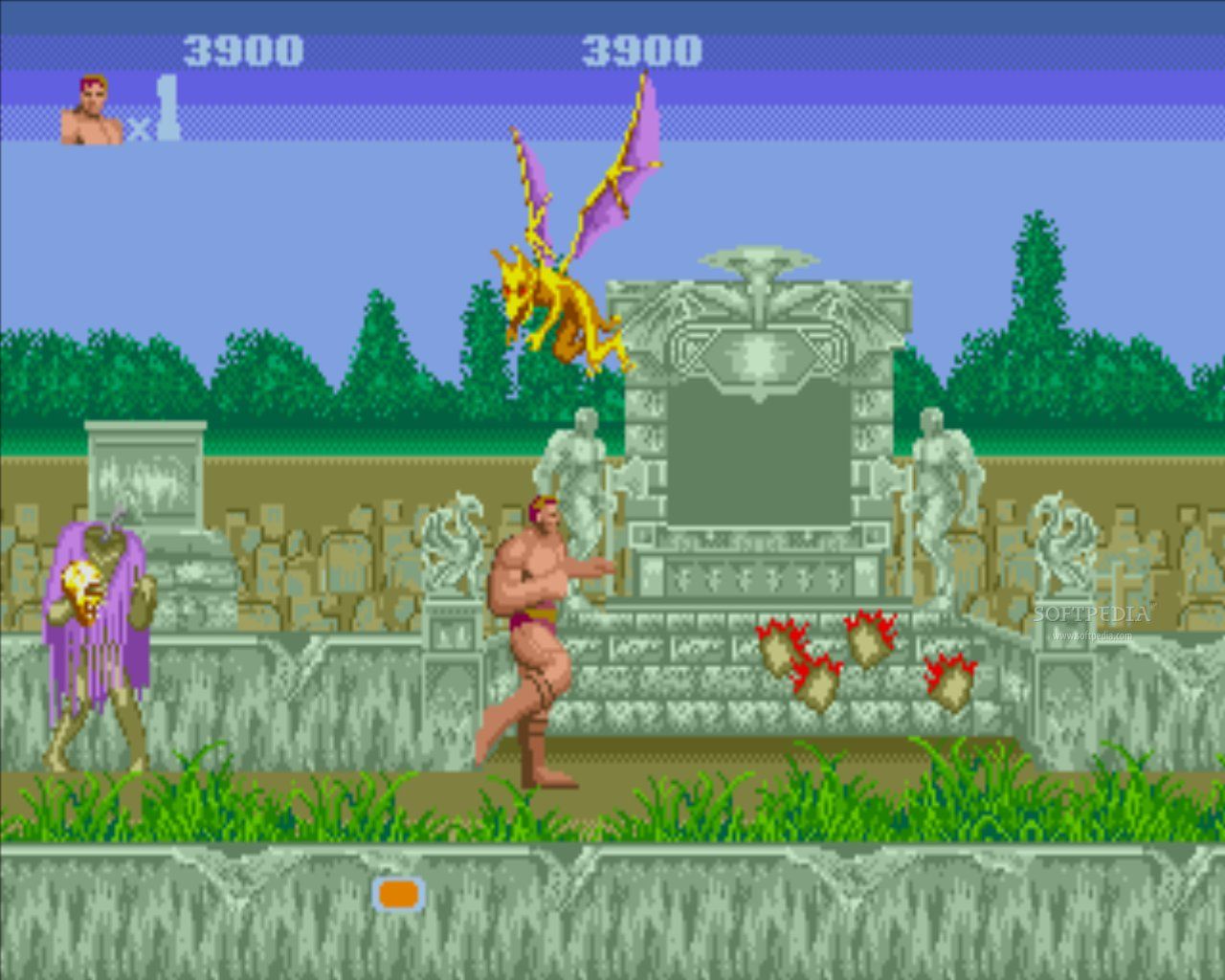
Watch all three directions from the very first stage.
2. The Underworld: The setting is a vast swamp where enemies even emerge from the bottom of the screen. It may be the easiest stage in the game, not only because its boss has a well-known weak point, but also because of the protagonist's beast form. Transformation: Dragon — simply the strongest form in the game. In addition to flying, our character has a shock attack that makes him invulnerable and hits enemies over an area without requiring direct contact. Boss: Octeyes.
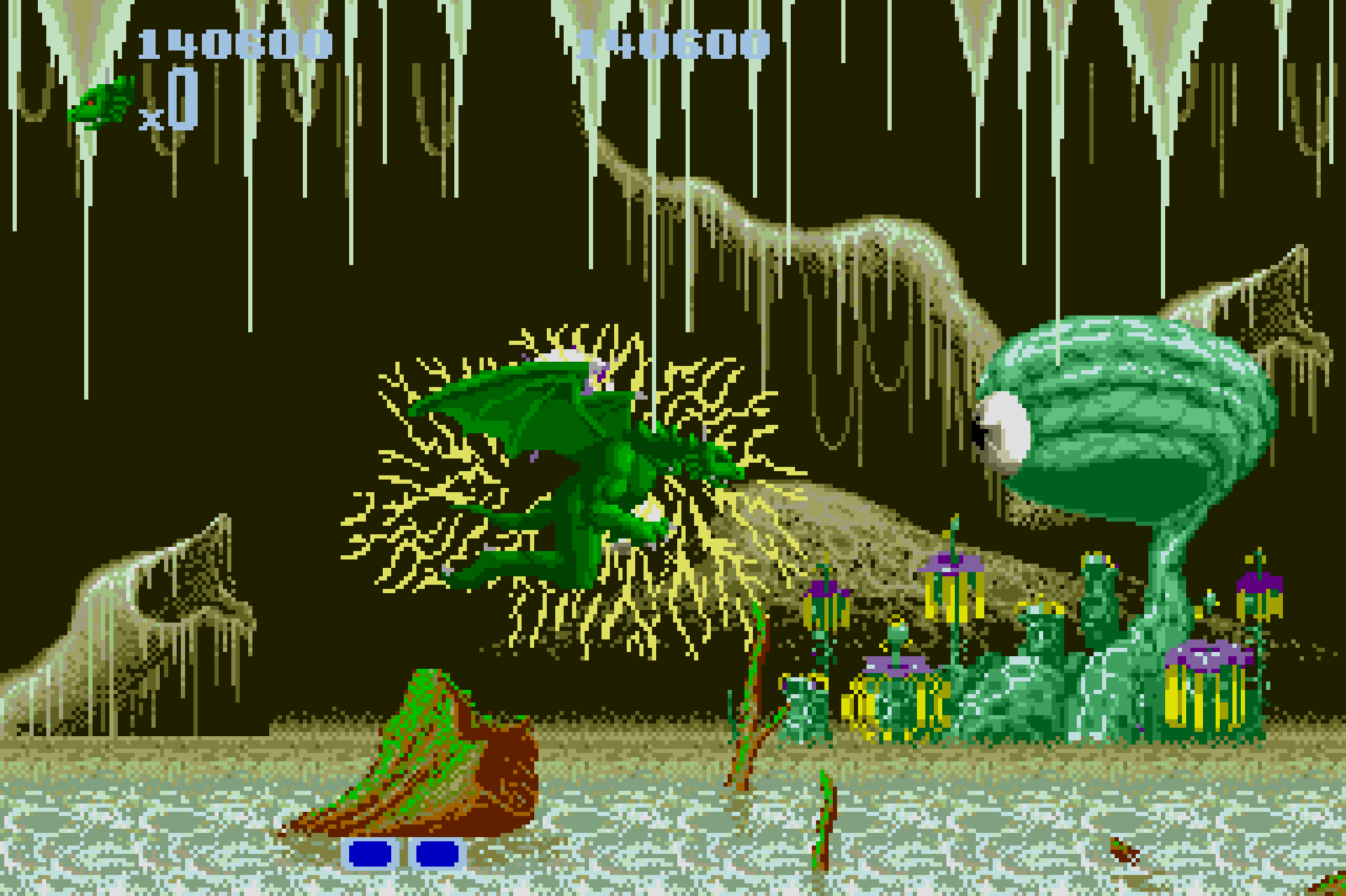
The best beast form in the game; fighting enemies was a delight.
3. Caverns of Souls: The game's difficulty takes a major leap in this stage, not only because of the pits but also because it features the worst beast form. Transformation: Bear Man — without a doubt the weakest in the entire game. You have one attack that can paralyze enemies and another that turns you into a little ball, bouncing along a path that cannot be changed during the jump. Boss: Moldy Snail.
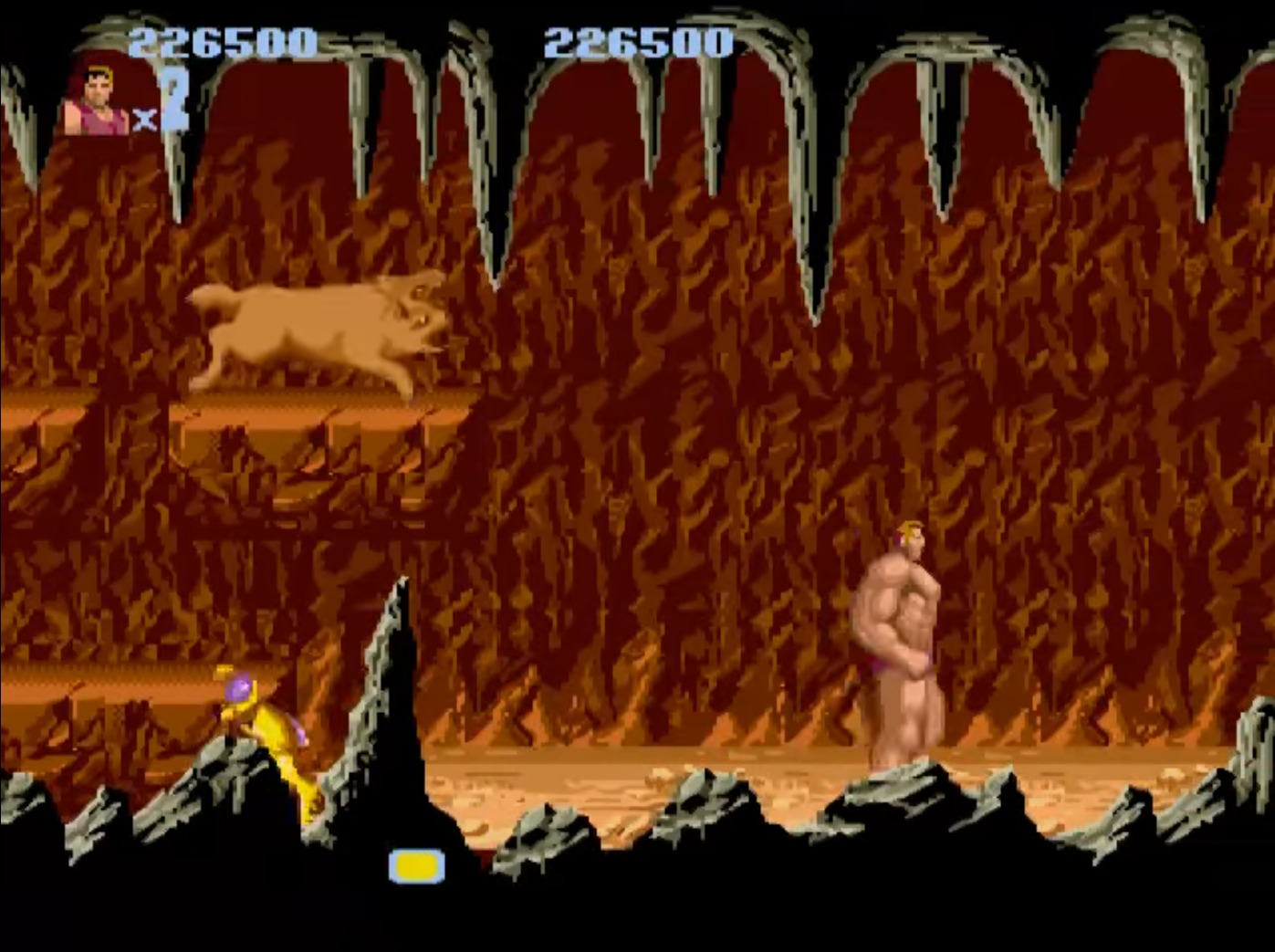
Enemies on every side were not enough; now there are pits too.
4. Neff's Palace: The stage's name already tells us the game will not go much farther. With more enemies and all of them moving faster, we must pay close attention to where the attacks and dogs come from. Here it often becomes necessary to memorize enemy positions so that, on the next attempt, we already know exactly where our character should act. Transformation: Tiger Man — a good form, able to fire a projectile and perform a very useful vertical attack, since this level has a considerable number of flying enemies. Boss: Crocodile Worm.
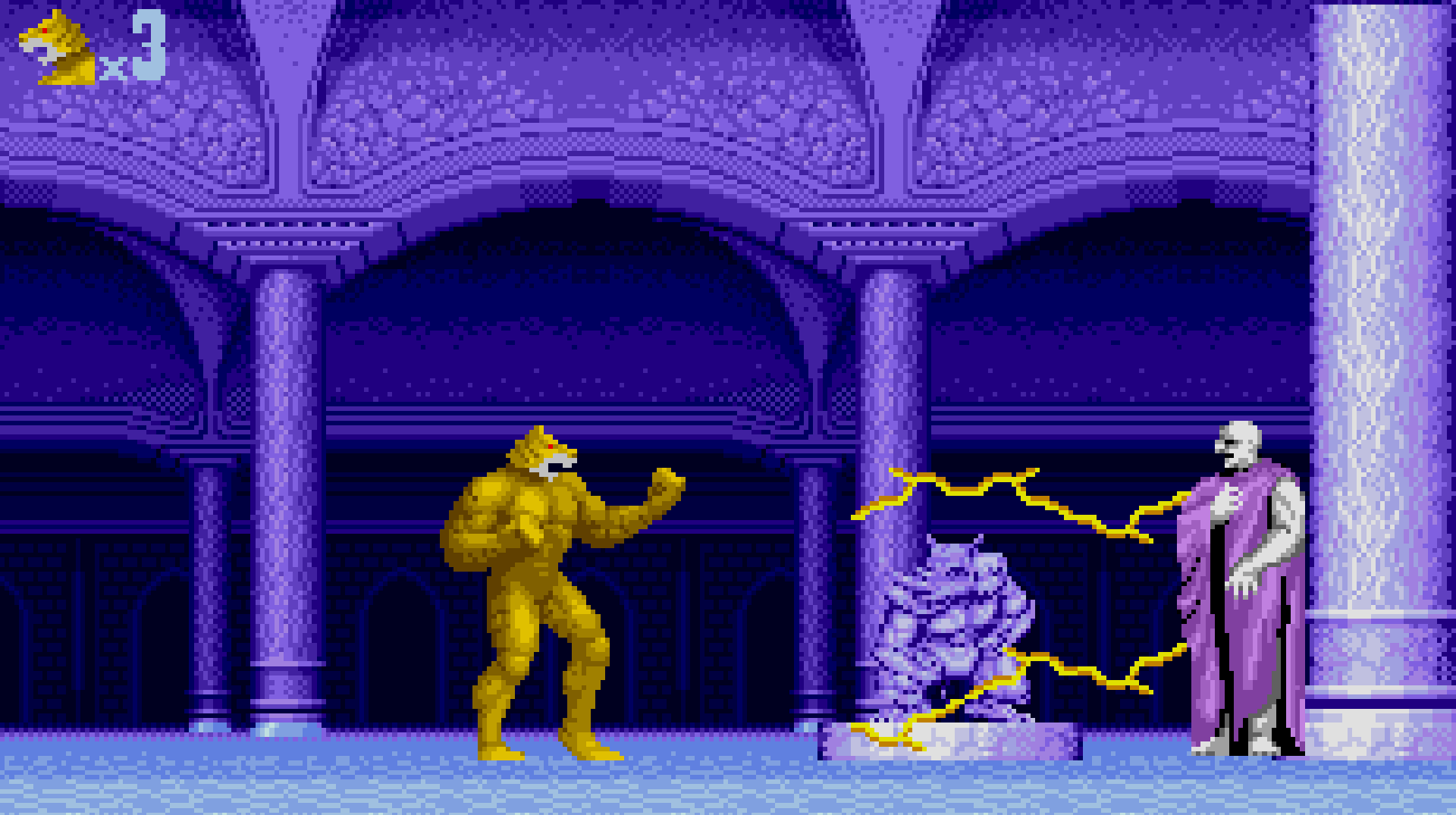
There is an Easter egg in this image.
Trivia: The villain from Altered Beast appeared briefly in Wreck-It Ralph, Disney's 3D animated film that pays tribute to many classic video games from the 1980s and 1990s. The image is shown below.
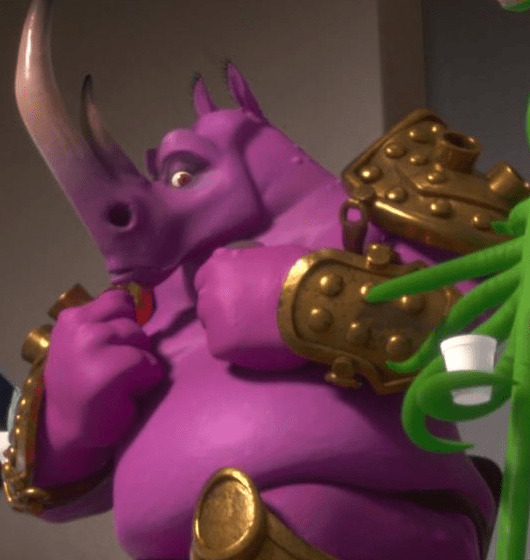
Neff appears in the movie Wreck-It Ralph
Technical Analysis
The story of Altered Beast is quite simple and merely establishes the motivation for the adventure. According to the game manual: "You were a Roman centurion, a brave warrior who knew no fear. And when you died on the battlefield with courage and honor, you thought you would have peace and rest for all eternity. But when the evil Neff, Lord of the Underworld, kidnapped the beautiful Athena, her father Zeus sought a strong and brave warrior to save her. He chose you and brought you back to life from the grave! And because you transformed into a mutant creature, Zeus granted you several supernatural powers. (...) You now possessed the gift to do what no man, living or dead, had ever achieved: fight the demons of the Underworld and win!" In short, Neff kidnapped Athena and Zeus sent you to rescue her.
Altered Beast was one of four games released for the Mega Drive in 1988, the year of its launch, and its main purpose was to show how the console's market rivals (the Famicom and PC Engine) were technically inferior. As a major force in arcades, SEGA always intended to bring its titles into people's homes at a fair price. This game came very close to achieving that goal: it is an excellent conversion, with clear compromises but still very close to the original version.
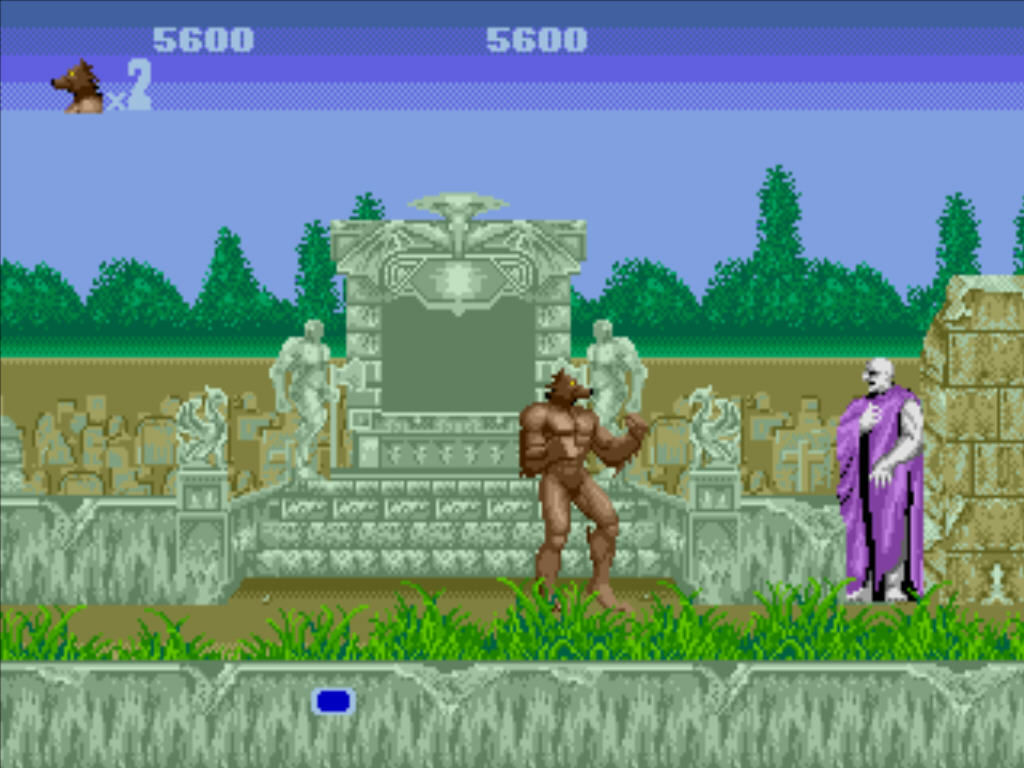
What a disappointment: there was no time to enjoy the transformation before the boss appeared.
It is no exaggeration to say that, when it was released, Altered Beast had the best graphics yet seen on a home console, clearly demonstrating the potential of the company's new system to intensify the console war that lay ahead. The sprites are large, there are parallax effects absent from the arcade version, and the enemies are highly detailed.
The game's length is difficult to measure because it depends on how it is played. If players do not use continues or other aids, completing it for the first time will take a while, but after discovering enemy patterns they may finish it in under 15 minutes. Its replay value is low because of the game's extreme linearity, with the main incentive being the option to play multiplayer with a friend.
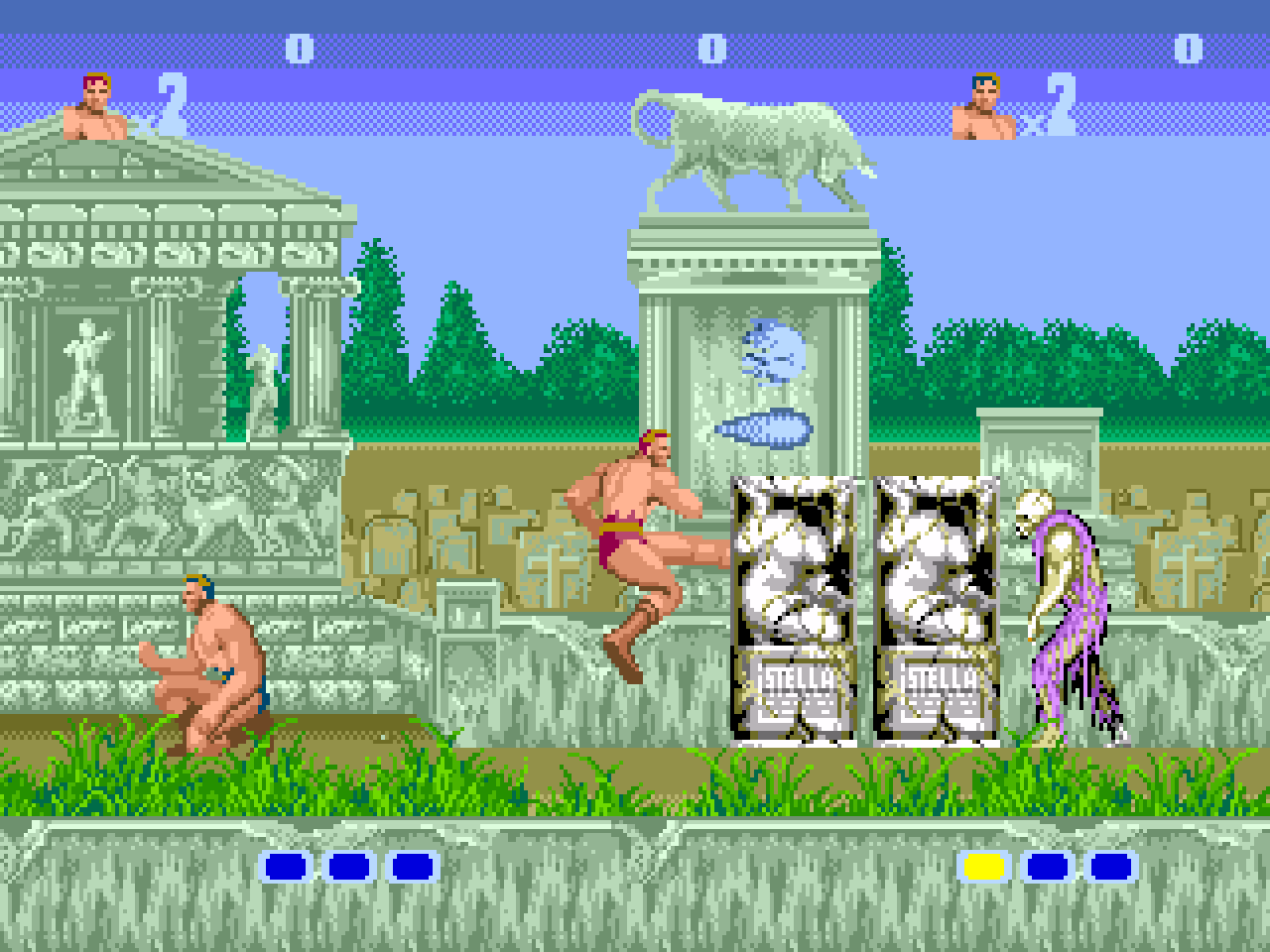
The multiplayer option contributed to the game's replay value.
The gameplay, for those unfamiliar with it, consists of moving forward while killing nearly every enemy on the screen and watching for the two-headed white wolves that carry orbs, or power-ups. Collecting three of these spheres transforms us into a beast and grants us the right to face the stage boss; if we reach the boss without completing the mutation, the stage continues. If we encounter Neff three times without being "ready," we must fight him anyway, and that is when things get ugly. The game has five stages and four different beasts to control. Images between stages show the grim ordeal Athena is enduring, even including rituals involving crucifixes, which is odd given that the game uses Greek mythology as its basis.
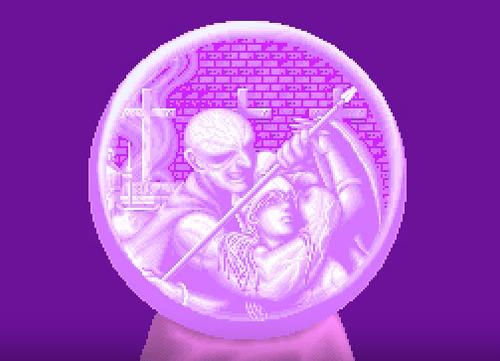
Short scenes between stages help establish the atmosphere.
Although Altered Beast is fundamentally a beat 'em up, in practice it resembles a shoot 'em up more than Double Dragon or Final Fight. Before you think I should have taken a breathalyzer test before writing this review, keep reading. In Altered Beast, simply having the skill to run around killing enemies indiscriminately is not enough. Power-ups are essential to progressing through the adventure, while knowing enemy patterns and exactly when the white wolves appear is mandatory for finishing the game. Memorizing what to do and when to do it matters more than anything else here.
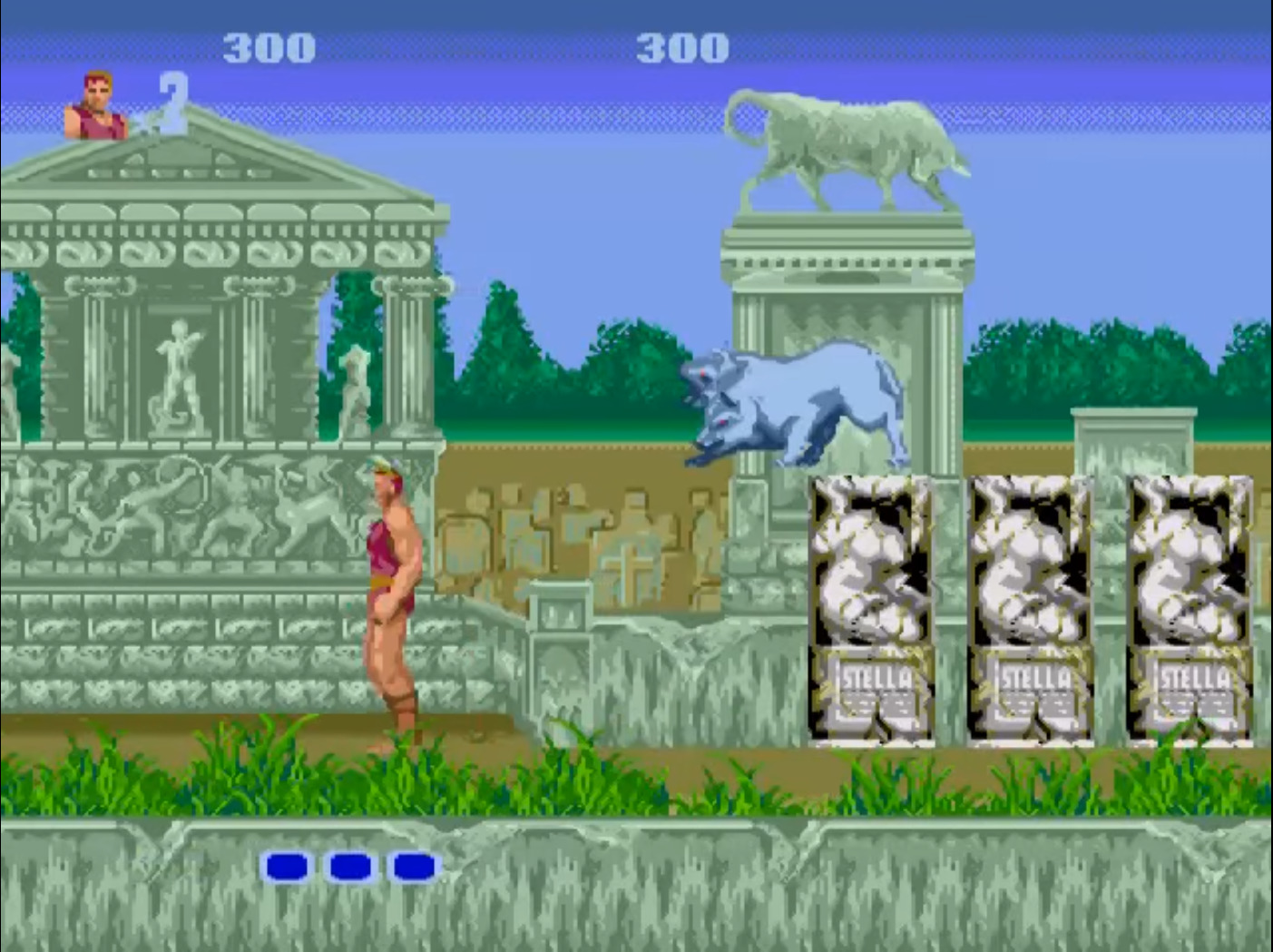
We have never been so happy to see an enemy. Note: the white wolf may look blue.
The controls may feel somewhat stiff and sensitive to first-time players, but they are easy to get used to fairly quickly. The different abilities of the character's beast forms are a highlight. The difficulty depends on whether players use continues and additions to their health bar. Anyone who accepts the challenge of playing with the default settings will face considerable difficulty until learning every enemy pattern and each boss's weak point, since they all have one.
The soundtrack of Altered Beast is very good and was composed by Tohru Nakabayashi, who also worked on Golden Axe. It performs its role very well, especially in the first track, popularly known as 'Rise From Your Grave,' which practically became a Mega Drive anthem in Brazilian stores that ran the game to attract customers. The music has an epic sense of adventure that effectively stirs the desire to win. The sound effects are famous, particularly the prerecorded voices, which with some generosity can be said to have good quality when the game's release period is taken into account.
Trivia: Altered Beast received numerous conversions for various consoles, including the microcomputers of the time. The Mega Drive version is indisputably the best of them, and many believe Sega issued these licenses so consumers would realize that its main console had the best and "true" version.
I found it worthwhile to mention at least three of them in this review because of their particular traits: 1) PC Engine: A highly competent conversion, with graphics and fluidity inferior to the Mega Drive's. The CD version, however, changes the level design of some stages and includes images that present the story with narration. Essential for franchise fans; 2) Master System: many people hate it, but I like it despite the missing third stage, low fluidity, and heavy flickering.
It may yet receive a review here on Epic Play; 3) NES: The graphics are poor, and an information bar occupies almost one-third of the screen. It would be a complete waste of time were it not for one reason: there are three exclusive stages with three transformations, Lion Man, the Shark, and the Bird.
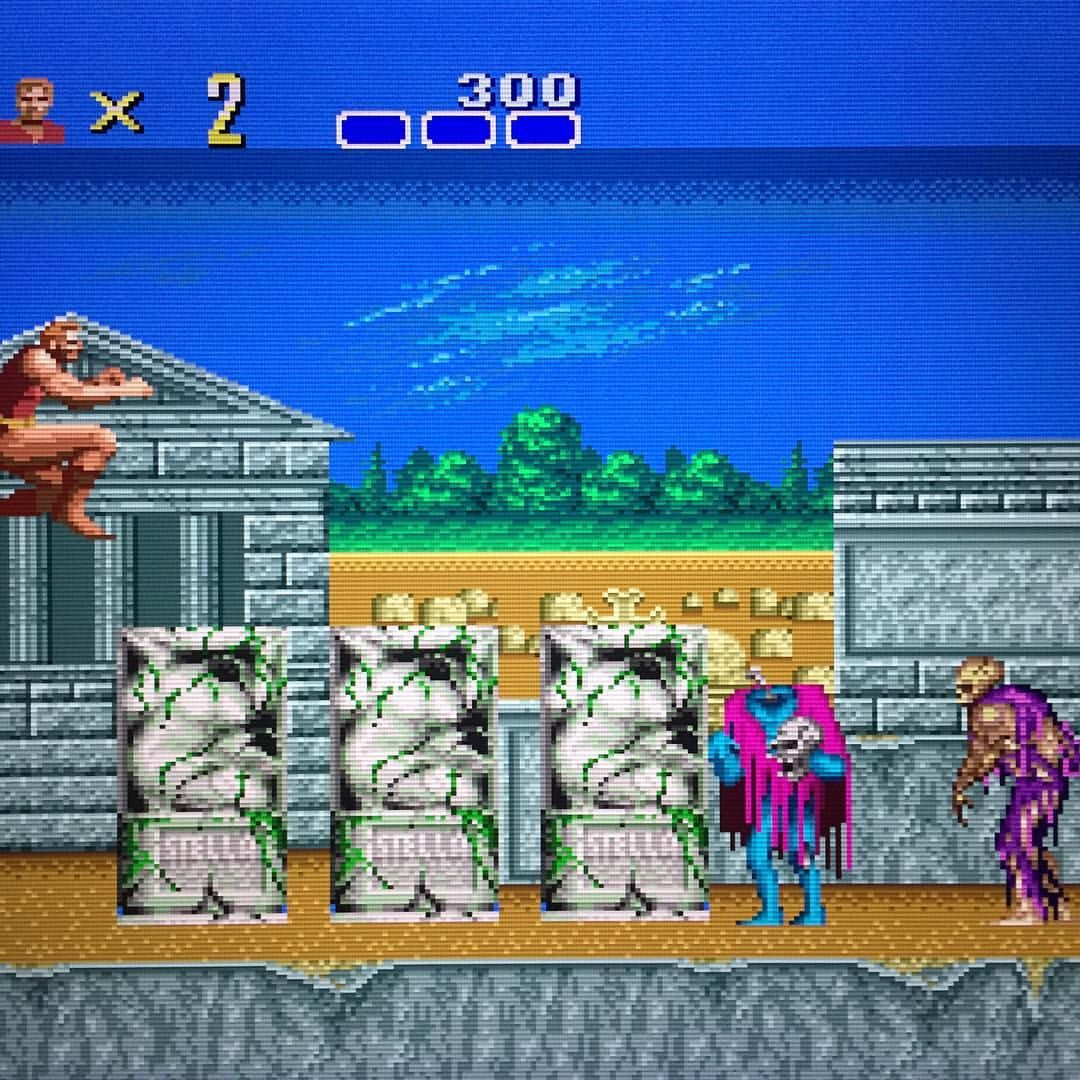
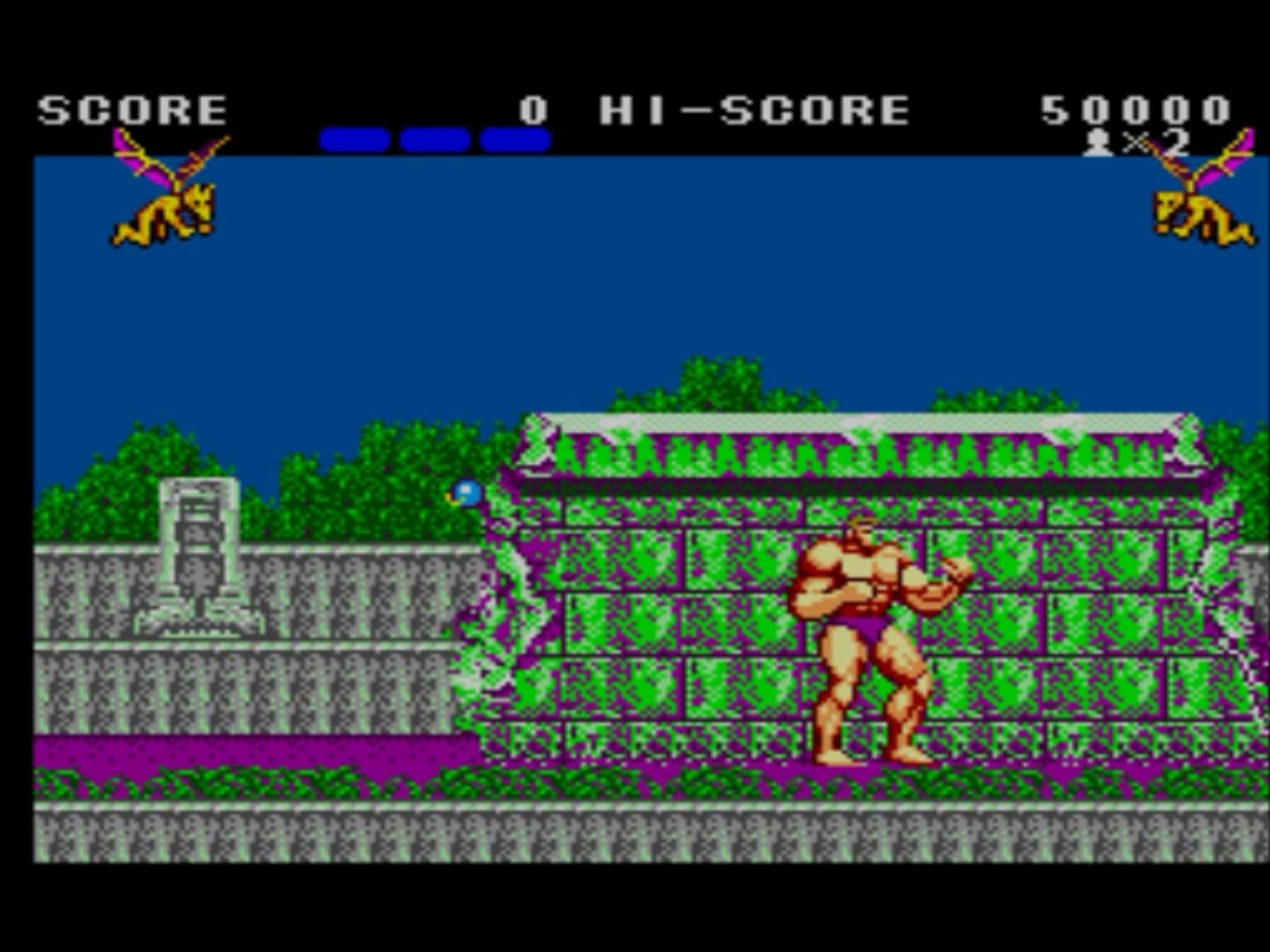
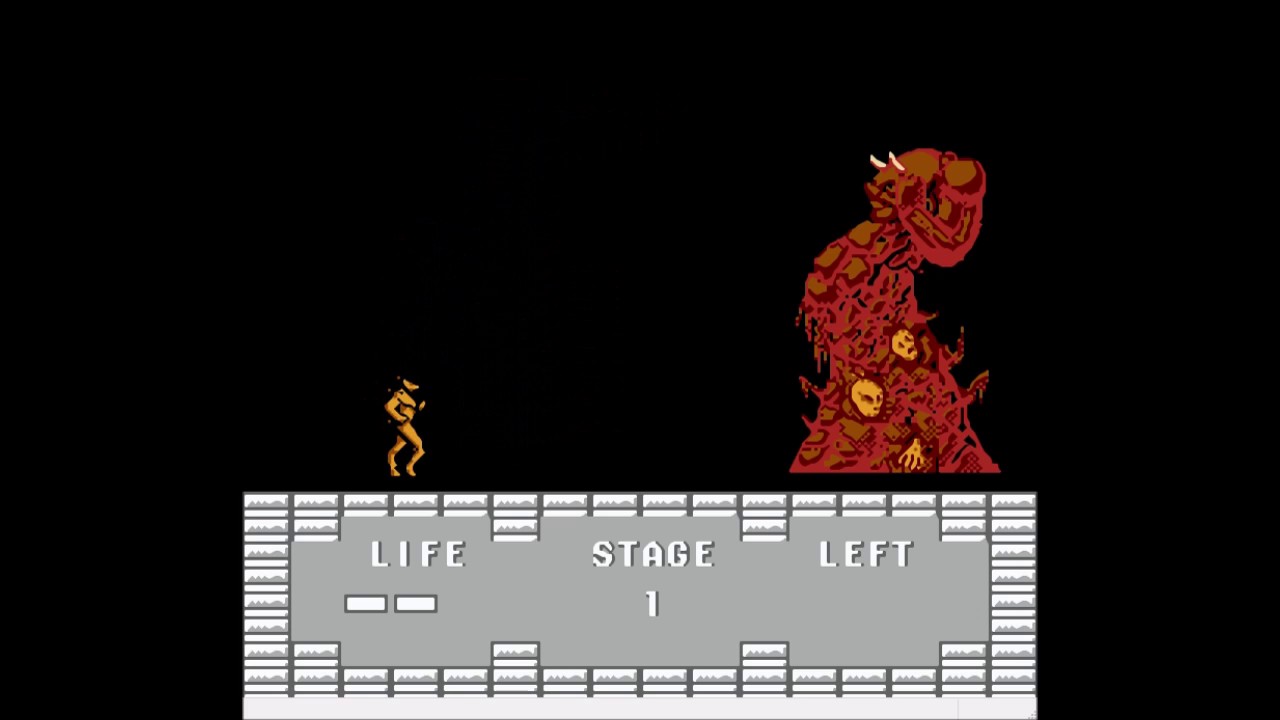
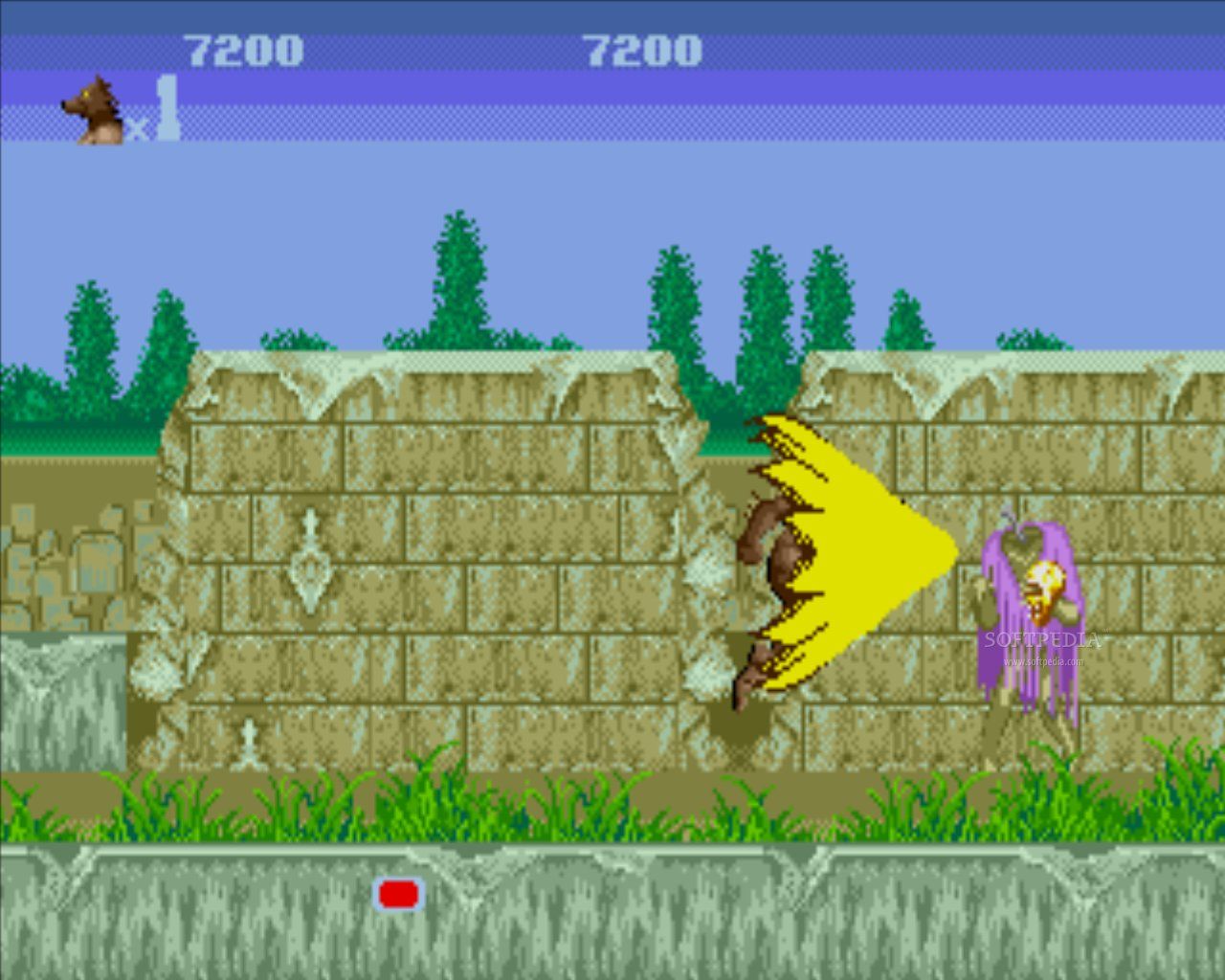
Looking at the player's situation, it is hard to believe he will manage to finish the game.
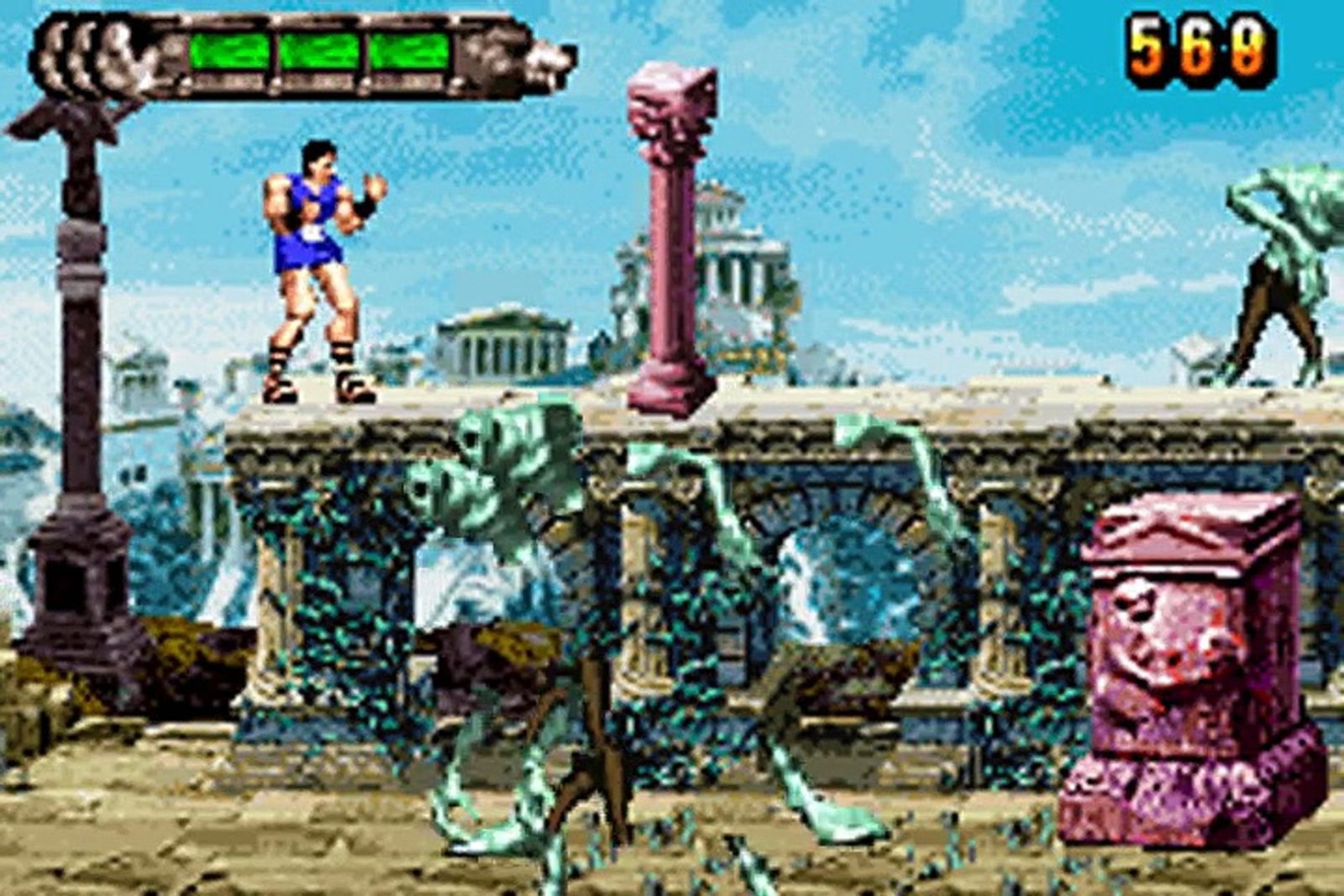
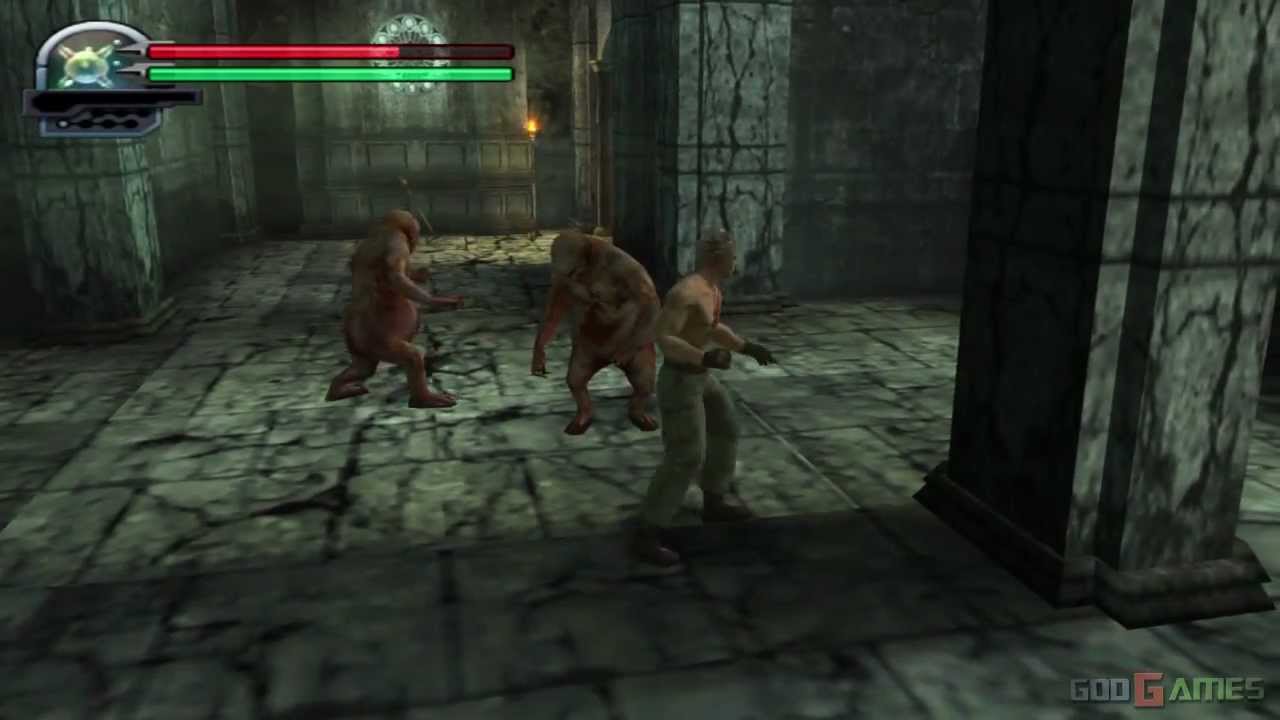
Trivia: As usual, Altered Beast is yet another forgotten franchise among so many at SEGA. The series officially had two sequels whose quality divides opinion. In 2002, the Game Boy Advance received Altered Beast: Guardian of Realms, a game with many stages and different transformations; all the series' roots are here alongside several innovations, making it worth checking out. In 2005, it was the PlayStation 2's turn to receive Project Altered Beast, which inherited practically nothing but the transformations from the original. Critics thoroughly panned it, to the point that it was never even released in the United States, a shame because the game had great potential.
Played on Mega Drive.