Assassin's Creed Revelations is the final part of the Ezio Auditore da Firenze trilogy, starring the master assassin we had grown accustomed to controlling since 2009. Was Ubisoft, the game's developer, right to retain the same historical period and character across three games in a series that players initially thought would always feature a different character and era? Or was all of this a hidden blade aimed at its own foot?
In a coma in Constantinople
Following the events of Assassin's Creed Brotherhood, Desmond Miles falls into a coma. But not an ordinary coma. Upon entering this state, the series' protagonist is connected directly to the Animus and discovers—with some rather strange help from Subject 16, a mysterious man mentioned since the second game—that he must complete a particular memory of Ezio to emerge from the coma.
The memory in question presents a much older—and gray-haired—Ezio searching for the library of Altaïr Ibn-La'Ahad, the protagonist of the first game in the series. His search takes him to Masyaf, the city that housed the Assassins' Middle Eastern headquarters during the Crusades. Ezio finds the door but cannot open it, as he needs specific keys—which happen to be highly mystical and full of powers.
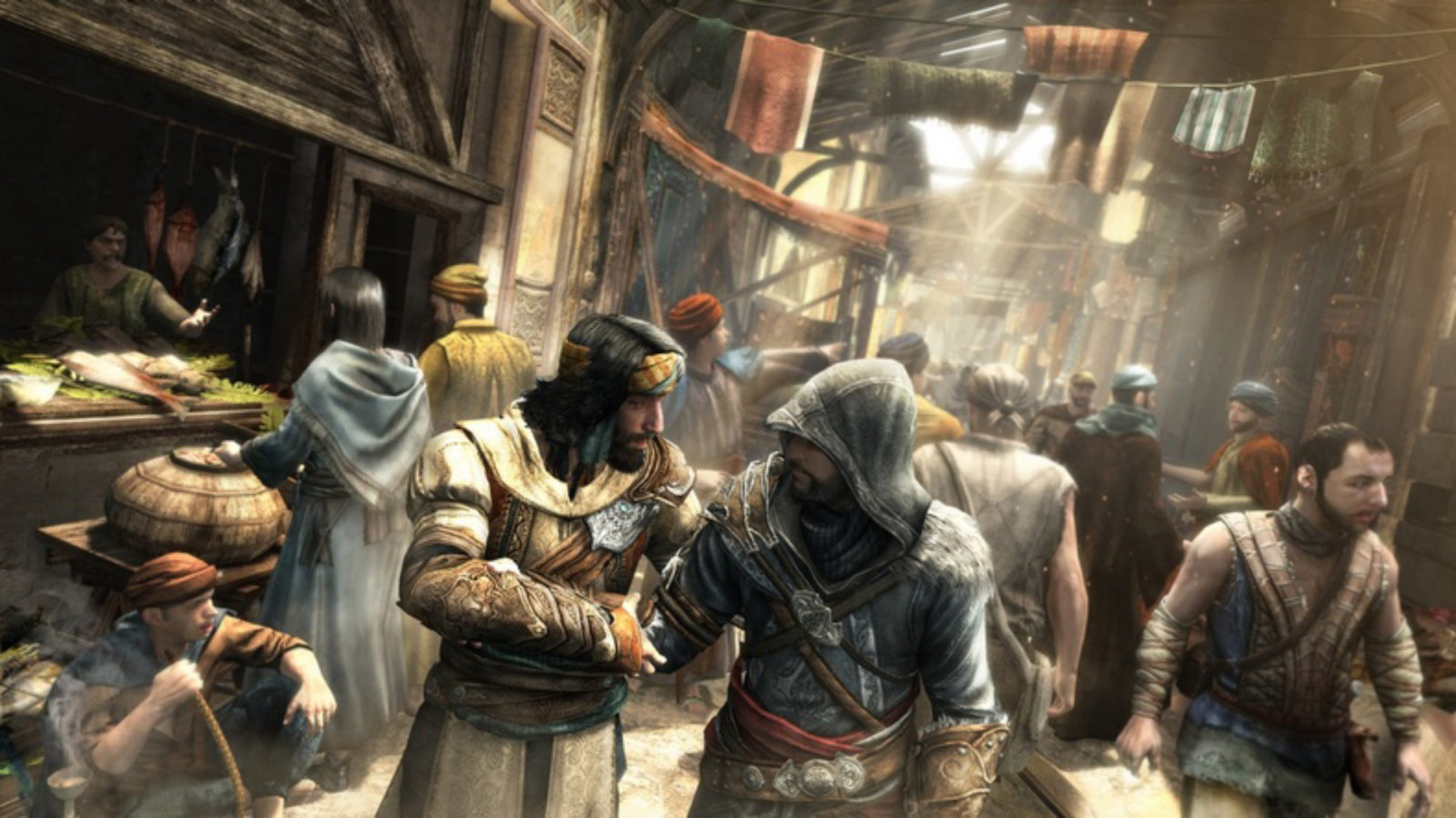
The game's ultimate objective is to obtain these keys, and that takes Ezio to Constantinople, then the capital of the Ottoman Empire. The game's principal events unfold in this city. Ezio meets the local Assassins, who teach him how to survive more easily in Istanbul, Constantinople's other name. Because he is in such a wealthy city governed by a sultanate, Ezio also becomes involved in the power struggle between two brothers who are candidates for the succession.
This is also the game in which Ezio meets the second love of his life, Sofia Sartor, who helps him unravel the mysteries of certain books that serve as a kind of guide to acquiring the keys.
Once again, the most important part of the game's plot is its historical reinvention and reconstruction, this time of Istanbul and the figures who lived there in that period. We meet Prince Suleiman, who really existed and becomes one of Ezio's great allies during the game. The two continually help one another because their objectives become intertwined as the game progresses. The game constantly provides players with information about historical places and concepts—such as what a bank was at the time—greatly expanding the encyclopedic character the series has always offered.
Revelations also shows us a highly mature Ezio, more experienced in everything from battle strategy to leadership, as well as a character who is far more serene than in other games. At the beginning of each memory, Ezio recounts what happened in the previous one and what the next step will be. This narration takes place as the protagonist writes letters to his sister Claudia, who remained in Italy.
Revelations also recounts Altaïr's life after his rise to leadership of the Assassins in Masyaf, which is quite interesting because this was a gap that needed to be filled in the series. It may even be the plot's most important element.
Little innovation
If any game in the series feels like a cash grab, it is Revelations. The game introduced no notable changes from its predecessor, Brotherhood... and what it did introduce failed.
Assassin's Creed Revelations
Revelations follows exactly the same setup as the previous game. Ezio still recruits members and uses them for help in combat, while the player can also send them on missions outside Istanbul at will, knowing that they will remain away for the duration set by the mission and that the Assassin in question will therefore be unable to help in battles. This allows them to gain levels and improve. None of it, however, is strictly necessary.
Assassin's Creed's extremely easy combat—perhaps the series' main problem, based on counterattacking enemies who exhibit very few differences, the greatest perhaps being the higher resistance of pseudo-bosses—makes the option of strengthening your army seem like a mere exercise in ego, just as it did in the previous game. The difference is that the novelty of the feature in the previous title could provide motivation. Here, it does not. There is no reason at all to improve the army.
The missions to retake headquarters held by the Templars also return, allowing Istanbul to be revitalized. This should be considered the game's most "stealth" component, since it is easier to kill a headquarters commander secretly from a distance. The stealth factor was largely sidelined in Revelations, which is a shame because Brotherhood had elevated this aspect of the series to great heights, and I honestly expected Revelations to make a greater leap rather than step backward. After all, winning a battle in Assassin's Creed is much easier than moving secretly without anyone noticing: a battle is merely a matter of time before victory. Stealth is a matter of skill and composure.
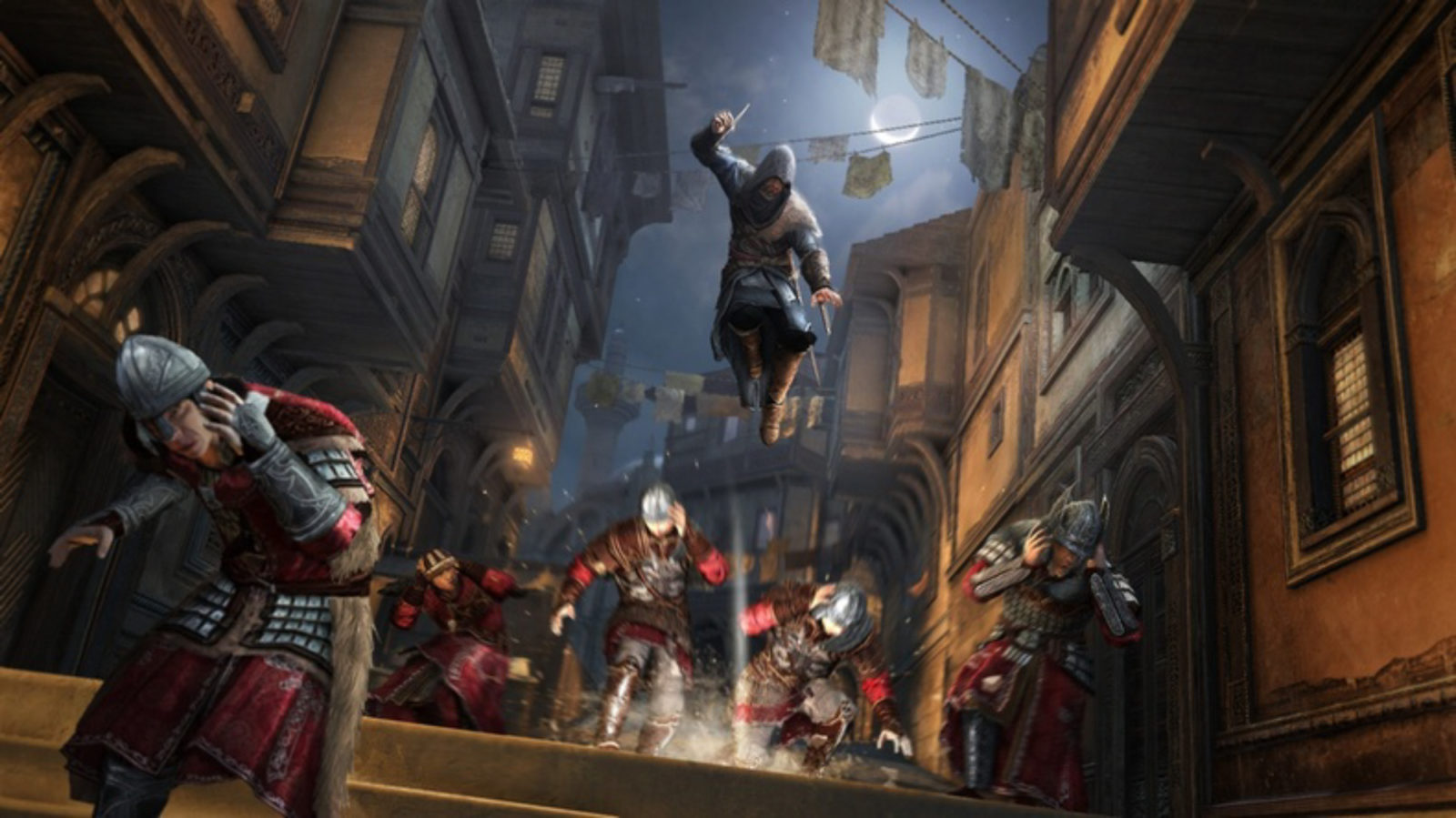
Parkour now receives an interesting element: the Hookblade, given to Ezio by Yusuf, leader of Constantinople's Assassins. It lets Ezio reach places that were previously difficult to access, especially when jumping over greater distances. With the hook-shaped blade, the protagonist can now grab roofs farther away and travel along ropes connected from rooftop to rooftop, like a zip line.
The Hookblade can also be used during fights. Ezio can now steal his enemies' possessions with the new blade. It can also help him escape barricades formed by enemies, but this is easily forgotten because beyond the tutorial the game makes little effort to encourage players to use this new ability more often.
Assassin's Creed Revelations
Revelations follows Brotherhood's approach by placing the player in a single large city divided by a river. The horse, a very welcome addition in the previous game, has been removed here, making travel across the city more time-consuming and forcing players either to run to their destinations or use shortcut tunnels that must be revitalized. It is a shame to lose such a convenient mode of transportation.
The factions that help Ezio return in Istanbul, though some have different names. The courtesans who helped Ezio blend in and move through areas unnoticed are replaced by Romani women, for example. Ultimately, their functions are the same.
The game tried to innovate through a new type of weapon and a way to defend Assassin dens: the new weapons are bombs, while defense takes place through a tactical mode known as Tower Defense. Both new features are unbearably tedious.
To use bombs, Ezio must assemble them at designated stations scattered throughout the stages and Istanbul. He must obtain ingredients either by looting enemies and chests or buying them on the black market. Each different combination of ingredients—three are required to make a bomb—creates a different type of explosive. When you stop to think about it, the variety of bombs is a positive point. Yet constantly making different bombs just to see their effects is extremely tedious. It does not work and completely breaks the game's flow.
Tower Defense is another feature that disrupts the game's flow. From time to time, a group of Templars attacks an Assassin den. The player can choose whether to defend it—which is fortunate, since it is not mandatory—against the Templar assault. Tower Defense works like this: based on the available recruits, whom the player rescues during the game to build a small army, Ezio must position them on rooftops at the entrance to the dens and command them to attack each approaching wave of enemies. Players can also set up barricades, fire cannons, and so on. It sounds good in theory, but I honestly think it makes the game feel very disjointed, because these battles are long—or perhaps they merely feel longer than normal because they are so boring.
One strong point is that this Assassin's Creed presents many different and unusual situations. Ezio may find himself being pulled by a cart while holding a rope, use a parachute to reach more distant places by jumping from a higher point, among other things, and even use it while being pulled by a cart as he clings to a rope.
Oh, and playing as Altaïr in some sections to see the rest of his story as an Assassin is very interesting and gives the game an excellent dynamic.
Turkish sound design
This is easily the game's greatest strength. Impeccable voice acting with Italian and Turkish accents brings a great deal of geographical and historical authenticity to the game.
Composer Jesper Kyd's music once again does not disappoint, though it could have been more prominent throughout the game, since it plays mainly at specific moments such as cutscenes.
Costumes and landscapes
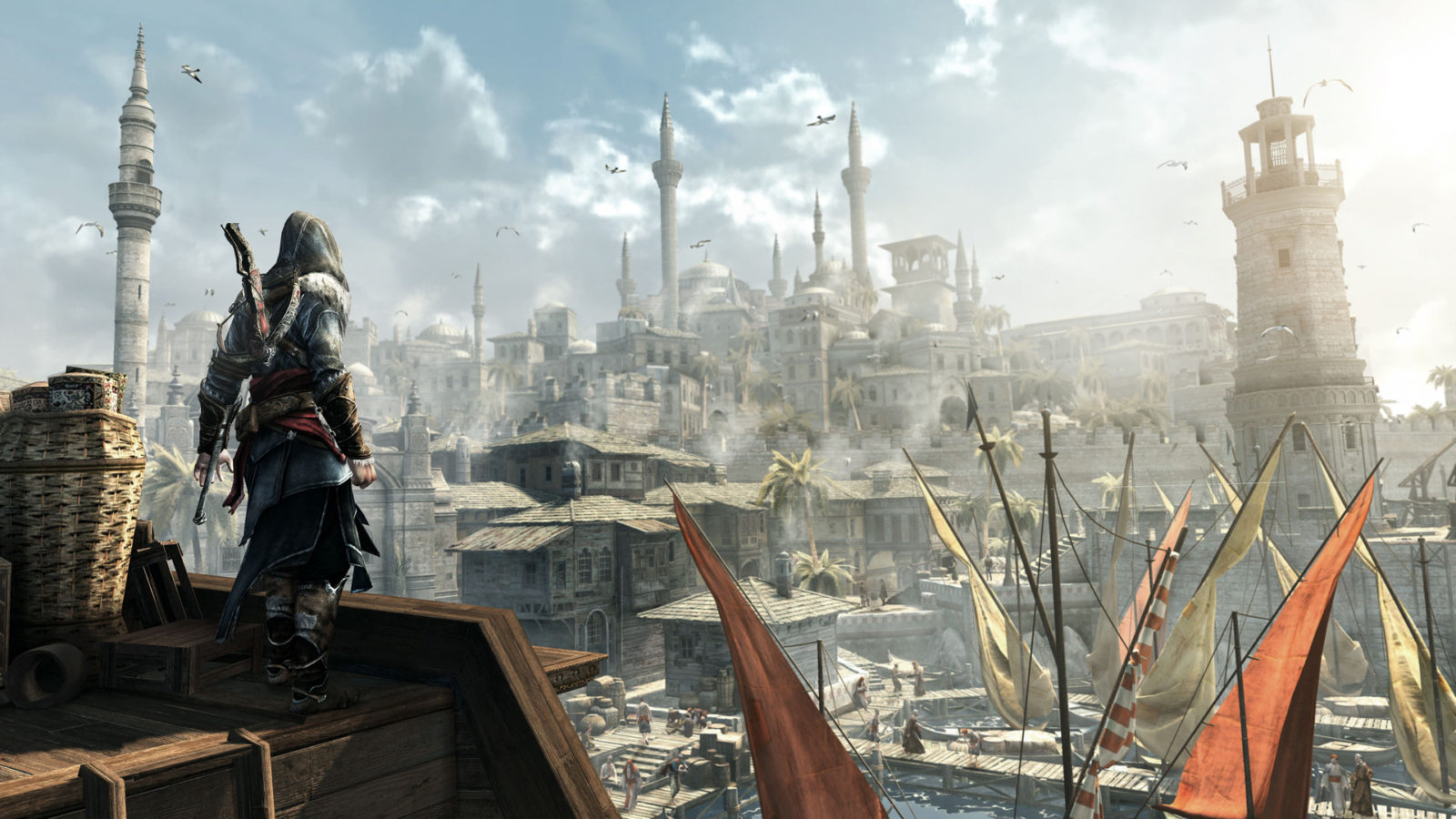
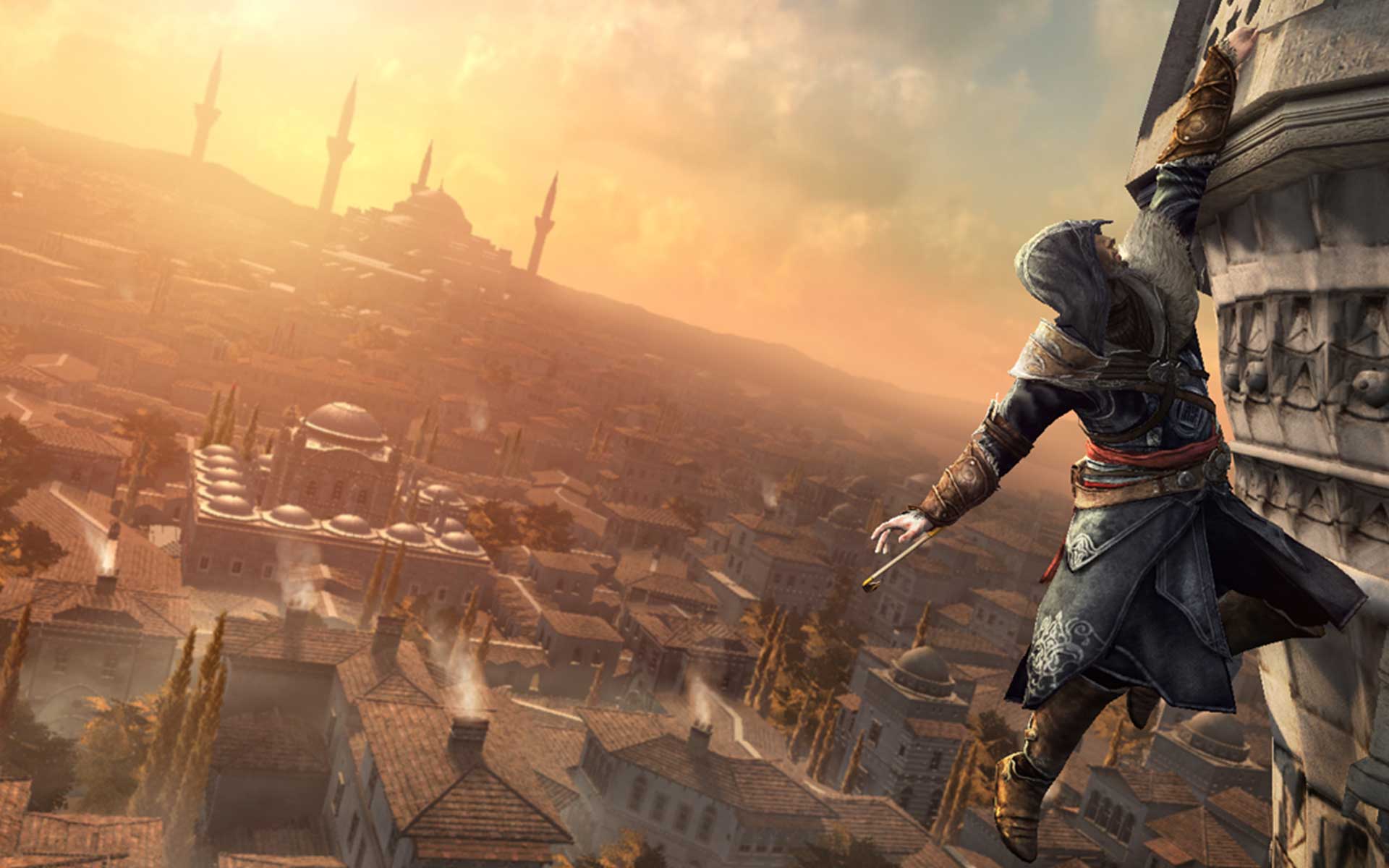
Assassin's Creed Revelations is a beautiful game; there is little denying that. The level of detail in its open-world city is astonishing and commendable. The problem is that the game's engine appears to have received few updates, so it often feels as though you are still traveling through Italy, precisely because the graphics evoke a strong sense of déjà vu from the previous games.
Assassin's Creed Revelations
The fabrics and characters' clothes provide the high point in detail. The amount of detail in Prince Suleiman's clothing is enough to make many games envious, displaying all the ostentation of the wealth shown by Turkey's royal families. The armor of the Janissaries, the sultan's family's personal guard, also stands out.
It is also worth noting that this is the most cinematic game in the series, with some camera shots showing large settings rich in detail.
Rest in peace, Ezio!
It is good to know that Ezio's cycle in the series is over. Now elderly, the character reflects the series' exhaustion. This is the installment with the fewest advances, and it remains slow until around the halfway point, after which it improves by presenting more varied situations.
If players set aside the bombs and Tower Defense, they will have a moderately enjoyable time—far less than with the previous games, though perhaps more than with the first. The series with Ezio is worn out, and it is a relief to know that it has reached its end. Now we wait for the already announced Assassin's Creed III, which will take place in the United States of America with another ancestor in another era. PHEW!
Now let me get back to the game's addictive and fantastic online mode. Unfortunately, I review only games' single-player modes, which to me represent the bulk of a game, especially in the Assassin's Creed series. But if you want to know whether it is worth buying for the online mode, I say: IT IS!
Score: 7
Tested on a PlayStation 3.