In the world of football, some players define their careers not only through the titles they win, but also through the adversity they face. Moacyr Barbosa do Nascimento, known as Barbosa, is one of those figures whose career was unfortunately marked by an injustice that still resonates today.
Skillful and acclaimed at Vasco da Gama, the goalkeeper's career is also permeated by misfortune at the 1950 World Cup, an event that influenced how Brazil came to recognize and value goalkeepers in subsequent years.
Barbosa was Black, making him an easy target for an elitist and overwhelmingly white media. It was said that because he was Black, Barbosa lacked the psychological capacity to be a goalkeeper and had therefore failed to stop Uruguay's second goal. Racist statements like this became common and entered football's popular imagination. To understand the scale of this, it was only 16 years after 1950 that another Black goalkeeper wore the national-team jersey: Manga at the 1966 World Cup. Another 40 years passed before Dida wore the number 1 shirt in 2006.
Barbosa's Beginning at Vasco da Gama and the Road to the 1950 World Cup
Born on March 27, 1921, Barbosa began his football journey in the youth ranks of Club de Regatas Vasco da Gama. He soon stood out for his remarkable goalkeeping skills, earning the starting position and becoming a fundamental part of the club's victory in the 1945 Campeonato Carioca.
At the club known for the cross on its shirt, Barbosa lifted the trophy in six editions of the Campeonato Carioca, one Rio-São Paulo Tournament, the South American Club Championship, and the Rivadávia Corrêa Meyer Tournament, the last of which was recognized as the "heir" to the Copa Rio, although he was not the starter in that competition. Barbosa's assured performances took him to the Brazilian national team. Coach Flávio Costa chose him to be Brazil's goalkeeper at the 1950 World Cup.
Barbosa at the World Cup
All these winning credentials led the Vasco goalkeeper to wear the Brazilian national-team jersey. Wearing Brazil's number 1 shirt, Barbosa started throughout the successful South American Championship campaign, which made Brazil the favorite for the 1950 World Cup, held on Brazilian soil.
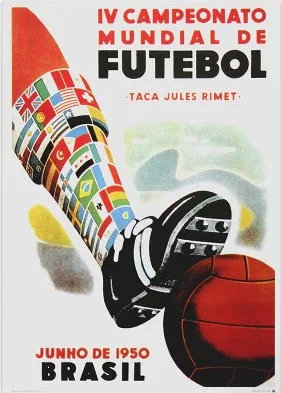
Brazil's first-stage campaign was almost perfect. Under coach Flávio Costa, the team defeated Mexico 4–0, drew 2–2 with Switzerland, and beat Yugoslavia 2–0, the leading European team at the World Cup. In the second stage, Brazil thrashed Sweden 7–1 and Spain 6–1.
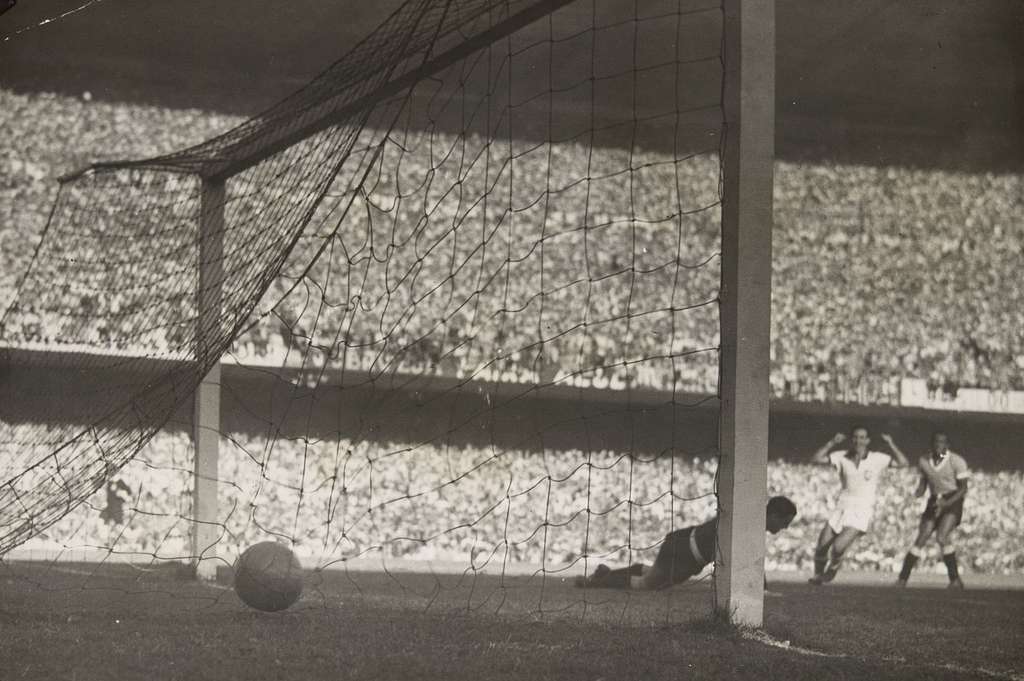
Despite the practically perfect campaign, the World Cup final against Uruguay held major surprises. The final entered history as the "Maracanazo," one of the most infamous episodes in Brazilian football history. Brazil led 1–0 but allowed a surprising comeback in the final minutes, culminating in a 2–1 defeat. Barbosa was unfairly identified as the villain of the match. The goal conceded in that final became a burden the goalkeeper carried for the rest of his life.
Brazilian society, still digesting the bitter humiliation of losing a World Cup in its own country, found a convenient scapegoat in Barbosa. It was unlike 2014, when "blame" was distributed evenly among several people. Barbosa was repeatedly blamed during his life and showed this to journalists, even becoming the subject of an international news report.
Racism and the Condemnation of Barbosa
"What is the maximum sentence in Brazil? Is it not 30 years? Well, I have already been serving mine for more than 40 years, and no one forgets. If I were an ordinary criminal, I would understand. But what was my crime? What was my sin?" Barbosa told journalist Helvídio Mattos in a 1993 interview.
As a reflection of society, football revealed the racial prejudice that persisted in Brazil at the time. Because he was Black, Barbosa became an easy target for the nation's frustration and disappointment. The defeat was not only a sporting setback, but a trigger for the expression of deep-rooted prejudice.
This view that a Black person lacked the psychological capacity to be a goalkeeper, widely spread by "specialists" in the press of the time, echoed for decades and affected many talented Black goalkeepers who were overlooked for call-ups simply because they were Black.
Barbosa died in 2000 still carrying the scars of an unfair and relentless condemnation. His story is a call for awareness and change, highlighting the ongoing need to fight racial prejudice and build a more equal and just society.
Seventy Years Later, Racism Remains Present in World Football. What Can Be Done?
Just as Barbosa was not allowed to make mistakes, like so many other Black players who came before or after him, the Black man still seems to lack permission to make mistakes today, both within and outside the context of football. Unfortunately, the Black player sometimes appears to have less room for error. Vinicius Jr. is proof of this. The player is constantly criticized for adopting a combative stance against those who direct racist insults at him and, beyond that, for demanding action from Spanish football authorities and exemplary punishment for those who commit such acts.
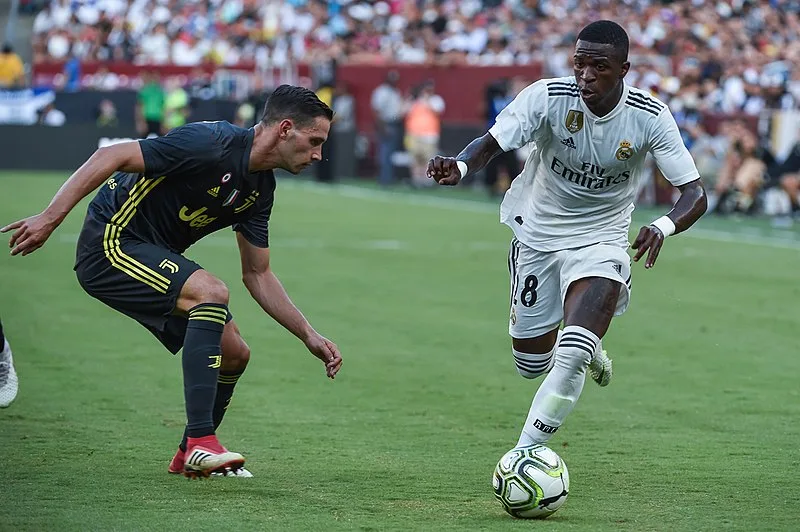
But Vinicius's protests come to nothing, as did those of goalkeeper Aranha, forward Grafite, defender Gil, and so many other players who experienced the same situation. The world's two largest club-sport governing bodies, Conmebol and UEFA, make procedural, unassertive decisions, and the sense of impunity strengthens the aggressors.
Some supporters, journalists, and people involved in football insist that playing is what matters and that complaining about this makes someone a "whiner." But what they also seem intent on sweeping under the rug is that racism does not belong only to the game; it is something bigger. It should not be treated as an ordinary insult. A firm stance is therefore necessary to curb such acts, regardless of whether they come from supporters, a player, or a member of the coaching staff.
Many consider a measure commonly discussed online—punishing entire teams or supporter groups in some way—as an initial "solution." Many describe this approach as unfair, which makes rational sense because clubs theoretically cannot assume responsibility for individuals who might begin acting in bad faith to undermine an entire group of people in specific situations. Nevertheless, cases like this require a more forceful approach, especially from sporting bodies toward racist behavior, so that this form of conduct is completely eradicated. There is no way to be even minimally complacent about cases of racism.
People will not become aware overnight, nor will they stop uttering racist phrases or singing racist songs because they have understood the gravity of the problem. But the "threat" of more forceful punishment becomes an important factor for supporters and players. Over time, the environment may become hostile to those who want to commit these atrocities.
Racism leaves severe trails of destruction wherever it passes and creates problems that calcify deep within society. Football is not immune and must act. The issue is serious and demands urgency.