
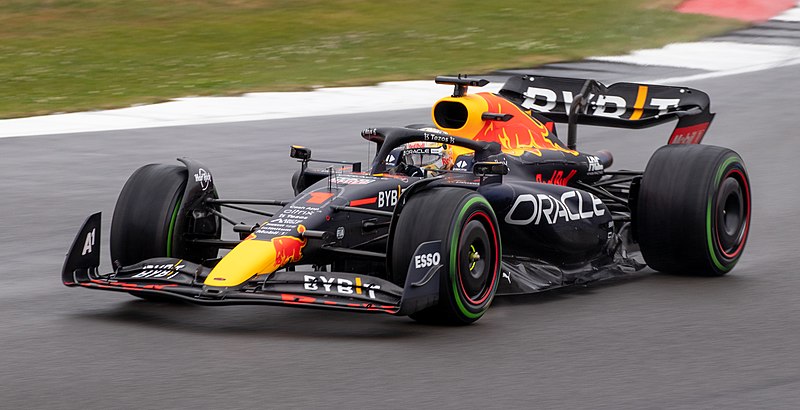
Formula 1 cars are high-performance machines designed to reach high speeds on challenging tracks. One important feature of these vehicles is the use of semi-automatic transmissions, which differ from the automatic systems commonly found in passenger cars.
The semi-automatic gearbox allows drivers to change gears without taking their hands off the steering wheel, improving agility and eliminating shifting errors that could damage the transmission. This article explains why Formula 1 prefers semi-automatic transmissions even with the advanced technology available.
How Does the Semi-Automatic Transmission in a Formula 1 Car Work?
As mentioned, Formula 1 cars use a semi-automatic transmission operated by two levers behind the steering wheel, known as paddles. Unlike ordinary cars, they do not have a clutch pedal. The clutch is used only at the start and is operated through a third lever. The driver engages first gear and releases the clutch to start racing. After that, every gear change is performed using the levers on the steering wheel.
One interesting detail about this model is that, like motorcycle transmissions, it operates sequentially: if the car is in fourth gear, it can only shift down to third or up to fifth. Skipping between gears is not possible. This technology, called "paddle shift" or "butterfly shifting," makes gear changes much smoother and thereby addresses one of the oldest problems affecting Formula 1 cars: gearbox failures. These were very common in the 1960s, 1970s, and 1980s, when teams still used manual transmissions, with the gear lever taking up space inside the cockpit.
Over time, that technology became outdated and also offered far less reliability, since any mistake when shifting gears could cause accidents such as a broken transmission belt. These problems were enough to make the car lose considerable performance, causing many retirements from races.
Why Doesn't Formula 1 Use Fully Automatic Transmissions?
The category did use so-called automatic gearboxes, but only for a short time. Between 2001 and 2003, some teams tried to implement automated transmission technology, but the results were not very positive. Formula 1's highly competitive and demanding nature requires a high level of control from drivers. An automatic gearbox eliminates their ability to adjust gears according to the specific demands of each circuit and race situation, compromising performance and strategy.
In addition, automatic systems can be heavier and less efficient in terms of rapid response, which is crucial in a racing environment where every millisecond counts. From 2004 onward, Formula 1 banned automatic transmissions, arguing that skill in handling the gearbox directly reflects a driver's ability and that F1 should reward not only the best cars, of course, but also the best drivers.
Even without the ban, teams would probably not have adopted automatic transmissions for the reasons mentioned above. Even so, this was one of several technologies developed and tested by Formula 1 that are now used in passenger cars. Today, a large share of cars already leave the factory with automatic transmissions.
In Brazil, a survey presented in 2020 showed that vehicles equipped with automatic transmissions dominated the market, accounting for 52.6% of passenger-car and light-commercial-vehicle sales, while manual models held a smaller share of only 47.4%. By 2022, automatic cars already represented around 57% of the country's new cars.
Automatic transmissions may not have worked very well in motorsport's premier category, but they are highly valued by casual drivers, especially in recent years. This shows that, beyond competition, developing and testing innovative mechanisms that serve the general public is also one of the functions of the world's leading motorsport category.