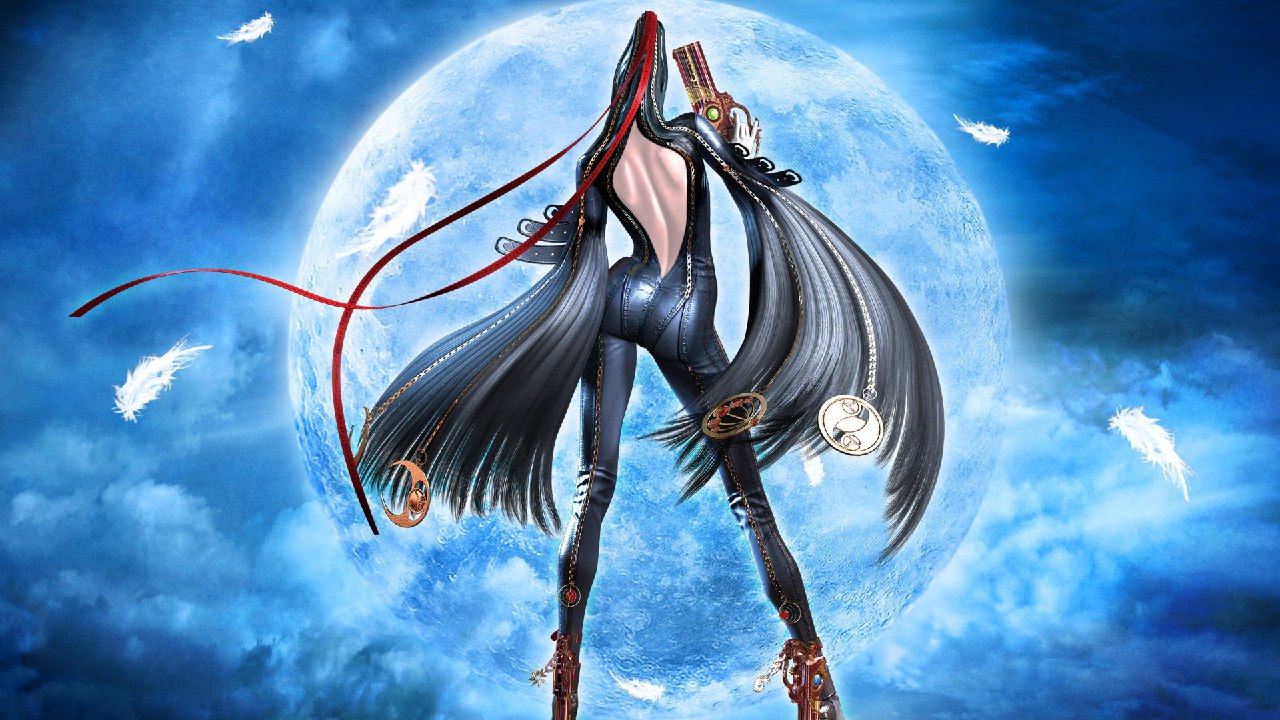
Bayonetta emerged at a time when the hack-and-slash genre was booming, and even amid intense competition, the title managed to stand out, not only because of the character's "design," but also because of the game's great quality in what it set out to do. With innovative gameplay full of references that immediately turn nostalgic players into fans, Cereza secured her place within the game industry for an indefinite period.
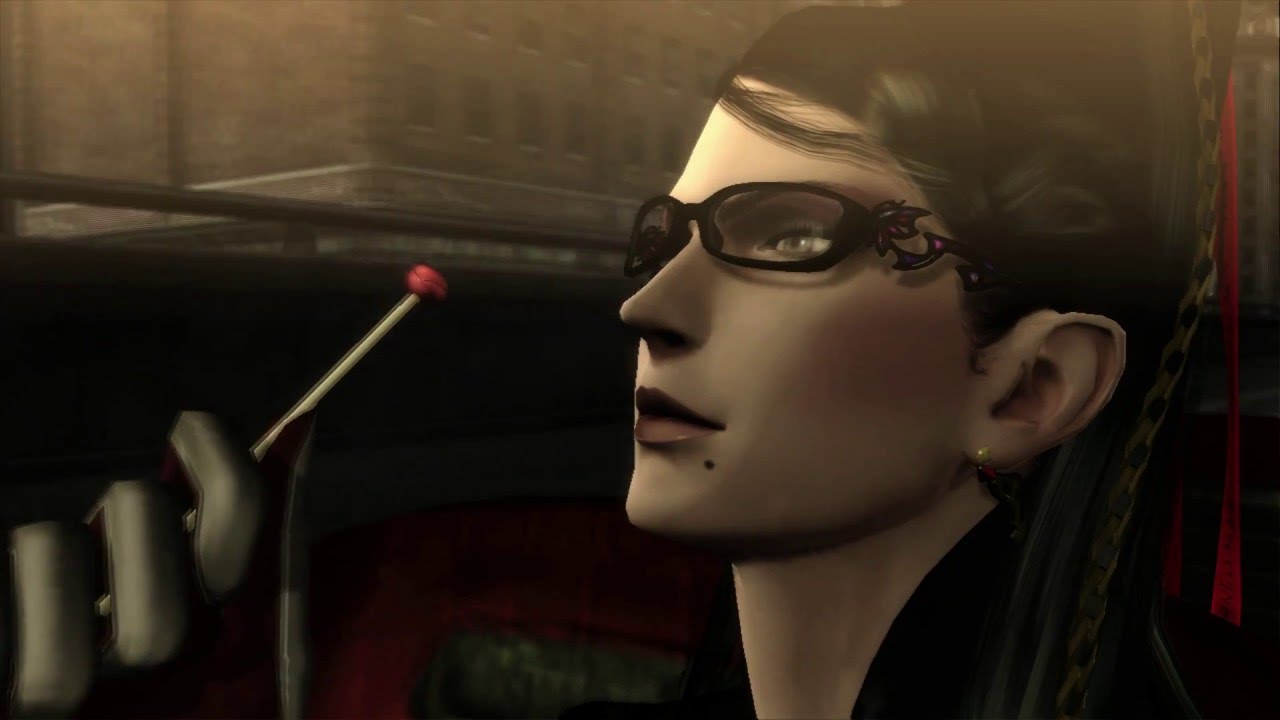
As if that were not enough, Bayonetta never lets go of this lollipop.
Bayonetta is a hack-and-slash game developed by PlatinumGames and published by SEGA. It was initially released in 2009 and is now available on the following platforms: Xbox 360, PlayStation 3, PC, Wii U, and Nintendo Switch. Unfortunately, among these versions, the PlayStation 3 edition is not recommended because of evident problems such as inconsistent frame rates and graphical issues. The version reviewed is the Wii U release.
Fun fact: Besides being a critical success, Bayonetta also achieved strong sales when released. Considering only its PlayStation 3 and Xbox 360 versions, a total of 2.4 million units were sold, which deserves considerable credit, especially for a debuting franchise. Another of its great achievements was receiving a perfect score of 40/40 from the prestigious Japanese gaming magazine Famitsu.
Behind the Scenes

Director Hideki Kamiya
Formed primarily by former Capcom employees, PlatinumGames began operating in 2006. At the outset, the studio needed a partner to invest in and publish its future games. The task was not particularly difficult given the résumés of the members of this new development team. They included Yusuke Hashimoto, Atsushi Inaba, Shinji Mikami, known for the Resident Evil franchise, and above all Hideki Kamiya, the mind behind Devil May Cry.
The visionary company that realized this team could produce nothing but successes was the dearly missed SEGA. On that occasion, it signed a contract for four new intellectual properties: Vanquish, MadWorld, Infinite Space, and above all our Bayonetta.
The idea behind these new games was to pursue the greatest possible originality and fun, reaching an audience that knew what their creators could do and would certainly approve of their new adventures. With unconventional characters and no significant censorship by the publisher, we can understand why the "marriage" with SEGA worked so well.
Bayonetta was clearly created with the goal of surpassing Dante of Devil May Cry, Hideki Kamiya's former creation. That would not be easy, since the earlier character had become synonymous with the hack-and-slash genre in the previous generation. Kamiya's objectives were therefore for the new character to be female, appear modern, and use four weapons, one on each limb.
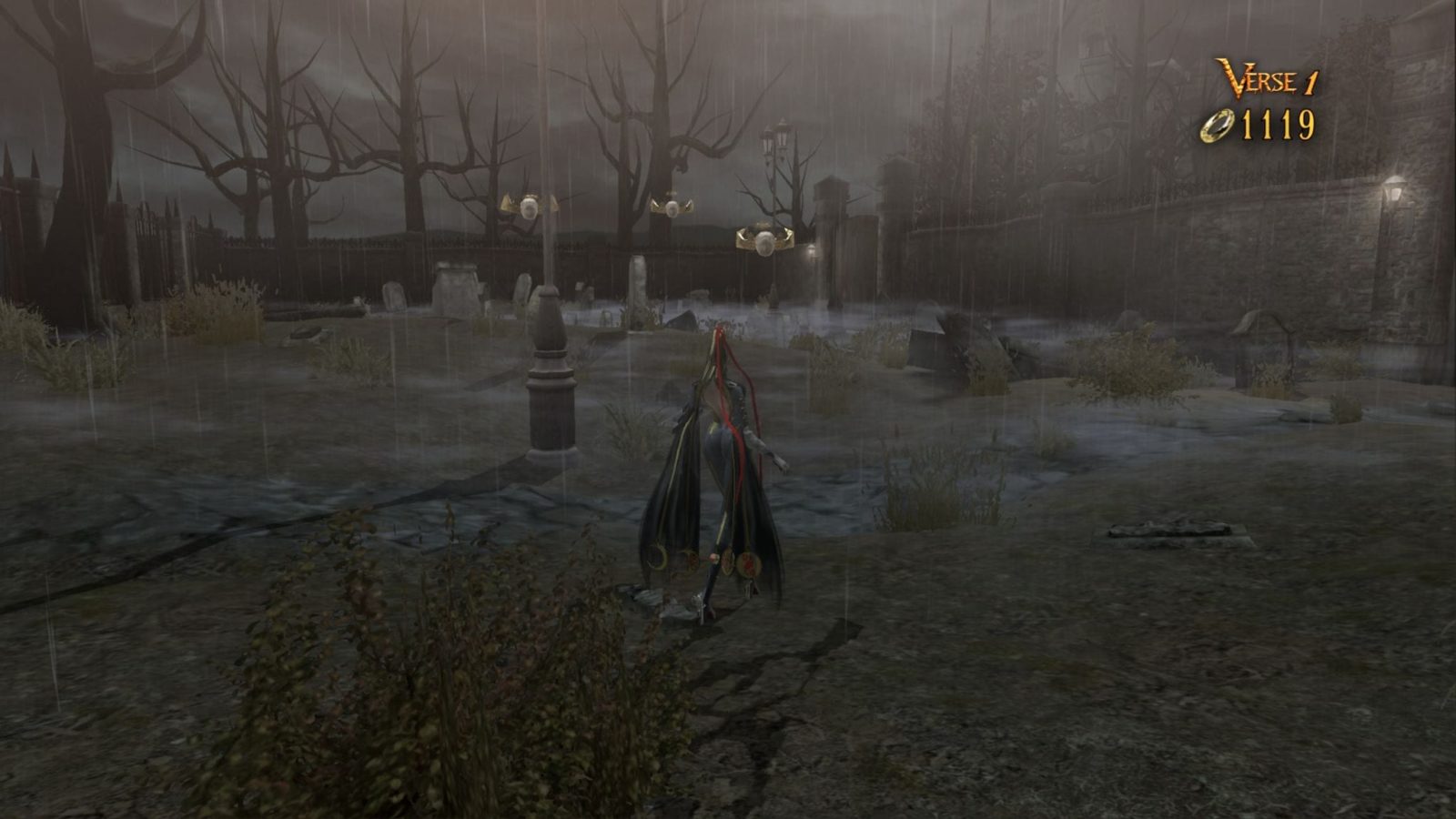
The beginning of another incredible hack-and-slash franchise.
Many consider Bayonetta a blend of characters the team members had created while working at Capcom. The protagonist would therefore have Dante's strong and even arrogant personality, Joe's good humor from Viewtiful Joe, and the courage and determination of Chris and Jill from Resident Evil. According to reports, her name came from the bayonet weapon's versatility.
Fun facts: According to reports, Bayonetta's geek style is quite deliberate, especially her glasses. In the words of developer Hideki Kamiya: "For Bayonetta, her glasses are like underwear: she must never be seen without them."
Story
Bayonetta's story involves many important events that occurred before our gameplay begins. I will be brief and avoid significant spoilers so that I do not interfere with the future experience of anyone who has not yet had the opportunity to enjoy this great game.
In the world where Bayonetta exists, there is an ancient conflict between two powerful factions: the Lumen Sages, followers of light, and the Umbra Witches, witches who follow darkness. Their confrontation created balance in the world, and each possessed one half of the enormously powerful jewels called the "Eyes of the World," left and right.
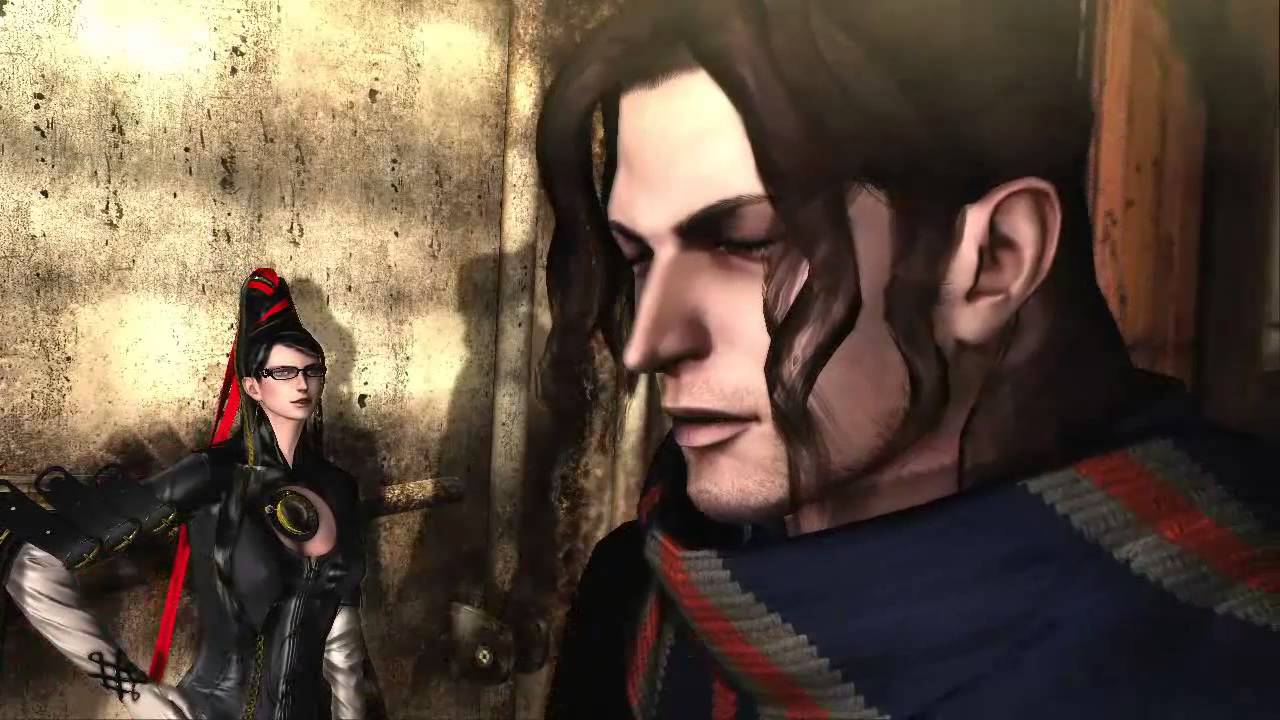
Bayonetta's past intertwines with those of other characters.
In a great confrontation between the Lumen Sages, who use angels as soldiers, and the Umbra Witches, who use demons, most of their members were wiped out, leaving few alive today. In the present, the events take place in a fictional European city called Vigrid, and Bayonetta, whose real name is Cereza, wakes from a 500-year hibernation that has left her without any memories.
With a jewel on her chest whose purpose Bayonetta does not know and angels constantly appearing to kill her, the protagonist sets out in search of answers about her past and the reason for all the events of her present.
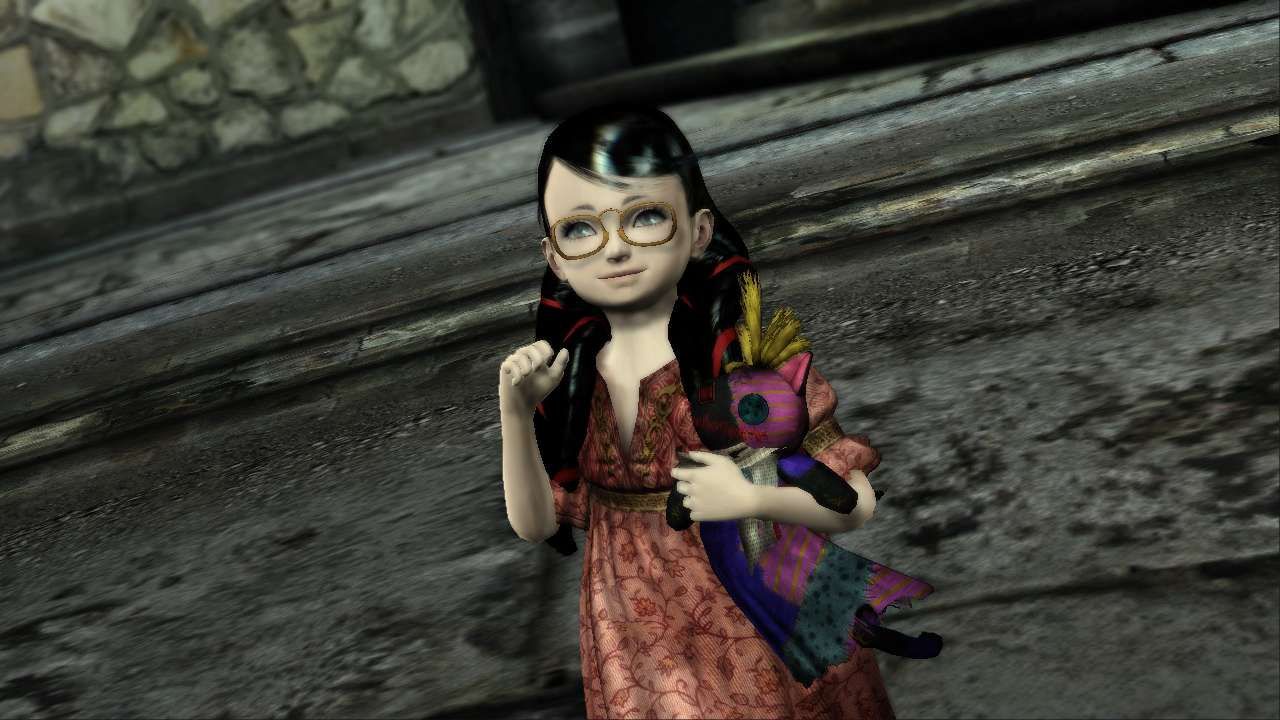
Young Cereza's stuffed cat evokes Alice, the one from Wonderland.
With settings that clearly evoke Dante Alighieri's Divine Comedy, Cereza can travel between heaven, purgatory, and hell during her great adventure, in which she will face angels and use the help of demons to obtain what she wants.
Fun fact: For fans of SEGA and CAPCOM, Bayonetta offers a genuine feast. This can be said because of the countless references to franchises from both companies. If you pay attention during gameplay, you may notice Sonic rings, music from OutRun, phrases from Space Harrier—"Welcome to my fantasy zone"—and Devil May Cry—"Let's Rock Baby"—choreography from Ōkami and Space Channel 5, and more.
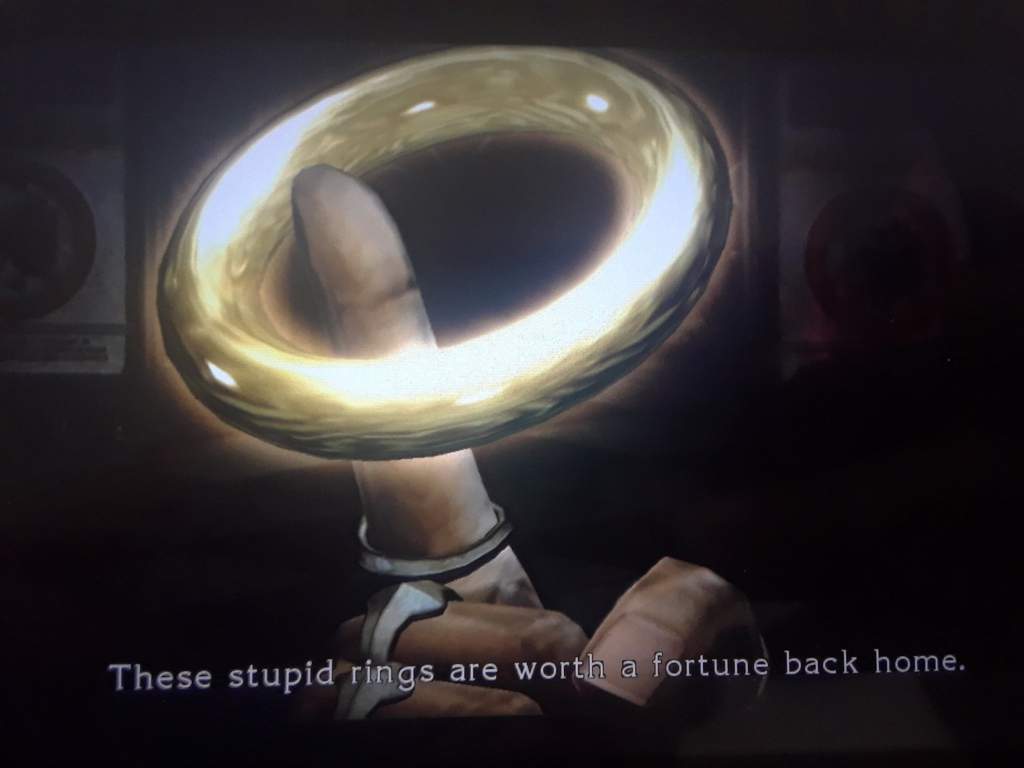
Sonic's rings, or Halos, are just one of the many references within the Bayonetta franchise.
Technical Review
Bayonetta's graphics are satisfactory for the time of its release. They are not among the best of their generation, but deliver exactly what the game promises. I did not encounter many bugs during the campaign, so there is genuinely little to complain about.
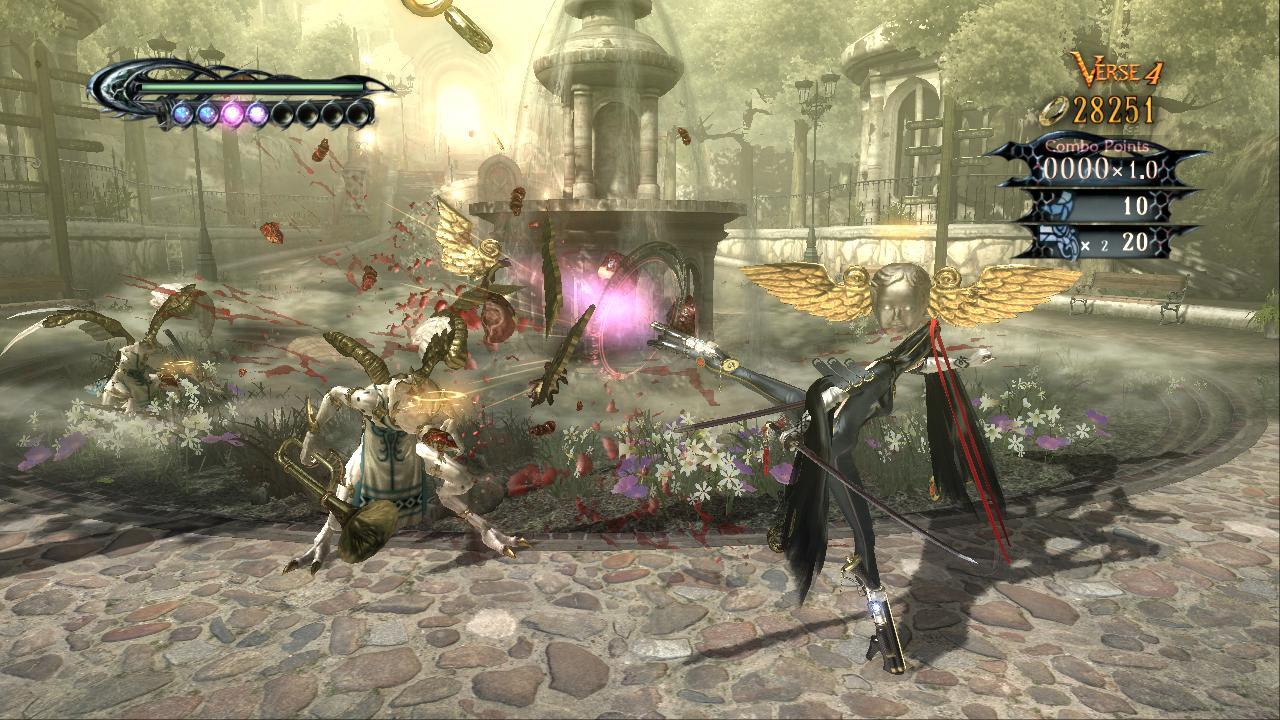
Intense battles await those who have not yet played Bayonetta.
Bayonetta is a typical hack-and-slash game in which we must defeat countless enemies in succession and use the spoils of these battles to improve the character's attributes in the shop known as the Gates of Hell. Interestingly, the game has a large number of moments when sections worthy of a good platform game are interspersed with the fighting. Knowing how to perform precise jumps, escape lava, and dodge rocks is therefore part of its gameplay. Another notable feature is Cereza's ability to transform into a panther, which greatly increases her movement speed.
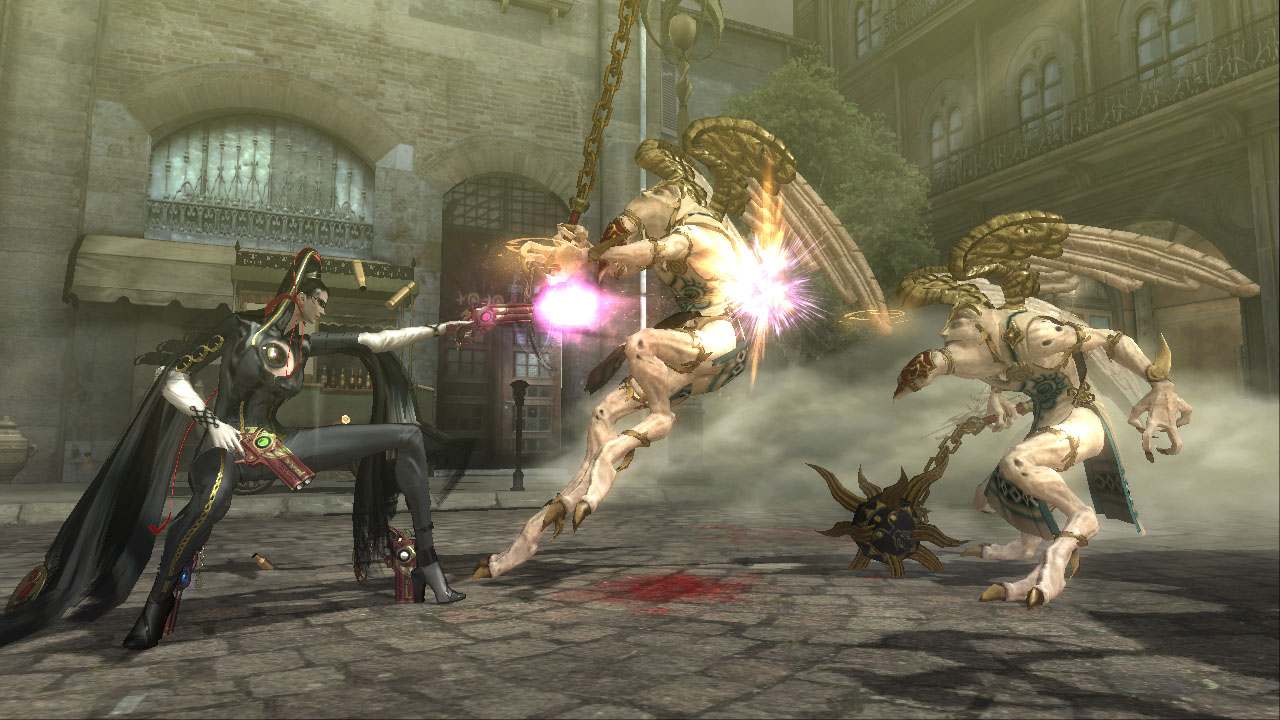
The visual flair of the battles is one of the game's greatest highlights.
Bayonetta is a beautiful character with a strong, independent personality. Besides being fluid, her movements always seek to emphasize her sensuality. This becomes a defining trait of a protagonist who appears to be posing for a photograph at all times. Although some may consider this behavior sexist, it also helps compose Cereza's image, which genuinely evokes SEGA's bolder years in the game market. It is worth remembering that in this game, we are on the side of darkness, not the angels as we might first imagine.
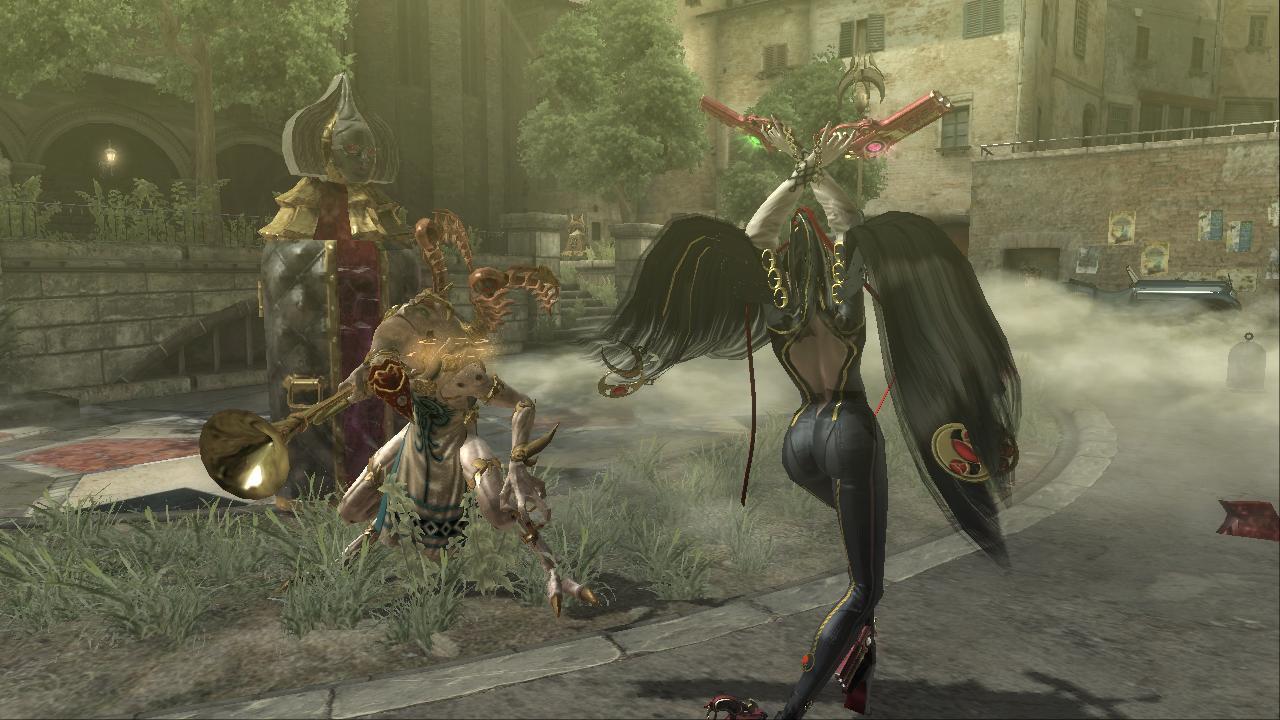
Bayonetta manages to be sensual all the time—absolutely all the time.
The gameplay in Bayonetta is excellent and does not fall short compared with other games in its genre. One somewhat innovative highlight involves creating combos with the character. In most cases, simply "mashing" buttons in a particular order is not enough, and a small "pause" is sometimes required while performing them. Although this may sound minor, it demands considerable coordination from players during gameplay and creates a somewhat unprecedented rhythm in battles for games of this style.
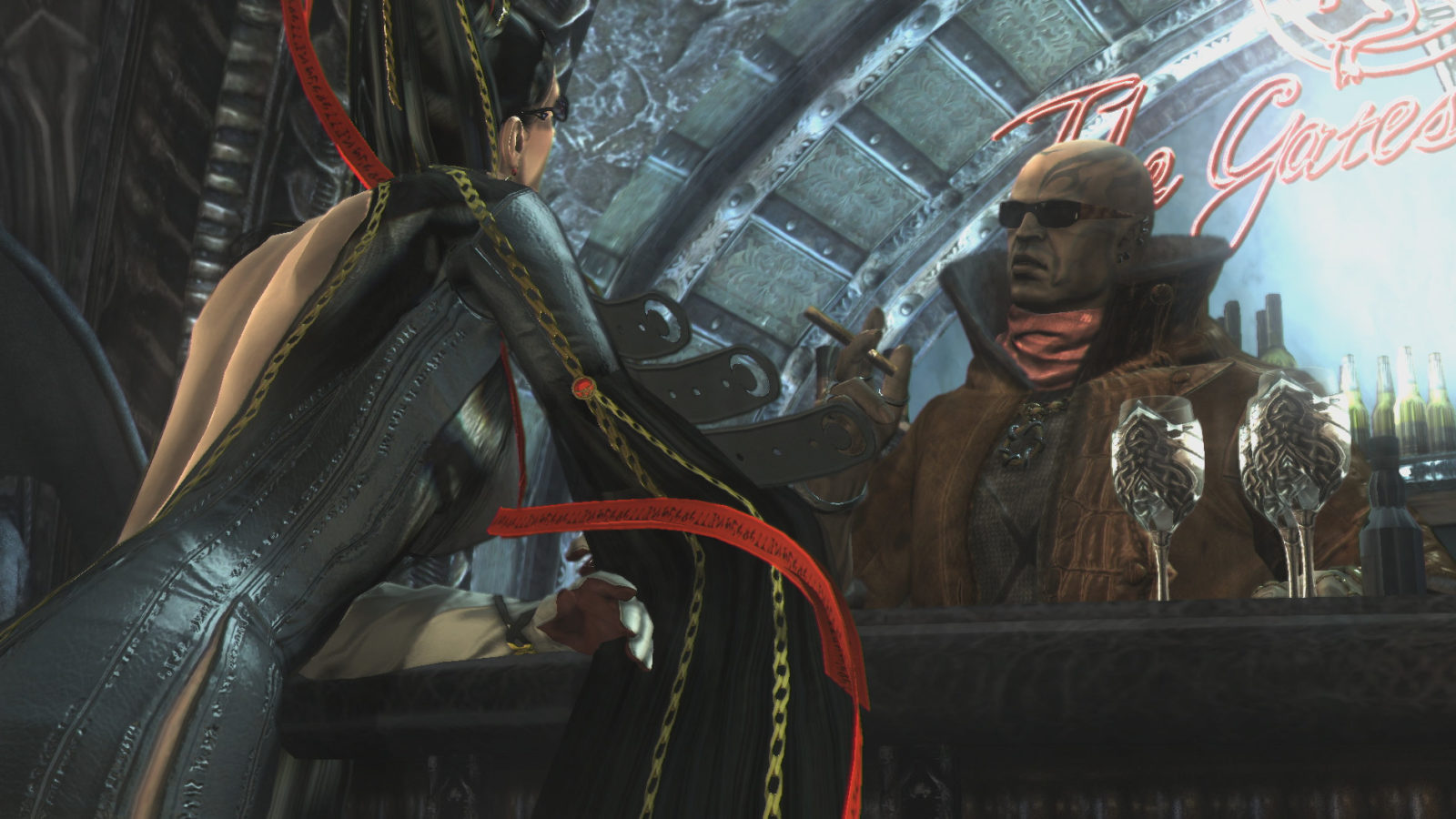
Rodin, the bartender at the Gates of Hell, sells the protagonist's weapons.
The game's replay value is low, with the main reason for a second playthrough being an effort to acquire items we could not access before. The title's difficulty is moderate compared with other games from its time, though still slightly greater than most others in its genre. The campaign length is approximately ten hours on a first playthrough if the player dies a few times, explores the environment, and calmly watches the scenes.
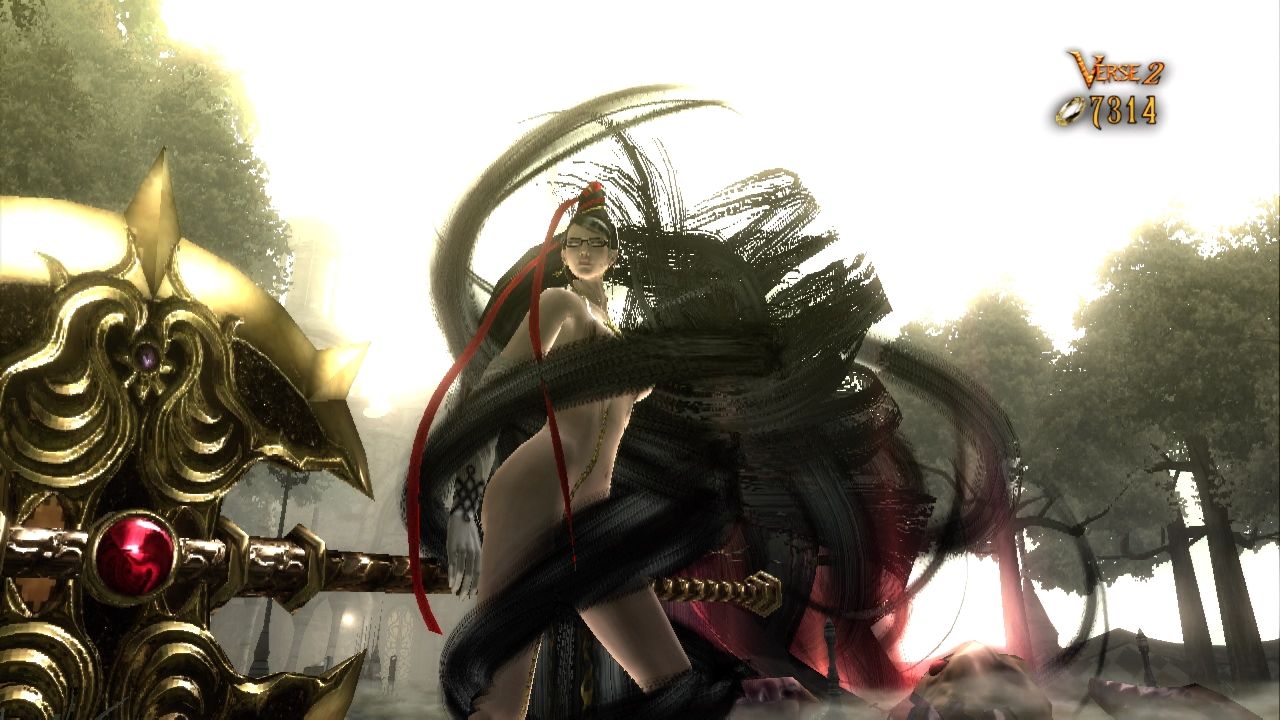
Bayonetta's outfit is made from her own hair, which she also needs to summon the demons who help her.
Playing Bayonetta is tremendous fun, especially if the player enjoys the exaggerated and somewhat "nonsensical" style present throughout the campaign. The title features humorous scenes with great frequency, even amid the frantic action that makes up its gameplay. Anyone who has not yet played it but is a fan of the hack-and-slash genre can be certain that satisfaction is guaranteed.
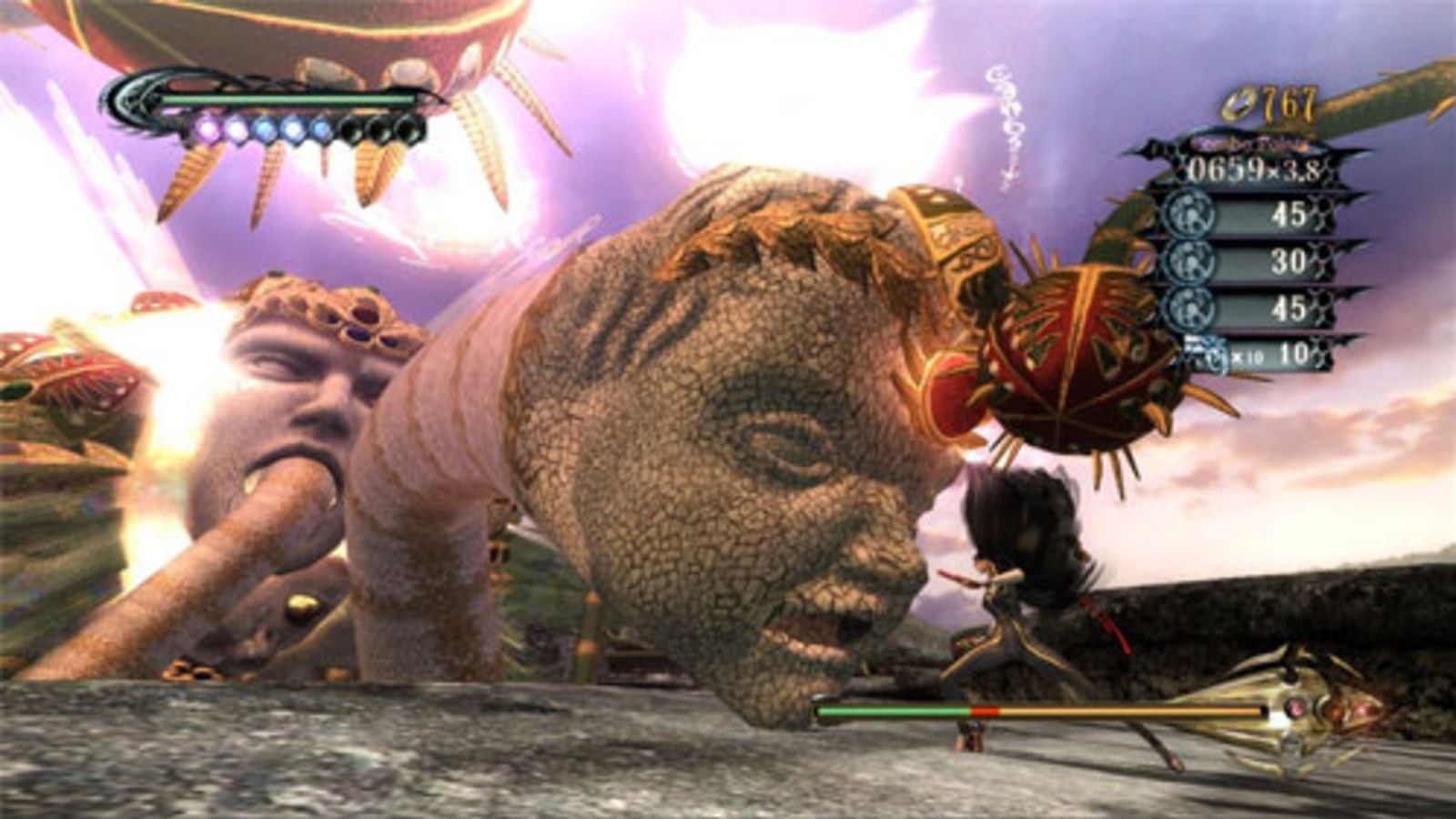
Gigantic bosses are part of the game's world.
Besides being excellent, Bayonetta's soundtrack has 150 tracks and was created by nine composers: Hiroshi Yamaguchi, Masami Ueda, Rei Kondoh, Takayasu Sodeoka, Norihiko Hibino, Takahiro Izutani, Yoshitaka Suzuki, Erina Niwa, and Naoto Tanaka. Everything in the music perfectly matches what is depicted during gameplay and performs its function well. The same is true of the sound effects, with excellent voice acting and sounds made by enemies and weapons.
Fun fact: A brilliant idea from the developers was adopting the Enochian alphabet for the language of the angels and the words spoken by the witches while casting spells. For those unfamiliar with it, this is a language created in the late 16th century and reportedly used by angels and those who had contact with them. Its main creator, John Dee, believed it was the language used in paradise at the beginning of time. The name Enochian comes from Enoch, an ancestor of Noah believed to have been the last person to know this language in ancient times.
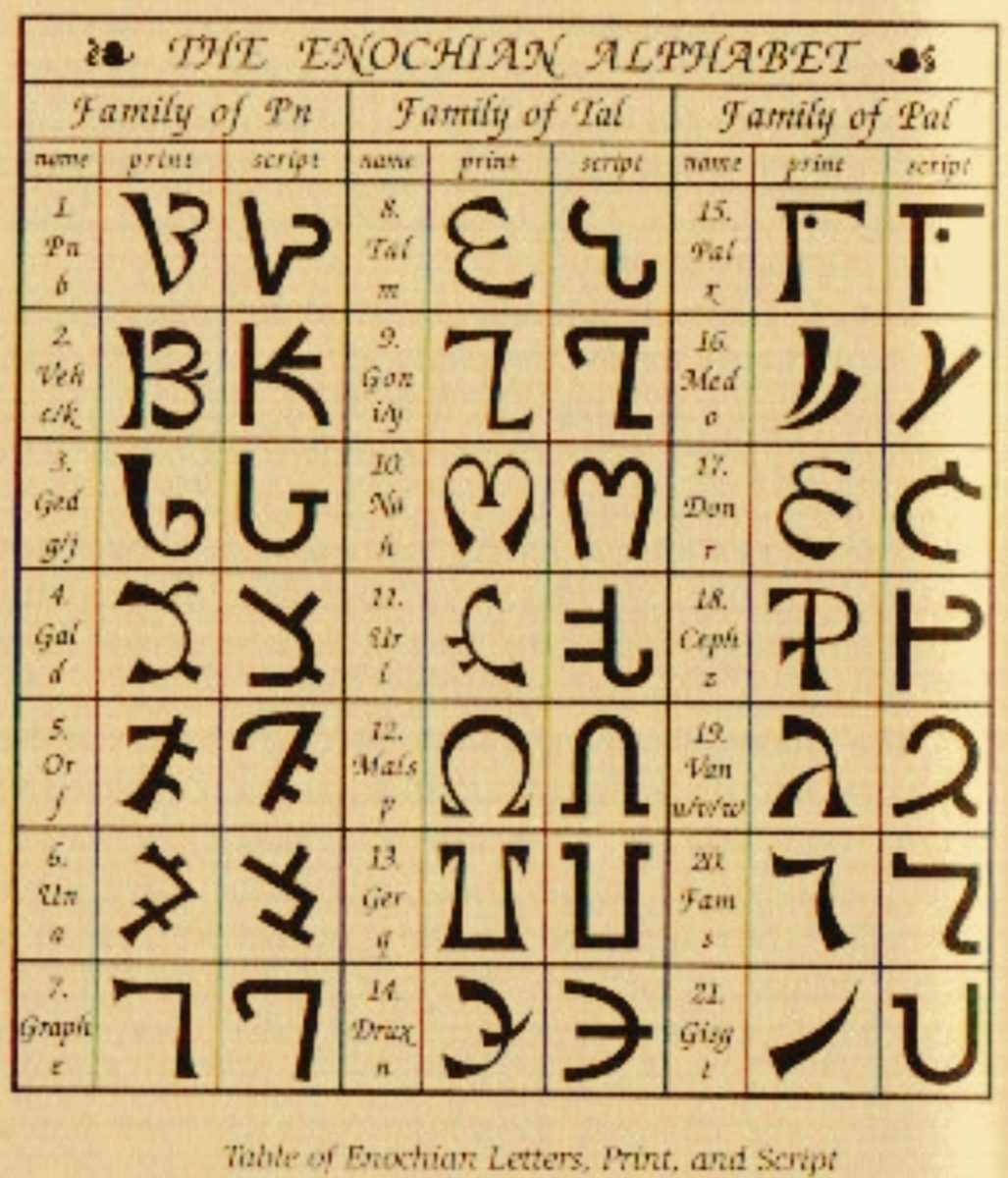
An image of the Enochian alphabet.
Bestiary
Although this is the franchise's debut, Bayonetta already introduces us to a wide variety of enemies. Interestingly, besides being rich in detail, several often leave behind their weapons for us to use in later fights. These celestial opponents are divided hierarchically into what the game calls spheres, with those in the first class being the strongest and those in the third the weakest. Below, we will look at two examples from the third sphere, one from the second, and one boss. This way, we will avoid significant spoilers.
- Affinity (Third Sphere): These are the game's most common enemies. They tend to travel in large groups, which is their only advantage in battle. They use spears as weapons, but defeating them requires only care not to become surrounded by several of their kind. These are said to be the angels some humans encountered in earlier eras.
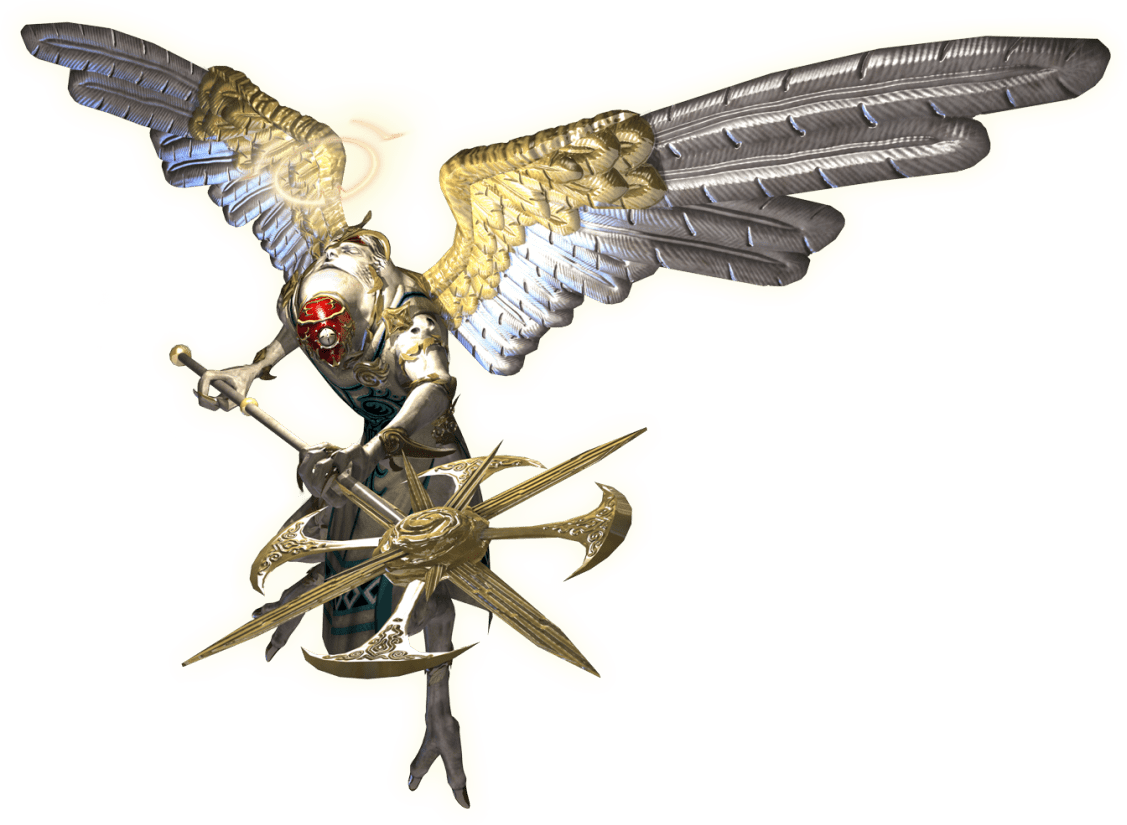
Affinity (Third Sphere)
- Enchant (Third Sphere): The Enchants take the form of a wagon wheel and, like the Affinities, do not cause major headaches during the adventure. Their greatest danger lies in their speed and ability to split in two during attacks. They can move along walls and ceilings and strike the protagonist from a distance. Bayonetta can use them as weapons before they are killed, which is a great help. According to reports, their functions in paradise involve preventing the entry of invaders and assisting with communications.
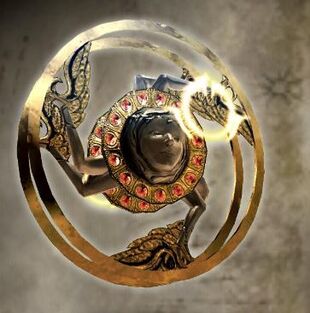
Enchant (Third Sphere)
- Beloved (Second Sphere): We must face this enormous enemy in Bayonetta's very first chapter. They possess great endurance and are strong enough to use high-impact weapons. Initially, their role in the game is that of a miniboss, and they reappear frequently near the adventure's end. Their disadvantage lies in their low speed and the weak point exposed on their backs. Within the game's mythology, the Beloved are those who guard the secrets of heaven.
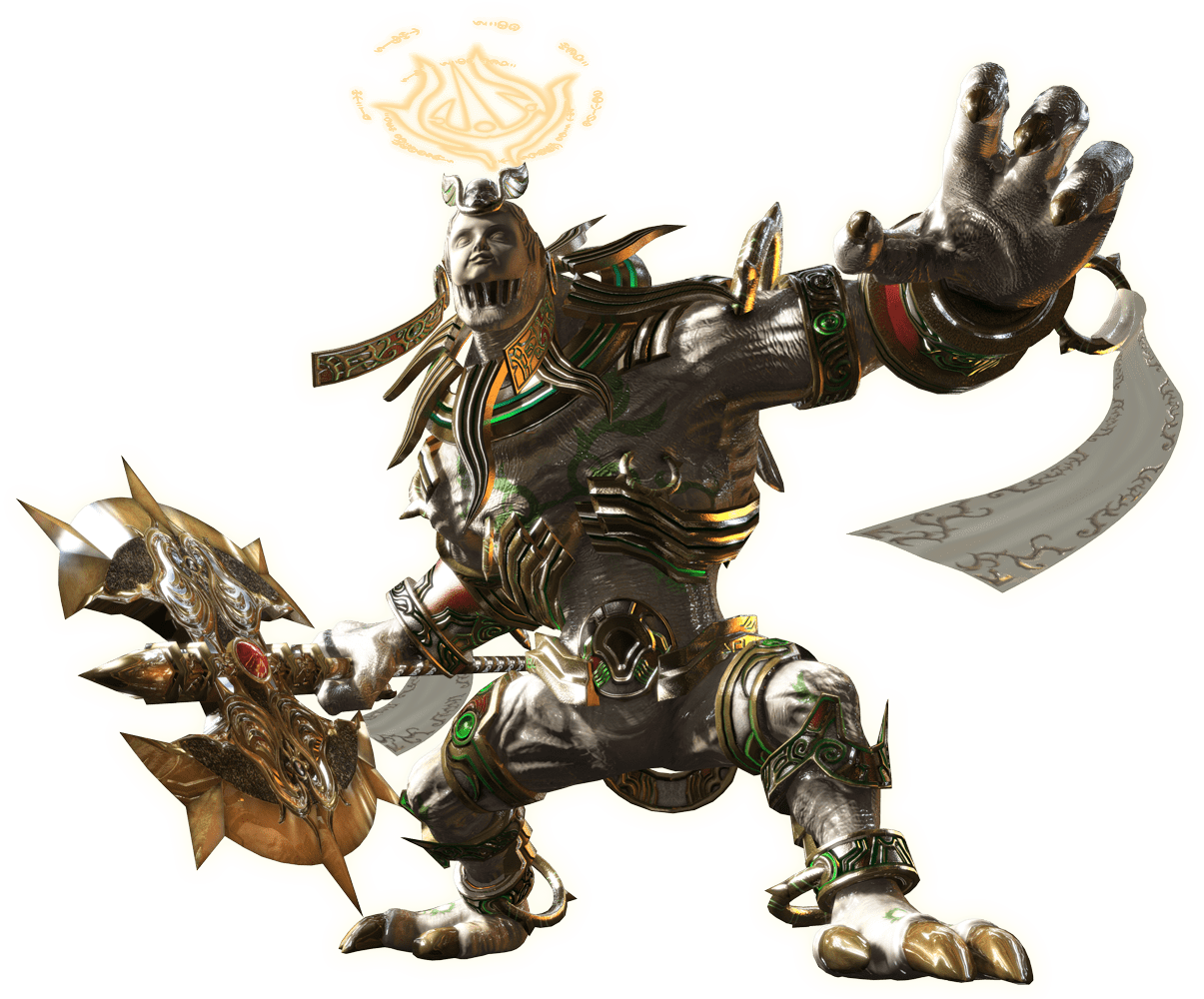
Beloved (Second Sphere)
- Fortitudo: One of the great names within Paradise. Fortitudo is a gigantic two-headed dragon capable of causing some difficulty before we manage to defeat him. His distinguishing traits include an inverted face and a tendency to speak a little too much. In addition to his great strength, he uses fire as his main ranged weapon. In the mythology, his design can be seen as a cross between a Cherub, which has the faces of several animals, and a Seraph, which is a draconic angel.
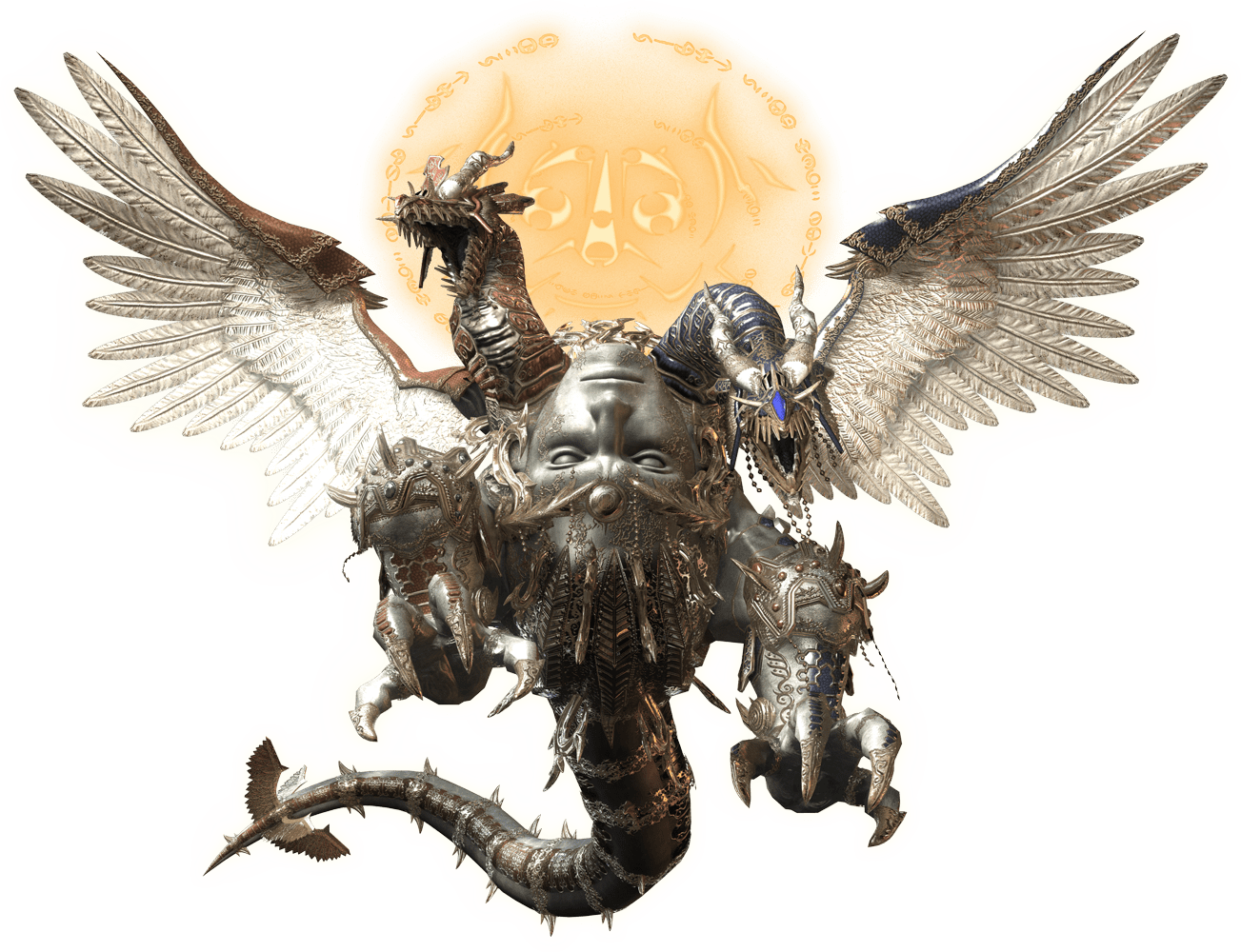
Fortitudo
Fun fact: The sequel, Bayonetta 2, was released in 2014 and surprised everyone when it was revealed as a Wii U exclusive. This essentially happened because Nintendo invested heavily in the franchise. According to director Atsushi Inaba, the game would never have existed without the company's support. The title was very well received by critics and remains one of the generation's highest-rated games to this day. That, however, is a subject for another review.
Played on Wii U