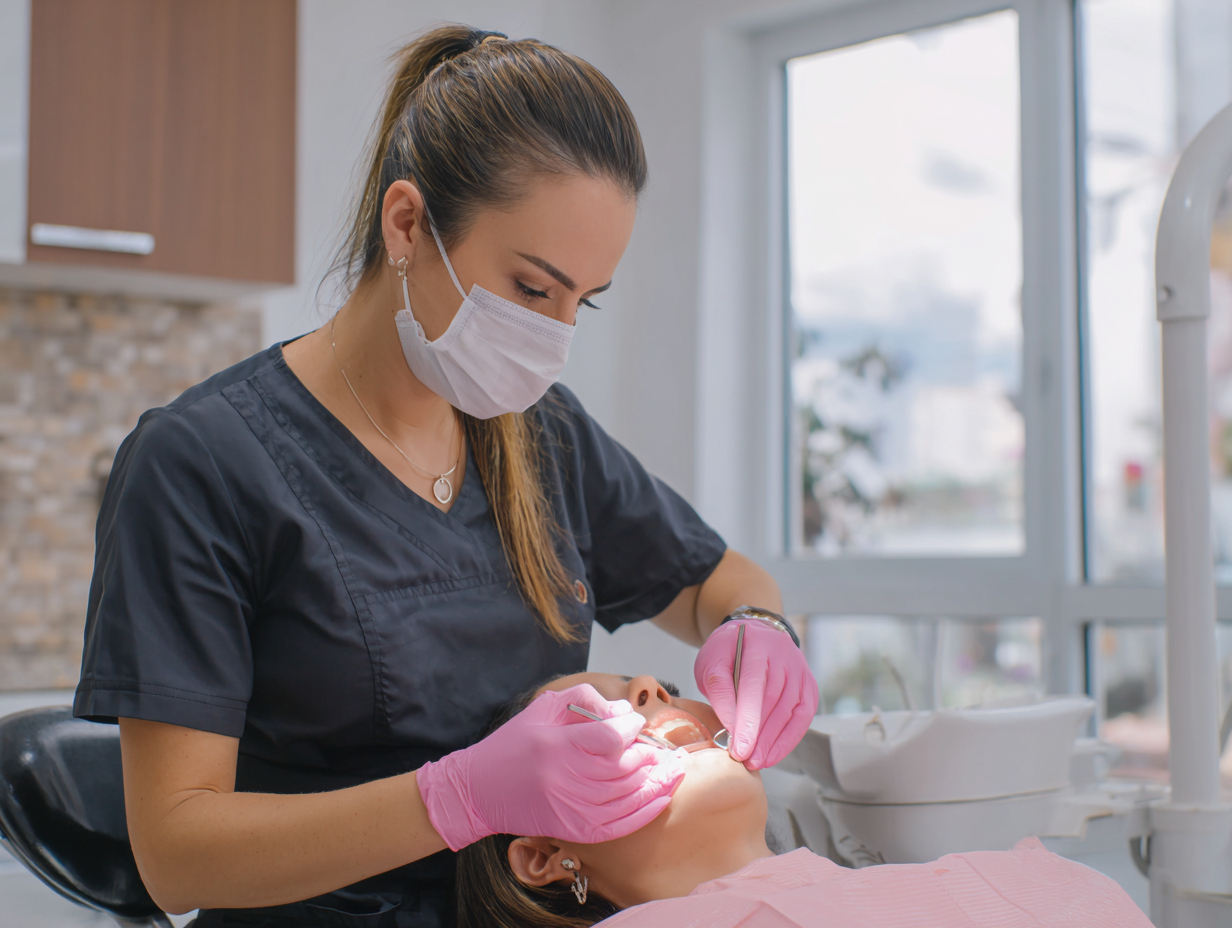
Anyone who has undergone an uncomfortable impression, waited days for a diagnosis, or left the office without properly understanding the next step usually recognizes the value of digital dentistry very quickly. In Porto Alegre, this advancement has moved beyond an attractive promise in a brochure and become a genuine part of many dental offices' routines. That considerably changes the patient experience.
When discussing the search for a dentist in Porto Alegre, the technology used in care now matters almost as much as professional training. Not because modern equipment works miracles by itself—it does not. But properly applied digital resources make diagnosis more accurate, planning more predictable, and treatment more comfortable. In this article, we will show where this transformation genuinely appears, which technologies deserve attention, and what is worth evaluating before choosing a professional.
How is technology changing dentistry today?
Dentistry has changed greatly in recent years. It has changed in a way patients feel in practice: less guesswork and greater predictability. Today, a modern office can capture detailed images of the mouth, simulate tooth movement, plan surgeries in advance, and even manufacture customized components much more quickly.
This does not mean that technology replaces clinical experience. In fact, the opposite happens: it expands a dentist's ability to make better decisions. A good professional uses digital tools to see details that might previously have gone unnoticed or depended on more time-consuming stages.
We see this transformation across three main fronts:
- richer diagnosis, with more complete images and data:
- safer planning, especially in complex cases:
- more comfortable and efficient execution, with less rework and greater precision.
There is also a less-discussed but important effect: communication improves. When patients see their own dental arch in 3D or follow a simulation of the result, they understand treatment better. This reduces anxiety. And anxiety, let us be honest, remains one of the great specters of the dentist's chair.
An honest warning is nevertheless worthwhile: digital technology should not be treated as a spectacle. We have seen cases where the equipment's shine becomes a sales pitch while the basics—a careful clinical examination, listening to the patient, and a coherent plan—take a back seat. A state-of-the-art scanner in the wrong hands remains merely a scanner. The real difference lies in the technical and ethical use of these tools.
Main digital resources used in treatment
The expression "digital dentistry" sounds broad, and it is. Some resources, however, appear more frequently in the routine of a dentist in Porto Alegre who invests in modern treatments.
Intraoral scanning and digital planning
For many people, intraoral scanning is the gateway to digital dentistry. Instead of using the traditional impression compound—that experience few people miss—the dentist uses a scanner to create a three-dimensional image of the mouth.
The benefit here is substantial. The process is generally more comfortable, faster, and cleaner. For the professional, the digital file allows more precise analysis of alignment, bite, spacing between teeth, and other details. This data can also be used to plan orthodontic treatments, prostheses, appliances, and rehabilitation.
We like to emphasize a human point that is sometimes overlooked: scanning makes an enormous difference for patients with a very strong gag reflex. It may seem small, but it is not. Anyone who has frozen during an impression knows this.
There are nevertheless limits. Poorly performed scanning or a rushed capture can compromise planning. Technology helps, but does not correct improvisation.
Digital radiology and more accurate diagnosis
Digital radiology brought sharper images and almost immediate access to examinations. Instead of waiting through lengthy processing, dentists can assess bone structures, roots, hidden cavities, and periodontal conditions within minutes.
Depending on the case, examinations such as cone-beam computed tomography may also be used, which is highly useful in implants, surgery, and more complex assessments. This kind of image shows volume and anatomical relationships in much greater detail than a conventional X-ray.
In practice, this helps prevent planning errors. An honest observation is relevant here: many headaches in dentistry begin before treatment, with an incomplete diagnosis. When the problem cannot be seen properly, the likelihood of rework rises.
Another important benefit is the organization of follow-up care. Because images are stored digitally, it becomes easier to compare progress, review approaches, and even request a second opinion when necessary.
3D printing and manufacturing customized devices
3D printing gained ground for a simple reason: efficient customization. It makes it possible to produce models, surgical guides, appliances, temporary components, and certain devices with a high degree of adaptation to the patient.
In implant dentistry, for example, a printed surgical guide can make placement more predictable. In rehabilitation and orthodontics, 3D printing helps manufacture components tailored to the digital plan.
The benefit is not solely technical. Many workflows reduce the time between consultation, planning, and delivery. For patients, this can mean fewer sessions and a more organized experience.
But again, without romanticizing it: not every clinic that talks about 3D printing has a genuinely well-integrated workflow. Sometimes the technology exists but has not been incorporated thoughtfully. Ideally, it should serve treatment, not publicity.
Benefits of digital dentistry for patients
From a patient's perspective, the benefits of digital dentistry generally appear at very concrete moments. This is not an abstract advantage. It is the kind of thing we notice during an appointment, in the length of treatment, and even in the confidence to make decisions.
The principal benefits include:
- greater comfort, especially compared with more invasive or uncomfortable traditional methods:
- greater accuracy, which tends to improve fit, planning, and predictability:
- greater speed, reducing stages in several procedures:
- better visualization of the case, making treatment easier to understand and follow:
- more organized follow-up, with digital files and comparisons over time.
There is also an emotional factor. When patients understand what is happening, they usually adhere better to treatment. That matters greatly. We have seen technically sound treatments fail because the person left the office confused, insecure, or with misaligned expectations.
Technology helps align this conversation. Simulations, enlarged images, and visual planning make communication more concrete. This can reduce frustration.
Now for an honest assessment: digital dentistry does not mean instant treatment or a guaranteed perfect result. Biology remains biology. Gums become inflamed, bones respond in different ways, patient habits interfere, and maintenance remains essential. Sometimes a digital resource shortens stages; at others, it merely makes the path more predictable, which is already highly valuable.
It is also worth remembering that the cost may be higher in some cases. Not always excessively, but it can happen. The point is to evaluate whether the investment brings a real benefit to that specific treatment. When it does, it is usually worthwhile.
In which treatments does digital technology make a difference?
Digital technology can appear in almost every area of dentistry, but in some treatments it genuinely changes the game.
Orthodontics, implants, and oral rehabilitation
In orthodontics, digital planning makes it possible to simulate tooth movement much more clearly. This is especially useful with aligners, but also helps in conventional treatments. Patients can visualize the proposal more effectively, while dentists monitor progress with greater rigor.
For implants, combining scanning, digital radiology, and a surgical guide substantially increases predictability. Implant position can be planned with bone, gums, and the future prosthesis in mind. This reduces improvisation, and improvisation in implant dentistry carries a high price.
In oral rehabilitation, where different areas meet, a digital workflow helps integrate aesthetics, function, and adaptation. Crowns, prostheses, and adjustments can gain important precision.
A vulnerability many people recognize deserves mention here: patients usually seek a solution when the problem is already advanced. They have lost a tooth, struggle to chew, or have hidden their smile for years. Technology helps greatly in these cases, but does not erase the accumulated emotional strain. Good care must recognize that too.
Veneers, crowns, and other cosmetic procedures
Digital technology plays a decisive role in planning cosmetic dentistry. Photographs, scans, and simulation software help define the smile's shape, proportion, and harmony with greater predictability.
This applies to dental contact lenses, veneers, crowns, and other restorative procedures. Patients understand the proposal more clearly before beginning, and the laboratory receives more consistent data for manufacturing.
But here is an important warning: technology can also fuel unrealistic expectations. Seeing a preview of the smile is useful, but a real mouth is not an app filter. Color, texture, gum response, and functional adaptation require balance. When aesthetics run roughshod over function, the result may look impressive in a photograph but cause discomfort in daily life.
The best use of cosmetic technology is therefore the one that brings expectations and reality closer together, not the one that sells perfection.
What should you evaluate when choosing dentists in Porto Alegre?
If the idea is to find a dentist in Porto Alegre focused on digital technology in treatments, it is worth looking beyond marketing. Attractive equipment does not replace clinical judgment.
In practice, we recommend considering several points:
- the professional's training and continuing education: courses, specializations, and experience in the treatment area you need:
- how the technology is explained: a good dentist shows why a resource makes sense in your case, not merely that it exists:
- clarity in planning: stages, time frames, limitations, and costs should be presented transparently:
- integration between diagnosis and execution: having a scanner or CT scan is not enough; the professional must know how to transform data into clinical action:
- reviews and local reputation: the history of care, the clinic's organization, and patients' perceptions are highly useful.
Porto Alegre has highly up-to-date clinics and professionals, which is excellent for patients. At the same time, this greater supply requires filtering. The most technological option is not always the most suitable for what you need at that moment.
A positive sign is when the dentist also discusses limitations, risks, and alternatives. This inspires confidence. We are somewhat suspicious of excessively fast promises or solutions marketed as perfect for everyone. In health, it is almost never like that.
If possible, approach the first consultation with an investigative spirit. Ask how planning is performed, which examinations are necessary, what changes with the digital workflow, and what continues to depend on your own care. Because something always does.
One detail that seems simple but carries great weight: see whether you feel heard. Technology improves treatment; listening improves the relationship. The two together make a difference.
Digital dentistry has raised the standard of care and opened much more precise possibilities for diagnosis, planning, and execution. For anyone seeking a dentist in Porto Alegre, this is already a relevant criterion, and rightly so.
The best scenario, however, is not technology on one side and human experience on the other. It is the combination of both. Scanners, digital radiology, 3D printing, and virtual planning make a genuine difference when they are in the hands of a qualified, transparent professional who pays attention to what the patient is experiencing.
In the end, what everyone wants is relatively simple: to understand the treatment, feel secure during the process, and achieve a functional, aesthetic result that makes sense in daily life. Technology helps greatly with that. It simply should not be treated as a magical shortcut.
If we choose carefully, ask the right questions, and value both the infrastructure and clinical judgment, the chances of a good experience rise considerably.