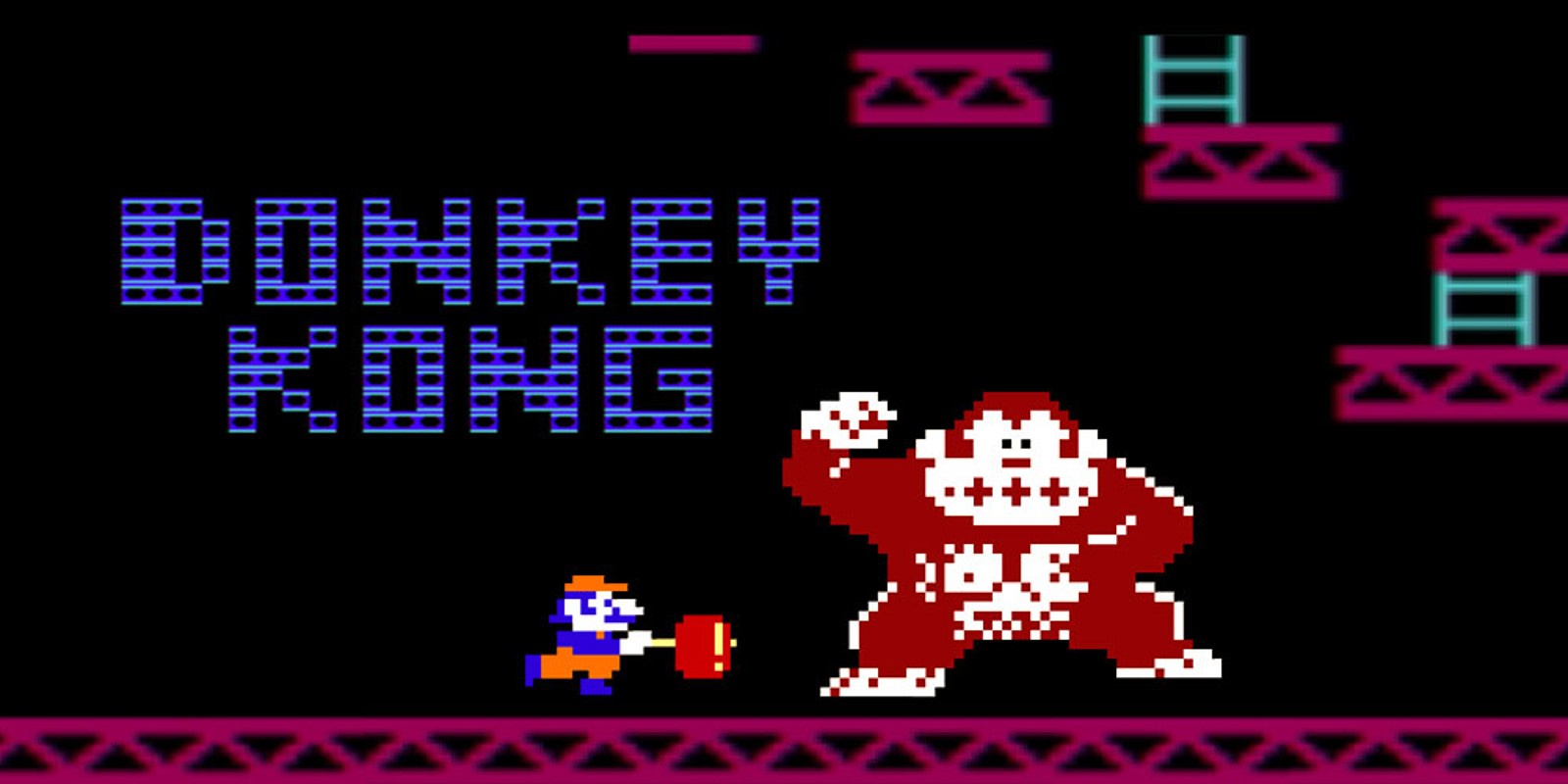
Reviewing a game from 1981 is not easy. People were not yet talking about graphics and other details, while physics and soundtracks were still in their infancy in this medium. Even so, Donkey Kong is such an important game within the video game industry that I am taking the risk of producing this record here at Epic Play. Because of its role in effectively propelling Nintendo forward in this business, I gave due weight to the context in which the title was produced, as we will see below.
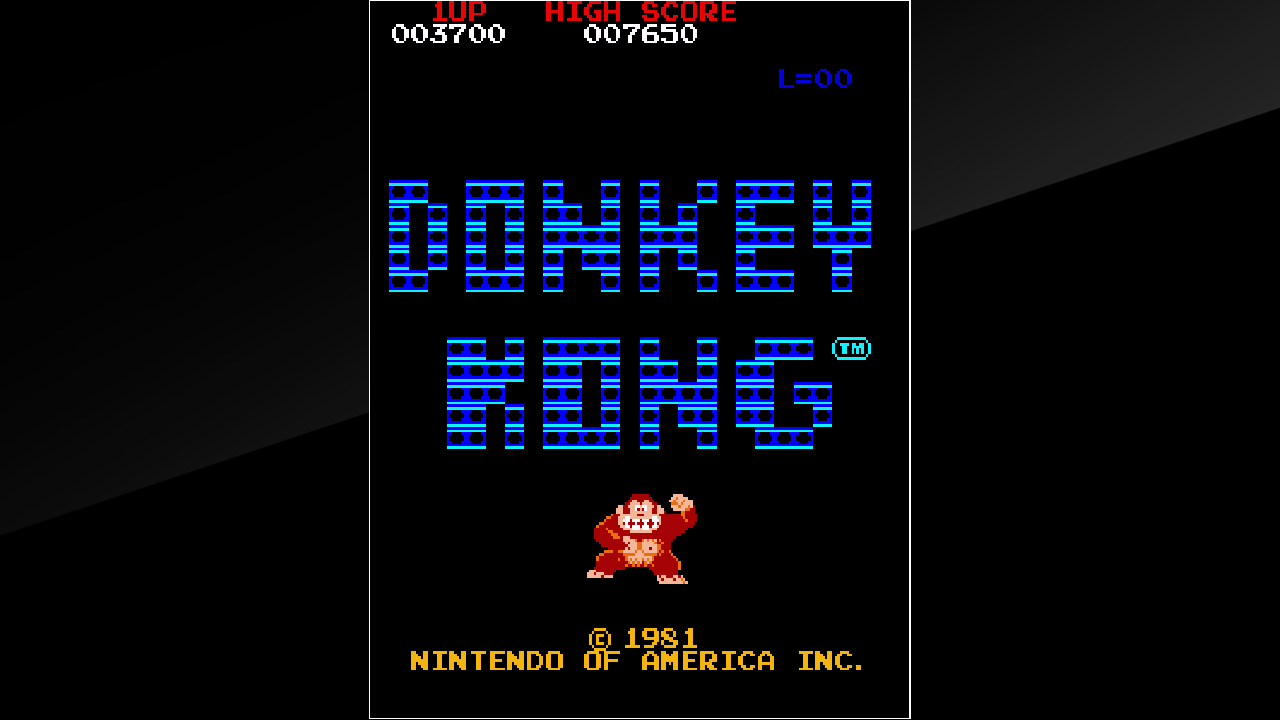
A screen that made its mark on gaming history.
Donkey Kong is a platform game released for arcades in 1981 that later received conversions for almost every platform imaginable. In this review, we will focus on its original version.
Fun fact: Donkey Kong was initially supposed to be a game starring the famous sailor Popeye. Because the brand was not licensed, however, Nintendo had to replace the characters. Curiously, King Features Syndicate, which owned the rights to the character, realized its mistake and rushed to make a game starring the sailor. It bore some resemblance to Nintendo's title and is now remembered as yet another Donkey Kong clone.
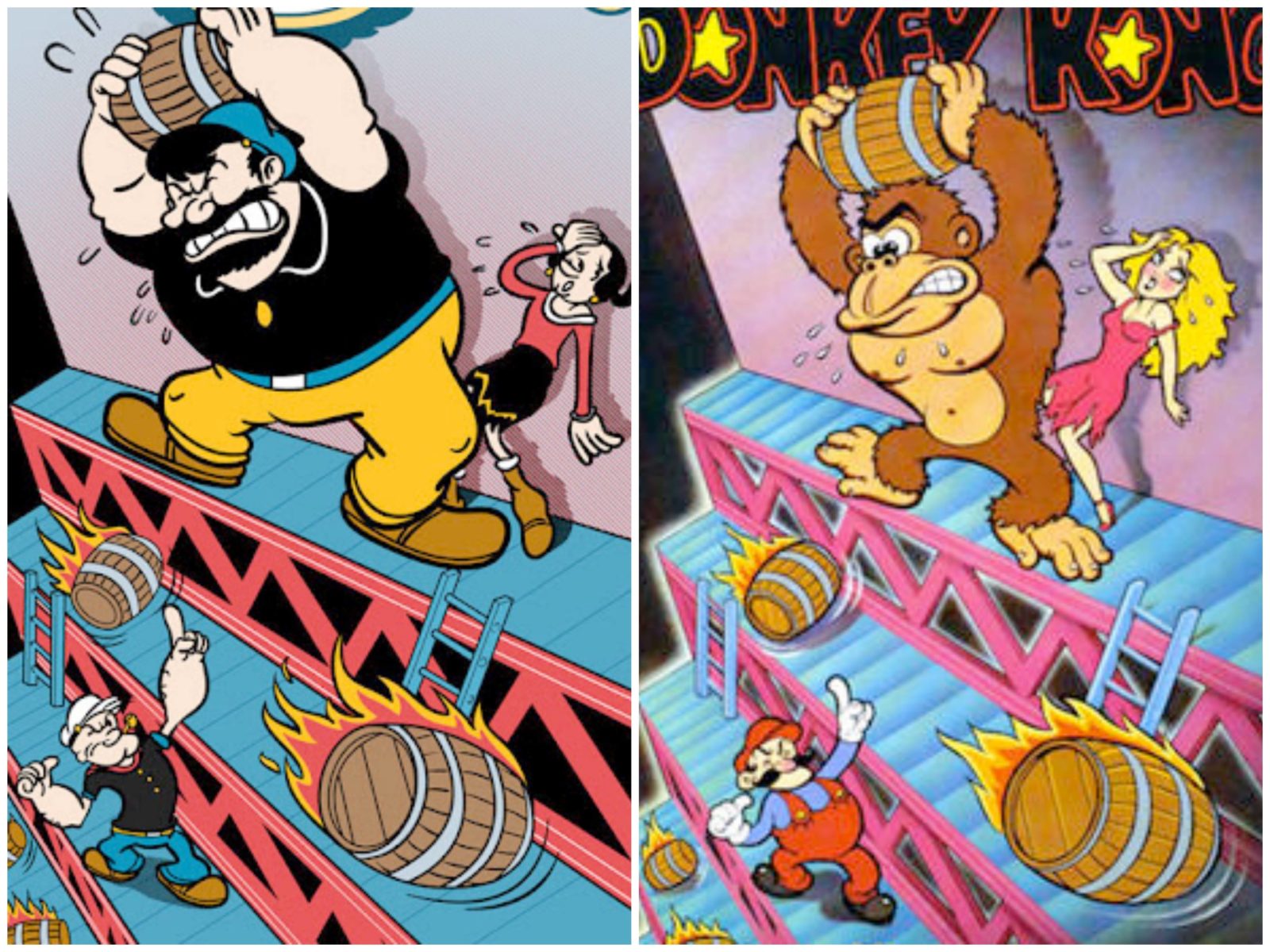
This almost happened.
Market Context

Nintendo president Hiroshi Yamauchi.
The century-old Japanese company Nintendo was successful in Japan across a wide variety of businesses, such as selling playing cards, toys including the Ultra Hand, and even investing in real estate. When the 1970s arrived, its president at the time, Hiroshi Yamauchi, saw electronic games as an industry capable of one day taking the business to a global scale. During the same period, Big N invested in Laser Clay Shooting, a shooting simulator based on laser guns, and had already ventured into the home market with the TV-Game 6 and Color TV-Game 15, which were essentially variations on the classic Pong.
Business was going well for Nintendo, especially for a company focused on the local market. Yamauchi's ambitions were considerable, however, and as expected, he set the goal of conquering America, the objective of every multinational because the United States is the world's largest consumer market. To do so, the serving president "summoned" his son-in-law, Minoru Arakawa, to establish Nintendo of America with his daughter.
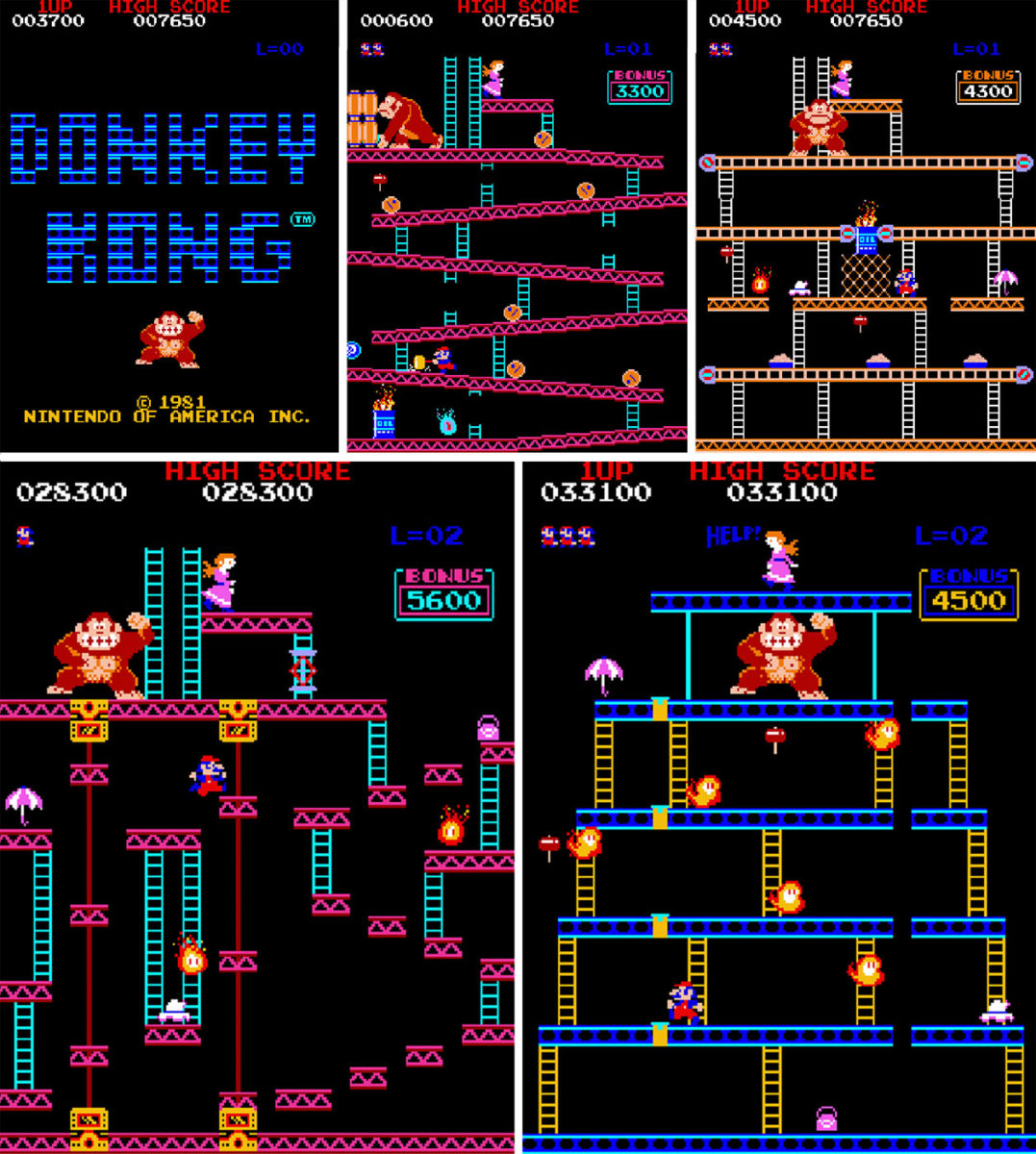
Every Donkey Kong screen in a single image.
The market at the time was consumed by the craze for space games, largely because of the success of Space Invaders. Nintendo, which was not yet recognized for the originality of its games, followed the trend and even had a particularly blatant clone of Taito's classic. Among Big N's arcade titles, one stood out: Radar Scope. Arakawa, whose American subsidiary was already struggling, produced 3,000 machines for the title, but American players did not enjoy the experience at all, and 2,000 units went unsold.
In Japan, Yamauchi was concerned about Nintendo's future outside the country, and the company simply could not absorb the loss from so many machines. The solution would be to reuse the unsold cabinets with game conversion kits. The mission of saving Big N was initially assigned to Nintendo's greatest name at the time, Gunpei Yokoi. He had several important projects for the not-too-distant future, however, and decided to place his bet on a 29-year-old newcomer hired to design cabinets who appeared to possess creativity far above average. His name was Shigeru Miyamoto.
Fun fact: One of Donkey Kong's great achievements is that it was the first title to feature an opening scene. Although Shigeru Miyamoto always says that plot is not the main focus of his games, he knew its importance to the game's atmosphere.
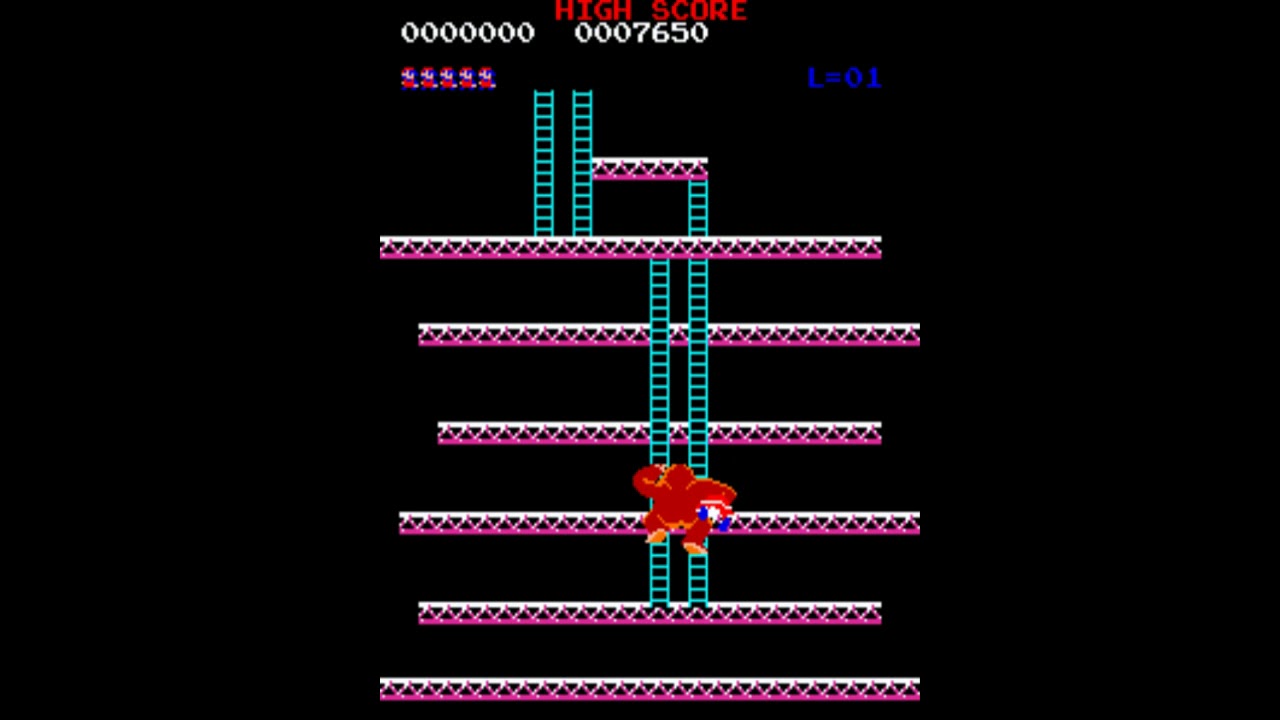
Donkey Kong is considered the first game to have an opening scene.
Behind the Scenes of Donkey Kong
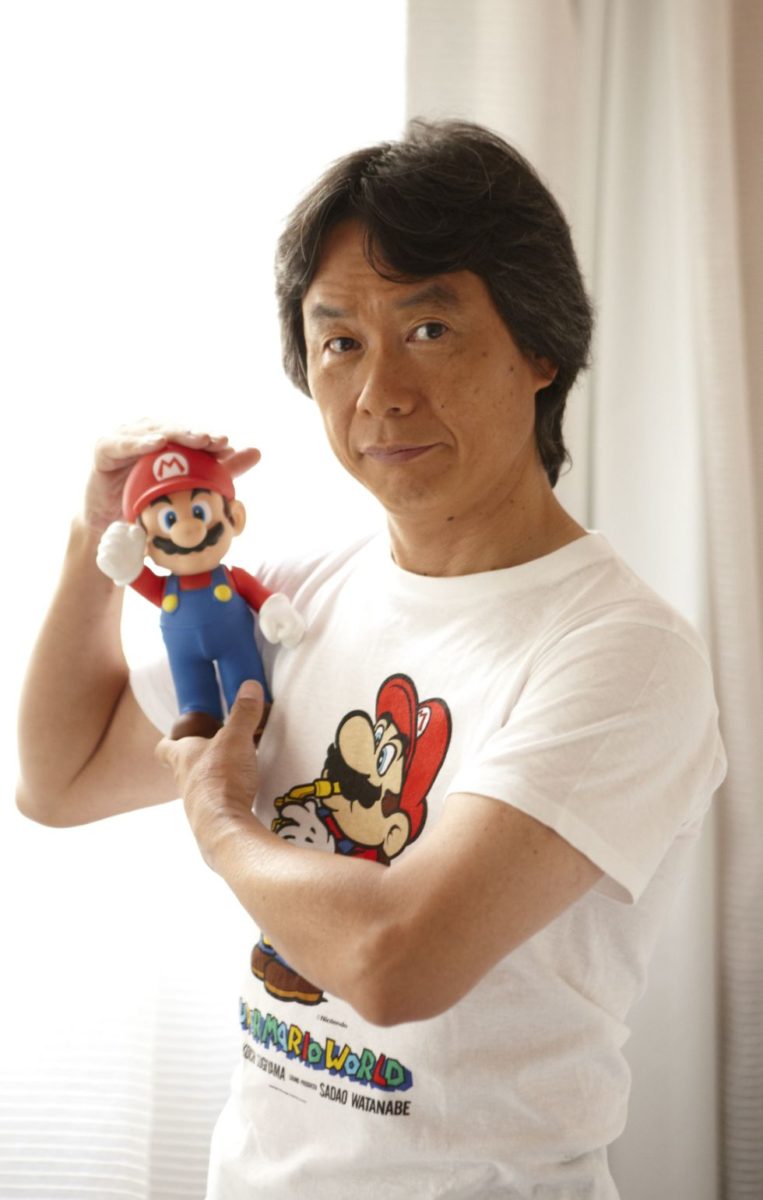
Designer Shigeru Miyamoto.
Hiroshi Yamauchi decided to trust Gunpei Yokoi and placed newcomer Shigeru Miyamoto, who had already ventured into a few games, in charge of turning Radar Scope into something profitable. The designer initially wanted something closer to cartoons and saw the Popeye cartoon as a chance to create something interesting, particularly because a live-action film was being made at the time and Nintendo had previously managed to license the brand for its instant noodles—yes, Nintendo even had "ramen." Unfortunately, negotiations involving the character did not move forward, but the foundation was already ready and essentially required only replacing the characters.
Expectations were high, and Nintendo of America initially decided to test the Donkey Kong machines that arrived in the United States on July 9, 1981. The arcade cabinets were strategically placed around Seattle to gauge the public's reaction. Then the unexpected happened: the machines exceeded 120 plays in just one day, something unprecedented for the company, and Nintendo could begin preparing to celebrate. At last, it had a Pac-Man or Space Invaders of its own.
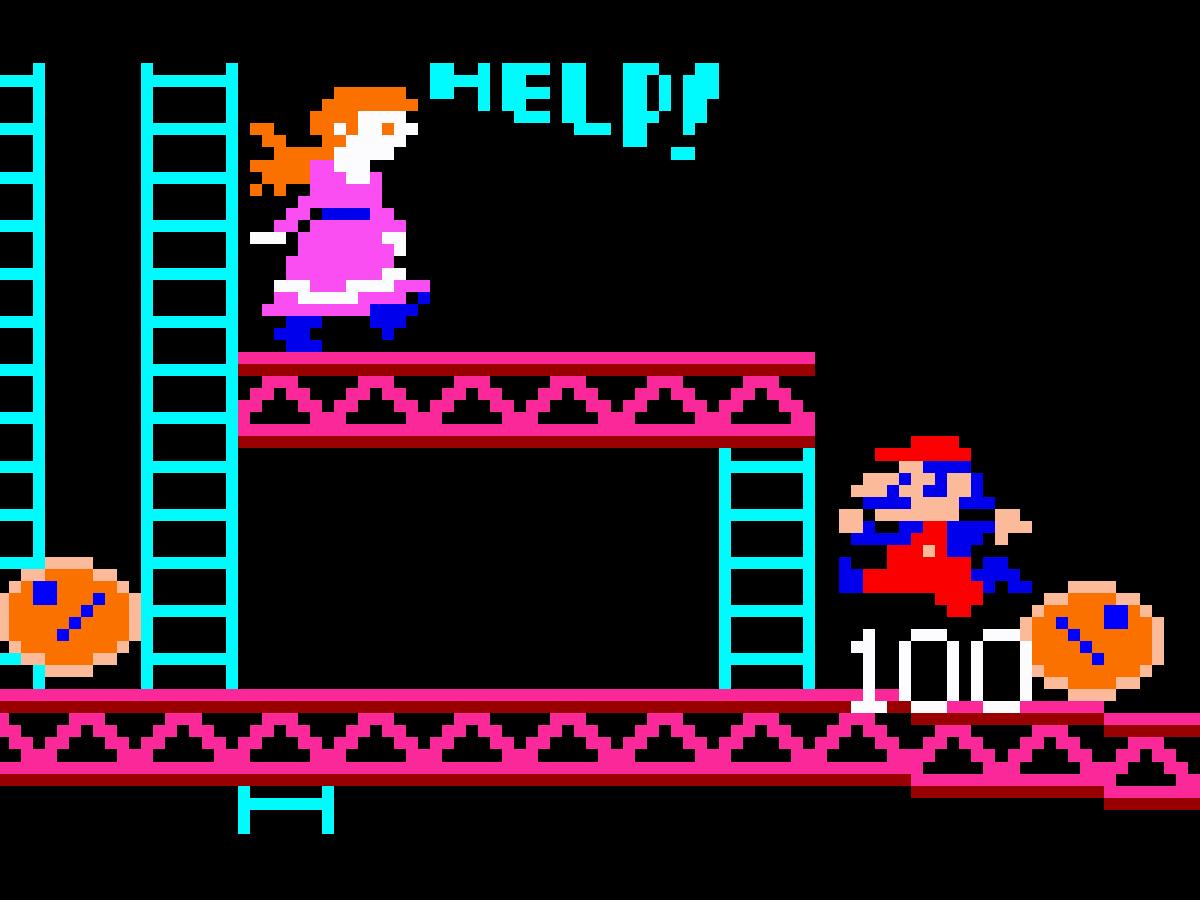
Charismatic characters have always been one of Miyamoto's priorities.
The consequences for Nintendo could hardly have been more positive. The game, which had the difficult mission of selling 2,000 unsold machines, had sold around 60,000 units in less than five months. The craze was so intense that units constantly arrived from Japan, while the Donkey Kong brand began to be used in a wide variety of ways, including on cereal boxes and even in animated cartoons. At the same time, Nintendo recognized Shigeru Miyamoto's achievement, and his potential was—and still is—put to excellent use.
Fun facts: The money Donkey Kong was making drew the attention of Universal City Studios, which saw an enormous resemblance between the title and the classic 1933 film King Kong and filed a lawsuit over the improper use of its intellectual property. Nintendo of America accepted the fight and hired John Kirby's firm, which specialized in the field. The court ruled that the concept of the original work had already entered the public domain, giving Big N the victory.
It did not end there, however. Universal then decided to make its own King Kong game, using the services of Tiger Electronics, with an incredible resemblance to our DK. This time, Nintendo sued Universal and managed to prove that the game was a copy, securing the sales revenue and the games' immediate removal from the market. The world really does turn. Oh! Nintendo also honored the great attorney by giving his name to one of its most important characters.
Technical Review
One of Donkey Kong's great distinctions in its time was its theme, which differed considerably from those of its contemporaries in a period dominated by games involving aliens and spaceships, a significant consequence of phenomena such as Space Invaders and Star Wars. Shigeru Miyamoto brought something different: a game that drew its main inspiration from cartoons, with elaborate and charismatic animation capable of conveying humor during the short but memorable adventure.
The gameplay itself is quite simple and intuitive. We see the gorilla, Donkey Kong, carry a victim, Pauline, to the top of an unfinished building. Seeing the situation, protagonist Jumpman sets out to rescue the woman who appears to be his girlfriend while the ape throws objects to stop us. We cannot forget that along the way we can gain access to the famous "giant hammer," which clears the obstacles we encounter. Anyone who has played Smash Bros. knows what this weapon can do.
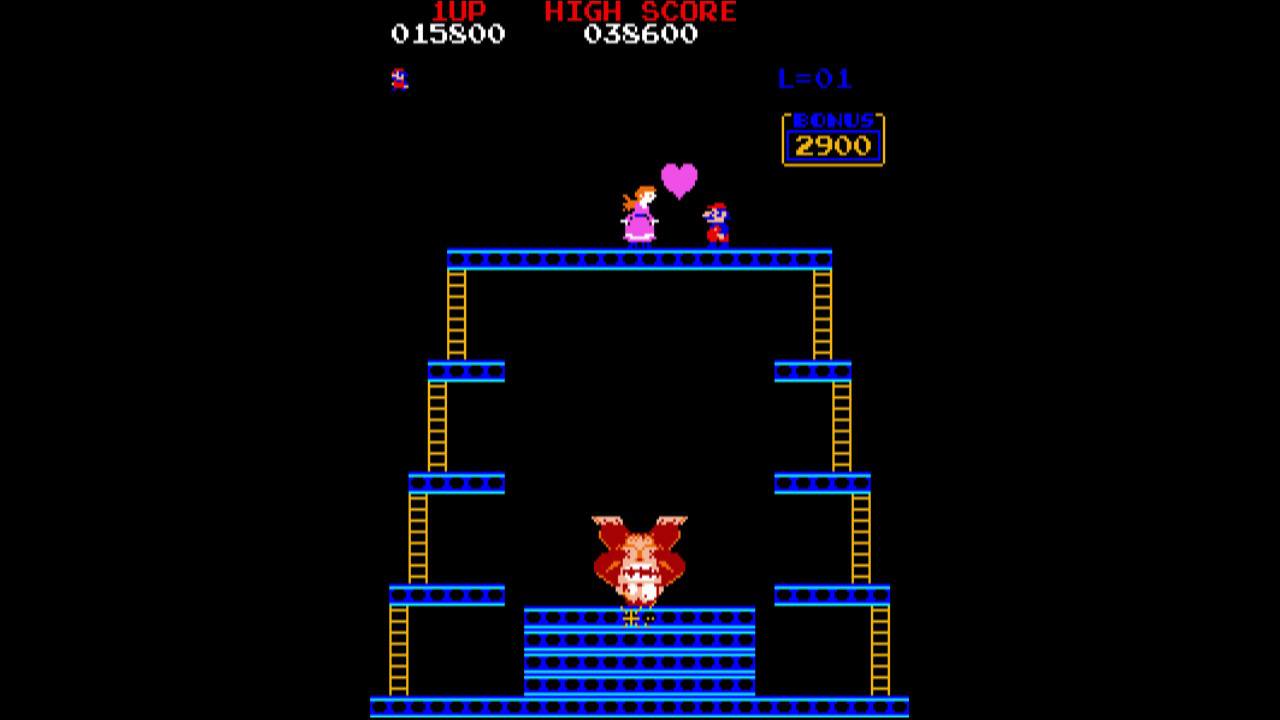
The scenes were simple but still revolutionary.
Graphically, the game is incredible, and Nintendo wisely made use of the limited resources available at the time. Thus Mario—I mean Jumpman—has a large mustache because creating a satisfactory mouth would have been impossible. His cap came about because every hairstyle fell below the desired quality, while his red color did not come from Nintendo's logo, but from the fact that it provided the best contrast with the environment among the few colors available during development. If you do not find that revolutionary enough, consider that the most charismatic character in gaming history up to that point was a yellow ball that merely opened and closed its mouth—and yes, I am talking about Pac-Man.
In the introduction to this review, I said that it is difficult to discuss physics in games from this period. In the case of Donkey Kong, however, it becomes necessary because many critics consider it a true reference point for the beginning of the concept. When controlling Jumpman, we feel resistance from the character, and he skids when we make him change direction while running. We can therefore say that the gameplay is excellent, despite the lack of many competitors from its era for a broader comparison.
Below are images of the classic Donkey Kong arcade game.
The audio, although highly limited like that of every game from its era, is satisfactory and does not disappoint, and even its opening theme is memorable. As for its difficulty, we can say that the game is easy by the standards of the time, requiring little skill or gaming experience to overcome the adventure's four levels. In an era when scores were the main objective in games, Donkey Kong offered different types of environments that entertained us considerably before they began repeating in cycles.
Donkey Kong is tremendously fun, and even today many people still pursue the title of the world's best player. The character controls are satisfactory for the period, the difficulty is balanced, and quick reflexes are required to keep us from being hit during the campaign. The combination of all these factors immortalized the title in the pages of gaming history and made it a timeless classic.
Fun fact: Donkey Kong is among the games competing for the distinction of having received the greatest number of conversions for different platforms. Of all these versions, however, one deserves more recognition than the others: its "remake" for Game Boy. The game follows the original only during its first four stages, then proceeds through a series of 97 new levels involving puzzles and other elements, for a total of 101 stages. The title differs so greatly from its original version that it is popularly known as Donkey Kong '94.
Donkey Kong's Stages
Today, a platform game having only four stages—which are really four screens—may not sound like much. At the time, however, this attracted players' attention by creating the feeling that we had a different experience every time we rescued our damsel in distress. Below, we will explore these stages that marked a generation of players and returned with each completed cycle.
- Barrel: This is not only the game's first stage but remains a symbol of it to this day. Here, Donkey Kong throws barrels that roll down the construction site's "framework" or its ladders. Not knowing their exact direction is one of the greatest problems. As if that were not enough, the gorilla also throws a blue barrel directly at our character at certain moments, while a flame emerges from the oil barrel at the beginning of the level.
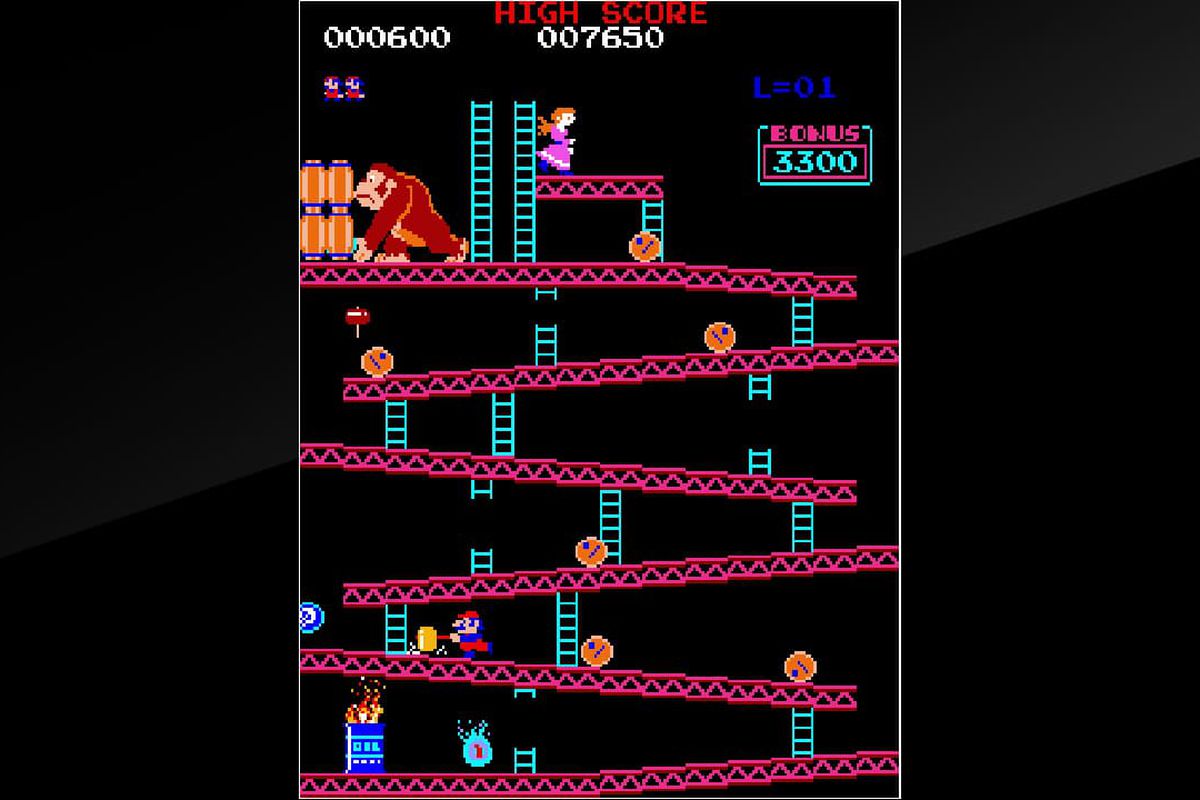
An iconic image of the 1980s.
- Elevator: Moving platforms that travel vertically through the stage are now our main concern. It does not appear particularly complicated. The problem is that Jumpman, despite his name, dies fairly easily when falling from great heights, demanding precision in these movements. We must also worry about fireballs roaming the environment and springs that keep "bouncing" along a predetermined trajectory.
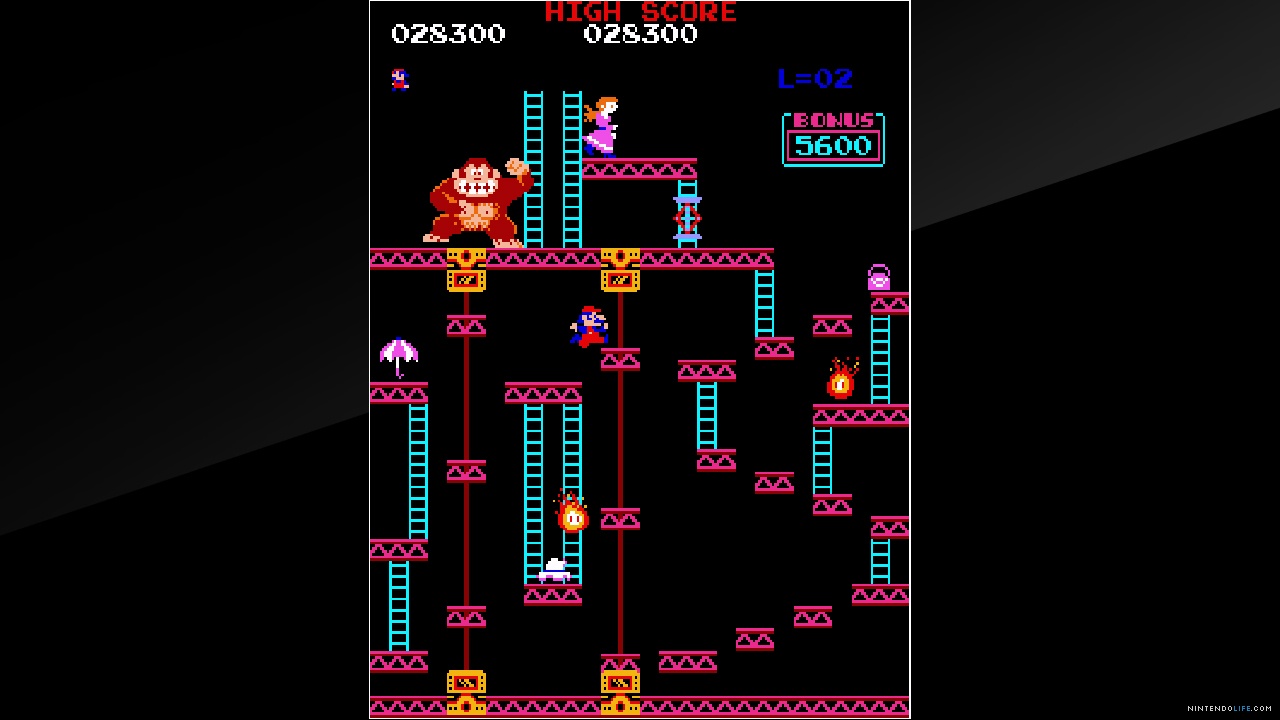
We never forget our first moving platforms.
- Conveyor Belt: This stage's main new features are moving conveyor belts and retractable ladders that hinder our effort to reach Pauline again. The familiar fireballs also roam the environment. It is a fairly easy level once we become accustomed to it.
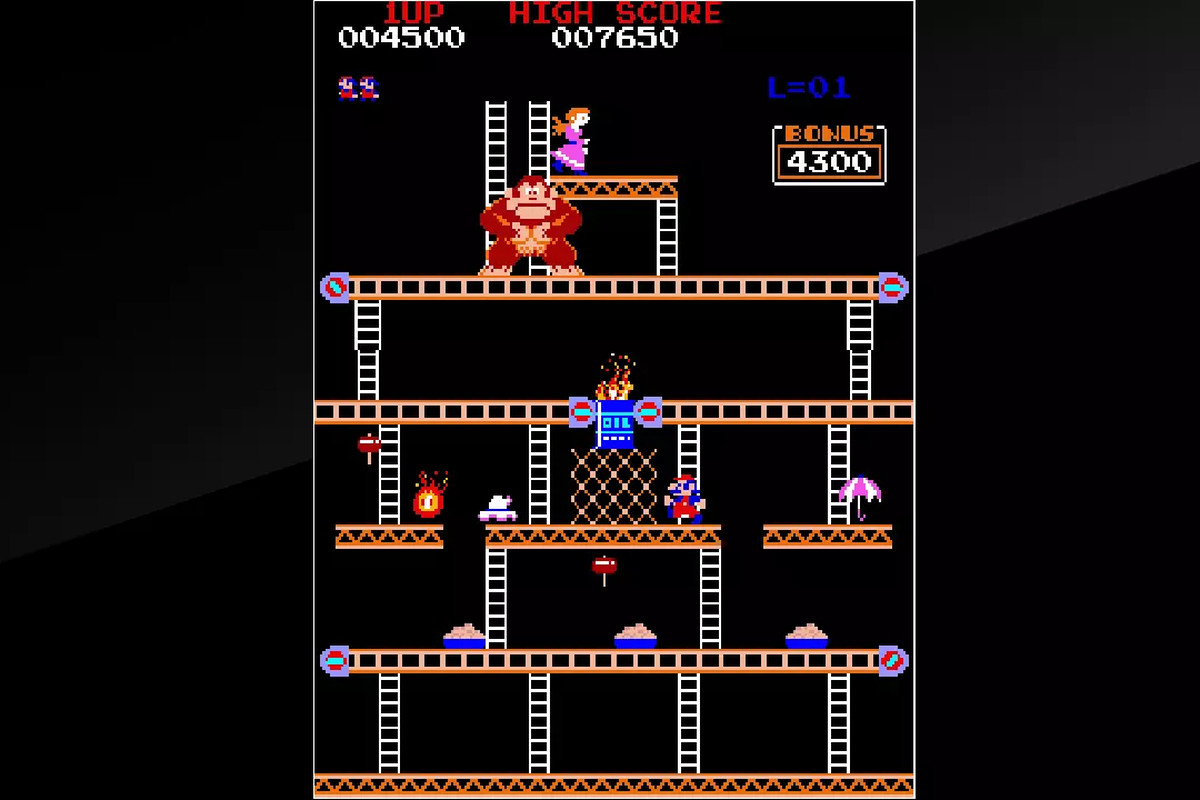
Conveyor belts appear to trouble the carpenter and future plumber.
- Rivet: Our objective now differs from that of the first stage, in which we simply had to reach Pauline. Here, our goal is to collapse the steel "skeleton" on which Donkey Kong is standing. To do so, we need to remove the yellow blocks forming its connections. During this process, we must avoid the living flames that try to stop us. Curiously, I consider this level much easier than the first.
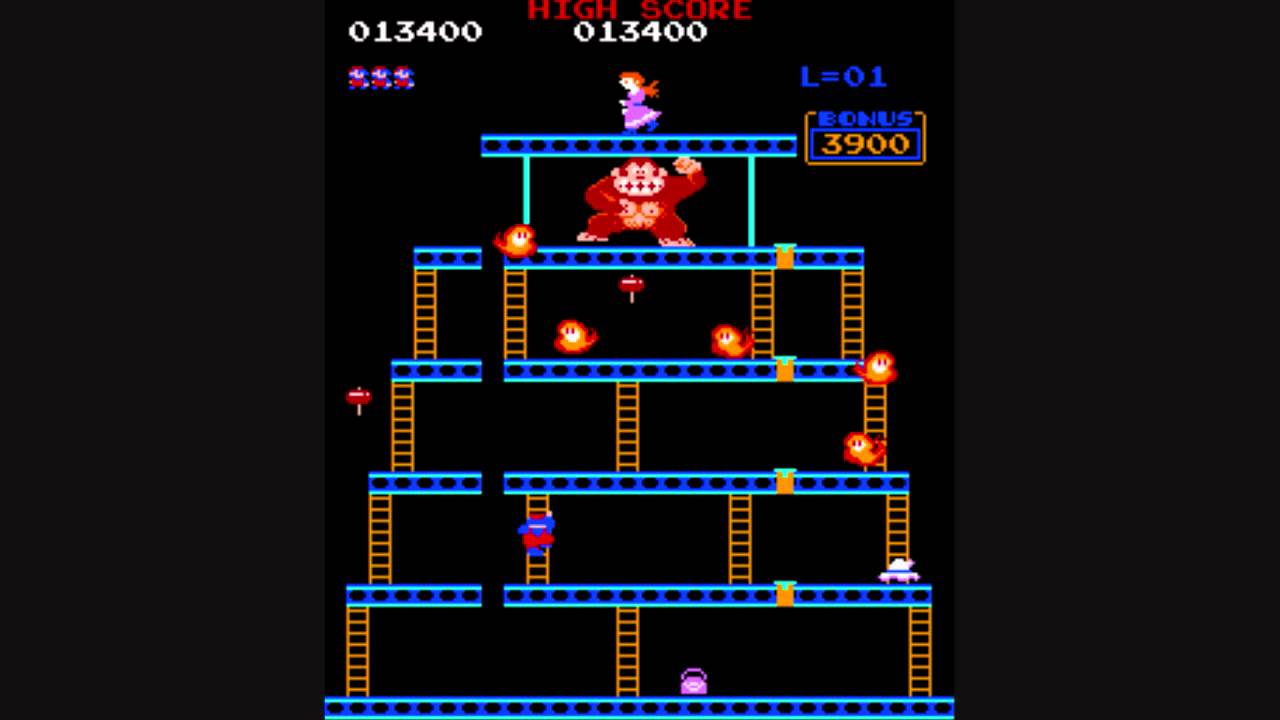
The objective is no longer to rescue Pauline, but to make the ape fall.
Fun fact: In the 1980s, Nintendo was quite flexible about licensing its franchises for use in a wide variety of forms, including animated shows, books, comics, and more. The company's behavior is said to have changed when the disastrous Super Mario film reached theaters. From that point on, it began to exercise much more significant oversight over works featuring its characters.
One recent appearance that deserves mention was in the film Pixels (2015), in which Earth is invaded by beings from games of the 1970s and 1980s. According to its director, Chris Columbus, Big N was highly demanding when licensing the character and also contributed to the appearance. Below is the scene in which Donkey Kong appears. It is no accident that he serves as the adventure's "final boss." Tell the truth: it turned out very cool, didn't it?