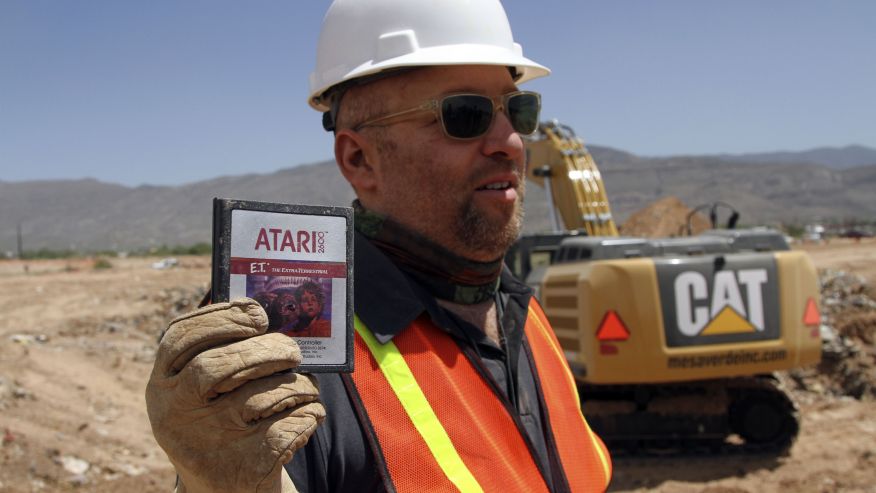

Some time ago, Microsoft confirmed the urban legend that cartridges of E.T The Extraterrestrial, a game released for the Atari 2600 in 1983, were actually buried in the U.S. state of New Mexico.
The burial happened because of the enormous negative reception the game received at launch, with graphics that left much to be desired—even at the time—and utterly incomprehensible gameplay. It was produced in five weeks and generated enormous consumer expectations because of the great success of the Steven Spielberg film on which it was based.
Despite some initial commercial success, the excess number of copies produced, combined with the high licensing cost, caused Atari to lose $100 million.
The game is regarded as one of the main causes of the video game industry's “crash” in the 1980s, when it fell from $3.2 billion to $100 million in just 24 months—a 97% drop—driving countless North American companies into bankruptcy and removing the U.S. video game market “from the scene.” It would be revitalized a few years later by the Japanese companies Nintendo and SEGA.
For these and other reasons, E.T The Extraterrestrial went down in history as the worst game of all time and also as a pioneer of poor movie-to-video-game conversions. In this spirit, Epic Play decided to select several games that failed in one way or another, excluding the already mentioned E.T.
To do so, we divided the list into three different categories:
- Critical failure: When fans and the media give low scores, but the game performs well commercially.
- Commercial failure: When the game receives positive reviews but does not meet sales expectations.
- Commercial and critical failure: When the game neither sells well nor receives a good reception.
The games are not ranked by importance—or lack thereof.
---
Critical Failures — Fans and Media
---
Mortal Kombat Mythologies: Sub-Zero (PS1, Nintendo 64)
Despite selling more than one million copies across both platforms, Mortal Kombat Mythologies: Sub-Zero is regarded as one of the worst platform games of all time.
Developers Ed Boon and Jon Tobias intended to combine elements of running-and-jumping games with the typical battles of fighting games. What was a good idea, however, did not work in practice: ugly sprites, unfairly punishing difficulty caused by unresponsive controls, demands for overly precise jumps, and so on.
On top of that, the PlayStation version featured live-action video scenes that became funny because of their "trash" quality. It is better to stick with the series' traditional games.
Sim City 2013 (PC)
Tarnishing the franchise's reputation, 2013's Sim City sold well thanks to the name established by earlier games. It was harshly criticized, however, for requiring a permanent internet connection, as well as long loading times, lost save data, and repeated crashes.
Add countless bugs, restrictions on city size, and a deeply flawed economic simulation, and the result is a frustrating game. Over time, developer Maxis released several patches and expansions to improve the experience. Even so, the game continues to divide public opinion.
South Park (PC, PlayStation)
The first-person shooter based on the world of South Park is notorious as one of the most poorly received games of all time. Basically, it is bad at everything: poorly made graphics, weak voice acting, disappointing gameplay, and a lack of content. The PlayStation version received scores between 1 and 2 from the international media of the time.
A Nintendo 64 edition was also released and received better reviews, though it still fell short of expectations. At least that version has better graphics and a story mode.
Carmageddon (Nintendo 64, PlayStation)
One of the list's most extreme cases, Carmageddon sold around two million copies, representing excellent commercial performance, especially given its release in the latter half of the 1990s.
The game was nevertheless banned in several countries, including Brazil, because of its excessive violence. In addition to setting a bad example, the game is also bad at everything, including graphics, music, and gameplay, creating an impression of "carelessness." The PC version released years earlier is a little better, but still far from ideal.
Even so, its commercial success led to a sequel, a recent rerelease for iOS and Android, and a reboot.
Final Fantasy: All The Bravest (iOS, Android)
All the Bravest was released free with a microtransaction system in 2013 for iOS and Android. It aims to appeal to players' nostalgia with graphics evoking the Super Nintendo and classic music, but unfortunately the gameplay consists of an army of characters whom players merely tap to attack the enemy until it dies and move to the next battle. Everyone does the same thing regardless of class, and it is impossible to select which enemy to attack.
Beyond the visibly low budget disguised as an appeal to nostalgia through old graphics—most of them reused from other series titles—the game feels disrespectful to fans. It also makes excessive microtransaction requests for elements and characters such as Cloud or Squall, further disrupting gameplay that asks nothing meaningful of the player.
Sonic 2006 (Playstation 3, Xbox 360)
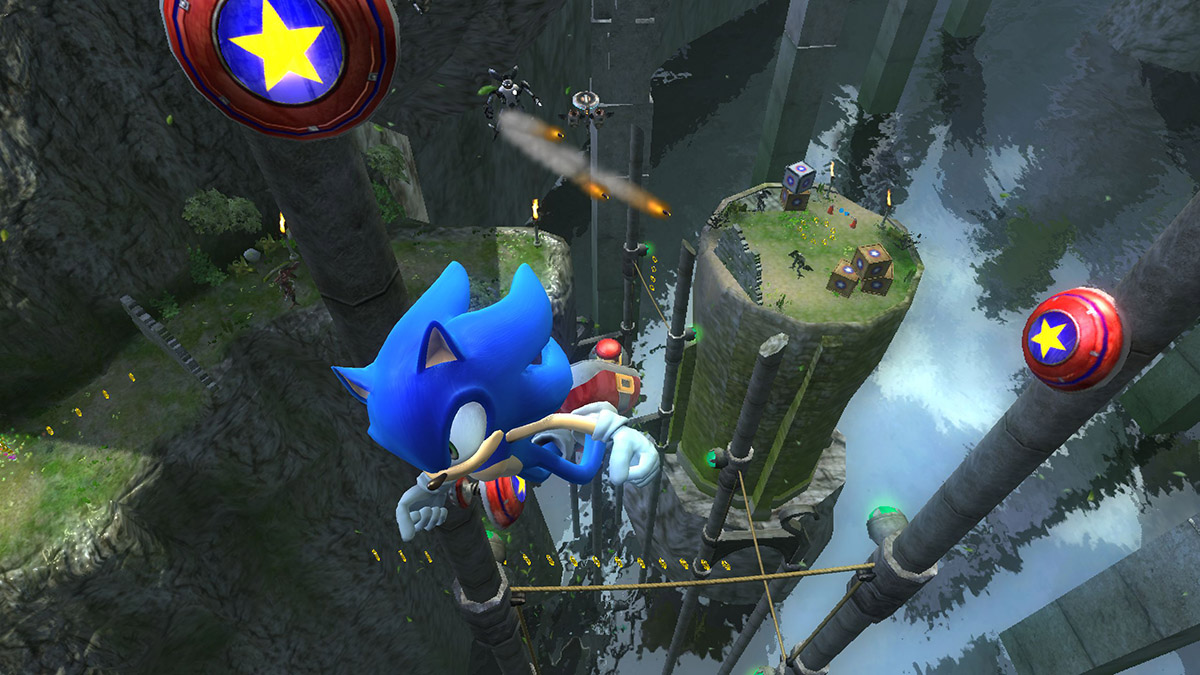
Even poor Sonic did not shine as brightly as he should have. Despite being commercially successful, though below expectations for a game in the series, Sonic 2006 offered countless interesting ideas but ultimately failed at the most important thing: gameplay.
According to reports, the reason was pressure from then-president of SEGA of America Simon Jeffrey, who forced Sonic Team to release the game in November 2006 despite project leader Shun Nakamura's requests to postpone the launch and refine it as much as possible.
The result was inevitable: a visibly unfinished game, with many loading screens, bugs, frozen characters, and a bad reputation for one of the gaming world's most traditional and classic series.
The game has good graphics for Xbox 360/PS3 titles, a great story depending on the chosen character—Sonic's is poor—first-rate music, charismatic new and returning characters, and well-produced scenes, but it lacks the skeleton: being a good game.
Call of Duty: Black Ops – Declassified (PSVita)
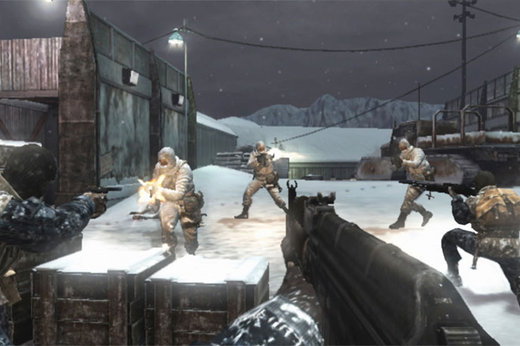
Call of Duty is one of the most famous and profitable series in first-person shooters, generating high expectations whenever a new game is announced. Unfortunately, the PS Vita version is the franchise's black sheep, embarrassing fans primarily through its tiny campaign—lasting less than an hour—poor touchscreen controls, and bugs involving stuck enemies, enemies passing through walls, and so on. Even so, this COD ranked among the PS Vita's best-selling games because of the "weight" carried by its name.
Ridge Racer (PSVita)
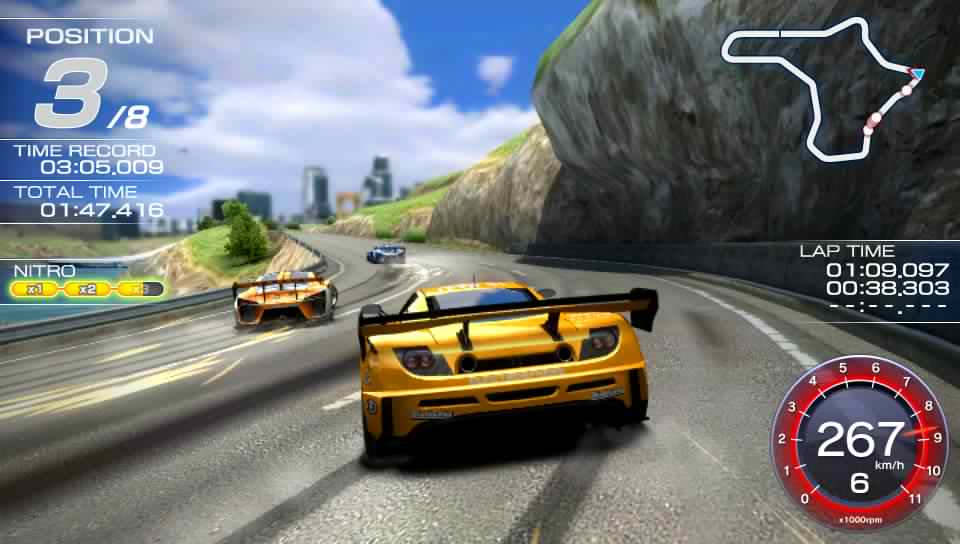
The Ridge Racer series has been relatively famous since the early 1990s for placing players in illegal races across various locations. Owned by NAMCO Bandai, development of the PS Vita game was handed to the Cellius studio, and unfortunately the result left much to be desired because players received few options, encouraging DLC purchases and creating the feeling that they had bought a demo. There is no story at all, a step backward from the other series titles, and the gameplay also disappoints: its level-advancement system, rather than increasing competitiveness, merely helps unbalance multiplayer.
Star Trek 2013 (Playstation 3, Xbox 360, PC)
The “Star Trek” game falls under the old “curse” known among video game audiences regarding movie-to-game adaptations. Taking the form of a third-person shooter, it is visibly rushed, poorly made work released solely to promote the film. The graphics are average, the animations are dreadful, and the repetitive, boring battles display a profound lack of inspiration, while an excess of bugs further damages the experience. Selling well thanks to the name it carries, Star Trek, for now, is better on the big screen than on consoles.
Mario and Zelda Games (CD-i)
Nintendo's most devoted fans have probably heard of these games. They arose in the early 1990s, when Nintendo planned to make a CD peripheral for the Super Nintendo and had a partnership with Sony that never became public. In June 1991, a Sony representative unveiled the “PlayStation” project at an event called the Consumer Electronics Show, but the following day Nintendo sent a note to the press saying the partnership would be dissolved because it was now joining Philips. Eventually, this Nintendo "defection" became Sony's project of the same name, released in 1994.
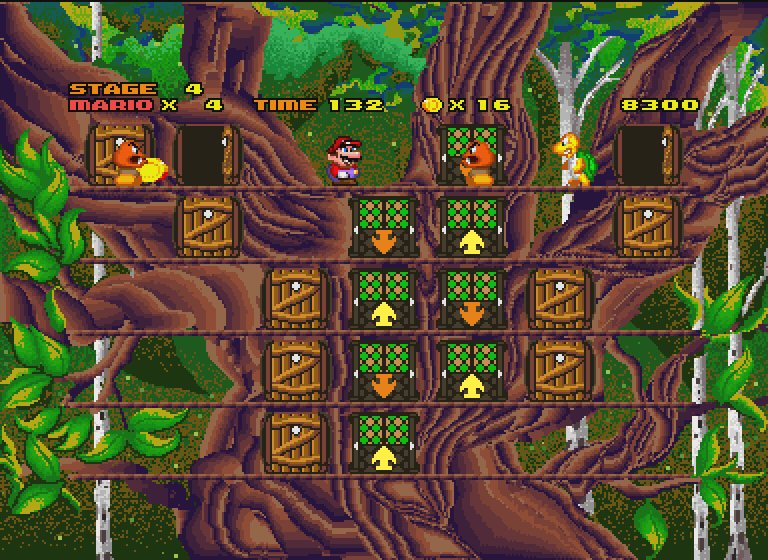
The Philips partnership ultimately did not produce a peripheral either, but the company obtained licenses for Nintendo's leading mascots to make games for its own console, called CD-i. This produced Hotel Mario, regarded as the worst game in the mustachioed hero's history because of unresponsive controls, poorly made cartoon cutscenes, and gameplay consisting of closing every door in the environment to clear a stage; Zelda the Faces of Evil, and Zelda The Wand of Gamelon, which use a 2D platforming system, suffer technical problems, and mischaracterize the series; and Zelda's Adventures with terrible graphics and gameplay, as well as a loading screen at every change of environment that irritated players.
Fast and Furious: Showdown (Playstation 3, Xbox 360, PC, Wii U)
Another game released across several platforms to promote the 2013 Fast & Furious film. It does not matter which version you choose, because all of them are thoroughly bad: the game is short, its physics are terrible—just like the films—its missions are buggy, its tracks lack inspiration, its voice acting disappoints, its multiplayer is painful, and its controls do not respond as they should. It is one of those games worth experiencing as an anthropological study of how not to make a game.
Batman The Dark Tomorrow (GameCube, Xbox)
You did not read that incorrectly: this game was made for GameCube and Xbox, and it has these graphics. Yet its visuals are still among its better qualities compared with everything else: the camera angles are painful, missions are repetitive—kill X enemies and reach a certain place—bugs appear constantly, and most importantly, it is not remotely fun. The only redeeming qualities are the video scenes, which look good for the era, and the story written by Scott Peterson, one of the Batman comic writers, but it fails at the main thing: being a good game.
Ride to Hell: Rebtribution (Playstation 3, Xbox 360, PC)
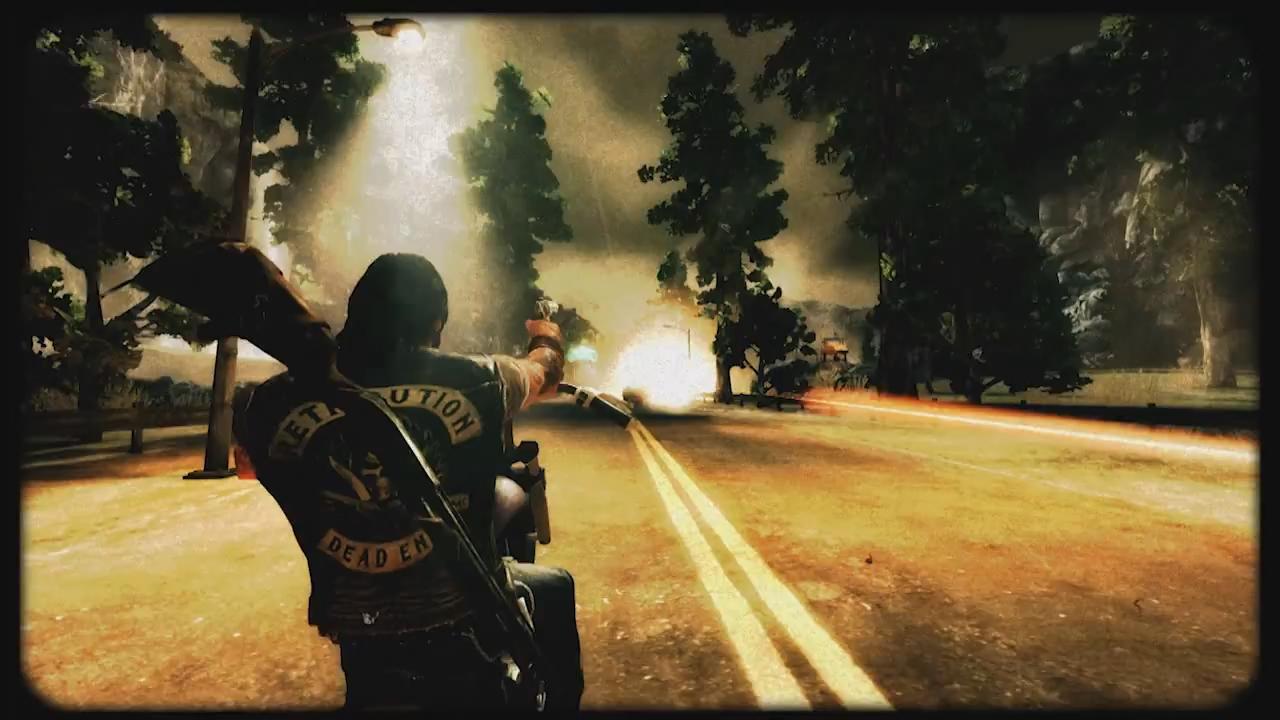
Promising to be a kind of 1960s GTA on a motorcycle, Ride to Hell: Retribution became one of the greatest fiascos in gaming history because of repetitive gameplay, technical bugs and camera problems, as well as strange graphics with terrible animations. The portrayal of women as purely sexual objects is also open to criticism, with tasteless scenes that perhaps not even the most stereotypical sexists would want to see, while setting a terrible example for players even in adulthood. Regrettable!
Self Defense Training Camp (Xbox 360)
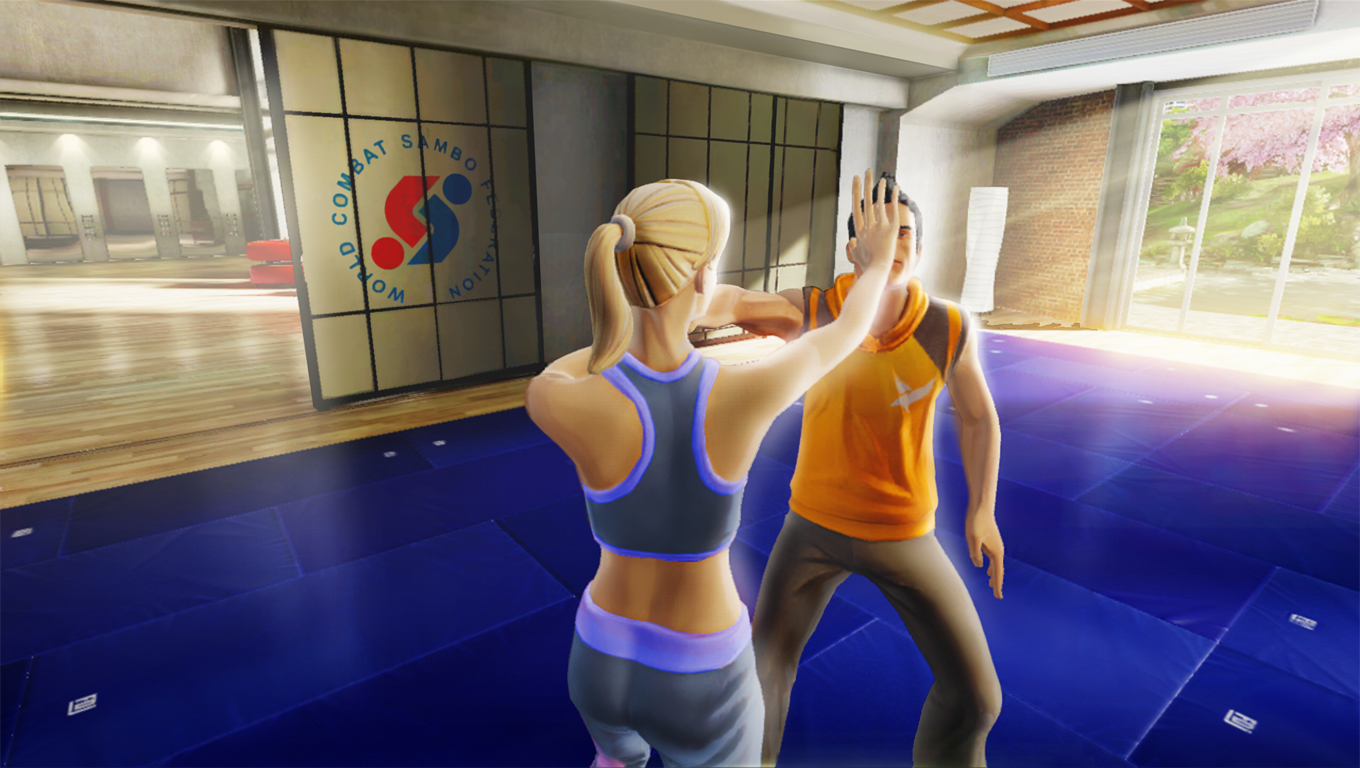
Ubisoft also made a serious mistake in 2011 by releasing a Kinect game that supposedly taught self-defense through Tai Chi Chuan techniques. Most curiously, the company itself already had experience using the peripheral with games such as the famous Just Dance. Self Defense Training Camp fails in every respect: character movement is "robotic," and the gameplay is plainly completely nonfunctional, frustrating players who perform the movement requested by the game because the peripheral cannot register it due to poor programming. You are better off joining a gym and taking self-defense classes or choosing other Kinect games for exercise.
Ninjabread Man (Playstation 2, Wii, PC)
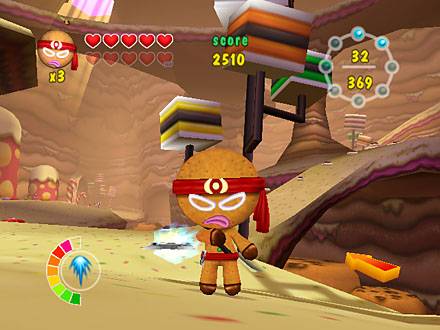
Regarded by many as the “worst multiplatform game of the 2000s,” Ninjabread Man is universally viewed negatively because of weak graphics, frame-rate problems even in small stages with few objects, and many other technical deficiencies. Add unimaginative, extremely "lifeless" environments, equally dull puzzles, and virtually no duration—the game has three stages! Despite an overwhelmingly negative reception from critics and consumers alike, producer Data Design announced in 2008 that it was making a sequel, but never discussed it again.
M&M’s Kart (Wii, Nintendo DS)
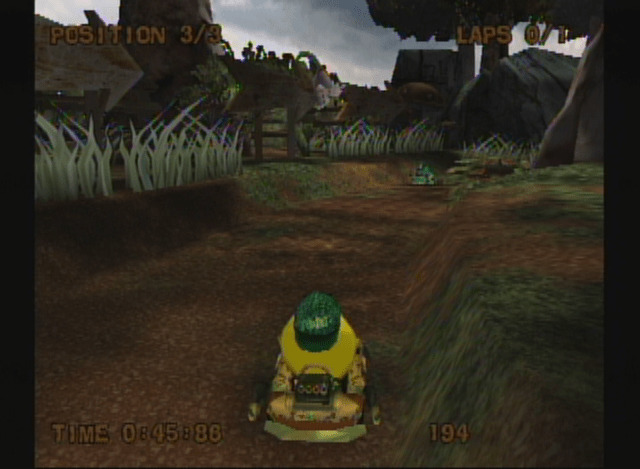
Who would have thought the little pieces of milk chocolate in colored shells would receive a racing game? Seeking to imitate the classics Mario Kart and Sonic & All Star Racing, M&M’s Kart Racing is an example of how not to promote a brand, perhaps driving players away from the chocolate after they endure the experience. The game is terrible in every respect: the graphics evoke the earliest 3D games of the 1990s; the utterly uninspired gameplay conveys no sense of speed, and the controls fail to respond properly; the stages are extremely linear, with environments lacking detail, and some tracks are so tiny they frustrate any player. As a bonus, bugs can leave the kart stuck to a wall and prevent you from continuing. Zero points!
Alien Colonial Marines (PC, Playstation 3, Xbox 360)
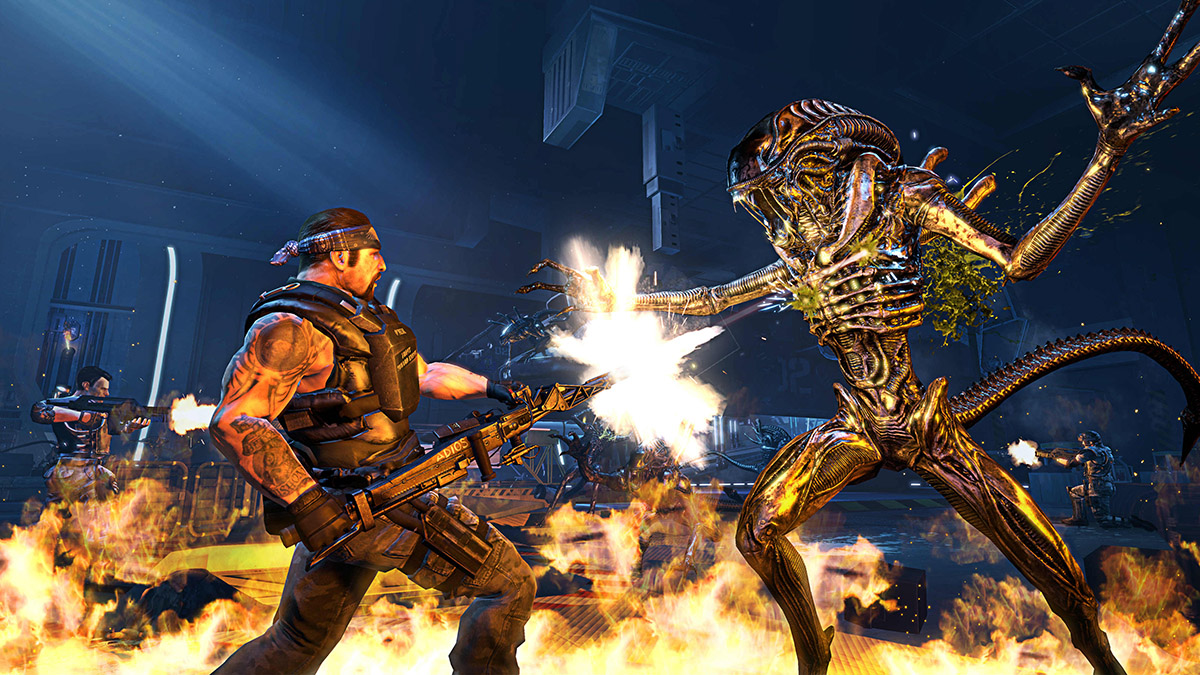
Developed by Gearbox Software, this game suffers from the same curse as most entries on the list: bugs every minute, weak graphics—do not be misled by the image—a boring competitive multiplayer mode, and an equally dull cooperative mode. Another point open to criticism is the lack of consistency with the Alien films, especially considering the producers said the game would take place in the same universe as the movies. At least the soundtrack is good.
Postal 3 (PC)
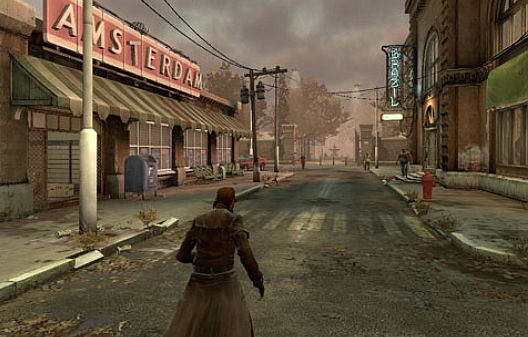
The third-person shooter series Postal for PC also has its black sheep. Postal III has a poor camera, dreadful enemy AI, controls that fail to respond when they should, overly linear stage design, and even several completely unfunny jokes. It is true that the game's story is a redeeming quality, though hardly brilliant, and there is a broad variety of weapons that would increase replay value. Unfortunately, few will continue simply because it is not fun.
Assassin's Creed III (PlayStation 3, Xbox 360, Wii U, PC)... and Unity? (PS4, Xbox One, PC)
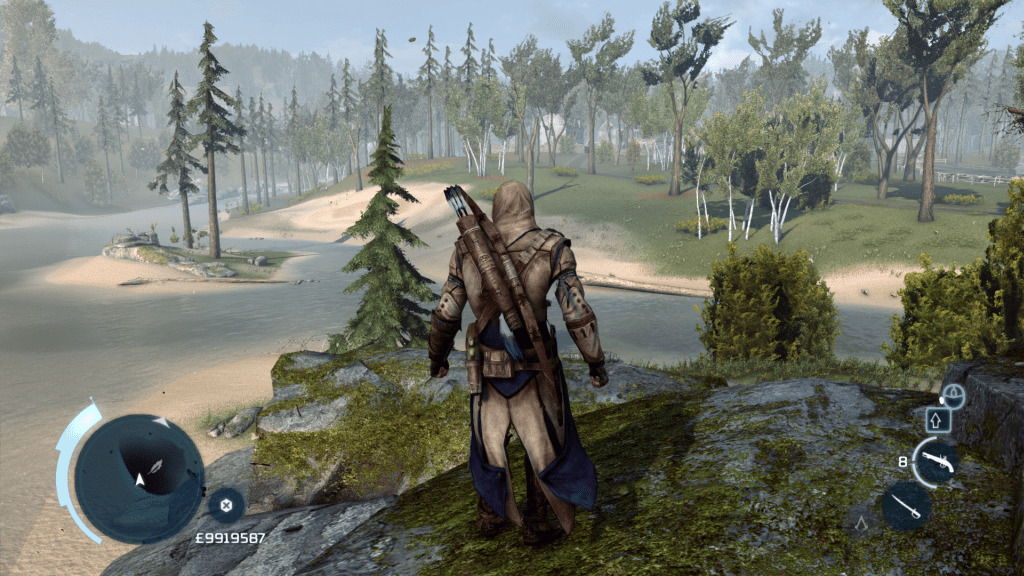
Despite receiving relatively positive coverage from the specialist media, earning good review scores, winning several awards, and selling well, much of the public considers it a disappointment, and it is easily regarded as one of the weaker Assassin's Creed entries. According to franchise fans, the game has many bugs and gameplay problems, abandoning the intuitive controls of Episodes I and II and often failing to respond properly. Another step backward is its use of prerendered scenes instead of the game's own graphics; although attractive, they clash with the rest of the game. Finally, loading times are long and journeys take too much time, crossing extremely broad environments and making the game monotonous.
The game is not a failure because it is necessarily bad, unlike our honorable mention, Assassin's Creed Unity for XONE, PS4, and PC, which remained packed with bugs to the end. AC3 had an interesting story, good graphics, and other appealing qualities, but it also featured a heavily criticized ending that disregarded all the "hype" the franchise had built over the years.
---
Commercial Failures
---
Grim Fandango (PC)
Regarded by many as the best "point-and-click" game of all time, Grim Fandango is a LucasArts game released for PC in 1998. It won countless awards, including "best adventure game of the year," "best music," and "best game of E3 1998," and is fondly remembered by everyone who bought it.
Point-and-click games were entering a decline, however, because gamers generally seek titles offering as much interaction as possible, usually with an action focus.
Grim Fandango sold only 500,000 copies, too few for the company and not enough to cover production costs. Because of its commercial failure, sequels to Sam & Max Hit The Road and Full Throttle were canceled. The era of point-and-click games as the fashionable choice on PC was approaching its end.
Madworld (Wii)
One of the first games made by PlatinumGames in partnership with SEGA, Madworld received very positive media reviews for succeeding across every technical area, as well as for its distinctive artistic style and its attempt to be a more "mature" Nintendo Wii game, differentiating itself from the console's other releases through a violent style.
The game sold only 120,000 units in North America, however, and just 3,000 units in Japan during its launch week, generally when games sell the most. In response, SEGA said at the time that it would "never again release a game aimed at adult audiences on Wii."
The Last Express (PC)
This first-person adventure game takes place in 1914, shortly before World War I. Widely praised for its good story, multiple endings, and excellent pacing, it came on three CDs and cost $6 million to produce, an enormous amount for the era.
Well reviewed around the world, winning awards, and remembered by players as a game of indisputable excellence, it sold only 100,000 units over three years. A commercial fiasco!
It was nevertheless rereleased in 2013 as a Gold Edition and made available for iOS and Android around the same time.
Marvel vs. Capcom Infinite (PlayStation 4, Xbox One, and PC)
Perhaps it does not deserve to be on this list, since the game received mixed scores and divided opinion. The critical consensus is that the title's visuals are poor in both its environments and characters, while the consensus among praise is that the series' gameplay remains as good as ever.
Capcom's goal, however, was for the game to sell two million copies by December 31, 2017, and it sold only one million.
Okami (Wii, PlayStation 2)
Another universally acclaimed game, Okami was praised for its innovation in graphics and characters, being beautiful, charismatic, and notably engaging.
Winning several awards, including game of the year from various publications, and praised worldwide as an excellent game, the title sold only 600,000 copies, which Capcom considered a failure. It was even listed in the 2010 Guinness Book under the title "worst commercial performance for a 'game of the year' award winner."
Pyschonauts (PC)
The platform game directed by legendary Tim Schafer—the same person behind Grim Fandango mentioned earlier—is another case of a game praised everywhere and winner of several awards, yet it sold only 100,000 copies.
The weak commercial performance led publisher "Majesco Entertainment" to leave the gaming world, while over many years the title entered the "cult game" segment and gained a substantial group of fans around the world.
Fortunately, this story had a happy ending: the game was rereleased digitally in 2015, sold 1.7 million copies, and led to a planned sequel, Psychonauts 2.
Its main points of praise include combining the platform and adventure genres with logical, entertaining puzzles, as well as a good story and charismatic characters.
Sonic Runners (iOS, Android)
Using the talent of Sonic Team, which developed a smartphone game for the first time, Sonic Runners became popular among hedgehog fans because of its appealing visuals and variety of content for a free-to-play game.
Downloaded about five million times, the game is considered a commercial failure because it did not deliver the expected microtransaction revenue. By all indications, people were already having enough fun playing only the free mode. SEGA therefore recently released Sonic Runners Adventure, using the same system but as a paid game.
Beyond Good & Evil (PC)
Developed by Ubisoft and conceived by Michel Ancel, creator of the Rayman, Beyond Good and Evil series, is a game combining action, adventure, and espionage elements, as well as an engaging story featuring an investigative reporter."
Originally released in 2003, it earned praise around the world and won awards, but did not deliver the expected commercial success, leaving what was meant to be a trilogy with only one title.
The game was eventually rereleased digitally for Xbox 360, and that version achieved considerable commercial success, but Ubisoft Europe's director, Alaine Corre, said at the time that the success came a little "too late."
Because it had a substantial fan base and gained long-term fame, Michel Angel announced Beyond Good and Evil 2 in 2017, fourteen years after the original game launched, apparently finally continuing the trilogy planned in the 2000s.
Brutal Legend (PC, PlayStation 3, Xbox 360)
Another Tim Schafer game that achieved critical but not commercial success. Mixing action and adventure with real-time strategy, protagonist Jack Black is transported into the world of heavy metal. He interacts with several famous real-world figures from the genre, including Motörhead, Ozzy Osbourne, Judas Priest, and others.
With excellent voice acting, good graphics for the era, and 107 heavy-metal tracks from more than 75 bands, Brutal Legend is considered addictive and innovative by many people, although it received some criticism for gameplay that was difficult to learn. With a strong marketing campaign, it sold 215,000 units in its first month, which was considered a failure, and a proposed sequel was canceled.
Over time, the game reached 1.4 million copies. This was considered a relative success, but remained below expectations given publisher Electronic Arts' substantial investment.
Shenmue I and II (Dreamcast and Xbox)
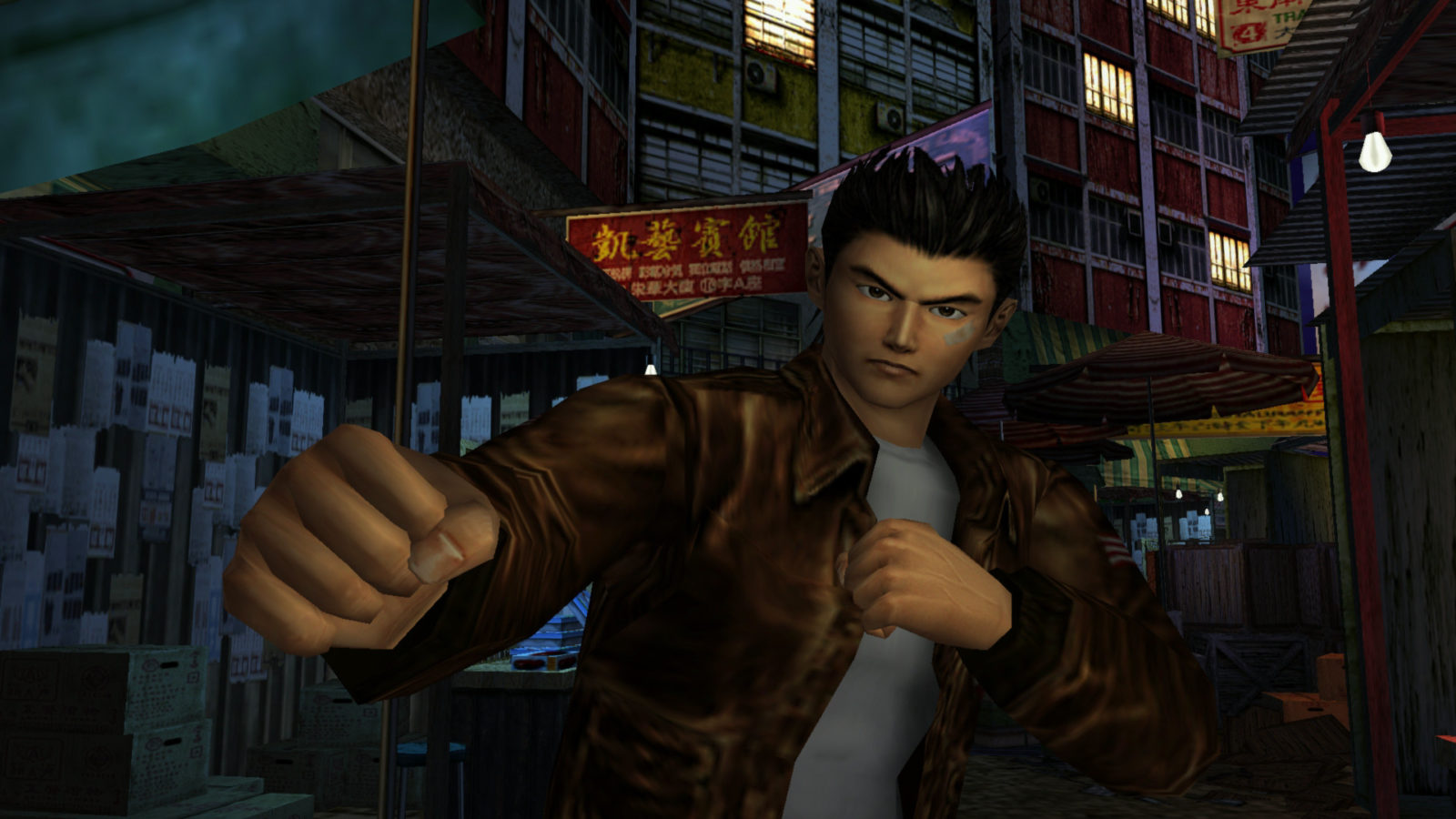
Everyone knows how incredible the game is, but unfortunately it was an immense commercial failure and one of the factors behind the Dreamcast's premature “death.” The problem was that this was THE MOST EXPENSIVE GAME OF ITS ERA, costing around $47 million, while development lasted about five years, beginning on the Sega Saturn and eventually ending up on Dreamcast.
Its high cost is reflected in a game as elevated in quality as it was in expense: the interactivity is fantastic, especially for the era; the system known as “open world,” extremely common today, was revolutionary; the graphics are the best on Dreamcast; the story is highly engaging; the soundtrack is excellent; and everywhere you look in this game, you will find perfectionism.
The game was universally acclaimed by the public and critics, receiving a “10” from several specialist magazines and gaining an enormous legion of fans around the world. Instantly considered a classic, it sold around 1.2 million copies, becoming the third best-selling Dreamcast game. Unfortunately, covering its production costs would have required far more copies to be sold; given that the console sold ten million units, practically every Dreamcast owner would have needed to buy the game.
A game far ahead of its time ultimately became a commercial failure for SEGA, causing the company enormous losses. A second game in the series was released, but since the first one's engine was already finished, it cost "only" $18 million and was also another commercial failure. Today we have Shenmue 3 , which was funded on Kickstarter, with contributions from millions of fans making production possible.
---
Commercial and Critical Failures
---
Sonic Boom (Wii U, 3DS)
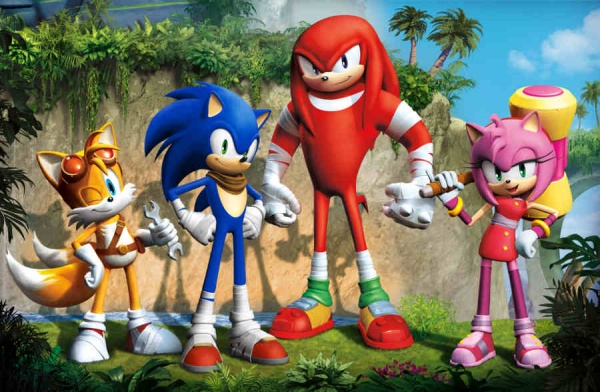
Needing no introduction, the three games' poor performance is virtually unanimous, a case on which nearly everyone agrees—the media, the public, fans, and enthusiasts—resulting in weak sales.
All three games suffer from the same problem: they are dull and do not feel like Sonic games, while Rise of Lyric for Wii U also suffered from dozens of glitches and performance problems. The new character designs were also rejected by the vast majority of gamers.
With an intense marketing campaign, the first two games, Rise of Lyric for Wii U and Shattered Crystal for 3DS, sold 620,000 copies together, among the blue hero's worst commercial performances. The third game, Fire and Ice for 3DS, sold 240,000 copies and is also regarded as a failure.
For comparison, Sonic Lost Worldon Wii U sold more than one million copies by itself with incomparably smaller advertising investments. It seems SEGA will stick to the blue hero's traditional saga. Whew.
Bomberman Act Zero (Xbox 360)
Developed by Hudson in an attempt to revitalize the classic series, the company sought to ride the "wave" of darker games from the 2000s and decided to update Bomberman for the genre.
Universally received negatively, it was criticized in every area: the proposed new universe does not fit the original series at all, the camera is terrible, loading times are dreadful, and the game is repetitive and dull. The outcome was inevitable: weak commercial performance and a rapid fall into obscurity.
Lula (PC)

Lula 3D is a point-and-click adventure game for PC released in 2005. Aimed at an adult audience, its protagonist is an erotic-film star who wants to produce her next movie but must rescue her fellow actresses after they are abducted. The game uses extremely childish language, seemingly appealing to "12-year-old boys who want to see adult films," losing any comic quality proposed by the plot. The graphics and sound also disappoint for the era, while bugs are constant and the puzzles are not remotely intelligent. In short, it is a game that fails in every possible way, worthwhile only for those who enjoy "trash" in the "so bad it's good" style.
Battlecruiser 3000AD (PC)
Considered the most "overrated" game of all time during previews, people had been extremely excited since its announcement in 1992, but it was released only in 1996 after troubled internal development.
The title promised to use a neural network for enemy AI, but this was disputed by other game designers of the era, and even a NASA programmer publicly said it was "highly unlikely to happen." The game also promised a completely new space-travel experience and unprecedented visuals.
In practice, the released game contained countless bugs, was dull, thoroughly unimpressive, and virtually "unplayable." To try to "remedy" the problems, the developers released several patches throughout 1996, 1997, and 1998, fixing bugs and significantly improving gameplay.
Daikatana (PC, Nintendo 64)
Developed by John Romero, creator of Doom and Quake, Daikatana is regarded as one of the greatest fiascos of all time, the "stain on his résumé."
The idea was to cross 24 stages divided into four episodes representing different periods of human history, including ancient Greece, feudal Japan, Norway's Dark Ages, and an imagined version of San Francisco in 2030.
Despite the good ideas, bug-filled gameplay, unresponsive controls, dated graphics, and poor enemy AI made it one of the most criticized titles of all time. In addition, sales of the PC version did not exceed 25,000 copies during 2000.
Pac-Man (Atari 2600)
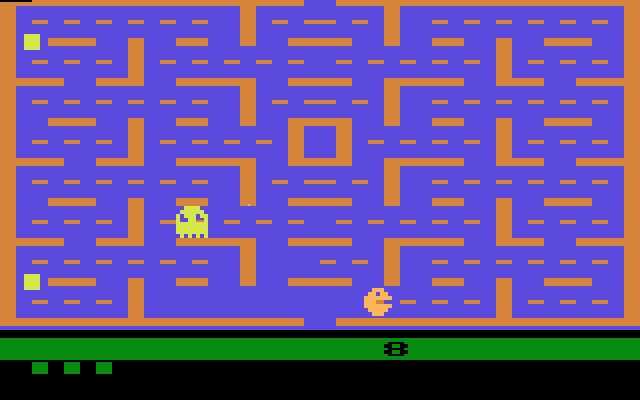
It may have been a major arcade success, but the Atari 2600 conversion is unfortunately regarded as one of the worst ports in video game history. Although it was the best-selling game of its era—1982—it was also among the games "most often returned to stores of all time," as consumers were frustrated to see how far the result fell below the arcades' quality. The reason was that the game was developed by Atari itself, which obtained a license from Japan's NAMCO—the original producer—and used technology that cut both costs and cartridge capacity in half. Console games averaged 8 KB, but Pac-Man had 4 KB.
The result can be seen in the image above, where the round pellets eaten by the character became rectangles, while the enemy flickers randomly on the screen, preventing you from efficiently determining its position and avoiding it. This was also regarded as one of the main reasons for the video game market's “crash” in the 1980s. It caused commercial losses as well because Atari produced 12 million copies of the game.
Epic Mickey 2: The Power of Two (Wii, PS3, Xbox 360, Wii U)
Receiving mixed media scores, it appears here because of the disappointment it caused everyone: the trailers raised players' hype "to the skies," but when the game launched, its quality was regarded as merely "okay."
The first game sold three million copies on Wii alone, while the second sold around 500,000 across every platform on which it was released, despite an intense marketing campaign.
Tony Hawk's Pro Skater 5 (PS3, PS4, Xbox 360, and Xbox One)
Exciting fans of the original game when announced, especially because it was going to be made with Unreal Engine 5, Tony Hawk Pro Skater 5 ultimately became one of the series' greatest disappointments because of simplistic missions, environments poor in detail, the new "slam" mechanic, bad graphics, and countless bugs.
Receiving scores of 2 and 3 from most media outlets around the world, this game is regarded as an "insult" to the history of the Tony Hawk series. It also sold around 300,000 copies, becoming a sales fiasco as well.
Dr.Who: Return to Earth (Wii)
Regarded by many as the worst Wii game, it belongs to the third-person action genre. Its graphics look like they came from Nintendo 64 despite the game being released in 2010, its controls do not respond, it is full of bugs, and it is basically "bad at everything." Even with good initial sales in the United Kingdom, the game is also considered a fiasco in that respect.
Raven´s cry (PC)
An action-adventure game released in November 2015, this title is considered poor not only technically but also as an example for everyone who plays, with tasteless jokes involving racism, sexism, and homophobia.
Add "one-button" gameplay that makes it tedious, an uninspired plot, graphics already very dated in 2015, and poor character animations, and the title is simply "bad at everything."
Superman 64 (Nintendo 64)
Superman 64 is another of those games that are bad in every area, winning countless “worst game” awards from various specialist media outlets. Its controls are awful, its music is awful, and every other aspect you can imagine is highly open to criticism.
In a recent statement, the game's producer, Eric Caen of the bankrupt Tidus Software responsible for the title, said the goal was to make a game in which you truly felt inside the superhero's body. The licensors at DC Comics and Warner Bros., however, demanded constant gameplay changes, and ultimately only 10% of the original plans made it into the game.
Following the overwhelmingly negative reception, the producer decided to make a new Superman game for PlayStation 1 as a kind of “redemption,” but after it was completed, the license expired and the game had to be canceled.
Duke Nukem Forever (PC, Playstation 3, Xbox 360)
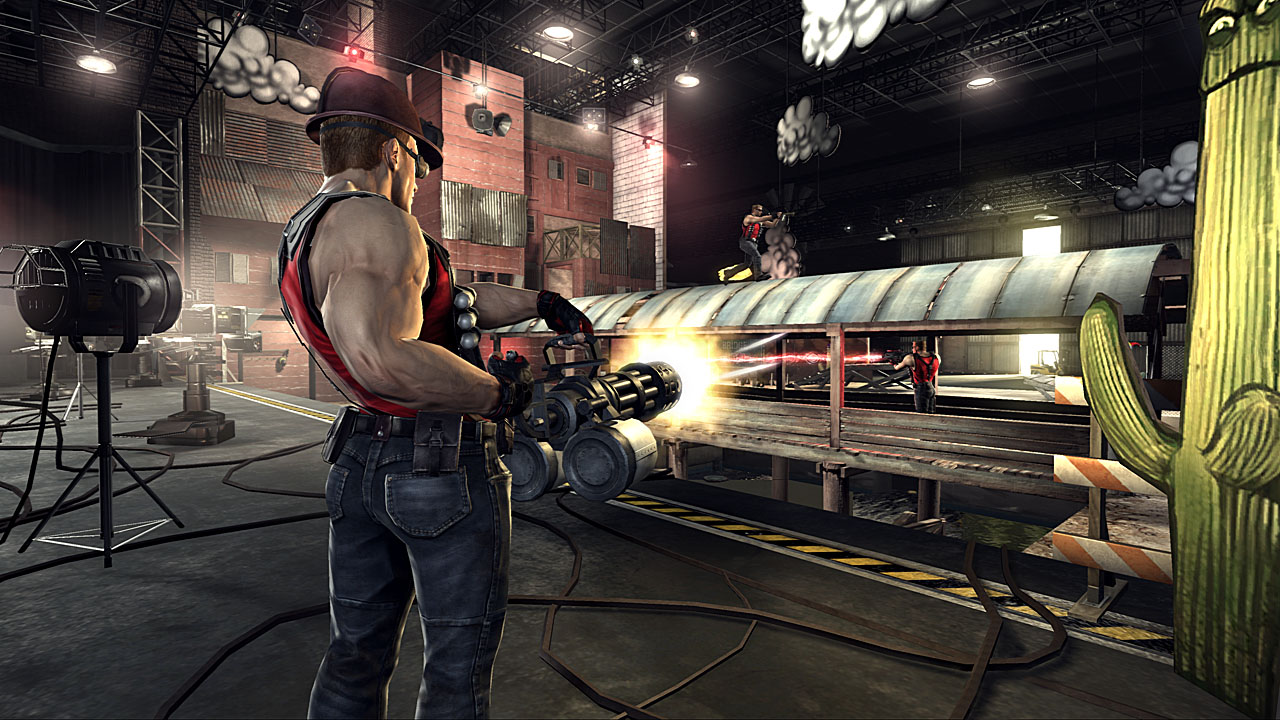
One of the most disappointing games in history, it began production in April 1997 and underwent a series of cancellations and revivals until it was finally released in 2011.
Initially produced by 3D Realms, creator of Duke Nukem 3D, the game passed into the hands of Gearbox Software—the same company behind Alien above—and it appears the producer is struggling when the subject is MAKING GAMES. The controls are poor, there are countless loading screens, the "trash" humor—which ends up ridiculing women—is not intelligent either, and the graphics evoke the first wave of Xbox 360 and PS3 games.
Another negative point is the level design. Ultimately, it is simply a bad, dull, tedious game. You are better off sticking with good old Duke Nukem 3D.