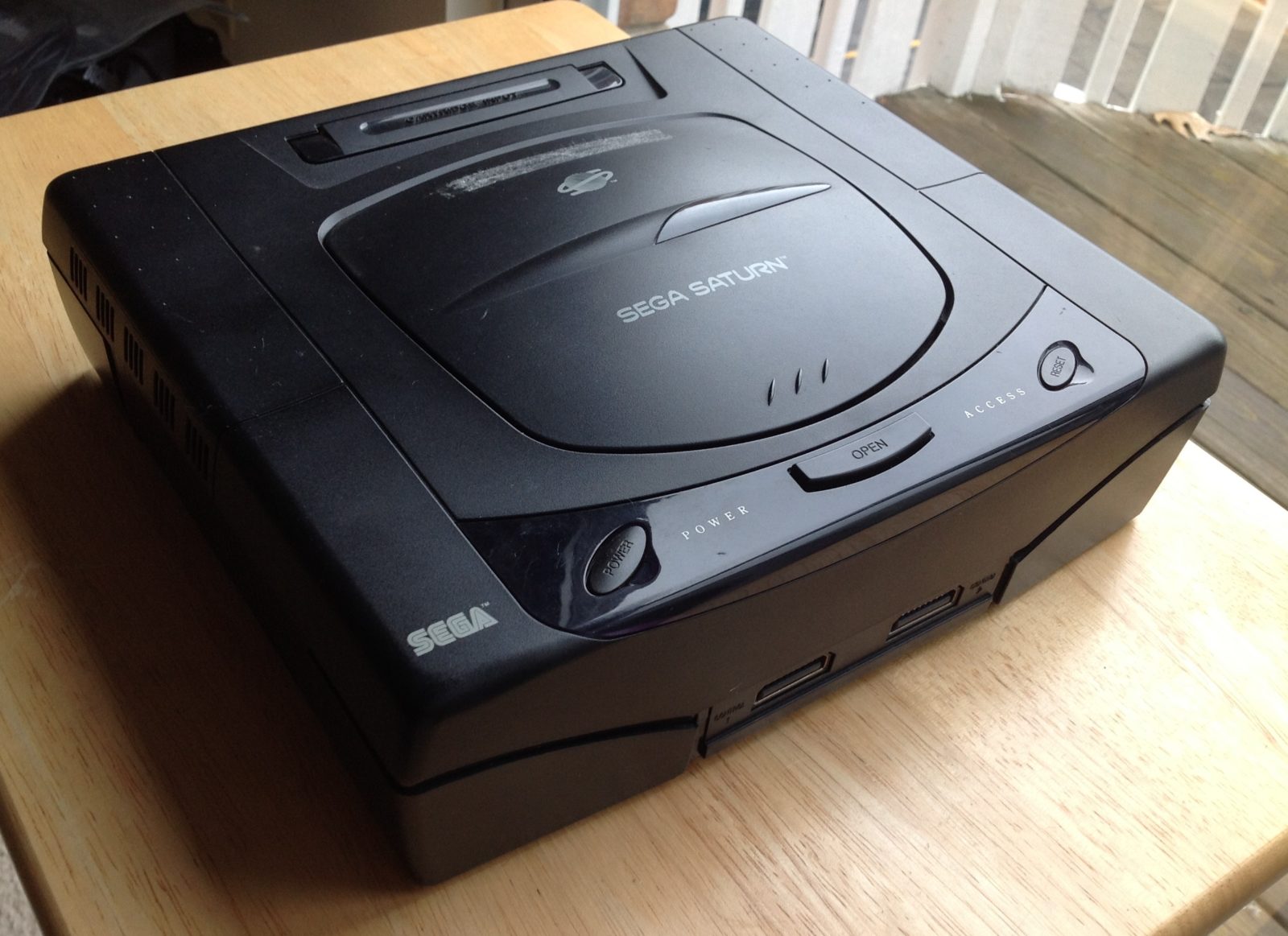
The SEGA Saturn, successor to the Mega Drive, had two main processors, video acceleration, and was responsible for bringing the quality of the best arcade games into gamers' living rooms in 1994. With a life cycle of only four years, the Saturn was released to compete with the PlayStation and, although it achieved great success in Japan, its sales fell even further after the launch of the Nintendo 64 in 1996. After reaching 9.26 million units worldwide, it was discontinued in 1998.
A fan known as “Dr. Abrasive” traveled to Japan, bought a Saturn, and began researching a way to use the console's sound chip. As difficulties accessing the console's hardware emerged, his plans took a very different path.
One of those difficulties was the way the console itself operated. Basically, because the Saturn had two main processors, one processor solely for sound, and another dedicated only to controlling the CD drive, Dr. Abrasive realized that the feature he wanted to access—the audio chip—would be controlled by the sound processor. It was also accessed by the other processors, each in a different way but highly dependent on the CD-drive processor. He therefore began researching how that last processor worked.
As he obtained small “pieces” of information, he assembled a map of how everything worked. This led him to write out the entire operating system running inside the CD-drive control processor, totaling 64 KB of information (ROM). Dr. Abrasive soon realized that all the information he had obtained essentially described how the copy-protection system on SEGA Saturn game CDs worked.
What the hacker was actually seeking, however, was not a way to circumvent this protection system, but some indication that the original programmers had left an “open door” in the operating system that would allow recorded CDs without that protection to be used, as with development kits. This would give him access to the processor and, consequently, to the sound chip. It had long been reported that developers received CDs that essentially put the Saturn into a development mode that accepted unprotected discs, temporarily disabling copy protection. In the end, he encountered one final obstacle: the development-kit CDs also had copy protection.
The fan therefore turned his attention to other possibilities, and Dr. Abrasive soon realized that the SEGA Saturn has a rear port allowing a Video CD card to be inserted.
Video CD is a video format created in 1993 by Sony, Philips, Matsushita, and JV. It was widely adopted in Southeast Asia as an alternative to VHS and Betamax, formats that dominated the American market at the time. The Saturn could run the Video CD format through a card—an add-on board—released in Japan seven months after the console's launch. With it, the console could play videos in MPEG-1 format.
...when we open applications such as Netflix on our current consoles, we should recognize that the SEGA Saturn was one of the grandfathers of this idea.
Today, this card is attributed enormous historical value because it is considered one of the first attempts to transform a device traditionally used for games into a complete entertainment system. Therefore, when we open applications such as Netflix on our current consoles, we should recognize that the SEGA Saturn was one of the grandfathers of this idea.
Because the Video CD card's programming contained code to be delivered to the processor, processed, and returned to the card, that was the open door Dr. Abrasive had been looking for. He explains that the Saturn's main processors operate like a fortress preventing direct access by the programmer, but the Video CD card sends information to them and receives it back after processing, in a way similar—but not identical—to what the CD reader does. This led to the idea of making a modified chip that could be connected to the Video CD port instead of any internal console board, with an SD-card slot like the Everdrive for Mega Drive.
The fan has now modified the project slightly, replacing the SD-card slot with a USB port because Saturn games are much larger than Mega Drive games. He also included support for audio, homemade programs (homebrew), and writing data directly to external storage devices, such as saved-game data.
This project is very important to the gaming community because it offers the possibility of reviving that Saturn you no longer used because its CD drive had burned out, as happened to my Dreamcast five years ago.