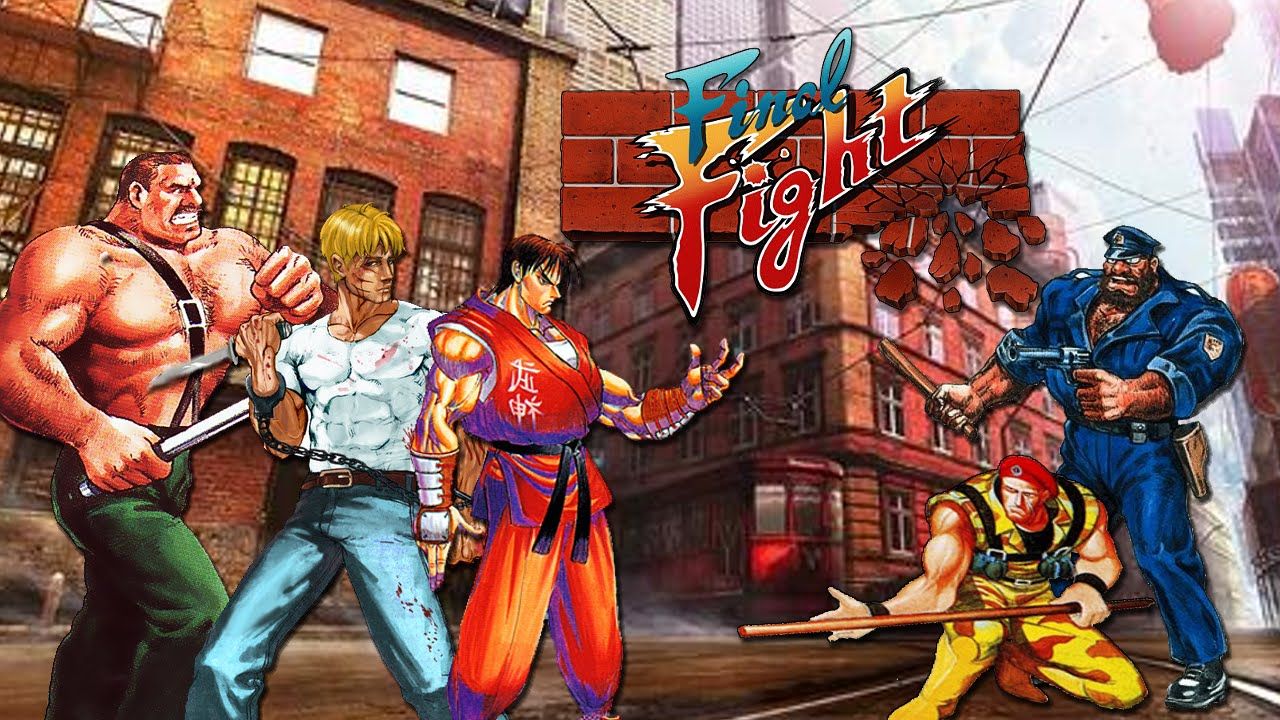
Arcades, known to Brazilians as fliperamas, were a craze that lasted from the late 1970s until the early 2000s. Among the genres of the period, some stood out on these machines, including fighting games, racing titles, and beat 'em ups. Final Fight was a true leap in quality for fans of the genre, as Capcom's famous CPS-1 board was used masterfully and delivered outstanding graphics, audio, and gameplay. Anyone unfamiliar with this game who enjoys its genre should know that playing it is mandatory, because much of it was inherited by later titles from the company and its competitors.

The beginning of the adventure.
Final Fight is a beat 'em up originally released for arcades in 1989. It received—and continues to receive—countless conversions for a wide variety of platforms, including Super Nintendo, Sega CD, and Game Boy Advance. The version reviewed here is the original arcade release.
Fun facts: After its late-1989 release in Japan, Final Fight was named Game of the Year in 1990 by the Japanese arcade magazine Gamest. This was an incredible accomplishment during a period when the platform had the most technically advanced games on the market. On the same occasion, Guy was named one of gaming's leading characters, with emphasis placed on his charisma.
Behind the Scenes of Final Fight

Designer Akira Nishitani
The first title in the Street Fighter franchise had achieved considerable success in 1987, so a sequel had already been commissioned to establish the series economically in the market once and for all. At that moment, however, its creators had their minds elsewhere: they wanted to create a game that could definitively take the prominent place Double Dragon occupied in arcades.
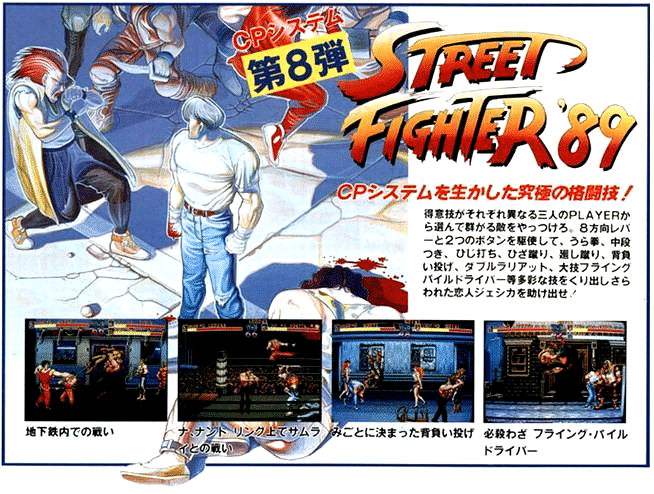
In the words of Final Fight designer Akira Nishitani: "Capcom USA wanted us to make a new game to continue Street Fighter, while in Japan, we wanted a stage-based fighting game because of beat 'em ups' success in arcades. The concept for what this game should be emerged, and since Street Fighter was already established by then, I thought of using that title for a sequel."
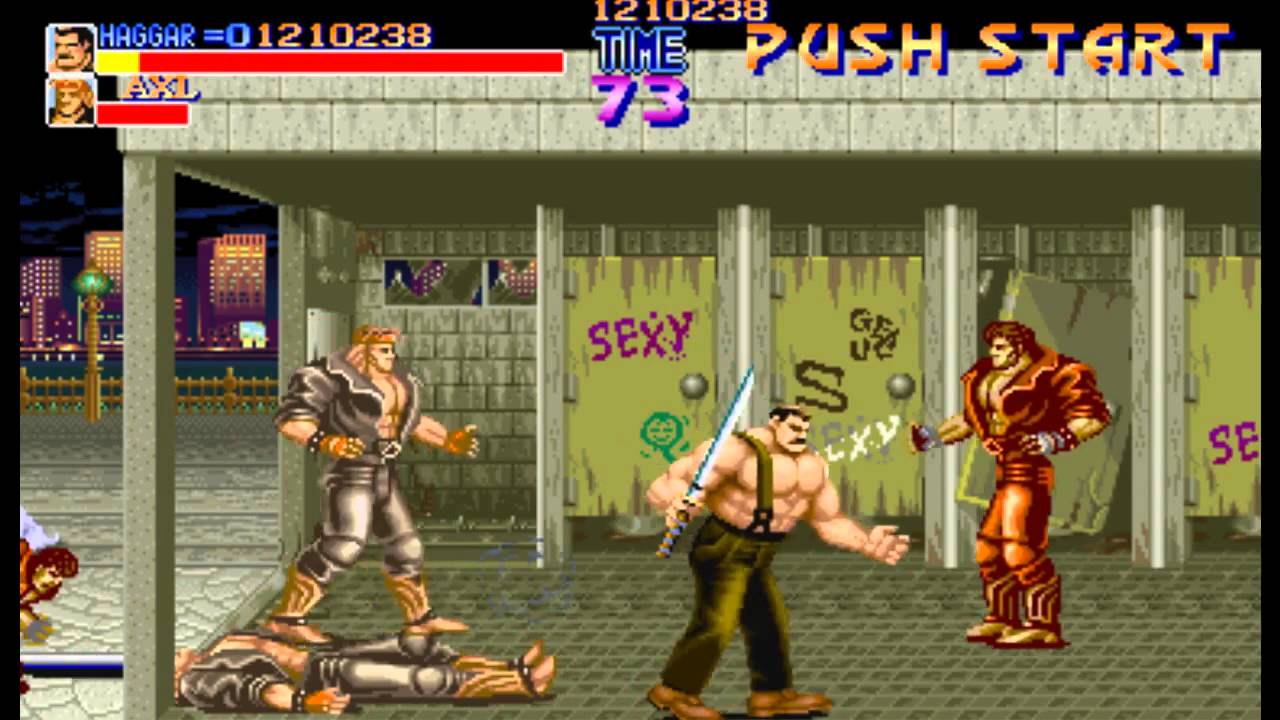
Tell the mayor that Metro City's streets are not the only things needing a good "cleaning."
When the version of the game called Street Fighter '89 was presented to Capcom USA manager Brian Duke, the reaction was not very pleasant: "I suggested a sequel to Street Fighter, but what I just played is a different game. It cannot be called Street Fighter. If we release this title under that name, everything will definitely be lost."
The game was too far into development for Capcom employees to ignore everything that had been done and start a real Street Fighter sequel from scratch. Instead, they decided to change the game's title and finish what was in their hands. Not everything from the original work was discarded, because as many of us know, the Street Fighter and Final Fight franchises share the same universe.
Fun facts: As we can see in the image on the left, Final Fight was initially going to be called Street Fighter '89. The project was so advanced and well defined that even the advertisements were ready. The image on the right shows the final title already established.
The Game's Characters
Like every beat 'em up, Final Fight is a game in which we face many "clone" enemies throughout the adventure, with character names representing classes more than anything else. Next, I will describe the three selectable characters and six enemies: four commonly found during the stages and two bosses.
Selectable Characters
Although three characters is not an impressive number compared with games in the same genre released later, this was a positive highlight for the title, especially because its principal objective was to surpass Double Dragon, which had only one "style" to choose.
- Mike Haggar: Metro City's feared mayor is a former wrestling champion. At the time, he was known as Mike "Macho" Haggar and could already be seen in the arcade game Slam Masters. His ambition to end crime in his city once and for all led to his daughter's kidnapping. As a character, his traits correspond to the slow and strong type;
- Guy: This typical American ninja with Japanese roots earned the right to become Master Zeku's disciple in the Bushin arts. After completing his training, he returns to his hometown of Metro City and finds it overrun by Belger's gang. Driven by a desire for justice, he joins the mayor so peace can return to the city. As a character, his traits correspond to the fast and weak type;
- Cody Travers: His specialties are street fighting and handling knives (AK-47), "knowledge" he gained from living in Metro City's suburbs since childhood. Considered temperamental, he had his girlfriend Jessica kidnapped and therefore joins his father-in-law Haggar so they can rescue his beloved together. As a character, his traits correspond to the typical balanced fighter, making him the best option for newcomers to the game.
Fun fact: Some influences visible in Final Fight also appear in the film Streets of Fire (1984), including the names of certain characters and the fact that Metro City is clearly based on New York, since we see the World Trade Center and Statue of Liberty at certain moments in the game.
Enemies
One feature we genuinely must highlight in Final Fight is the opponents encountered during its stages. All possess a level of charisma rarely seen in games of this style, and many bosses and even ordinary enemies later returned, particularly in the Street Fighter franchise. Curiously, many characters have names inspired by musicians and bands of the period. If you are a fan of good 1980s rock and roll, you will certainly recognize several references.
- Dug/Simons/Bred/Jake: These are the familiar soldiers every game in the genre has. They are easy to defeat, possess little health, and cause little damage with their attacks. The secret is not allowing many of them to surround you;
- Axl/Slash: Stronger than the enemies described above, they have the ability to defend themselves and do so constantly. The tip is to open their defenses with a jump followed by a downward attack and make liberal use of grabs;
- Andore/Andore Jr./F. Andore/G. Andore/U. Andore: These are the game's brutes, strong and highly resistant. Fighting near them is quite risky; ideally, you should face them using weapons such as the sword or with flying kicks.
4. Poison/Roxy: They are extremely fast and have a flying kick capable of removing a considerable portion of our characters' health if it strikes cleanly. They tend to jump constantly, which is highly irritating. The tip is to get rid of them as soon as possible; they apparently become more dangerous when on screen with other characters;
5. Sodom/Katana: Like several characters from the Final Fight franchise, Sodom appeared in Street Fighter years later. Already a powerful boss when we encounter him in the game's second stage, he is fast and carries two katana swords capable of removing considerable health when they hit. The ideal strategy in this battle is to try grabbing him when he becomes vulnerable;
6. Abigail: Games from the period often had a boss stronger than the final one during their campaigns, and Abigail is one of them. In addition to enormous endurance, the enemy has attacks that remove a great deal of health, especially a charged punch. The tip for defeating him is to keep his henchmen out of the fight, maintain your distance, and attack him with flying kicks and weapons. He also appeared recently in the Street Fighter franchise and apparently continued training, since even Zangief looks small beside him.
Fun fact: Several Final Fight characters were inspired by real people. Mike Haggar came from professional wrestler Randy "Macho Man" Savage, and even the pose the character uses to celebrate with his daughter came from one Randy struck while holding his wife. Axl clearly came from Guns N' Roses vocalist Axl Rose, and Andore was inspired by French wrestler André the Giant.
Technical Review
Final Fight's story is simple but competent. A new mayor, Haggar, takes control of the corrupt city of Metro City with a promise to clean its streets of the countless criminals inhabiting them. After realizing that the incorruptible former wrestler would not make life easy for the troublemakers, the Mad Gear gang kidnaps Jessica—Mike's daughter and Cody's girlfriend—and through one of its leaders, Damnd, states that unless the government cooperates, Haggar will never see his daughter again. Father and son-in-law contact their friend Guy, and together, they set out to rescue Jessica and end Mad Gear once and for all. This is where the campaign of Final Fight begins.
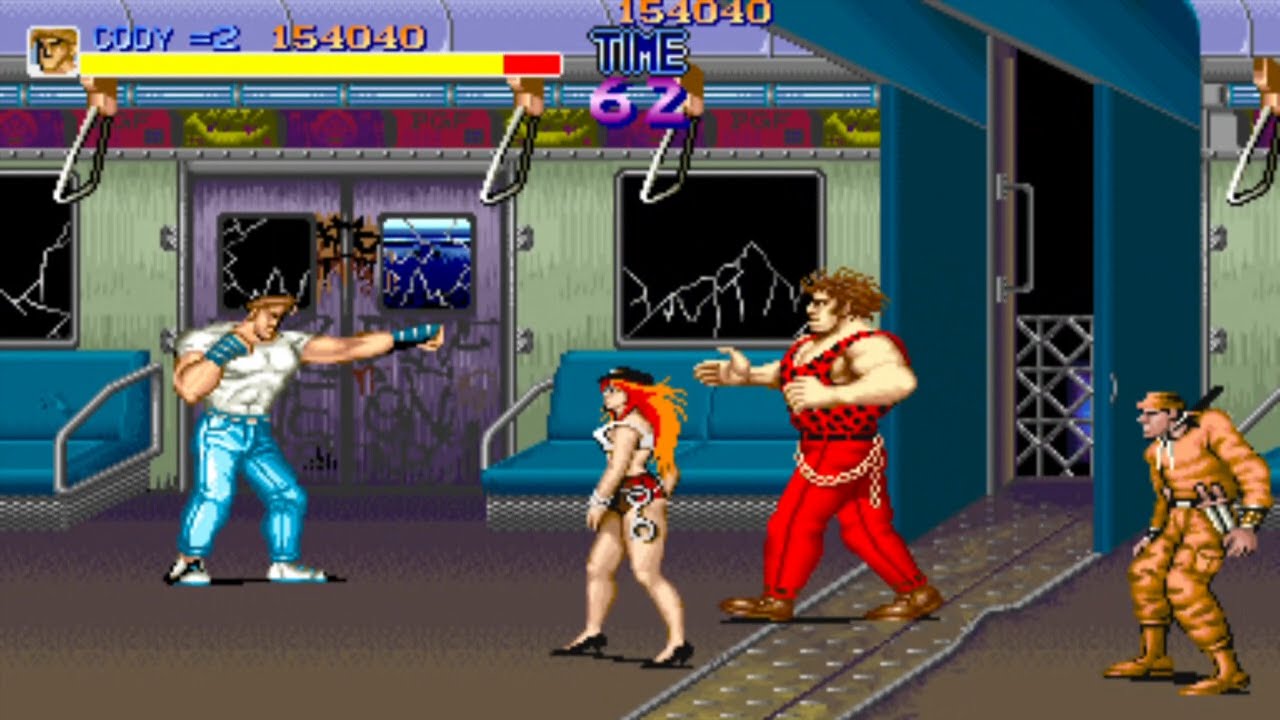
The game already begins raising its difficulty at this point.
Final Fight's difficulty is quite high. By the second stage, we find ourselves surrounded by numerous enemies and can rarely escape the situation without taking damage, making it a genuine coin-eater. Training and knowledge of a few "tricks" are required for players to reach the end without spending their entire allowance.
The title's replay value is not high, since there are no multiple paths to discover or extra abilities to unlock. Even so, it is worth saying that the game's high difficulty means players will take time to become masters of all three available characters and reach the end without spending countless credits.
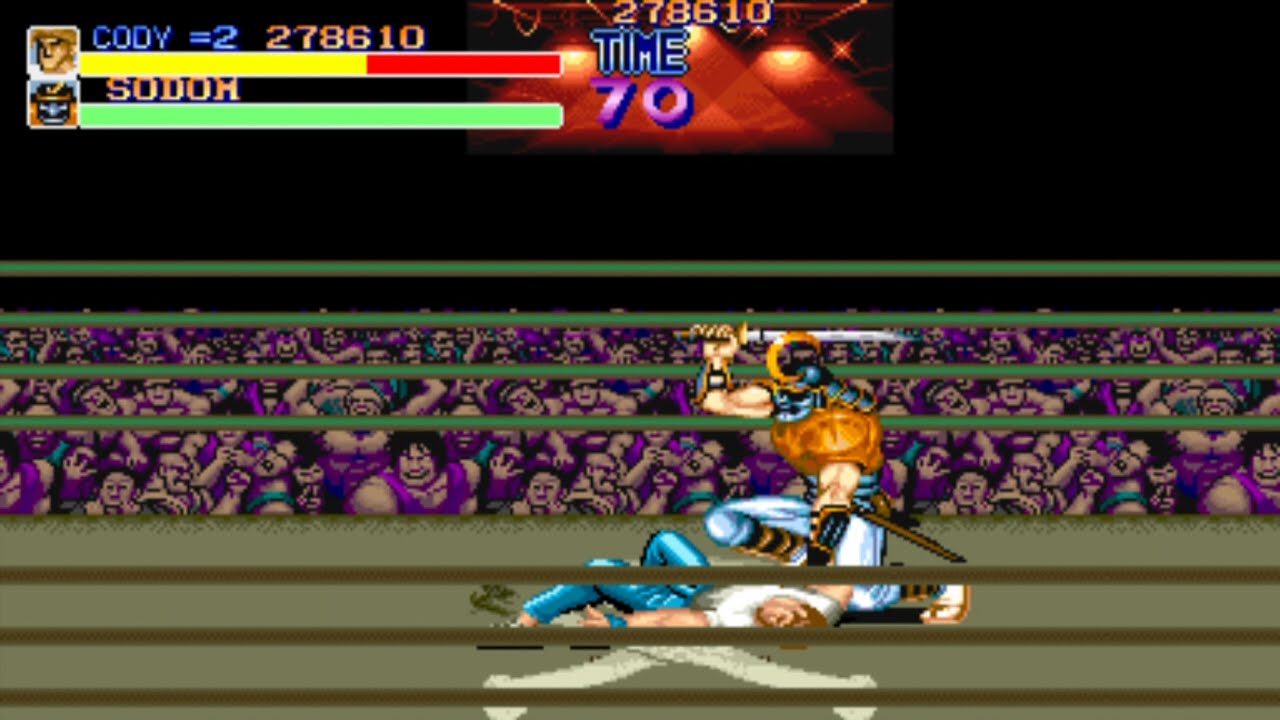
The second boss was already tough.
Final Fight has two bonus stages during its campaign. The first comes after completing the second stage and involves destroying the car belonging to Bred, one of Mad Gear's "soldiers." After we demolish the vehicle, the unfortunate gang member appears crying. The second bonus comes after the game's fifth stage and requires us to break panes of glass arranged in a row. We must strike their exact centers, or the object rotates; the secret is to use the shadows as a guide.
The campaign length is considerably short, though standard for games of this genre from its time. After learning the best ways to defeat enemies, an experienced player will take around 50 minutes to reach the end of Final Fight.
The gameplay became the style popularized among games in the genre. We must beat every enemy who appears on screen, without distinction between strong, weak, police officer, woman, or wheelchair user—yes, the 1980s. Our characters have basic moves including grabs, punches, flying kicks, and specials that consume a small portion of the health bar when used. For that reason, we recommend using them only when surrounded and facing inevitable damage. A considerable variety of melee weapons is also scattered through the environment and can cause greater damage to enemies. Unfortunately, carrying them prevents the development of larger combos, and our character attacks more slowly.
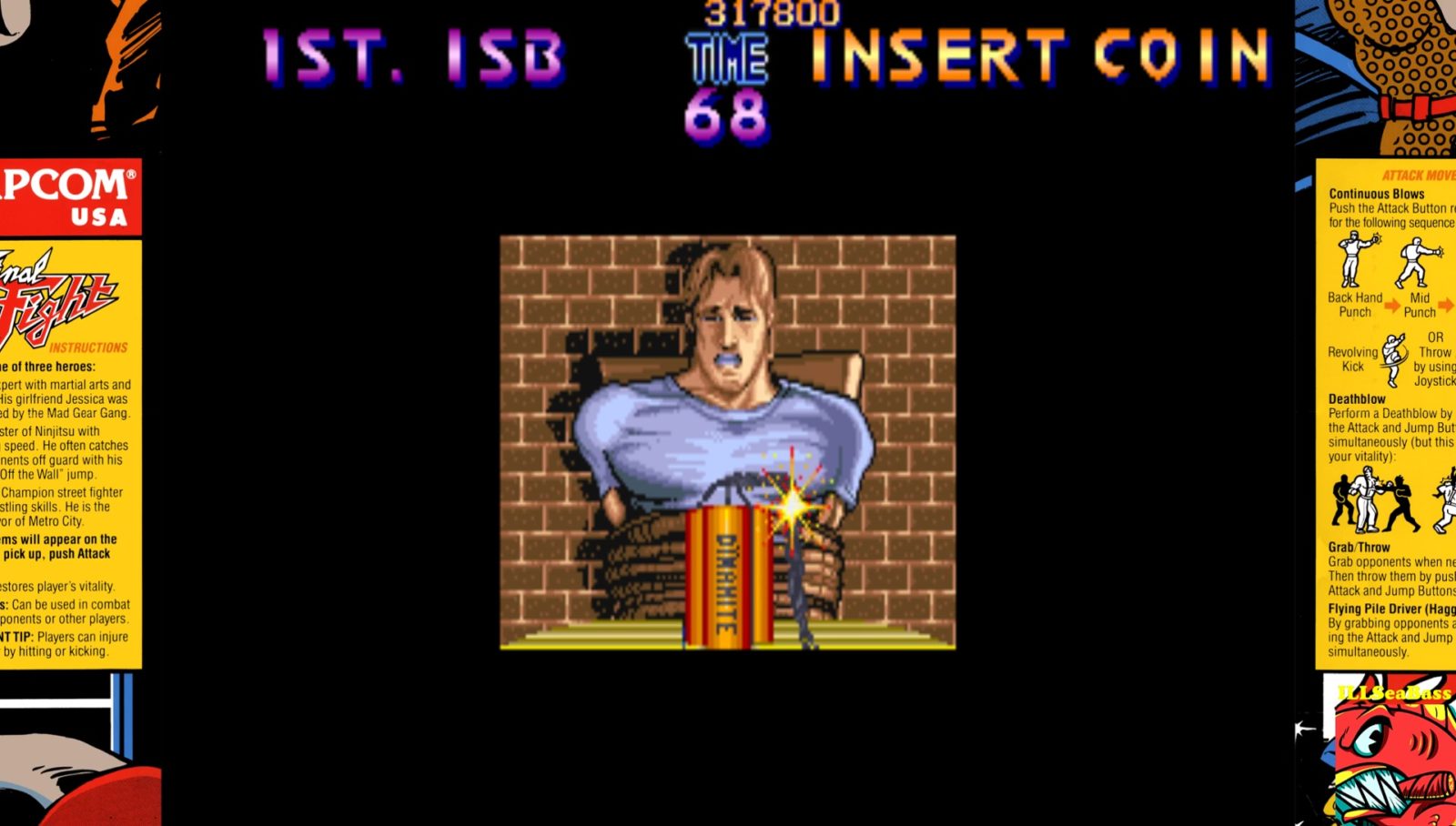
An aggressive game-over screen that applies pressure.
The game's graphics are simply incredible for a 1989 release, with large, detailed sprites and a rich range of animation. The title genuinely looked like a beat 'em up made with the care devoted to a fighting game. Access to something of this quality was jaw-dropping at the time.
The title offers enormous fun, especially for those willing to finish it with all three available characters and play alongside a friend. Despite its low replay value, the game is so technically accomplished that the day will certainly come when another game of Final Fight begins.
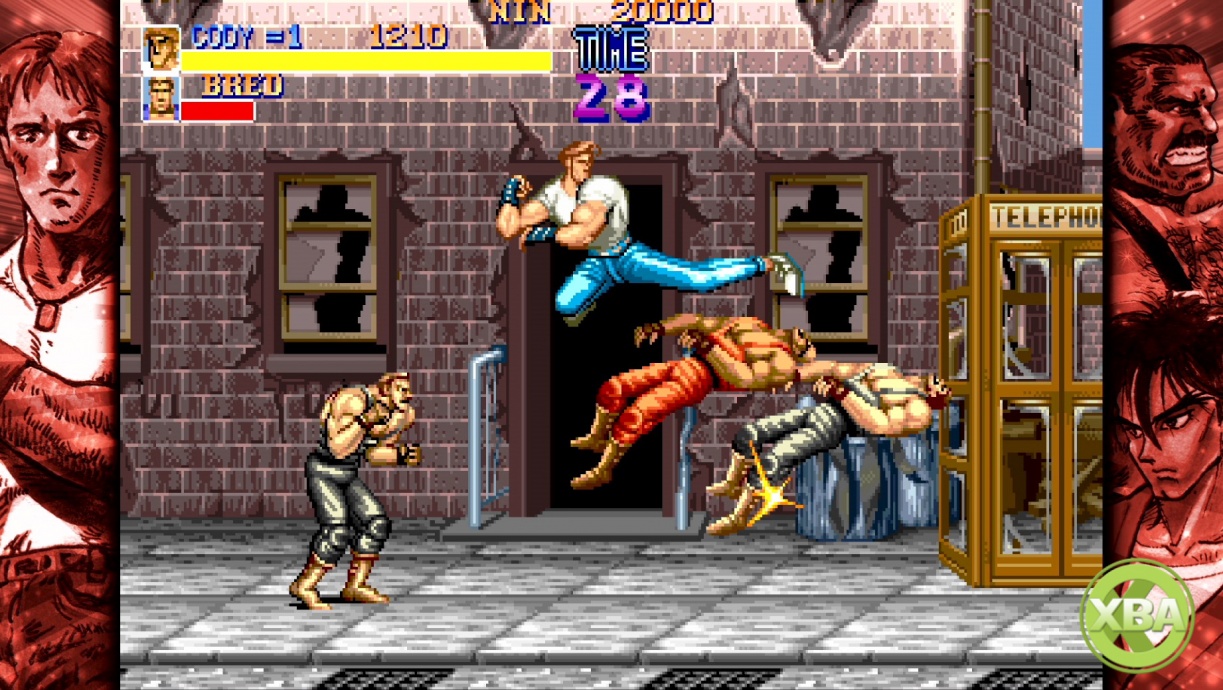
Knocking down two enemies with one move felt very good.
Final Fight's sound effects are very good, match the game's concept well, and do not become tiresome. The game's soundtrack received considerable praise when it was released and was created by seven composers: Manami Matsumae, Yoshihiro Sakaguchi, Harumi Fujita, Junko Tamiya, Yasuaki Fujita, Hiromitsu Takaoka, and Yoko Shimomura. Strangely, only Yoshihiro Sakaguchi was credited in the game, under the pseudonym Yokishan's Papa.
Fun facts: Many curiosities and controversies involve the character Poison. The main one concerns her sexuality. At the time, to avoid controversy about violence against women, Capcom Japan said the character was actually a man. In its conversions, Capcom USA replaced her images with those of the characters Billy and Sid. More recently, in an interview, Akira Nishitani decided to say that Poison's sexuality is open to each player's interpretation.
Conversions
Final Fight was enormously successful when released, so it is unsurprising that the title received several conversions for many platforms of the period and the future. I chose to describe four that I believe deserve more attention because they were popular and helped the franchise achieve the fame it deserved.
- Super Nintendo: Certainly the most popular conversion mentioned here, it is also the most problematic. Nintendo's console received its Final Fight in 1990, full of cuts compared with the arcade version, including the absence of Guy, the Industrial stage, and above all any ability to play multiplayer. The game was released early in the console's life, when cartridges still faced memory limitations, but an updated version called Final Fight Guy later appeared. It simply removed Cody and added Guy while retaining every other problem. Regrettable;
- Sharp X68000: Sharp's obscure but incredible computer received an excellent version of the game, nearly identical to the arcade original and without any cuts. Some Japanese players had the privilege of playing this great game at home shortly after its arcade release;
3. Sega CD: Called Final Fight CD, the Sega CD version took time to arrive, but when it did, it was polished. Taking advantage of the storage available on the medium, this Final Fight received an introduction with digitized voices, incredible animation, a remixed soundtrack, and a new Time Attack mode. Without content cuts compared with the original, the game suffered only a slight graphical loss due to the Mega Drive's color limitations. SEGA won this small round of the console war, though unfortunately, only Sega CD owners could enjoy it;
4. Game Boy Advance: Final Fight One reached Nintendo's handheld in 2001 and apparently tried to remove the bitter taste the Super Nintendo version had left in some Nintendo fans' mouths. Many consider the port the definitive version of the classic, since in addition to all the content seen in arcades, it added boss dialogue, the ability to play with character skins from the Street Fighter Alpha franchise, and even the option for both players to choose the same character. Incredible.
Fun fact: In 1993, the NES received a version of Final Fight. This title became so different that it ultimately received the name Mighty Final Fight. Everything in it is original and excellent, making it probably one of the console's best beat 'em ups, if not the very best. The characters use an SD, or super-deformed, format, and everything in the game has a cartoon-like and entertaining air. Capcom succeeded by creating something that respected the NES's limitations, and the result was spectacular. It may yet receive a review here at Epic Play.