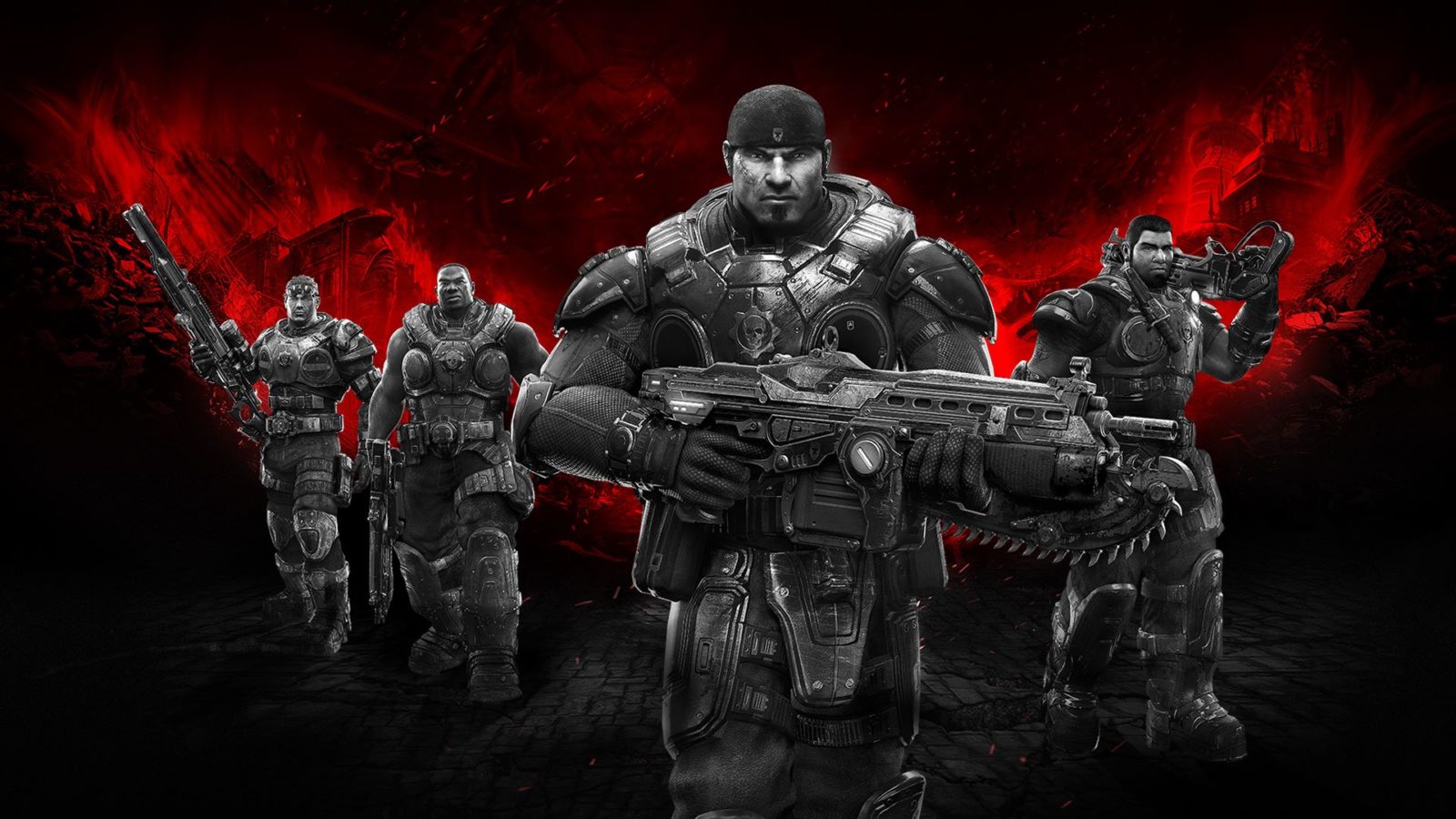
Gears of War emerged at a time when everyone was waiting for a major action game with a science-fiction story and third-person shooting. Its graphics were incredible for the period and led many people to embrace the Xbox 360 as their platform of choice during the sixth console generation. An action-packed campaign with a variety of enemies and the option to play in multiplayer made this the first chapter of a successful franchise that continues to this day. Comparisons between the original and remastered Xbox One versions. Gears of War is an action game in the third-person shooter genre, produced by Epic Games and published by Microsoft Game Studios. It was originally released for Xbox 360 on November 7, 2006, received a Microsoft Windows conversion the following year, and, more recently, an Xbox One remaster titled Gears of War Ultimate Edition in 2015. This review covers that last version from 2015. Below is the trailer for Gears of War Ultimate Edition.
Behind the Scenes of Gears of War
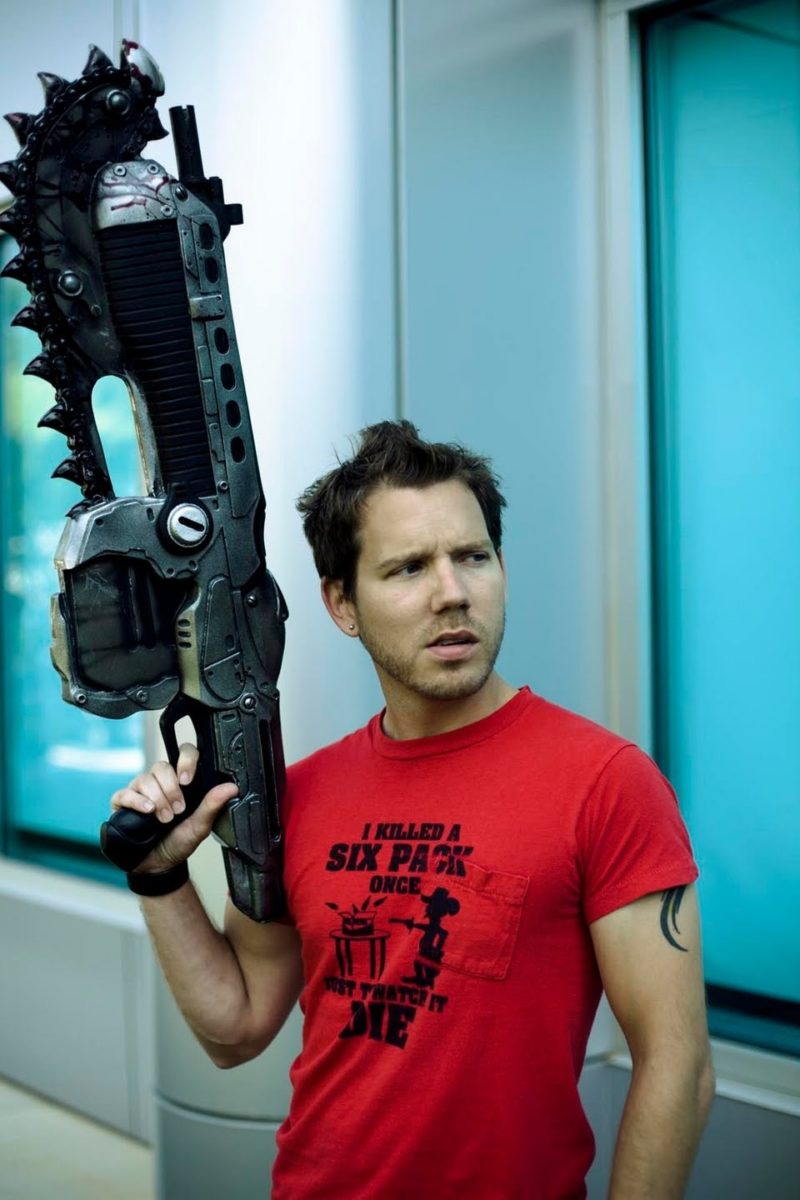 Designer Cliff Bleszinski (CliffB)
Gears of War has many notable names behind it, but the main one associated with the brand is Cliff Bleszinski (CliffB), an American game designer born in 1975. Considered by many a prodigy in his field because of his early start in the game industry, he produced his first game at only 15 years old: The Palace of Deceit, an adventure title programmed in Visual Basic.
His career at Epic Games began in 1992. After working on a series of games with modest sales, he joined the project that would become the famous Unreal and its continuation, Unreal Tournament. His greatest success from then on was serving as lead designer on the original Gears of War trilogy. According to Cliff, Gears was initially going to be a first-person game in the Unreal universe. After he encountered Namco's Kill Switch and Capcom's Resident Evil 4, both in third person, however, the game changed into the first franchise title reviewed here.
Cliff announced his departure from Epic Games in 2012, saying that he was no longer interested in working with games. In 2014, however, the designer opened his own studio, Boss Key Productions, which closed in 2018 after a series of games with weak sales.
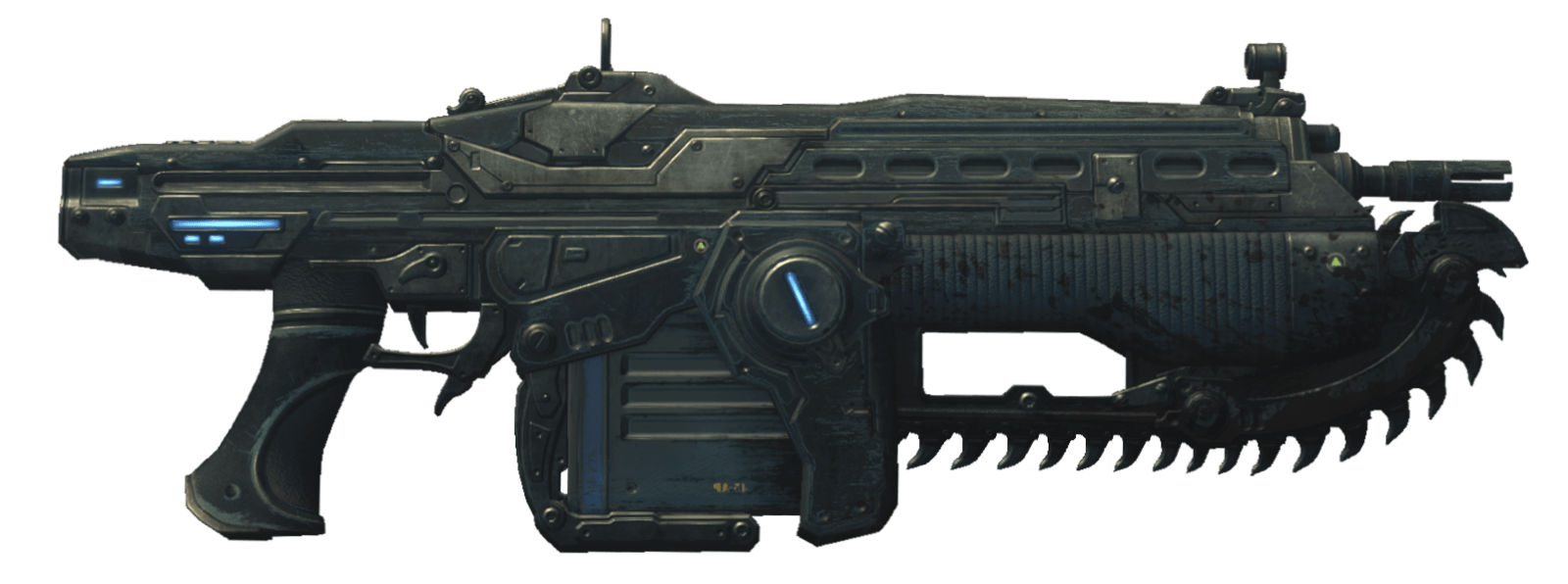 The Lancer is Gears of War's signature weapon. Using it truly is as much fun as it looks.
Fun fact 1: In 1988, 13-year-old Cliff Bleszinski had the honor of appearing in the pages of the first issue of the American magazine Nintendo Power. This was thanks to his achievement of scoring 9,999,950 points in Super Mario Bros. Cliff said in an interview with Rolling Stone: "That was probably one of the moments when I realized, deeply and subconsciously, that I wanted to become a name in the video game business." Another achievement in the field came when, at age 15, he competed in the famous Nintendo World Championships and finished second.
The Story of Gears of War
Spoiler warning, but only for events that occurred before the beginning of the Gears of War campaign.
At an unspecified point in the distant future, humans began colonizing other planets; one of them is called Sera. After some time exploiting the planet's natural resources, they discovered an unusual liquid that had never been studied: Imulsion, which functioned as a new fuel capable of generating an enormous amount of energy cheaply and efficiently. It did not take long for Sera's peoples to begin fighting for control of this new and promising resource.
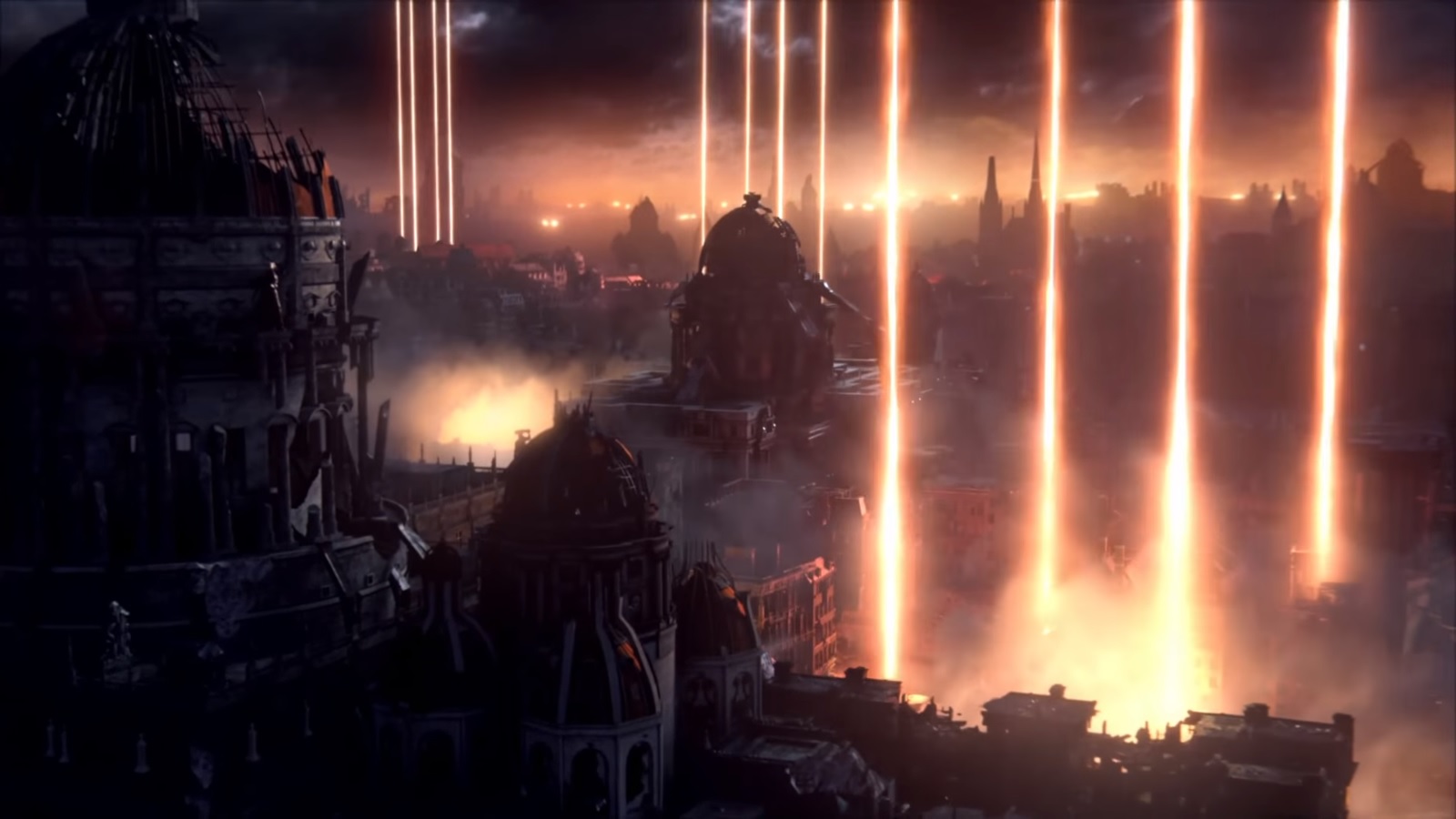 The Hammer of Dawn was used against humanity itself in an attempt to defeat the Locusts.
The countries with abundant Imulsion formed the COG (Coalition of Ordered Governments), while those with little of it created the UIR (Union of Independent Republics). This crisis ultimately caused a conflict called the Pendulum War, which lasted almost 80 years, ended in a COG victory, and devastated Sera.
The COG achieved victory after gaining control of a new weapon called the Hammer of Dawn. This device is an incredible orbital cannon capable of devastating cities in seconds. Dr. Adam Fenix received credit for the invention, although UIR scientists had begun the project.
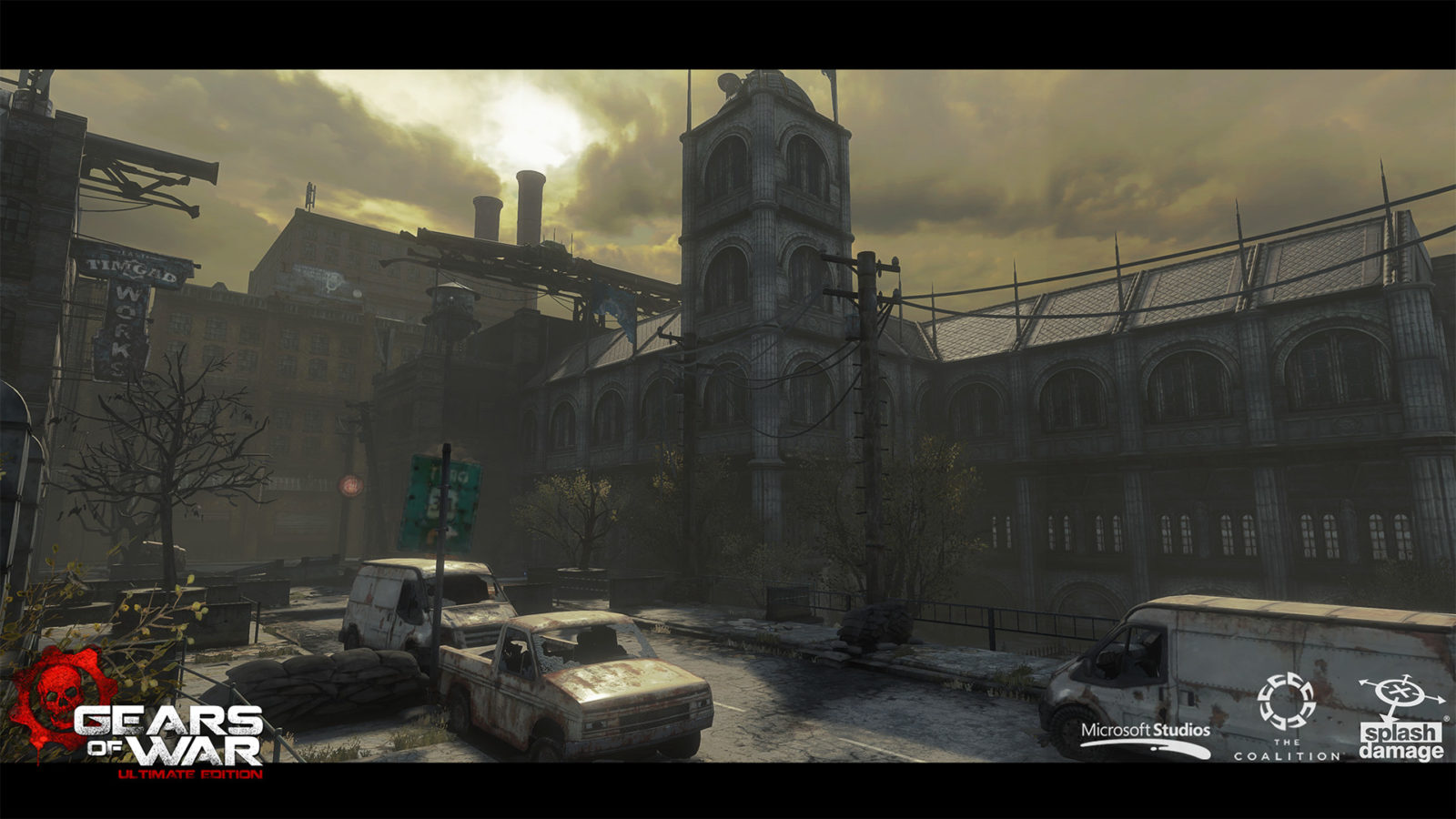 Devastated settings are a constant throughout the Gears of War franchise.
After a brief period of peace came something no human expected: Emergence Day. It was a surprise attack by an intelligent species that inhabited the interior of the planet Sera. These beings are called Locusts, and in less than 24 hours they exterminated more than 90% of the planet's population. Humanity had no option but to use the Hammer of Dawn against the cities under attack by the invaders, thereby killing a large share of the Pendulum War survivors.
In this setting, a war against the alien race began. Humanity's strength was concentrated in the Gears, the COG army. One of its officers stood out: Marcus Fenix. Everything changed when Marcus abandoned his post in an attempt to save his father, disobeying his superiors' orders. After being tried for desertion, Fenix was imprisoned for 14 years. This is where the Gears of War campaign begins. 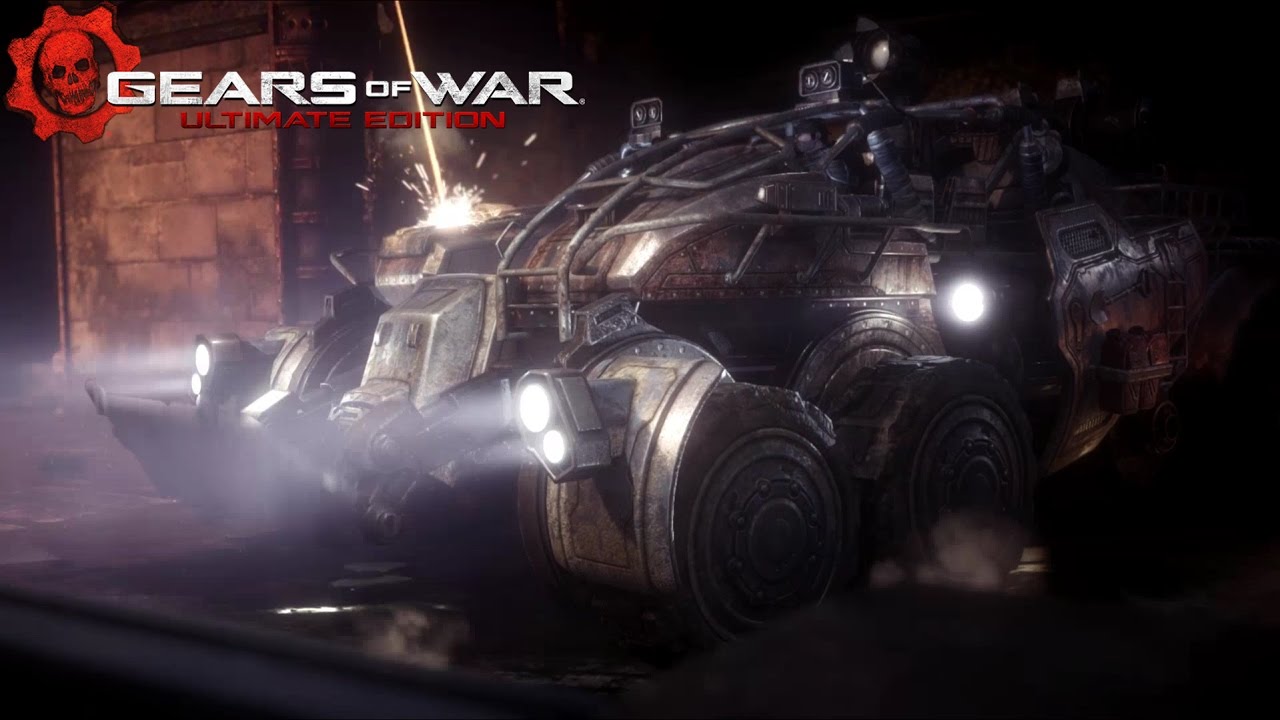 Using the Junker contributes to varied gameplay during the campaign.
One day, Marcus's best friend arrives at the prison to rescue him. It is Dominic Santiago (DOM), asking for help with a mission that could end the war against the Locusts once and for all.
Using the Junker contributes to varied gameplay during the campaign.
One day, Marcus's best friend arrives at the prison to rescue him. It is Dominic Santiago (DOM), asking for help with a mission that could end the war against the Locusts once and for all.
Technical Analysis
The graphics in Gears of War were unbelievable for its release year of 2006. They undoubtedly gave consumers a reason to want an Xbox 360. The 2015 remaster was also very well reworked and is a worthy version for the new console generation.
The game's controls respond very well during combat. Some people complain about the camera shaking while the character runs, but it does not interfere with the adventure. The "cover" system deserves special attention: characters seek shelter during the "shootouts" typical of Gears of War campaigns. Some games had already experimented with this system, but it was refined here and became a reference for games in the genre.
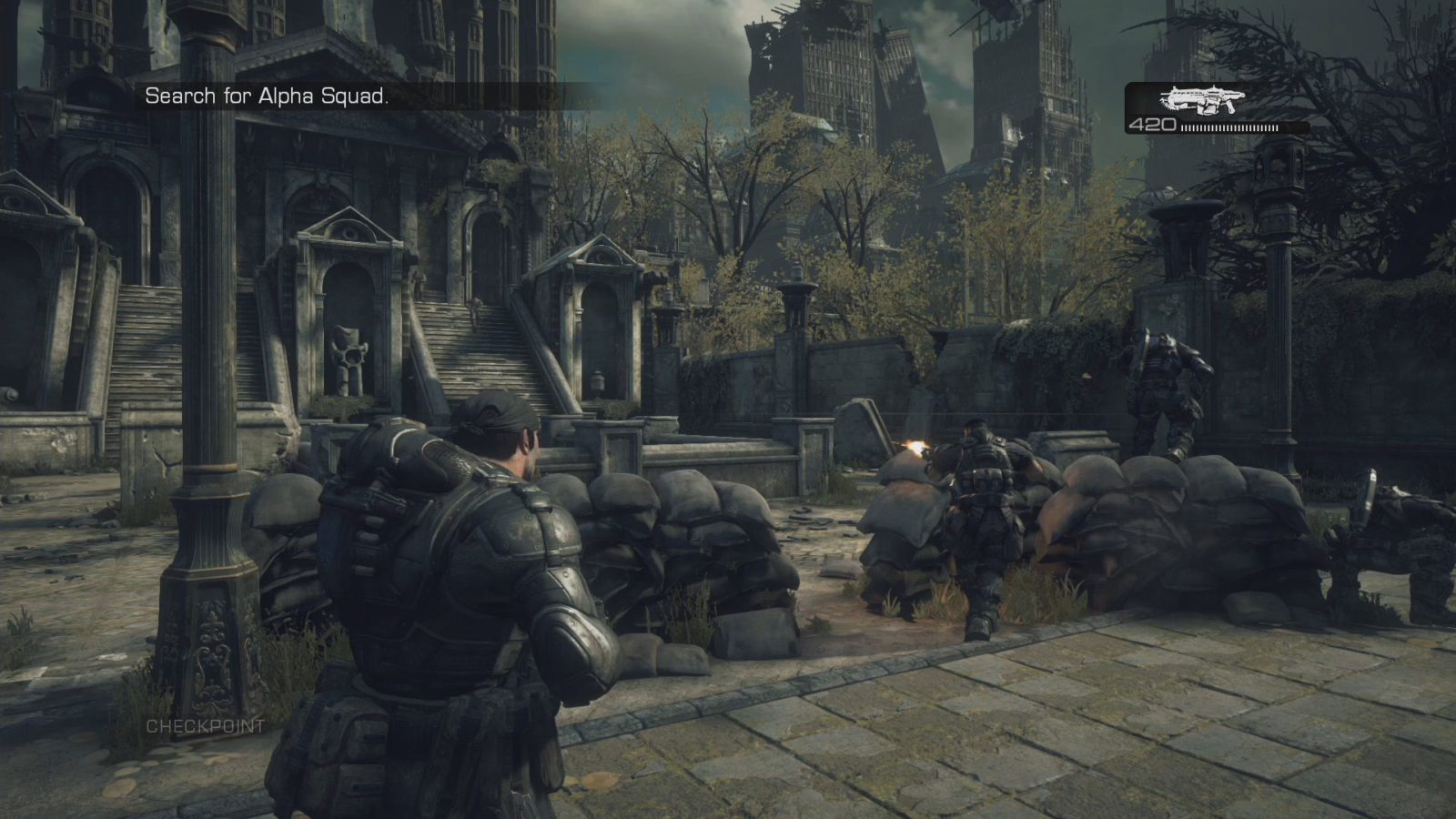 Over-the-shoulder camera, inherited from Resident Evil 4.
During the campaign, we do more than engage in the typical massacre of enemies: there are moments when we use vehicles and proceed along rails. Even so, many may consider Gears of War tiring because of the number of opponents we kill almost without interruption.
When we are hit, health returns through "recovery," a system in which we regenerate simply by going a few seconds without taking damage. This modern style of recovery works very well with the fast action of Gears of War. When we fall after taking a large amount of damage, we do not die immediately, so we can call our companions for help and they can revive us.
One of Gears of War's distinctive mechanics is weapon reloading. There is an exact moment when we must press the reload button a second time to be rewarded with a special magazine that has greater capacity or bullets that deal more damage. If we miss the correct moment, the weapon takes a little longer to reload.
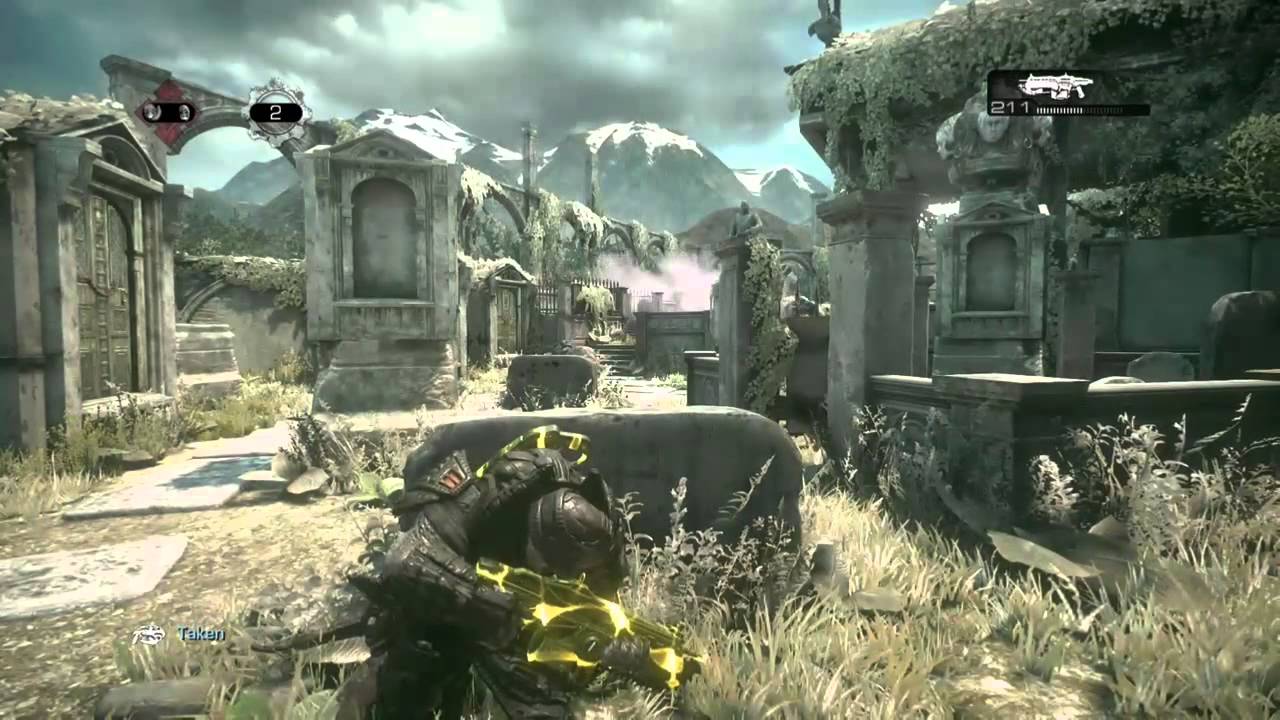 The cover system was immortalized in Gears of War and became typical of games in the genre.
We generally travel in a four-person squad during the campaign. Their artificial intelligence is not among the best, but they still help more than they hinder. When they fall from damage, we players often have to revive them. They land a few shots on enemies during combat, but their greatest help comes when we fall and need assistance to continue the game.
The difficulty in Gears is low. You will die many times, but checkpoints are close together, and immediately after each death we learn from our mistakes and discover the best way past the threats. At some points in the game, we can choose between the left and right paths. This helps replay value: when we decide to play a second time, we can explore environments we have not yet seen. The campaign lasts less than ten hours on a first playthrough and takes a little longer if we search for the various collectibles scattered through the settings.
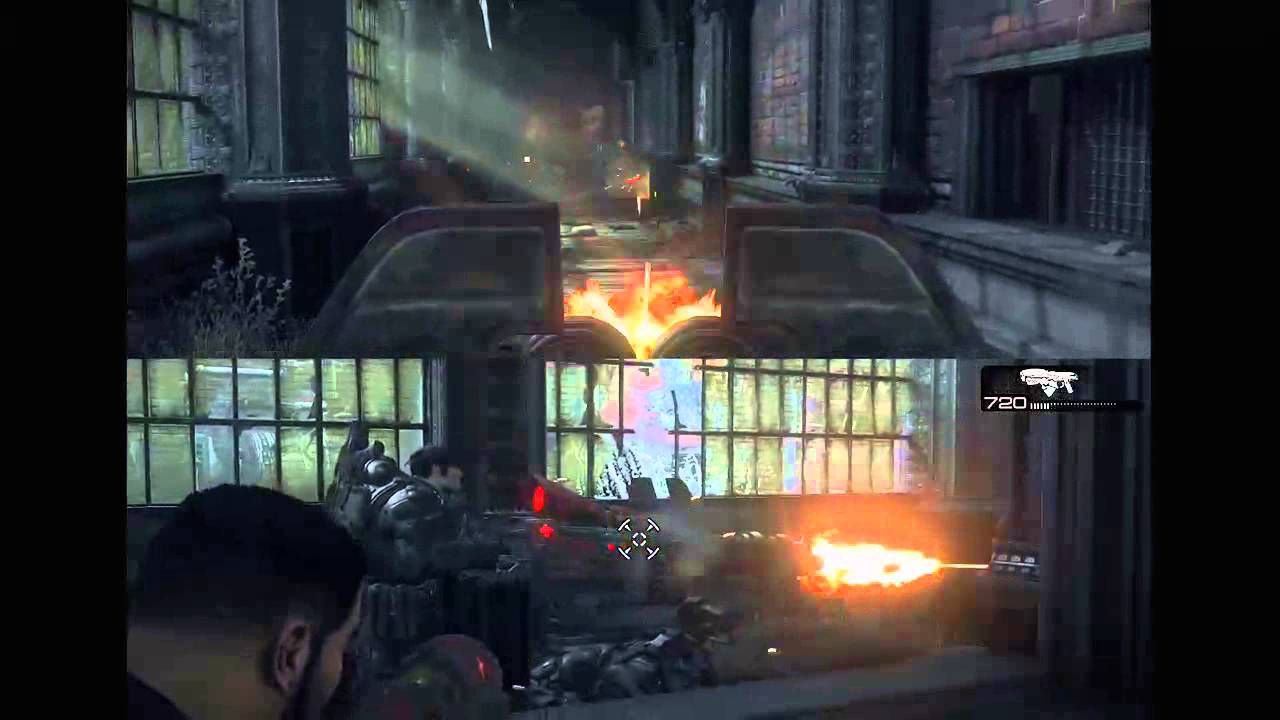 Local split-screen multiplayer is one of Gears of War's distinctive features. Fun is guaranteed.
New features in this remastered version include layouts similar to those in Gears 3, stages previously exclusive to the PC version, and the option to play with Brazilian Portuguese voice acting. Those additions alone give anyone who played the original 2006 version a reason for a second playthrough here.
Without a doubt, a major attraction of Gears of War is the option to play in local and online multiplayer, not only in versus mode but cooperatively throughout the campaign. This gives it indefinite replay value, since shooting alongside a friend is always enjoyable.
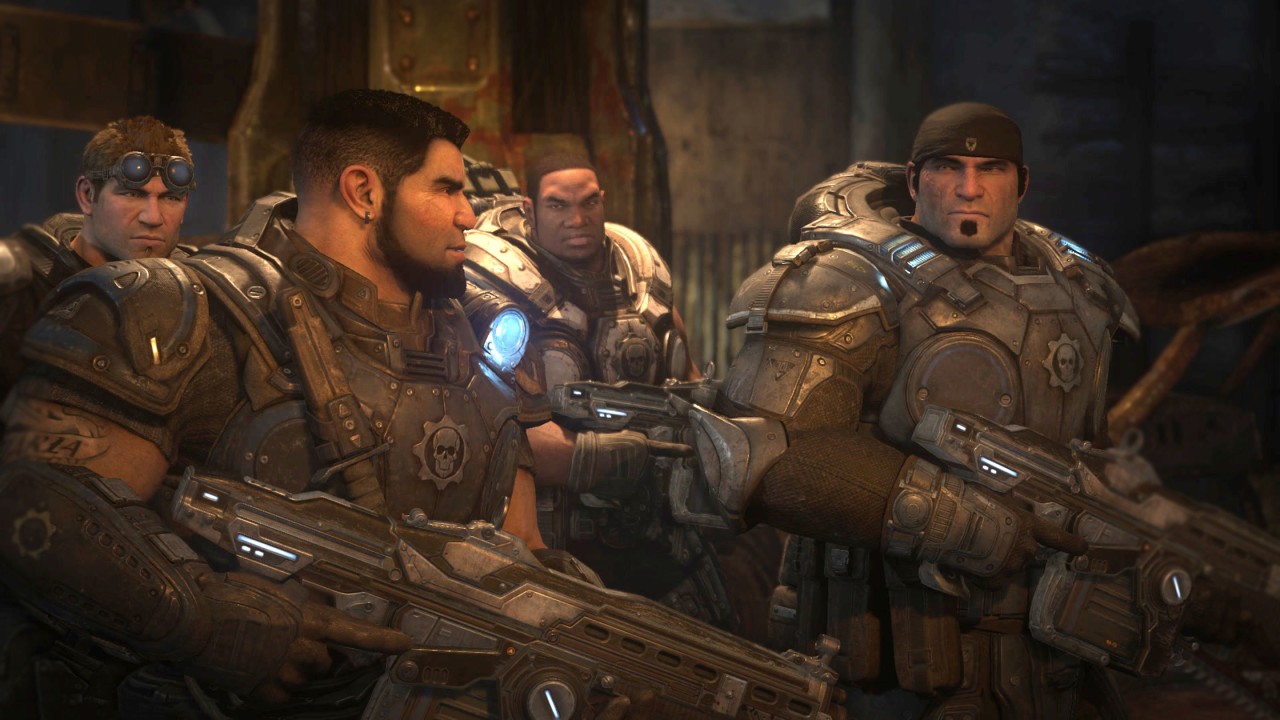 The interactions among the team and their amusing dialogue contribute to the narrative.
If you regularly follow my reviews, you may have noticed that I do not pay much attention to bugs during gameplay, but here I feel obliged to make an observation. During the Gears of War Ultimate Edition campaign I played for this review, I encountered two progression-blocking bugs: in one, NPCs simply blocked my path and made it impossible to continue; in the other, a cutscene did not begin when it should have. These were complicated situations that required quitting the game and returning to the last save before the problem. Regrettable, especially in a remastered version where such simple flaws could have been fixed.
The music is good and suits the game's action style, but it is not especially memorable. The sound effects are excellent, with enemy roars, weapon noises, and ambient sounds. The original voice acting is high quality, and the Brazilian Portuguese dub also deserves praise for preserving the humor of the characters' witty dialogue.
Below is the complete Gears of War Ultimate Edition soundtrack.
Fun fact 2: Gears of War earned major recognition from the public and specialist media in its release year, selling more than 6 million units—an incredible figure for a debuting franchise—and competing for Game of the Year at the 2006 Video Game Awards, an honor it lost to The Elder Scrolls IV: Oblivion. Another achievement was reaching the top of the most-played games on Xbox Live at the time, taking the position from Halo 2.
Bestiary
The first game in the Gears of War franchise already features a wide variety of enemies throughout the campaign. I will describe six of them here and leave the others for players to discover during the adventure, thereby avoiding spoilers.
- Wretch: The weakest enemy in the game. It has no firearms and does not need to take much damage to die. Its strengths are speed and the fact that Wretches always travel in groups. The Locusts use them as pawns on the battlefield, sending them ahead before their race's elite arrive.
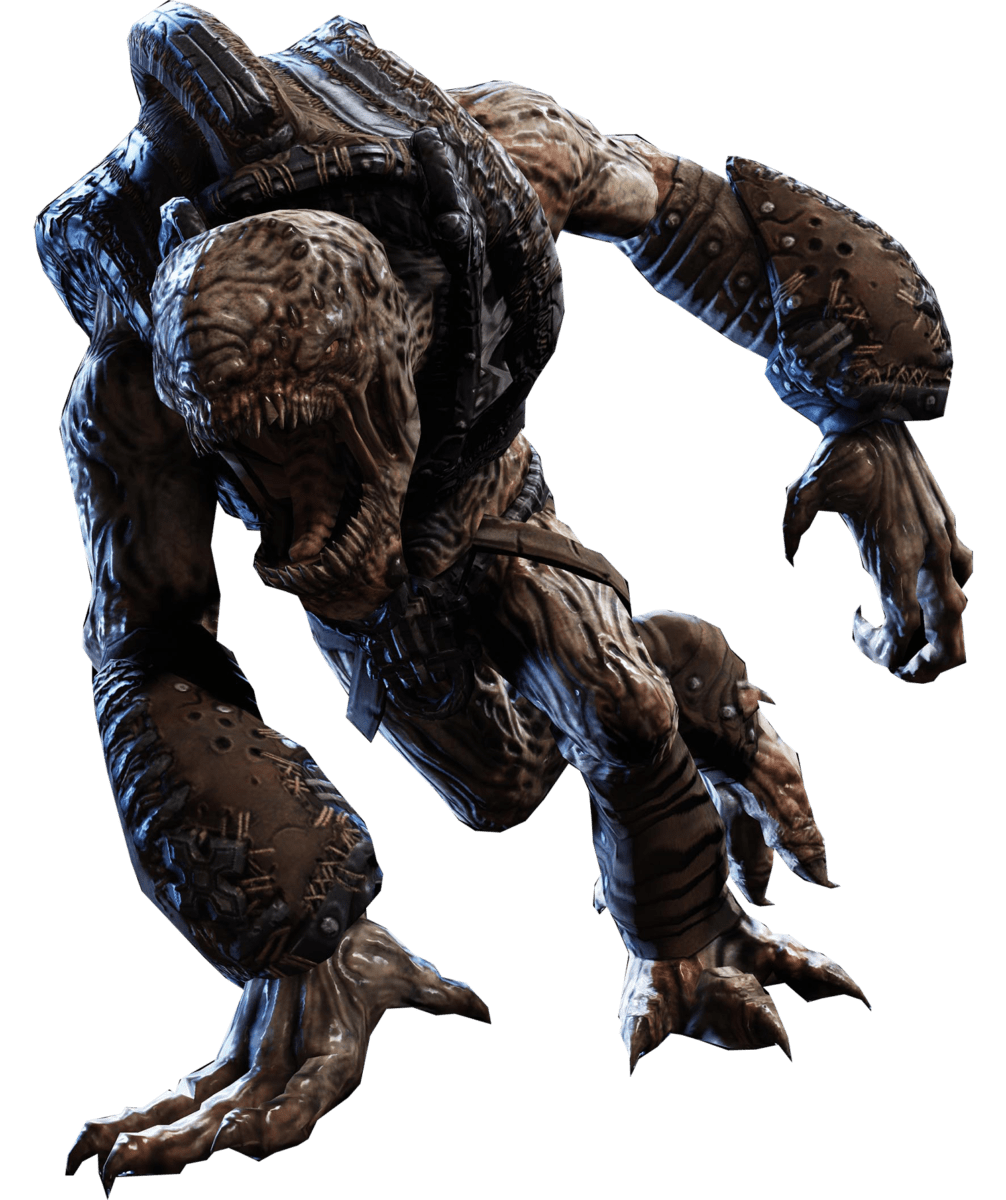 Wretch
- Drone: Also called Grubs by the Gears, they are the Locust infantry, use firearms, and come in several specialties such as snipers and grenadiers. They have strong resistance to damage from simpler weapons and already possess advanced intelligence. According to legends among the people of Sera, Drones stole human children for study years before the invasion on Emergence Day.
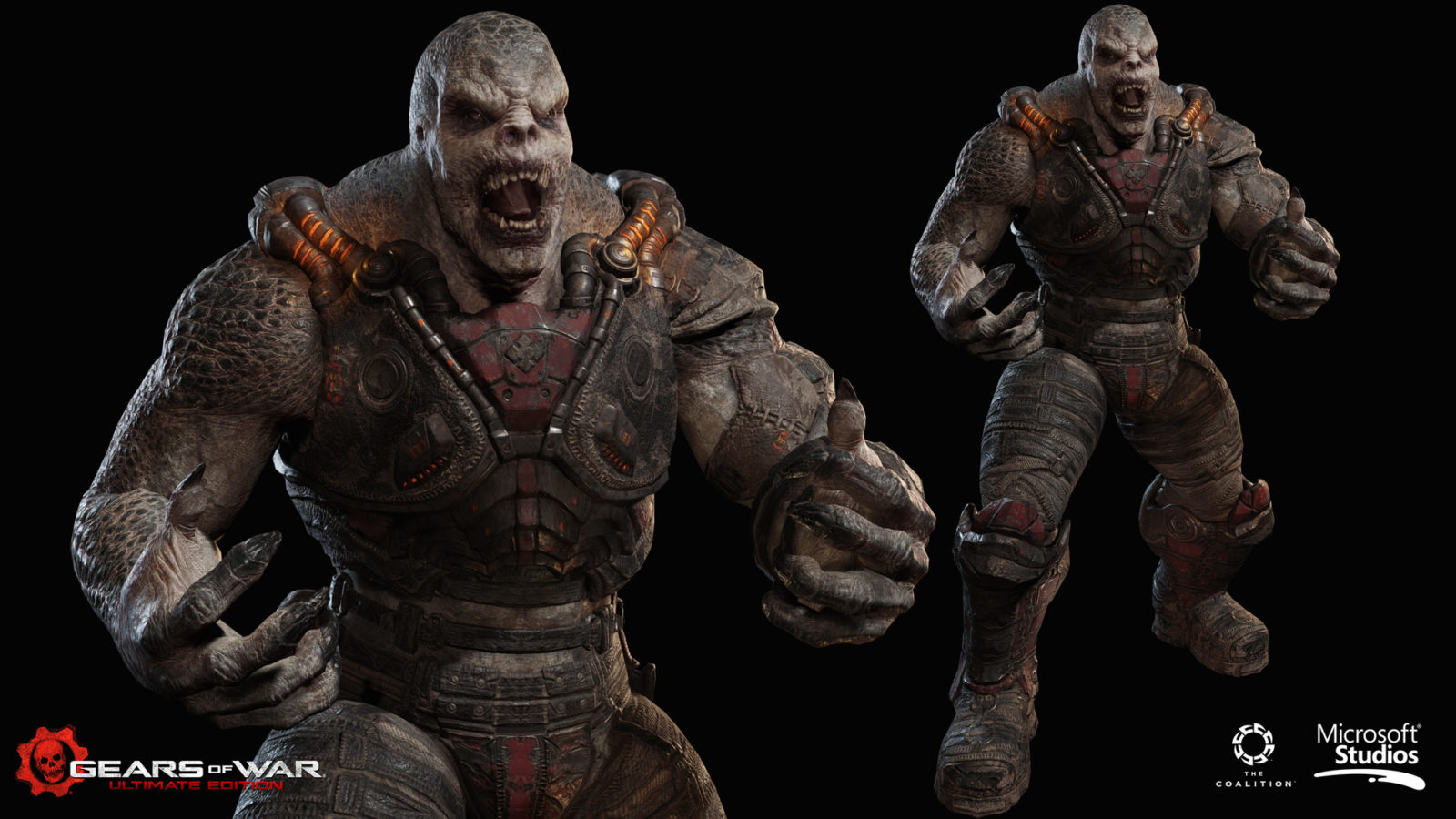 Drone
Drone
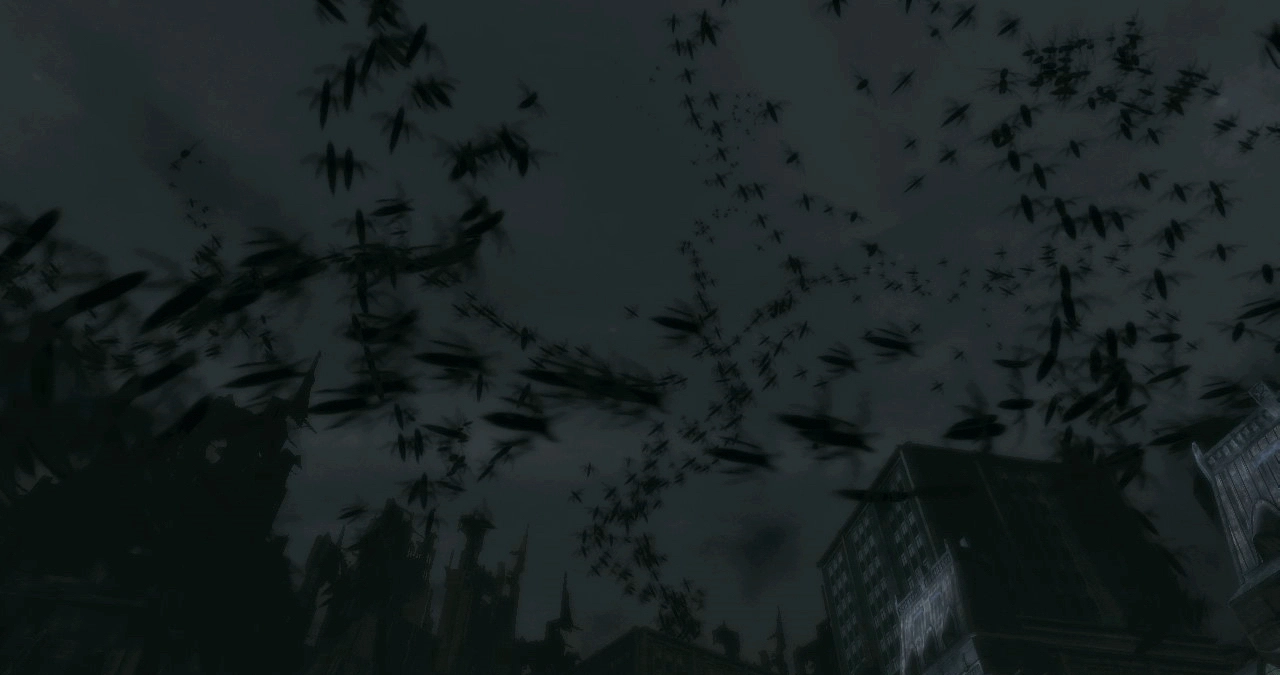
- Kryll: Nocturnal, winged creatures with a genuine hunger for flesh that resemble flying piranhas. They tend to act in great swarms and bring down prey within seconds. Light is the only way to repel them.
- Berserker: The female Drones. Incredibly stronger, they are immune to every conventional weapon because of their highly resistant skin and are vulnerable in this first game only to the Hammer of Dawn. They are blind but have highly developed senses of hearing and smell. They are extremely powerful enemies that often serve as bosses in Gears of War.
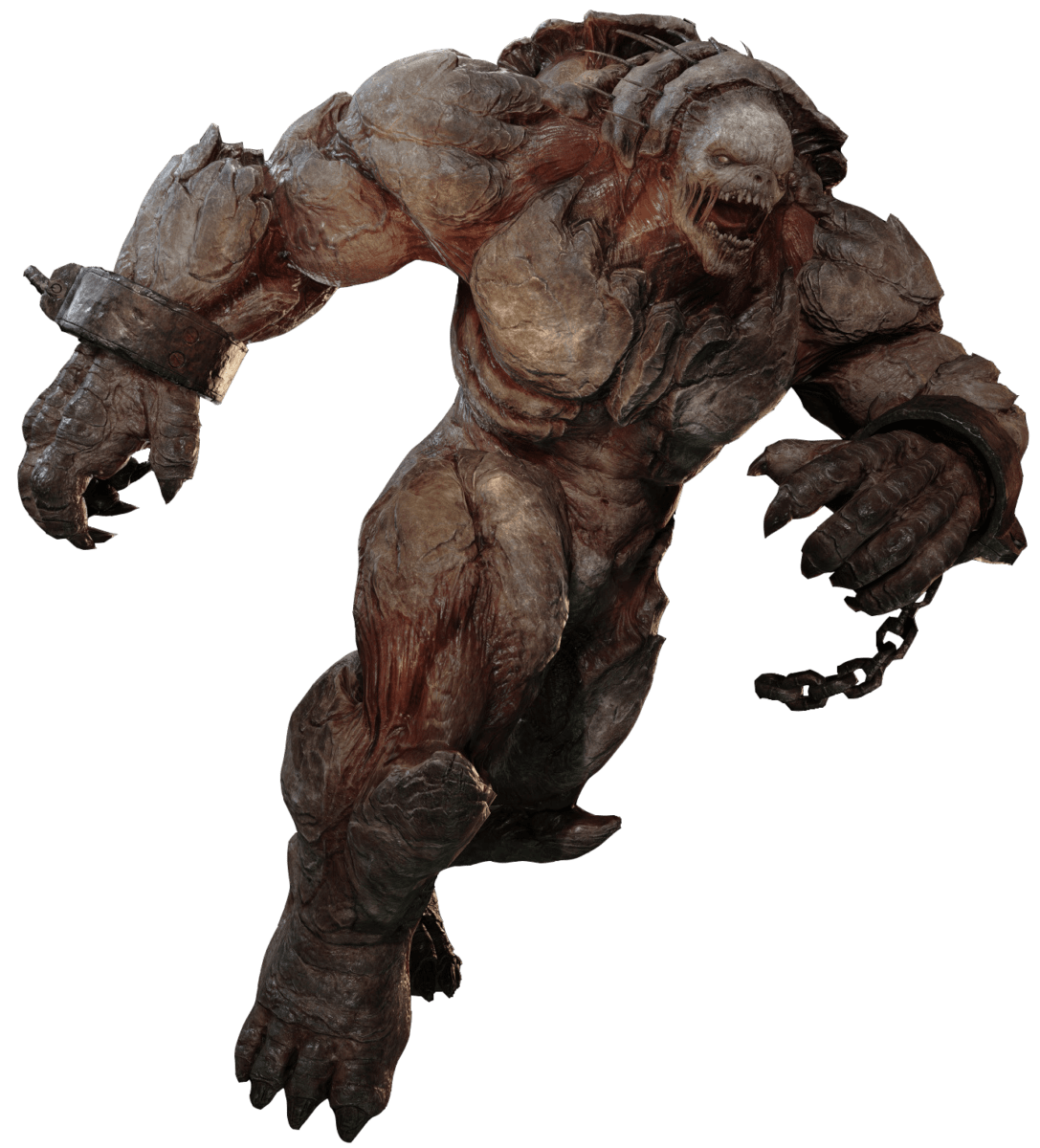 Berserker
- Seeder: Large and resilient enemies. Arthropod-like in appearance, they have eight legs and can release spores called Nemacysts from their bodies. In the Locust army, their role is to defend territory as antiaircraft artillery. Their presence on the battlefield also helps interfere with human radio communications.
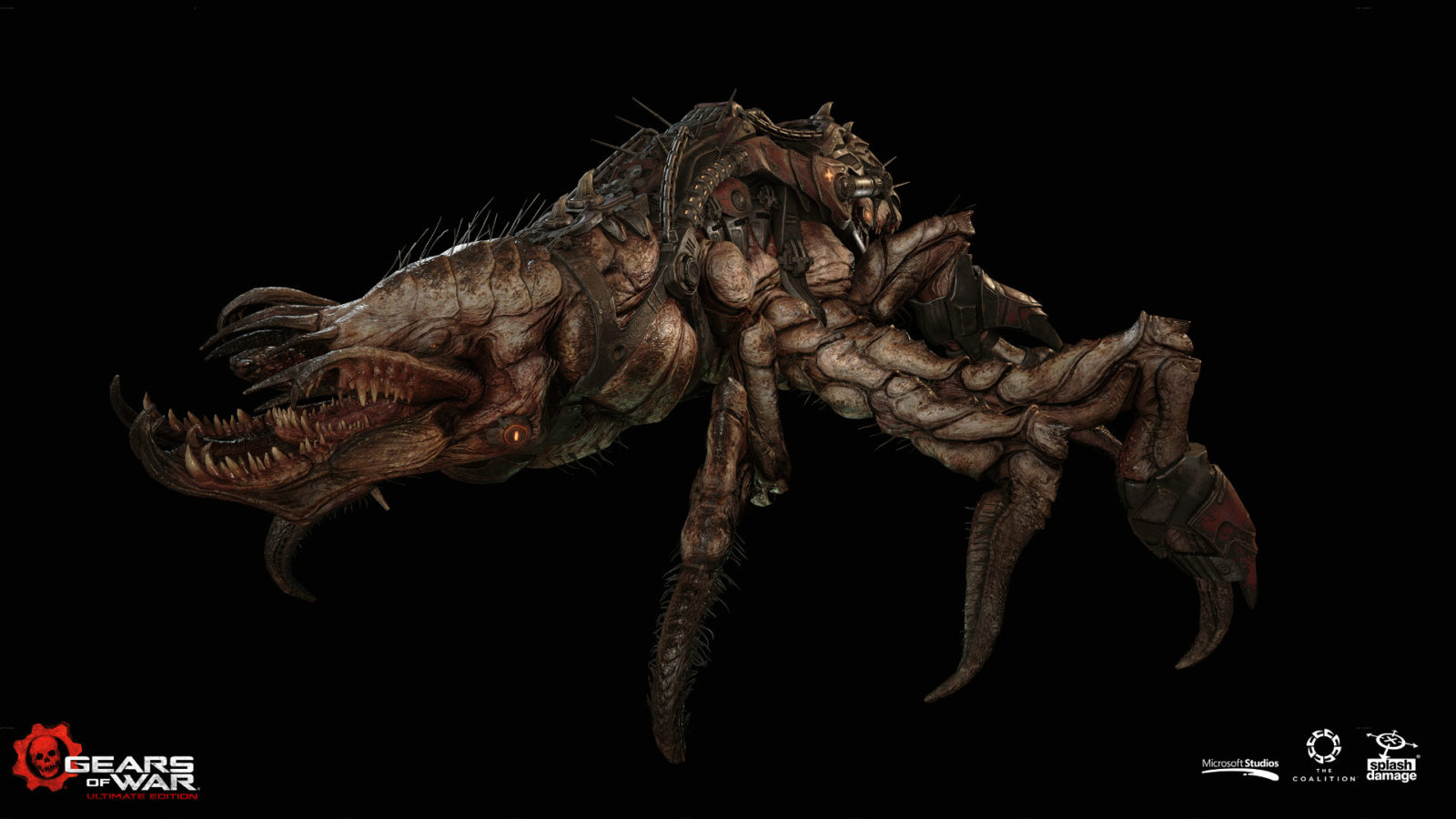 Seeder
- Brumak: Gigantic beings that reach more than 12 meters in height and weigh 10 tons. The Locusts are believed to have "manufactured" the Brumaks through scientific experiments. They are used for transportation and heavy artillery and have a Drone that "drives" them from above their heads. They generally have two machine guns, one on each arm, and a large rocket launcher attached to their backs. They are undoubtedly one of the Locusts' greatest assets in the war.
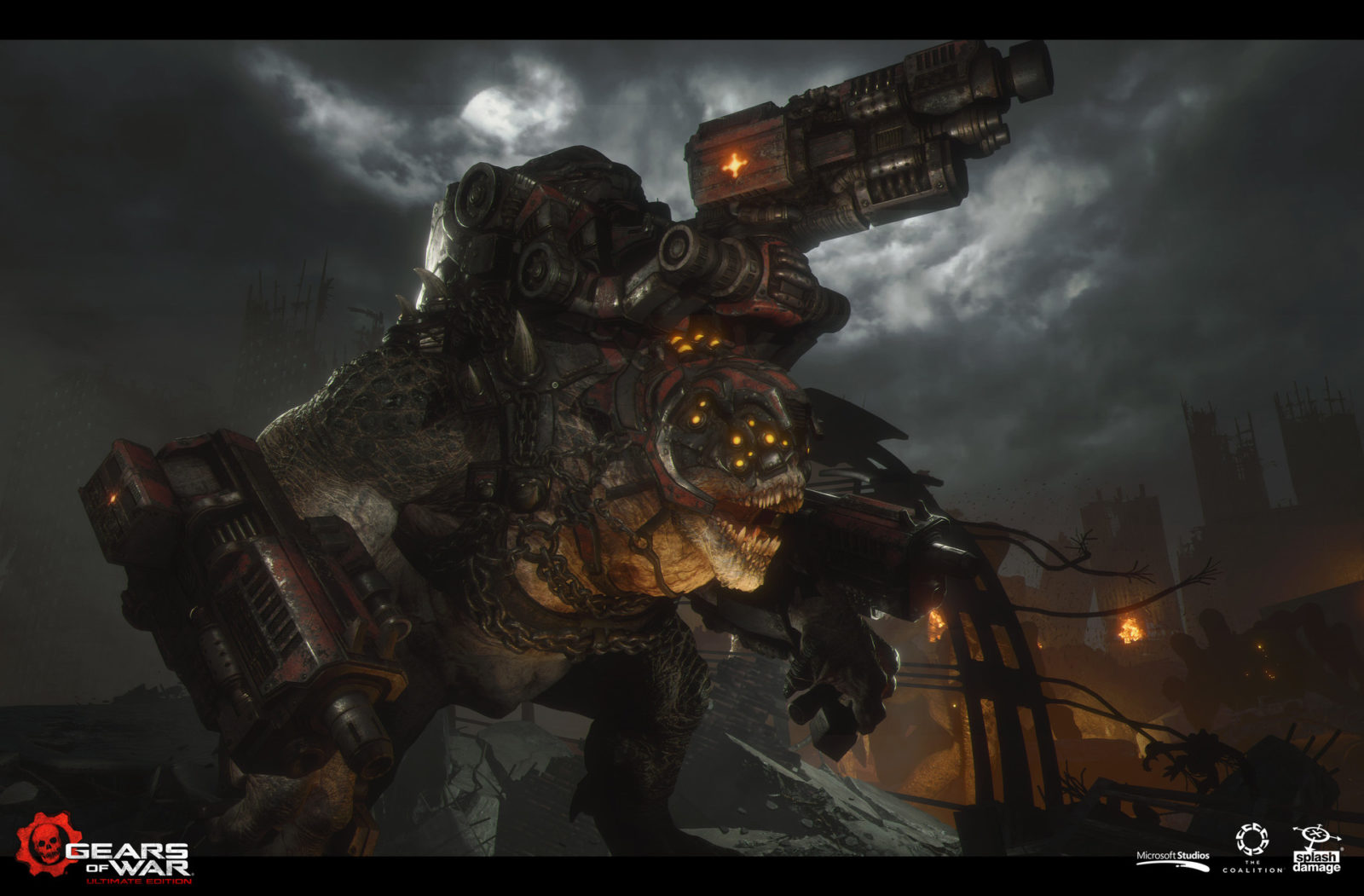 Brumak
Fun fact 3: In an interview during E3 2015, Rod Fergusson, head of The Coalition and the person responsible for remastering Gears of War, said that one of the main reasons for making this Xbox One version was to give his team experience with the franchise before they began developing Gears of War 4. This is probably why they did not port Gears 2, 3, and Judgment to Microsoft's newest console.
Brumak
Fun fact 3: In an interview during E3 2015, Rod Fergusson, head of The Coalition and the person responsible for remastering Gears of War, said that one of the main reasons for making this Xbox One version was to give his team experience with the franchise before they began developing Gears of War 4. This is probably why they did not port Gears 2, 3, and Judgment to Microsoft's newest console.
Our Conclusion
Without a doubt, Gears of War is a good game that made third-person shooters even more popular during the second half of the previous decade. Its fluid, enjoyable gameplay made it the first installment in a successful franchise under Microsoft. If you have not played it yet, give it a chance. Its action in the style of American movies may win you over, and if it does not, ask a friend to join you for the adventure; you cannot go wrong, I guarantee it.
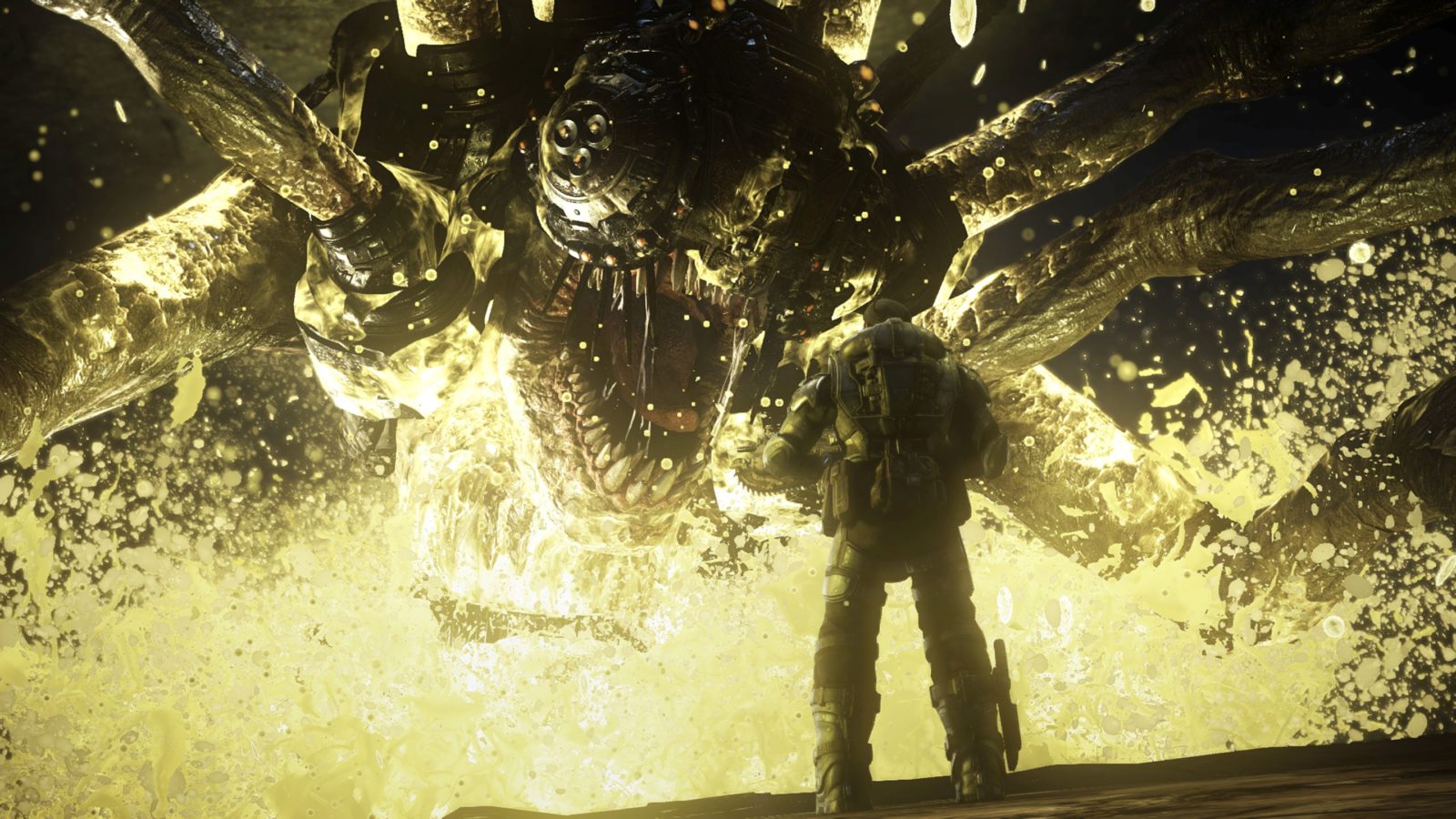 Boss battles are not numerous in the Gears franchise.
Rating: 8.5
Played on the Xbox One version