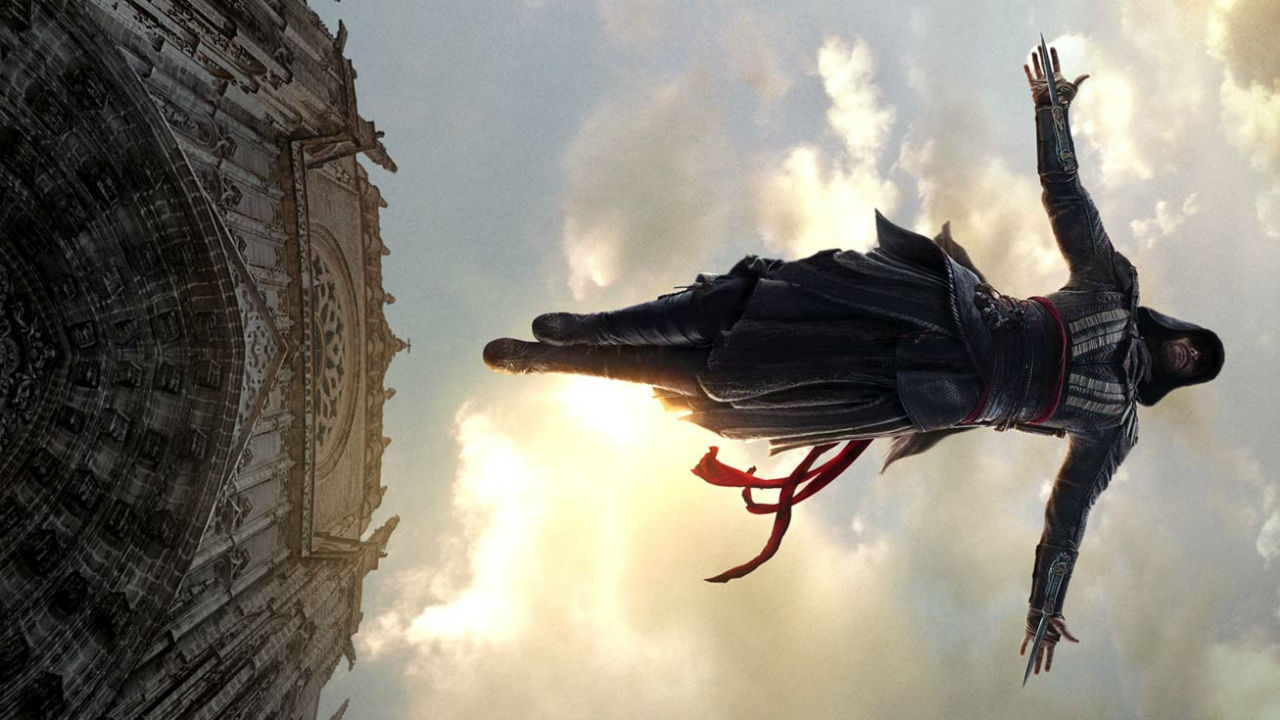
Assassin's Creed... a video game movie. An adaptation of a series filled with highs and lows, but one that is also a sales and social phenomenon, achieving tremendous success in several forms of media beyond the games: action figures, comics, books, and now a movie too.
I went into the theater with low expectations. In fact, this movie never made me excited. Obviously, ever since it was announced, I said, "Wow, I need to see it; after all, it is Assassin's Creed, but I imagine it will be terrible." The first photos were bad, the first image of the assassin Aguilar (Michael Fassbender) wearing the outfit looked strange and out of place, the trailers were silly, and they showed a very... um... very "whatever" performance from Fassbender.
But, well, it is Assassin's Creed, right? And I even played the terrible Liberation, the exhausting Revelations, and the problematic Unity. Why wouldn't I see the movie, which cost much less than I paid for all those games and would take up less of my time, right?
When you do anything with low expectations and it turns out not to be that bad, you tend to say, "Wow, that was actually kind of nice." But obviously, if in addition to having low expectations you approach it with ill will and want that particular thing to be a disaster, then there really is no saving it.
I did not want Assassin's Creed on the big screen to be a disaster. I just did not expect it to be the Citizen Kane of video game adaptations, much less the Citizen Kane of today's movies. I expected something... confusing, rushed, with bad performances. Honestly, Marion Cotillard is almost a Nicolas Cage: one extreme or the other. Either she is fantastic (Piaf), or she is terrible (Batman). And the trailers showing Michael Fassbender with an "I don't care" expression also made me expect a performance delivered reluctantly, at the very least.
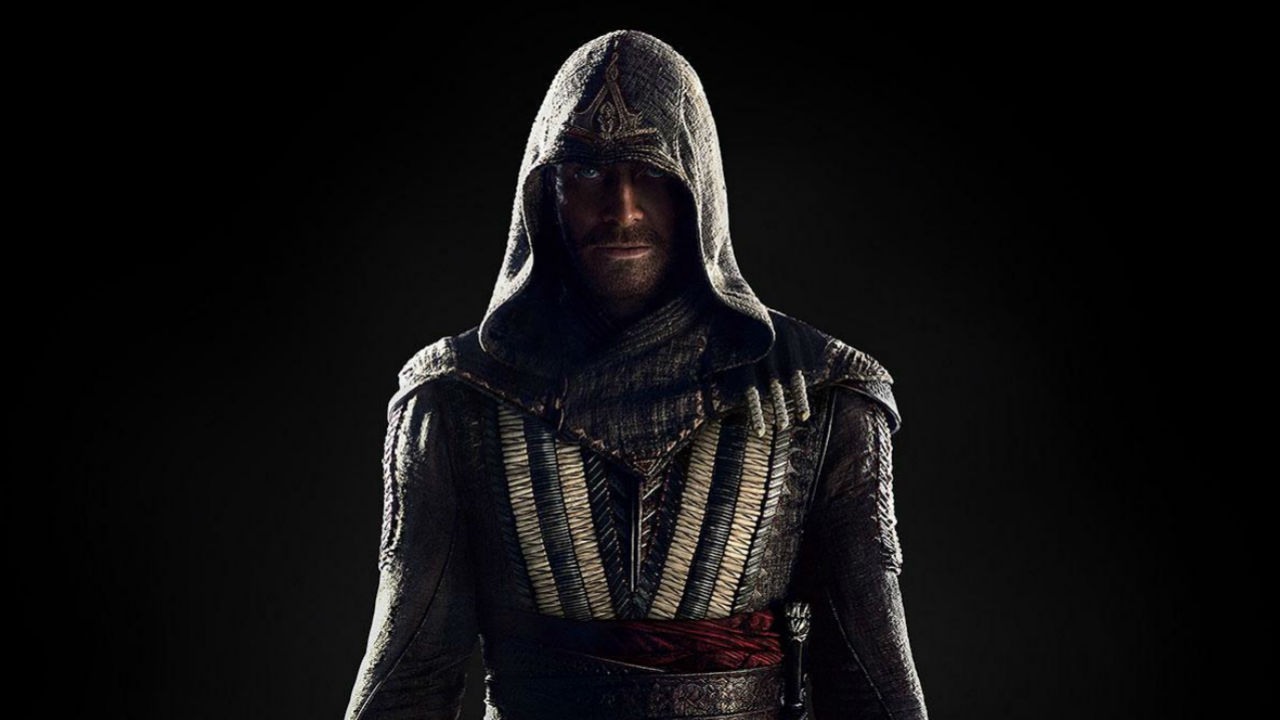
This was one of the first images from the movie. And it did not excite me at all.
Anyway, the lights went out after about ninety trailers (seriously, there were many trailers — but not ninety; that was an exaggeration), and it began... when it ended, I had LIKED it. It finished, and I said, "Look, it is actually not that bad."
The fact is that there is a lot of fan service. There are plenty of camera shots typical of the series (such as those flying over the cities), there is a scene that perfectly recreates synchronization at a View Point (only without saying that is what it is, as the game does, because, right? That would make no sense), there is a leap of faith, there are hidden blades, parkour, smoke bombs—wow, there is a lot, and everything fits together quite well.
The best fan service, however, in my honest opinion, comes during the Templar speeches. That felt very Assassin's Creed: the tension of the assassin drawing closer, in the shadows, blending into the crowd, and getting nearer and nearer to the target. I thought these parts were great, and they conveyed the feeling of the games very well.
The dialogue is actually good. The Abstergo portion strongly reminded me of the first Assassin's Creed, with Desmond kidnapped to be tested in the Animus (but the movie's Animus is much cooler), and Fassbender and Cotillard's performances were satisfactory, while Jeremy Irons performed at his usual level of excellence.
However, regardless of how much fan service it has or how many scenes recall the games, it simply cannot match the game's depth in my favorite aspect: historical reconstruction. Of course, that is unfair: the movie is two hours long, while a game in the series lasts at least twelve. The movie is much more limited, and the interaction is missing... Playing Assassin's Creed, to me, means interacting with the digitized history there on my TV, seeing landmark events happen and taking part in them. In the theater, that is impossible.
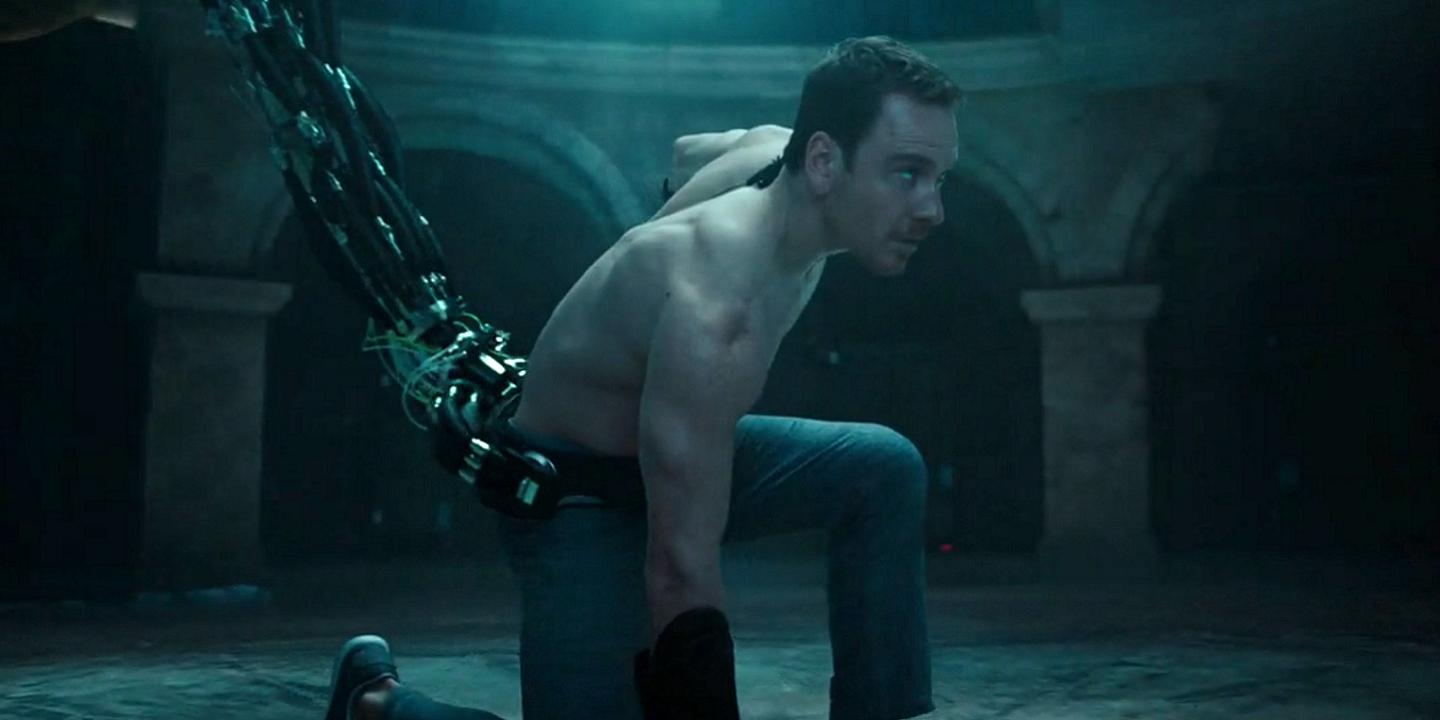
The Animus
The movie chooses to focus heavily on the present, especially because we will probably get more Assassin's Creed movies (and I truly hope we do), so this foundation really did need to be firmly established for the future. The past, meanwhile, is somewhat sidelined, even though a considerable portion of the movie takes place in Andalusia in 1492. But that part serves the action scenes more than the reconstruction of history (which is what the games do).
In terms of cinematography, we have seen much better. I thought the movie was far too dark (and I saw it in 2D), especially during the shots flying over 15th-century Andalusia. The soundtrack did not catch my attention at any point either, and the first song that plays, just after the movie's introduction, made me fear that the film would go down a "quippy Marvel-style" path. Moreover, the song had nothing to do with the video game series.
Another problem, although this one has nothing to do with the movie's team or production, is the terrible localization work for Brazil. In scenes set in Spain, the characters speak Spanish (a point in the movie's favor, by the way), but the English subtitles appear on screen! And so do the Portuguese ones, creating a jumble of sometimes four lines of subtitles that interfere with viewing the screen. The company that distributed the movie in Brazil did not put enough care into it.
Look, the movie is good. I believe anyone will be able to watch it without trouble, even without knowing anything about the games. But I am a fan, so I do not know. I believe fans who go in with an open mind will like it, but if you go to the theater saying, "It will be awful, garbage, I will hate it," then nothing can save it. Do not even waste your money.
PS: Oh, and it is very funny to see Jeremy Irons, an actor who played Pope Alexander VI in the series The Borgias, in an Assassin's Creed movie!