Whenever a new Super Smash Bros. is announced, Nintendo fans become extremely excited and every piece of news generates enormous attention, doesn't it?
Super Smash Bros. Ultimate was so successful that it sold more than 30 million copies worldwide and received over 10 DLC releases with characters and stages, demonstrating the strength of the franchise directed by Masahiro Sakurai.
Super Smash Bros. Ultimate arrived with every character from every Smash released up to that point, including newcomers made available through DLC. It launched with more than 100 stages, 800 songs, new modes, and returning modes that had been expanded.
A franchise so extensive in many respects certainly has some fascinating facts worth discovering. Shall we look at a few associated with each game?
Super Smash Bros. (Nintendo 64 — 1999)
1. Originally for Super Nintendo
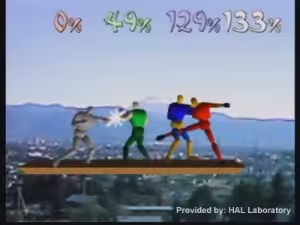
It is rumored that the first prototype of what became Super Smash Bros. was intended for Super Nintendo and would use rudimentary 3D graphics powered by the Super FX chip. The officially disclosed idea, however, was to create a new franchise with original characters under the name Dragon King: The Fighting Game.
When the project moved to Nintendo 64, the "father of Smash," Masahiro Sakurai, added Nintendo's own characters during a testing period. He liked the result, and the title became a crossover featuring the company's characters.
2. Nintendo Did Not Expect the Game to Succeed
The first Smash Bros. was developed on a limited budget and with a relatively small investment in advertising.
It is assumed that Nintendo's executives did not expect the game to become a commercial success, but it soon reached nearly six million copies and became one of the five most successful Nintendo 64 games.
3. Scrapped Characters
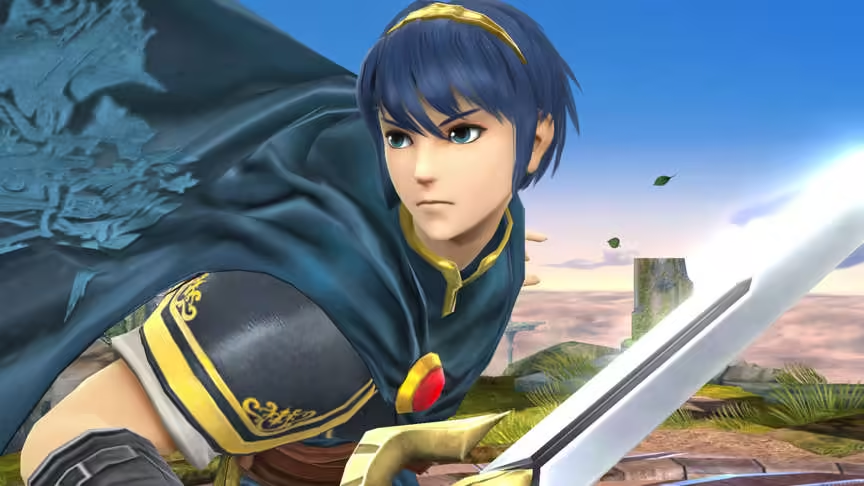
Fire Emblem character Marth was meant to join the roster of the first Super Smash Bros., but was ultimately dropped because there was not enough time to implement him.
In the following game, Melee, he became an unlockable character. Other characters planned for the game but later scrapped included Mewtwo, Bowser, and King Dedede.
4. Made for Western Markets?
The Japanese version's data includes the announcer saying Jigglypuff rather than the character's original Japanese name, Purin. This indicates that the developers planned to release the game in the West from the beginning.
5. James Bond in Smash Bros.
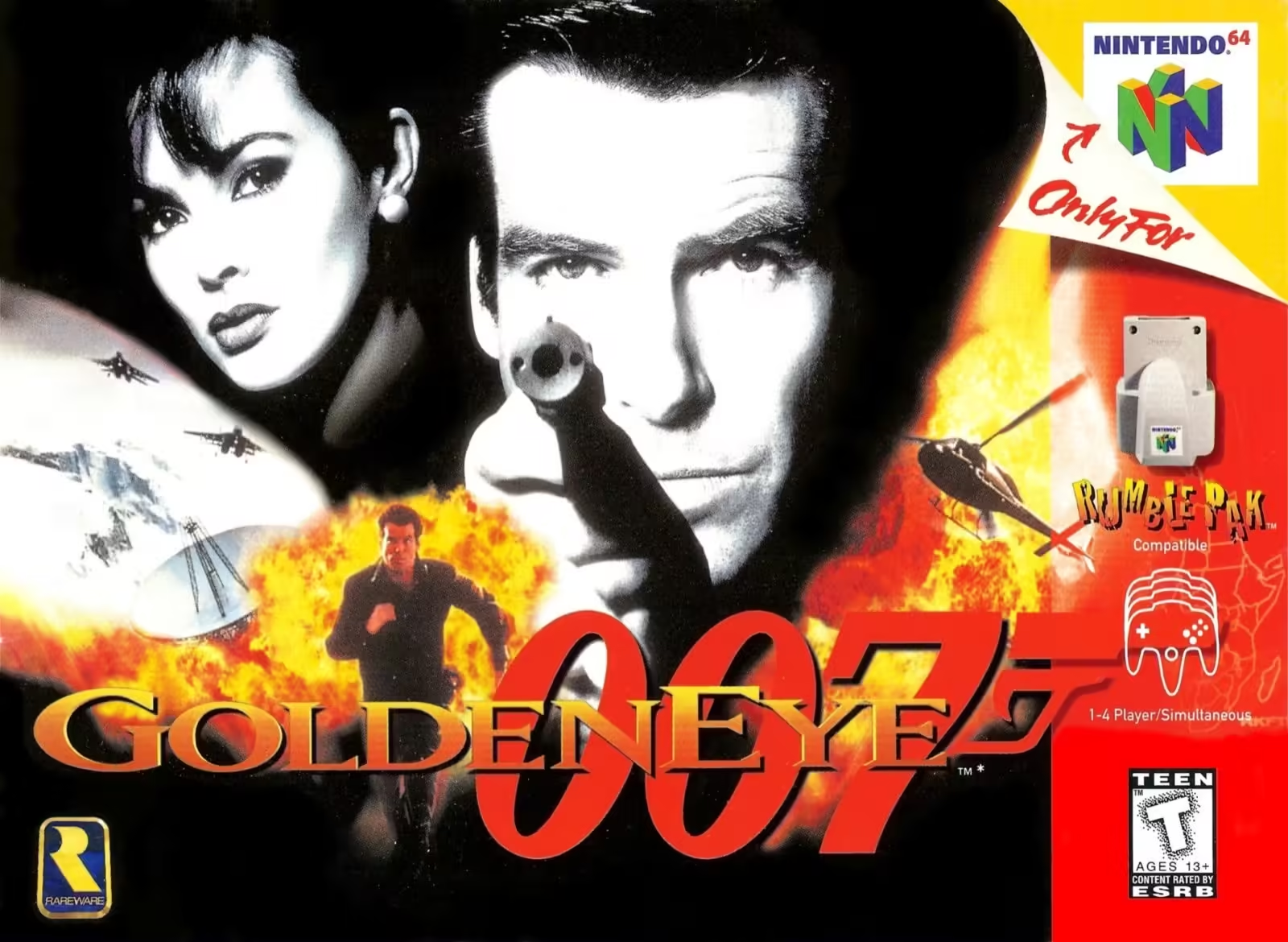
After the Japanese launch, Nintendo conducted a poll to learn which characters players wanted to see in future games. Most of the top ten have since appeared, including Bowser, Peach, Wario, Mewtwo, King Dedede, and Ganondorf.
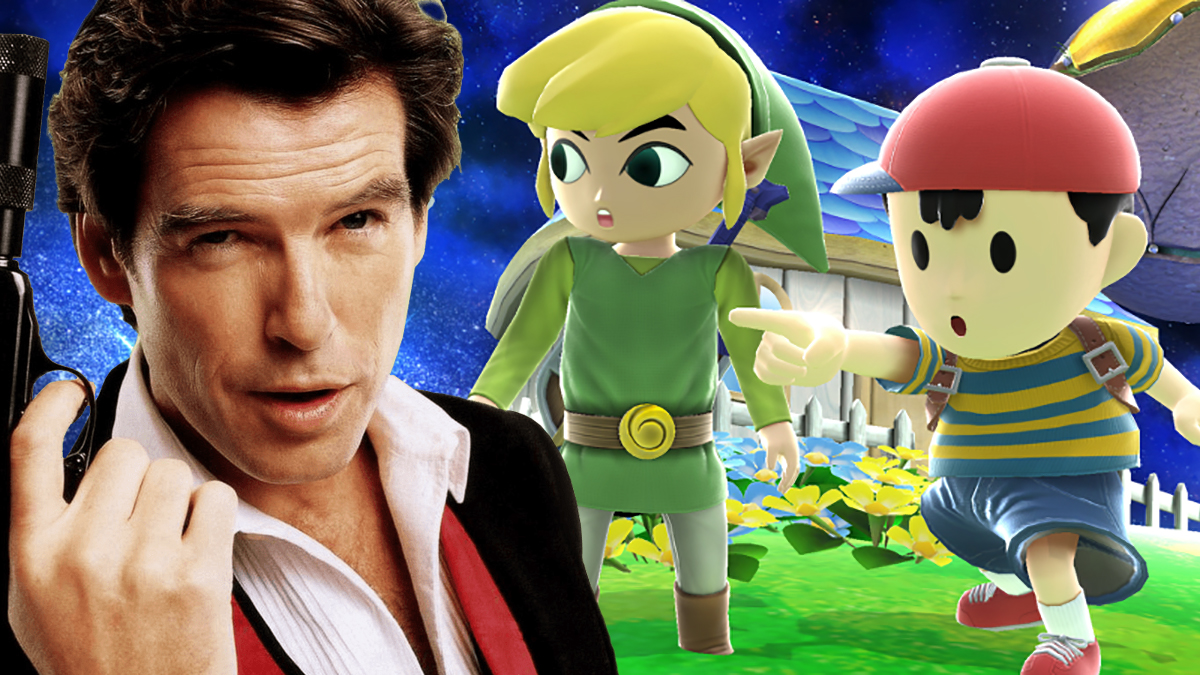
Curiously, James Bond from 007 was among the most requested characters, but probably never reached a game in the series because of copyright issues and restrictions on how the character could be used. Banjo and Kazooie and Toad, who were also on the list, did not appear until Super Smash Bros. Ultimate. Unfortunately, Mew, another name on the list, never became playable.
6. Character-Selection Screen
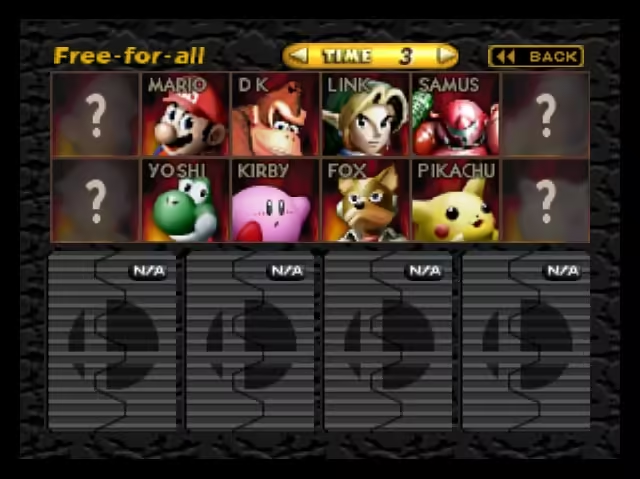
Whether intentional or not, the characters, excluding unlockables, are arranged by the release dates of their titles from left to right and top to bottom.
Mario and Donkey Kong appeared in 1981, Link and Samus in 1986, Yoshi in 1991, Kirby in 1992, Fox in 1994, and Pikachu in 1996.
7. Final Smash
According to an interview by the late Satoru Iwata, the move known as the Final Smash was intended for the very first game in the series but was cut because of hardware limitations. The idea finally arrived only in Brawl.
Curiously, the original game's data contains Ness shouting "PK" and "Sandstorm!" as well as audio of Captain Falcon shouting "Come On!", probably connected to the special move.
8. A Secret Door and Sign?
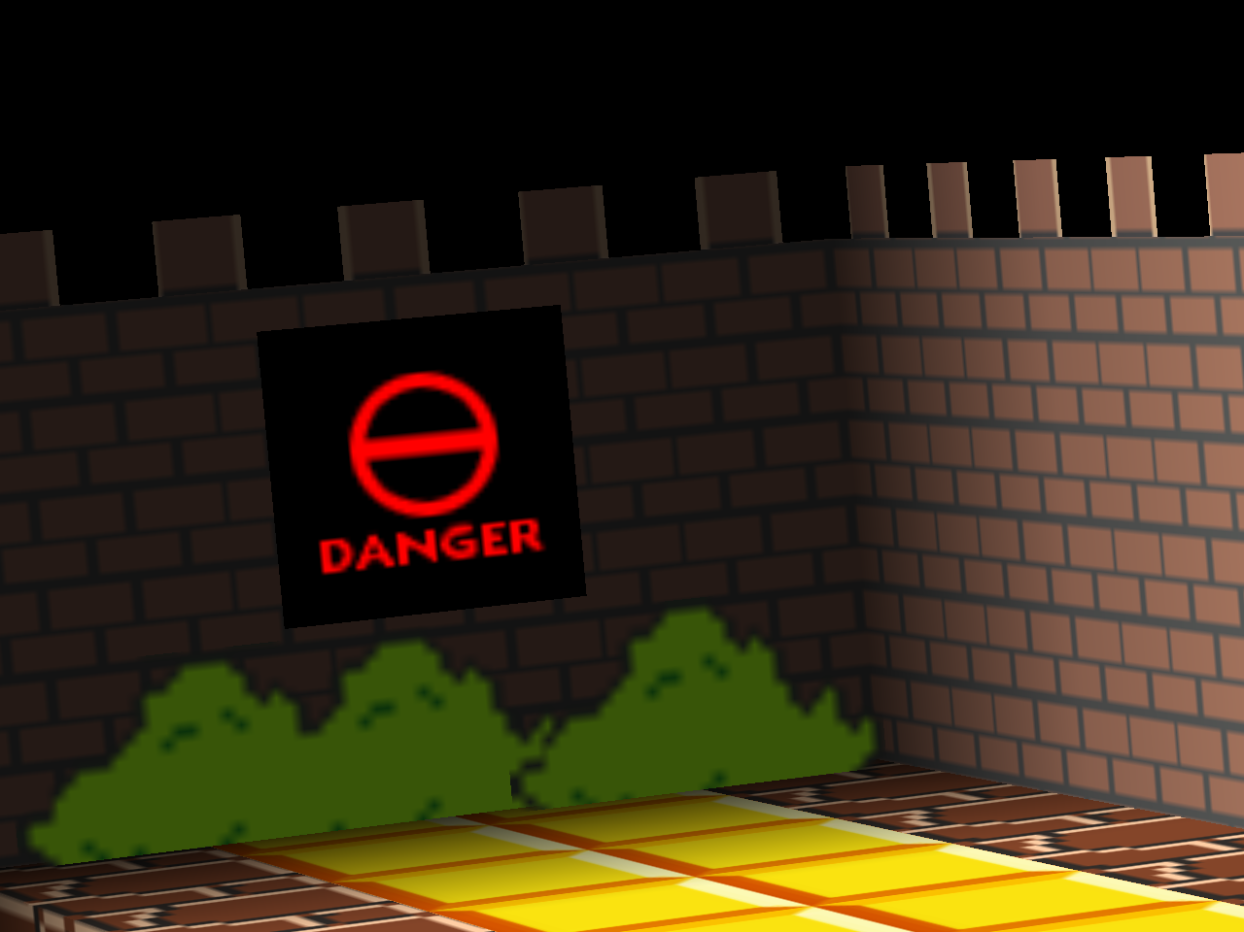
In the Mushroom Kingdom stage, if you pause the game and move the camera to look at the far left or right, you will see a sign reading "Danger," indicating that going beyond that point means death. It is very difficult to see it any other way.
The introductory scene, as well as the ending, includes an animation showing a bedroom. Curiously, the setting has a door that cannot be seen without exploring the game data because the camera never points there.
9. Japan Versus the United States
- In Japan, the "punch" sound is different and resembles a more traditional fighting sound. It is believed the change in the United States was made to keep the game more family-friendly;
- The logo on a building in Sapphron City changes from "Silf" in the Japanese version to "Silph" in the American release;
- The Japanese version does not have the "Congratulations" screen;
- Fighting Polygon Team is called Dummy Corps in the American version.
Super Smash Bros. Melee (GameCube — 2001)
1. Major Production
After Nintendo realized that Super Smash Bros. had won over Nintendo 64 players, the company invested heavily in Melee. Because it came in the first wave of games for the console, it was also produced to demonstrate the potential of the newly released GameCube.
For that reason, it has a high-quality FMV sequence, a much larger roster, and unquestionably far more content than its predecessor. The game also had a short development period of 13 months, and Sakurai said he even worked on weekends and holidays.
2. Trophy Reflections
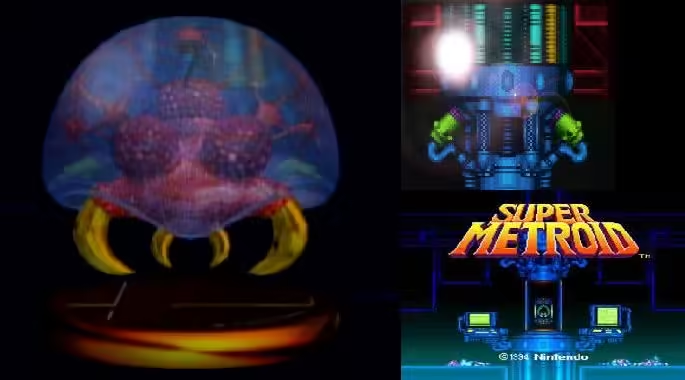
- If you look closely, you will notice that the Metal Mario trophy reflects the "Yoshi Island" stage;
- The Ayumi Tachibana trophy reflects a cat's face;
- The Ocarina trophy reflects the sky;
- Several trophies show Osohe Castle from the canceled EarthBound 64;
- The Metroid reflects the space station from the Super Nintendo game Super Metroid.
3. Solid Snake and Sonic Were Planned for Melee
Hideo Kojima asked Nintendo to include Solid Snake in Super Smash Bros. Melee, and Yuji Naka made the same request for Sonic. Because the requests came at the last minute, however, both characters were moved to the next game.
4. A Different Room When the Language Changes
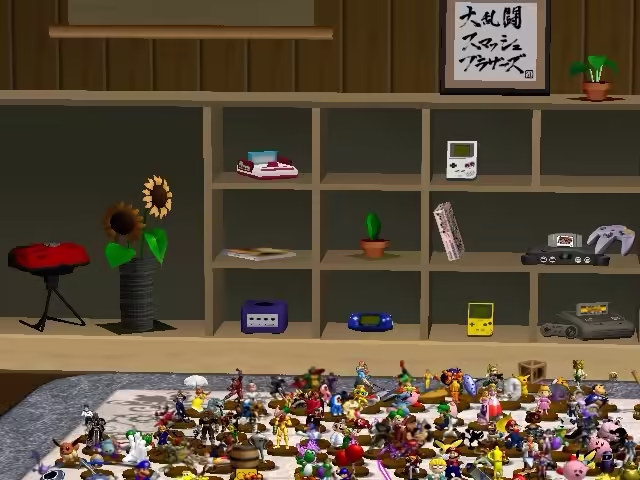
If you change the game's language to Japanese, several things in the room change. The NES becomes a Famicom, the Super Nintendo becomes a Super Famicom, and the Super Smash Bros. poster switches to Japanese. Curiously, a Virtual Boy can also be seen.
5. References
- Event 44 is called "MewTwo Strikes!" in reference to the first Pokémon movie, "Mewtwo Strikes Back." In the same event, Princess Zelda has a darker appearance that evokes Nurse Joy in the feature film when controlled by Mewtwo;
- Roy has the image of a lion on his belt. This refers to the ending of Fire Emblem: The Binding Blade, in which he is called the "Young Lion";
- Event 22 is "Super Mario 128," a reference to a Nintendo test project of the same name created to demonstrate the GameCube's power;
- One bonus battle is called "Switzerland" and is worth 12,000 points. To win, nobody can attack anyone else. This may refer to the country's neutrality during the two world wars;
- Several dolphins can be seen in Captain Falcon's "Break the Target." This may refer to the GameCube prototype, which was codenamed "Dolphin";
- If you look closely in Luigi's "Break the Target" room, you will find a GameCube in the middle of the stage;
- The bottom of the "Barrel Cannon" trophy bears the inscription "2L84ME," a reference to the phrase "Too Late For Me."
6. Third Eye
Princess Daisy's trophy had a third eye beneath her hair. This bug was fixed in later versions of the title.
7. Ditto Was Supposed to Emerge from a Poké Ball
The developers originally wanted Ditto to emerge from a Poké Ball used in battle and transform into a copy of the character who released it, temporarily helping during the fight. The feature was removed because they could not implement it properly. The idea finally saw the light of day in the Switch version of Ultimate.
8. Devil World Trophy
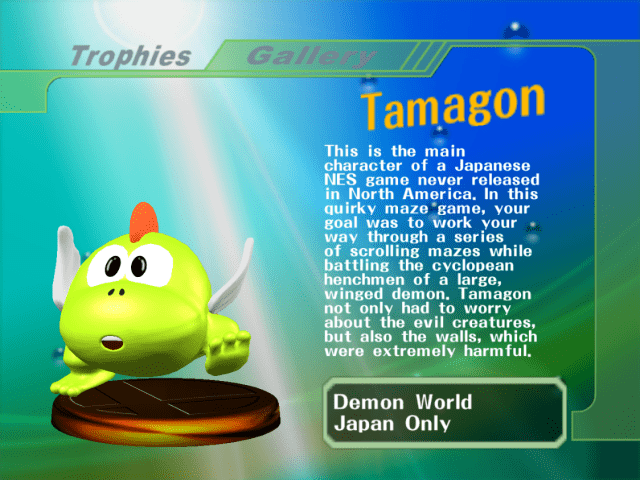
The protagonist of Devil World, an 8-bit NES classic released in Japan in 1984, is Tamagon, a trophy exclusive to the Japanese version of the game.
By exploring the American game's data, however, it is possible to find him with his complete description even though Devil World never reached the Americas. More curiously, he was entirely removed from the European version of Super Smash Bros., despite that game having been released there.
Super Smash Bros. Brawl (Wii — 2008)
1. Solid Snake Does Not Like Sonic
During an in-game conversation between Solid Snake and Otacon, the agent makes it clear that he does not like Sonic. This is believed to reference Snake's Japanese voice actor Akio Otsuka, who is the son of Japanese voice actor Chikao Otsuka, the voice of the hedgehog's classic villain Dr. Eggman.
2. Brawl's Pikachu Is Melee's Pichu
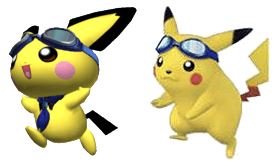
One theory says that the Pikachu seen in Brawl is the Pichu from Melee. The reasoning is that it has the Wall Jump ability, which only Pichu had in Melee; its Final Smash is Volt Tackle, which can only be obtained at the Pichu stage; and one of Pikachu's alternate outfits in Brawl matches Pichu's in Melee.
3. Clothing Was Originally Going to Show Damage
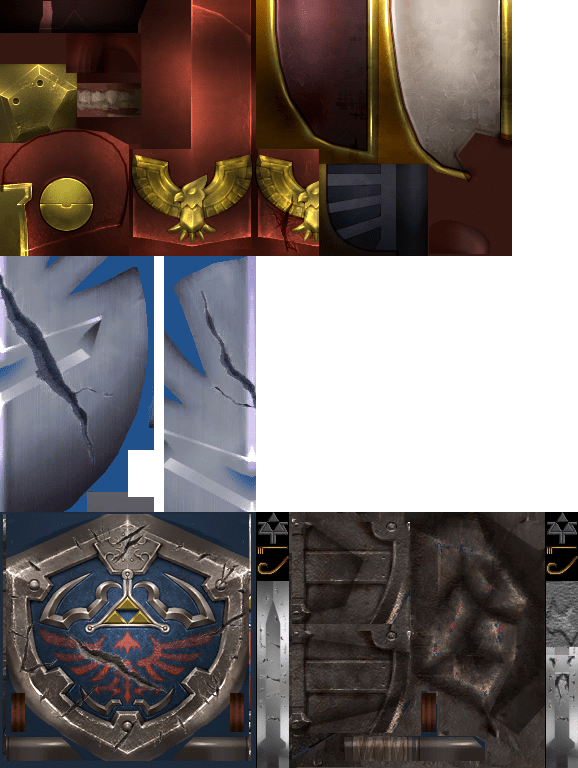
At one point in production, characters were going to show the damage they had suffered in battle. Sakurai's idea was that if armor or a shield were damaged, the enemy would become more vulnerable. Because of the rush to release the game, the system was never implemented.
4. Easter Eggs?
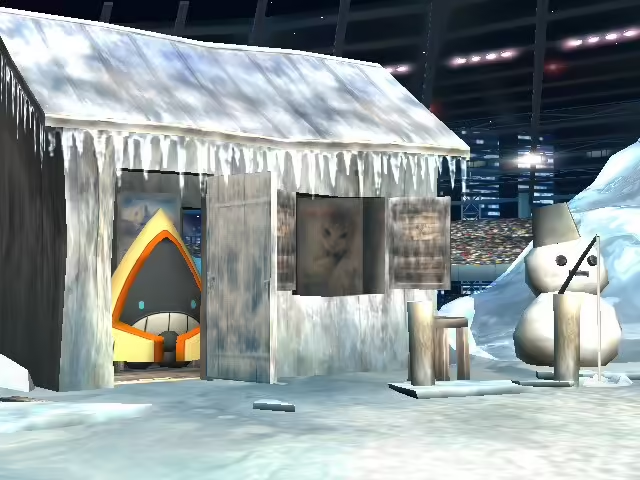
If you look closely, a picture of Masahiro Sakurai's cat appears in the icy area of Pokémon Stadium.
Still on the Pokémon Stadium stage, a building bearing the word Pocket can be seen in the background, in scenery very similar to Saffron City from the first Super Smash Bros.
5. Different Victory Jingle
When playing as Sonic, his victory theme differs from those of the other characters and is taken from the Sonic 2006 soundtrack.
6. Primid Changes Constantly
During the events of the Subspace Emissary, Primid's face changes every time the game starts.
7. Chronological Order
In All-Star Mode, the opponents' order reflects the release order of their respective games. The first opponent is Mr. Game & Watch, and the last is Captain Olimar from Pikmin.
8. Characters That Were Going to Be Included
According to the game data, Dr. Mario, Roy, and Mewtwo were going to return in Brawl, while Dixie Kong, Plusle and Minun, Toon Zelda, and Toon Sheik would have been newcomers. The production team probably scrapped the characters to meet the game's release date.
Curiously, Wolf from the Star Fox series was going to meet the same fate. He was added at the last minute thanks to persistent fan requests and the fact that his similarity to Fox McCloud made him easy to create.
Super Smash Bros. for Wii U & 3DS (Wii U and Nintendo 3DS — 2014)
1. Geno from Super Mario RPG Was Supposed to Be Playable
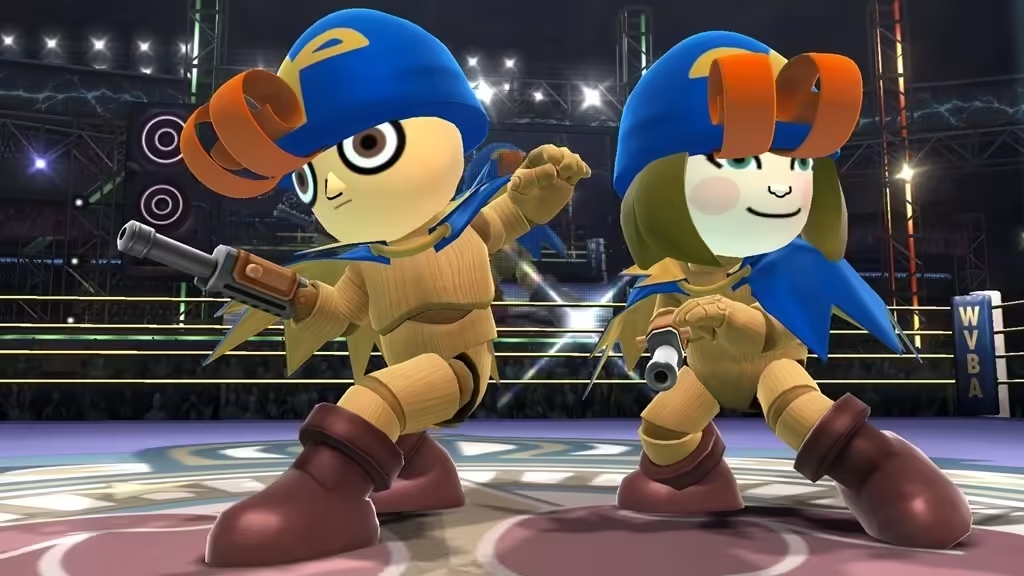
Sakurai wanted Geno, the iconic character from Super Mario RPG for Super Nintendo, to be playable. He was ultimately not included, however, and appears only as an outfit for Miis.
Nintendo is believed to have faced copyright obstacles at the time because Super Mario RPG was developed by Squaresoft and Geno was an original character from the game. Years later, the two companies resumed their partnership to finally release a remake of the RPG.
2. Heihachi Was Also Going to Be Playable
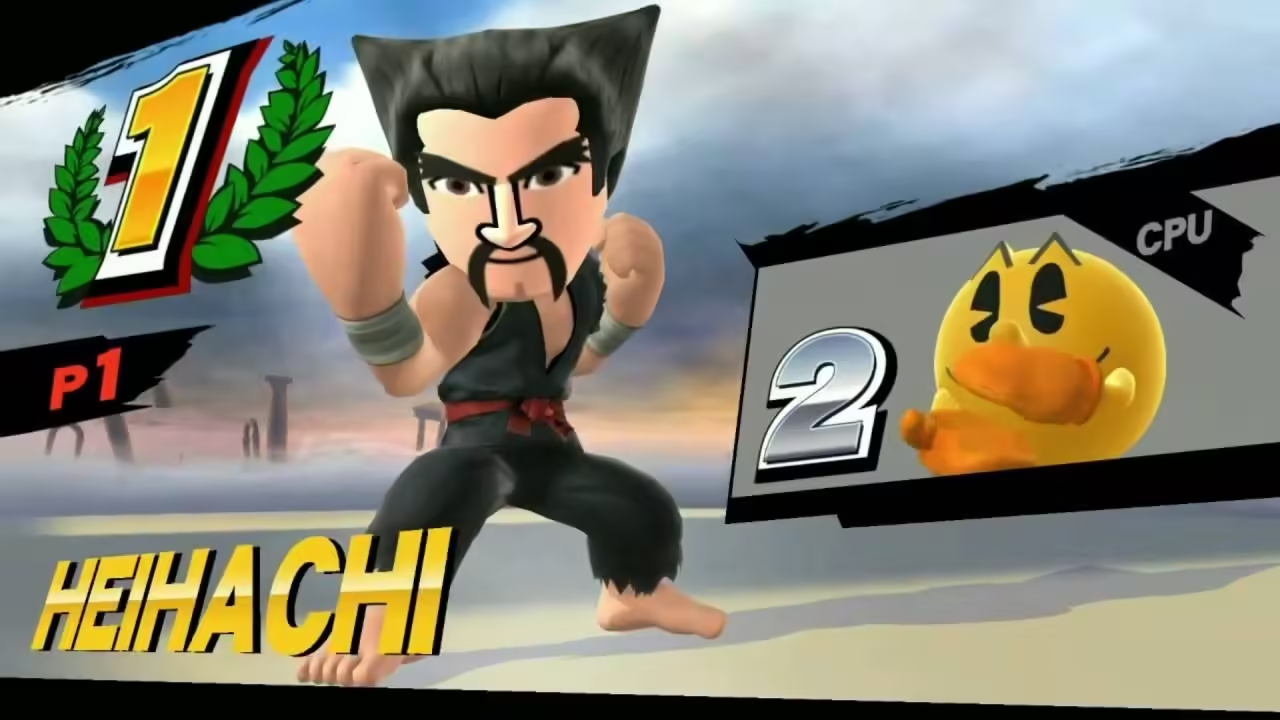
Tekken character Heihachi was going to be playable but was eventually replaced by Ryu from Street Fighter. Like Geno, he ultimately received only a reference outfit for Miis.
3. Text in Hylian
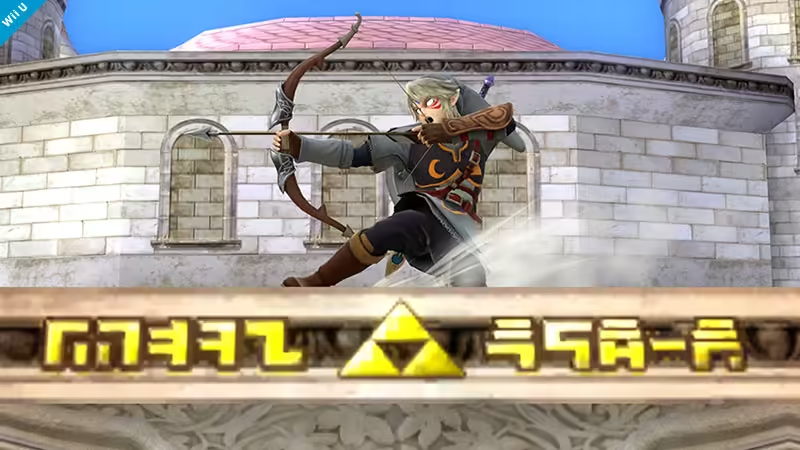
Hyrule Temple contains text written in the fictional Hylian language that reads "Smash Brothers" when translated.
4. Mega Man's Outfits Refer to His Games
Capcom's blue hero was most likely given outfits designed to represent the weapons and equipment he acquires throughout the games.
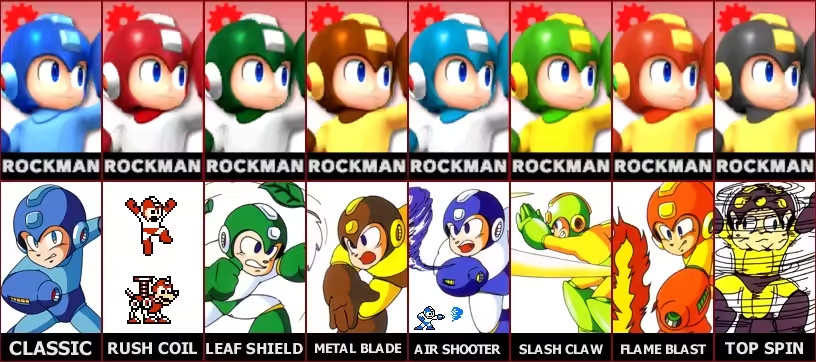
- Red and White — Rush Coil from Mega Man 3
- Green and White — Leaf Shield from Mega Man 2
- Gold and Brown — Metal Blade from Mega Man 2
- Blue and White — Air Shooter from Mega Man 2
- Green and Yellow — Slash Claw from Mega Man 7
- Red and Black — Flame Blast from Mega Man 6
- Yellow and Black — Top Spin from Mega Man 3
5. Link's Hair
By looking beneath Link's hat under forced circumstances, it is possible to see fully rendered hair that cannot be seen normally.
6. Duck Hunt Joined Smash Bros. for a Specific Reason
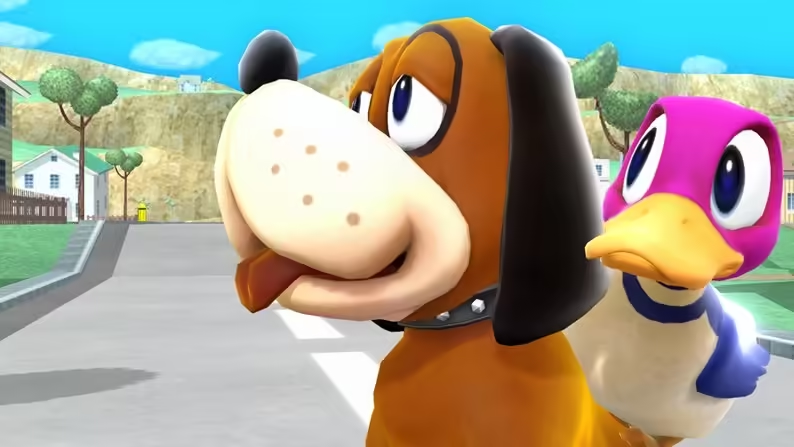
In an interview with Famitsu magazine, Sakurai said he added the Duck Hunt fighter because it was highly distinctive compared with the others, bringing variety to the game. It was also a viable addition because of the strong sales of the eponymous title in the United States during the 1980s.
7. Pac-Man Might Not Have Made It into the Game
Sakurai also said in an interview that if Bandai Namco had not accepted his proposed redesign of the character for Super Smash Bros. 4 in favor of a more classic style, Pac-Man might not have been accepted among the game's fighters at all.
8. Money
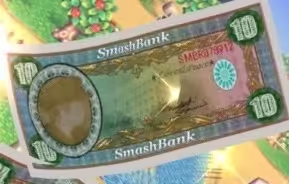
In Coin Battle Mode on Wii U, a close look at the banknote reveals an image of Nintendo's building in Japan, a picture of Masahiro Sakurai, and his signature.
9. Morse Code
During the Classic Mode boss Master Core, a piece of music falls silent after 1 minute and 53 seconds. A series of noises then plays for about six seconds before the music resumes normally. Those noises spell "Master Core" in Morse code.
10. Changing the Logo
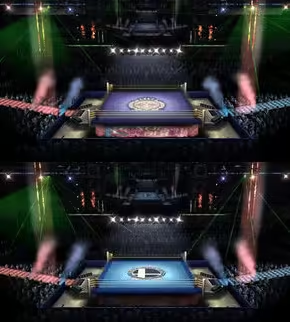
If you press the L button while selecting the Boxing Ring, which represents the game Punch-Out!!, the arena logo changes to the one from Super Smash Bros.