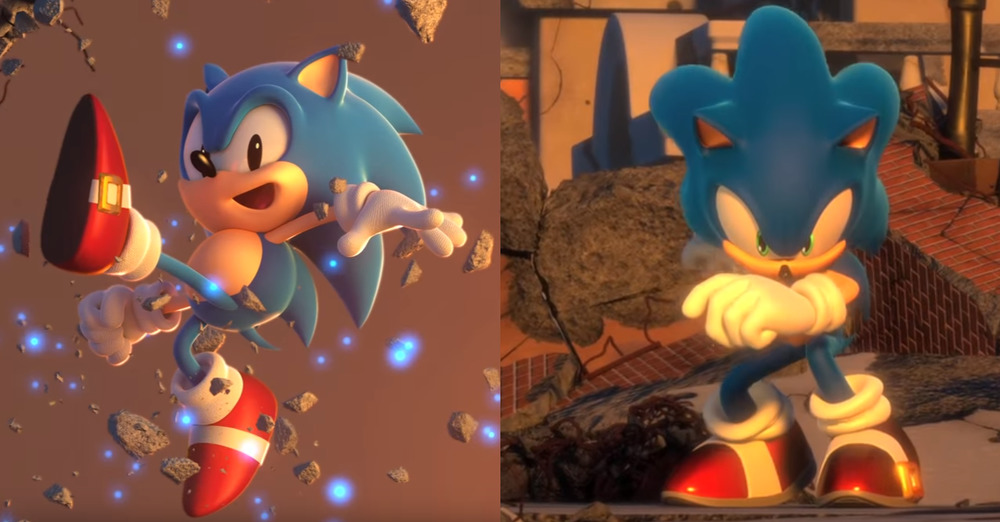

Nowadays, it is common to see some Sonic fans say that the blue hedgehog lost his essence beginning with the Sonic Adventure games, especially the second one. The core of their argument is that the series' identity lies in the Mega Drive games, but that it was lost over time. "Back then, the mascot ran through surreal, colorful settings with fantastical themes; the story was merely a pretext for starting the adventure; the varied level design allowed for many different combinations; Sonic's speed was a reward for the player's skill, rather than something freely given as it would be in some later games; the soundtrack was pop, not rock." However, when we look up the meaning of the word essence in a dictionary, we find: "that which is primordial or indispensable". Within the context of this argument, essence is synonymous with "essential", "primordial", and "fundamental". Therefore, "Sonic's essence" is more a matter of opinion than fact, since every player has a particular idea of what is fundamental to the hero's games. Moreover, it is easy to conclude that what is essential to the series is not necessarily tied to its earliest games, since any game can introduce concepts that go on to become fundamental to the franchise.
What Gives Sonic His Identity? Distinguishing "What Is Done" from "How It Is Done"
The elements that identify the hero's games are more closely tied to the nature of the character than to how the games are made: Sonic is a hedgehog who runs at the speed of sound and saves the world from Dr. Eggman. With that simple premise, the games are expected to explore the character's speed by having him run, defeat enemies along the way, and destroy the scientist's contraptions. Any game that uses ideas like these will directly evoke Sonic's games.
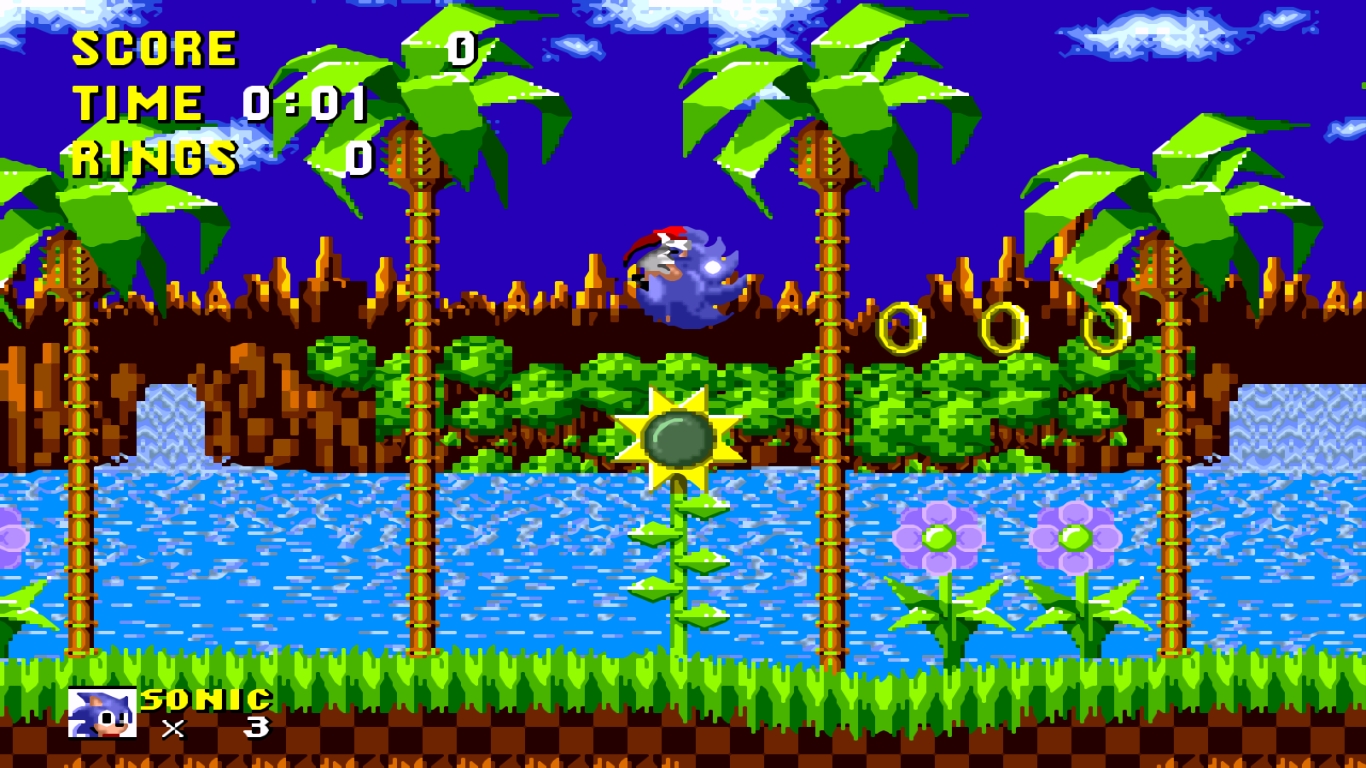
It is important to stress, however, that the way this is done can vary from one game to another, as becomes clear when we compare Sonic 1 for Mega Drive with Sonic Unleashed HD for Xbox 360 and PlayStation 3. In the former, speed was a reward given to the player for skill with the controller: the better they knew and memorized the positions of enemies and the paths through a stage, the faster they could make the mascot go.
The latter, meanwhile, has the boost ability: a press of a button is enough to send the hero racing at high speed and plowing through enemies, while the challenge becomes the player's reflexes as they try not to die by falling into chasms or hitting an obstacle. Both fit within that essence, because they explore the protagonist's speed, but they do so in different ways.
Another example is the story: on the Mega Drive, it existed only to provide a "backdrop" for the adventures, whereas in Sonic Adventure it gained greater importance by exploring character development and plot twists. Nevertheless, they are essentially the same: Dr. Eggman wants to take over the world, and the hedgehog has to save it. Once again, what is done does not change, only how it is done.
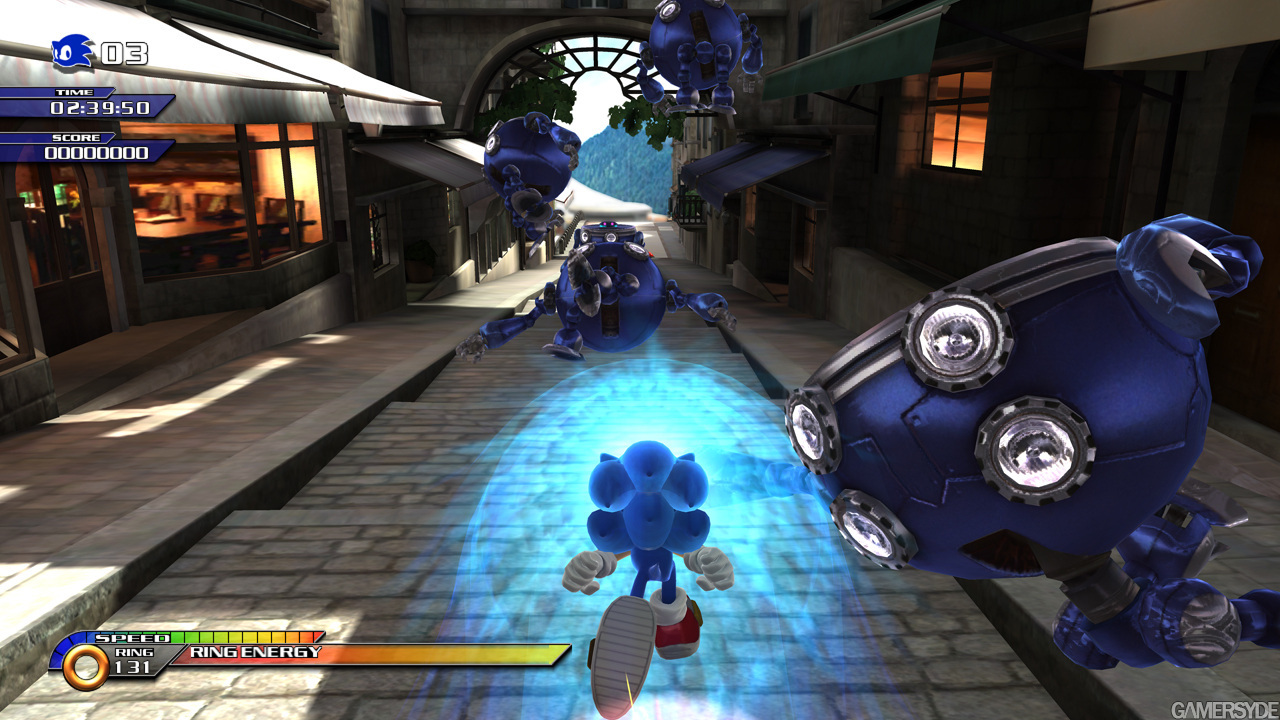 Many argue that boost gameplay is the style most consistent with the character's essence. For the first time, we feel Sonic running at the speed of sound.
"Sonic Changed Drastically When He Entered the 3D World" — Did He?
Long-running series with many games undergo changes and makeovers over the years in an effort to satisfy the public's tastes and explore the technology of each era. Yet when we compare Sonic with other franchises, we can see that the mascot's games did not undergo changes as drastic as many people claim.
Resident Evil offers an excellent comparison, since gameplay in the original trilogy involved turning the character on their own axis under cameras in fixed positions, shooting zombies, scarce ammunition, and solving puzzles. The story involved the Umbrella Corporation, and the games took place in Raccoon City.
Beginning with the fourth installment, there were no zombies or Umbrella Corporation, the camera moved behind the character, puzzles became secondary, the focus shifted to shooting, and horror gave way to action. The only element connecting it to the classic series is protagonist Leon, because with another character, the game would have had nothing people had known as Resident Evil until then. In an emblematic case, they changed Resident Evil's essence, yet the game still became a critical and commercial success and gave the series a new identity.
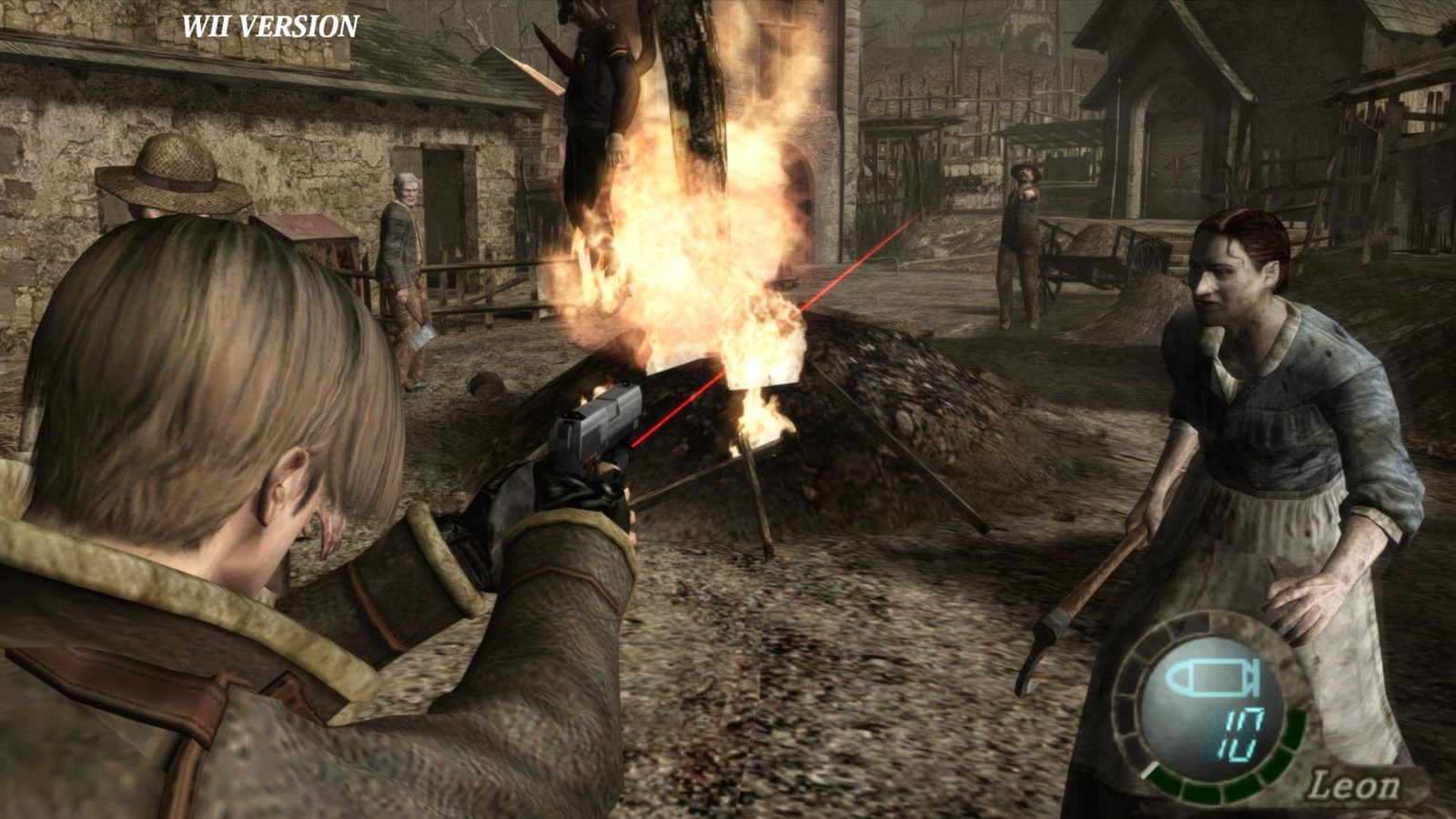 Resident Evil 4 drastically changed everything people understood the series to be. That did not stop it from becoming a critical and commercial success.
Super Mario is another good example and, as with Sonic, it changed "how it is done" more than "what is done." In the plumber's two-dimensional games, the goal was to run from point A to point B, jumping on enemies, collecting mushrooms that made him grow, avoiding obstacles, and reaching the end of the stage, while exploration mattered only to those who wanted to complete 100% of the game.
With the move to the 3D world in Super Mario 64, the mustachioed hero gained open environments and the objective became collecting stars, requiring the player to enter the same stage several times to look for them. Big N's mascot also gained several new moves, unlike earlier games in which he primarily ran and jumped and acquired new abilities by collecting an item that changed his outfit.
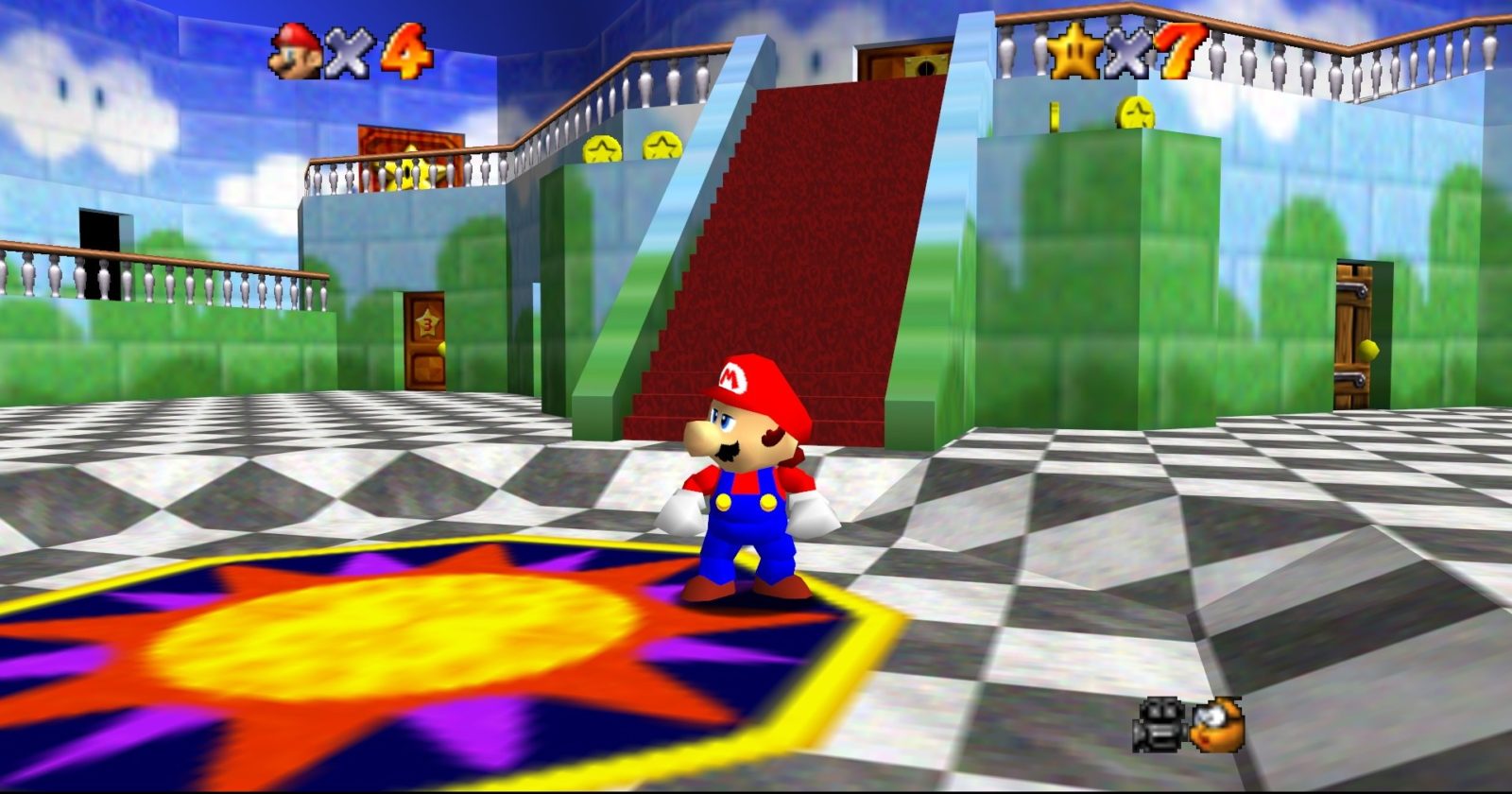 Mario's gameplay was radically transformed in the transition to the 3D world.
And Sonic? He also changed in the transition to the 3D world: environments became more realistic, the aforementioned story grew more developed, Sonic's friends received more attention, a multiple-gameplay system was introduced, the hedgehog gained new abilities to vary and adapt gameplay for a three-dimensional setting, the series gained enemies beyond Dr. Eggman, and so on. Yet the protagonist's gameplay was not altered as drastically as Mario's or Resident Evil's: Sonic still had to run from point A to point B as quickly as possible.
It is worth noting that both Mario and Sonic had two elements established when their series moved into the 3D world: in both cases, the protagonist's appearance became definitive, although Mario's changes were subtler, and both adopted their Japanese names as official, since Dr. Robotnik became Eggman, just as King Koopa became Bowser and Princess Toadstool became Peach.
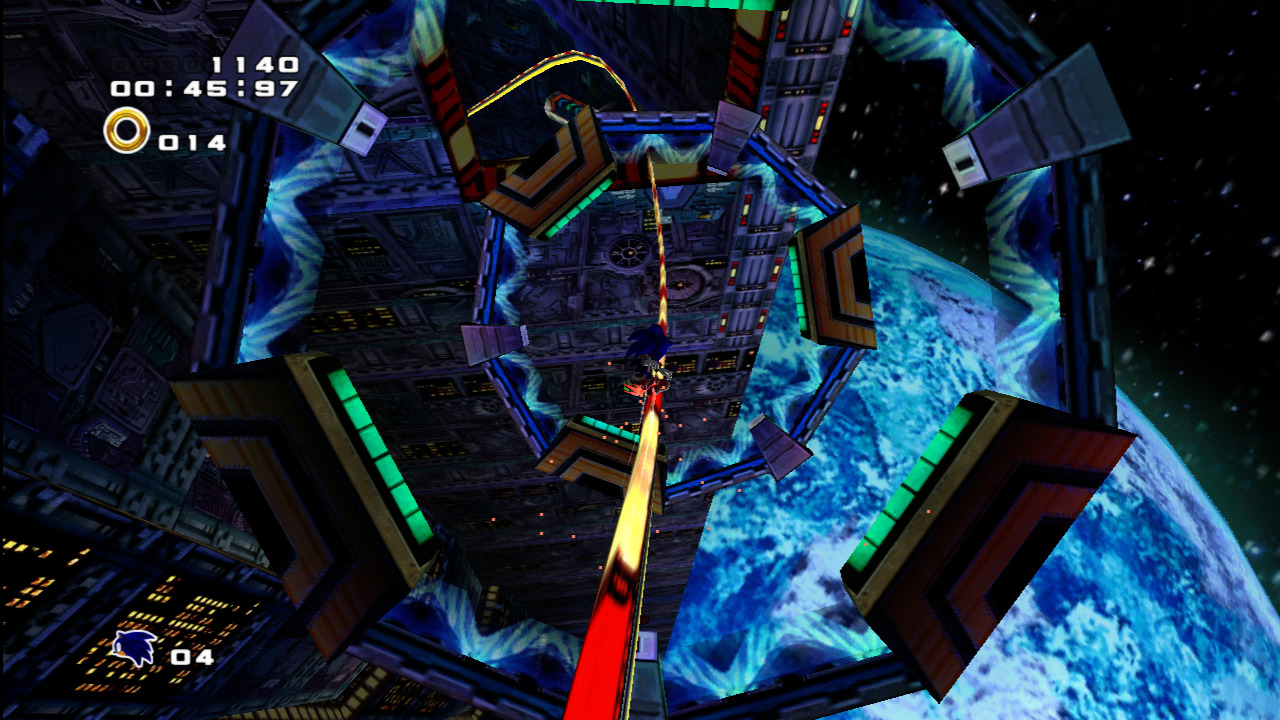 Sonic Adventure 2 embraces a more realistic style and a more mature world.
Its fast-paced gameplay, however, remains similar to that of the Mega Drive games.
Sonic Adventure 2 embraces a more realistic style and a more mature world.
Its fast-paced gameplay, however, remains similar to that of the Mega Drive games.
Realistic Versus Surreal Settings
The blue hedgehog's three-dimensional games began to focus on graphical realism, as can be seen in both Sonic Adventure games, especially the second, as well as in Unleashed. Fans of the Mega Drive era object to this transition, arguing that the hero used to run through surreal, imaginative environments with geometric shapes and that placing him in realistic settings therefore strips the series of its character.
It is important, however, to understand the thinking behind the developers' choices. Both Sonic 1 and Sonic Adventure sought to showcase the graphical power of their respective systems: the Mega Drive and Dreamcast. The former had two-dimensional graphics, and that world "calls for" colorful, imaginative environments to create a better visual effect, whereas 3D graphics look better precisely through realism. This becomes clear when we compare the polygonal character models in Sonic Adventure 2 and Sonic Heroes: the latter brings graphical surrealism into a three-dimensional world, and even though it appeared on consoles more powerful than the Dreamcast, its characters seem graphically inferior to those in Sonic Adventure 2.
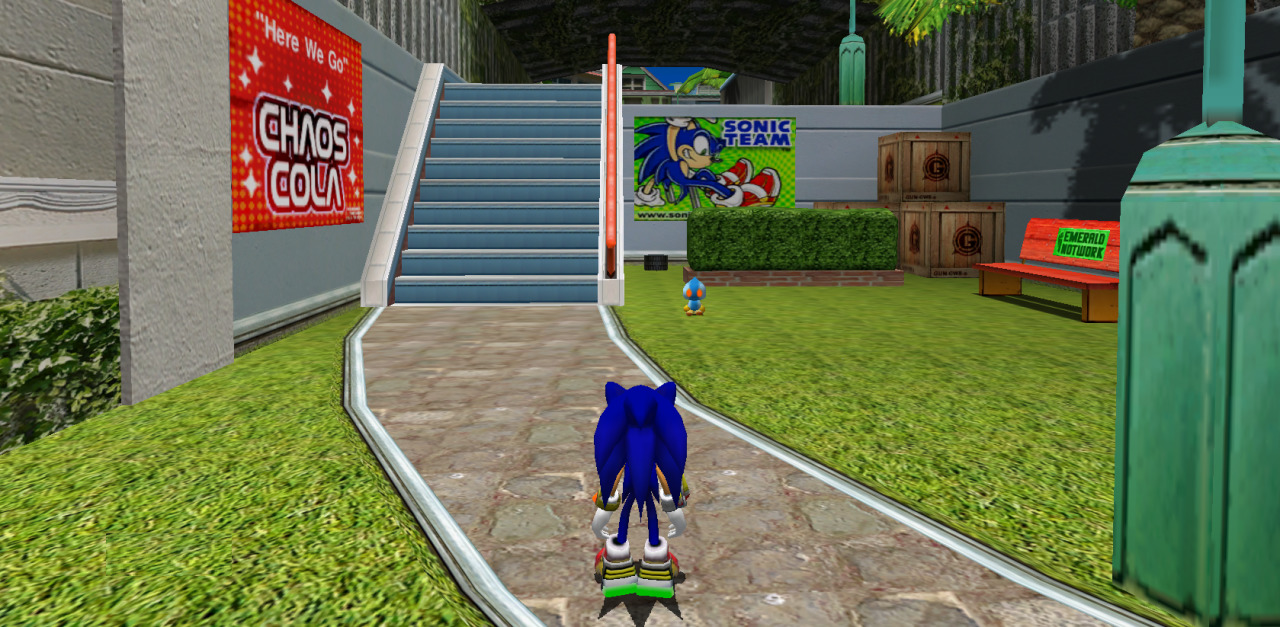 3D graphics call for graphical realism to create a better visual effect.
In addition, Sonic Team, the developer, placed geometric shapes in the environments of the Mega Drive games for two reasons: to help create a sense of speed, since a "flat" floor would not make the mascot appear as nimble, and to give a 2D game a three-dimensional effect. That is why Green Hill Zone in Sonic 1 is full of squares, Palmtree Panic in Sonic CD has triangles, Hydrocity in Sonic 3 has bricks, and so on.
This is unnecessary in the three-dimensional world, since the textures and the environment as a whole already convey a sense of speed. We can therefore conclude that realistic settings do not strip the series of its character, but enrich its possibilities and work well for the franchise's three-dimensional world. It is worth saying that the entire 2D saga retained graphical surrealism, as reflected in the settings of the Advance and Rush series.
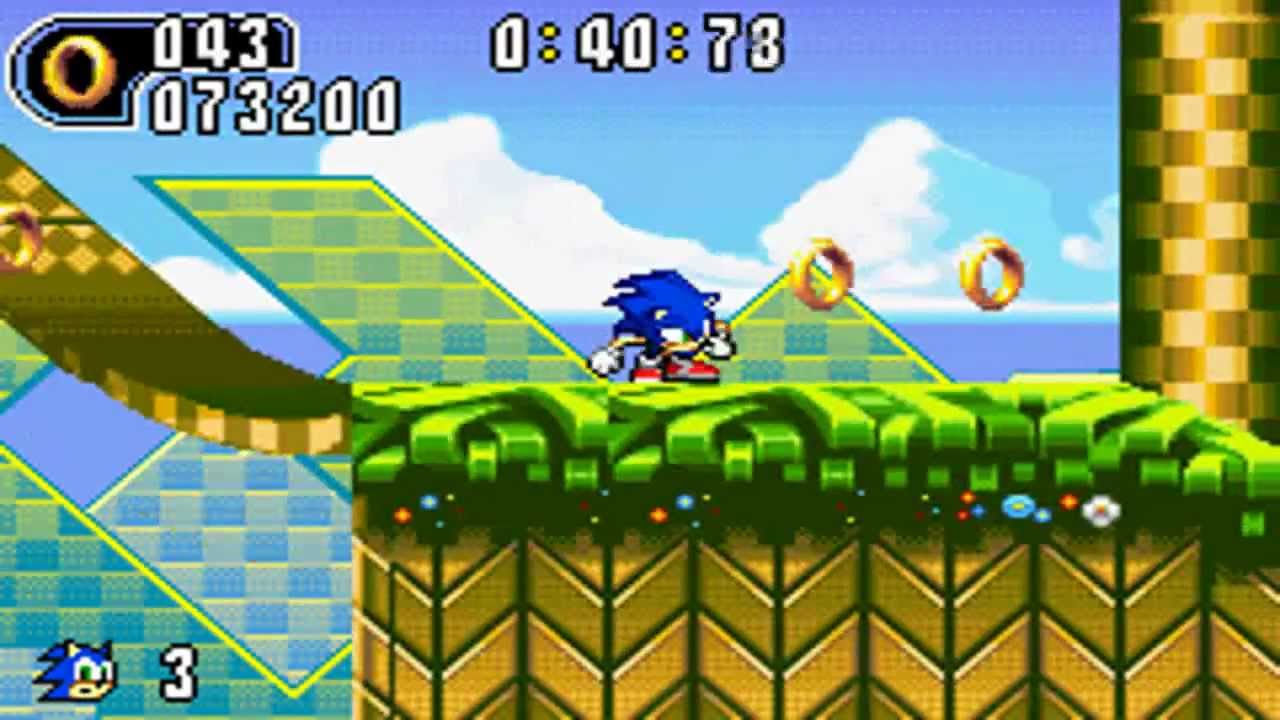 In Sonic's 2D saga, the art style continued to embrace surrealism.
Putting Humans in Sonic Strips the Series of Its Character
Dr. Eggman has existed since Sonic 1.
Are There No Limits to Changing How Things Are Done?
Of course there are, as reflected in the saying "too much of anything is bad." Within the main saga, only one game can be identified as falling outside what the series sets out to do: the spin-off Shadow the Hedgehog. The title takes realistic elements and the more mature style of Sonic Adventure 2, but unlike that game, which innovates without abandoning what the mascot's games set out to be, Shadow's game goes too far and simply does not fit the series.
Thus, even though there are speed-based platforming and the goal of saving the world, its world is stripped of its character by the presence of firearms, macabre aliens, shootouts and civil war, apocalyptic settings, rock that is too heavy in some songs—not a discussion of the soundtrack's quality, but of the fact that it does not fit the Sonic series—and so on. It is worth stressing, however, that this is an isolated case within the main saga. More recently, there were also the two Sonic Boom games. Even though they set out to introduce a new world, give the characters a new look, offer unprecedented gameplay, and function as a subseries, there is nothing in either game that evokes a "Sonic game," not even speed. If any other character had been put in place of the mascot and his friends, no one would say the game belonged to the franchise.
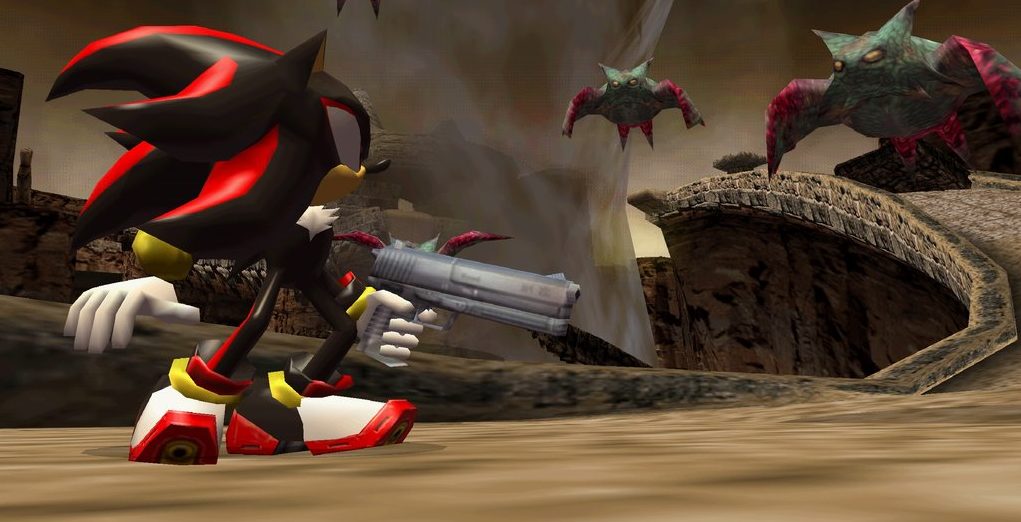 Shadow the Hedgehog is a title that does not fit what Sonic sets out to be. Fortunately, it is a very isolated case.
What Is Fundamental to a Sonic Game? What Is Sonic's Essence?
Since essence is a matter of opinion rather than fact, a main-series game with "Sonic's essence," in the opinion of this writer, would bring together elements from every era of the hedgehog.
From Sonic 3&Knuckles, several playable characters should return, but all of them should be speed-based and each should have individual abilities;
From Sonic Adventure 2, it needs the story, which went on to become essential for enhancing the entertainment in Sonic games; The orchestration that originated in Sonic Unleashed also became part of Sonic's essence, though Crush 40 should also participate with the games' theme songs; A final battle with Super Sonic, especially against an enemy more powerful than Dr. Eggman, is another essential point for the series; Visually, what is fundamental is to be realistic in the 3D world and surreal in the 2D world. And the core: speed in Sonic games is also essential. Obvious as that may seem, it is something that is unfortunately absent from Sonic Lost World, so part of Sonic's essence is not present in that game.
 Crush 40 came to the Sonic series in 1998, becoming essential to most gamers.
"9 out of 10" fans love the band's music.
Crush 40 came to the Sonic series in 1998, becoming essential to most gamers.
"9 out of 10" fans love the band's music.