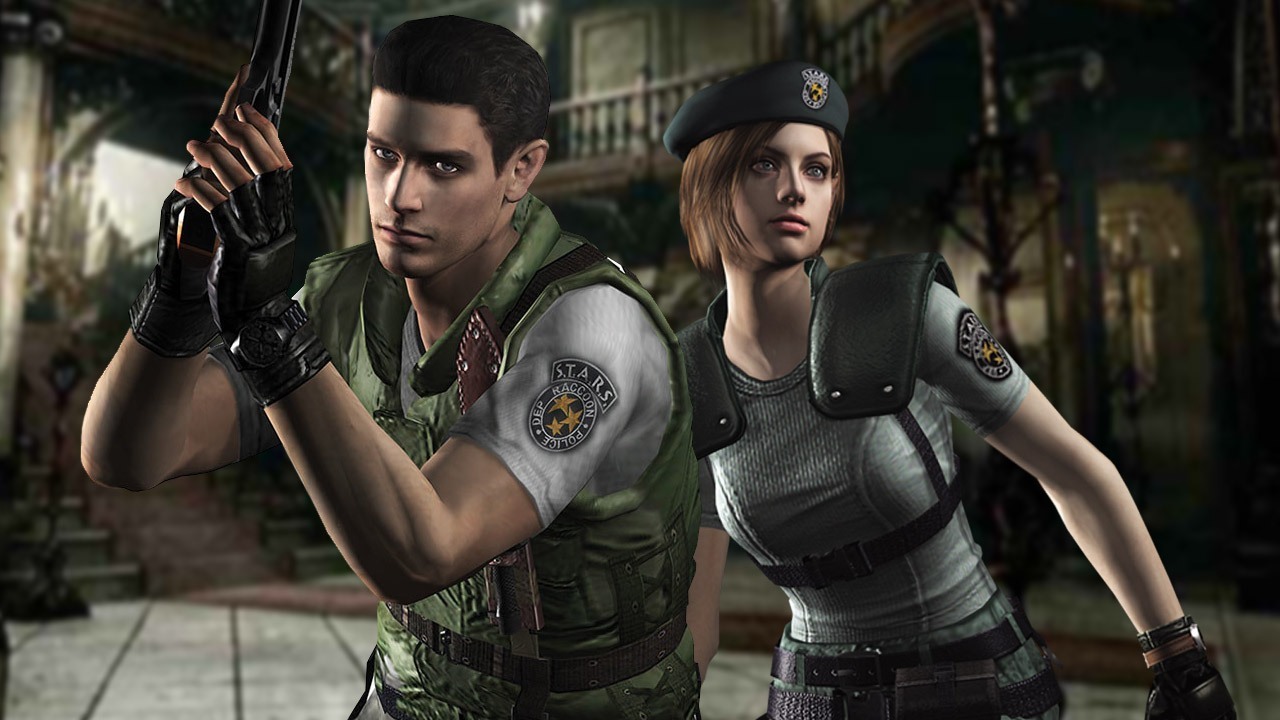
There is debate over which was the first horror game or even the first survival horror, but the gaming community has no doubt about the title that popularized the genre and established the pillars for future games in this style.
The atmosphere of Resident Evil was entirely unprecedented when it was originally released in 1996: merely opening a door, actually a cleverly disguised loading screen, was filled with apprehension about what lay ahead. Exploring the enormous mansion and reading the many files scattered everywhere greatly contributed to the tense, unsettling atmosphere.
The small inventory and scarce resources made us spend minutes in front of an item box deciding what to carry and which new route to follow. All of that was new and wonderful for players accustomed to good old classics such as Super Mario and Sonic. This matters because we must focus on when the game was released, in a market still dominated by 2D platformers. It all helped make this franchise one of the most profitable in the video game industry.
Resident Evil, a survival horror game, was originally released in 1996 and received console and PC conversions at the time. In 2002, under an exclusivity agreement with Nintendo, producer Capcom created a fantastic GameCube remake, which was ported to Wii in 2008 with some control changes. Only in 2015 did this updated version receive a high-definition adaptation for Windows, PlayStation 3, PlayStation 4, Xbox 360, and Xbox One, the latter being reviewed here.
Below are comparative images of the original version and the remake.
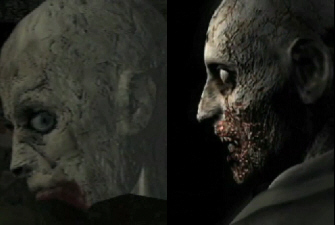 the first zombie
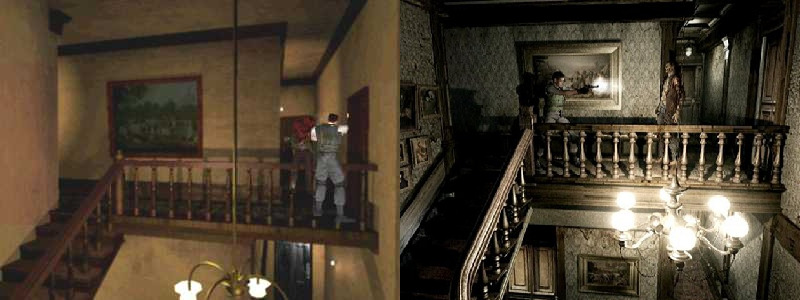 greatly improved lighting effects
Below is the trailer for the HD version of Resident Evil Remake HD...
Trivia: Resident Evil was originally called Biohazard. Capcom changed the name for its United States release because a Mega Drive game and a heavy metal band already shared it, avoiding possible copyright lawsuits. The name was not the only change. Several scenes from the original opening were removed because their content was considered extremely violent or simply inappropriate, such as Joseph being devoured by dogs and Chris smoking during his introduction.
Understanding This Game and the World of Resident Evil
The many events preceding the franchise's games are rich in detail. I will try to present them briefly while avoiding major spoilers.
It begins in the 19th century, when scientist and explorer Henry Travis finds the Sun Garden in the ancient African kingdom of Ndipaya. The garden contains an uncatalogued plant called the Stairway of the Sun, which local legends say was once used in a leadership rite of passage. Anyone brave enough to consume its extract and survive its poison would become both the tribe's new leader and the bearer of supernatural physical strength. The scientific community of his time did not believe Henry's studies. Considered a fraud, he fell into a severe depression and died, though he documented his discoveries for posterity.
In the 1960s, three scientist friends working in bioengineering and virology, Edward Ashford, James Marcus, and Ozwell E. Spencer, discover Henry Travis's catalogued natural-history studies and decide to mount an expedition to Africa to see the plant that granted tremendous abilities to those who consumed it. After three months of searching, they find the Sun Garden and its legendary plant.
Initial on-site studies reveal that the plant truly causes changes in living organisms. Because it behaves like a virus, the scientists name it Progenitor. After attempts to grow the Stairway of the Sun in the United States show that it cannot survive outside its natural habitat, the scientists open a research base in Africa and send plant extracts to their laboratories in Europe and the United States.
PROJECT W: After research into the Progenitor virus advances, Spencer wants to begin testing it on humans. Children born to highly intelligent parents are selected for the experiment and unknowingly placed under permanent surveillance. These test subjects, called the Wesker Children, receive doses of the Progenitor virus in a manner similar to the natives described by Travis. Most die after several years, but the survivors include a boy named Albert Wesker.
THE UMBRELLA CORPORATION: In 1968, Oswell E. Spencer founds the Umbrella Corporation, a front company focused on pharmaceuticals. Over the years, its public image and reputation improve, mainly because of numerous social initiatives supporting the growth of Raccoon City, Umbrella's home. Aware of the secrecy surrounding his research, Spencer bribes politicians and the city's police, even securing privileged agreements for future business with the military. Conscious of the risks of espionage and sabotage, the company creates a paramilitary security division split into the USS, Secret Service, and the UBSC, Biological Threat Control Service. Hunk leads the USS.
Umbrella's slogan is: our business is life itself. Ironic, isn't it?
THE MANSION: In 1962, Spencer decides to build an enormous, complex mansion in the Arklay Mountains outside Raccoon City. Famous architect George Trevor is hired and given carte blanche by his employer, allowing unlimited resources for the construction. During the monumental project, Spencer asks Trevor to add secret passages, traps, and underground routes. Faced with such an unusual request, the proud architect accepts and remains involved throughout the process until completion. In 1967, with construction finished, Spencer invites Trevor and his family, his wife and daughter, to spend a few days at the luxurious mansion. Unfortunately, the architect accepts, and human experimentation begins.
S.T.A.R.S.: The Special Tactics and Rescue Service consists mainly of former military personnel and is divided into two teams, Alpha and Bravo. It is an elite unit of the Raccoon City Police Department founded in 1996, two years before the events in the Raccoon forest. Six of the twelve S.T.A.R.S. members are: 1) Chris Redfield: skilled in hand-to-hand combat and firearms, but hot-tempered; 2) Brad Vickers: the cowardly helicopter pilot; 3) Jill Valentine: a specialist in bomb disposal and lock-picking; 4) Barry Burton: highly knowledgeable about firearms; 5) Rebecca Chambers: responsible for the team's medical needs; 6) Albert Wesker: leader of S.T.A.R.S.
Note: The photo below was taken shortly before the mission that began the game's conflicts.
Trivia: Chinese developers managed to do what seemed impossible. In 2003, studio Waixing converted Resident Evil for NES and released it on the gray market, complete with box and manual. Despite the achievement, this version lets us control only Jill, while its story faithfully follows the first game in the franchise.
Story and Narrative of the HD Version
Spoiler warning for the following paragraph, but only for the game's prologue.
It is July 24, 1998, and bodies are found on the outskirts of Raccoon City near the Raccoon forest. Among the many forms of violence recorded on the corpses, some apparently show signs of cannibalism. The first reports appear in local newspapers. The S.T.A.R.S. Bravo Team is sent to investigate, but contact with them is lost, and their helicopter is believed to have crashed in the forest.
After countless communication attempts, the S.T.A.R.S. Alpha Team sets out to rescue its colleagues. On arrival, they find the crashed helicopter and its dead pilot. Soon afterward, they encounter Dobermans infected with the T-virus. The first Alpha Team member dies here: Joseph Frost. Terrified by what he sees, Alpha helicopter pilot Brad Vickers flees alone, abandoning his teammates in danger.
With no other option, Jill, Chris, Albert, and Barry all run toward an immense mansion in the middle of the forest. This is where the campaign of Resident Evil begins.
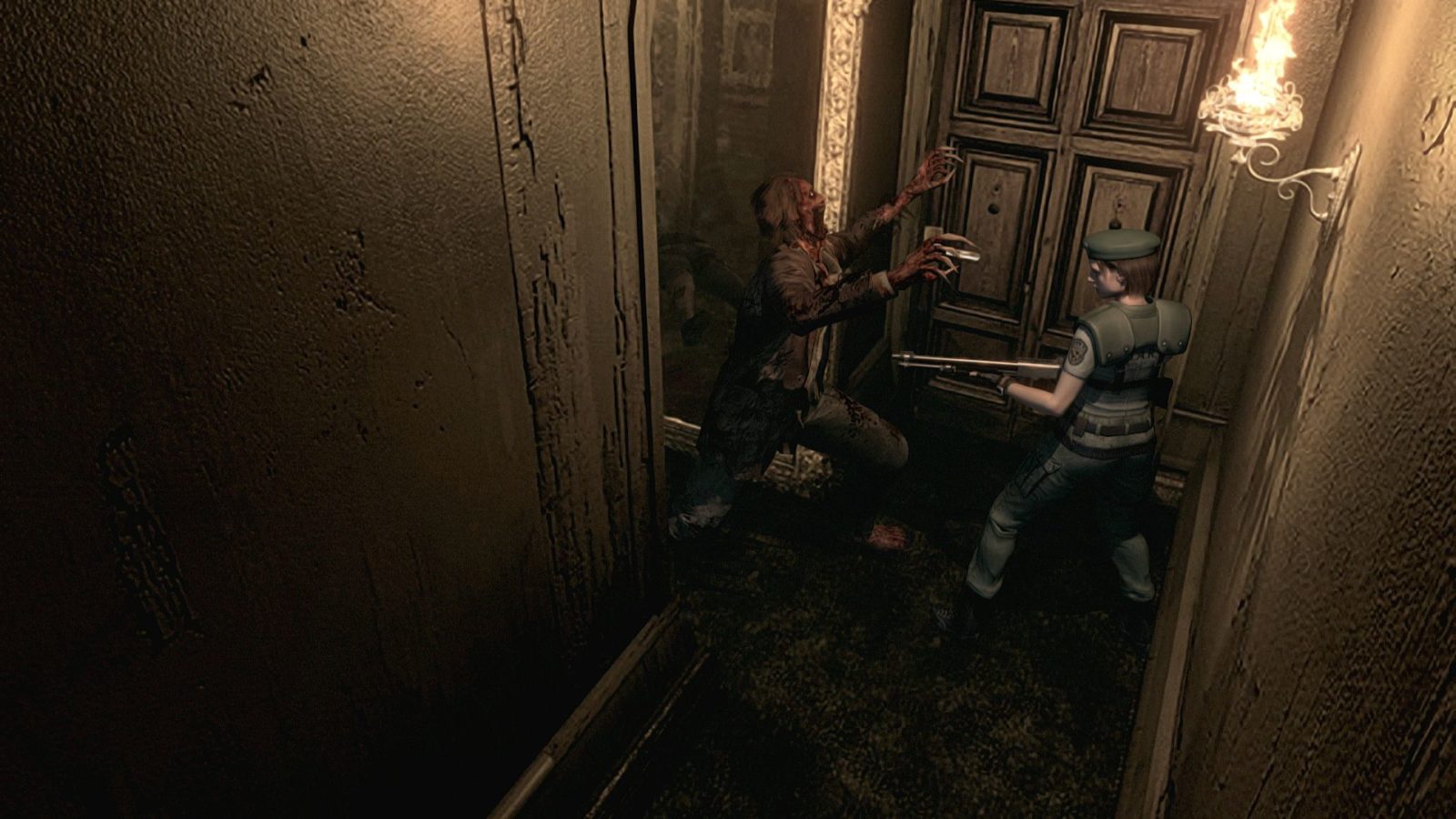
It is not hard to be startled by a creature like this
We should highlight not only the good story of Resident Evil but perhaps above all how it is told. The numerous files found throughout the game show in detail what happened to the mansion and the people who worked there. We soon realize that the zombies we face were scientists who once led ordinary lives. The files include diaries documenting the progression of people's illnesses, farewell letters to their families, scientific advances in research, and, amid all this, clues to solving the game's puzzles. Read everything carefully, because it greatly strengthens the overall immersion and makes us feel that Resident Evil is more than simply exterminating monsters.
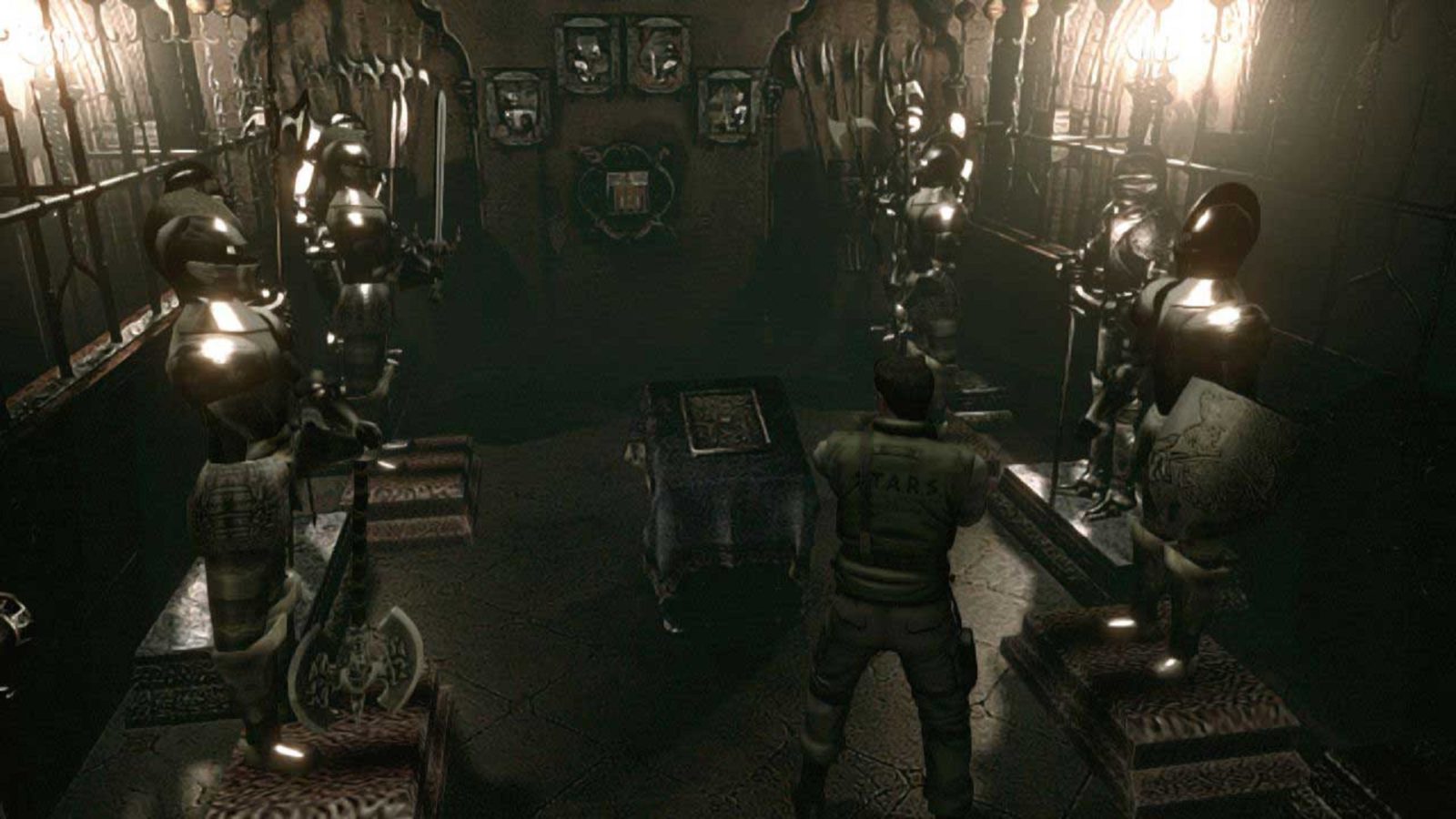
Puzzles are a hallmark of the franchise, especially in its early games
Trivia: The Resident Evil franchise appears in several media, with a wealth of content to explore.
Because this review covers only the first game, I will summarize it as follows: 1) The Animated Productions: faithful to the series' story and highly recommended, both for their quality and for a better understanding of the work as a whole; 2) The Books and Comics: there are many, some following the games' stories and others not, recommended only for genuine franchise fans; 3) The Movies: despite their large budgets and profits of more than one billion dollars for their creators, they focus on action and distort the story in ways most fans and critics reject, so they are not recommended.
A More Technical Analysis of the Remake
First, the game's controls are generally an obstacle for newcomers to the franchise's classic entries. This remake updates them somewhat for modern times, but believe me, learning the old-school way to play Resident Evil is highly worthwhile. Its typical tank controls use the digital pad: press up to move forward and right to rotate clockwise. The camera is fixed and, although outdated to many, helps preserve the tense atmosphere. Countless times, we hear an enemy in the same room without knowing where it is because we cannot see it.
The puzzles are new in this remake, while existing ones were redesigned. None is extremely difficult, so if you struggle, carefully read the files you collected and think it through. Do not look for guides. Much of the fun lies in the puzzles, and overcoming them creates a sense of progress.
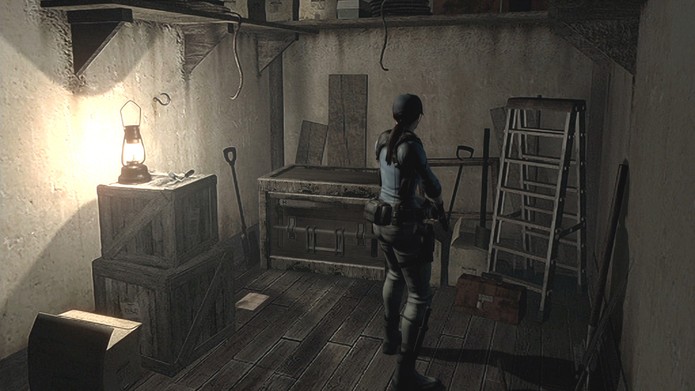
Item box: a place where we can store items and retrieve them later from the same box or another one.
At the beginning, we can choose between Chris and Jill. Their campaigns differ greatly, so we recommend playing both, not only for fun but also for a better understanding of the story. Differences include the protagonists' weapons, supporting characters, damage resistance, inventory size, and more. Playing as Chris is commonly considered a harder mode, though I do not see major changes in that regard. Replay value is enormous, not only because there are two characters but also because the game has 12 different endings and unlockable bonus modes such as invisible enemies. A first playthrough lasts about 18 hours if you read the files and die a few times.
New features in this remake include new enemies, original puzzles, and previously unexplored areas such as the cemetery, parts of the underground, and the back of the mansion. I consider it at least 30% larger in explorable content than the original version.
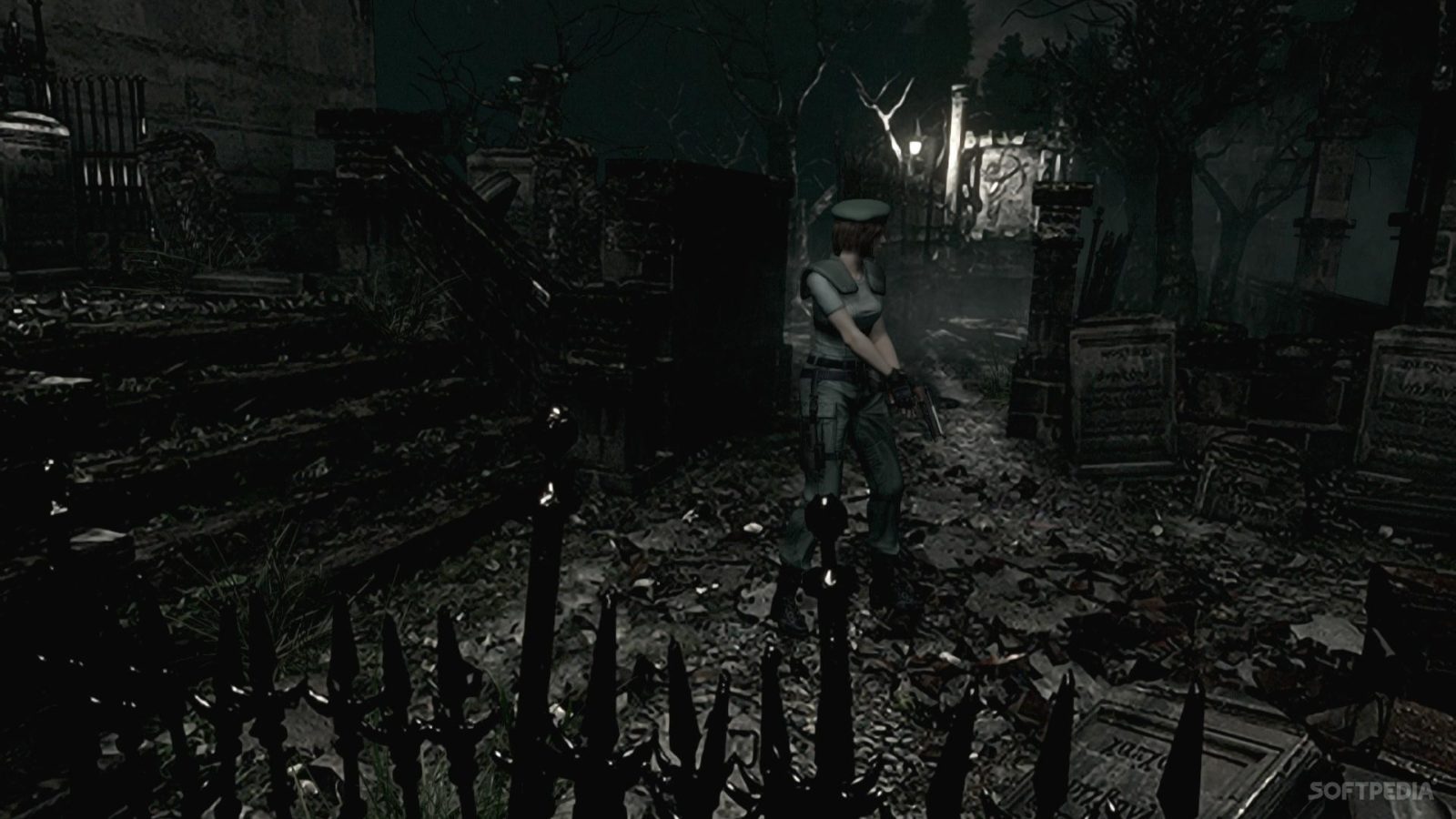
The cemetery is one of the new areas in Resident Evil Remake
The difficulty is harsh compared with current games. In addition to having no checkpoints, the number of times we can save is limited by the ink ribbons collected throughout the campaign. The severely limited inventory forces us to devise many strategies while playing, as the fear of running out of ammunition and healing items, represented here by different herbs, is constant.
The graphics ranked among the best on the market in the GameCube era and maintain high quality here, particularly in their beautiful light and shadow effects. This new HD version adds the option to play in 16:9, but I recommend the classic 4:3 format because the updated presentation loses details from the top and bottom of the original image.
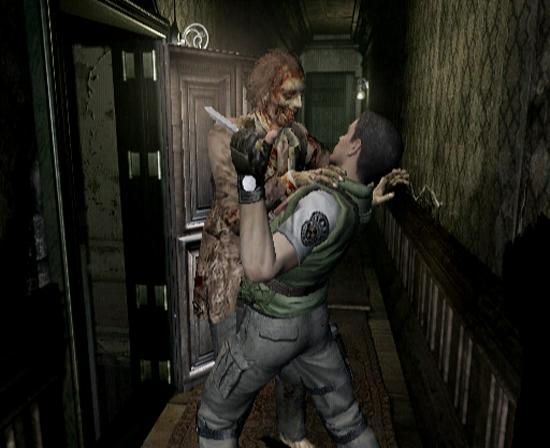
The remake's new features include defensive weapons such as the dagger.
The music and sound effects perfectly support Resident Evil's frightening atmosphere. Calm tracks in save rooms and tense ones when enemies surround us make us alternate between relaxation and tension throughout the campaign. The game itself uses these conditions to startle us, handling these devices in a way no earlier game had.
Trivia: Recently, after the announcement of Resident Evil 2 Remake, a rumor emerged about a possible remake of Resident Evil HD. If true, which would personally please me greatly, the game would be a remake of the remaster of the original game's remake. It would be good, but enough to make anyone dizzy.
Behind the Scenes of This Remake
 Game designer Shinji Mikami
Although several important figures from the game industry were involved in developing Resident Evil, the leading name is certainly Shinji Mikami. Born on August 11, 1965, he already had a respected résumé as a game designer before embarking on Resident Evil. The good games he developed include Aladdin and Goof Troop, both for Super Nintendo.
According to reports, when the Resident Evil project began in 1993, the game was going to use a first-person perspective because that would be easier to adapt to Sony's console, whose technical specifications had not yet been revealed. The enemies were initially spirits, with a focus on psychological horror. After early tests, the team realized the quality was far below expectations and saw zombies and a fixed third-person camera as the solution for creating a quality game.
The game's main influences include the Italian film Zombi 2, in which tourists try to survive on a zombie-filled island; Stanley Kubrick's classic The Shining, whose protagonists survive in an immense, empty hotel isolated from civilization; Alone in the Dark, with its third-person perspective and fixed cameras; and above all the NES game Sweet Home, released by Capcom itself in 1989, which contains many reference points such as inventory management, puzzles, the mansion, character-specific items, multiple endings, and more.
In a controversial interview during the sixth-generation console war, Mikami said he would cut off his own head if Resident Evil 4 lost its GameCube exclusivity and was released for PS2. Fortunately, he did not keep that promise. His current main project is the survival-horror franchise The Evil Within, produced by Tango Gameworks. In a more recent interview, he said he once occupied the throne as king of survival horror and wanted to claim it again. We are rooting for him and wish him luck.
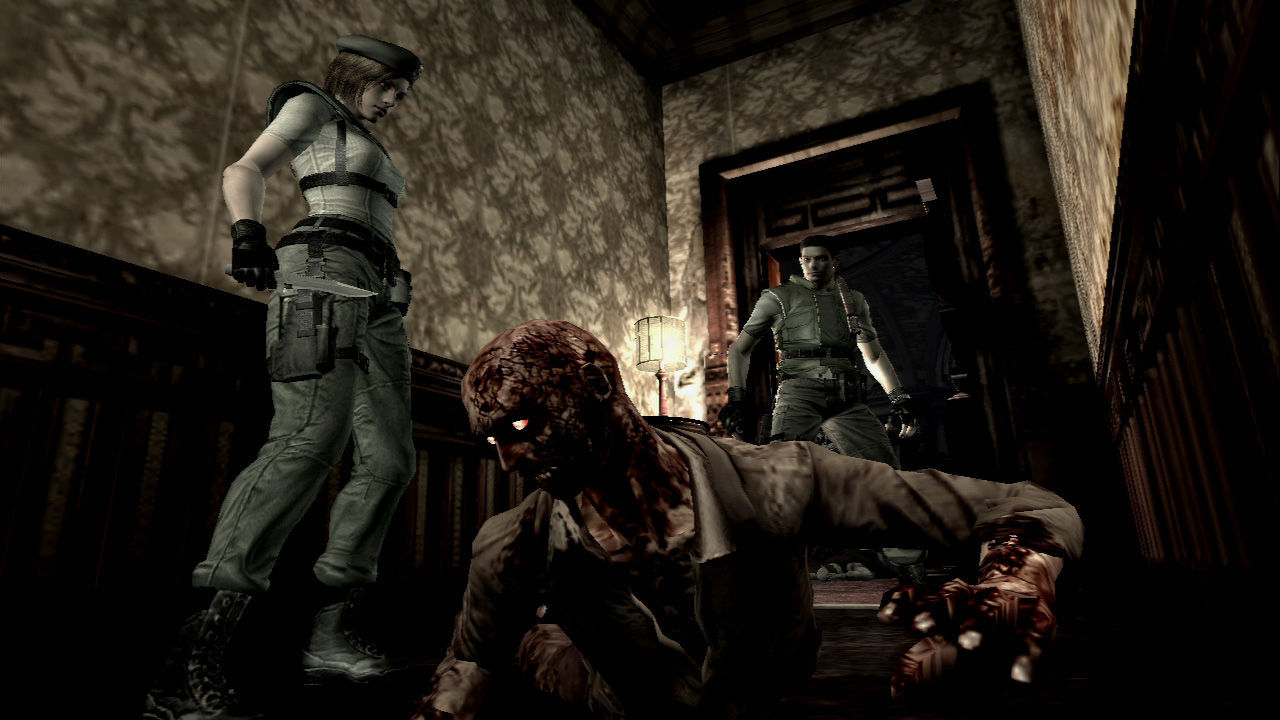
The franchise often makes us kill a dead person pretending to be dead
The Bestiary
The franchise's very first game presents a wide variety of enemies. Although zombies are the most common adversaries, other monsters are almost as famous. To keep the review from becoming too long or spoiler-heavy, I chose six threats from the game: five commonly encountered enemies and one boss.
ZOMBIE: A human infected accidentally by the T-virus or through the bite of someone carrying the disease. This classic enemy and franchise symbol has several variants, including some that move a little faster and others that vomit, though they are generally easy to evade or take down. If you choose the latter option, remember to burn them or destroy their heads. Otherwise, prepare to face the next enemy in the bestiary. One distinctive feature of these zombies in this entry is their ability to open doors, leading to some effective scares.
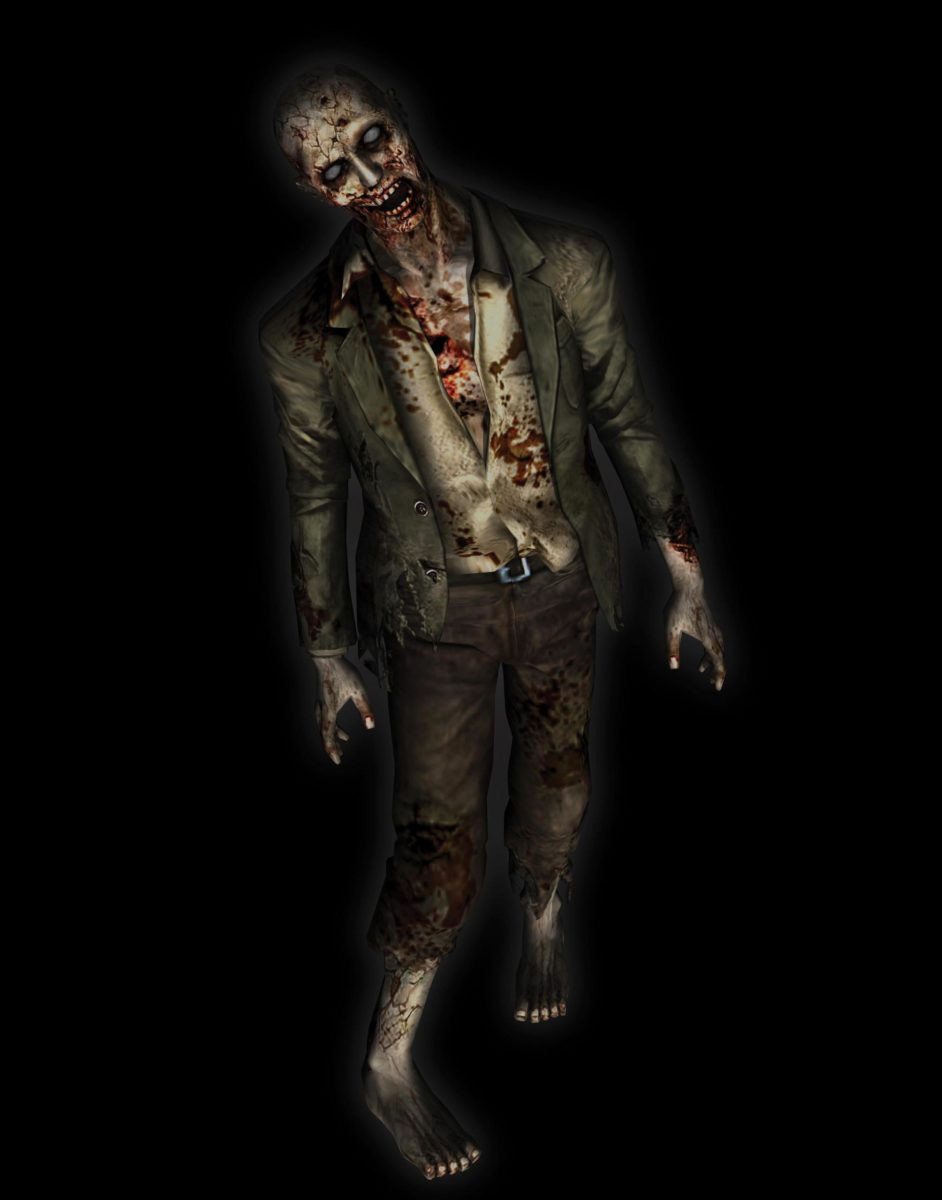
Classic zombie
CRIMSON HEAD: If you do not burn a zombie or destroy its head, the T-virus remains active and continues mutating the body. At a certain point, the classic zombie becomes a Crimson Head, creating a serious headache for players because this evolution is almost as significant as "Magikarp into Gyarados." The enemy becomes fast, much stronger, and more resilient, forcing us to use higher-impact weapons such as the shotgun.
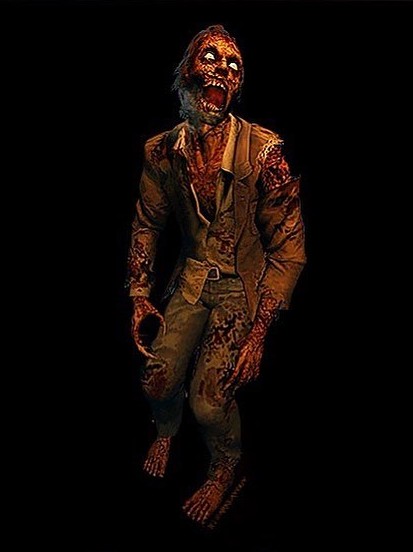
Crimson Head. An enemy found only in Resident Evil Remake.
CERBERUS: They could not be left off this list because they star in perhaps the franchise's most famous scare in the 1996 version. These are Doberman dogs somehow infected by the T-virus. They are somewhat fragile, and their main danger lies in the speed of their attacks.
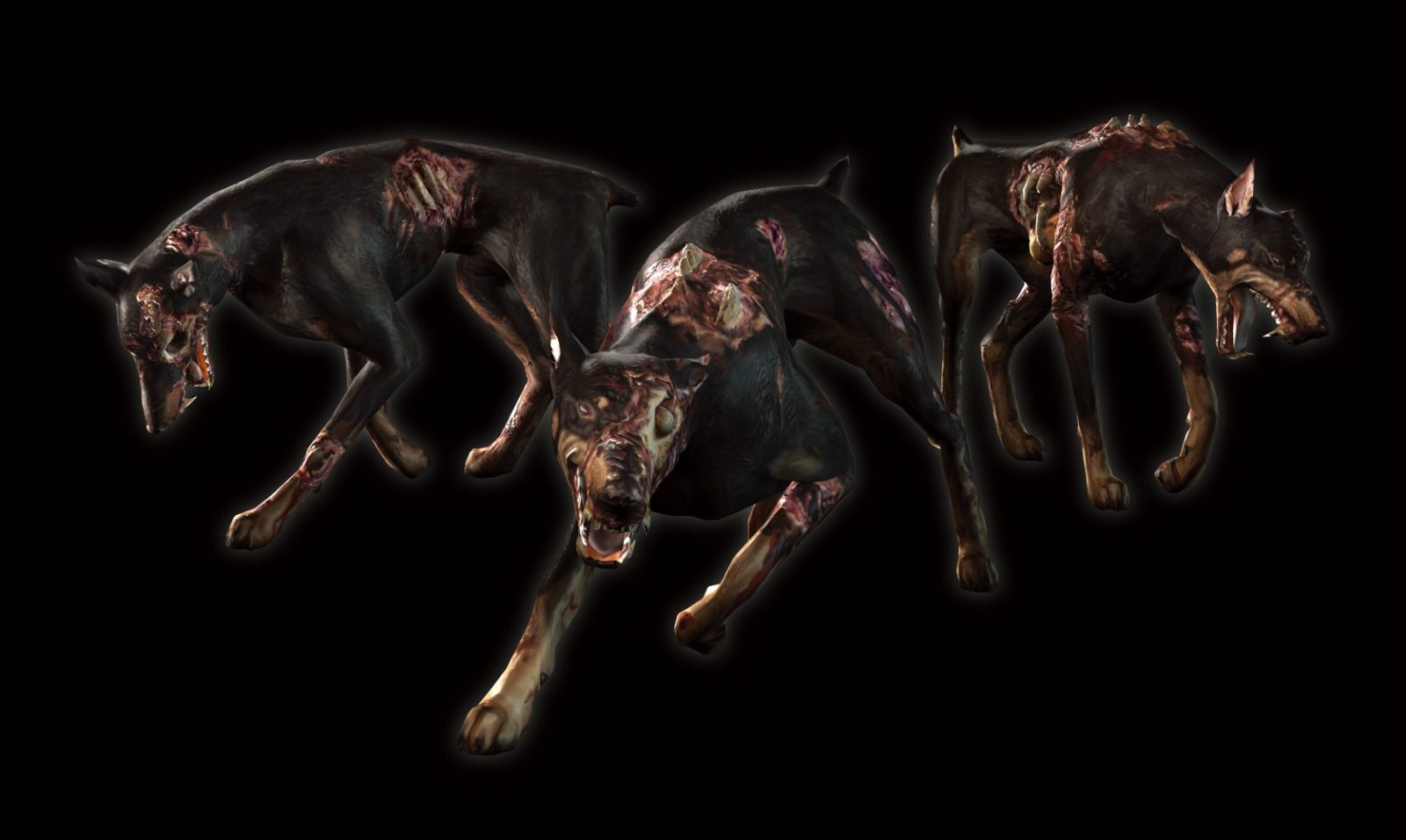
Cerberus. Unlike infected humans, the dogs retain their natural agility.
HUNTER: The terror of players in the game's second half. Its MA-121 model was the first B.O.W., or bio-organic weapon, created in the laboratories of the Arklay Mountains complex. It originated from the fusion of a human ovum, reptilian DNA, and the T-virus. Hunters are extremely dangerous because of their aggression and speed. If your character's health is low, one can tear off their head with a single attack. We recommend using high-caliber weapons whenever you decide to confront these enemies.
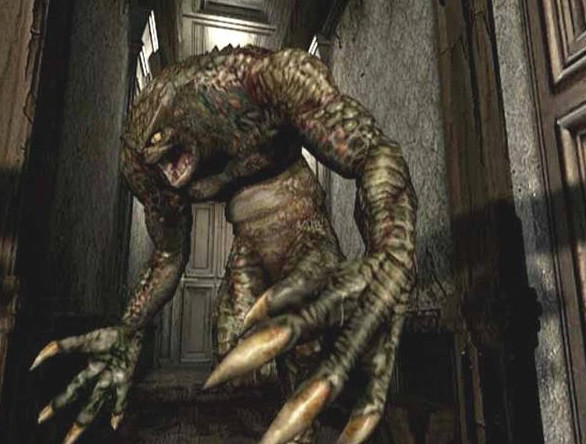
Hunter. A player's nightmare: strong, agile, and resistant to low-caliber weapons.
CHIMERAS: They appear near the end of the game. Their origins lie in the fusion of a human ovum, fly DNA, and the T-virus. They are not very resilient, and their main advantage is the ability to move across walls and ceilings. In the original 1996 Resident Evil, we find a file showing B.O.W.s created by Umbrella, and one page among its slides is blank. This was a brilliant production choice that preserved the mystery surrounding one of the campaign's last enemies.
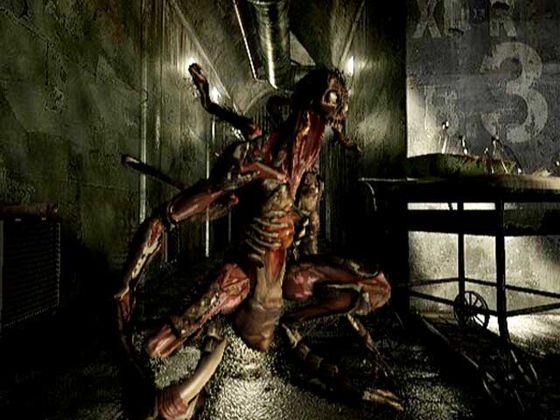
Chimera. They are not very strong, but keep an eye on the walls and ceiling.
YAWN: This is the only boss presented in the bestiary. Its name means "bocejo" in Portuguese, and one look at the size of its mouth explains why. Unlike mammals, which usually become zombies after contact with the T-virus, reptiles and some arthropods grow dramatically. Umbrella scientists used this snake as a test subject, but it escaped during the experiments. By the time it returned to the mansion, it was able to make the laboratory scientists its diet.
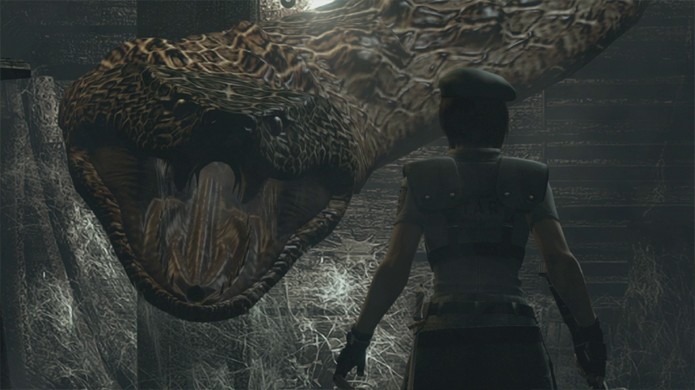
Yawn. The game's famous giant venomous snake. We must face it twice during the campaign.
Note: This Resident Evil remake has a new boss named Lisa Trevor. Her behavior and the story surrounding her were major additions to this version. I will not describe further details to avoid spoilers, but she would also be impossible to ignore.
Trivia: When Resident Evil was originally released in 1996, Capcom itself did not believe in the franchise's great potential and printed only a few thousand copies for the market. Once fans and critics responded positively, sales reached the millions, and the series soon became the Japanese developer's leading brand, surpassing classics such as Mega Man and Street Fighter.
Below is the Resident Evil 2 Remake trailer. Remember to turn on subtitles.
Played on the PS3 version.