Like most people who enjoy games, I follow the opinions of specialist critics and usually heed their guidance about what is considered high or low quality. After all, with games costing so much and little time available to devote to them, we need to know where to invest our money and free hours. Before Ryse: Son of Rome was released, the title greatly interested me because of its theme, graphics, and gameplay style focused on enjoyable battles. After launch, I saw a huge number of reviewers give it mediocre scores, including an absurd 4/10 published by one of the largest American websites. I ignored it for a long time, but recently, after gaining access to the title through Microsoft's Game Pass, I decided to give the experience a chance and, just as I had imagined before release, I loved the game. This motivated me to write the following review, which may help dispel the widely repeated fallacy that this game is bad.
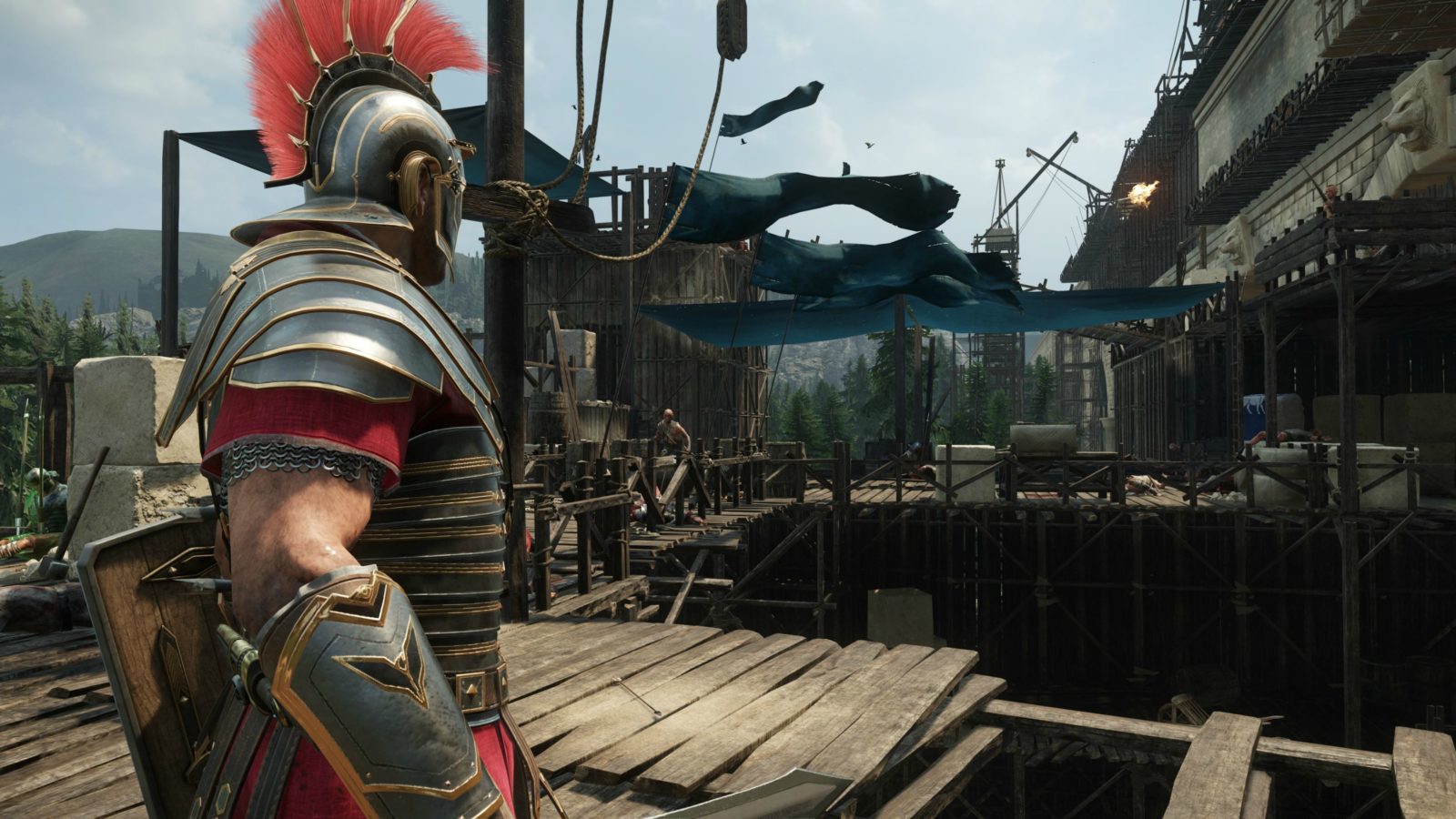
Even for a 2013 game, the graphics do not disappoint when compared with 2019 titles.
Ryse: Son of Rome is a hack-and-slash game developed by Crytek and originally published by Microsoft Studios. It was initially released as an Xbox One exclusive in 2013 and later ported to PC in 2014.
Below is the launch trailer for Ryse: Son of Rome.
Fun fact: The Xbox One version of Ryse: Son of Rome is believed to have sold around 1.5 million units. That is a respectable figure for a debuting franchise, but far below the expectations of Microsoft and Crytek, which had invested heavily in production and marketing. Unfortunately, excessively negative reviews ultimately affected sales of this great game and consequently the prospects of a sequel in the near future.
Behind the Scenes of Ryse: Son of Rome
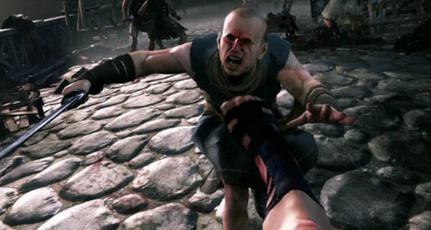 Image from the period when Ryse was still a first-person Kinect game project.
Believe it or not, Ryse began development in 2006 as a first-person action RPG exclusive to the Kinect accessory. First shown to the public at E3 2010, it had the codename Kingdom, and players were expected to play while standing, throwing punches and kicks and pretending to wield a sword.
In early 2011, the game project was transferred from Crytek's Budapest studio to its headquarters in Frankfurt, Germany. The greatest change in this process was moving the title from its original fantasy kingdom to Ancient Rome. Some project members believed an on-rails format would be ideal for a Kinect game, an idea that was later discarded. Everyone agreed that the power of the CryEngine graphics engine should be put to excellent use.
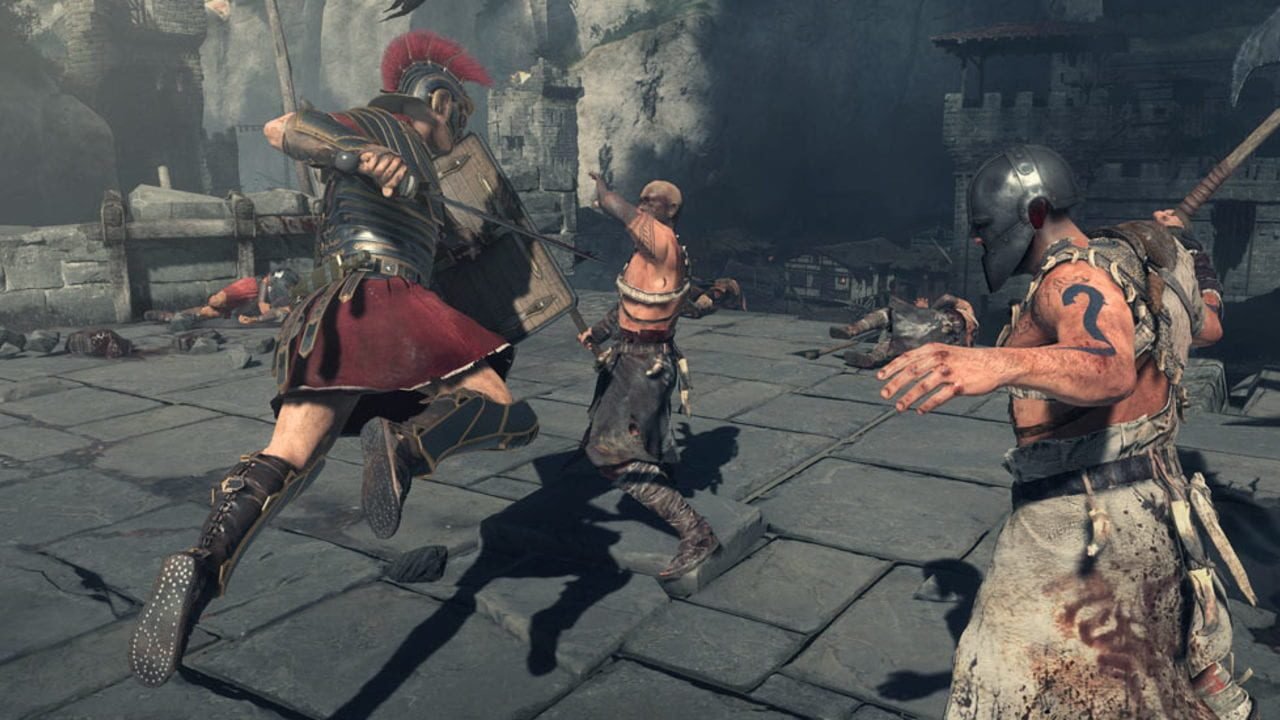 The battle dynamics strongly resemble the Batman franchise's games.
After testing several prototypes, Crytek concluded that using the accessory would leave players too tired to enjoy Ryse satisfactorily and decided to make it a third-person game that used Kinect only as an optional supplement. Phil Spencer, corporate vice president of Microsoft Studios, announced this to the public at E3 2012. By May 2013, the title was being promoted as an Xbox One launch exclusive.
From the project's beginning, one goal was for Ryse to have the fluidity of a cinematic work. Film director Peter Gornstein, who worked on the game, said this required giving its characters strong personalities, performing excellent motion-capture work, and creating engaging transitional scenes that made players curious to learn more about the story.
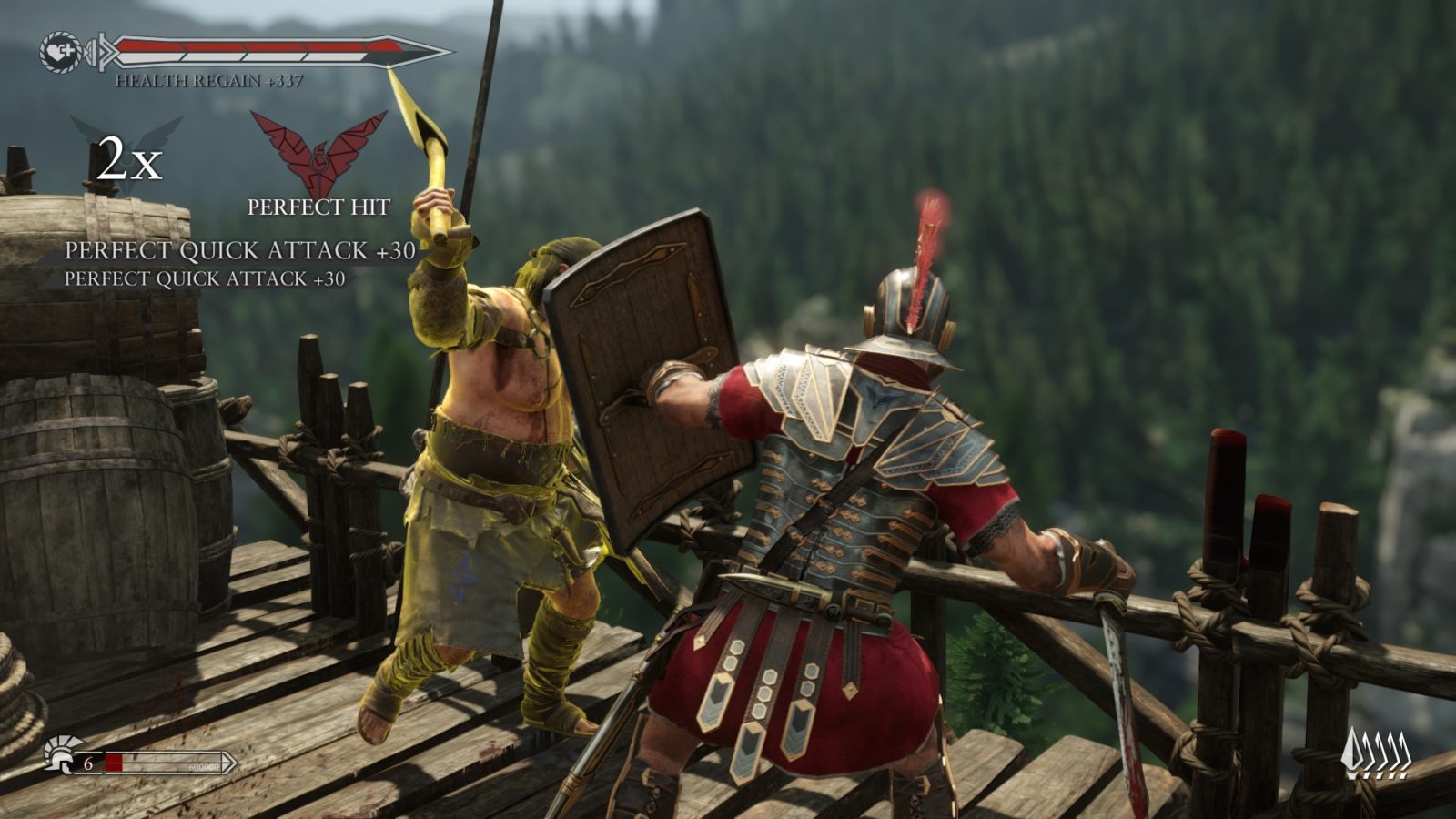 Enemy colors during combat guide our next moves.
Regarding Son of Rome's historical background, Crytek's developers chose the artistic freedom of not remaining faithful to a specific period. They thought it better to select their favorite events from the ancient Roman Empire and combine them to make the experience as enjoyable as possible. For the beautiful historical locations depicted, the production team traveled to several places to create the most accurate setting possible.
Fun fact: At the Xbox One launch in 2013, Microsoft employees were frequently seen carrying the first console units to stores while dressed as gladiators, a clear reference to Ryse: Son of Rome. Below is an image showing the major event that was the console's launch. 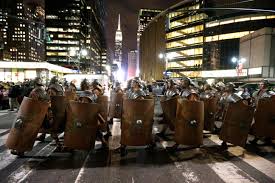
Historical Context and Story of Ryse: Son of Rome
Below, I will provide a brief introduction for those who have not yet played Ryse: Son of Rome. The information helps clarify the historical moment used as the work's backdrop and describes the beginning of the adventure. It is only supplementary and contains no spoilers capable of harming the player's experience.
The writers of Ryse: Son of Rome's story had enormous artistic freedom while developing the game, so its events, characters, and objects should never be treated as realistic. To give an idea, Roman emperor Nero died in AD 68 at age 30—completely unlike the elderly man in the image below—and the Colosseum had not even opened during his rule, which occurred only in AD 80. We should therefore consider only the Roman Empire setting and nothing beyond it.
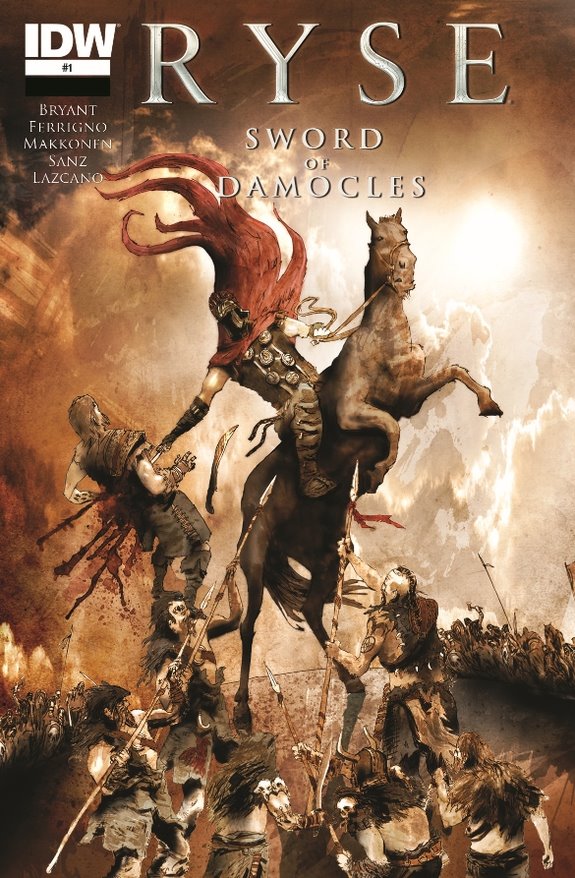
Nero senses chaos in the near future.
If we make an effort to place Ryse on the timeline, it would probably fall at the beginning of the High Roman Empire, within the first century of the Christian calendar, a time when emperors accumulated powers and were free to intervene in legislative, military, and religious matters. Internal crises plagued Roman territory during this period, largely because of its rulers' despotic behavior.
The game begins in the midst of action, with protagonist Marius Titus leading Rome's defense against an invasion of Celtic barbarians who have already broken through the city gates. Our character hands a package to a soldier and gives him a simple order: "Take it to a high point where it can be displayed." He then sets out to find Emperor Nero and keep him safe in a protected location.
As usual in games and films with this theme, revenge is one of the great motivations that begins the adventure.
Once safely with Nero, Marius begins telling the emperor his story and how he arrived there. The game starts depicting the protagonist's life from the moment he visits his family to celebrate completing his training and announce that he has been accepted into the Second Roman Legion, responsible for protecting peaceful Alexandria. As we might imagine, Rome suffers a surprise barbarian attack during the happy reunion, and his family dies. Commander Vitallion consequently invites Marius to join the Fourteenth Legion, promising him blood and revenge. As the adventure progresses, the protagonist begins questioning whether foreigners or Rome's corrupt politicians are truly responsible for his people's suffering.
Fun fact: Around the release of Ryse: Son of Rome, Microsoft published a free online comic titled Sword of Damocles that expanded the game's story.
Technical Analysis
First, let us discuss what immediately catches the eye of anyone who takes a brief look at Ryse: Son of Rome: its graphics. This title has incredible visual quality and is far ahead of several games released in 2019. It is hard to believe that one of the most beautiful games of this generation was released in 2013 alongside the new console. Every setting contains fantastic detail, as do the animations of people, trees, and water. Characters and objects move fluidly even when far from the protagonist. The care devoted to the visuals is stunning.
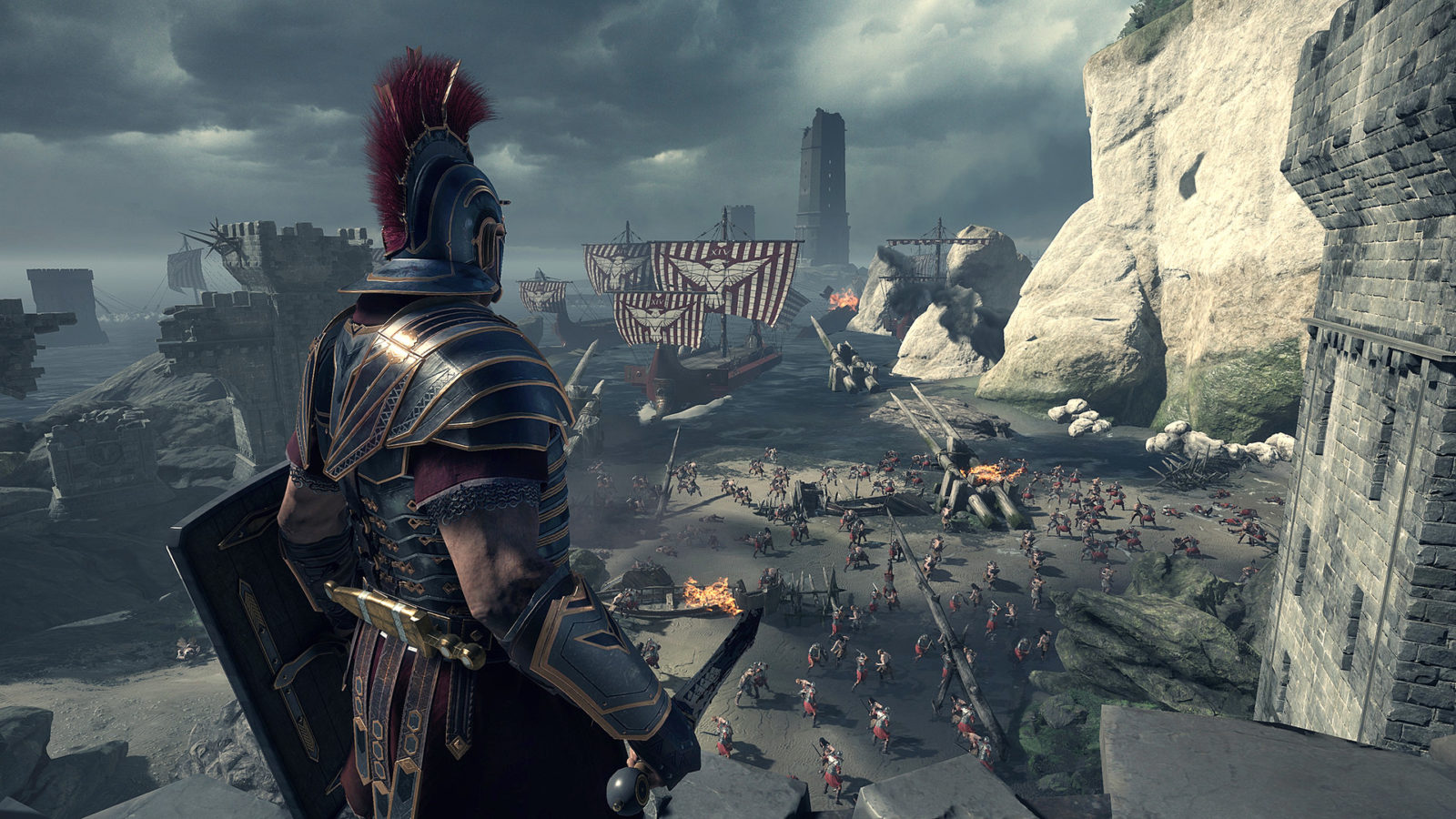 The amount of animated detail during gameplay is incredible, including battles seen in the distance
The campaign length is short, around seven hours of gameplay on a first completion, assuming you die a few times near the end and play at a relaxed pace while enjoying the experience. The adventure has eight chapters and is extremely linear, at times strongly recalling the good beat 'em ups of the 1990s. The actors' cinematic performances guide us through the adventure, which has a good story that may be somewhat clichéd and predictable at moments but fits a game with this theme perfectly.
Although the title is considered a hack-and-slash game, its combat resembles recent games in the Batman franchise far more than God of War or Devil May Cry. The moves are simple, and it does not take long for players to begin defeating enemies without major difficulty.
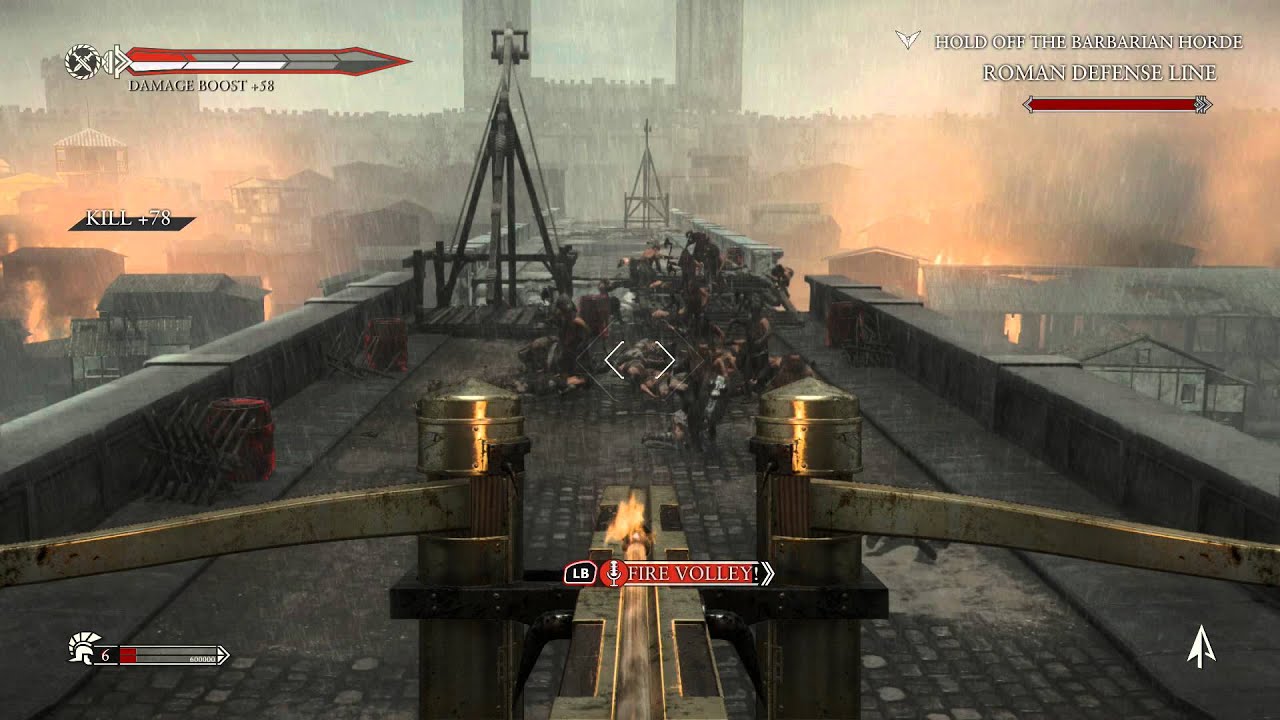 Using weapons such as the ballista varies the gameplay beyond simply slaughtering enemies with a sword.
The protagonist uses essentially a sword and shield throughout the campaign, and upgrades do not change combat very significantly. What deserves emphasis here are the defensive, counterattack, and execution methods we use strategically. The famous "button mashing" works only during the game's early stages, with the ending—especially the final two levels—demanding a little more from players. Success depends on entering the rhythm of battle and knowing the exact timing for pressing each button. The programmers called this system "Flow," and it is highly functional, keeping gameplay enjoyable over time despite some repetition.
Another highlight is the executions performed on opponents through the directional pad. Besides being extremely well animated and violent—worthy of being called 'fatalities'—they contain a strategic element indispensable to success. During an execution, we can choose among four possible rewards: 1) increased damage; 2) greater experience gains to spend on better attributes; 3) an increase to the focus bar, used as a special move during battles; and 4) health recovery, since there are no potions or other ways to regenerate the health bar.
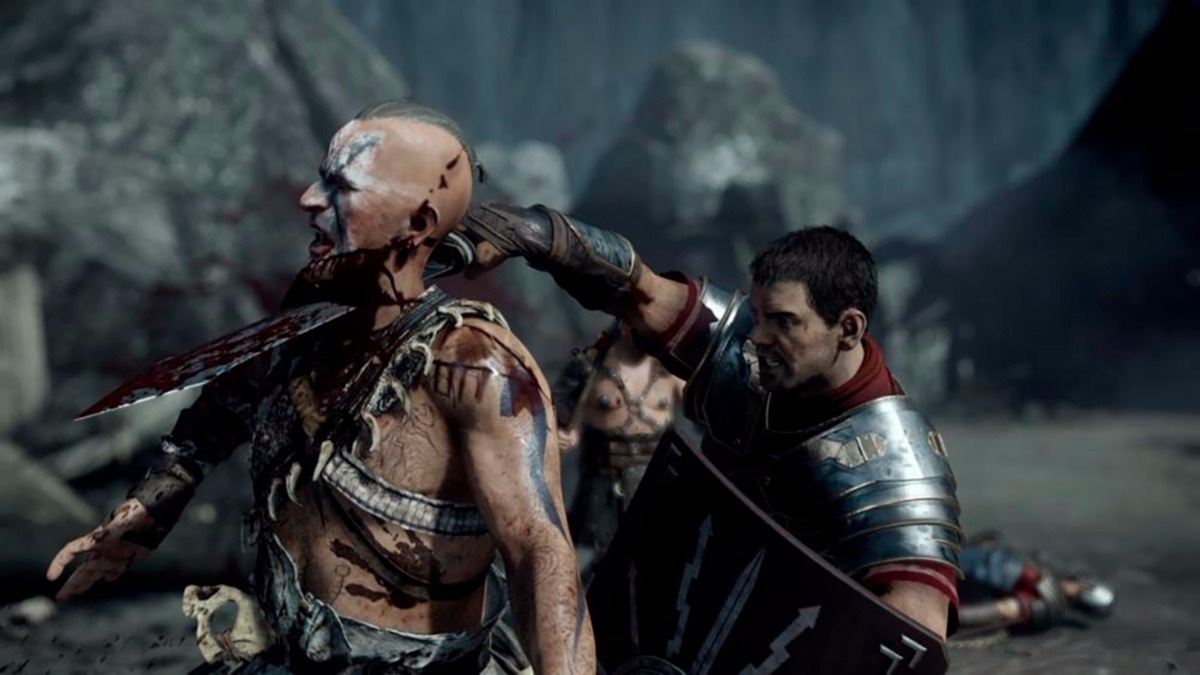 The executions, in the finest 'fatality' style, give the game tremendous charm.
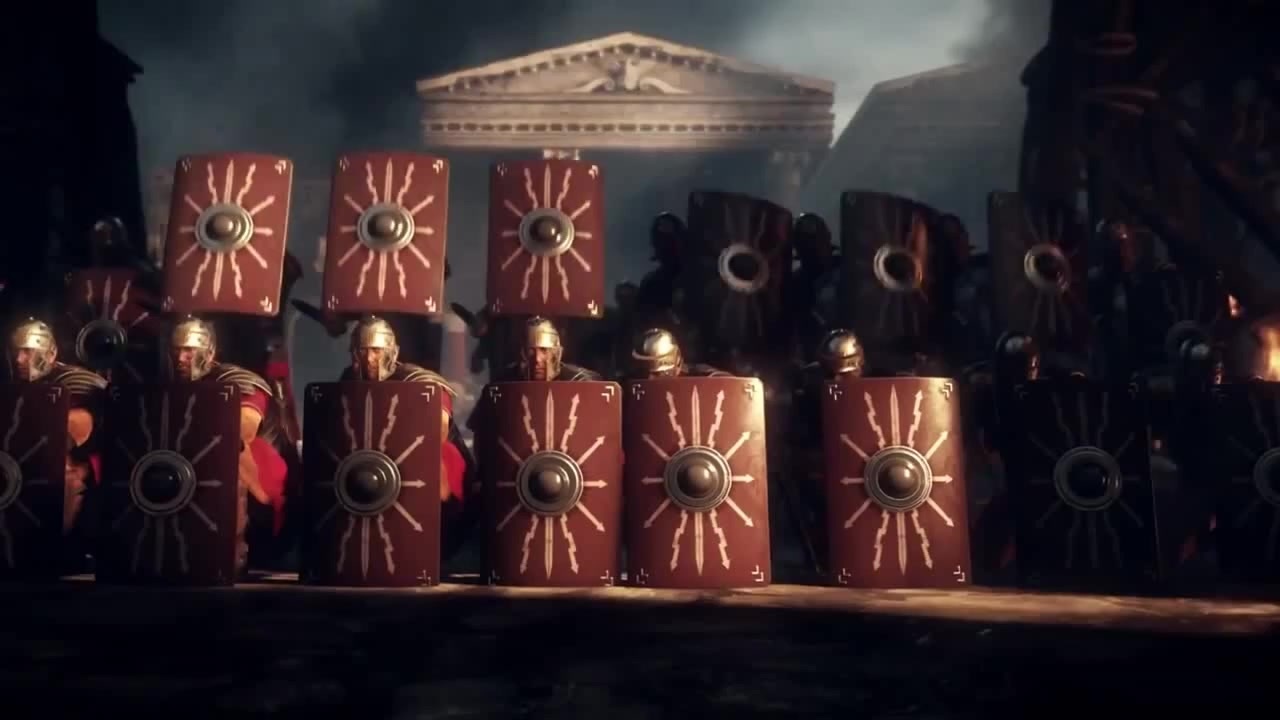
During the campaign, we use other weapons that add greater gameplay variety, such as javelins and the ballista—large bows fixed to the ground that can fire bolts with tremendous impact. Other interesting details involve the title's light strategic element, such as ordering archers to fire volleys of arrows at enemies or leading groups of soldiers in the formation popularly known as the "tortoise." At some moments, we must also choose our approach when enemies draw near, such as taking control of a ballista or meeting the enemy head-on.
The Roman legions' formation known as the "tortoise" appears in the game and demands strategy and precision to lead. Below are images of these moments.
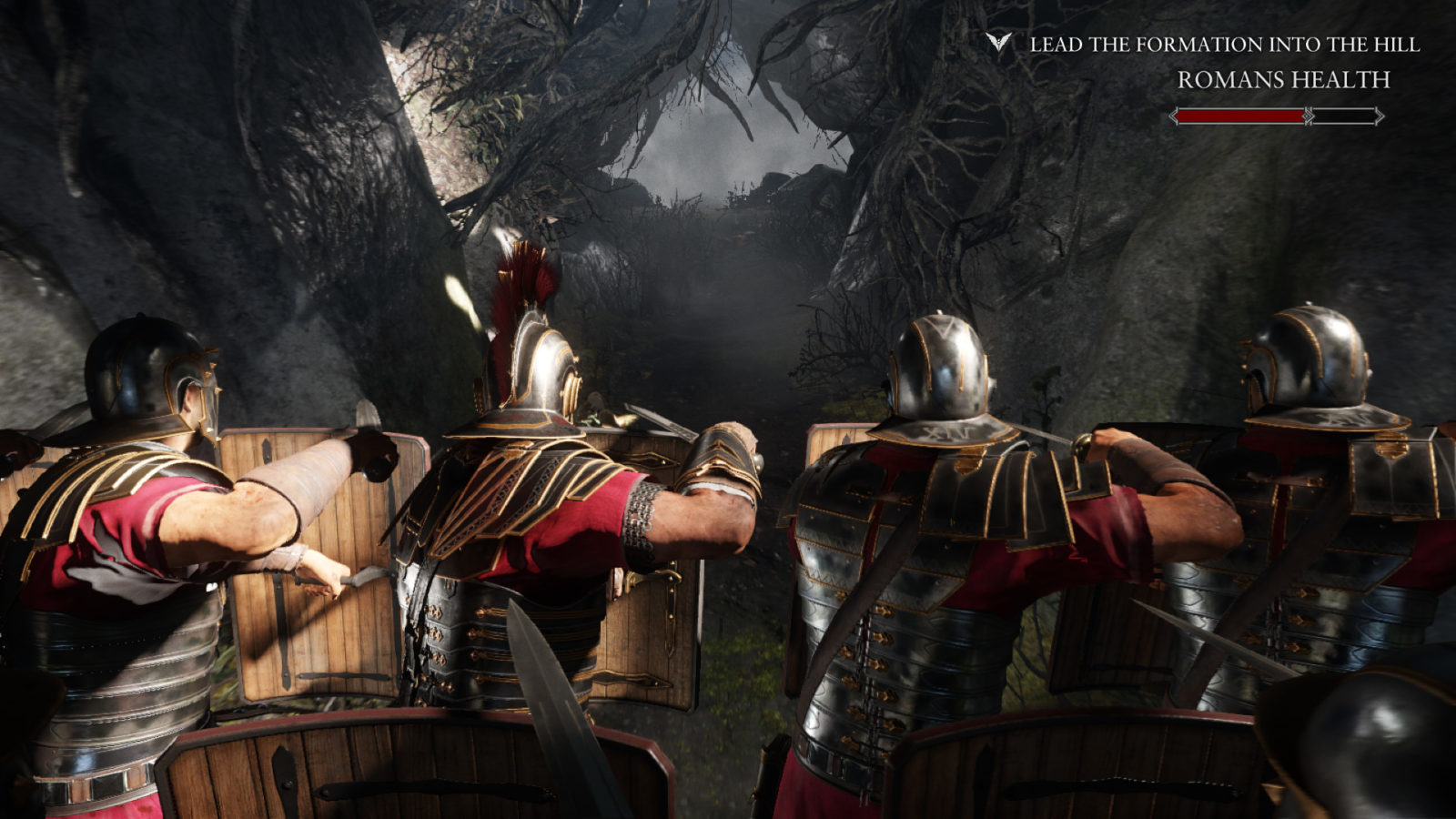
The game's difficulty is low and becomes more challenging only near the end of the campaign, where we encounter bosses whose patterns must be learned and battle timings mastered. The campaign's consistent linearity makes our steps highly intuitive, requiring brief exploration only from those searching for collectibles.
Ryse: Son of Rome has low replay value, and the main reason to continue playing after finishing it is its online multiplayer, based on Gladiator mode, where two players face hordes of enemies in a Colosseum. Unfortunately, progress here is slow, tempting us to use the microtransactions that are regrettably present in the game.
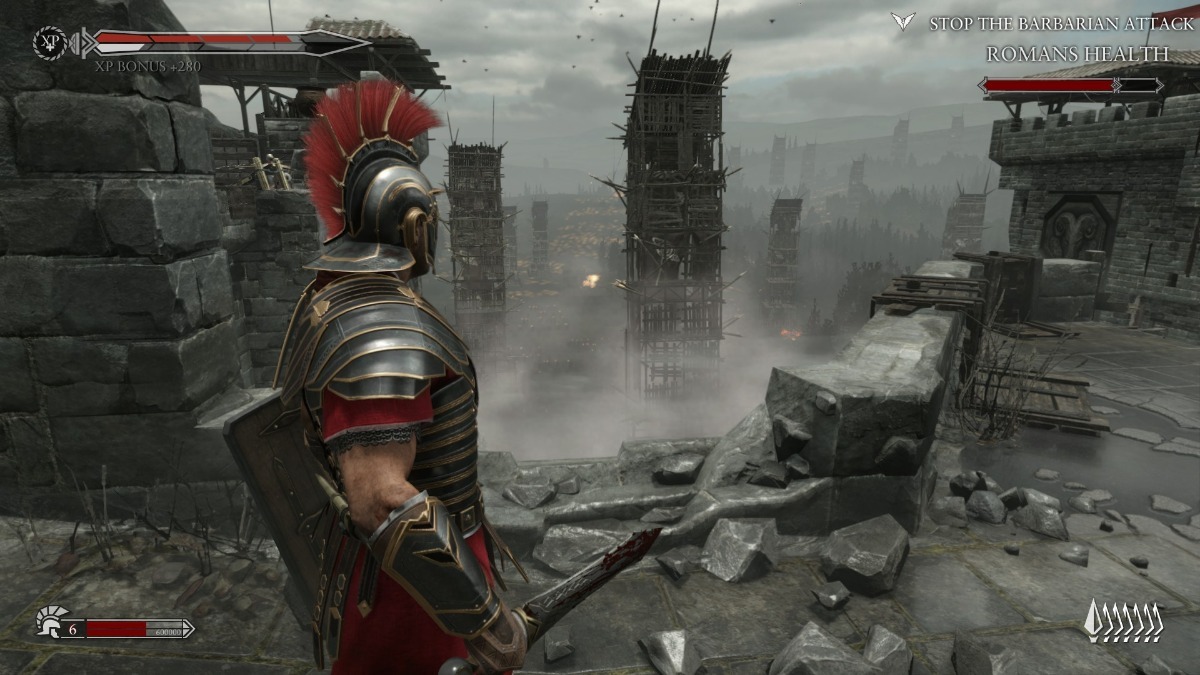 On the right is our companions' "health" during the battle, while in front of the protagonist we see towers bringing enemies into another great epic fight.
The game offers considerable fun, especially for those who enjoy a title with an engaging story and the simplicity of fighting enemies in succession. Without a greater variety of weapons or complex upgrades, Ryse becomes a simpler experience, but not one less valuable than other games in the style.
The game's soundtrack is good and supports the title's atmosphere, evoking moments of action and climax as well as calm and sorrow when more personal situations appear in the transitional scenes. The sound effects, including explosions and combat, are also high quality. The voice acting deserves great praise, including the Brazilian Portuguese dub, which is among the best heard in this generation.
Below are all the songs on the Ryse: Son of Rome soundtrack.
Fun fact: Around the Xbox One's launch, a rumor arose that Microsoft Studios had reached an agreement with Machinima Inc. to ensure favorable reviews for the console's first games. Ryse: Son of Rome was among the titles reportedly included in this agreement. The rumor said positive reviews would receive between US$15,000 and US$30,000. Personally, I do not believe this is true, especially because we know critics ultimately did exactly the opposite and assigned scores below what the title truly deserved.
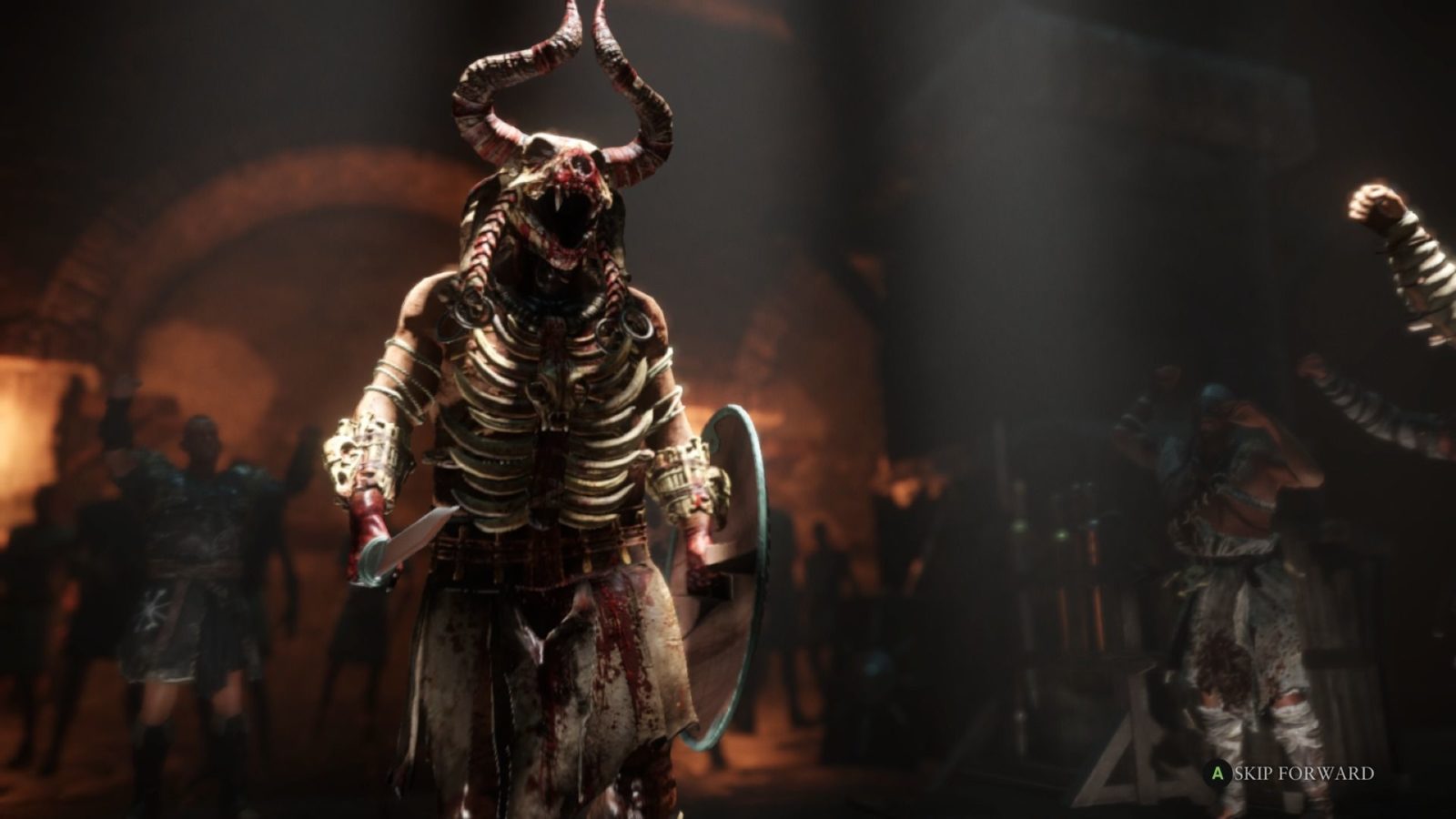 Stronger enemies serve as bosses in Ryse: Son of Rome.
Fun fact: According to creative director Cevat Yerli, Ryse: Son of Rome was conceived as the first installment in a franchise. Its sequel, Ryse 2, is nevertheless believed to have been canceled because of disagreements between Microsoft and Crytek. According to information published in the press, Microsoft wanted to take ownership of the franchise's intellectual property in exchange for financing the second title, and the project was canceled because Crytek did not accept this arrangement. Crytek currently focuses its efforts on developing free-to-play games, a decision made after the company recently suffered a financial crisis.