
Writing a review of Mega Drive's Sonic 1 required some courage, since thousands of people have already done so and it is almost impossible to believe that anyone reading this article has not played it many times. Still, I tried. Like many of you, I also have a special affection for this game, which mattered not only to Sega's great success in the early 1990s but to the entire history of the video game industry. I hope you enjoy the article and remember the quality of this great game. Play it again for nostalgia's sake or, if possible, discover one of the most important titles of its era.
A panoramic view of Green Hill Act 2.
Sonic the Hedgehog is a platform game originally released for Mega Drive in 1991. Its success later led to conversions with significant differences for Master System and Game Gear. The original version is constantly rereleased on modern platforms, so there is really no reason for anyone not to play Sonic today.
Trivia: Sonic was an enormous, immediate success with audiences and critics, receiving game-of-the-year awards upon release. Among its achievements is being the best-selling Mega Drive game, surpassing 15 million units, of which 4.34 million were cartridges sold outside the console bundle.

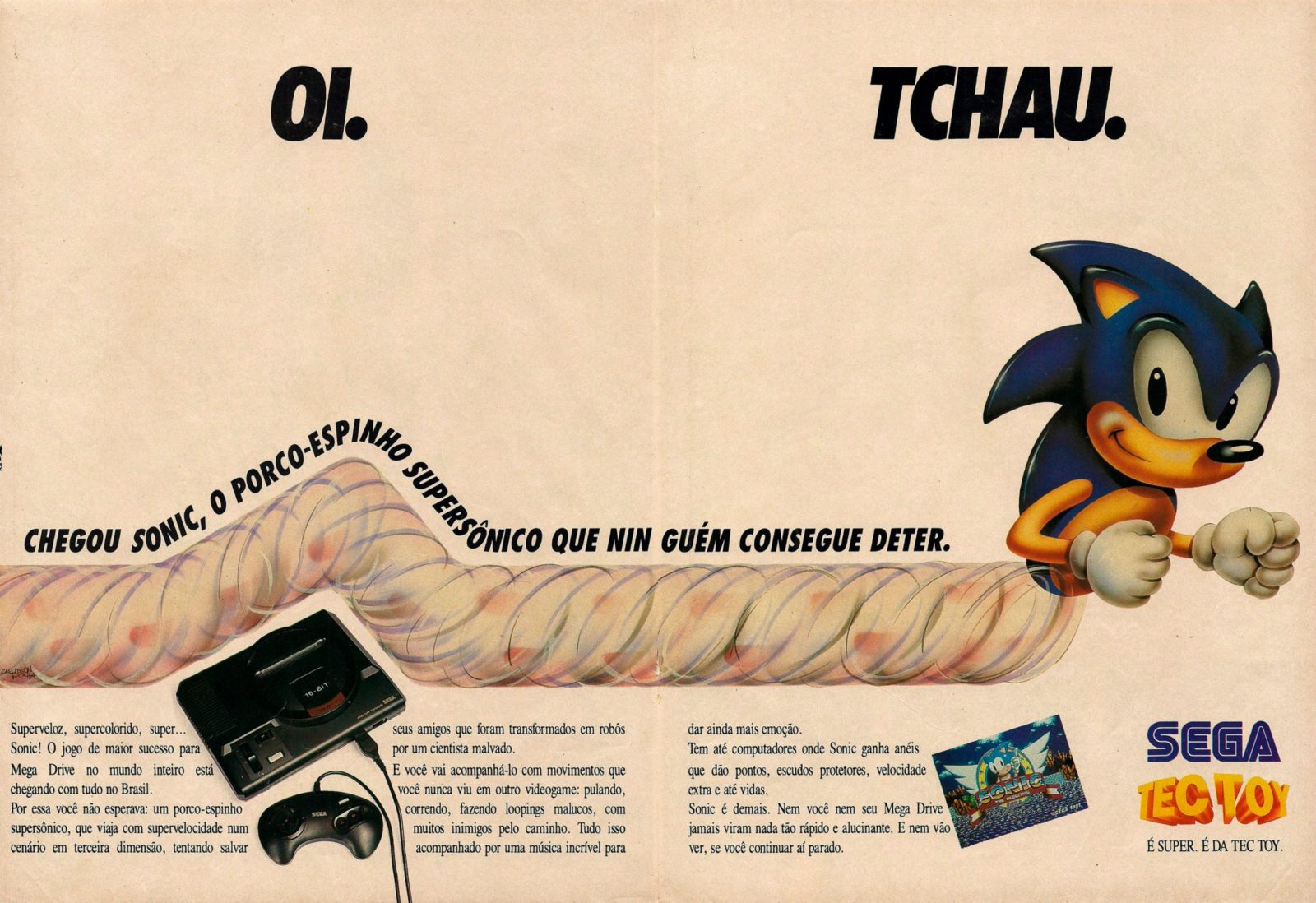
The character's advertising worked. Brazil is one of the countries where Sonic is most popular.
Note: We recommend reading the previous review of Sonic 1 for Master System alongside this one to learn the main differences and similarities between the games.
Market Context at the Time of Release

Hayao Nakayama
In the mid-1980s, Nintendo held absolute dominance thanks to Super Mario's enormous popularity in the world's leading markets. Sega, an arcade giant, was also working tirelessly to gain a foothold in home consoles. Unfortunately, taking on the mustachioed hero was no easy task, and even the excellent Master System console unfairly failed to receive the commercial recognition it deserved.
Sega's solution was to put a significantly more powerful console on the market, showing NES owners that their system was completely outdated. The company wanted to launch its 16-bit console as quickly as possible to secure a substantial lead before Nintendo could release its fourth-generation successor. Executives hoped this period would be enough to establish a large installed base in consumers' homes and guarantee the platform's success.
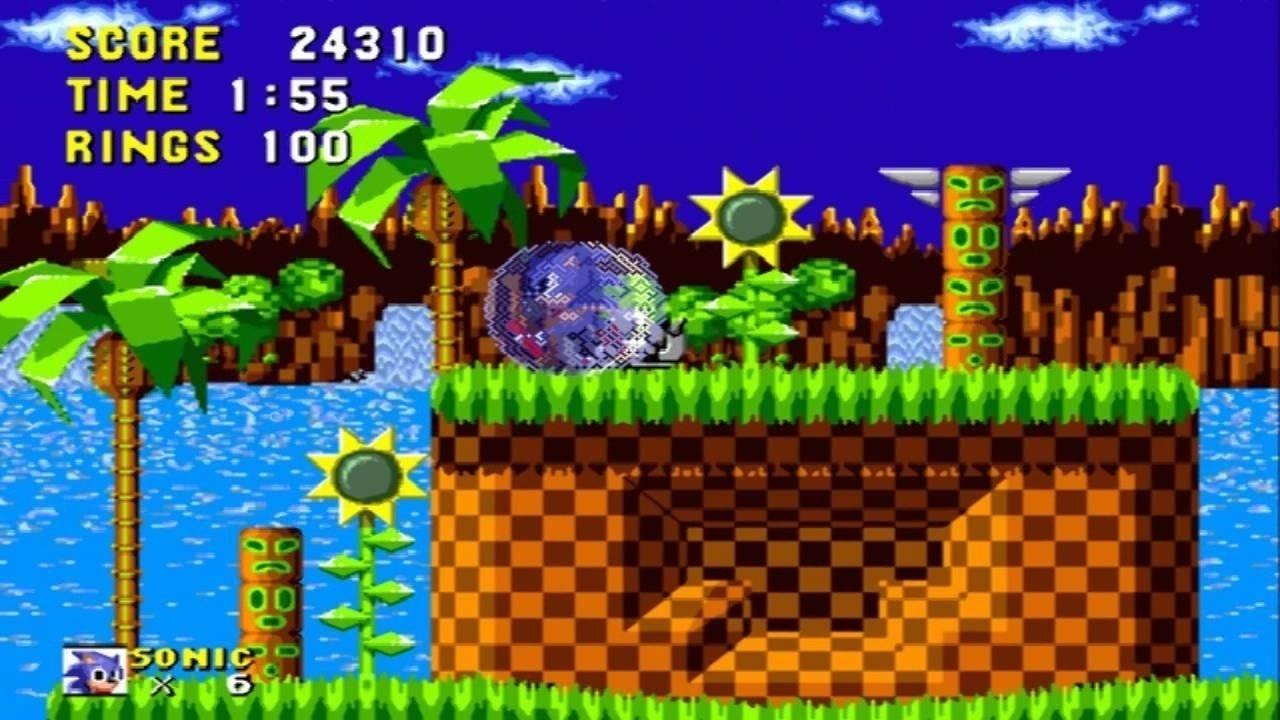
Shields gave us "one more chance" during a game.
The predictions were correct. With incredible ports of famous arcade games, a proper American launch, and two years without competition from Nintendo in the same generation, success appeared secure. Everything was going well until the famous mustachioed hero returned on the newly released Super Nintendo with the timeless classic Super Mario World. The shock was considerable, and Nintendo soon began matching the installed base that Mega Drive had taken two years to build. Sega needed an urgent, effective response to contain the Italian plumber's success once again, made worse by the fact that the game would be bundled free with the console in the American market.
Sega president Hayao Nakayama simply ordered the creation of a character who would do for the company what Mario did for Nintendo. The original project from the SEGA-AM8 team, where important studio figures already stood out, caught everyone's attention. Naoto Oshima, Yuji Naka, Rieko Kodama, and Hirokazu Yasuhara conceived something agile and dynamic that would use the Mega Drive's incredible 7.6 MHz.
Trivia: According to reports, Sonic's design was inspired by: 1) the shoes Michael Jackson wore in the Bad music video, colored Santa Claus red to convey speed more effectively; 2) the character's blue color as a tribute to Sega's logo; 3) the personality of former US president Bill Clinton; and 4) Mickey Mouse's famous gloves. A rather curious combination, don't you think?
Behind the Scenes

Yuji Naka
Yuji Naka apparently received 12 new proposals for future games on his desk one day. One deserved special attention: it was called "Defeat Mario." Game designer Naoto Oshima then conceived the central idea for a character who could accomplish that mission: a rabbit, which admittedly made more sense given the game's planned high speed, after the team rejected a bulldog, a samurai bear, and an armadillo. The rabbit would use its ears to attack and pick up objects. The idea was abandoned at the time but later reused in Ristar. They combined the rabbit's speed with the armadillo's ability to curl into a ball and a sketch of a hedgehog; the company's new mascot was born. Naming the character was easy, since they wanted something supersonic.
In Yuji Naka's own words: "I like fast things, and I thought it would be cool to create a game in which the better you played, the faster you could finish the stage. That became the basis for Sonic's speed and also helped distinguish him from the rival plumber."
Yuji Naka soon built a game prototype with unprecedented scrolling speed and showed that everything was possible. Level-design specialist Hirokazu Yasuhara was then brought in to create entertaining stages of increasing difficulty. The group already called Sonic Team was formed; all it needed was the feminine touch of a brilliant Sega employee to bring everything as close to perfection as possible. Rieko Kodama, who had worked with her colleagues on the acclaimed Phantasy Star, made the game's environments "breathe." As we know, everything looked beautiful, with lovely sprites and excellent parallax effects.
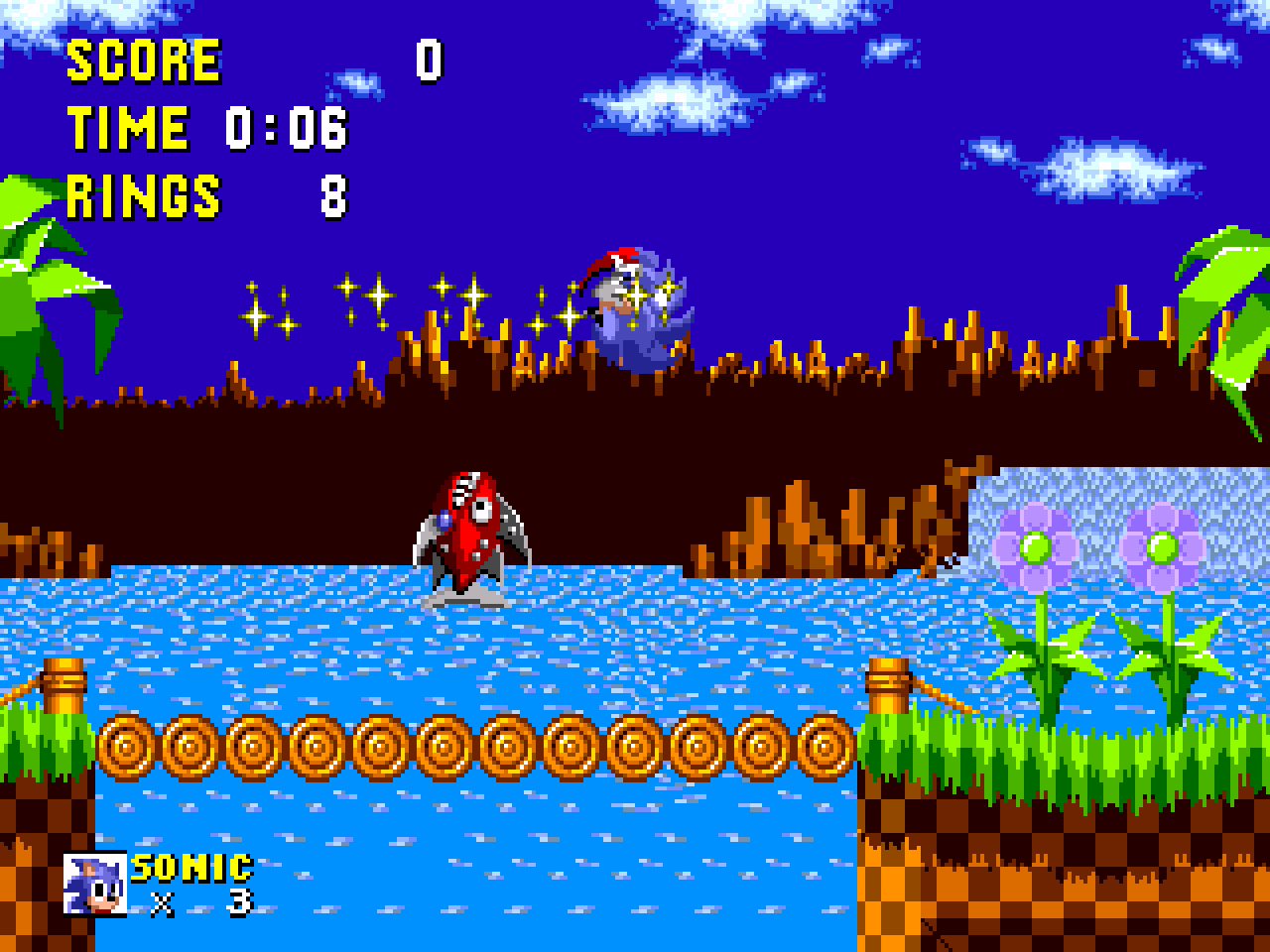
The speed the game delivered from the outset was incredible, a genuinely unprecedented sensation in games.
As we know, not only Sonic titles but practically all Sega games feature incredible soundtrack quality. The first entry already revealed the high standard the series would maintain. Masato Nakamura, leader of the Japanese pop band Dreams Come True, was invited to compose the music. The result was spectacular, and he was soon asked to score the incredible sequel.
The new mascot was presented at the 1990 CES, the Consumer Electronics Show, which served a function similar to E3 before that event began. The show marked a new phase in the greatest console war ever fought, since Super Nintendo was also presented to Americans on the same occasion. The 1990s were beginning, and we consumers benefited most from the battle.
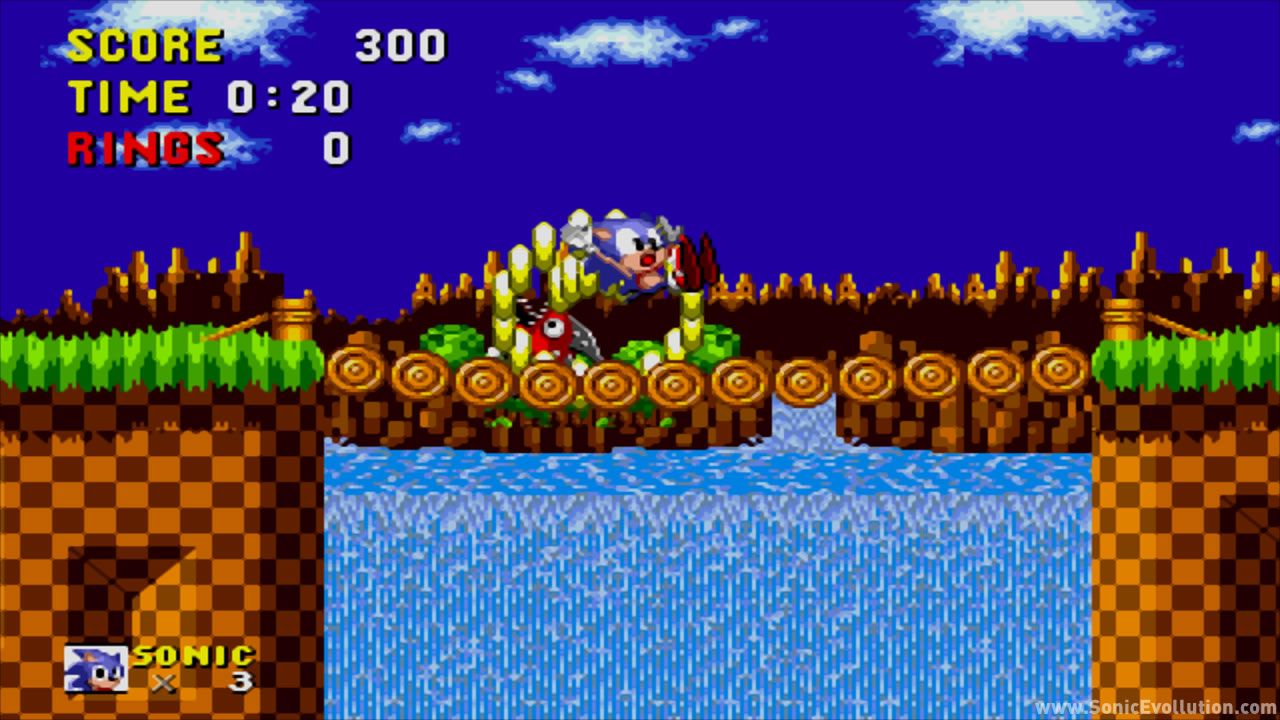
Sonic's speed made us want to run, which often caused problems.
Trivia: During development, seeking greater appeal among teenagers, Sega placed Sonic in a band whose members included a monkey, rooster, rabbit, and the now-familiar crocodile Vector. He was also going to have a blonde human girlfriend named Madonna, inspired by the famous singer. Sega of America apparently disliked the idea of depicting a romance between a hedgehog and a human and asked for its removal. The year 2006 came to many minds, didn't it?
Stages of Sonic the Hedgehog
The campaign of Sonic the Hedgehog consists of six zones with three acts each, with Dr. Eggman piloting one of his inventions in the final act. We will briefly describe the zones below, but you should know from the outset that all feature superb level design worthy of high praise.
1. Green Hill Zone: The tropical zone that symbolizes not only the game but the entire franchise. With a strong focus on speed, it shows us exactly what a Sonic game is. The loops that cleverly demonstrate the game's fantastic physics were already present here. Its theme music was also an excellent invitation for players to enjoy the coming adventure.
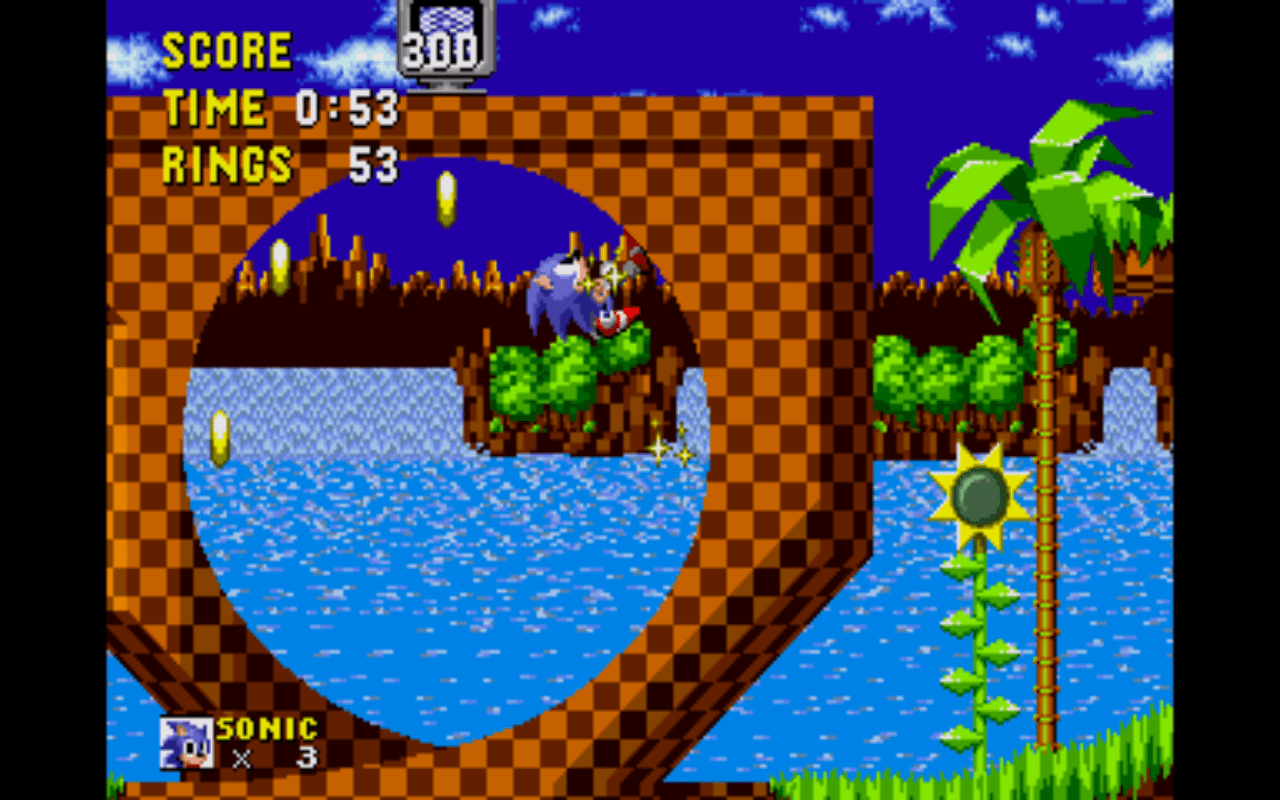
The famous loop that demonstrated the title's innovative physics.
2. Marble Zone: Already in the game's second zone, we must moderate the protagonist's speed. Lava pits are everywhere, and secret passages conceal items and shortcuts. Beneath the surface lies a beautiful marble dungeon that already raises the game's difficulty. Treacherous enemies such as Caterkiller are found here, while spikes emerging from the floor are genuine traps.
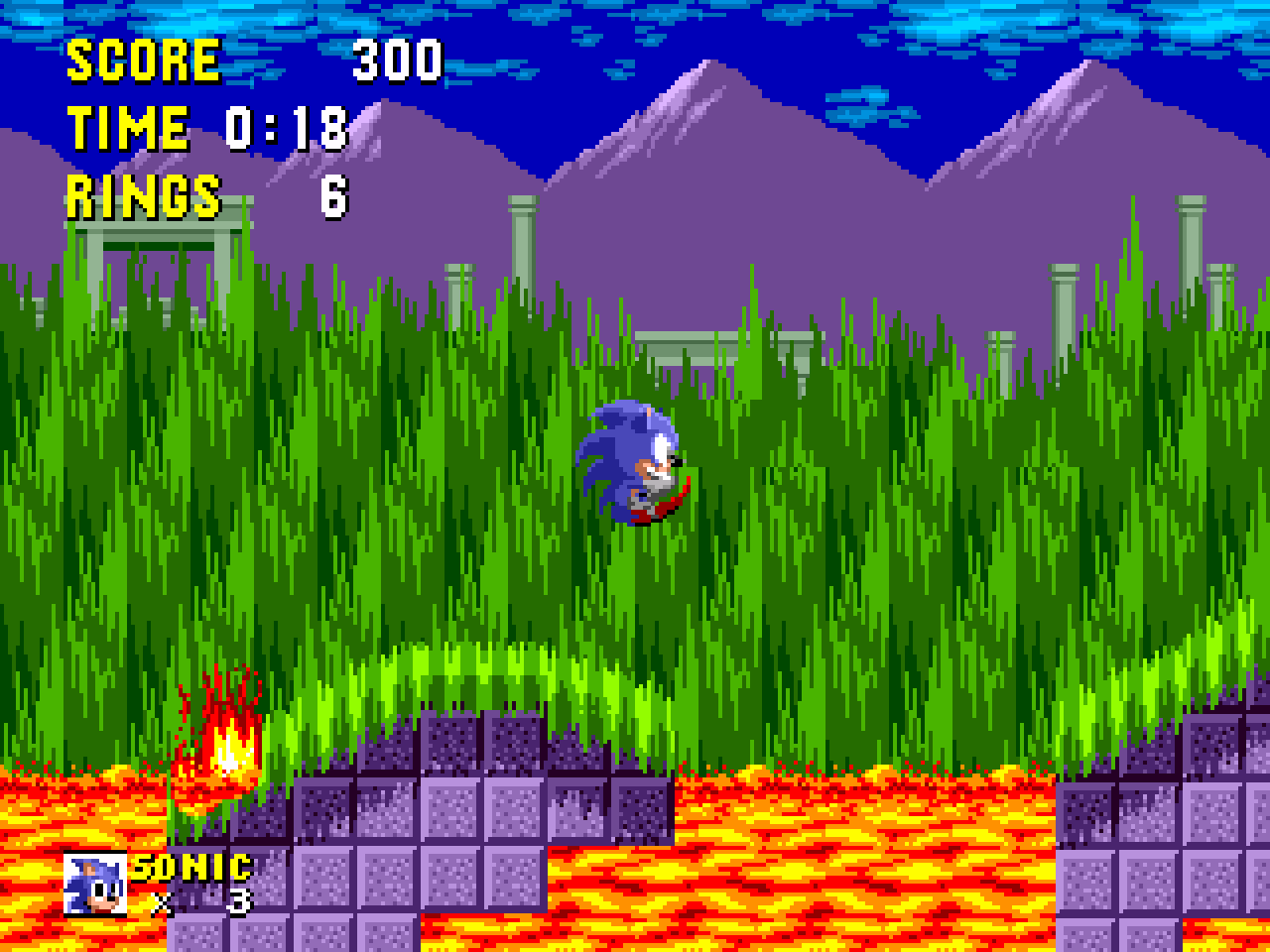
Lava and dungeons in the second zone, a sign that we were on a great adventure.
3. Spring Yard Zone: The background scenery shows the passage of time, bringing us to a beautiful sunset. As the zone's name suggests, many springs are scattered along its paths. The elevators are somewhat treacherous, and we recommend leaving a good margin of safety in your movements to avoid being crushed. Many regard its boss as the hardest in the game because it removes pieces of our platform during its attacks.
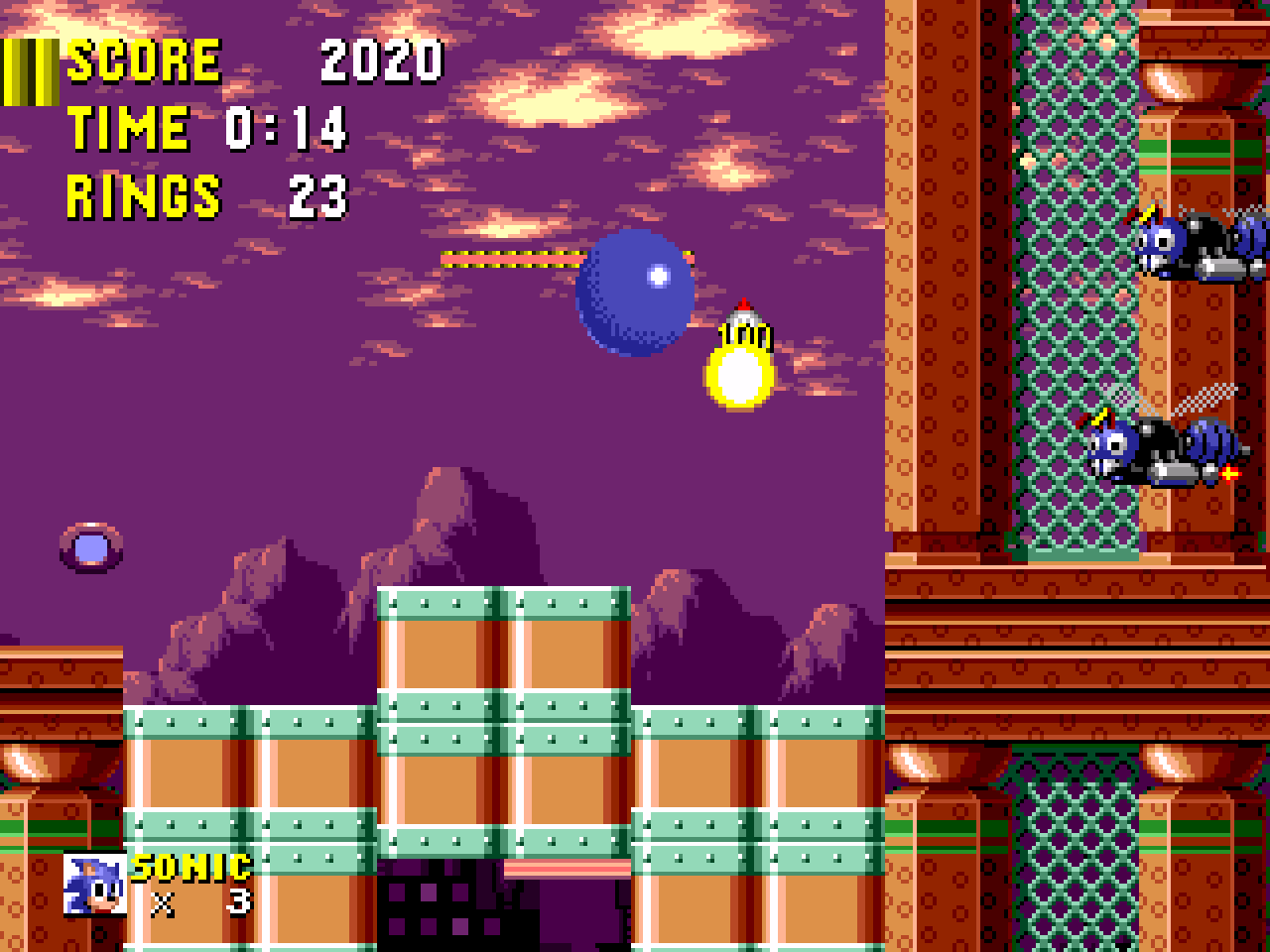
These elevators interrupted the zone's frantic pace, alongside Buzz Bombers that exploited our vulnerability.
4. Labyrinth Zone: Loved by some and hated by many, Labyrinth Zone does what every Sonic fan dislikes: it slows the character down. The game once again raises its difficulty and shows that players must move carefully, especially to avoid spending too long underwater, since our hedgehog cannot swim and constantly needs bubbles emerging from the ground at specific points.
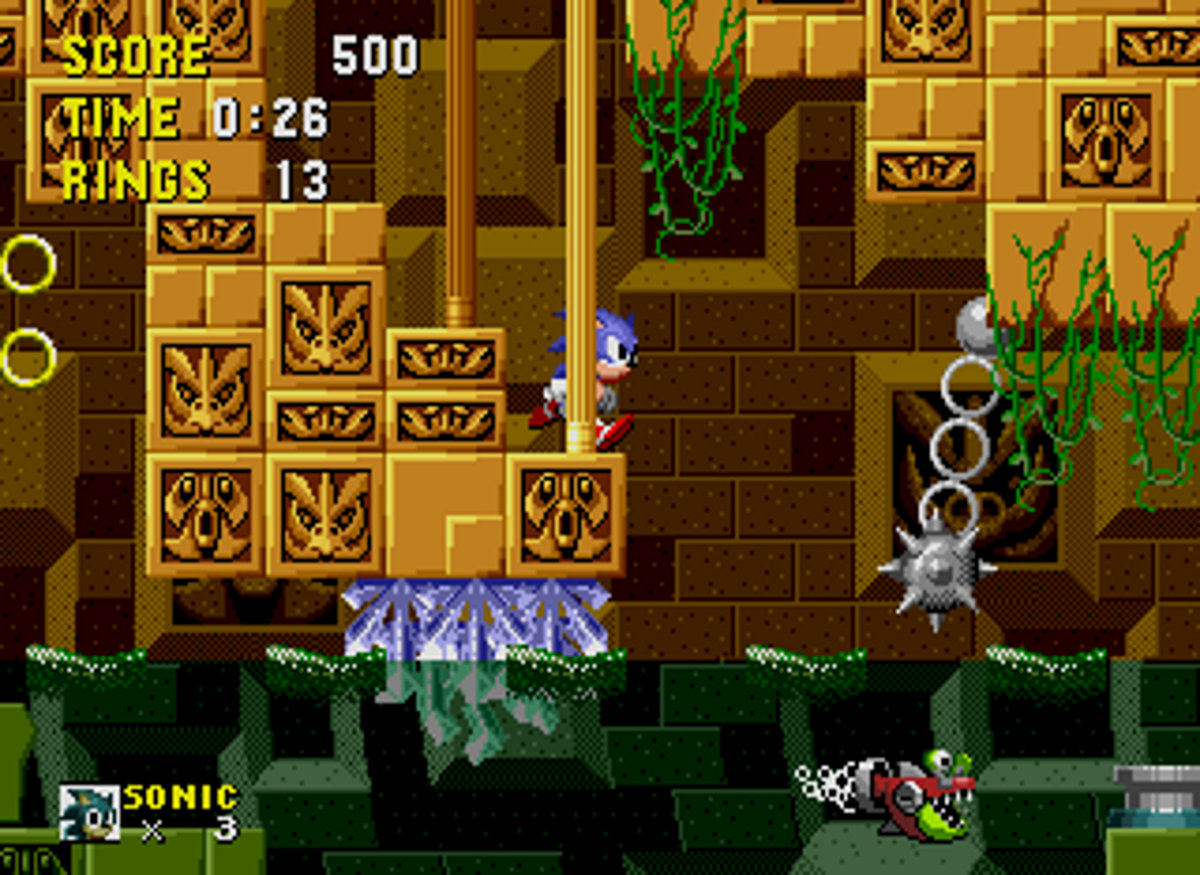
Despite its beauty, the labyrinth was a nightmare for many players, especially when the air-depletion countdown began beeping.
5. Star Light Zone: Night has fallen on Sonic's adventure and, unlike the previous zone, this one is extremely fast, with loops, ramps, and springs that let us build considerable speed. It is undoubtedly one of the game's most beautiful zones and has one of its most engaging soundtracks. Games once commonly placed their best-made stages first to serve as advertising, but Sonic demonstrates consistent care from beginning to end.
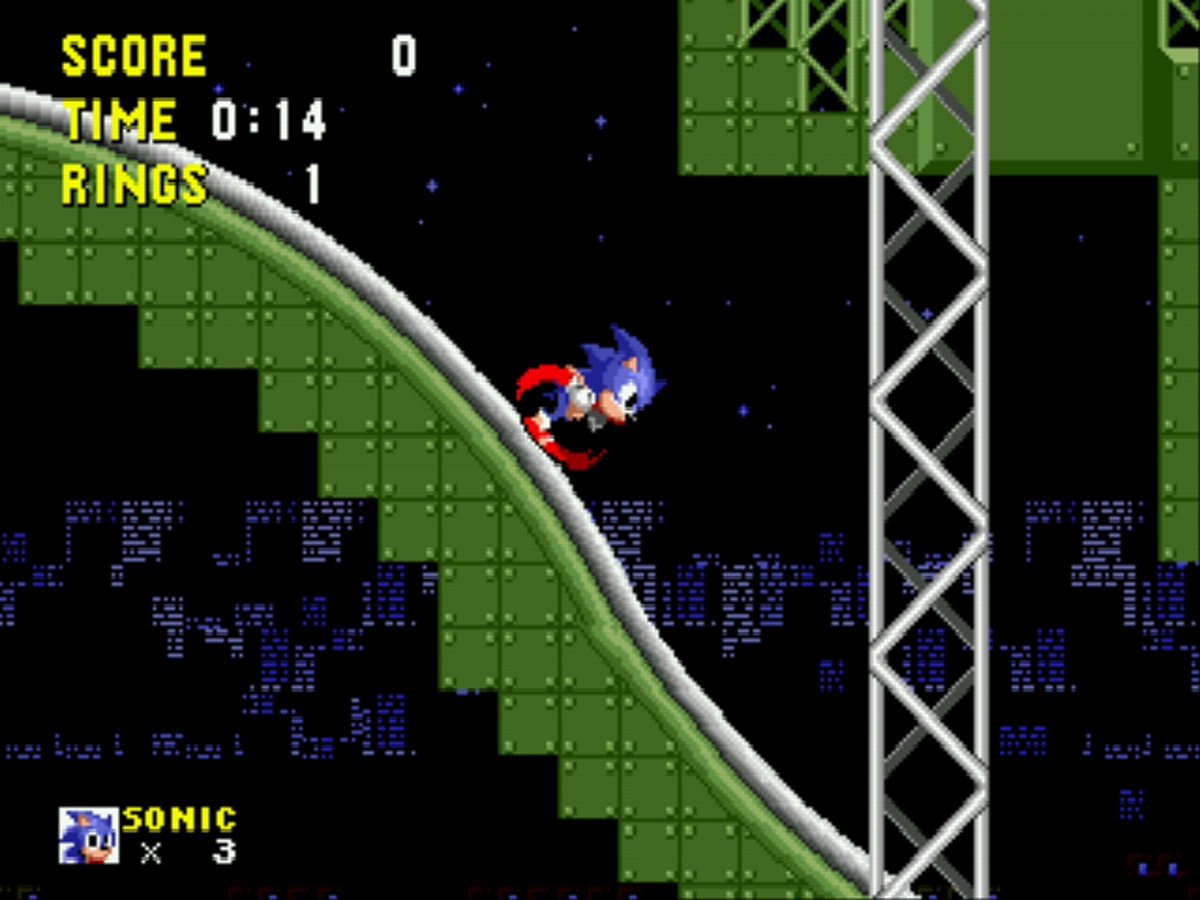
For me, it is the game's most beautiful zone. Fast, with incredible music. Unforgettable.
6. Scrap Brain: This base, resembling a laboratory full of contraptions, is the game's final zone. It is undoubtedly the most complicated because of the many obstacles and chasms throughout the environment. We recommend exploiting the character's speed only if you know the area well.
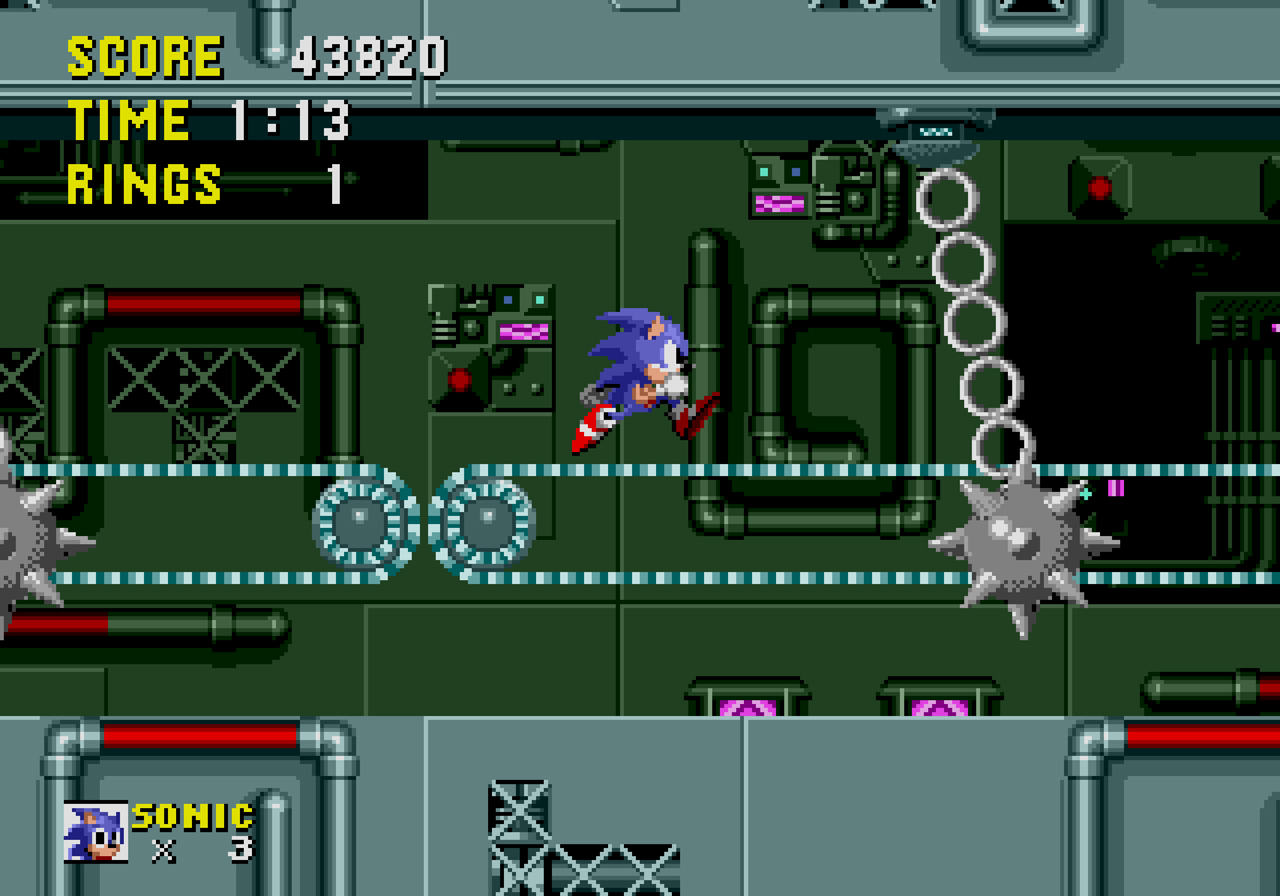
Dr. Eggman's base. Full of traps, enemies, and obstacles. Be very careful here.
Special Stage: When we finish Acts 1 and 2 of the early zones with more than 50 rings, we gain access to these stages to collect the famous emeralds. Their design is a maze where we must avoid blocks labeled "goal," which make us leave the stage. As a tip, remember that blocks labeled "up" and "down" respectively increase and decrease the rotation speed, while the letter "r" reverses its direction.
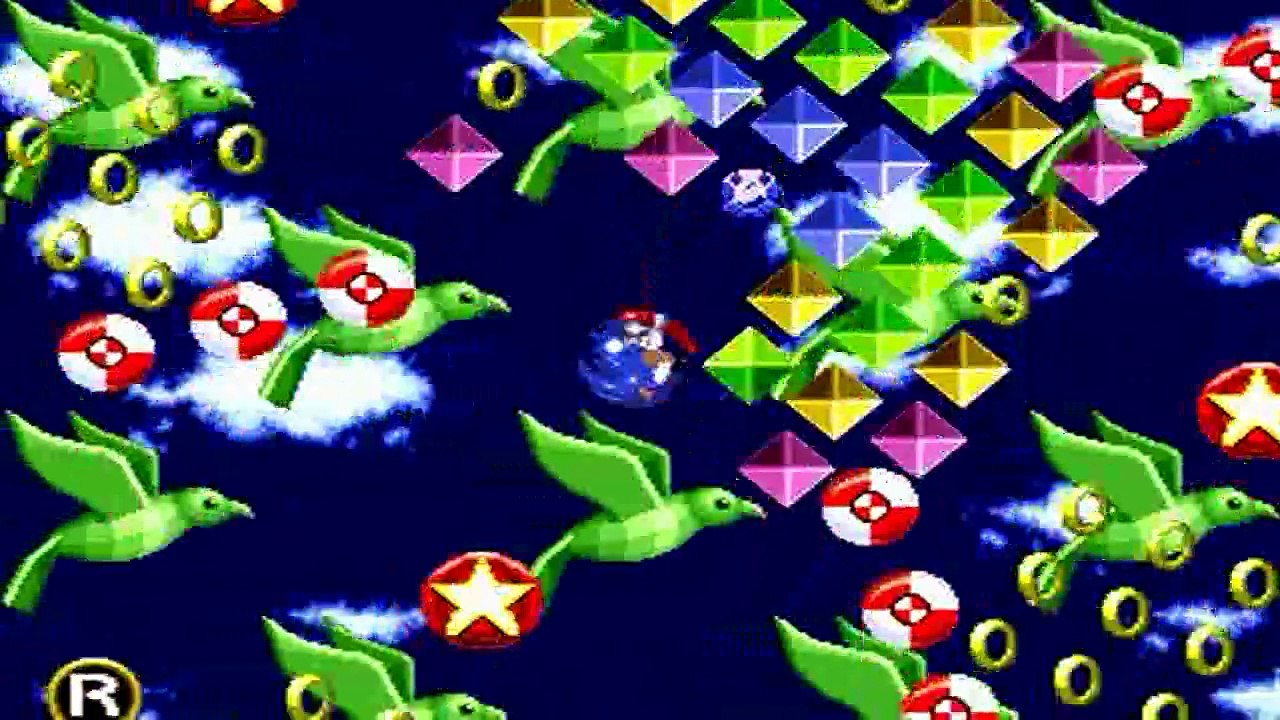
It is not so difficult once you get the hang of it; just practice a few times.
Trivia: Sonic cannot swim because the programmers were completely certain that hedgehogs could not float when the game was created. Thanks to this, we have the classic bubbles and countdowns in water stages. We cannot blame them; they did not have YouTube to watch videos like the one below.
The Bestiary
The number of enemies Sonic faces in the first game is already quite large. In the review of the Master System version, I described five. Here I will present seven, plus one encounter with Dr. Eggman. Although they appear in both versions, their behavior differs.
- Moto Bug (Mechanical Flea): The first enemy encountered in the game is also very easy to defeat. Simply jump on its back or hit it from the front with a spin. Its only advantage is its good movement speed.
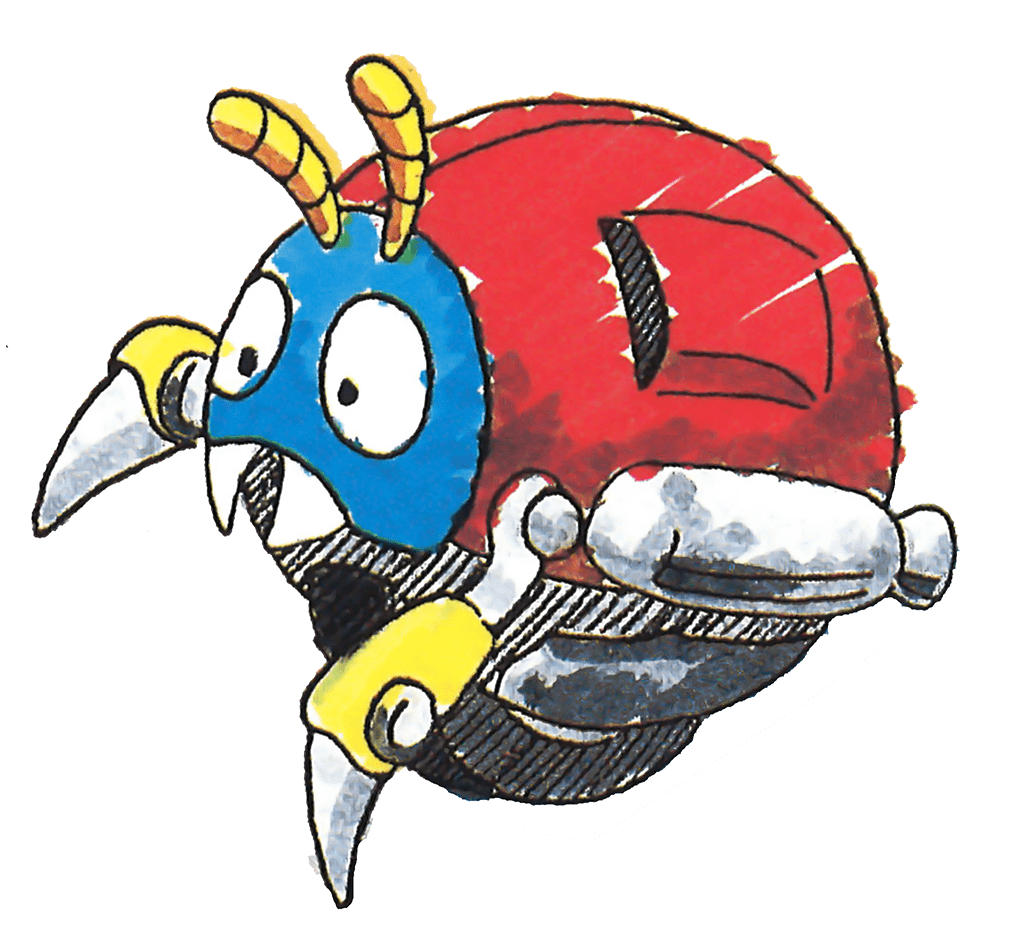
Moto Bug (Mechanical Flea).
2. Crabmeat (Crab): Like Moto Bug, it appears as early as Green Hill. This enemy is slightly more treacherous because it fires energy spheres along both diagonals. There is still no need to panic; simply wait for the right moment to attack.
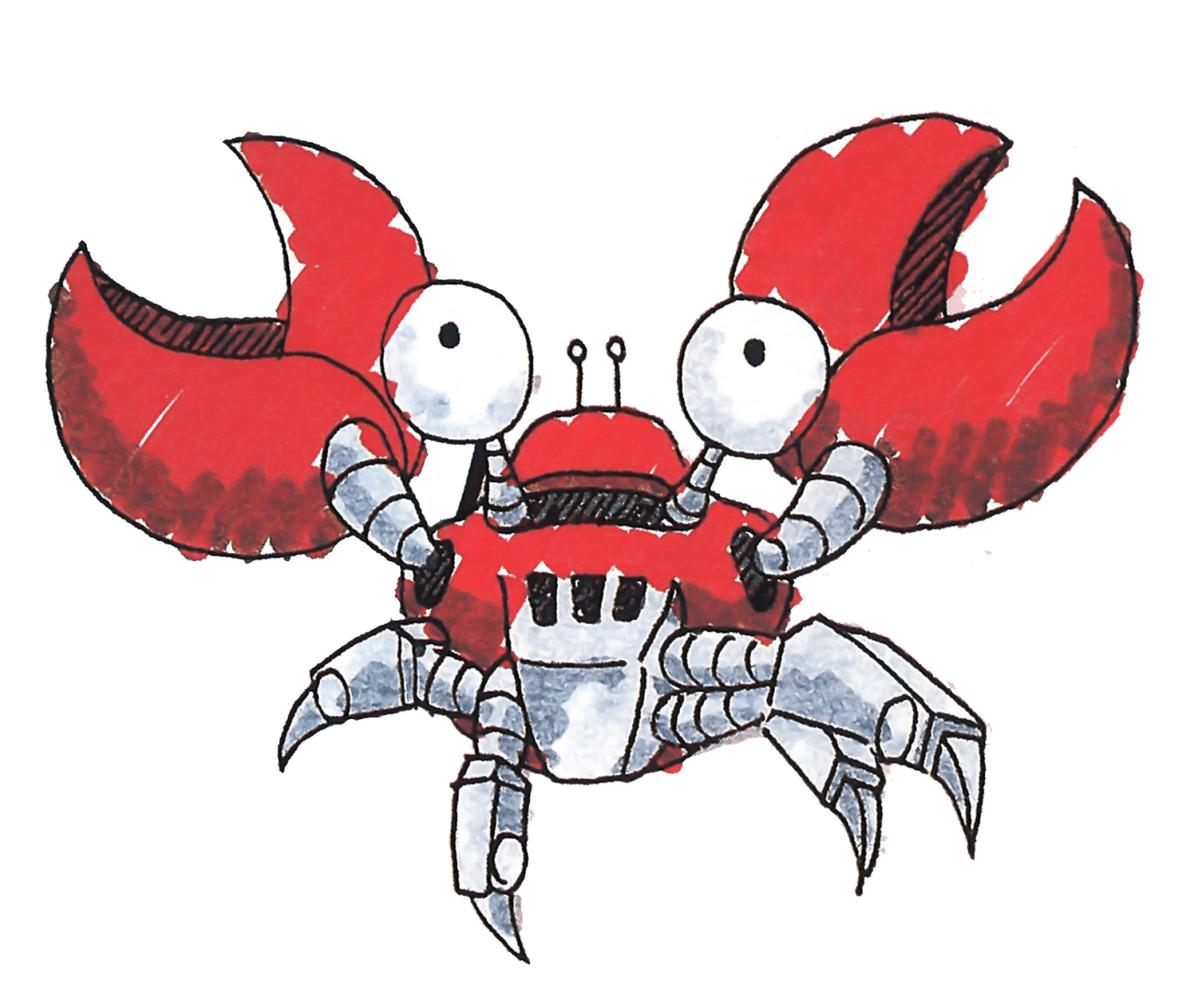
Crabmeat (Crab).
3. Buzz Bomber (Deadly Wasp): Another classic enemy from the series. It fires an energy sphere toward Sonic when he comes close. Dealing with it is not difficult and requires only a little attention.
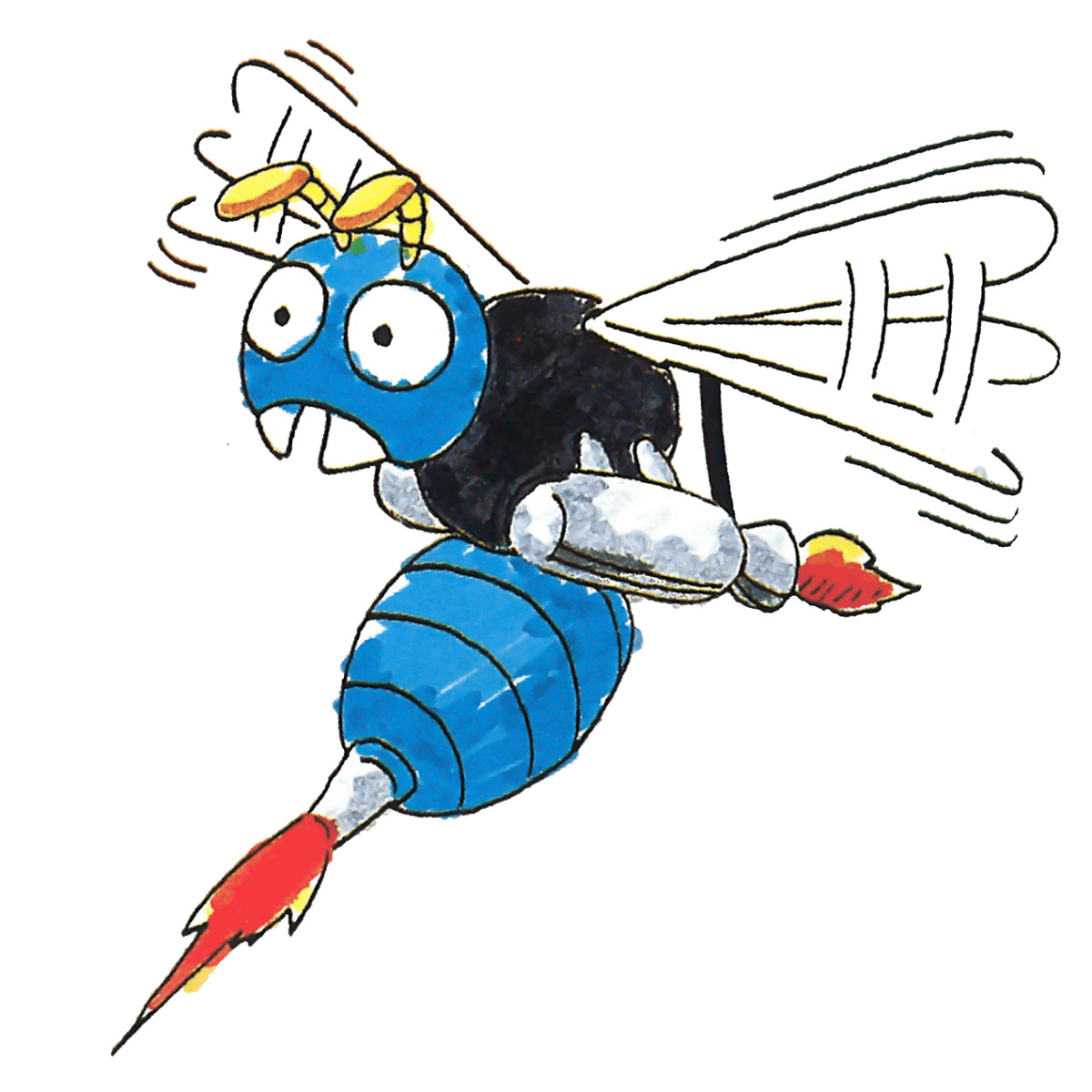
Buzz Bomber (Deadly Wasp).
4. Chopper (Piranha): A very fast enemy that attacks vertically when we pass near bridges. The advice is to pause briefly near areas where it usually appears to avoid being surprised by its attacks.
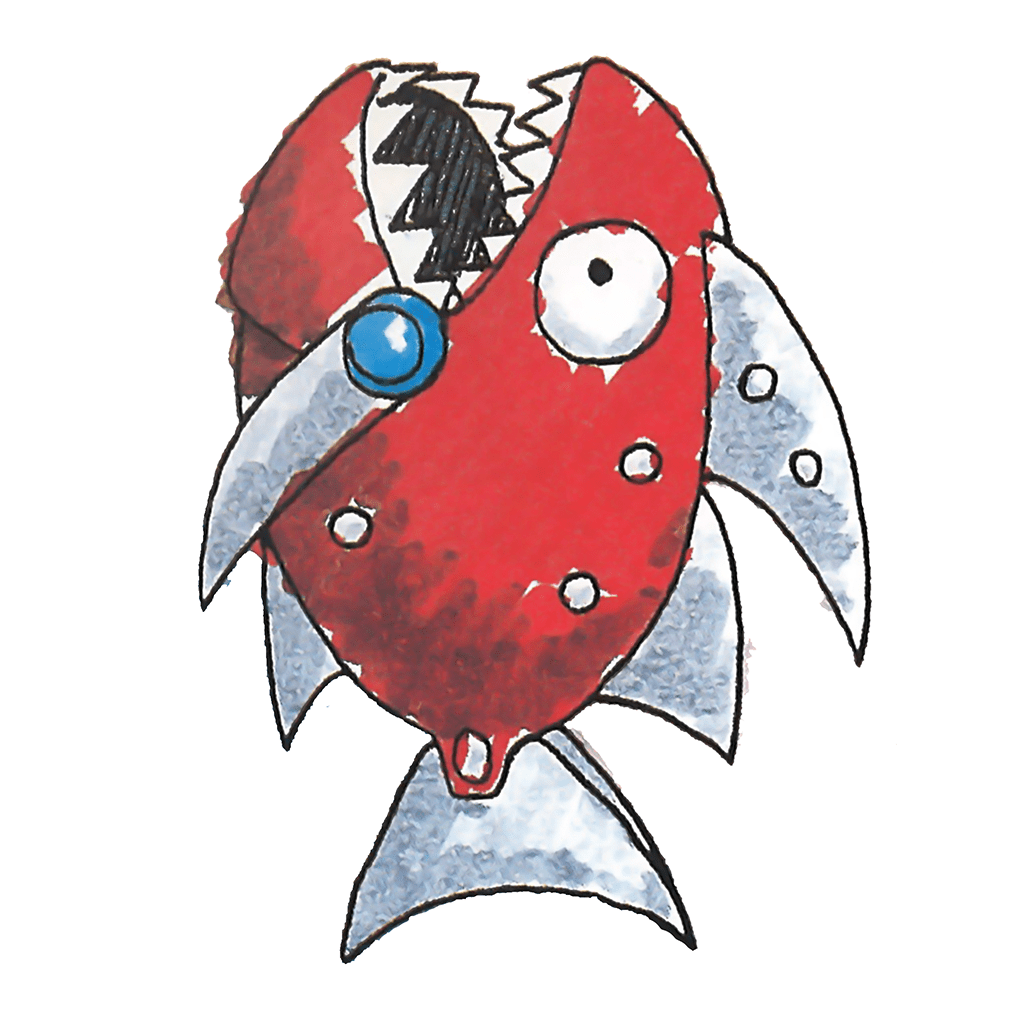
Chopper (Piranha).
5. Caterkiller (Killer Centipede): This annoying enemy appears in Marble Zone. Its weak point is its head, so we recommend taking it down from the front with a spin. Hitting its body not only damages Sonic but also scatters its pieces across the environment.
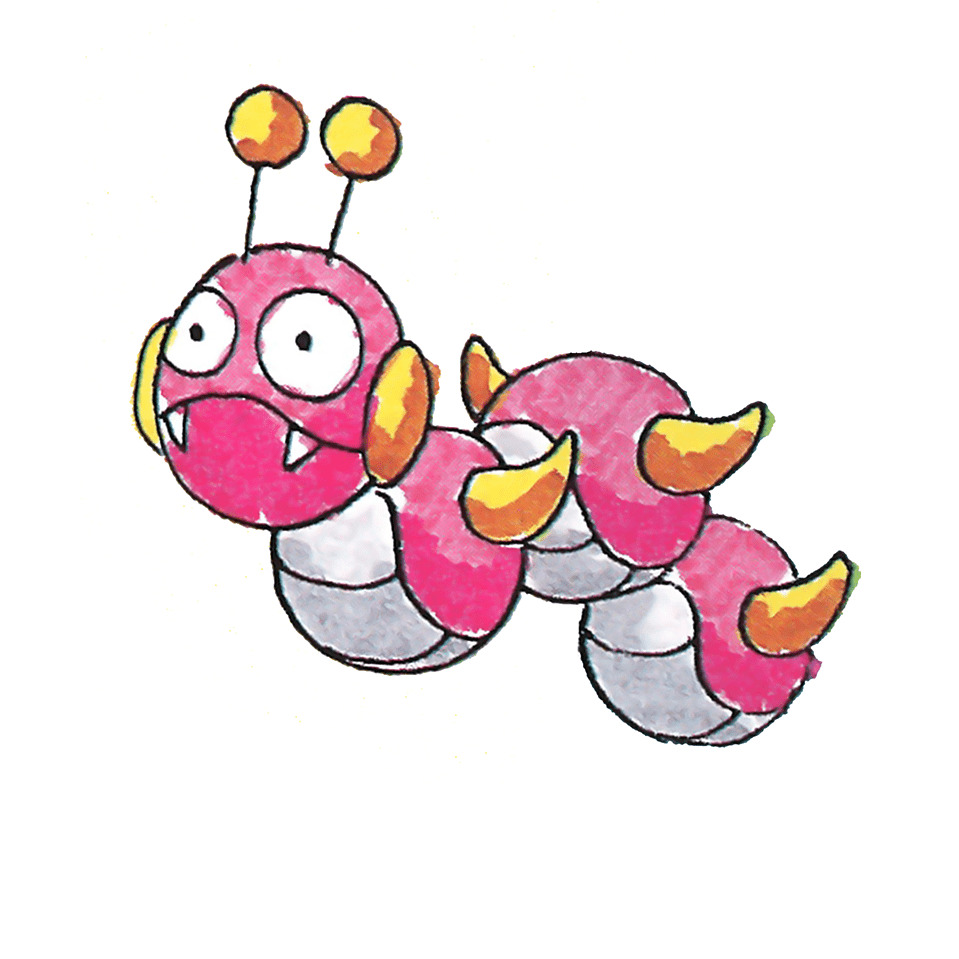
Caterkiller (Killer Centipede).
6. Ball Hog (Pig): Curiously, this enemy does not move. It simply fires energy spheres that bounce through the zone. Facing it head-on is always dangerous, so do not rush when you encounter it.
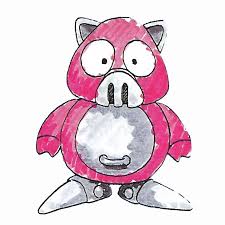
Ball Hog (Pig).
7. Newtron: A highly treacherous enemy with the ability to turn invisible and reappear to strike us with an energy sphere. It is often better to avoid it.
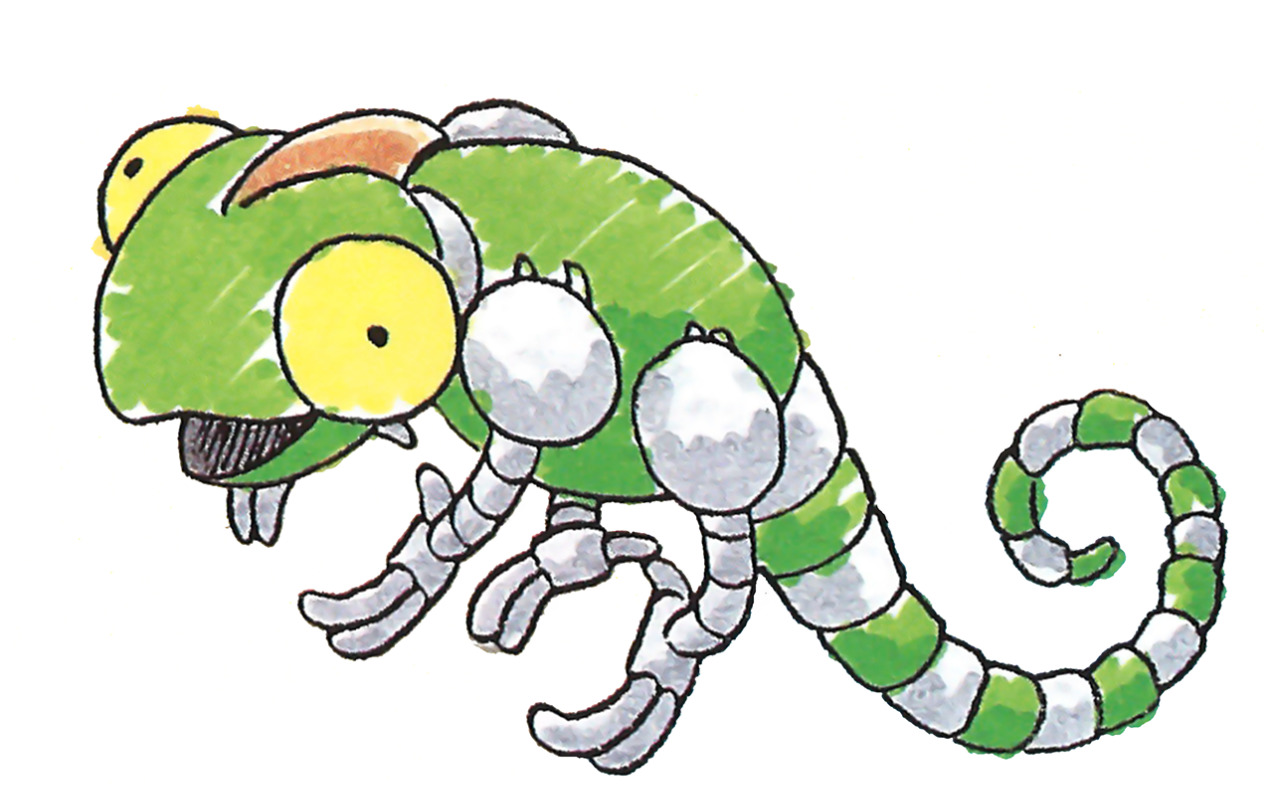
Newtron.
8. Eggman (Robotnik): The mad scientist who turned the island's animals into robots and wants the Chaos Emeralds to rule the world is faced in Act 3 of every zone. In other words, we encounter him six times during the adventure. Compared with the Master System battles, these are easier: simply memorize his attack patterns and have enough skill to hit him eight times at the right moments. I do not know about you, but as a child I imagined how cool replica toys of Eggman's machines would be.
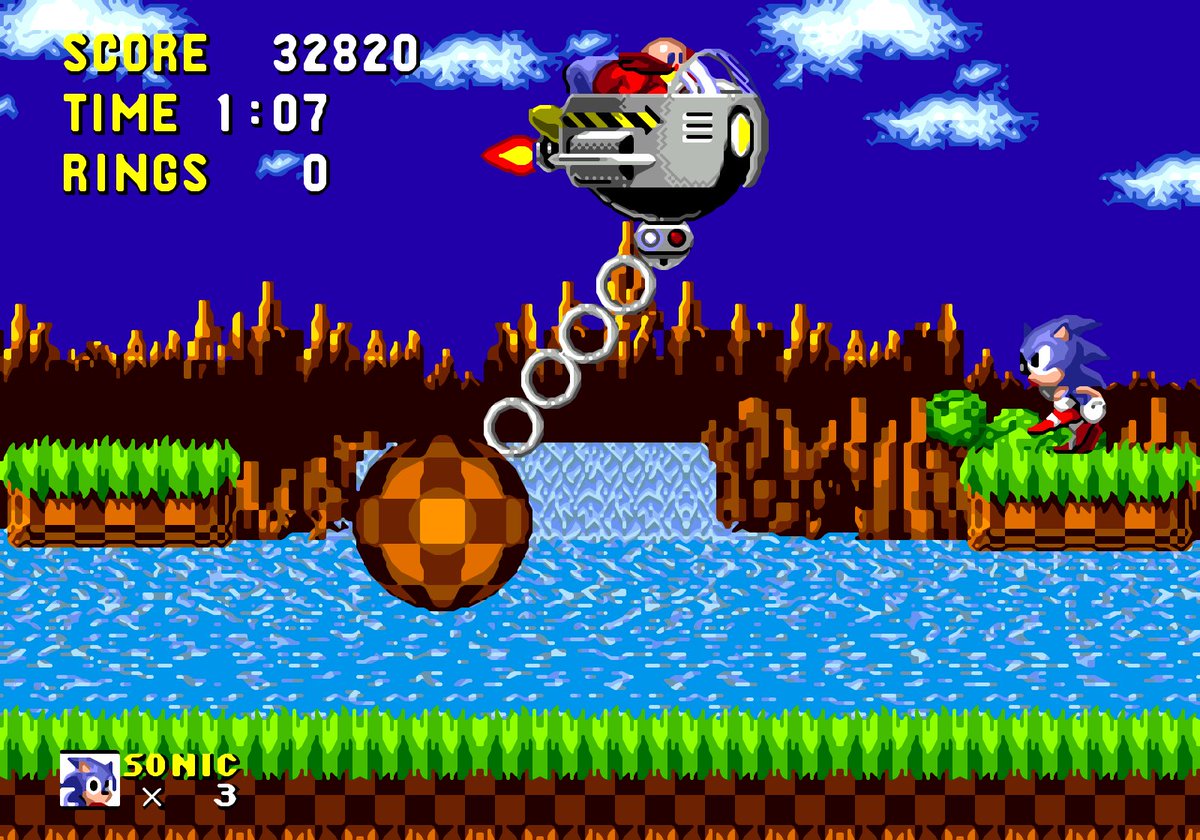
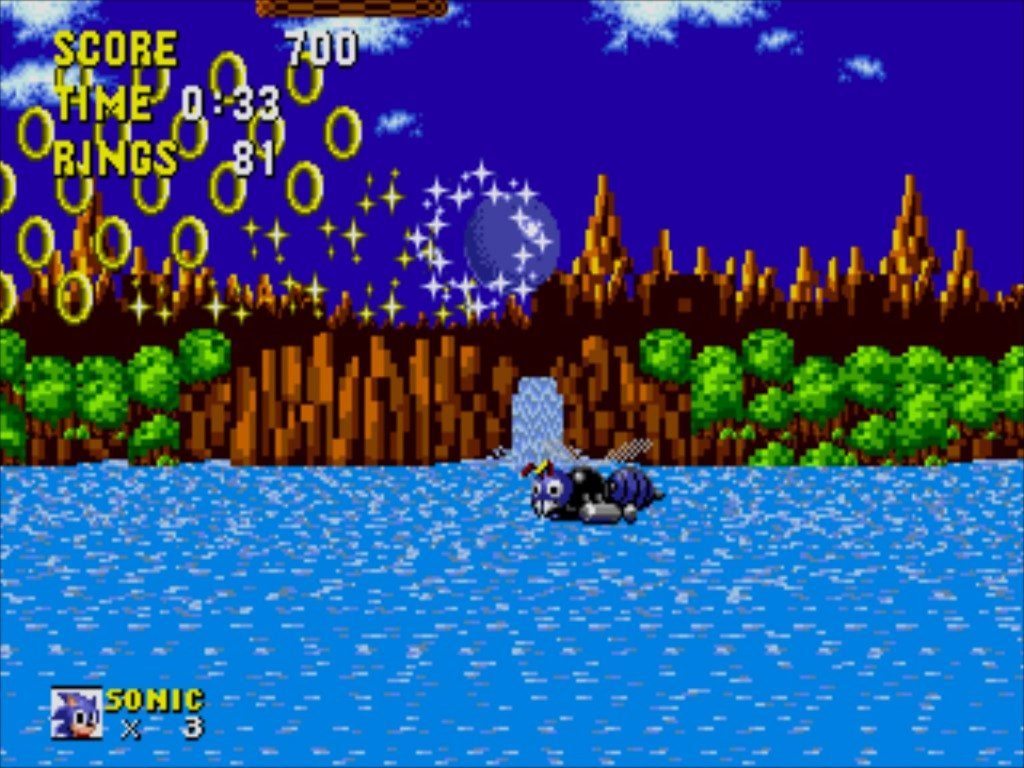
We never forget our first encounter with Dr. Eggman.
Trivia: According to reports, one-eighth of Sonic 1's 4 Mb cartridge memory was used solely for the famous "Segaaa" introduction announcing the name of the game's developer.
Technical Analysis
The story of Sonic 1 is quite simple, more a concept that serves as a backdrop for the hedgehog's adventures. Everything was going well on peaceful South Island, home to the powerful Chaos Emeralds, jewels that provide nearly unlimited energy. Learning of these powerful relics, Dr. Eggman sets out to control them and creates his army of robots, the Badniks, imprisoning the island's animals inside the machines. When Sonic learns what happened, he sets out to save his friends and thwart the mad scientist's plans.
The game's graphics were simply beautiful for the period, far ahead of most Super Nintendo games even though the rival system had a significantly larger simultaneous color palette. Sega itself used this in advertising, comparing Sonic's graphics with Super Mario World. Rieko Kodama truly made everything flow in an incredible way, perfectly matching the level design and the game's high speed.
Invincibility was often a trap because it appeared near pits, while the urge to run with its music playing was indescribable.
The controls are among the aspects most deserving praise in Sonic 1. We feel complete command of the character, landing exactly where we want because the jump distance can be adjusted very effectively in midair. The scrolling's high speed rarely interferes with movement precision, fulfilling the game's original proposal: excellent controls for the most beautiful and fastest platformer made up to that point.
Just as the speed impressed, another remarkable programming detail was the high-quality physics, represented above all by ramps and the famous loops. Encountering an incline, watching Sonic build tremendous speed, and rapidly crossing a long stretch of the zone is incredibly satisfying. This occasionally causes bugs, but nothing that harms the immense enjoyment the title provides.
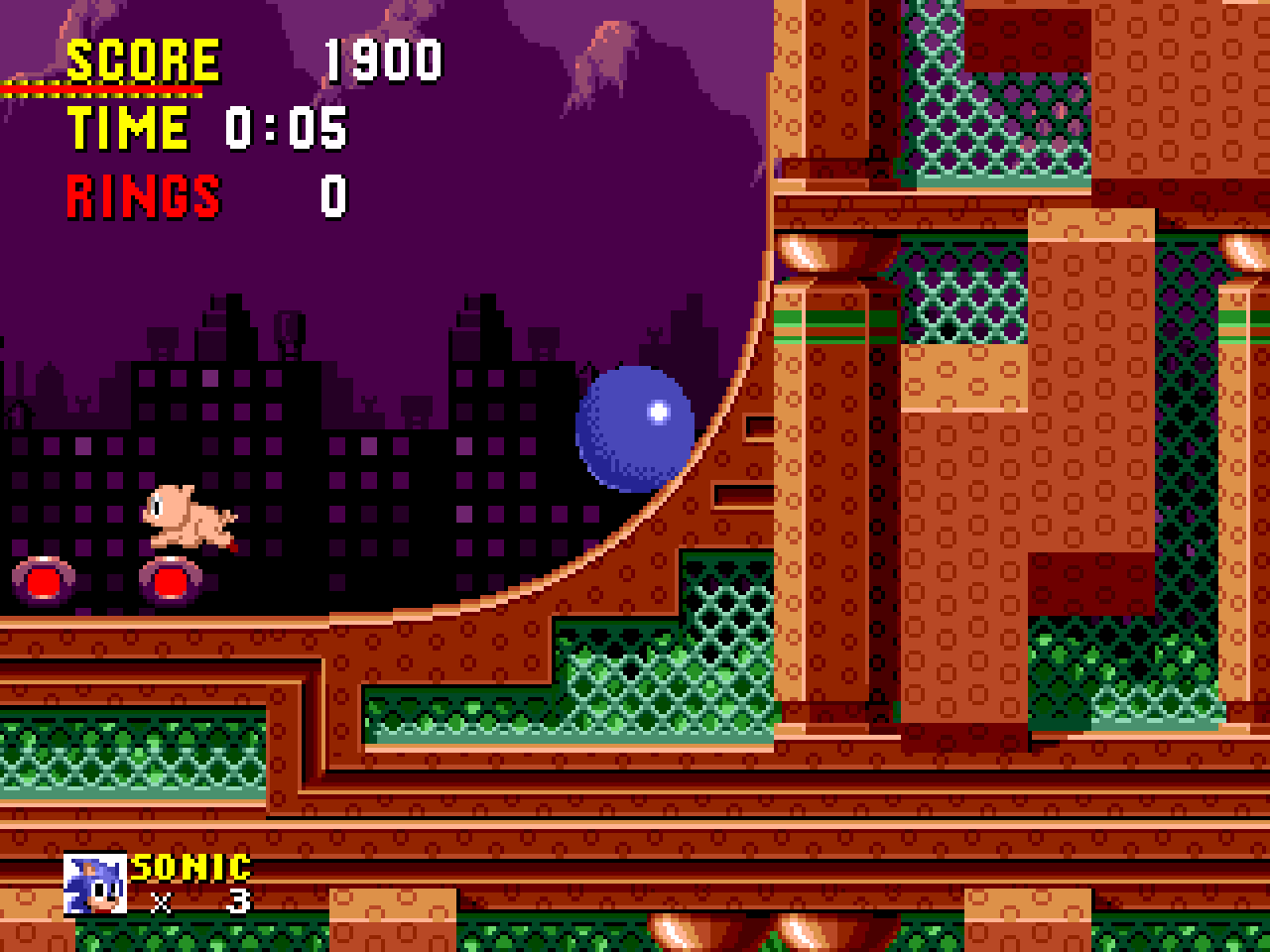
Learning to use the game's incredible physics was one of its greatest charms.
During gameplay, players run, jump over obstacles, defeat enemies, and search for rings and items that help them reach the end of the adventure. Few moments demand more than simple reflexes. Marble Zone includes a modest attempt at a puzzle, pictured below, while Labyrinth Zone slows us underwater and makes us dependent on air bubbles. Many players probably dislike aquatic zones because Sonic loses his defining trait, speed. I consider them positive additions because they create gameplay variation during the adventure.
Although some people consider the game difficult, I personally find it quite easy. A little practice is enough to learn the zones and control the character. Everyone I know who plays video games and wanted to finish it succeeded. With lives, continues, and items fairly easy to obtain and a character who is easy to control, I see no reason not to reach the end.
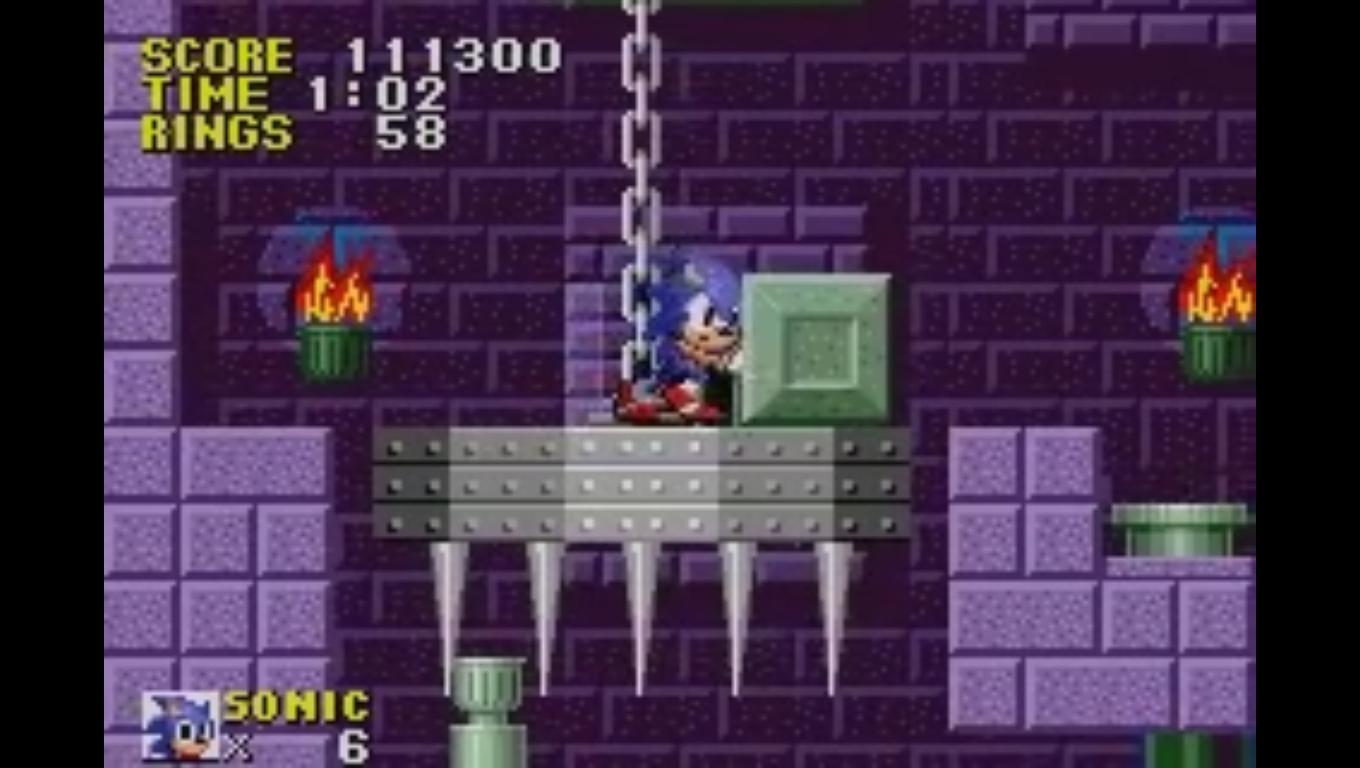
The game tried to include a few light puzzles in its level design.
The game's replay value is low. After finishing it once, the main reason to play again is to seek the Chaos Emeralds and the true ending. If you truly like the game, however, as many hedgehog fans do, you will probably want to return later, hear its music again, and explore its beautiful zones.
The campaign length is short, though first-time players will need time to learn enemy and boss patterns. Once everything is mastered, the title can be completed in under an hour.
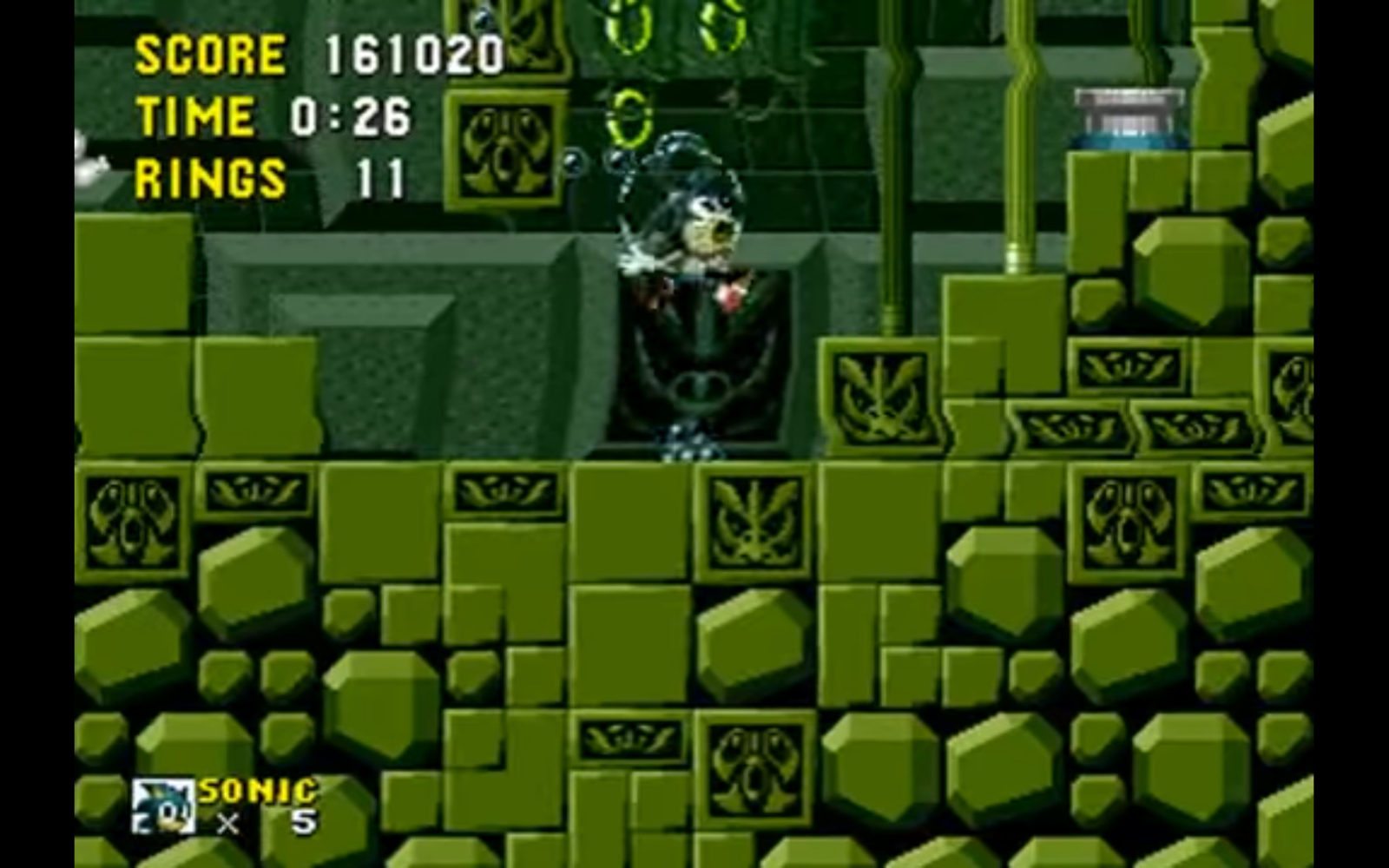
The famous air bubbles that let Sonic breathe underwater for a few moments.
The fun is immense. With progressive difficulty and a great soundtrack, players who enjoy the title will easily lose track of time. As noted earlier, replay value may be low, but everything is so appealing that many have played it for almost 30 years.
The soundtrack by Masato Nakamura, leader of the Japanese band Dreams Come True, is simply incredible and became immortalized, especially through the invincibility music and Green Hill Zone theme. It is one of the most classic and important soundtracks in video game history. The effects are equally impressive and match everything, from the sound of losing rings and obtaining a shield to the simple jump sound, which never becomes tiring despite being heard hundreds of times in a game.
Below is one of several orchestras performing music from the hedgehog's first game. It is beautiful. Remember to turn up the volume.
Here is the game's complete original soundtrack.
Trivia: One of Sonic the Hedgehog's greatest qualities is undoubtedly the high standard of its sound effects. Few people know that the famous skidding sound the hedgehog makes when braking originally came from the car braking in Out Run and was reused.
As I often say, older gamers had the pleasure of seeing Brazilian video game commercials on television during the 1990s. Below is a Tec Toy commercial announcing the arrival of Sonic 1 for Mega Drive as the game of the year in the United States. Those were good times.
Played on Mega Drive