I generally try to set nostalgia aside in my reviews, but that was difficult in this case. Sonic for Master System came built into my first console and was the only game I owned for some time. I spent many afternoons playing with family and friends, and it is no exaggeration to say that I learned to love video games because of it. It is certainly a great game that was wisely adapted in an original way for SEGA's 8-bit console and remains in many Brazilians' memories as one of their first childhood games.
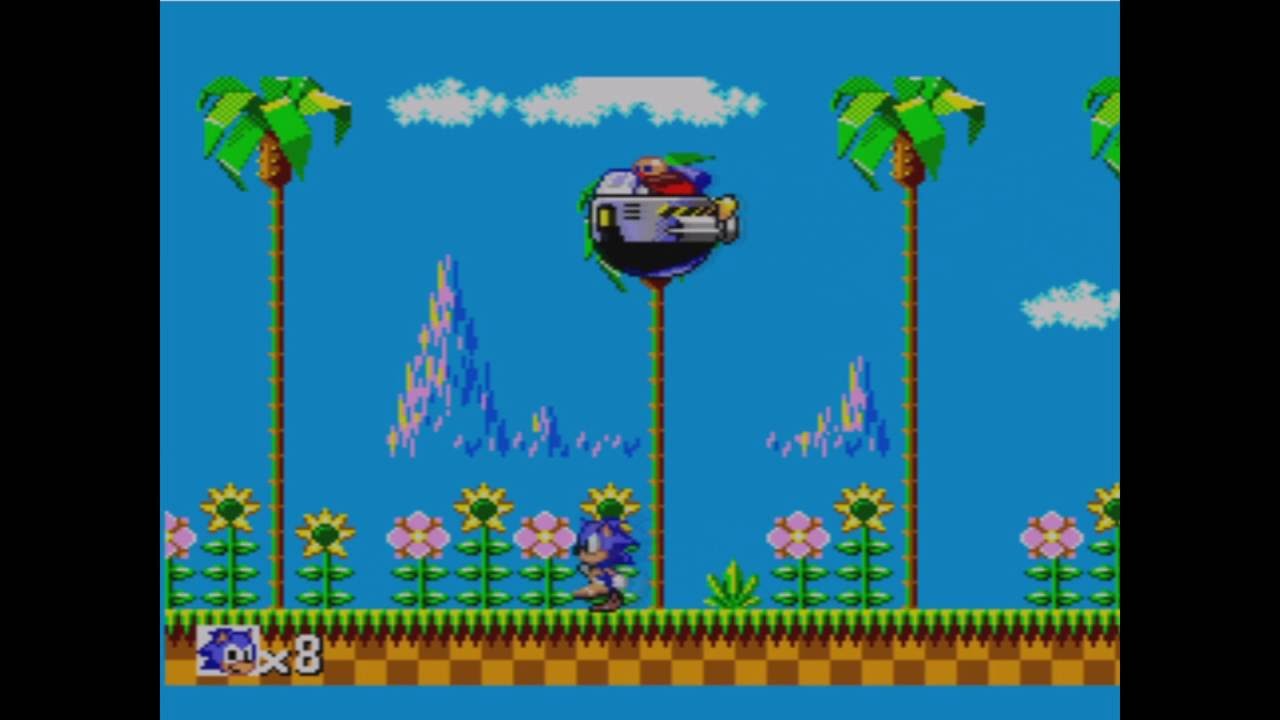
Dr. Eggman in 8 bits: he caused trouble too.
Sonic the Hedgehog is a platform game released for Master System in October 1991. A version with several changes followed for Game Gear in December 1991. Developed by Ancient and distributed by SEGA, it was initially released on cartridge and later built into versions of the console sold in Brazil and Europe. This version was rereleased on the Wii Virtual Console in 2008.
Fun fact: Believe it or not, some people still think Sonic first appeared on Master System rather than Mega Drive. The Master version was commissioned precisely because of the enormous success the Mega Drive game achieved almost immediately after release. Sonic had actually appeared even before the first game for SEGA's 16-bit console, however. It was in the 1991 arcade title Rad Mobile, where the hero appears as a keychain. The game was later ported to Sega Saturn, and perhaps we will review it in the future.
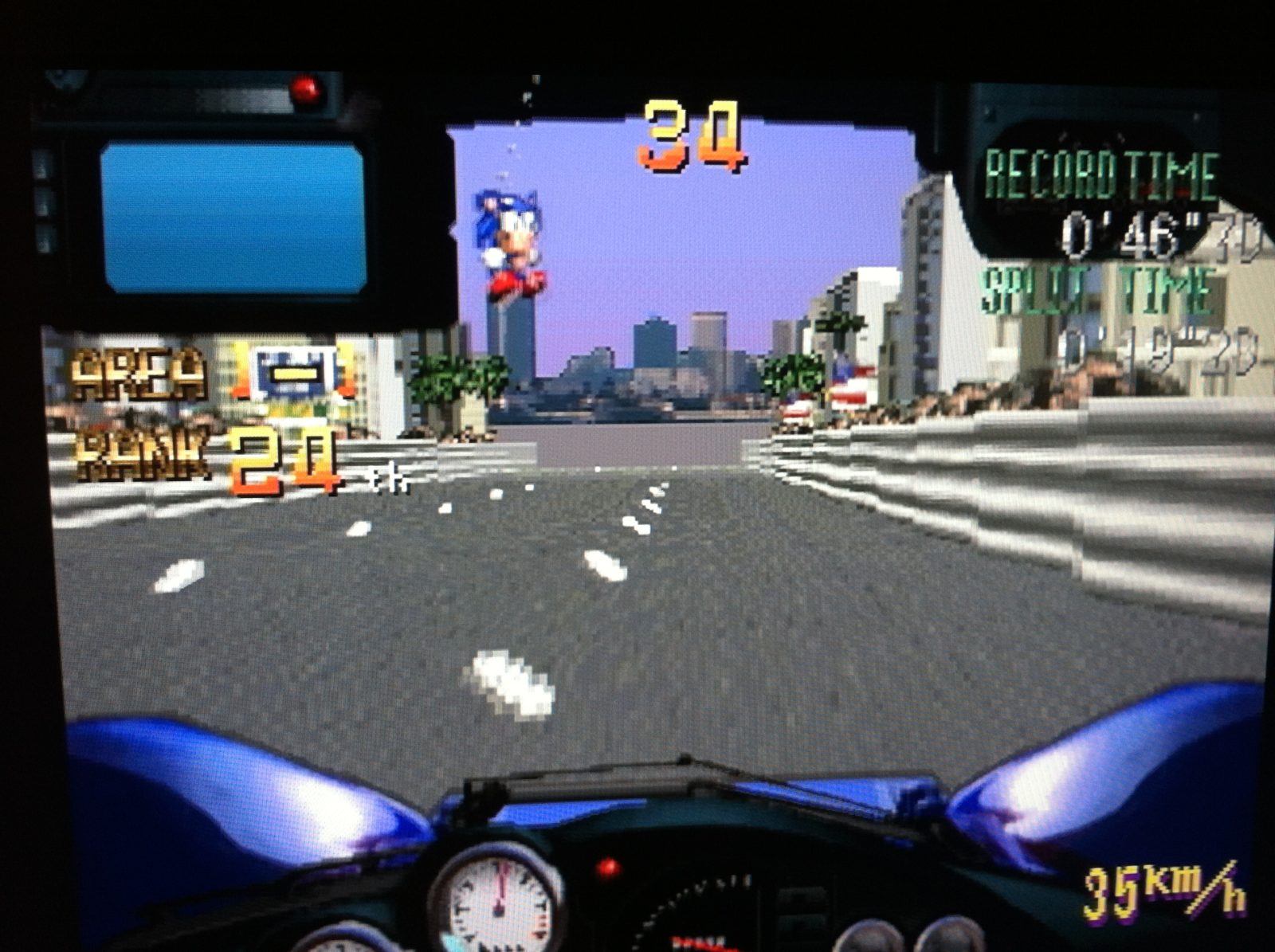
Rad Mobile, Sonic's true first appearance.
The Story of Sonic the Hedgehog
Sonic's adventure takes place on South Island, a very peaceful place with rich flora and fauna. All was well until the ambitious scientist Dr. Eggman learned that the legendary Chaos Emeralds—magical gems and a source of incalculable energy—were there.
After reaching the mysterious island, Eggman begins capturing the region's animals and imprisoning them inside his robots, thereby creating his Badnik army so they can find the powerful emeralds together and begin his plans for world domination. When Sonic learns what is happening on South Island, he sets out to ruin the mad doctor's plans, free his friends, and restore peace.
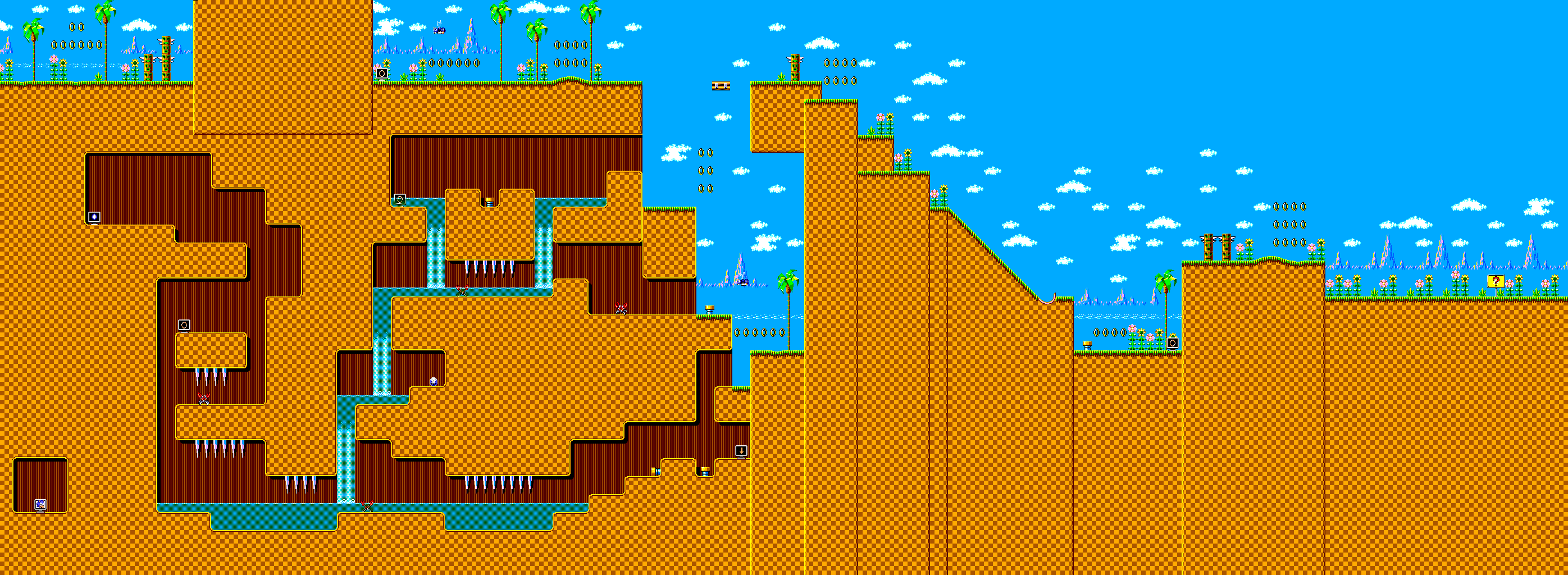
Playing 'inside' Green Hill during its second act was an excellent idea.
Fun fact: Master System was not very successful in Japan or the United States, so Sonic the Hedgehog was the last game released for the console in the US and was not even distributed in the Japanese market. Americans were fortunate to experience this great title, while it is a shame that the Japanese, despite making this great game, did not have the pleasure of playing it.
The Stages of Sonic the Hedgehog for Master System
In Sonic the Hedgehog for Master System, there are six stages with three acts each, just as on Mega Drive, and every stage's third act features a confrontation with the franchise's villain, Dr. Eggman. These boss battles contain one difference: there are no rings to collect in these acts, generally making the fights harder than those on the 16-bit console.
Some stages share themes with the Mega Drive version—for example, both have a Green Hill Zone—although their level design is completely different. Others are entirely original, such as Bridge and Jungle Zone, and all are great fun.
- Green Hill Zone: The most classic stage in the Sonic franchise is here, moving quite quickly in its first act and emphasizing exploration in the second. Playing beneath Green Hill during this first stage's second act was an excellent idea. Curiously, Sonic Mania did something similar many years later. One detail few people know is that this stage contains the only pair of Power Sneakers—the shoes that grant speed—in the entire game.
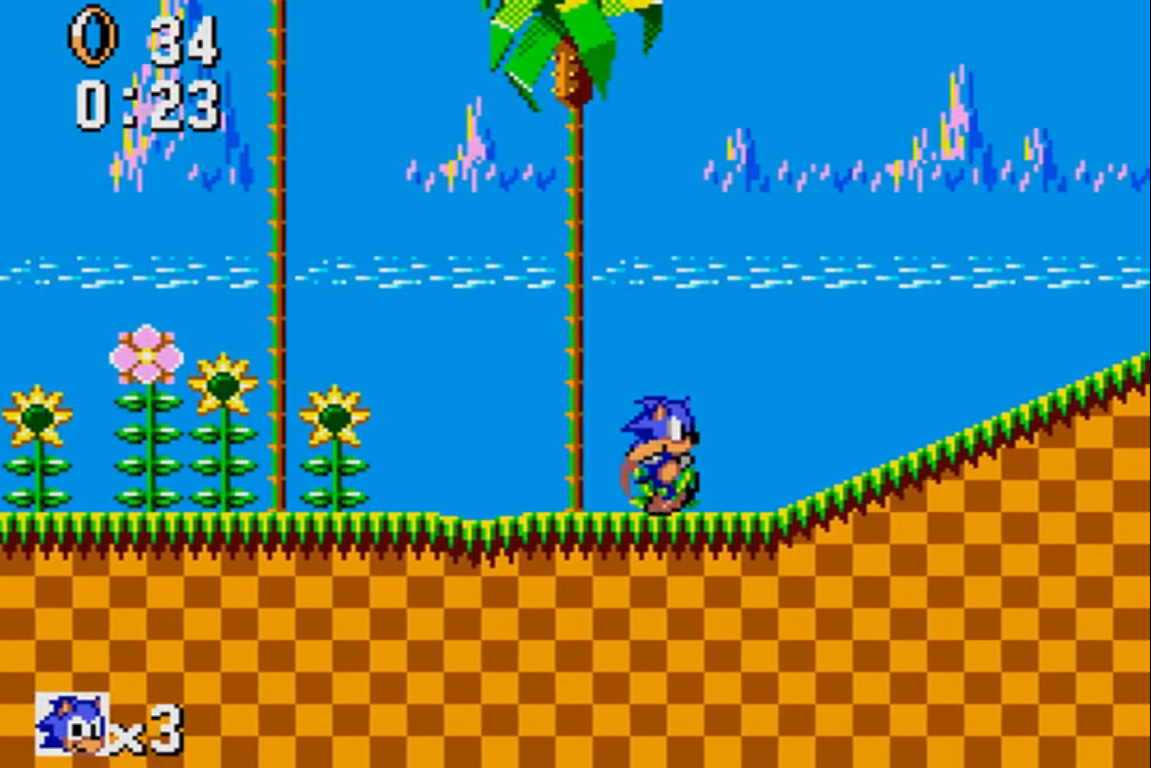
The typical opening stage in Sonic games: fast and fun.
- Bridge Zone: A completely original stage that immediately reminds us why Sonic belongs to the platforming genre. Many precise jumps are required, and fragile bridges must be avoided. Its classic music is a highlight and was later reused by SEGA itself in Tails's theme, “Believe in Myself,” in Sonic Adventure. Another original highlight appears in the second act, which features autoscrolling: the screen moves automatically and dictates the pace of progression.
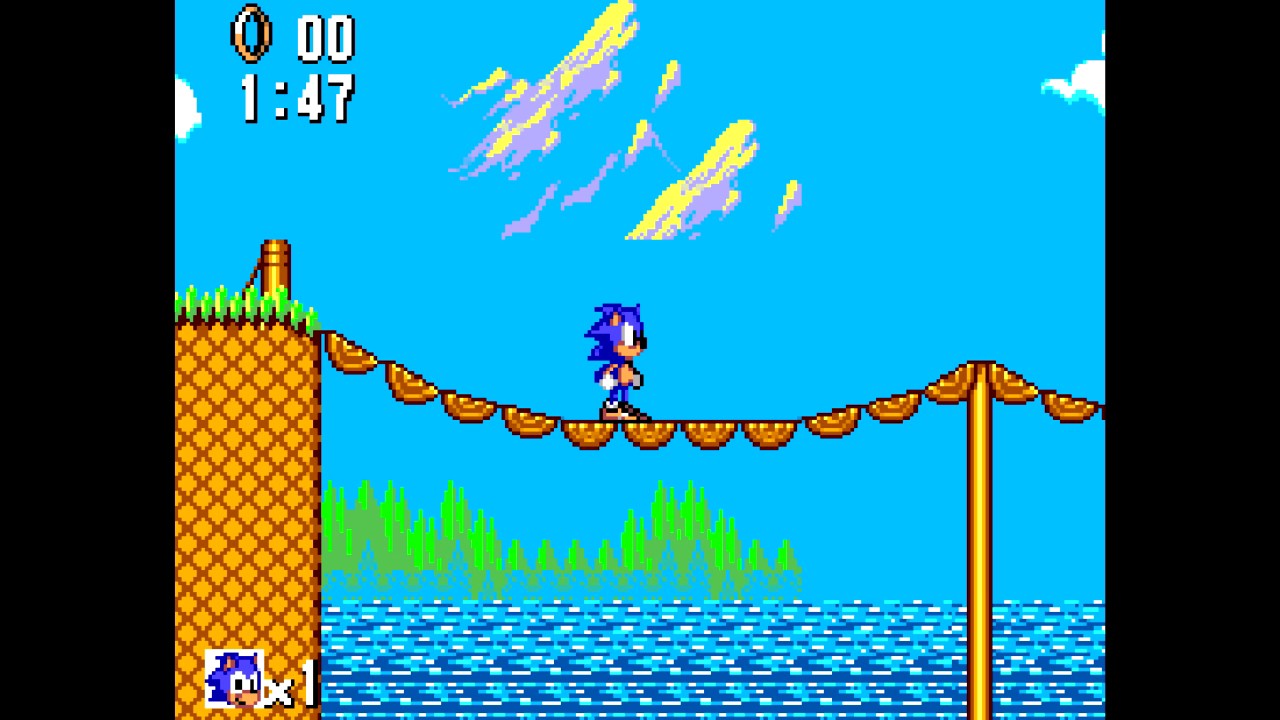
This second stage already shows why Sonic is a platform game: one wrong jump and it is over.
- Jungle Zone: One of the most beautiful stages among the 8-bit Sonic games, it also has no equivalent in the Mega Drive version. Filled with detail, it takes place in a forest with plenty of water, currents, and enemy variety. The second act also deserves praise: it is a highly original vertical stage in which we must climb a waterfall to its summit, and missing a jump means death.
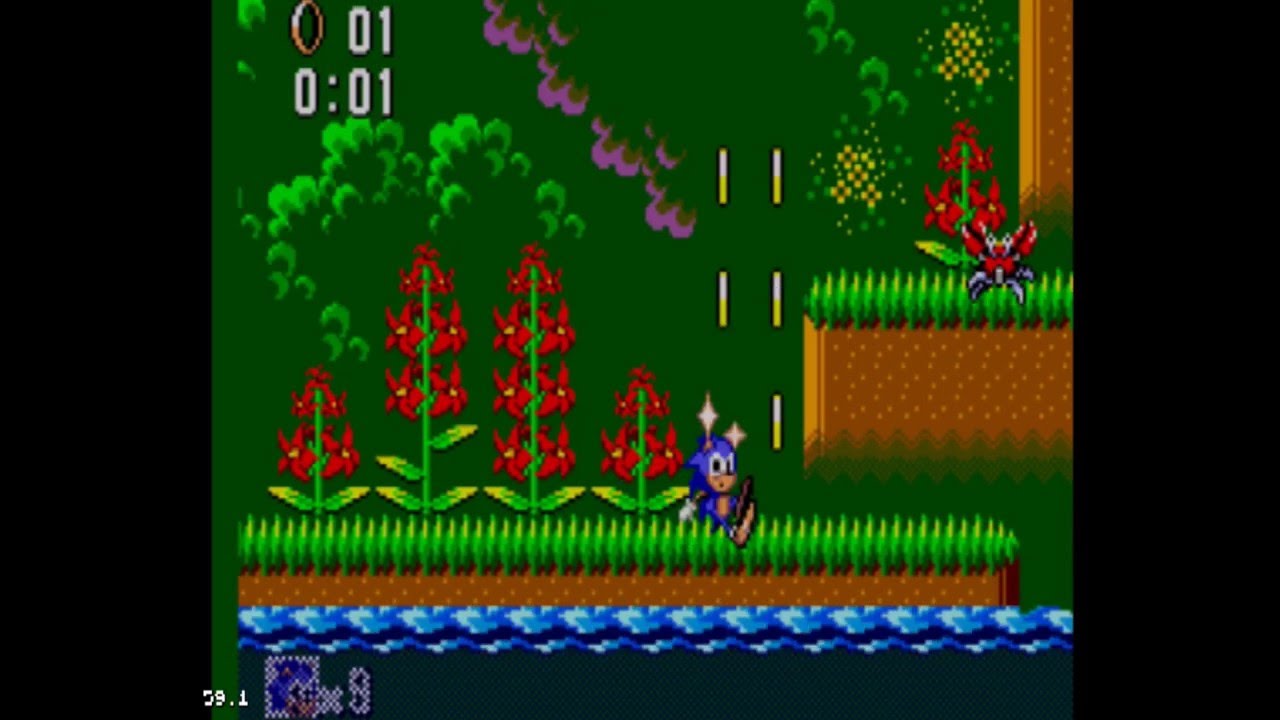
Perhaps the game's most beautiful stage. We must control our speed.
- Labyrinth Zone: Sonic games typically include an underwater stage. Despite sharing its name with the aquatic stage from Sonic 1 on Mega Drive, its level design is completely different. These acts usually involve running out of air and searching for bubbles; in the third act, however, the character spends the entire time underwater without needing extra oxygen. It is one of those moments when the game chooses enjoyable gameplay over realism and rules established earlier.
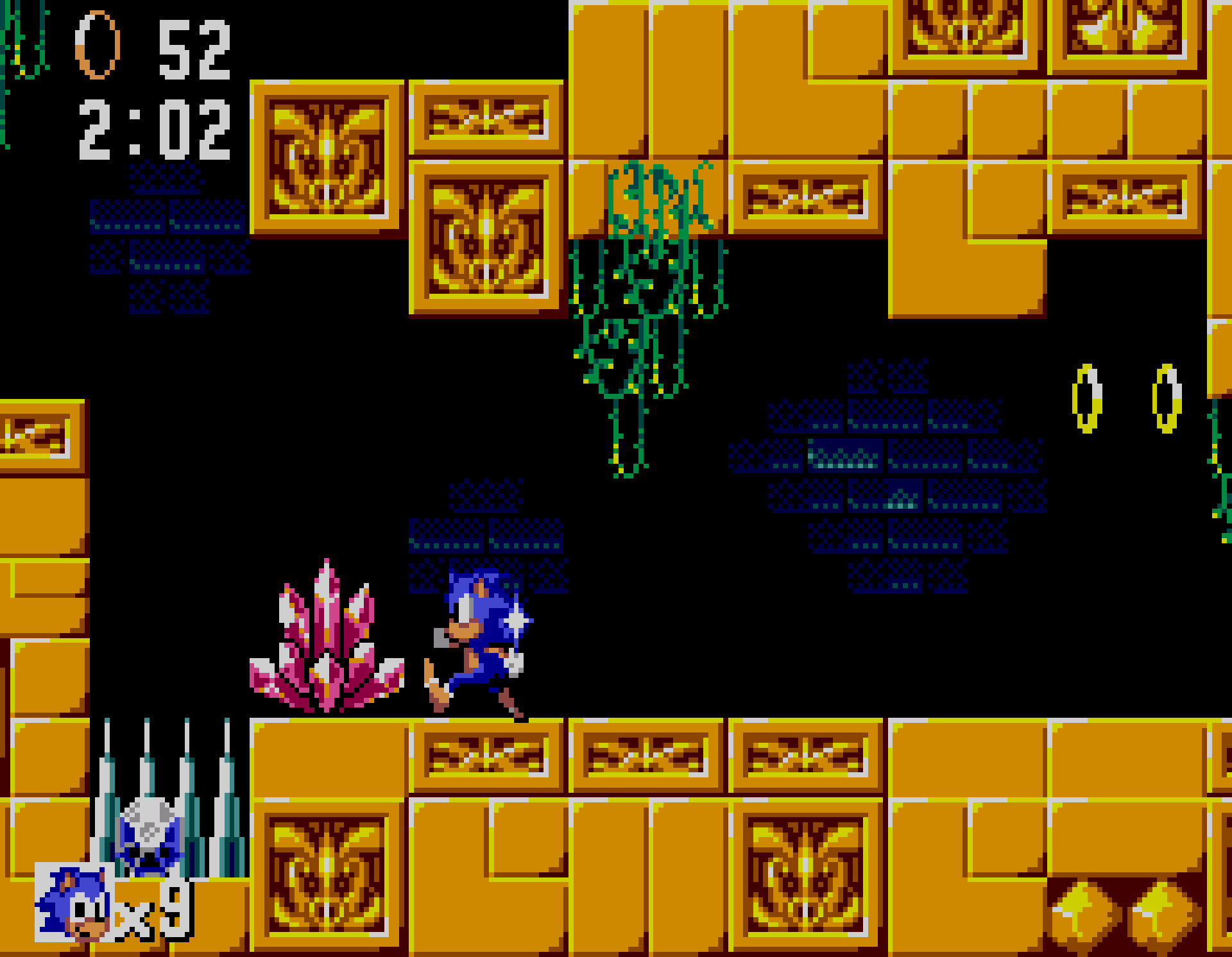 The emeralds in this game are scattered through the stages. Finding them is great fun. Do not go looking for guides!
- Scrap Brain Zone: We invade Dr. Eggman's base in the fifth stage of Sonic 1 for Master System. The first act is quite simple, but the second is a maze where it is easy to get lost and difficult to find the emerald. A very well-made stage.
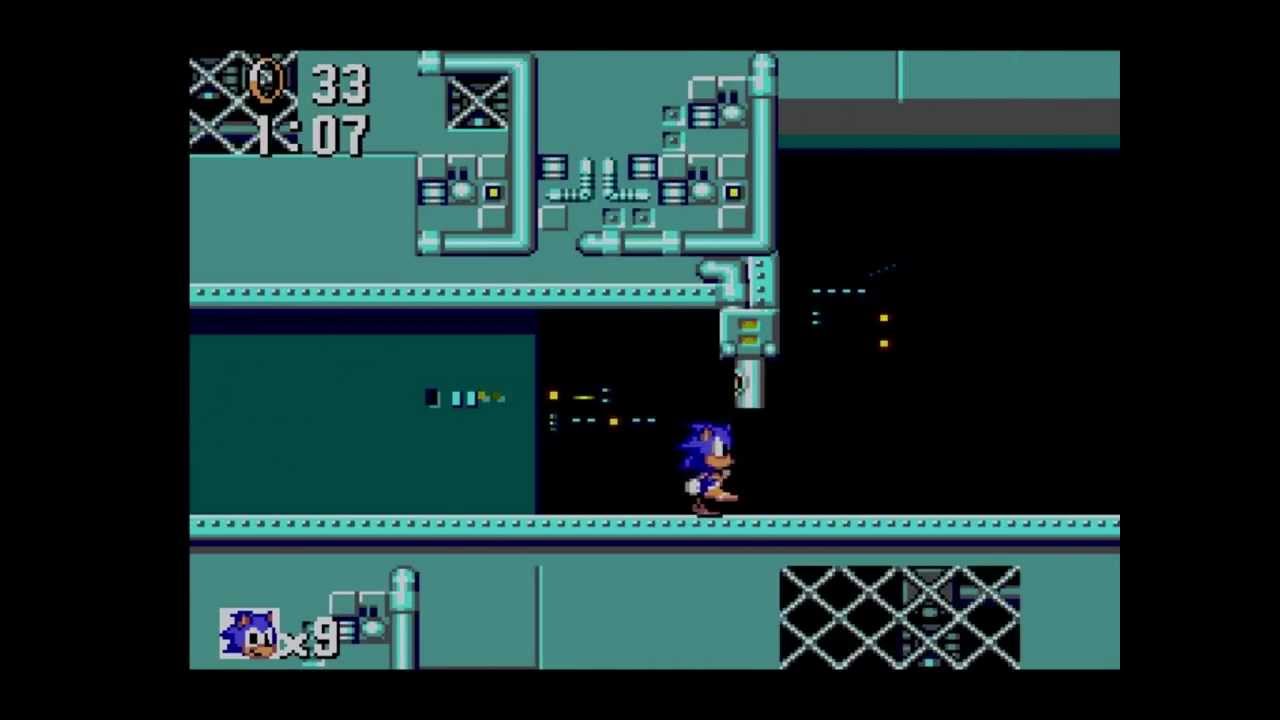
It returned from the Mega Drive version just as terrifying.
- Sky Base Zone: An original stage that truly depicts Sonic's pursuit toward his final encounter with Dr. Eggman. The first act features lightning that produces beautiful lighting effects across the stage. In the second, there is not a single ring to help us reach the end, demonstrating this game's greater difficulty compared with the original version.
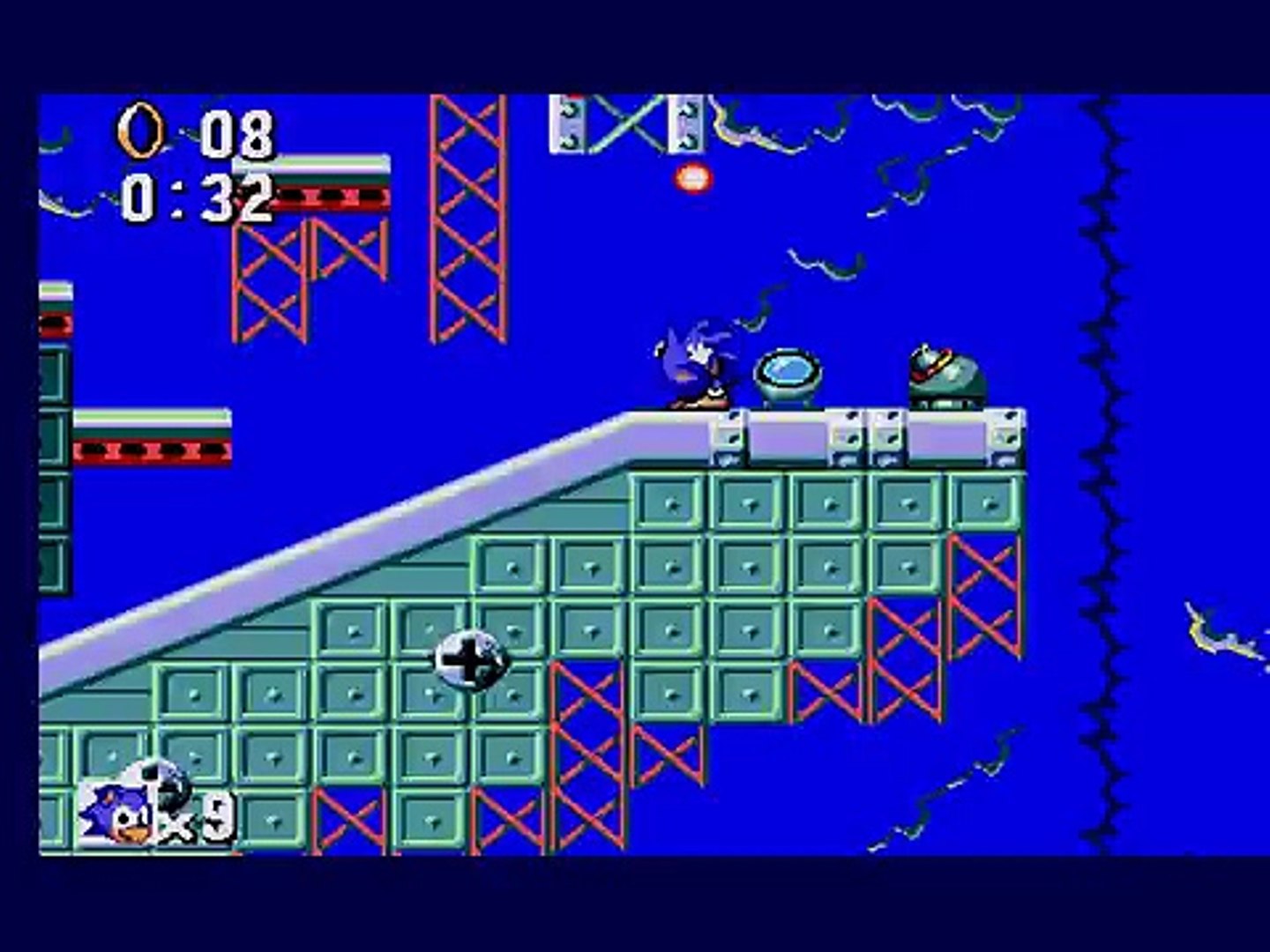
The thunder effects are truly impressive for an 8-bit console. Memorable.
- Special Stage: If you finish a stage's first act with between 50 and 99 rings, you enter the bonus stage. Unlike the Mega Drive version, the goal here is not to collect the emerald but to earn continues. The stages have a pinball theme and are filled with springs and bumpers. They are great fun but unfortunately did not return in Sonic's Master System sequel.
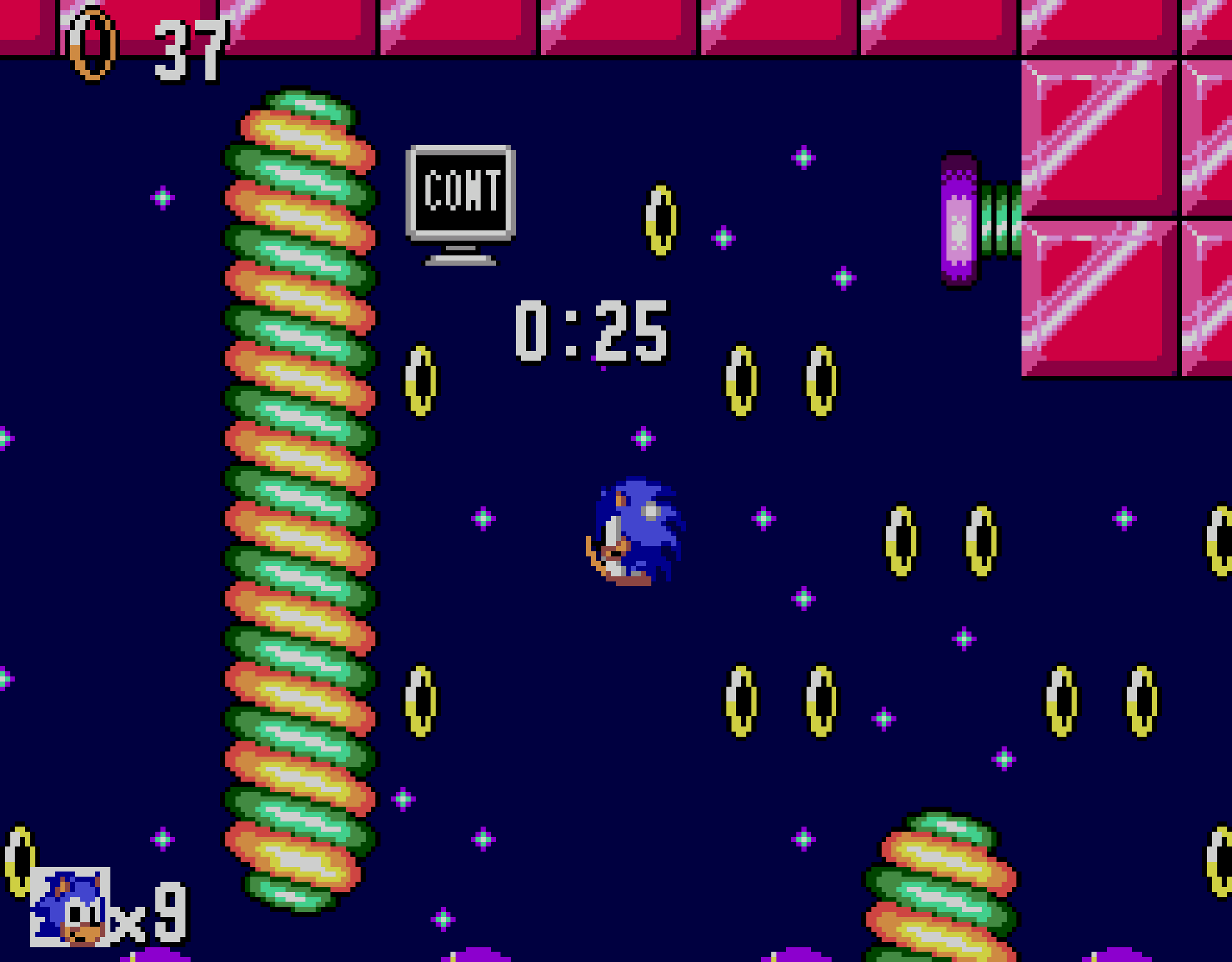
A highly enjoyable bonus stage. Unfortunately, it did not return in Sonic 2 for Master System.
Fun fact: Some years ago, hackers found an 8-bit version of the Marble Zone music from the Mega Drive game inside the Sonic 1 Master System ROM. In other words, the possibility of including this stage was approved at some point during production but later discarded. The version of the song appears below.
Technical Analysis
The graphics in Sonic the Hedgehog may look simple at first, but they are far ahead of the standard for Master System games. They are highly colorful, the settings are filled with detail, and they smoothly maintain the character's speed, the franchise's defining feature. Jungle Zone stands out with its waterfalls and floating logs.
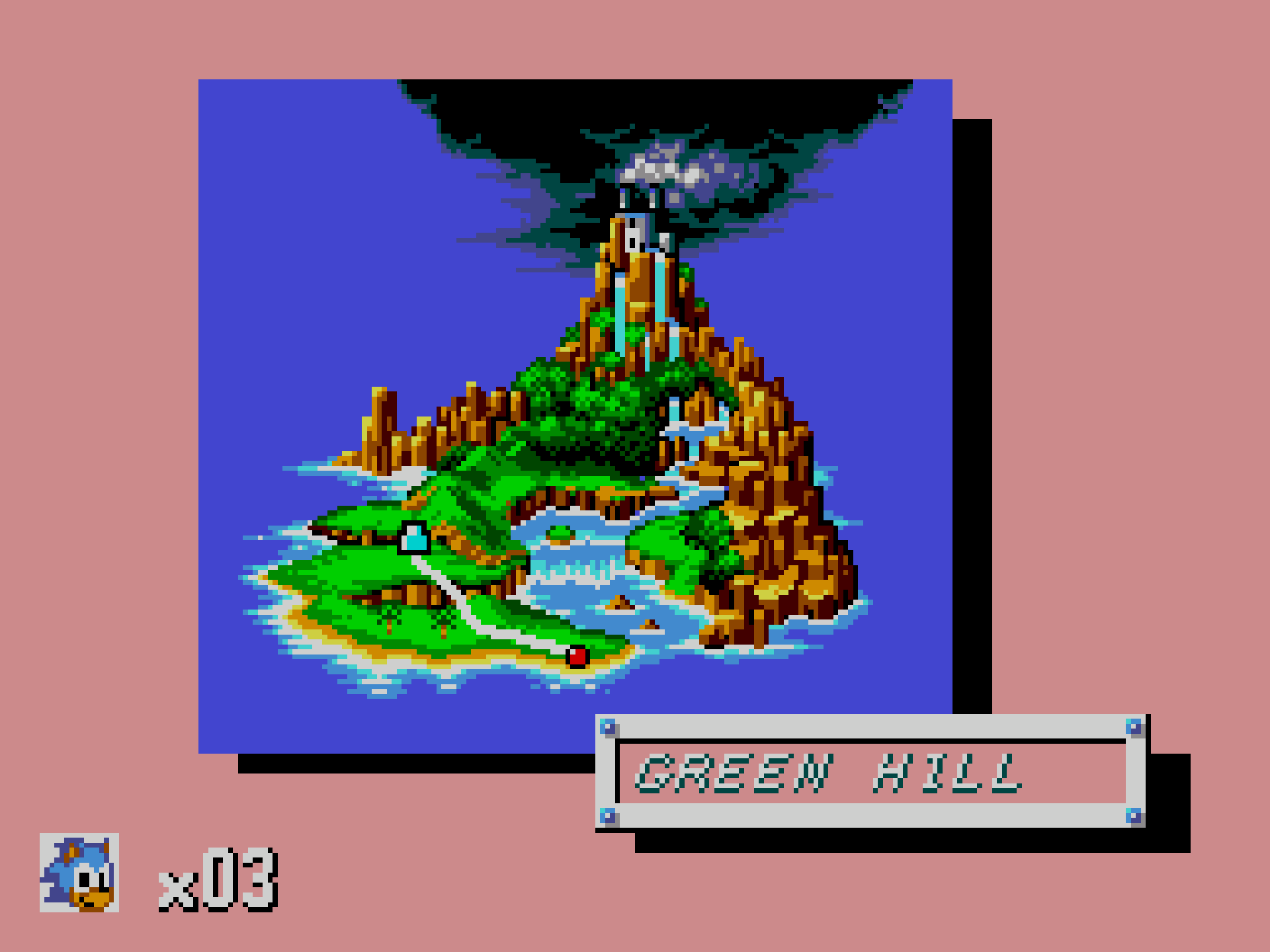
Introducing the map was quite interesting. We truly pass through places similar to those seen here.
Sonic's gameplay is excellent, following the series' usual approach with the typical simplicity that lets us make large jumps and quickly reach high speeds. On rare occasions, slowdowns interfere with gameplay. Bridge Zone stands out in this respect, as it happens there because many objects move on screen simultaneously.
The game introduced several new features compared with its 16-bit version. Before each stage begins, we see a map of South Island and the exact location we occupy and will visit during the next act. This may seem minor, but details like it help establish the setting. Here, the emeralds are not inside the bonus stages but hidden throughout the stages' first acts. This added an exploration element the franchise had not previously used, and many people, including me, thought it worked wonderfully. In this game, the bonus stages became the place where we search for continues.
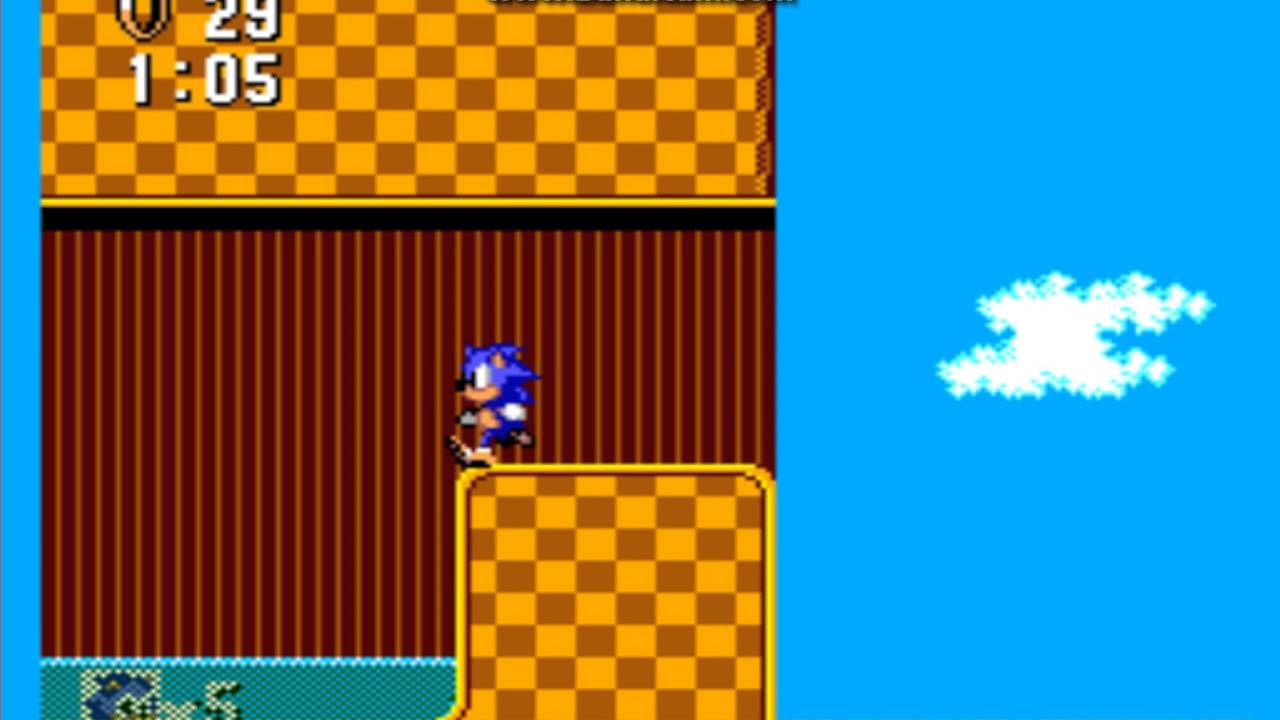
Caves in Green Hill. This apparently inspired the recent Sonic Mania.
The game's difficulty is low, although it is still higher than in Sonic 1 for Mega Drive. If we lose our rings in this version, we cannot recover them, while the third acts of every stage, where we fight Eggman, contain no rings at all, considerably increasing the tension of the confrontations. Curiously, this game allows us to carry our protective shield into the next act, a feature that would appear on Mega Drive only with Sonic 3.
The campaign length is difficult to measure because players will probably see a few "game over" screens before finishing the game for the first time. After mastering the emerald locations and learning enemy and boss patterns, it is possible to reach "the end" in less than 50 minutes without major difficulty.
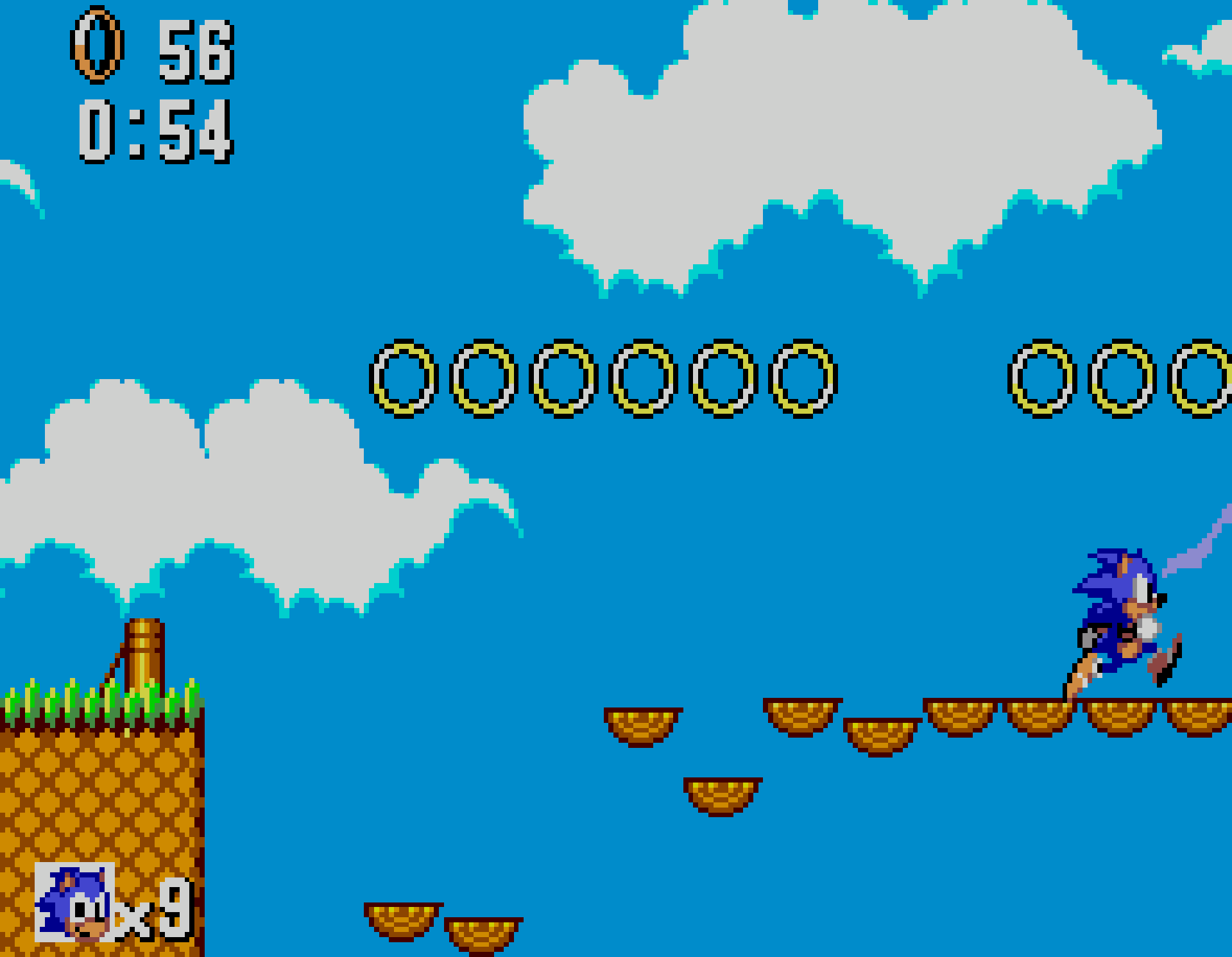
Collapsing bridges, a source of slowdown in the game.
The fun is immense, and it is not difficult to find people who consider this 8-bit version of Sonic the Hedgehog more enjoyable than its Mega Drive inspiration. Details such as the need to explore the settings to find emeralds, slightly greater difficulty, and original, extremely charming stages such as Jungle and Bridge Zone made this another Master System classic.
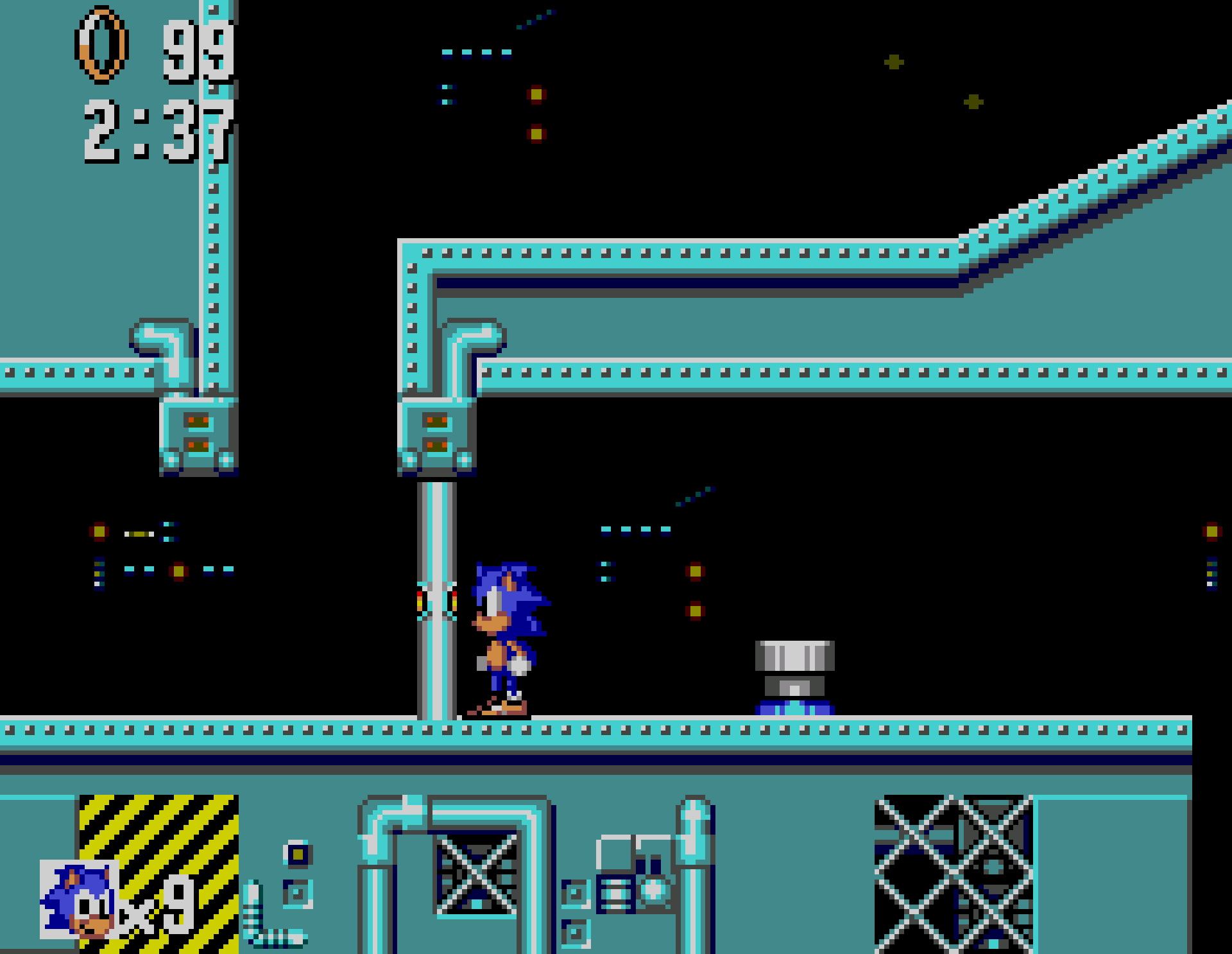
Small puzzles appear in the stages.
The game's replay value comes from searching for hidden, hard-to-reach emeralds, since you will certainly not collect all of them on your first playthrough unless you use a guide, which we do not recommend. Moreover, the title is so enjoyable that players who like platform games will probably return to Sonic the Hedgehog in the not-too-distant future.
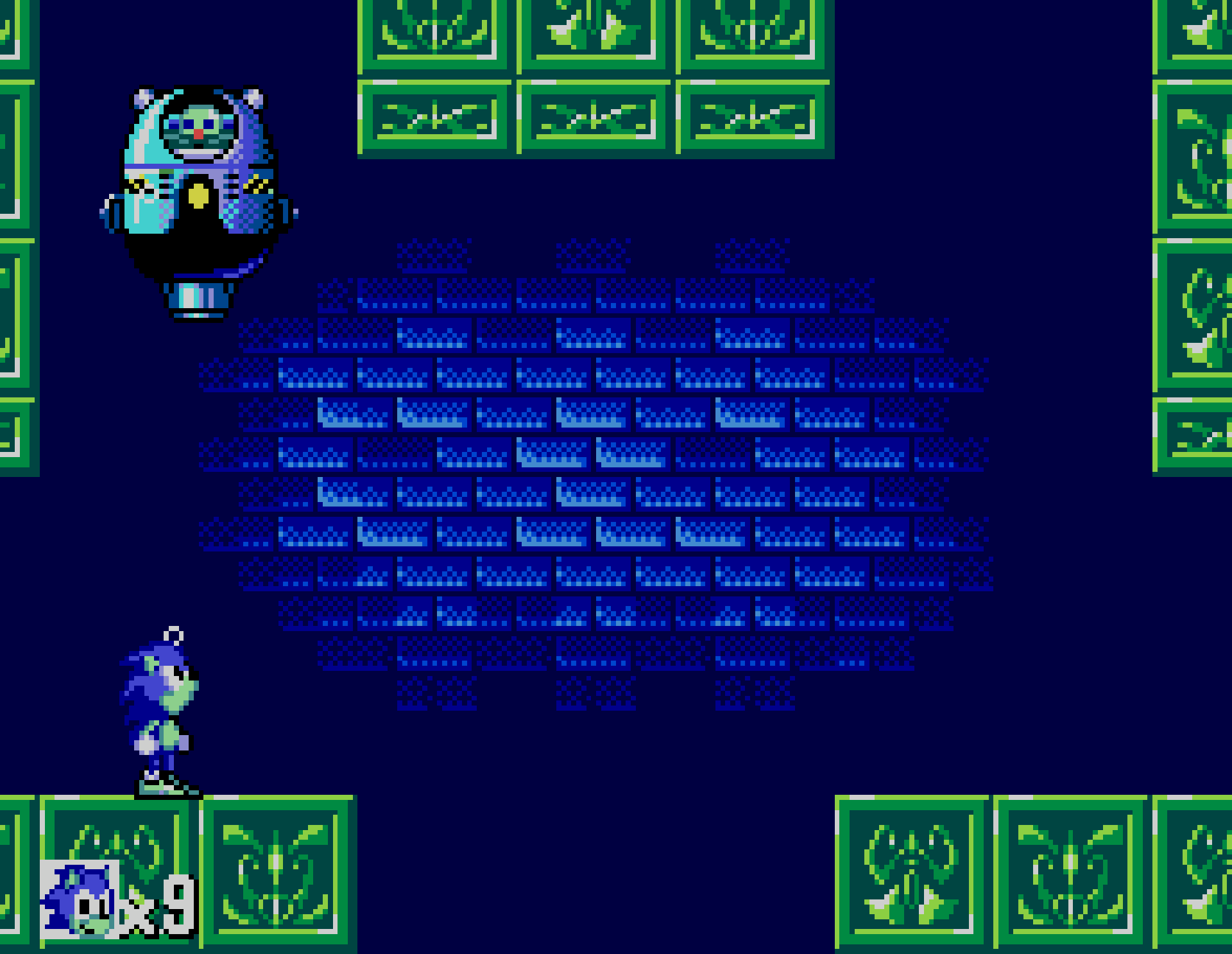
The game often chooses fun over realism. In this battle against Eggman, we do not worry about running out of air.
The music is fantastic, with only Green Hill Zone adapted from the Mega Drive version. No wonder: the tracks were composed by Yuzo Koshiro, one of the greatest composers ever to work for SEGA. His résumé includes incredible soundtracks for games such as Streets of Rage, The Revenge of Shinobi, and Shenmue. Some of this music was reused and remixed in other Sonic games and even served as the basis for tracks by famous artists, as in Janet Jackson's case.
Below is the complete soundtrack of Sonic for Master System.
Fun fact: Some years after the release of Sonic Tthe Hedgehog for Master System, American singer Janet Jackson used musical samples from Bridge Zone in her song 'Together Again.' Below are excerpts from the songs demonstrating this.
Bestiary
This Master System version of Sonic 1 has a good variety of enemies, and we will discuss five of them here. It is worth noting that the game's zones generally feature enemies typical of their region. The bosses are variations on battles against Dr. Eggman, so I will not explain them in detail in order to avoid major spoilers.
- Moto Bug: Called a mechanical flea by the Tec Toy manual, this is the first enemy we encounter in the game. Unlike its Mega Drive counterpart, it is much smaller here, making it harder to hit and therefore more dangerous.
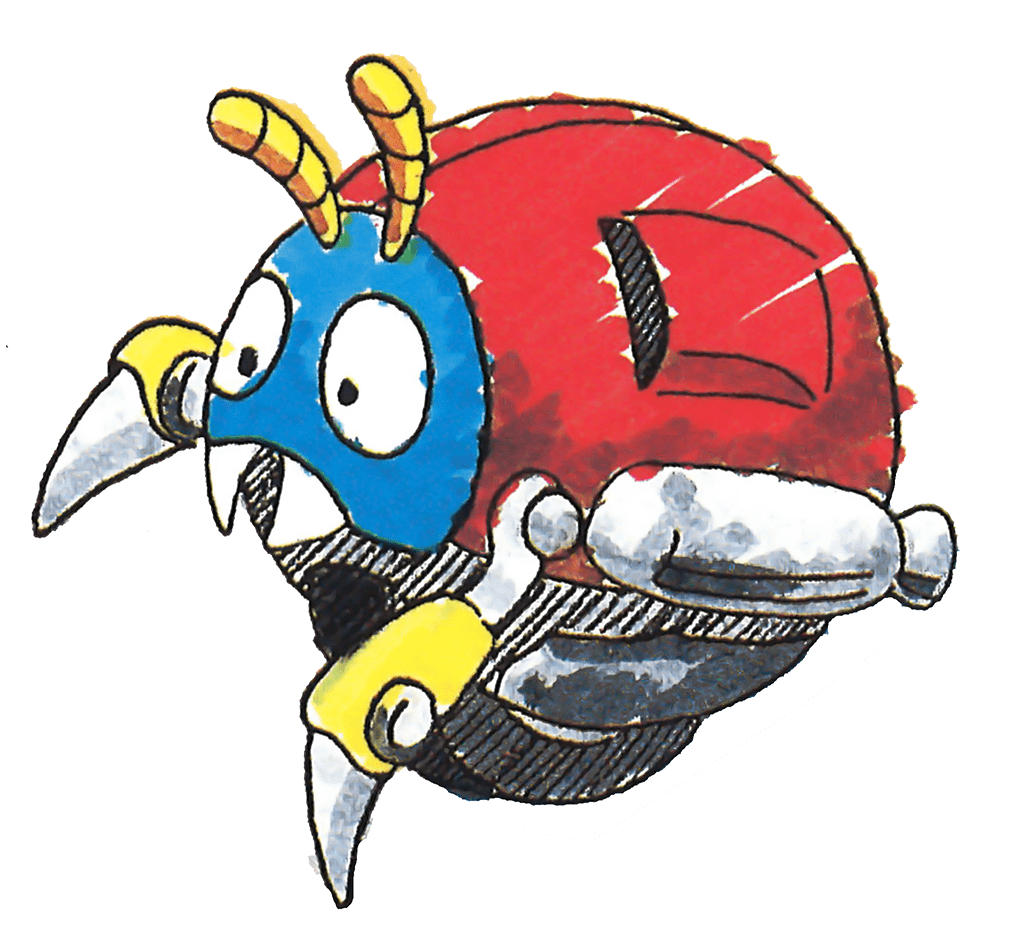
Moto Bug.
- Buzz Bomber: The deadly wasp, a classic Sonic enemy. It fires an energy ball toward us when we get close. Its behavior is easy to memorize and presents no major concern for experienced players.
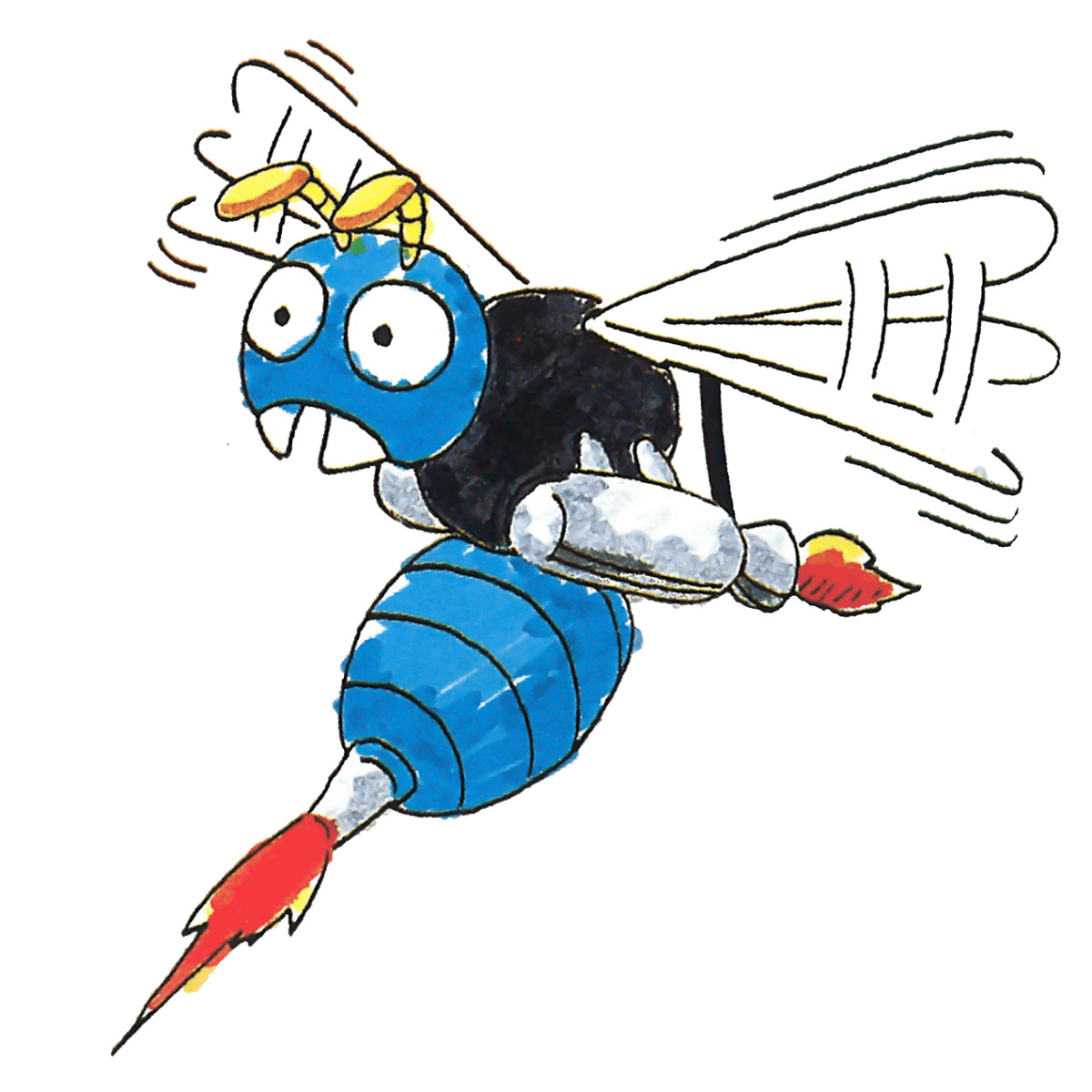
Buzz Bomber.
- Caterkiller: The killer centipede. An annoying enemy that usually makes us slow down when we encounter it. Its head is its only weak point, so we recommend fighting it with a spin rather than jumping on it.
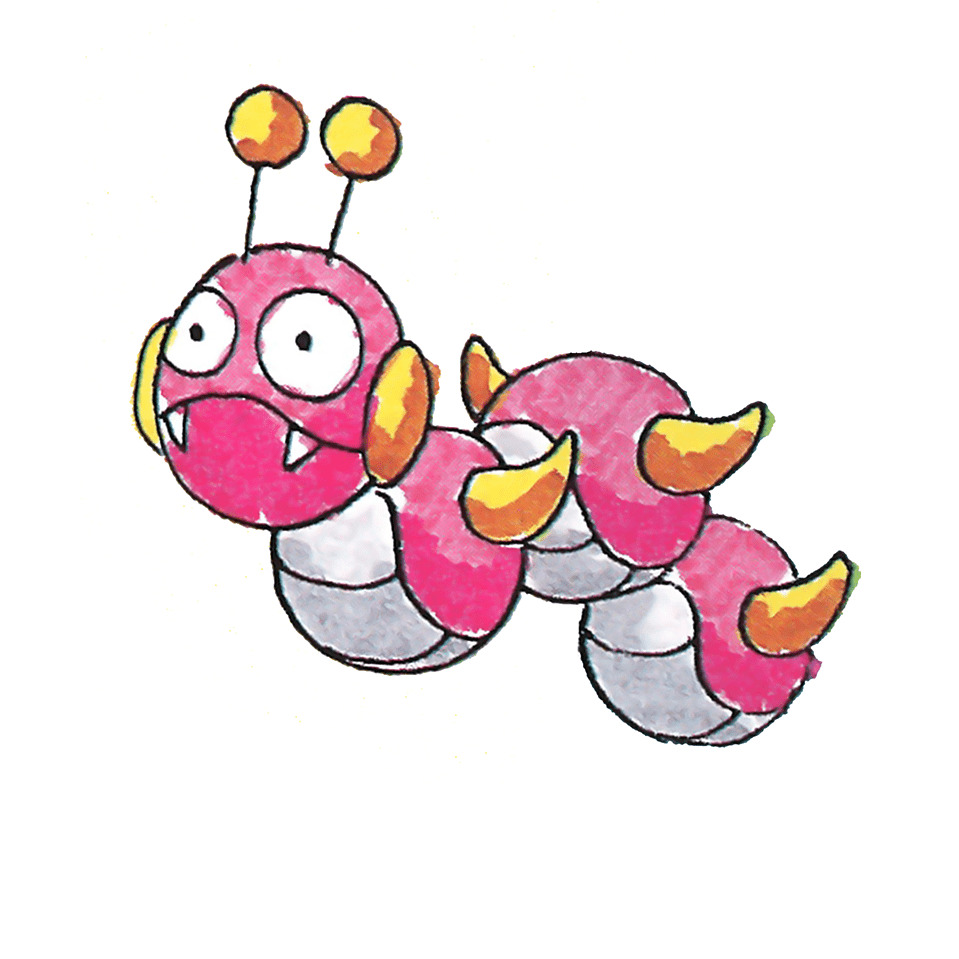
Caterkiller.
- Ball Hog: An enemy that appears closer to the end of the campaign. It fires energy balls that bounce around the setting and hit us fairly easily.
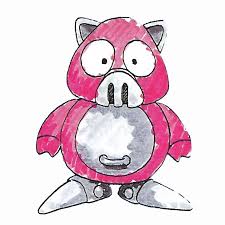
Ball Hog.
- Newtron: An enemy that can camouflage itself and become invisible for a few moments before attacking us with an energy ball. Once we learn the Newtrons' locations, they cease to be a problem.
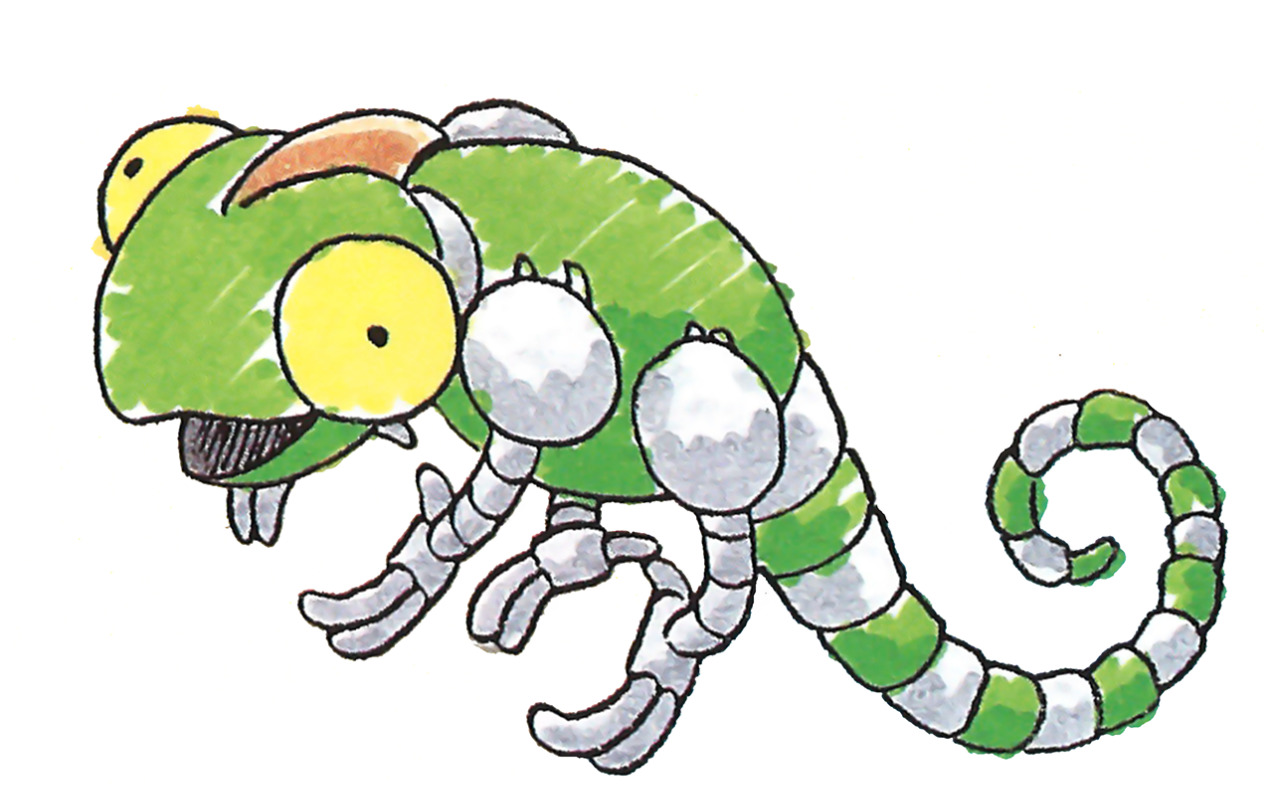
Newtron.
Fun fact: The game's manual contains some errors in its bestiary, claiming that the Roller enemy is present when it is not in this game, while overlooking others such as Orbinaut, which appears in the game but is not listed.
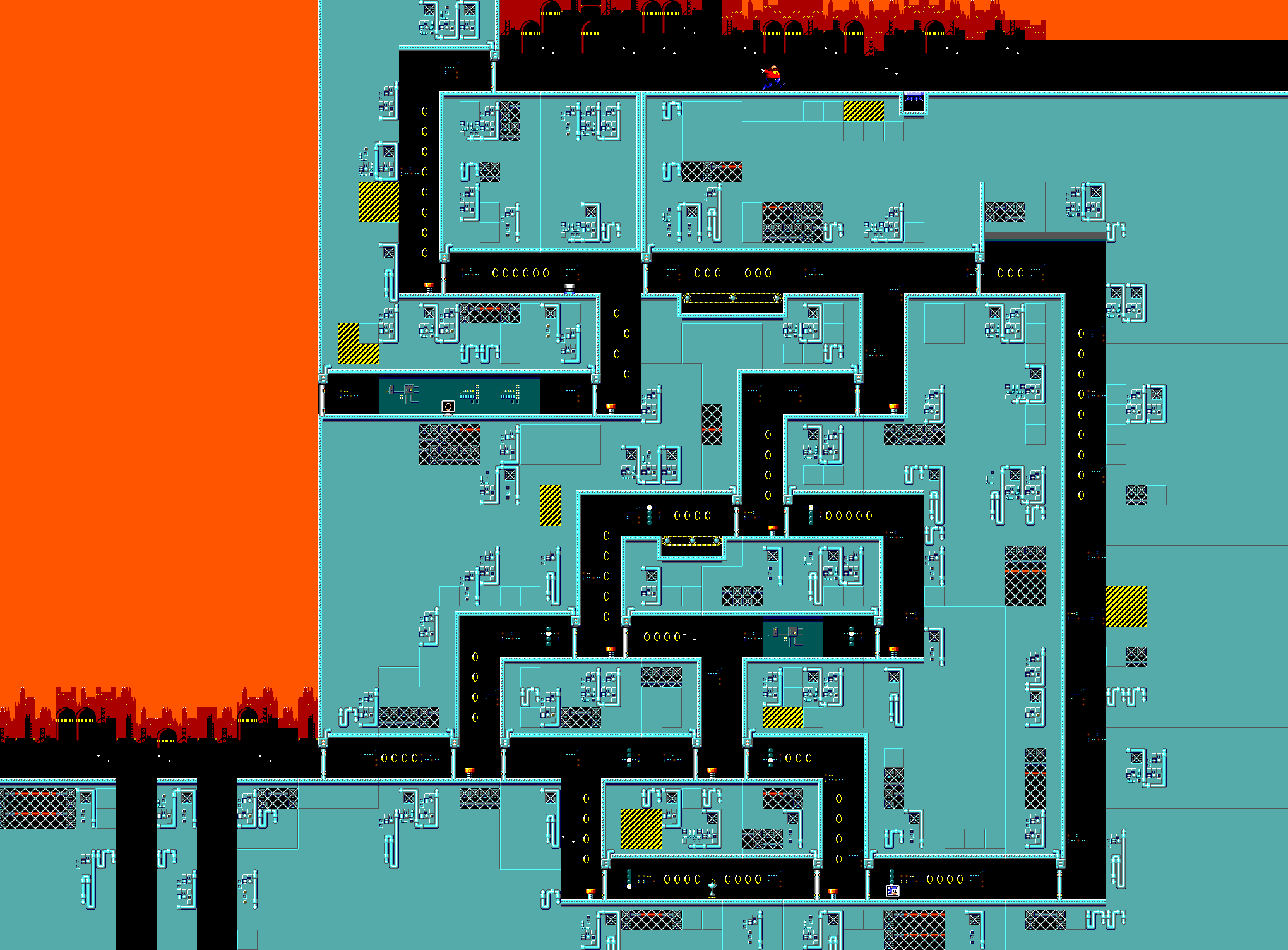
Labyrinth Zone is not the only stage that looks like a maze, and this is the stage's third act.
Fun fact: Anyone who experienced the 1990s probably remembers the video game commercials shown between cartoons. Below is an advertisement for the Master System 3 Compact, which already included Sonic the Hedgehog in its memory. Those were good times.
Played on Master System.