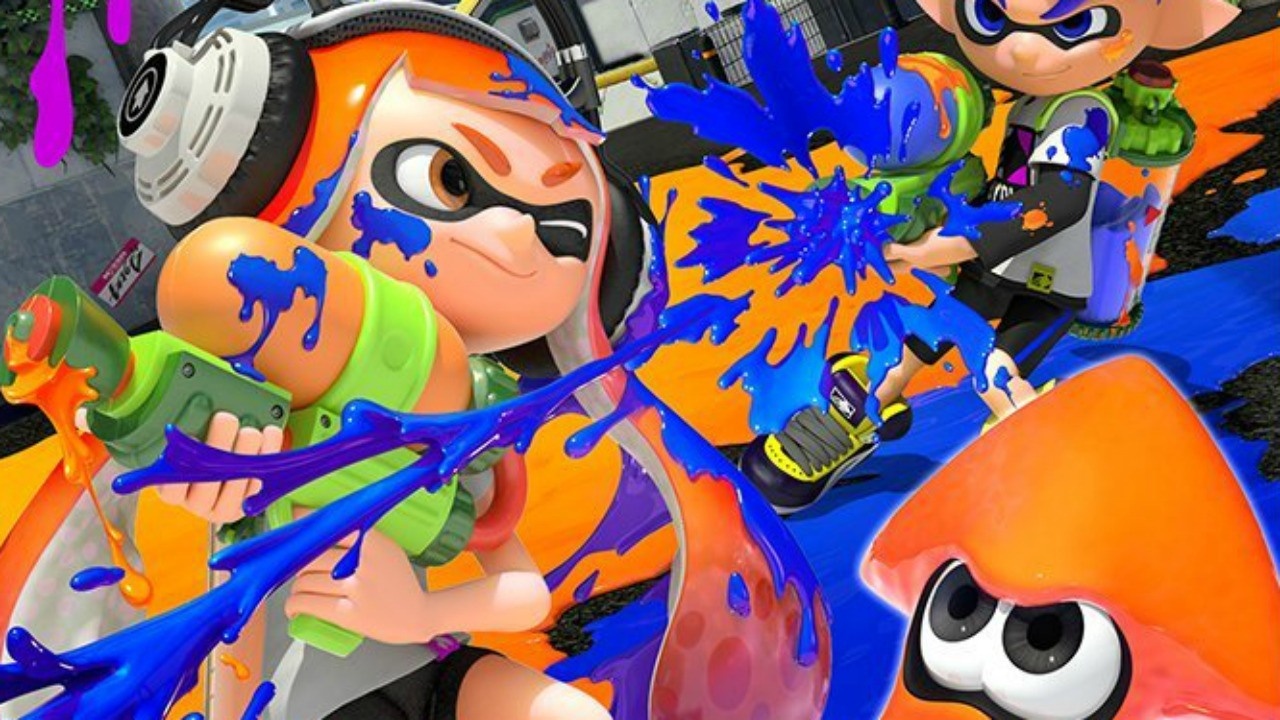
I have probably said this in other reviews and will certainly say it again. Nintendo is a master at reshaping genres that are already firmly established in video game history. As the most commercially relevant examples, we could mention the Mario Kart and Super Smash Bros. franchises as the company's respective visions of racing and fighting games. It would not be long before Big N's employees turned their eyes toward the enormous success shooters enjoyed in the previous generation. Splatoon is exactly that: a TPS through the eyes of the famous Kyoto company.
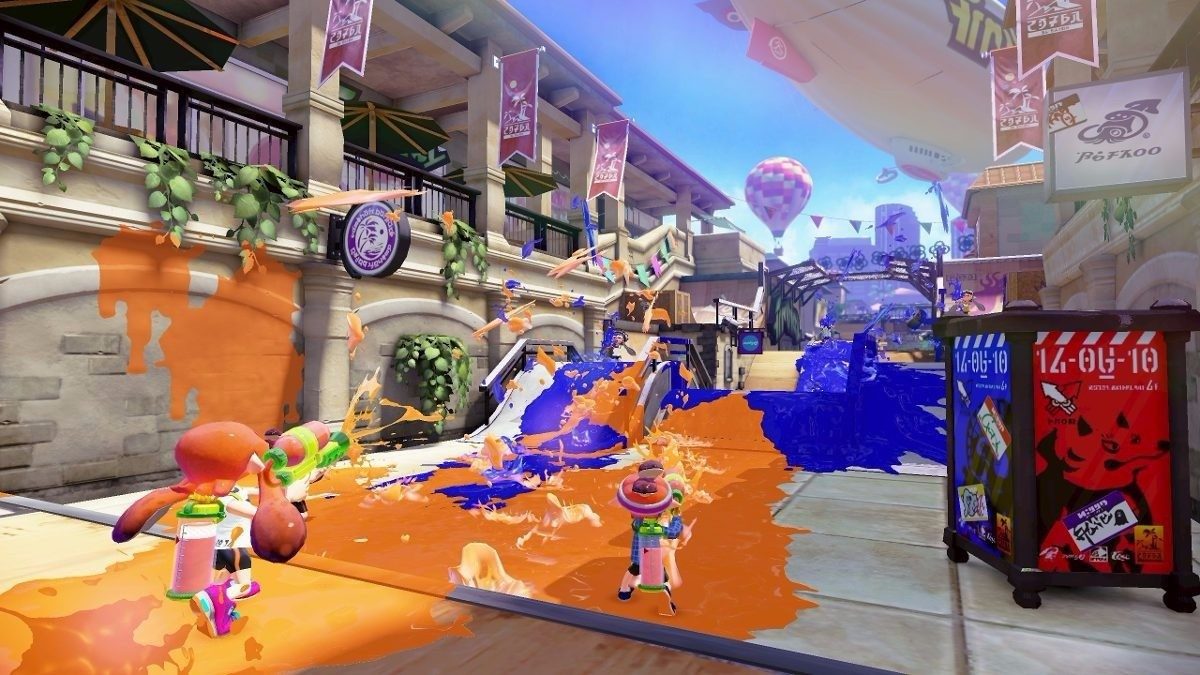
Off to gaming's most entertaining ink war.
Splatoon is a TPS shooter, or third-person shooter, focused on online multiplayer. It was developed exclusively for Wii U and released in May 2015.
Below is the Splatoon trailer.
Fun fact: Splatoon was a major commercial and critical success. One of its achievements with the public is becoming the fifth best-selling Wii U game, with 4.71 million units sold.
Behind the Scenes
Every self-respecting Nintendo fan feels some concern about the company's direction after Shigeru Miyamoto eventually retires, as he certainly will one day. Considered the greatest creative mind in gaming history, today he effectively serves to approve whether an idea moves forward within development teams and to give good advice for future games.
Nintendo, as visionary as ever—at least within the artistic side of its company—developed a project called Garage, a group of young developers tasked with devising new, viable, and above all entertaining ideas for future original intellectual properties. When something good emerges from their meetings, they arrange a meeting with master Miyamoto, who must say whether the idea is valid. Splatoon was the first approved "offspring" to emerge from the "Garage," and it apparently delivered what the company's fans expected.
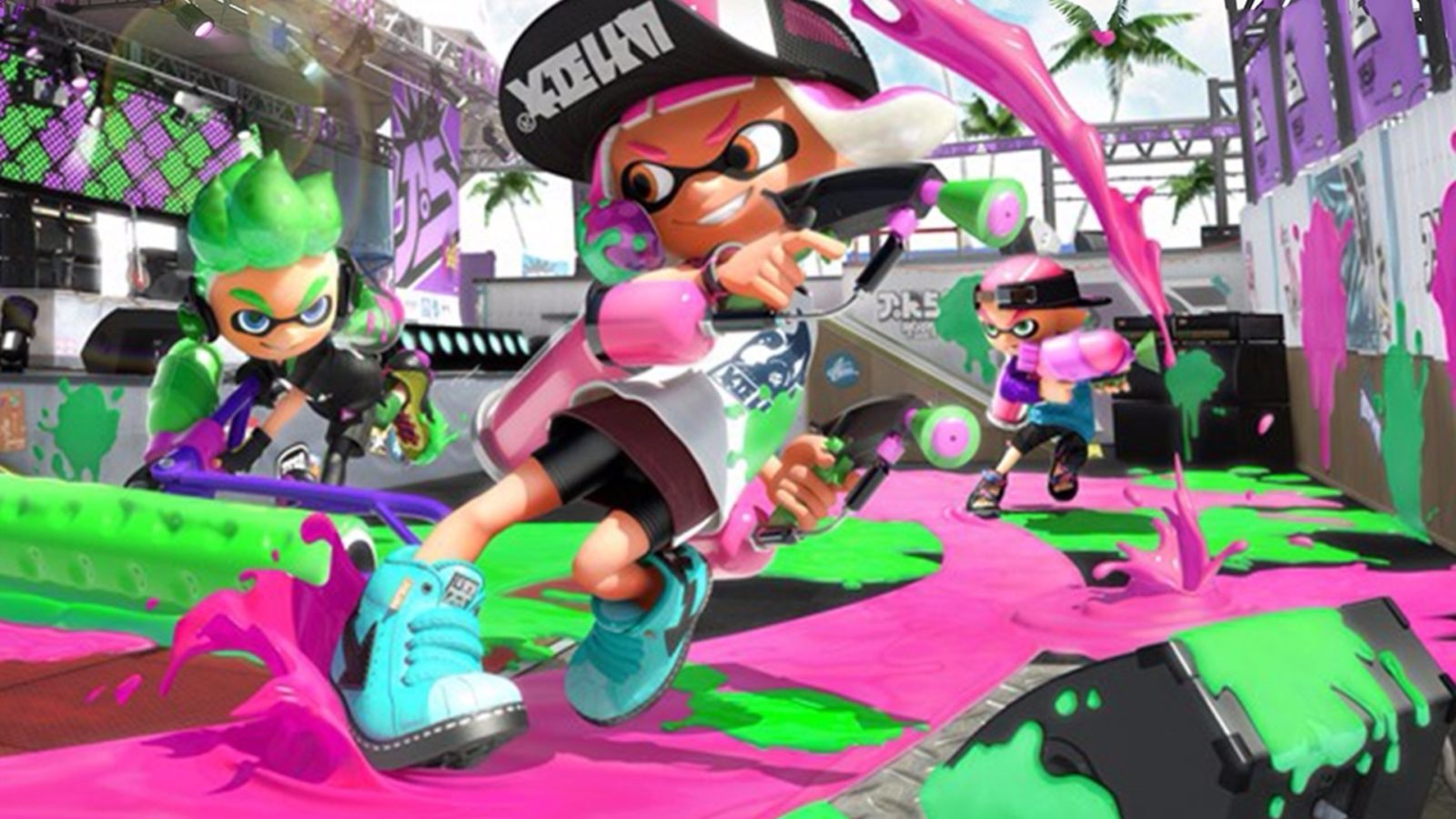
There is no denying that the team managed to create highly charismatic characters.
The Garage developers described themselves as fans of Nintendo's competing franchises, such as Call of Duty, and wanted to make something connected to that style that could still relate to the company's roots. The idea of an ink war soon emerged, as did the possibility of hiding within the ink during battles.
Interestingly, when the Garage developers—called Miyamoto's students by some—showed their master the idea, the teacher observed that the characters in the new intellectual property apparently lacked charisma. As he had during the development of Super Mario Kart and Super Smash Bros., Shigeru suggested replacing the characters with Mario and his friends to guarantee success, even noting that the ink could be fired through the equipment used by the mustachioed character in Super Mario Sunshine.
The team opposed the idea in full and "stood its ground" in wanting to keep the Inklings as the new franchise's characters. The rest is history we already know.
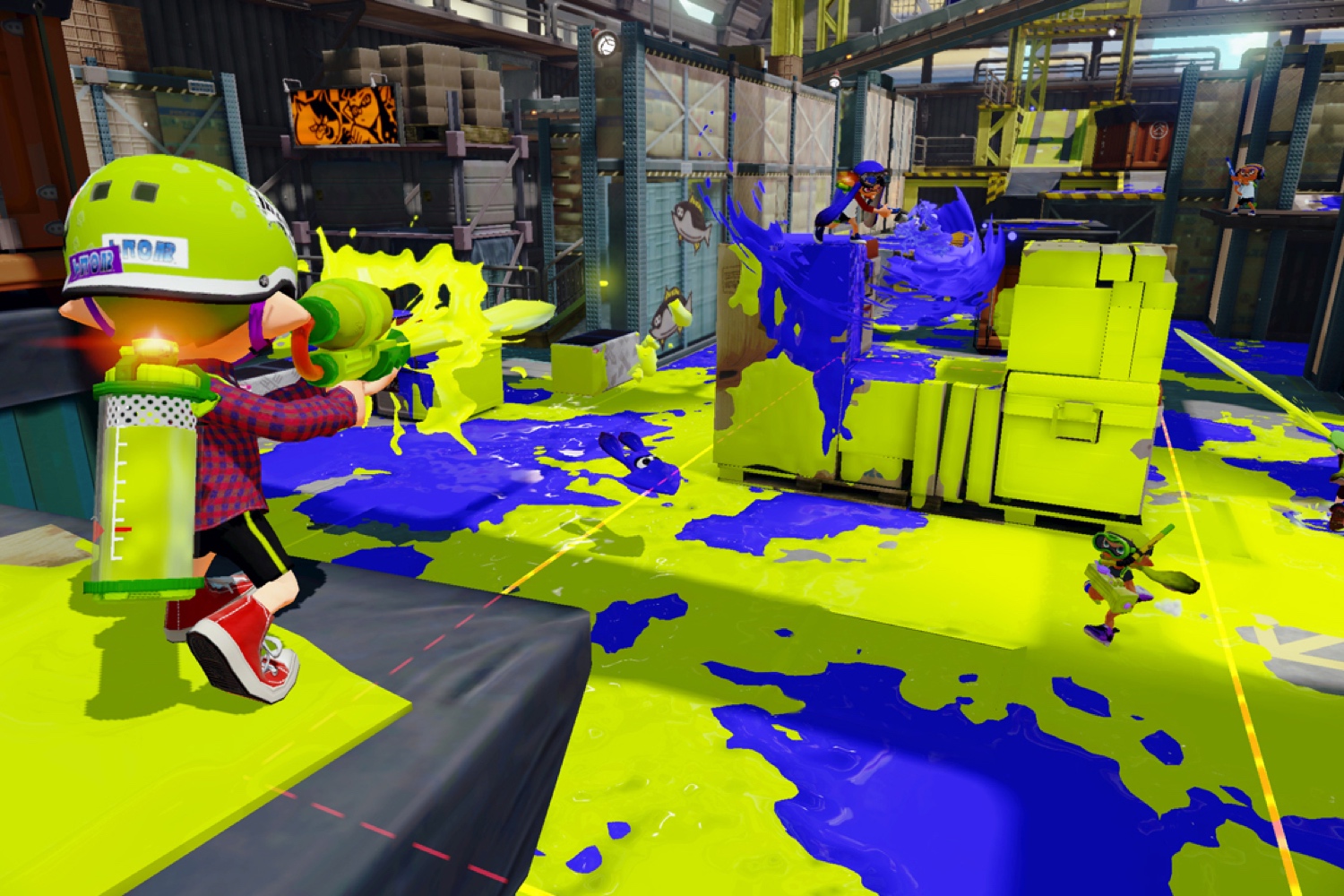
It will not take long before you tell yourself: "The team doesn't paint like I paint." Terrible pun no. 1.
Fun fact: Splatoon received countless awards in its release year, but I will highlight those from the gaming world's most famous ceremony, The Game Awards 2015. That year, the game won Best Multiplayer against titles such as Call of Duty: Black Ops III, Destiny, and Halo 5. It was also the best shooter, once again defeating the classics Call of Duty: Black Ops III, Destiny, Halo 5, and Star Wars Battlefront. The reason for this great victory is difficult to identify, but bringing something innovative and distinct to such an overused genre was certainly one of its great differences.
Story and Single Player
Splatoon's story apparently takes place in the distant future, when the human race no longer exists and aquatic beings have evolved enough to become intelligent and dominate the surface. Amid this situation is a conflict between the squids, or Inklings, and the octopuses, or Octarians. The latter were forced to live underground after losing an earlier war.
Our duty is to face this Octarian threat, which has kidnapped the electric catfish that serve as the main sources of energy in Splatoon's world. To undertake this mission, we must find a manhole in Inkopolis, speak with veteran Cap'n Cuttlefish there, and gain access to Octovalley, the octopuses' home.
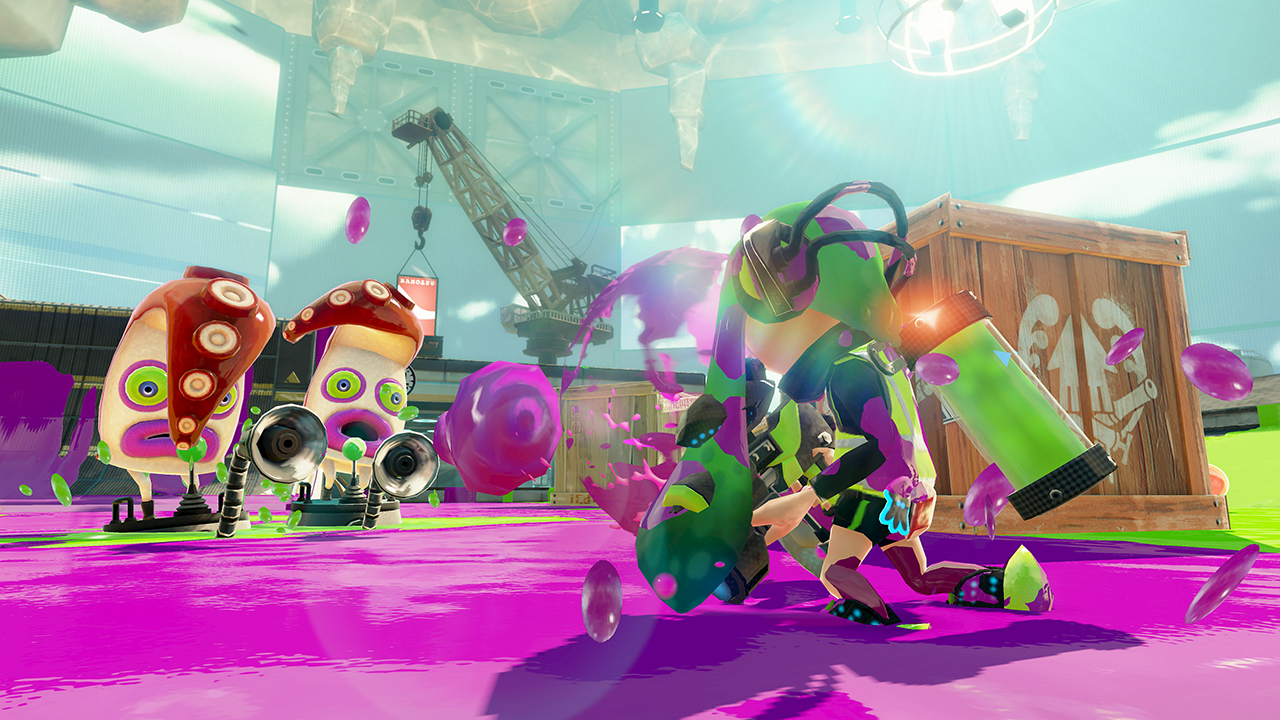
Besides being great fun, campaign mode serves as good training for online play.
Although relatively short, Splatoon's single-player campaign, Hero Mode, is highly entertaining and even essential for those who want the complete game experience. In addition to serving as a genuine tutorial for future online battles, here we find the Sunken Scrolls, which tell the game's story and allow new weapons to be unlocked in the shop, as well as extremely creative and well-made boss battles. It is worth noting that some mechanics are exclusive to this game mode, such as platforms that grow when struck by our ink and shrink when hit by enemy ink.
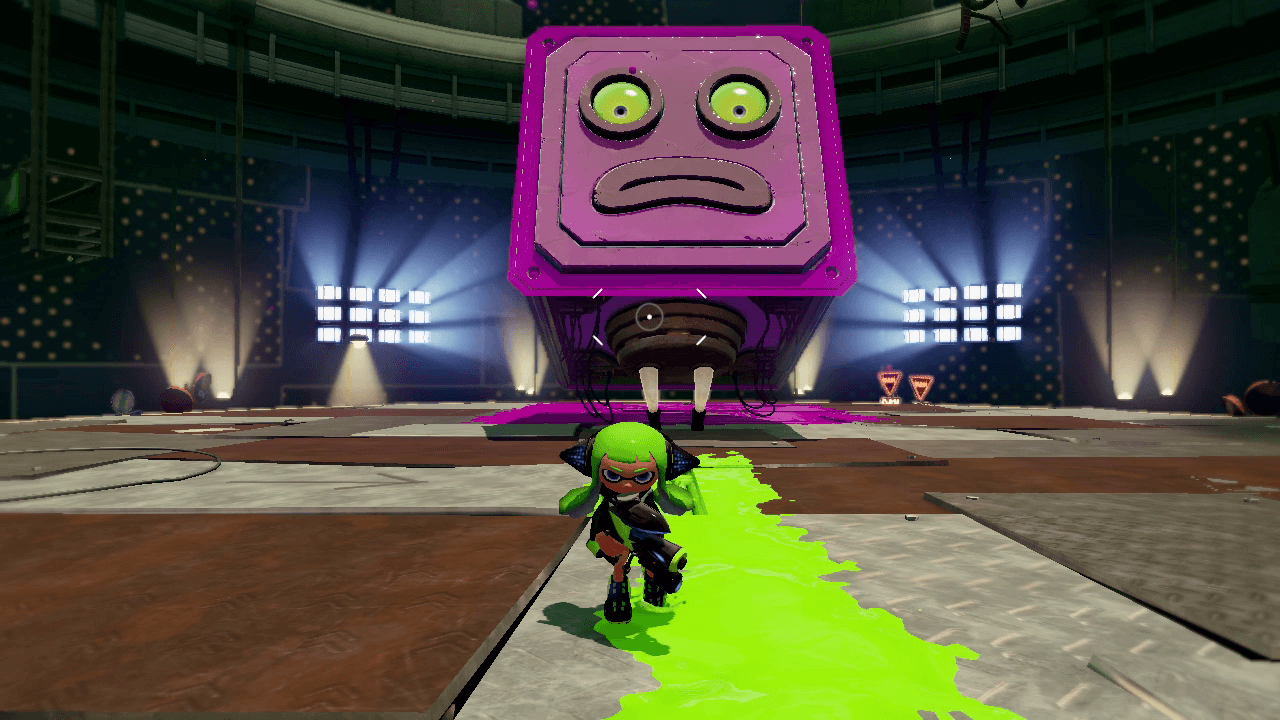
The campaign's greatest highlight is its highly creative and entertaining bosses.
Below is the trailer for Splatoon's single-player mode.
Fun fact: Splatoon was certainly not going to miss the amiibo trend. In this game, their functions increase the single-player mode's replay value by creating new challenges, forcing players to use particular weapons, limiting their ink, and asking them to complete speedruns. It is also worth noting that each amiibo unlocks three exclusive clothing items for our avatar.
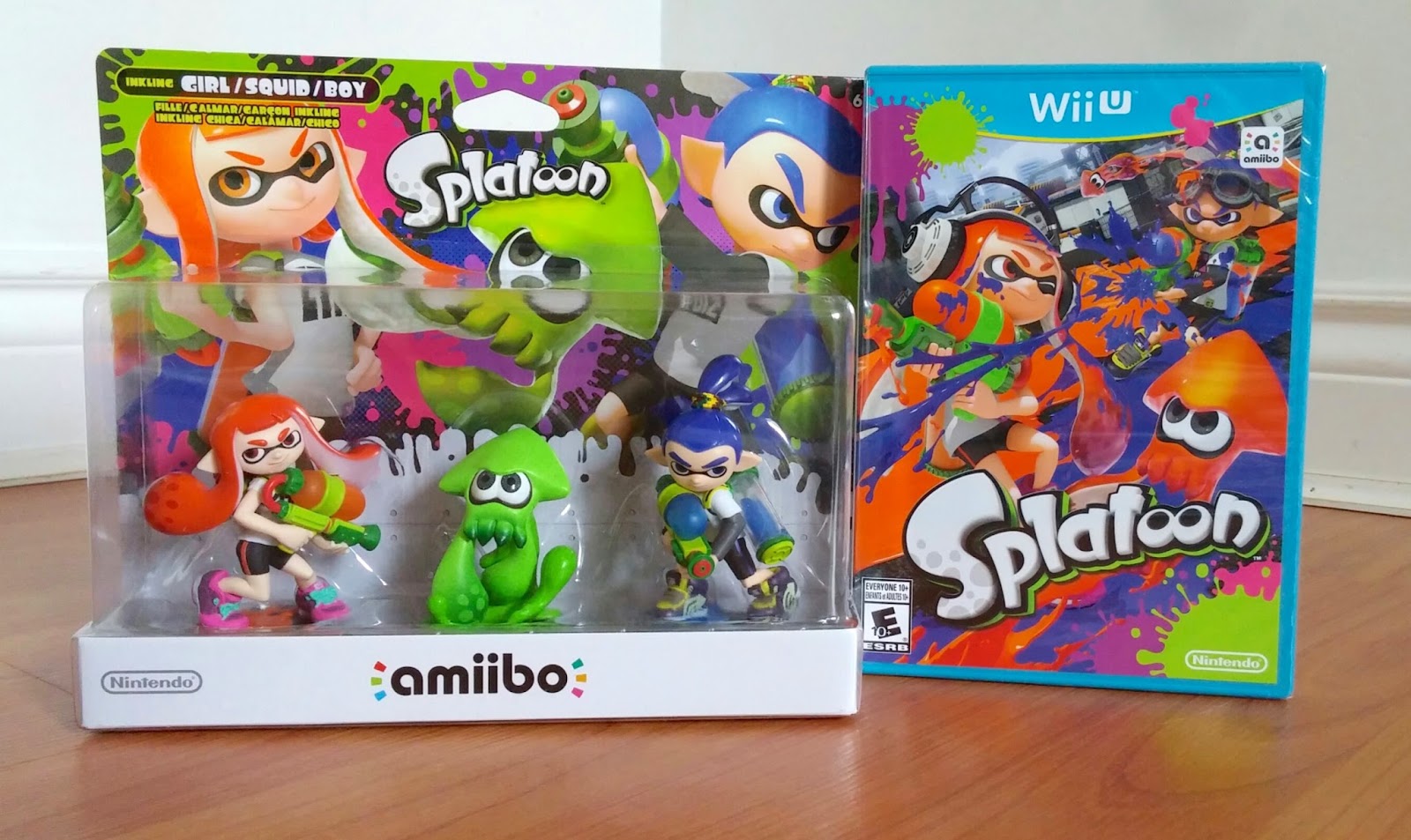
The amiibo added good content to the main game.
Splatoon's Weapons
Splatoon's content received numerous updates after release, covering not only weapons but also environments and other accessories. This caused many review sites to redo their impressions of the game. To give an idea, more than 90 weapon types alone are available to players, divided into shooters, chargers, rollers, sloshers, and splatlings.
Each weapon in Splatoon is divided into three parts: Main Weapon, Sub Weapon, and Special. Main Weapons are used most often and are described below. Sub Weapons consume a little more ink and require more strategic use, as with ink bombs. Specials, which can be used after we accumulate a good number of points during a match, generally paint a large area when activated.
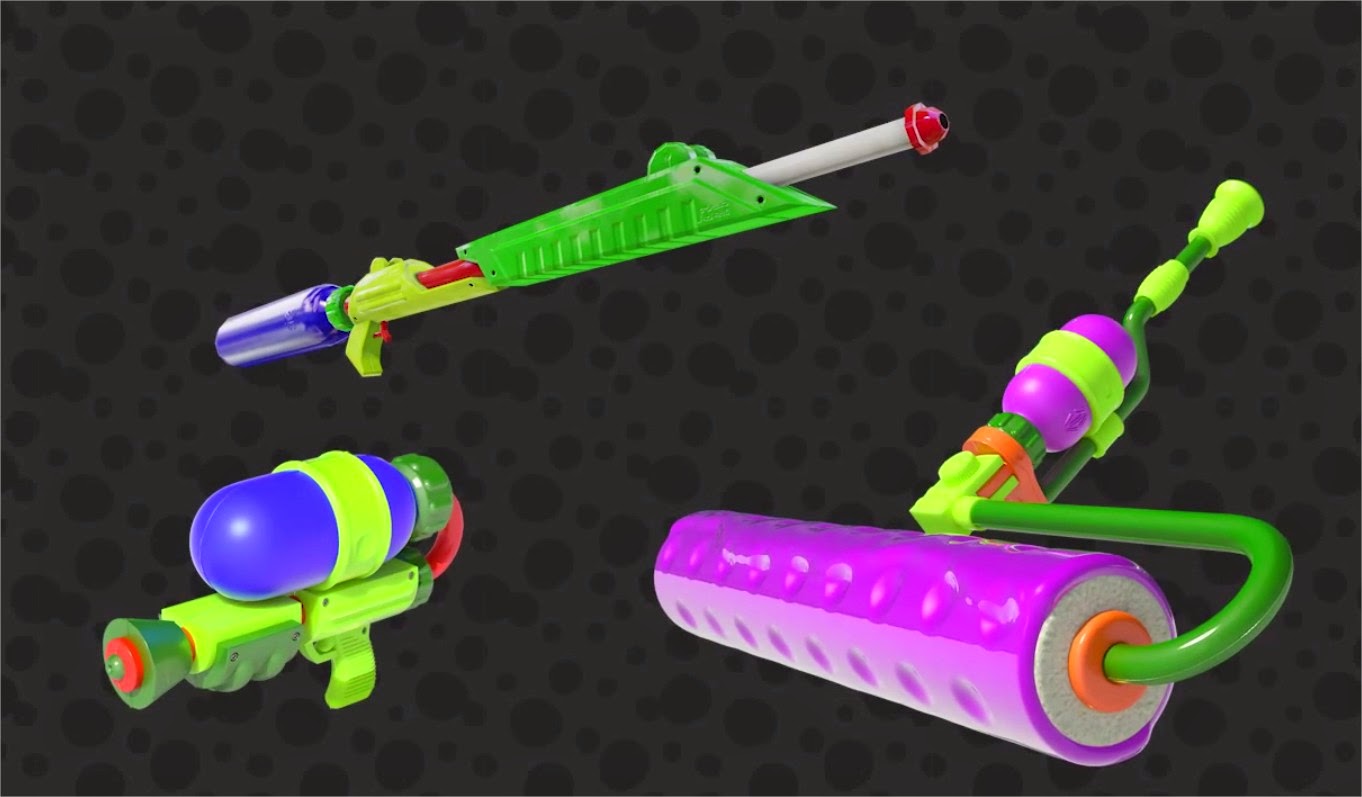
Some examples of the game's basic weapons.
Below are descriptions of the Main Weapons in Splatoon:
- Shooters: These are Splatoon's traditional weapons, perfect for beginners. They balance range, ink consumption, and rate of fire. Some examples are Aerosprays, Splash-o-matics, and N-ZAPs;
- Chargers: Put as simply as possible, these are sniper rifles. They have a low rate of fire and consume little ink but offer great range. Their users generally need support from the team and must position themselves in elevated areas to avoid being found. Examples include E-liters and Squiffers.
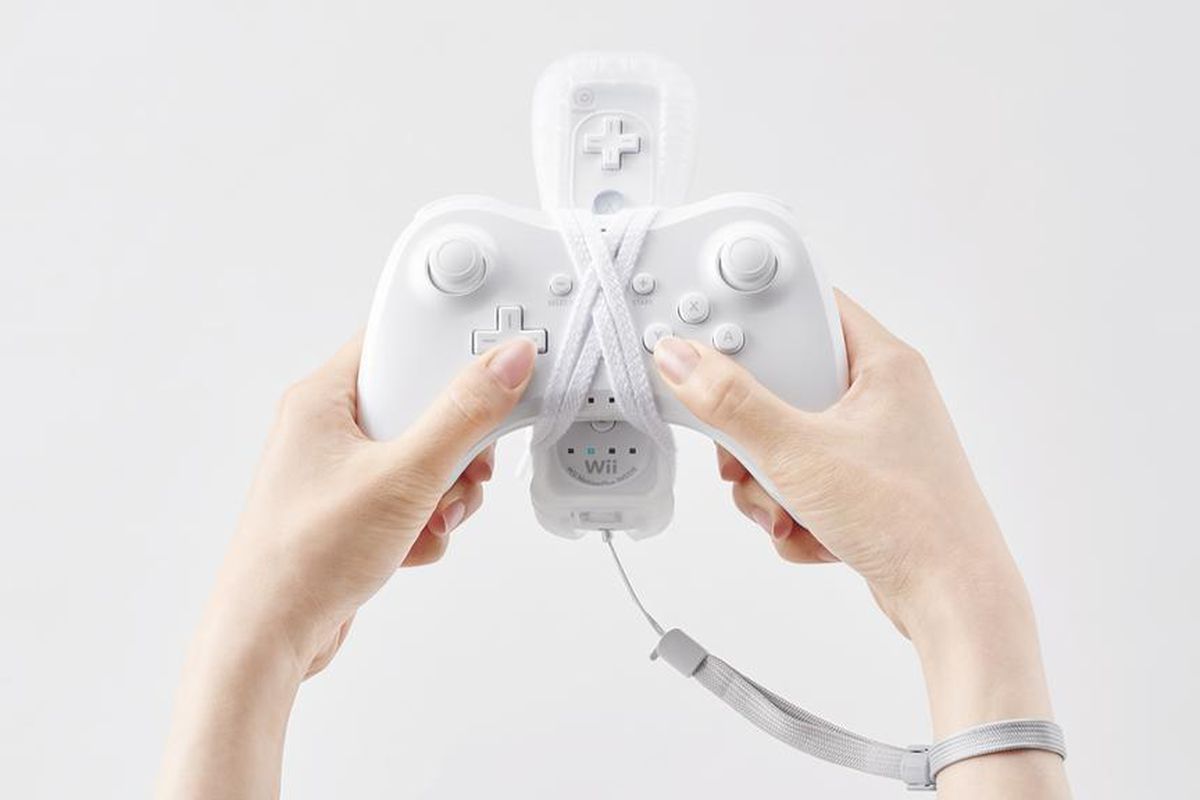
Nintendo recommended this workaround to keep local multiplayer fair.
- Rollers: These are the game's signature weapons. They have very limited range but can paint a large area in little time, making a Roller practically mandatory on a successful team. It is recommended for those who do not like worrying too much about their aim and love close-quarters combat. Examples include the Carbon Roller and Inkbrushes.
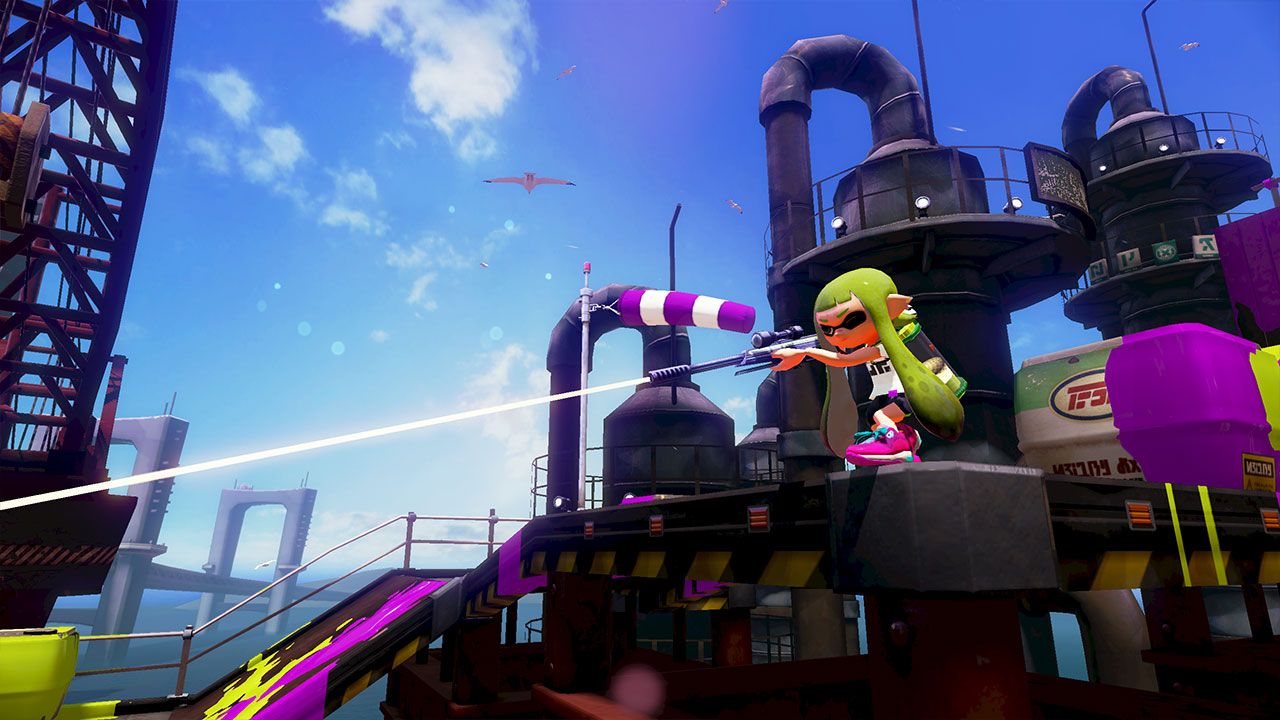
Where there is shooting, there are campers. At least here they do not cause much trouble because of the game's fast, constant pace.
- Sloshers: These are buckets, somewhat more difficult to use, though not excessively so. Despite covering a good area, they have short range. The ideal strategy for their users is to defend an area from an elevated position such as a tower. Mastering them requires some experience. Examples include the Classic Squiffer and Splat Charger;
- Splatlings: These are the game's least popular weapons, although they look like genuine machine guns. They fire strong bursts across long distances, but their weakness is the need to charge, which temporarily leaves players vulnerable. They are recommended only for experienced Splatoon players. Examples include the Mini and Hydra.
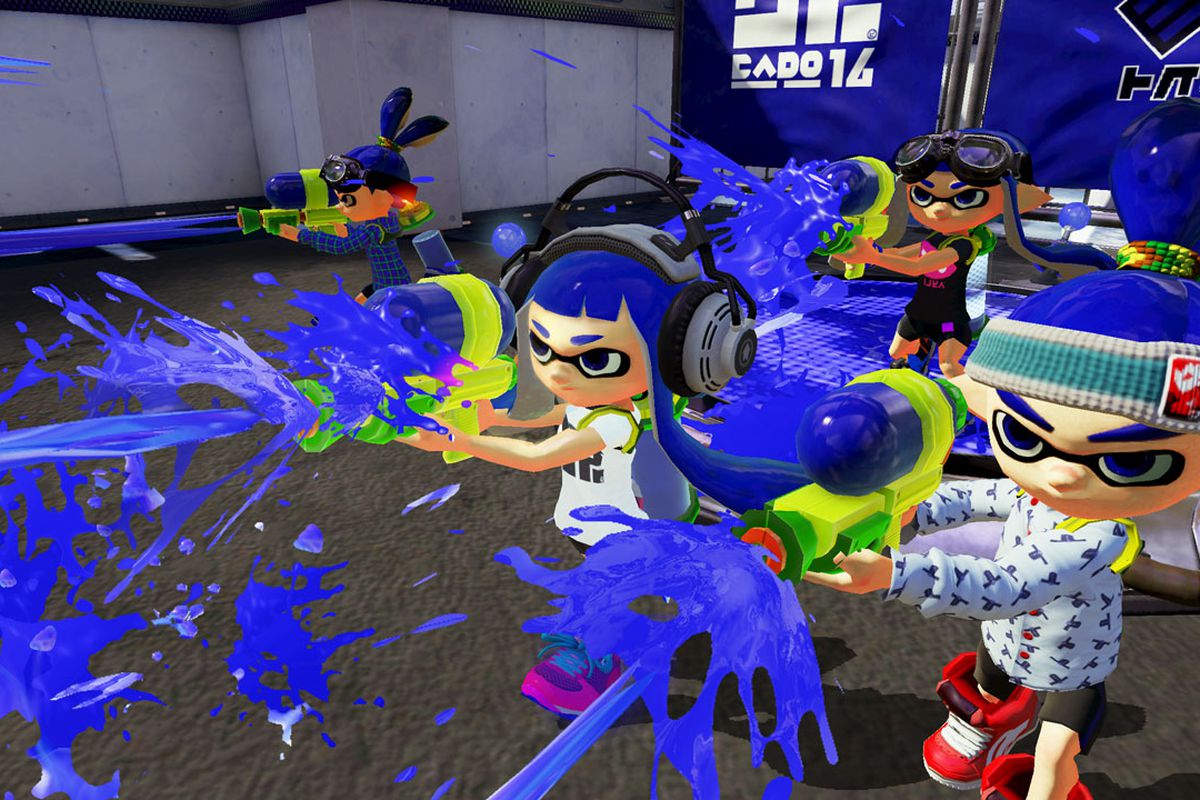
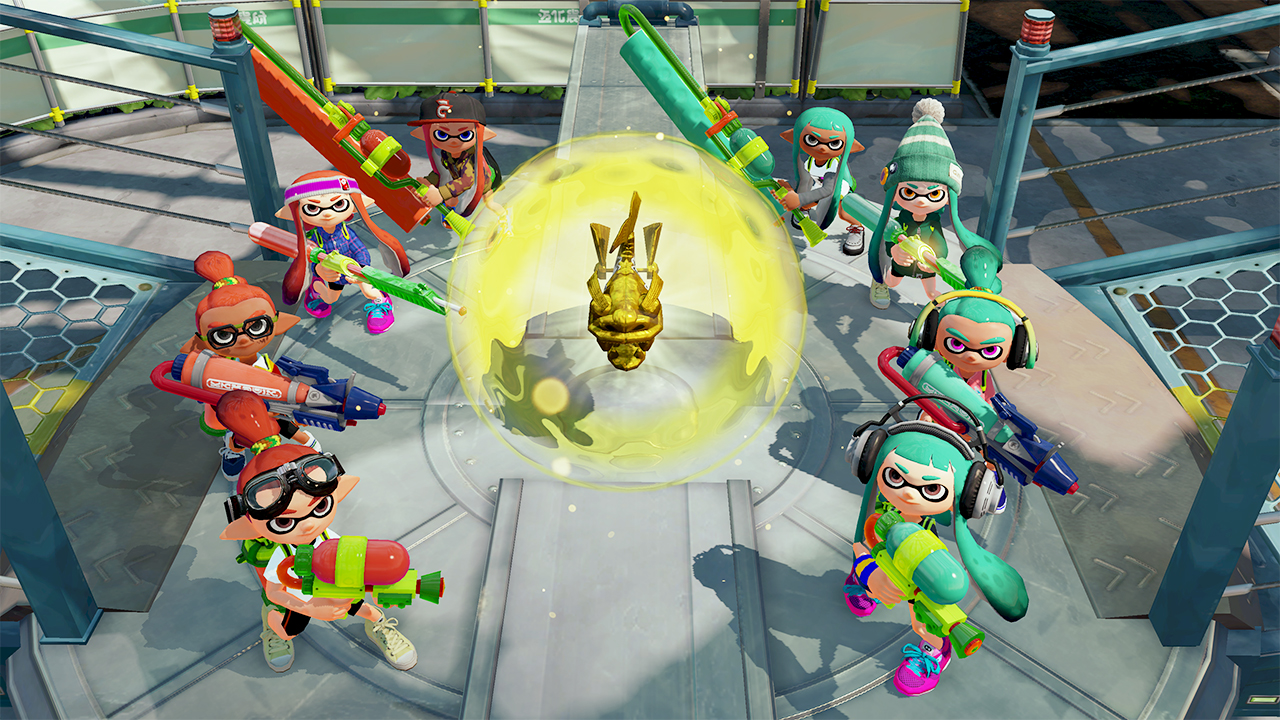
An example of a standard team.
Fun fact: As soon as we begin Splatoon, we encounter the beautiful Inkopolis Plaza, where we can shop, see other players, and access the game modes. It was certainly inspired by Shibuya, with its shops and nearby Tokyo Tower, and by the city of Los Angeles, whose residents often wear modern clothing and technological accessories.

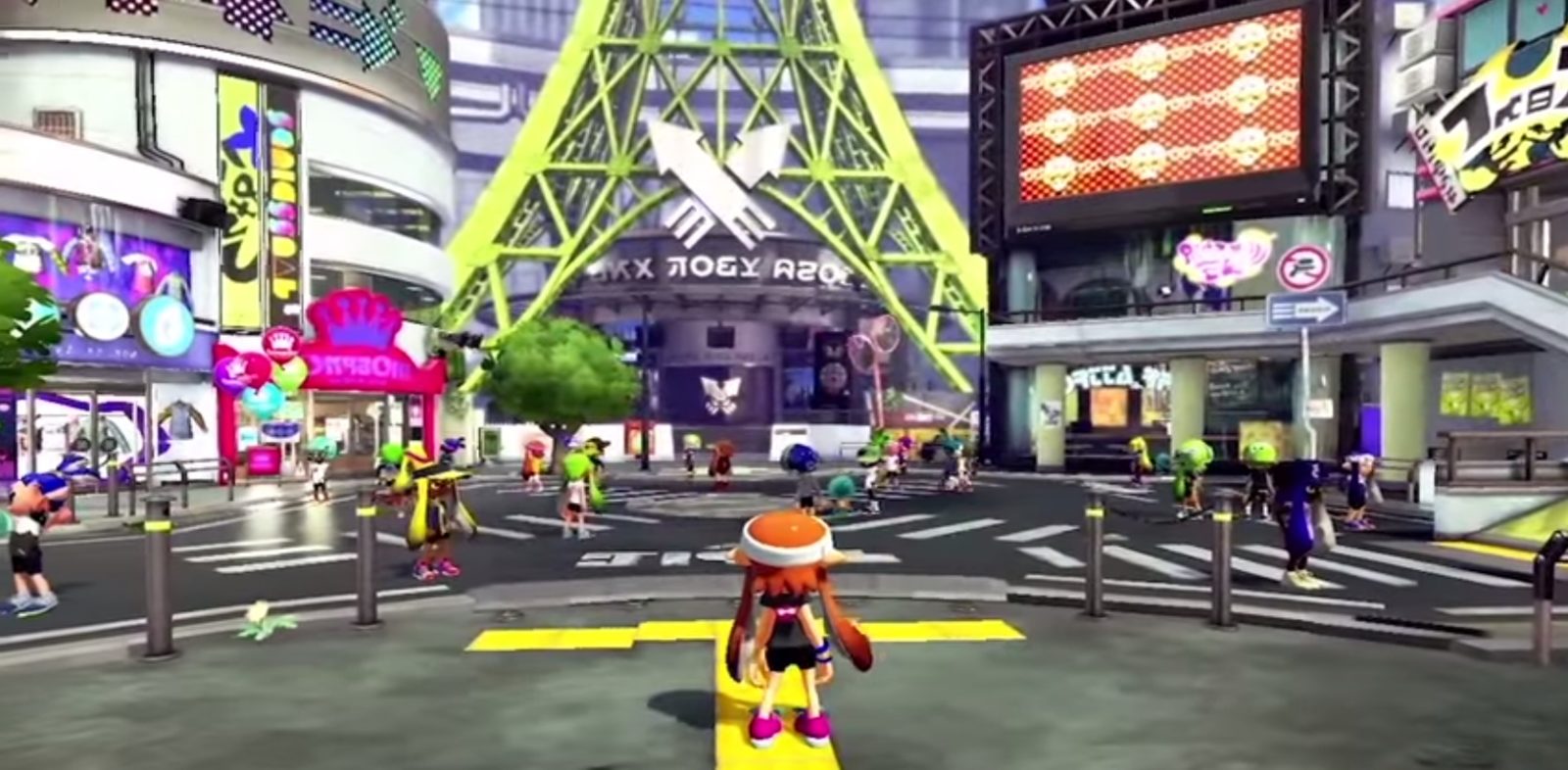

Technical Review of Splatoon
Splatoon's graphics are very good and genuinely showcase the Wii U's potential. Everything is highly colorful and detailed, especially the ink, which is very well made. Nintendo apparently knew the commercial potential the franchise would have and polished this aspect carefully.
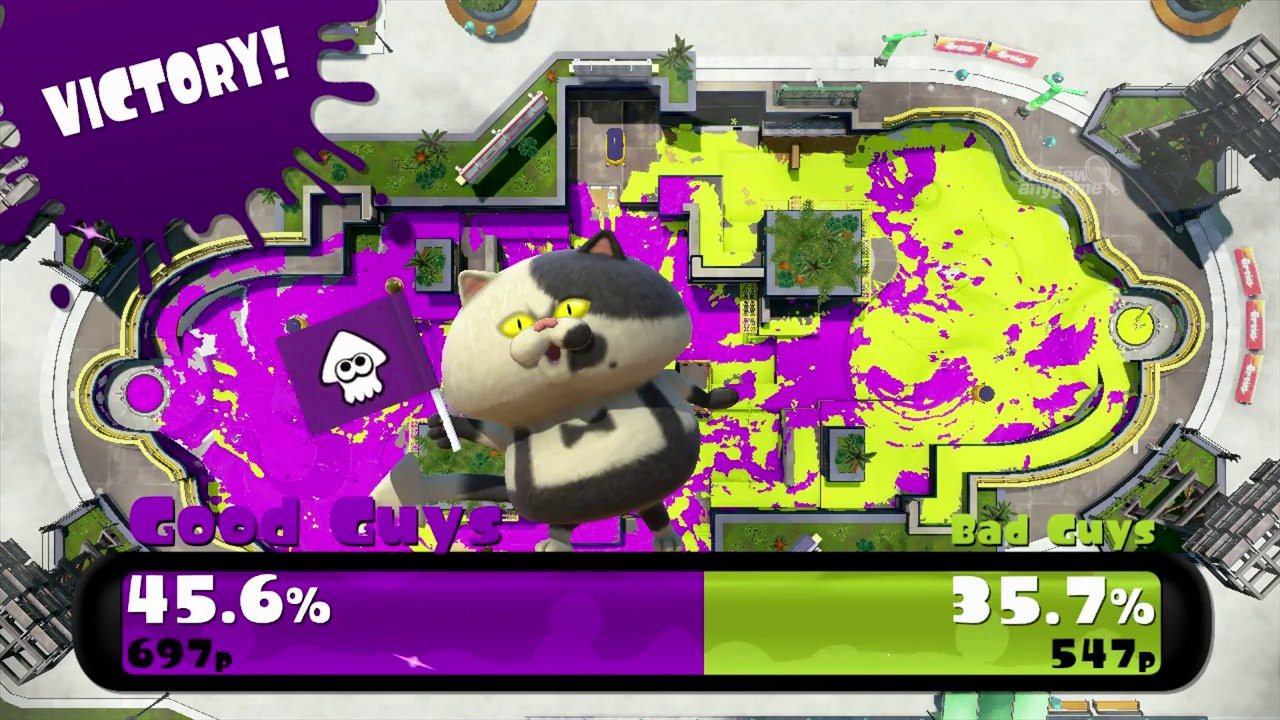
The suspense created by the cat is indescribable.
Although the game has a single-player mode, multiplayer is where Splatoon shows why it came. Its main mode is called Turf War, in which two teams of four people must paint the largest area of the arena before the match time expires. The most interesting mechanic is that competitors can transform into squids within the ink to move more quickly, at the price of being completely vulnerable while doing so. The Wii U GamePad is extremely relevant because, in addition to showing the match map, it allows our character to make large jumps within the arenas. Note: the game has local multiplayer, but it is not essential to enjoying it.
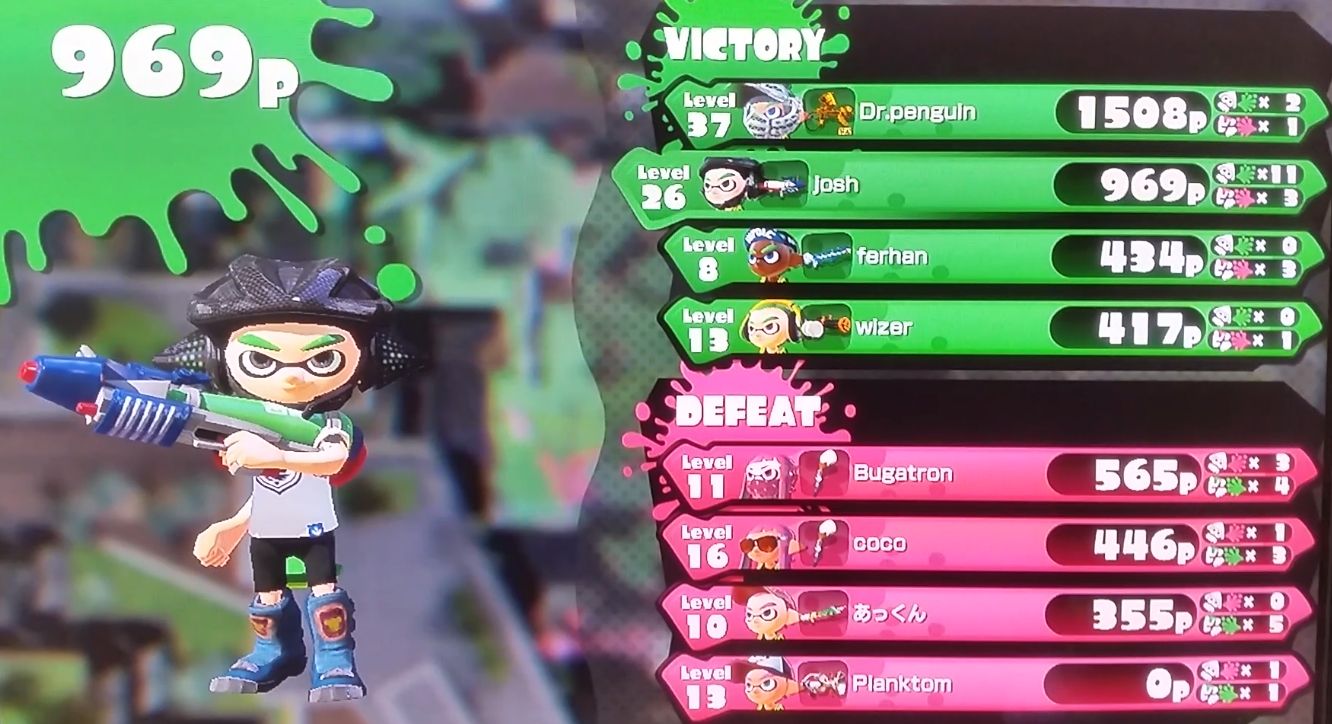
Unfortunately, losing one team member makes a considerable difference in Splatoon.
Not everything in Splatoon deserves praise, as its online mode has a few "flaws." Although I did not encounter serious disconnection problems during matches, some of the programmers' choices are difficult to understand. These include fixed arenas that change after a few hours, with players given no choice, and the fact that we must leave the "room" whenever we want to modify our character. These are not serious problems, but many players disapproved of them.

Always watch every side so no one can roll you from behind. Terrible pun no. 2.
Initial character customization is quite limited, but that is because accessories acquired as the game progresses allow us to improve our avatar's attributes. Fashion in Splatoon is therefore directly connected to our character's gameplay.
Splatoon's gameplay may initially intimidate some people because it requires practice with the Wii U GamePad's motion sensor. Although I consider this the better approach, it is worth noting that the system can be changed to a more "standard" one in the game's "options."
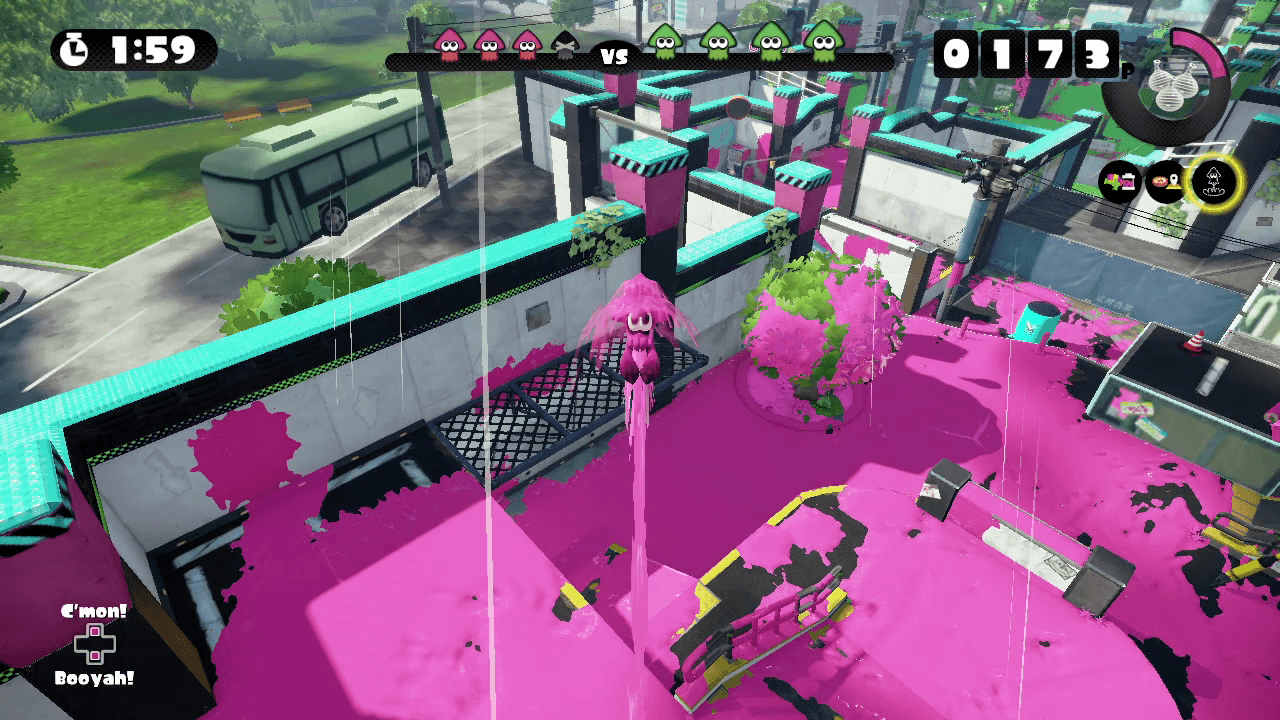
The squids' great leaps. Ah, I will not make a pun about the brush weapon; that would be too much.
The campaign length, or Hero Mode, is around five hours on a first playthrough if the player searches for collectibles and has some difficulty adapting to the game. That may seem short, but as Nintendo itself said, it is merely an entertaining rehearsal for those who want to play Splatoon well in multiplayer.
Splatoon's replay value is enormous, mainly because of its addictive online mode and the abundance of equipment to unlock with points earned during matches. The game becomes an incredible pastime that offers different experiences every time it is played.
The search for the electric catfish. I hope I wrote that correctly.
Splatoon's fun is equally memorable because of its technical polish and addictive multiplayer. You may grow tired of playing after a while, but believe me, it will not take long before you want to join a few more matches and once again try to build the most perfect avatar possible.
Splatoon's soundtrack is very good and perfectly matches the game's fast-paced, competitive rhythm. Its music is extremely original, and several tracks are apparently sung in the Inklings' completely unrecognizable language. The sound effects are equally high quality, leaving nothing to complain about in that respect.
Below is Splatoon's complete soundtrack.
Fun fact: Given Splatoon's success, we could already imagine that a sequel would come to its successor, the Nintendo Switch. That happened in July 2017, three months after the new console's release. Intended to contribute to console sales, Splatoon 2 sold extremely well and today ranks fourth among the system's best-selling games, with 7.01 million units sold.