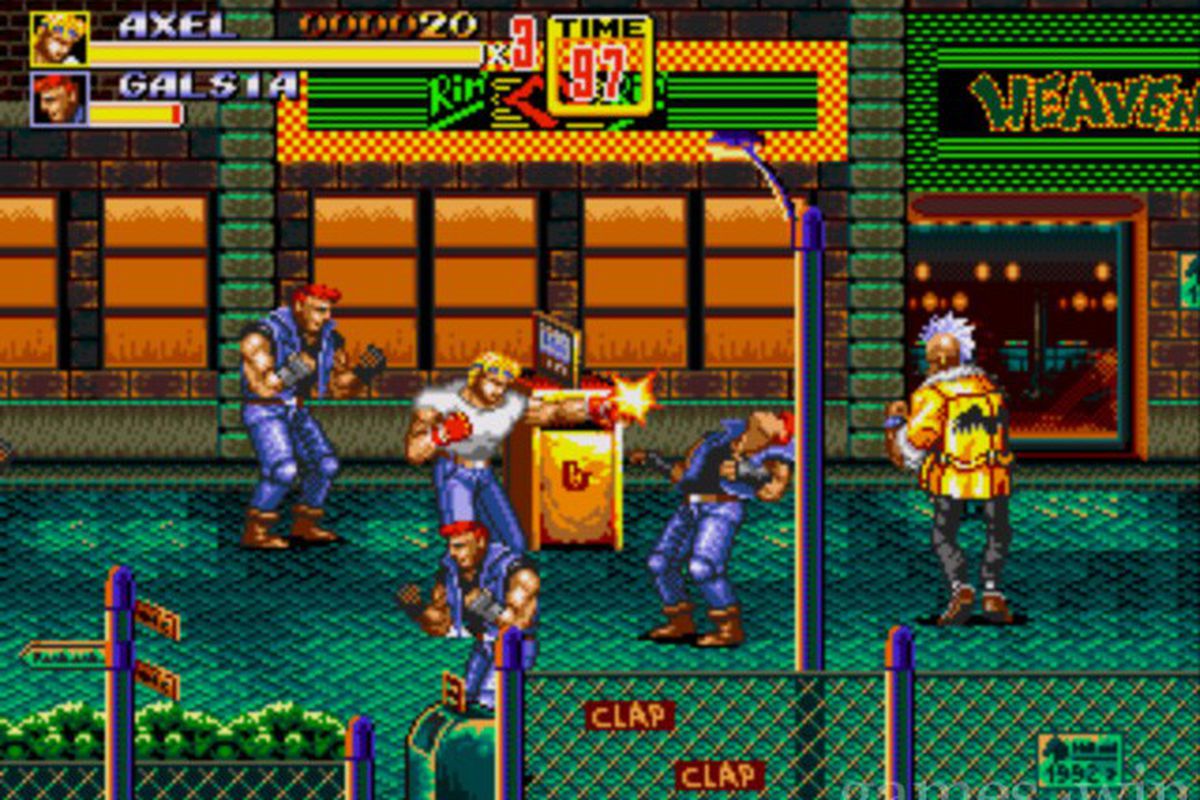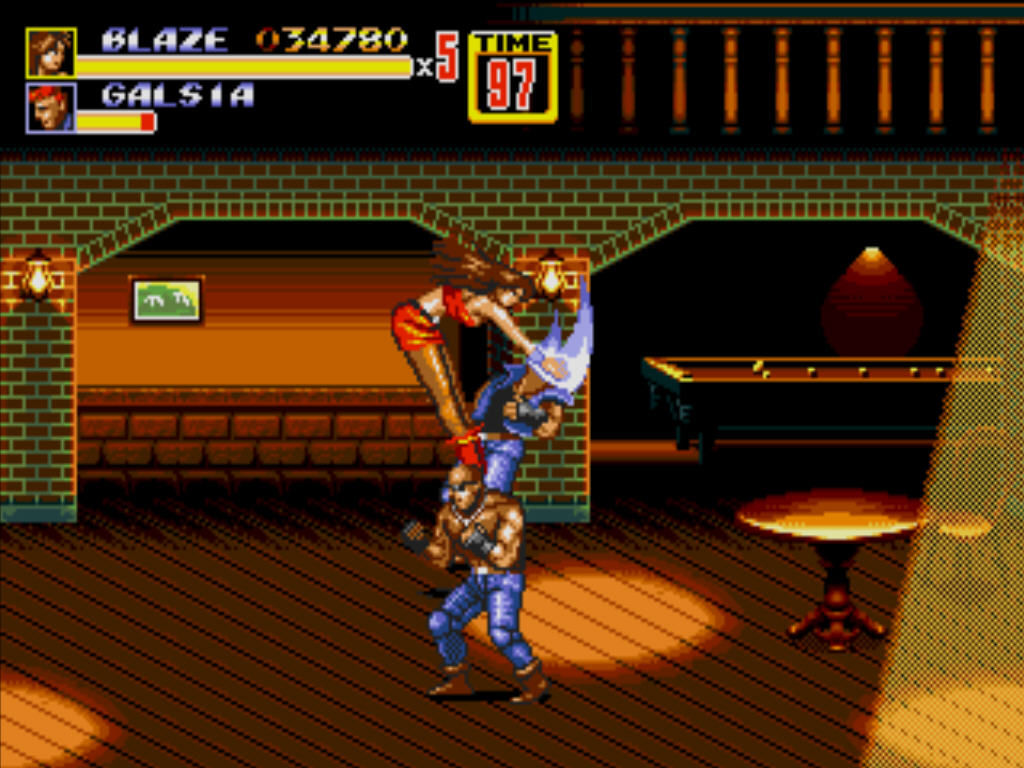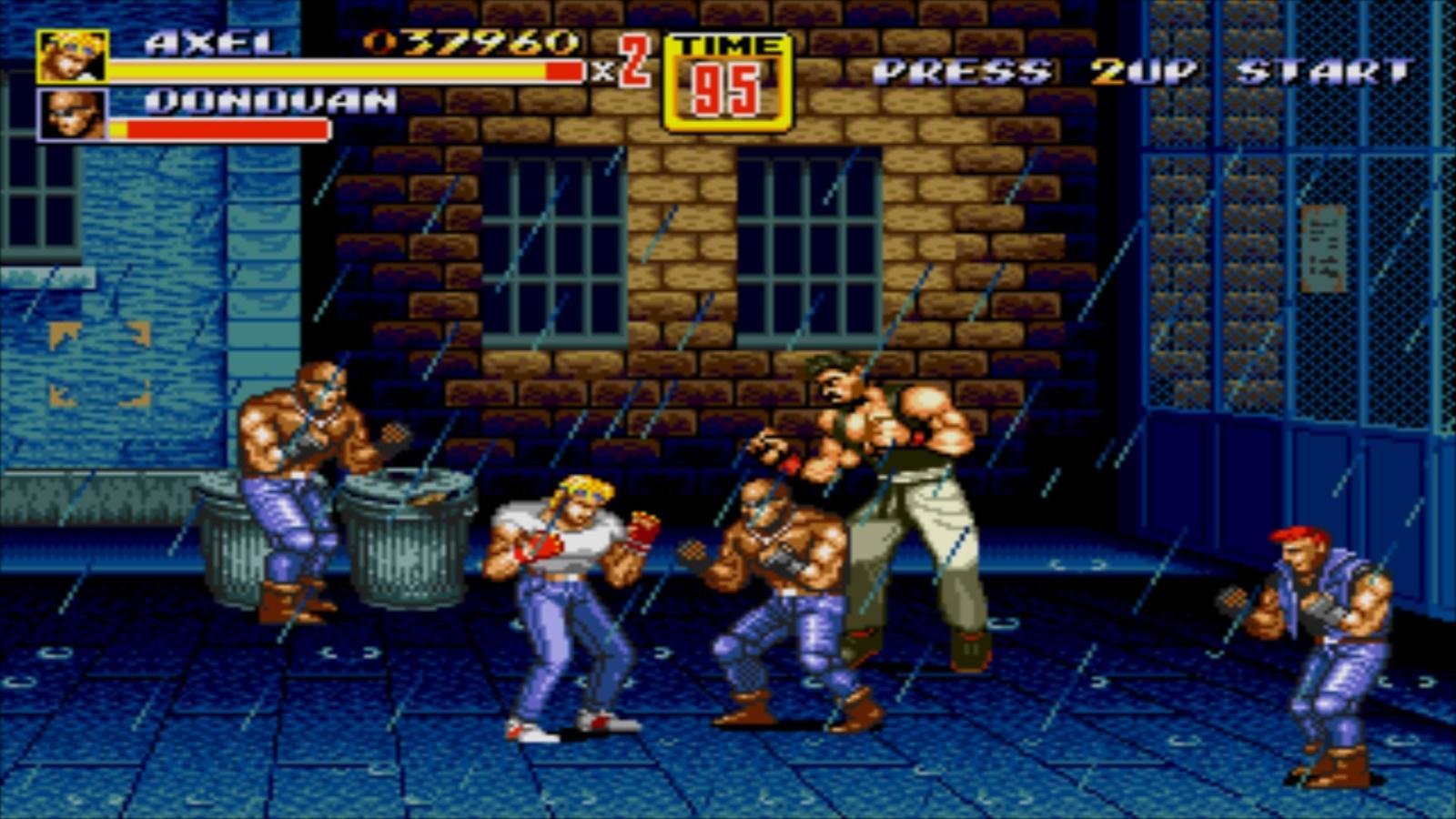
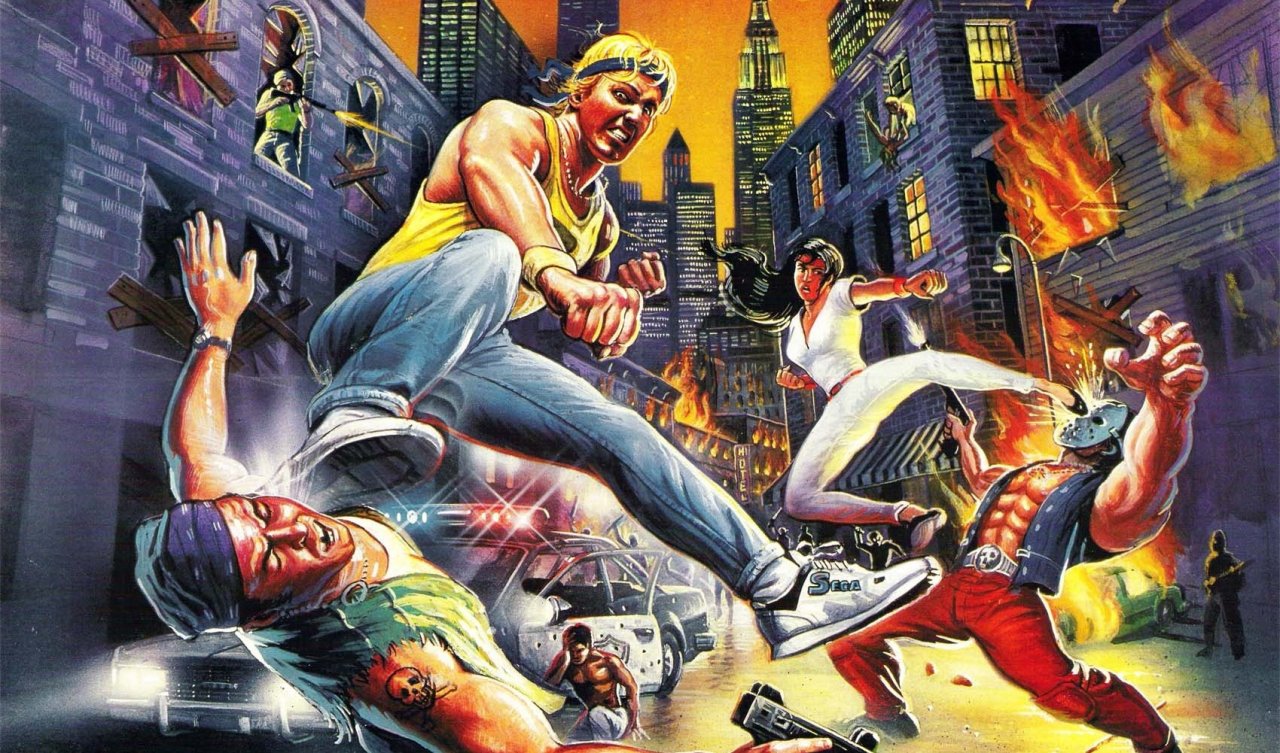
If we had to choose a SEGA franchise that could rival Sonic's popularity on Mega Drive, it would be Streets of Rage. The series was born with the mission of taking on Final Fight and, in my modest opinion, far exceeded its objective. "The streets of rage" was one of those titles that kids loved playing at game-rental stores, especially with a friend.
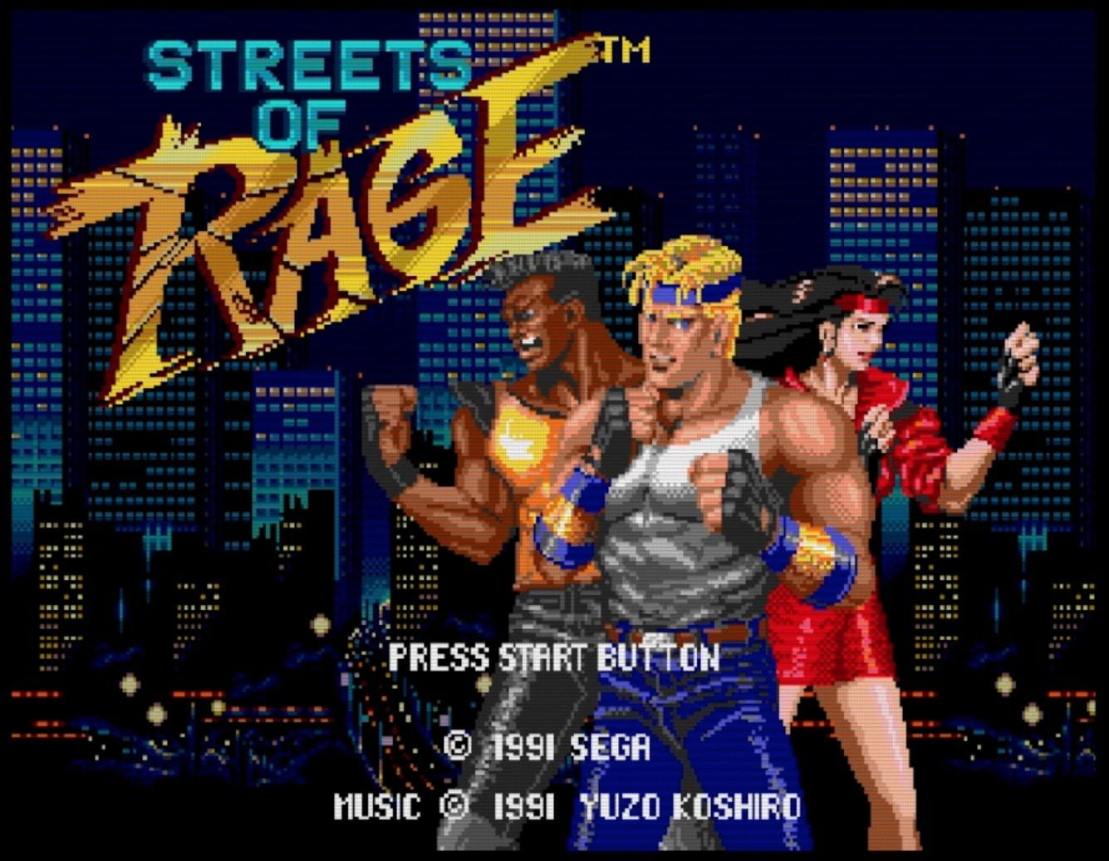
The beginning of the best beat 'em up trilogy in video game history.
Streets of Rage (Bare Knuckle: Ikari no Tetsuken in Japan) is a beat 'em up developed and published by SEGA for Mega Drive in 1991. It was the first entry in a trilogy successful in its day, receiving conversions at the time and later numerous ports in compilations.
Trivia: There are clear similarities between the covers of Streets of Rage 1 and 2 and Final Fight 2, as the images below show. Many people still claim plagiarism because Capcom's title was produced well after SEGA's classic. All of the covers have the same illustrator, however, making this controversy somewhat unfounded.
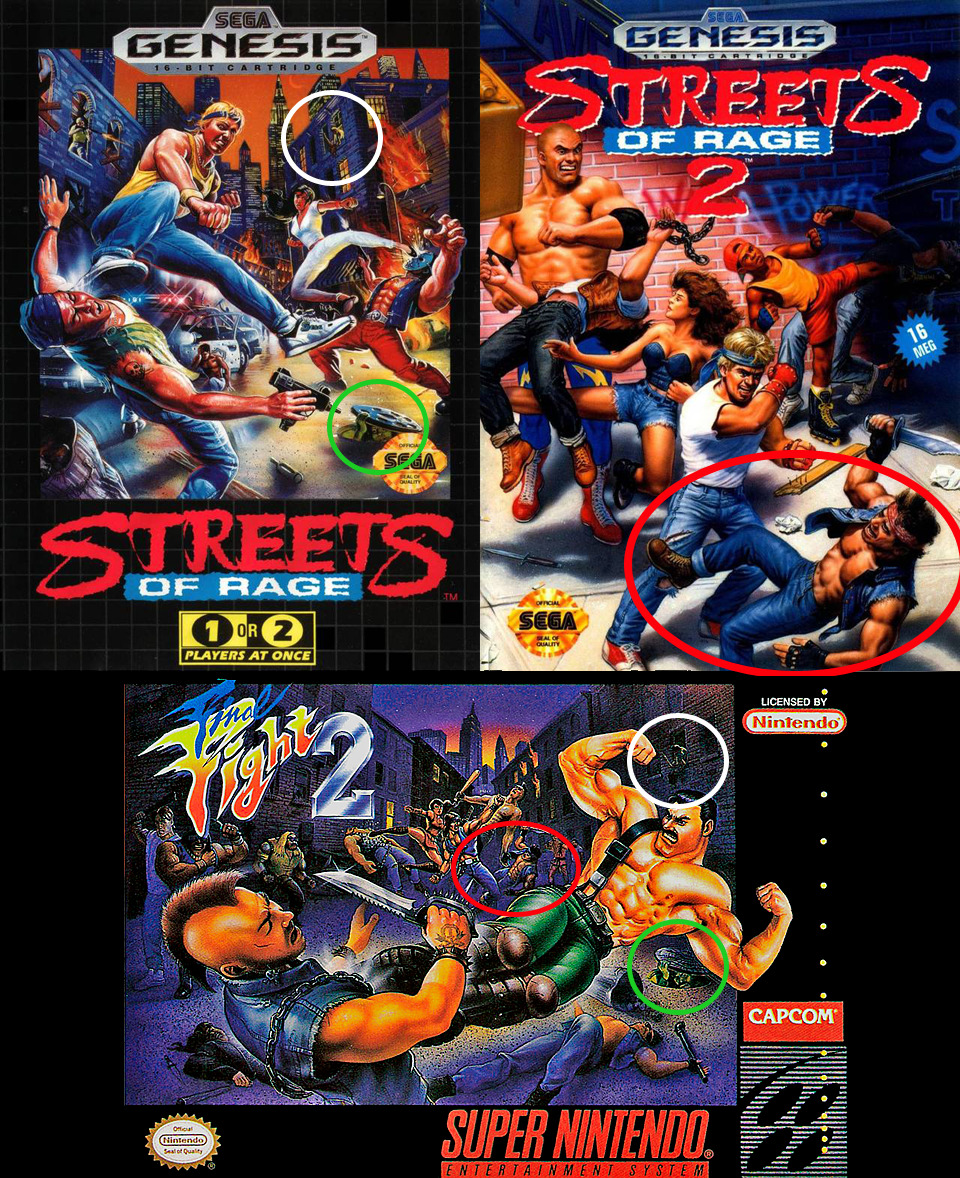
Highlighting the similarities between the Streets of Rage and Final Fight covers.
Behind the Scenes
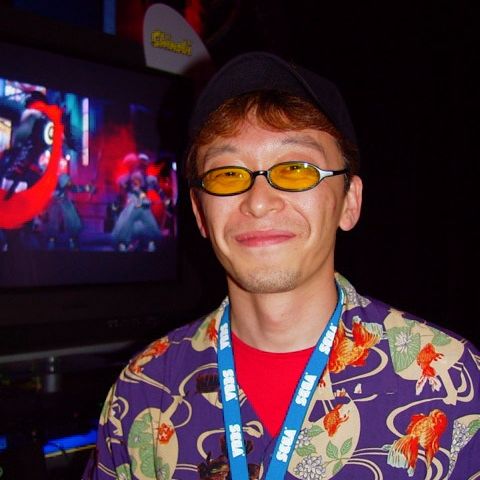
Director Noriyoshi Ohba.
Streets of Rage grew from a conversation between director Noriyoshi Ohba and musician Yuzo Koshiro after they finished the incredible The Revenge of Shinobi (1989) together. The subject of their informal meeting was SEGA's need for a game that could compete with the hits Double Dragon and Final Fight, something like "street karate," as they put it. Their inspirations included the games already mentioned and the television sensation of the time, The A-Team.
Early in production, when the game was still called Dragon-Swat (D-Swat), several features had already been defined: three selectable characters, one strong and slow, one weak and fast, and one with balanced attributes; a special attack modeled on Golden Axe; and the urban theme of cleaning up the streets. Calling Streets of Rage SEGA's answer to Final Fight, then exclusive to Nintendo consoles, is no exaggeration. Designer Atsushi Seimiya himself said the production team bought a Super Nintendo and played Capcom's title relentlessly throughout development of Axel and his friends' adventure, seeking to surpass every element that made its competitor successful.
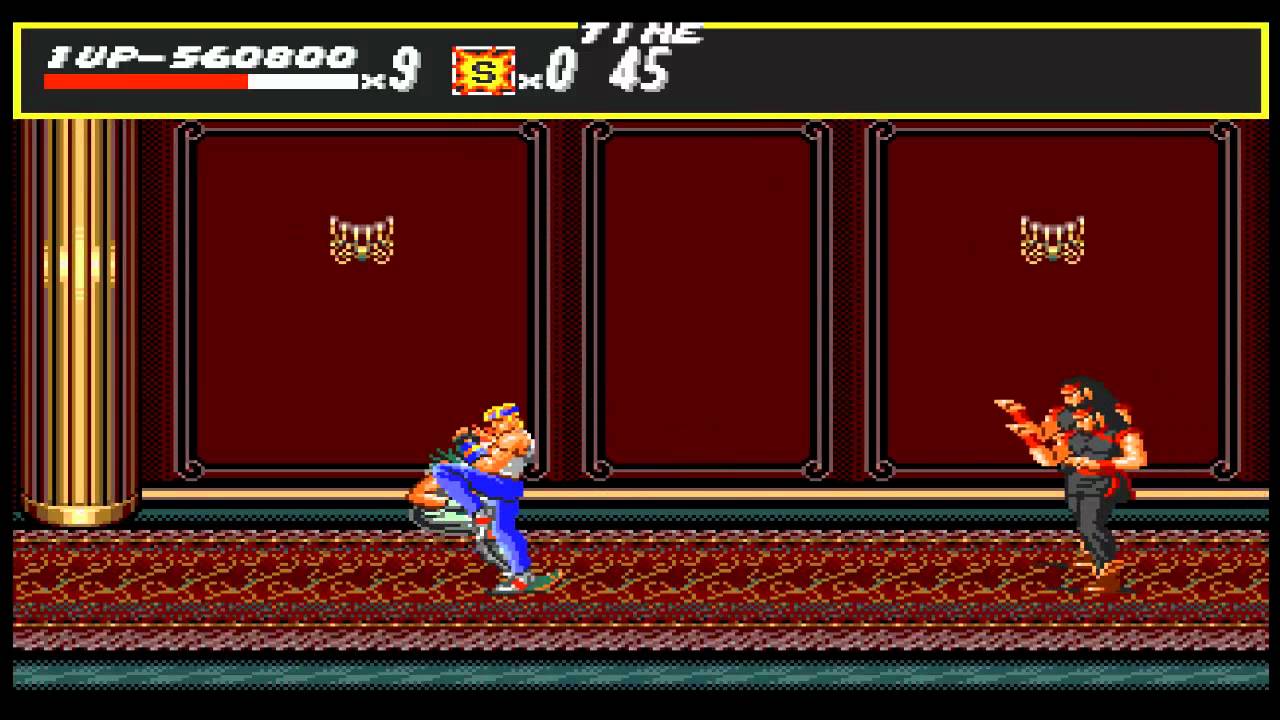
In the final stage, we have to manage without the support car.
Under Ohba's leadership, the ten-person team began work in July 1990. Besides the director already mentioned, the team included an environment developer, four designers, three programmers, and musician Yuzo Koshiro. The latter was so important to the project that he deserves a section of his own.
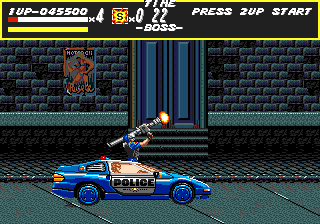
Trivia: As we have seen, Streets of Rage was initially called D-Swat, mainly because some members of Ohba's team had worked together not only on The Revenge of Shinobi but also on E-Swat. This explains the reuse of both sound effects and sprites from the earlier game. One good example is the support car, also seen in the cybernetic police officer's game.
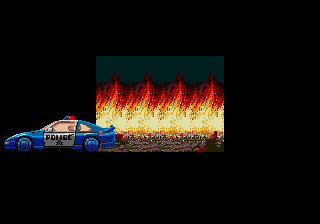
The Incredible Streets of Rage Soundtrack

Musician Yuzo Koshiro.
One of the great masters among video game composers was born in Tokyo in 1967. Influenced by his musician mother, he began playing piano at age three. While still young, he studied with the famous Joe Hisaishi, known among Japanese audiences as the "Japanese John Williams." Koshiro dreamed of becoming a game programmer as a child, but his fascination with soundtracks such as those of Gradius and Space Harrier changed his plans.
At only 18, he was hired by Falcom, where he soon distinguished himself by composing music for the classic Ys. During this period, Yuzo took up a notable cause: he protested the lack of recognition game creators received, as even their pseudonyms appeared in end credits only if they were lucky. Koshiro's solution was to become independent, work as a freelancer, and demand that his name appear in titles featuring his music, a truly revolutionary stance at the time.
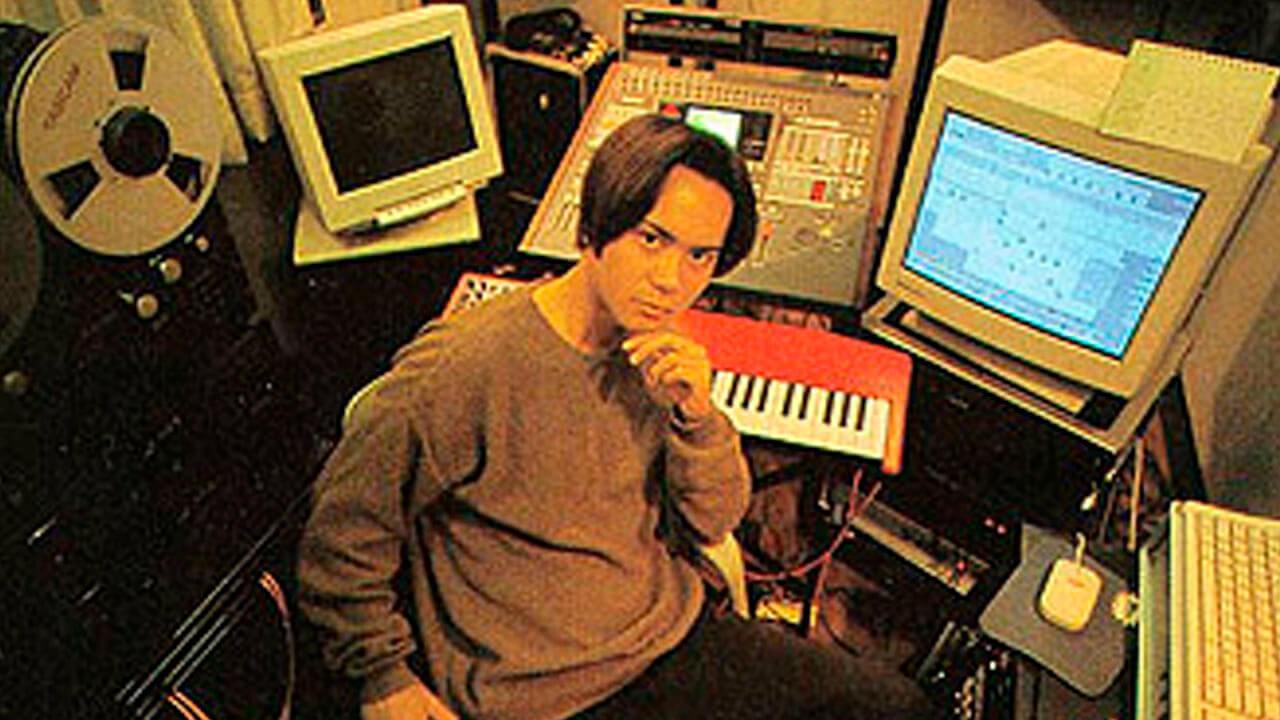
His style ranges from the pop/fusion of Sonic (MS), through the Baroque sound of Beyond Oasis, to the funk of Super Adventure Island.
The versatility and quality of Koshiro's compositions led SEGA to hire him for the music of the classic The Revenge of Shinobi, where he not only did excellent work but received proper credit on the title screen. When hired for the Streets of Rage soundtrack, Yuzo chose to innovate by moving away from the fusion and rock fashionable at the time. He had just returned from a trip to the United States, where he had extensive contact with electronic music. The style was not yet popular in Japan, but he took a chance on the prediction that it would one day become a trend there. He could not have been more correct.
In Yuzo Koshiro's own words: "I think it was the first time my music was made for an audience outside Japan. (...) SEGA did not interfere in the process. They did not give me any direction to follow; I could do what I wanted." Only 20 years old at the time, the so-called "wizard of the Mega Drive sound chip" created an excellent original soundtrack influenced by house, techno, R&B, and hip-hop.
We recently learned of his collaboration on the soundtrack for the upcoming Streets of Rage 4, which undoubtedly left every fan delighted and tremendously excited.
Trivia: As expected, the Streets of Rage soundtrack was enormously successful, leading to several music albums at the time of its release and afterward. One deserves special mention: an LP released in 2015 on the Data Discs label, a genuine treasure and essential item for true fans of the franchise.
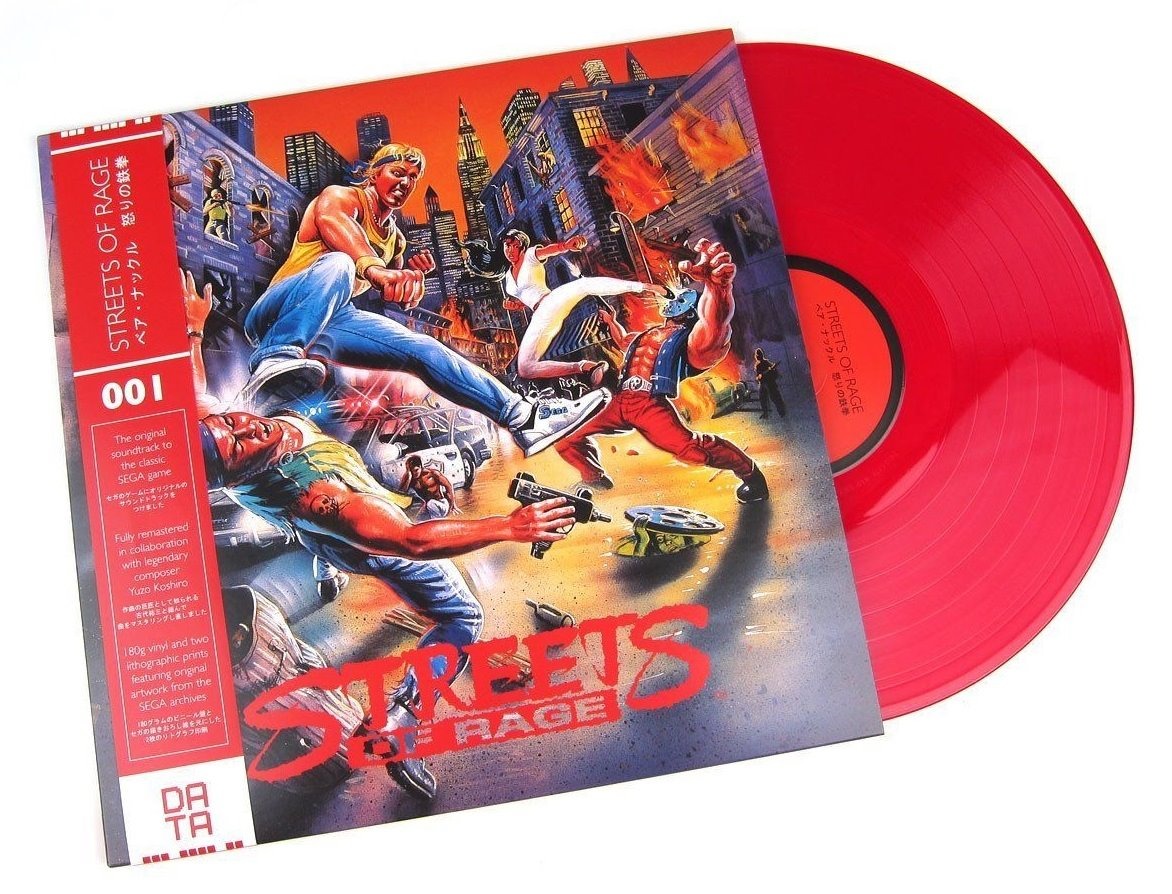
What a beautiful thing.
Story
The story of Streets of Rage is quite simple, merely providing a backdrop that justifies the brawling in the streets of a crime-ridden metropolis. Those who have not played it can read freely, because the information below will not disrupt the gameplay experience.
The best way to describe the situation seemed to be transcribing the title's famous introductory text, which plays with an incredible soundtrack before presenting the game's protagonists.
"The city was once a peaceful place... Until one day, a powerful criminal organization, the Syndicate, took control. This corrupt association seized the government and even the local police, and the city became a violent center where nobody was safe. Amid the turmoil, a group of young police officers vowed to clean up the streets. Among them are Adam Hunter, Axel Stone, and Blaze Fielding. They are willing to risk everything... Even their lives... In the streets of rage!"
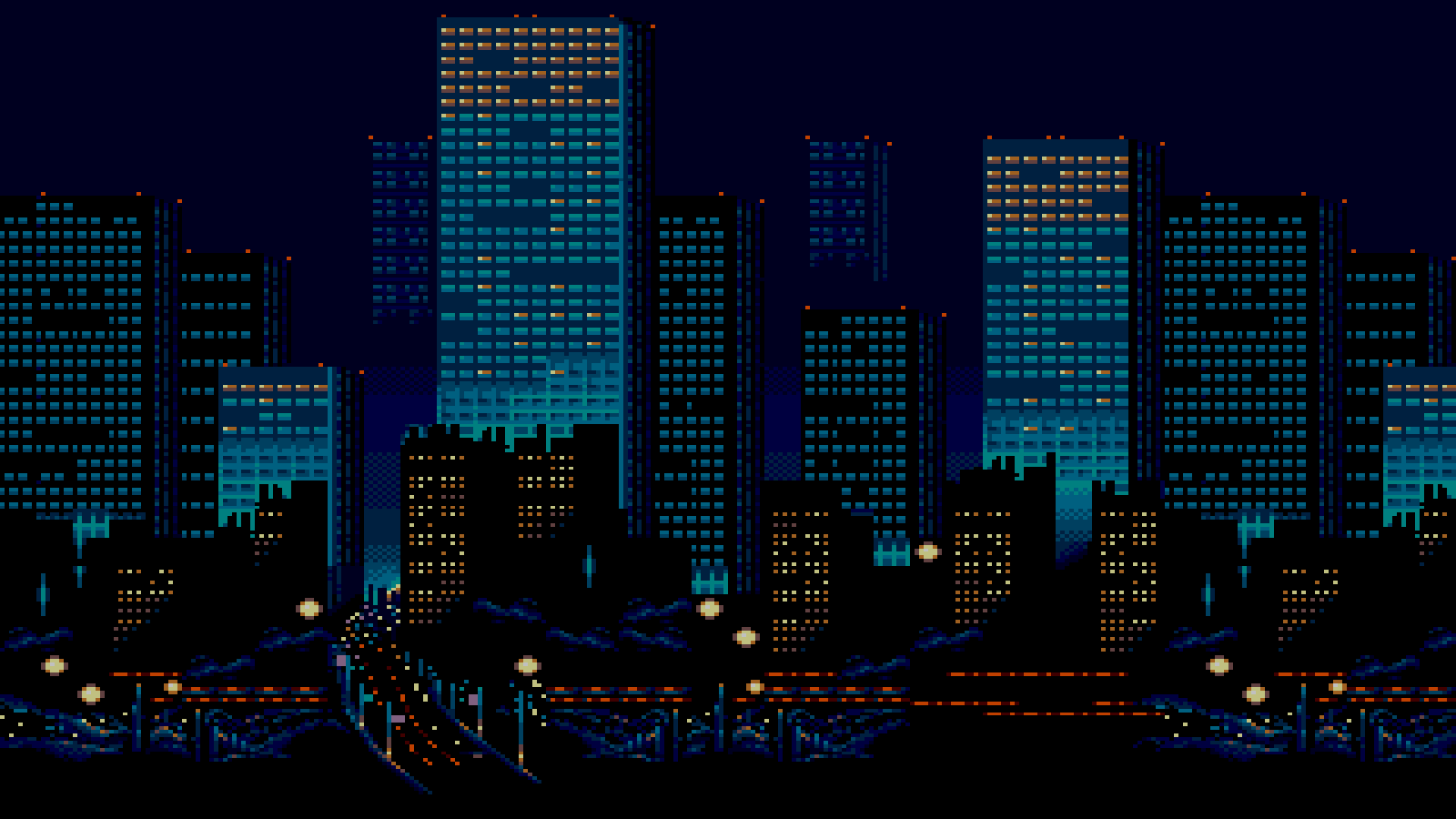
One of those deeply nostalgic images from the 1990s.
Thus, after completing their academy training and witnessing the unnamed city's police force become completely corrupted by its largest gang, three young officers decide to free the residents from the crime caused by villain Mr. X on their own. SEGA was not feeling very creative, was it? The heroes are Adam Hunter: strong and slow, unfortunately a protagonist only in the franchise's first title, with a long-range flying kick as his greatest asset; Axel Stone: the rebels' leader, with balanced attributes; and Blaze Fielding: fast and weak, and a leading contender for the greatest heroine in SEGA history.
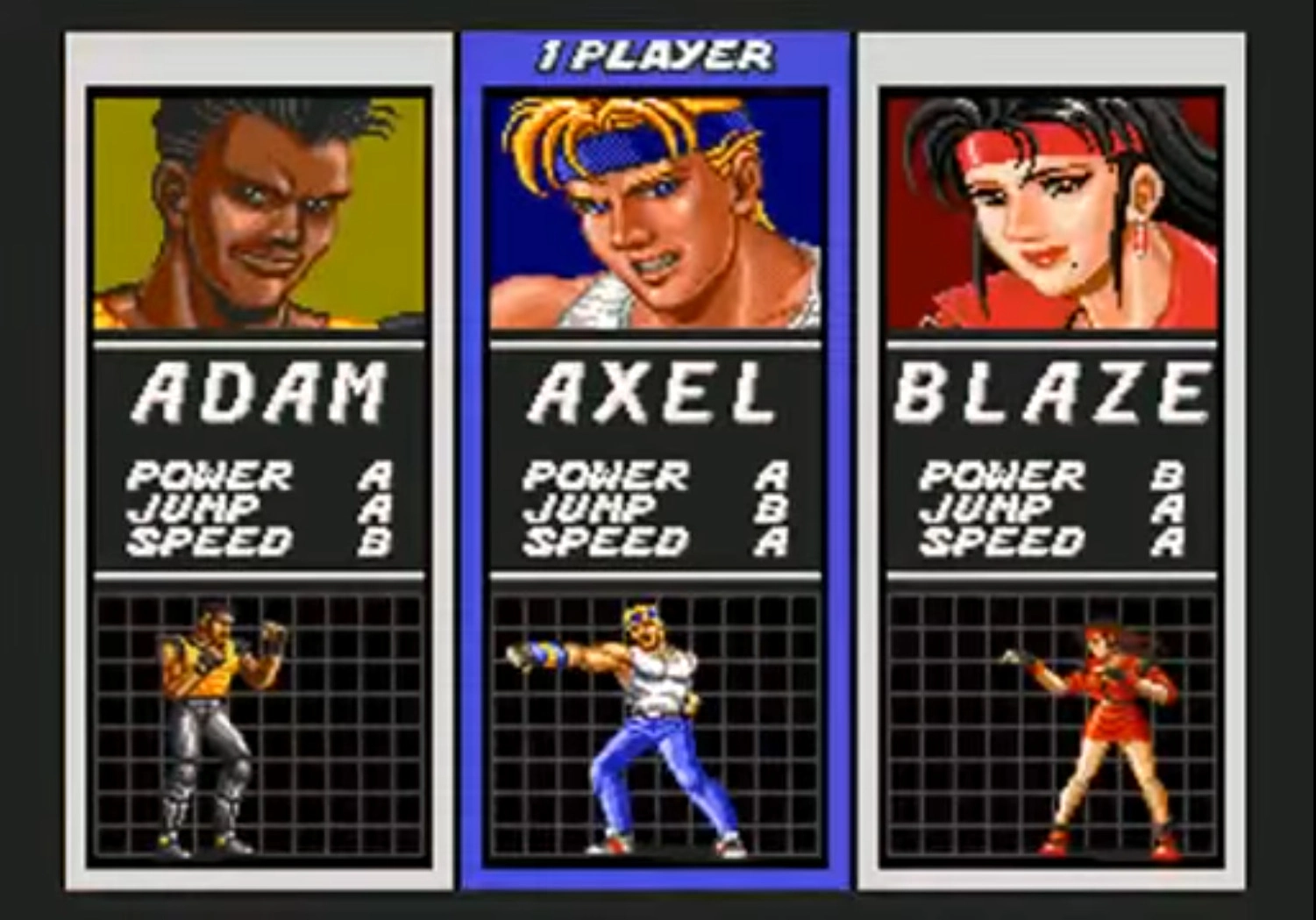
Which one was, or still is, your favorite?
Trivia: During the creation of Streets of Rage, the protagonists' names and designs changed considerably. Axel was initially called God Hand, a karate fighter very similar to Chuck Norris, then renamed Hawk before finally becoming Axel. Adam was first Black Bird, a controversial name to say the least given the character's ethnicity, then Wolf before becoming Adam. Blaze was known as Pink Typhoon, and her design closely resembled an enemy from The Revenge of Shinobi. Most interestingly, some of the strongest evidence for Adam and Axel's prototype names came from the pages of Brazilian magazine Supergame, which was backed by Tectoy, SEGA's representative in the country.
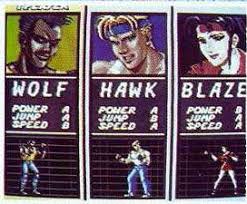
An image demonstrating the respect Tectoy had for SEGA at the time.
Technical Analysis
Today, the premise of a protagonist beating up hundreds of thugs who spend their days disrupting honest residents' lives without asking many questions may seem strange. Movies with similar themes were a sensation, however, especially from the 1970s and 1980s through the mid-1990s. Actors such as Bruce Lee, Jackie Chan, and even Jean-Claude Van Damme stand out as icons of this action style, which generated millions of dollars annually.
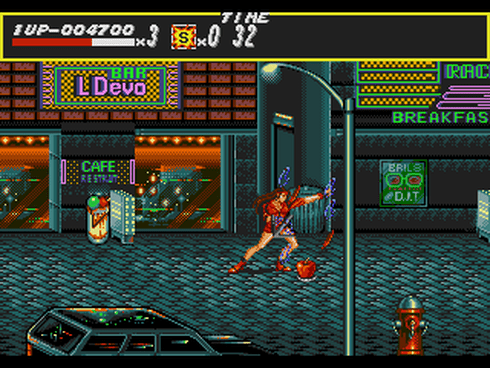
Food is found in the most unlikely places, such as trash cans and telephone booths. The terror of salmonella.
The gameplay of Streets of Rage was not especially innovative or revolutionary, mainly consisting of advancing after defeating every enemy in our path. Looking more closely at the details, the refined grab system can be considered an interesting addition to the genre: we can not only throw enemies to the opposite side but also leap behind them and perform a suplex, a technique that deals greater damage and adds strategy. Other distinguishing features include joint attacks in cooperative play and the ability to hit opponents approaching from behind, similar to Golden Axe.
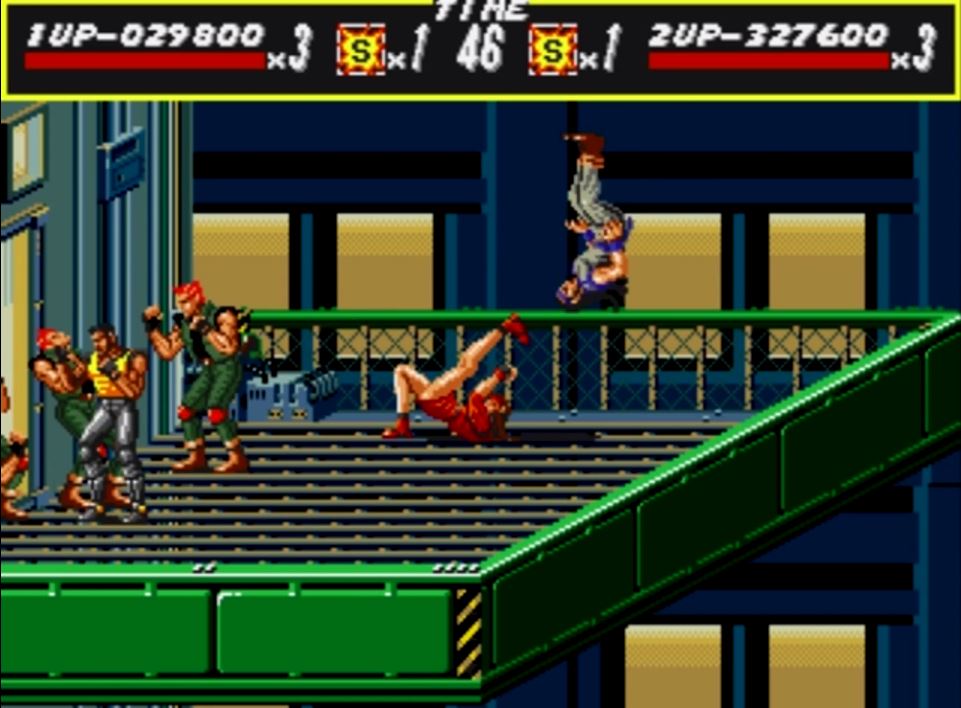
Throwing enemies from classic elevator stages was such a pleasure.
The controls in Streets of Rage are very good and respond well to player input. Unfortunately, SEGA had not yet implemented running in the franchise, even though that would not have been unreasonable given that Golden Axe came from the same company and had already been on the market for some time.
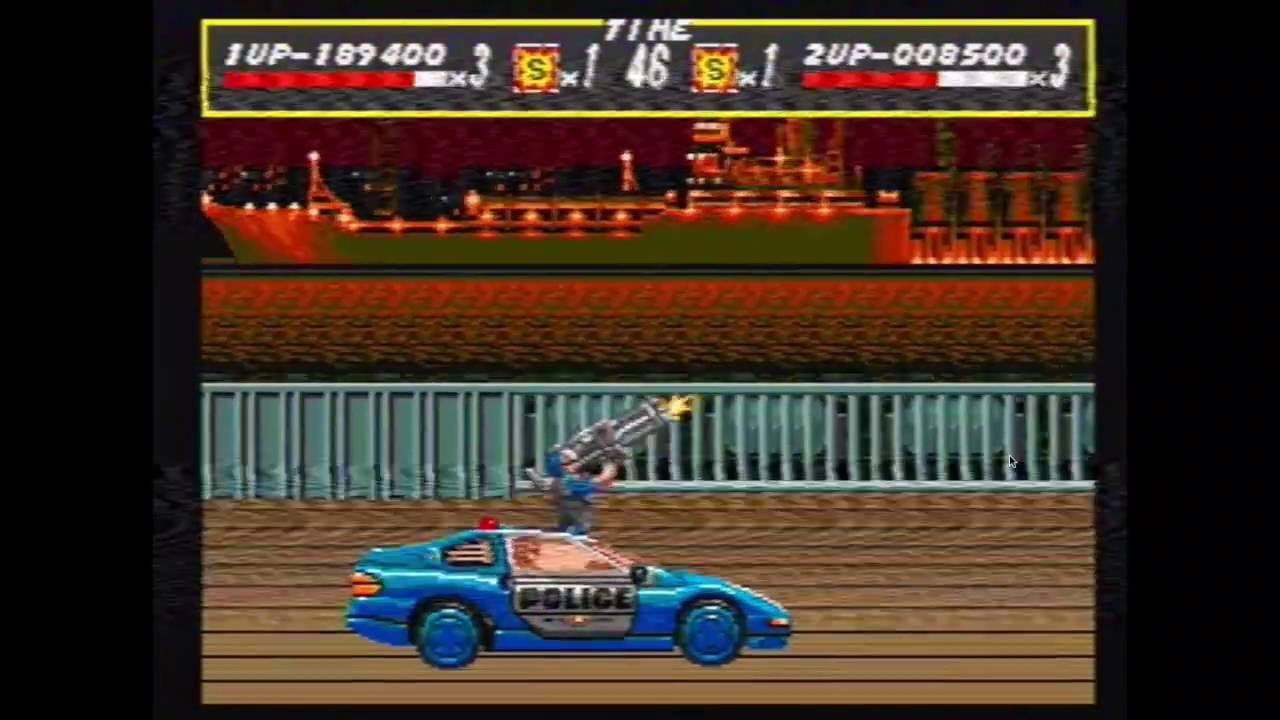
Am I the only one who thinks the police opening fire on unarmed troublemakers without saying a word is a little excessive?
The graphics of Streets of Rage are its greatest weakness, especially compared with the incredible sequels it received on Mega Drive. Even so, everything is colorful and highly detailed, making the varied scenery throughout the adventure a genuine pleasure to admire.
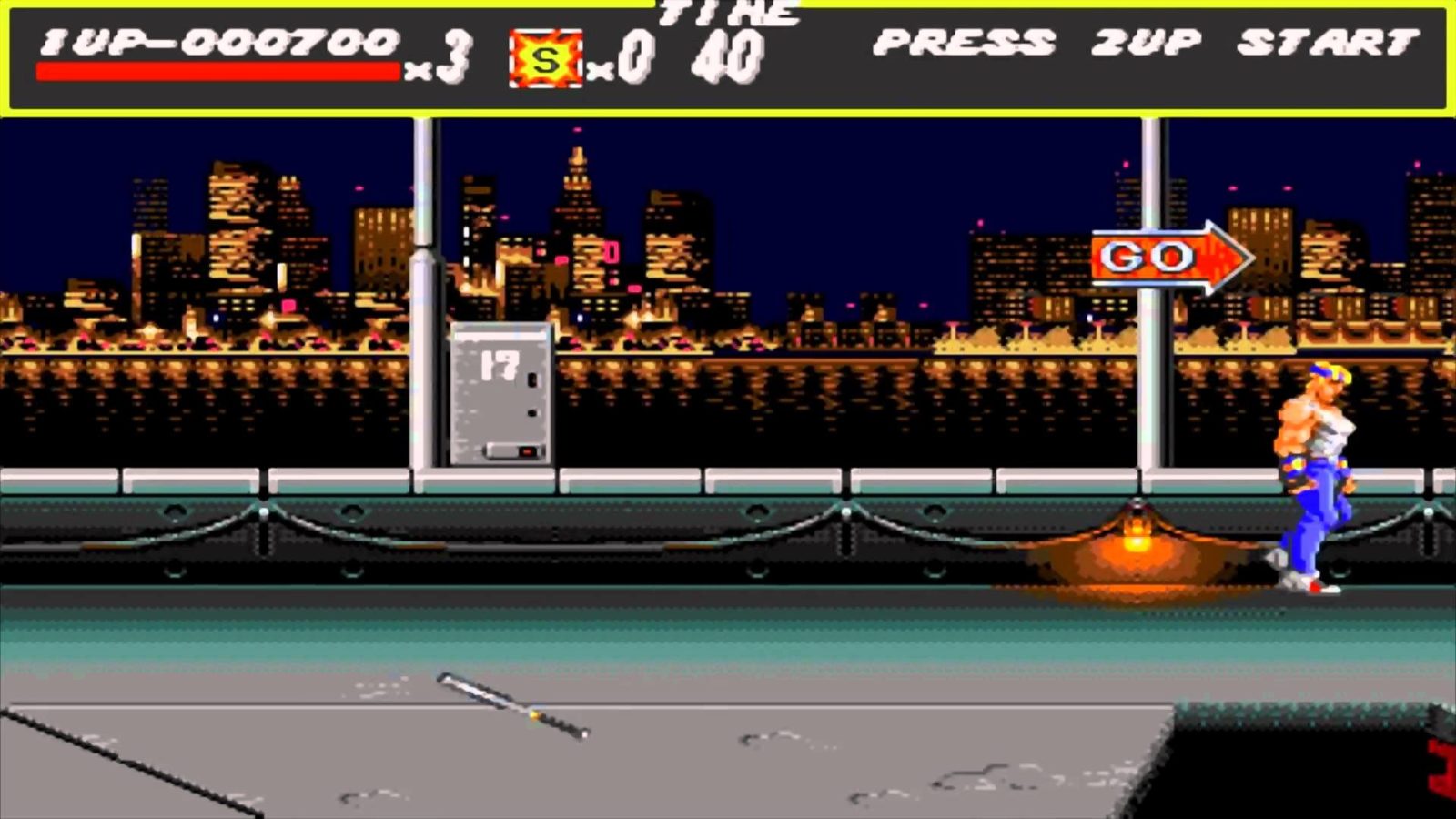
Pits throughout the stages let us gain time when used correctly.
Although Streets of Rage has no multiple paths to explore, the title has good replay value because it is so much fun, especially when shared with a friend. Everything has such visual flair that players will want to return, if only to hear the incredible soundtrack again or reach the so-called bad ending.
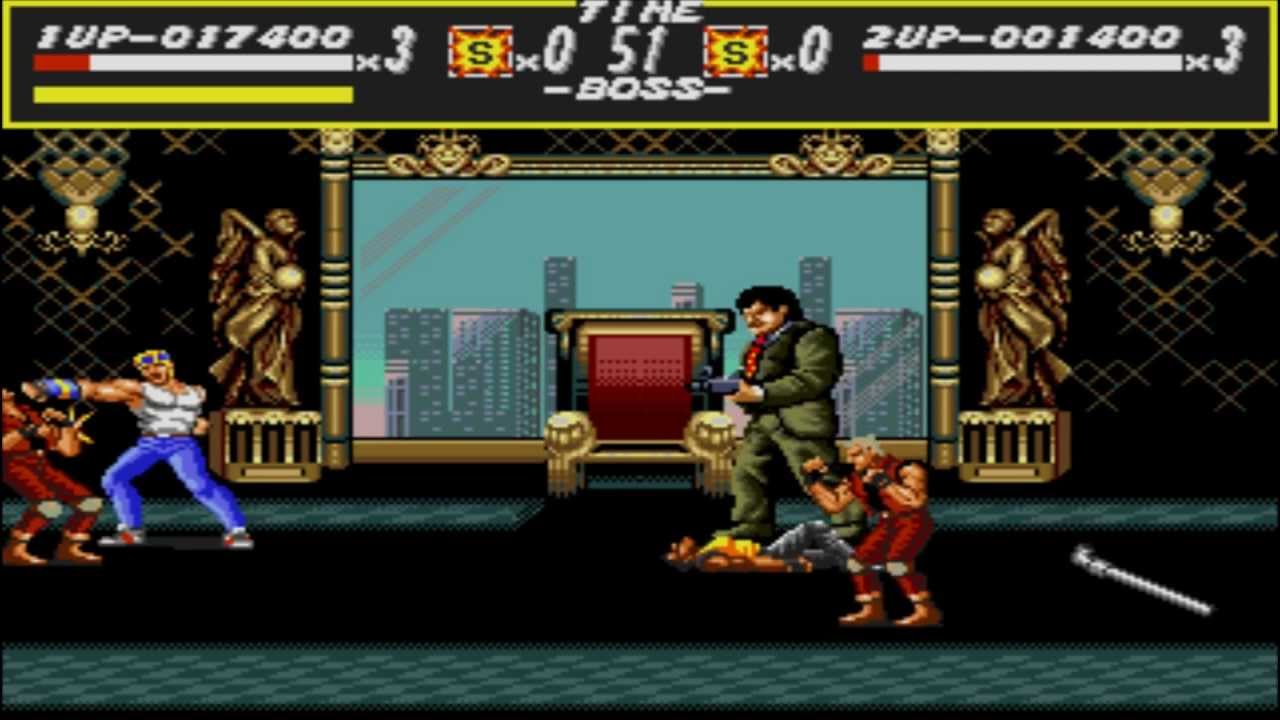
Showing up with a machine gun is just unfair.
The difficulty in Streets of Rage is low for players experienced with beat 'em ups, especially in multiplayer. Because both players have access to the special attack, bosses become much easier; the game's toughest enemies effectively enter the scene already severely weakened.
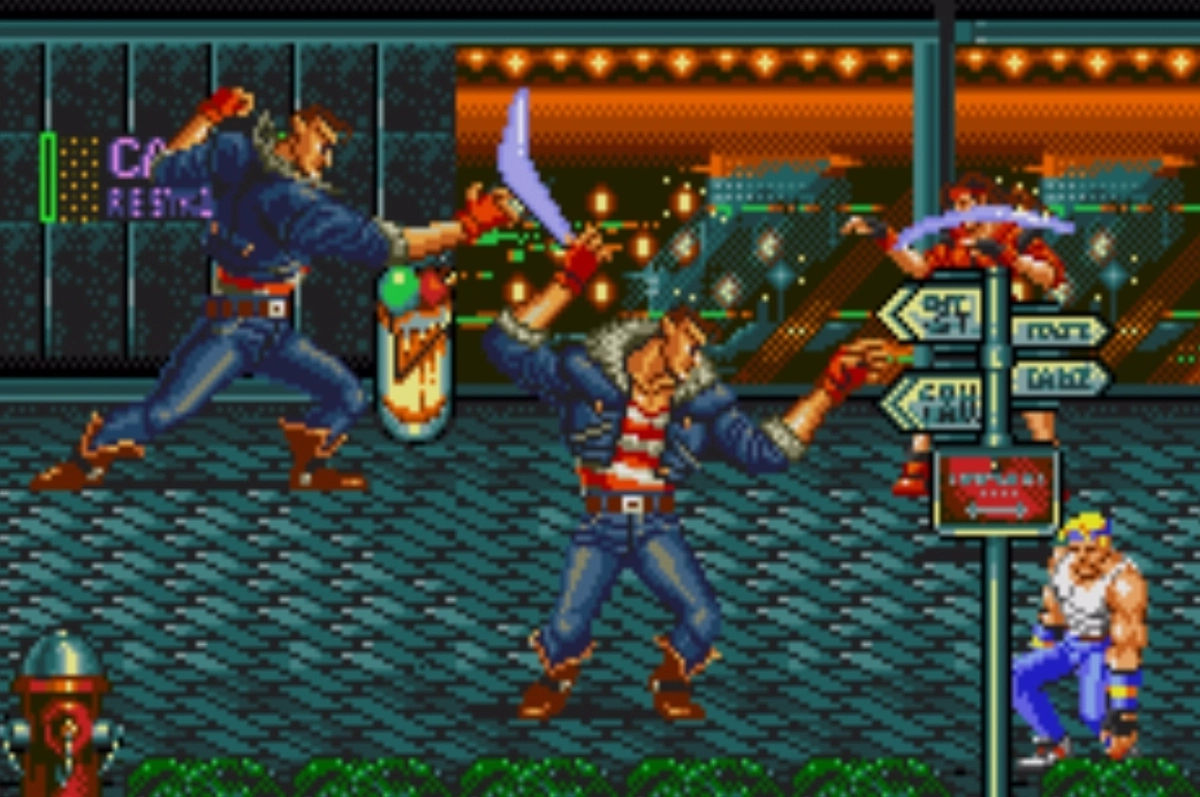
The bosses in the first Streets of Rage apparently suffer from gigantism.
The campaign length of Streets of Rage is short, though typical of its genre. More experienced players will reach the end credits in under an hour.
The soundtrack has already been discussed at length above. As for the sound effects, they are excellent, and many were reused from The Revenge of Shinobi, partly as a cost-saving measure.
Below is the complete Streets of Rage soundtrack. Turn up the volume and enjoy.
Trivia: Streets of Rage was such a tremendous success that conversions for SEGA's 8-bit consoles were easy to imagine at the time. Master System: Released in 1993, this version made excellent use of the console's technical capabilities and, despite losses such as the inability to play multiplayer, included extras such as a distinctive new boss. In my view, it easily deserves the title of the best beat 'em up in the console's library. Game Gear: Released in 1992, this is an entirely different and much weaker version than the Master System game. It has only five stages and lacks both the support car and Adam as a selectable character. The controls also suffered, making it worth seeing only as a curiosity.
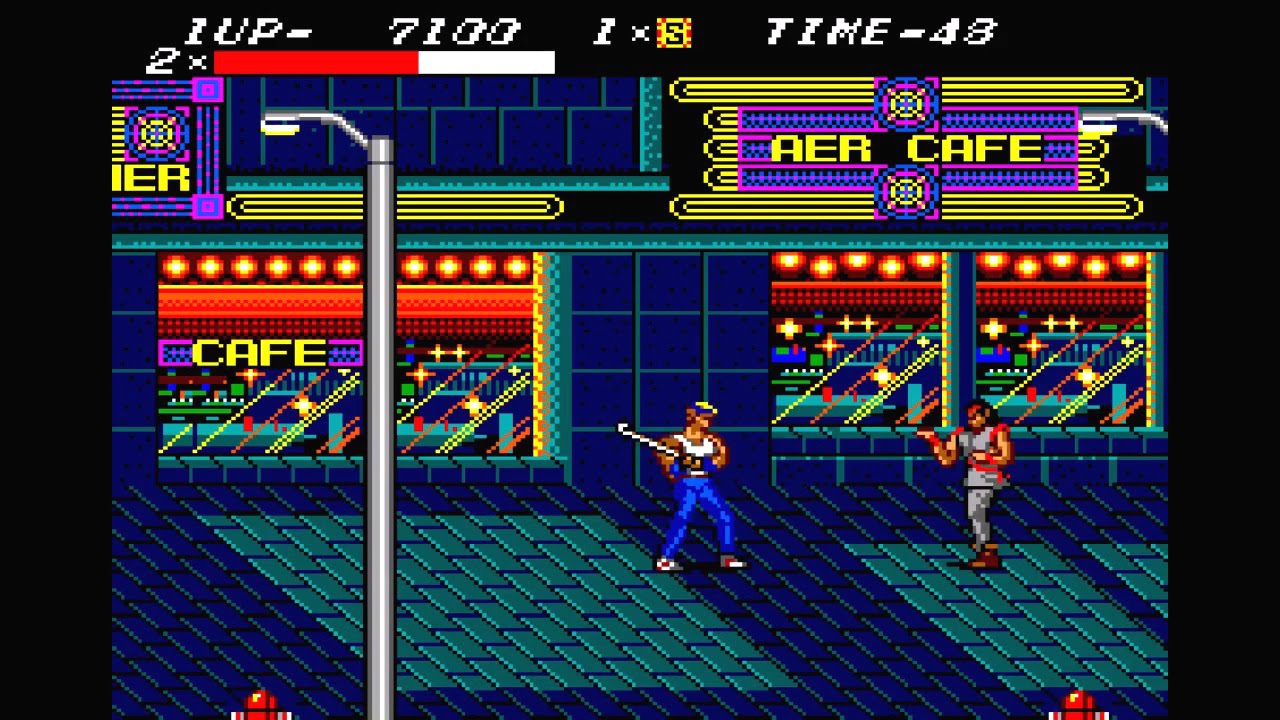
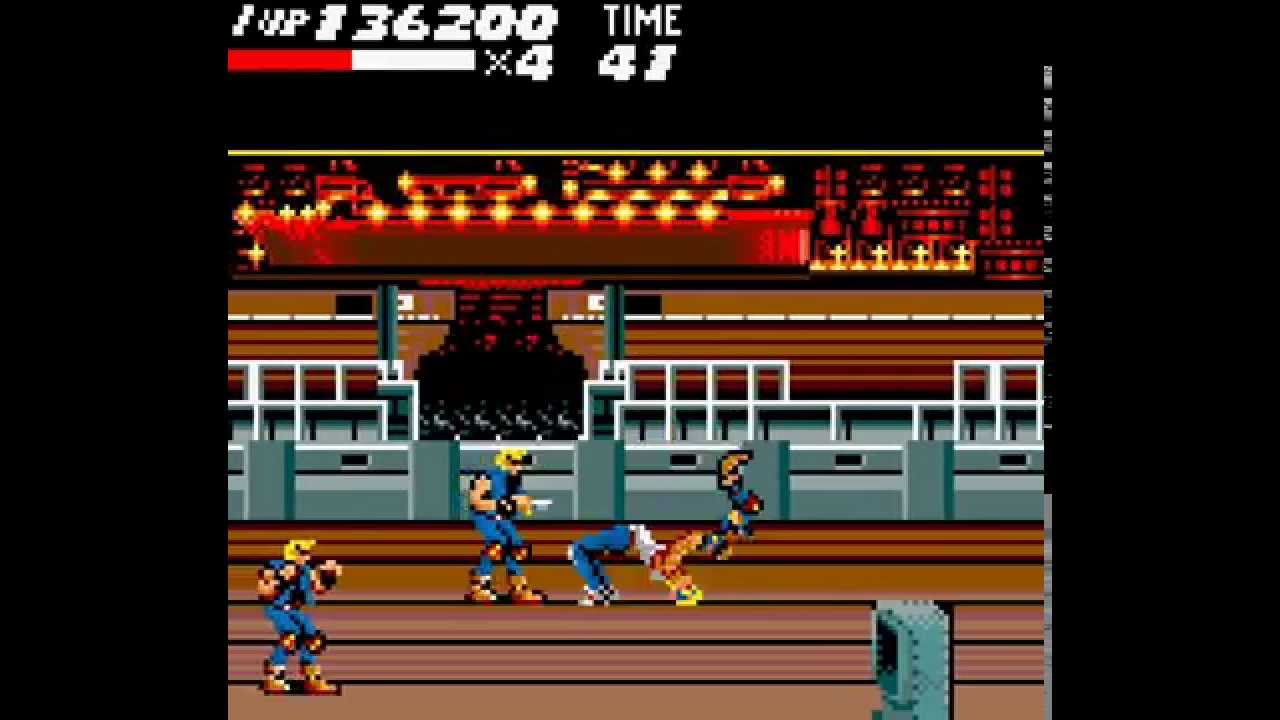
Streets of Rage Stages
Streets of Rage has eight campaign stages, each with a distinctive setting and plenty of personality. Not all have unique bosses, so some repeat. Throughout the stages, we encounter genre clichés that simply cannot be omitted: an elevator stage, unsafe food found in trash cans, and pits into which we can throw enemies, a feature unfortunately absent from its incredible sequel. I will cover only the first three stages to avoid larger spoilers.
Stage 1 — City Street: The game begins in the city center, contaminated by corruption and disregard for the law. The soundtrack immediately displays its above-average quality, which alone motivates us to continue. As expected, the difficulty is manageable. Boss: Antonio.

The shop windows and bright lighting show that we are downtown.
Stage 2 — Inner City: After cleaning up downtown, it is time for the outskirts. The setting is extremely dirty, with abundant graffiti and abandoned buildings, a typical gang-controlled area in the action movies of the period. Souter's subordinates are everywhere, but the difficulty is still not especially high. Boss: Souter.
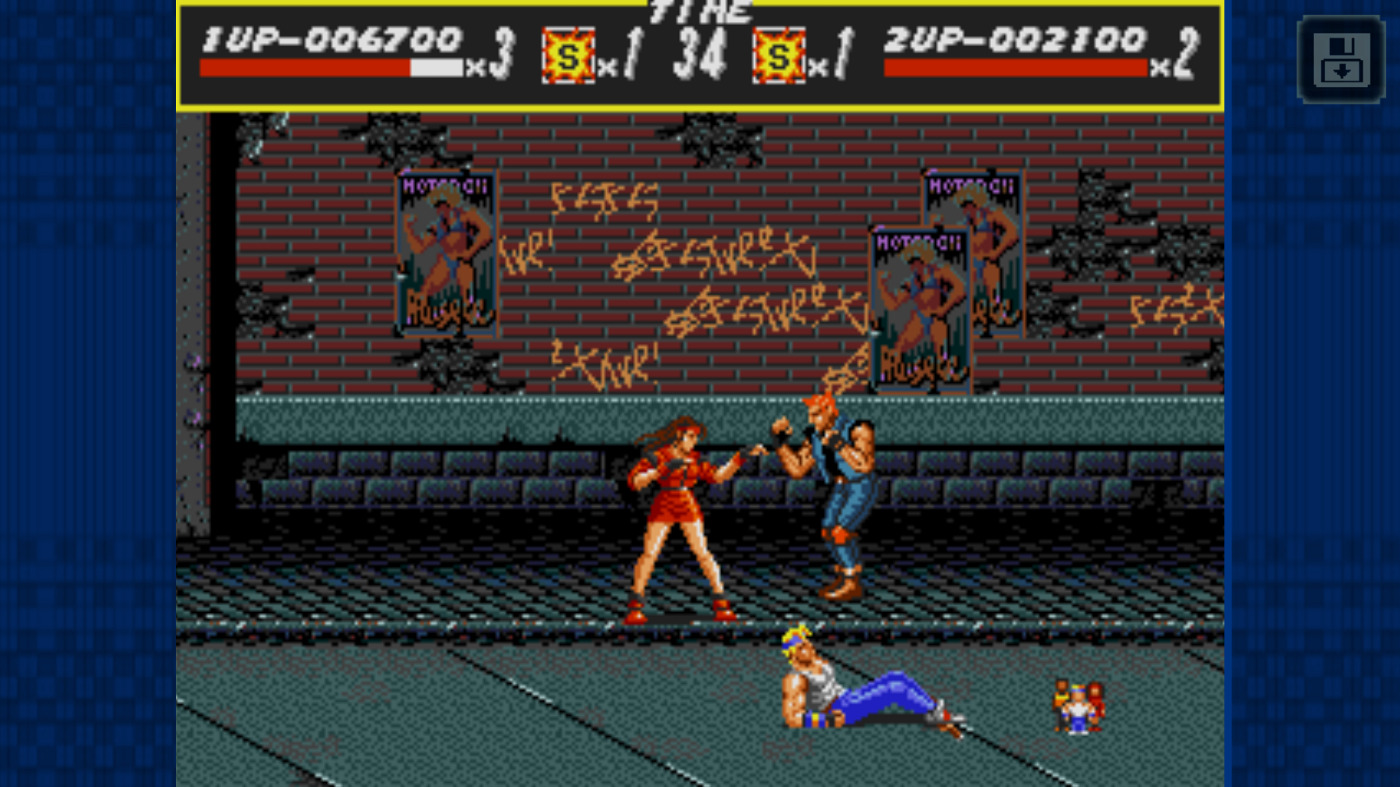
A typical stronghold for those who do not obey the law.
Stage 3 — Beachfront: Time to head to the coast and deal with the criminals infesting its sands. Everything is filthy and full of cans and tires where we find items. It is commonly remembered as one of the game's simplest settings, yet also one of the most iconic because of its soundtrack. The local leader is a professional wrestler who agreed to serve Mr. X in exchange for a great deal of money. Boss: Abadede.
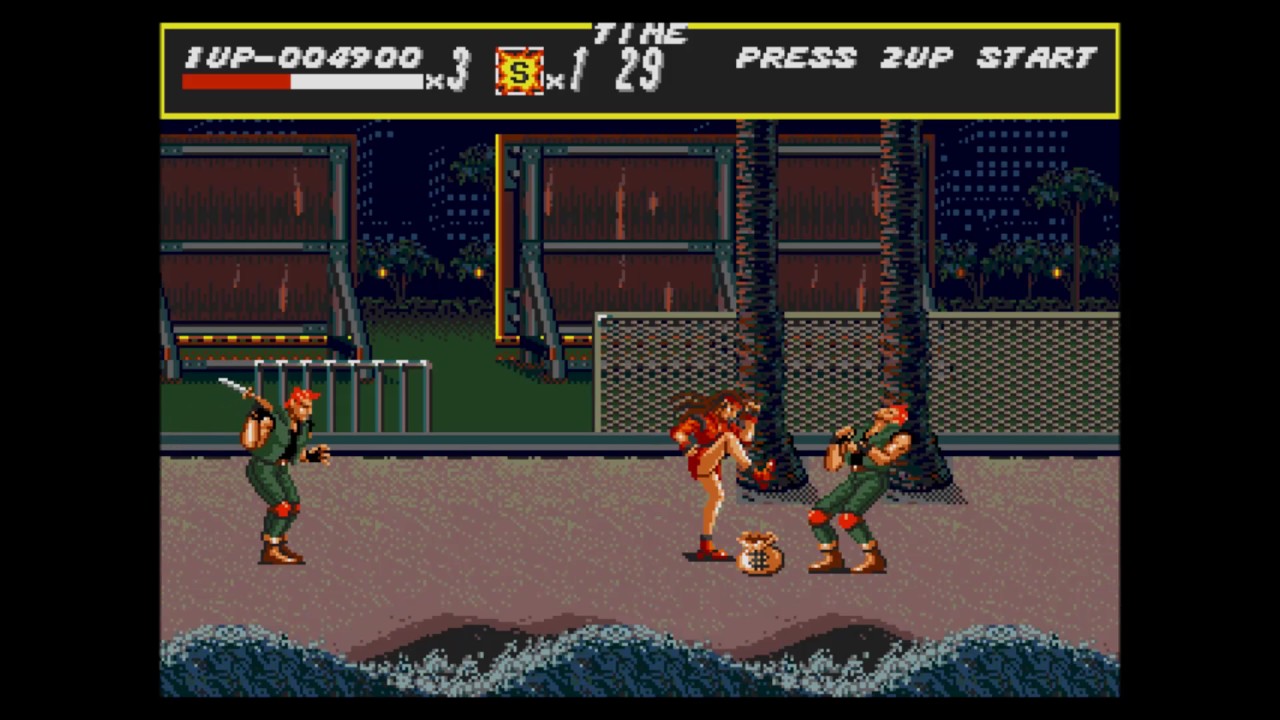
Time to "clean up" the beachfront.
Trivia: Incredibly, many people still do not know after all these years that Streets of Rage has a bad ending. To see it, players in multiplayer must give different answers when Mr. X asks whether they would like to join him. If the player who answers 'yes' wins the duel and then defeats Mr. X, that player becomes the new leader of the Crime Syndicate.
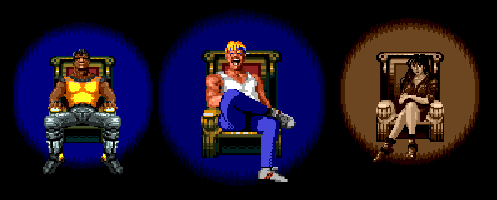
A little-known image from the game. (Apologies for the brief spoiler.)
The Bestiary
Enemy variety was limited in the first Streets of Rage. I imagine this was partly because the cartridge had a capacity of only 4 Mega. There are five enemy types and their variants throughout the stages, plus five bosses. Unfortunately, only bosses have visible health bars here, a flaw corrected in the sequel. Below, we will cover four enemy types commonly seen during the campaign and only one boss, avoiding excessive length and spoilers.
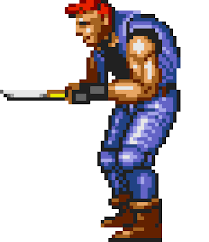
Garcia: The simplest enemy in the game, a typical punching bag who causes no trouble for players with some experience in the genre. Unfortunately, the Garcias have one detail: some may appear armed during the campaign, which changes the situation somewhat, especially one carrying a little knife, the very definition of an annoying enemy. Even so, a little attention solves the problem;
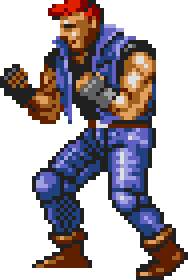
Y-Signal: Naturally, the enemies include typical punks. Their specialties are difficult-to-evade sweeps and throws that deal substantial damage, when they are not sending us into pits. The key advice is never to forget to press up plus the jump button when thrown. This makes the character land on their feet without losing health. This tip is even more useful against the boss, or bosses, regarded by many as the hardest in the game.
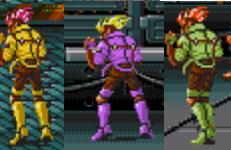
Y-Signal — the throwing punk.
Hakuyo: Known at the time as SEGA's Shiryu, Hakuyo is a kung fu student dissatisfied that he could not use his advanced techniques on his classmates. He saw Mr. X's Syndicate as an opportunity to reveal his cruel side without repercussions. He is a fast character who jumps frequently during battles. Players only need to pay attention and everything will be fine.
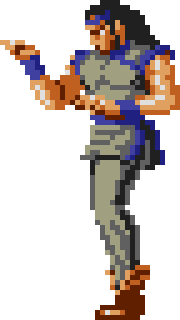
Hakuyo — Shiryu. He really does look similar, doesn't he?
Nora: The game's sadomasochist is a dancer at the city's nightclubs controlled by Mr. X. Her intimate relationship with the Syndicate boss lets her move through any part of the city. Her black-outfit variant has a highly inconvenient trait: when hit, she falls and only gets up after we move away. Grabbing techniques are ideal in these cases.

Nora — the sadomasochist.
Boss Souter: The boss of the second stage, who also reappears later. This variation on Freddy Krueger rules Inner City without allowing any government interference. His attacks deal substantial damage when they land cleanly. The main advice is to defeat him with grabs and never, seriously, use aerial attacks.
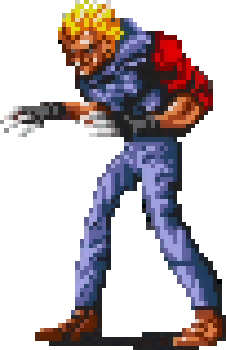
Souter — the ten-foot-tall Freddy Krueger.
Trivia: Streets of Rage 2 reached the market in 1993 to inflame the console war. The title surpassed every strength of the first game, including the soundtrack, at least in my opinion. It was so well made that it resembled a beat 'em up crafted with the care of Street Fighter 2. Its cartridge had a capacity of 16 Mega, four times that of its predecessor, and it was one of the strongest reasons to buy a Mega Drive. As usual, however, that is a subject for another review.