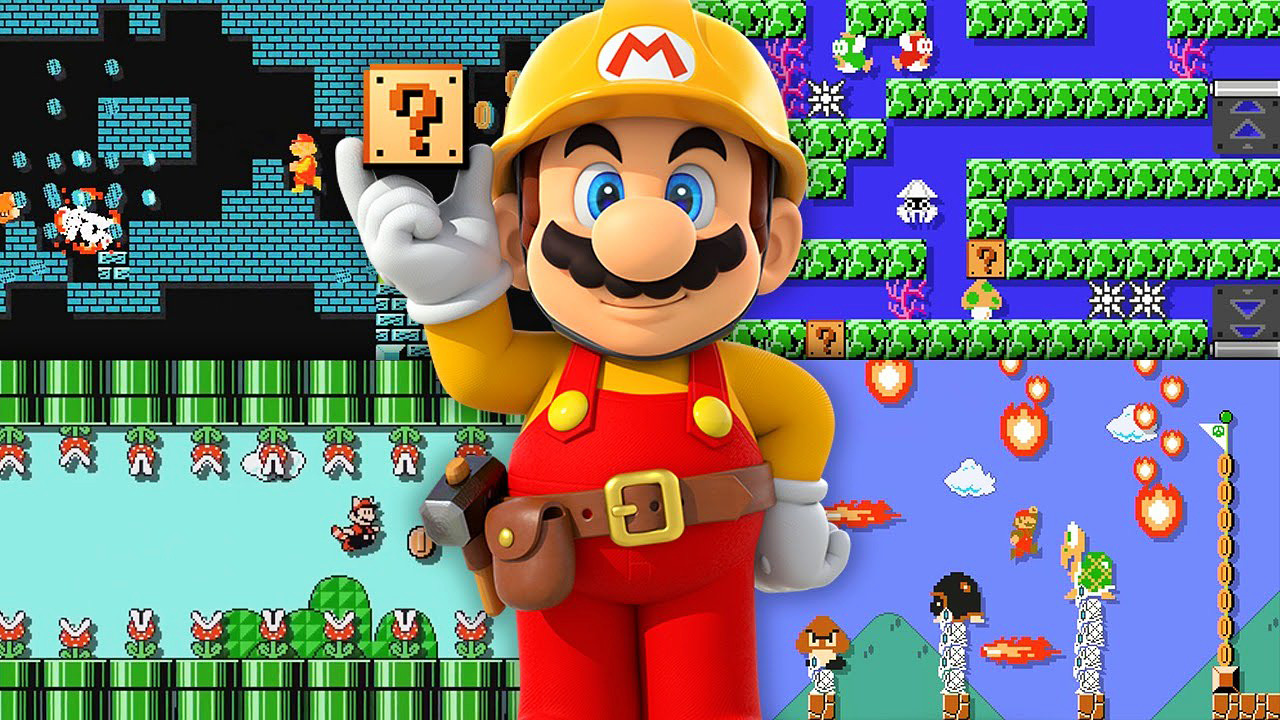
In the 1980s, Super Mario Bros. unquestionably became a guide to how platform games should work from that moment on; its legacy can still be felt today, and Nintendo has always known how to make proper use of it. Wii U had the perfect tools for a level creator through its GamePad, and combined with the recent success of LittleBigPlanet, some people already imagined that major companies would embrace something of this kind. Ironically, Shigeru Miyamoto did not actively participate in the creation of Super Mario Maker, but everyone who played it could feel the wonderful pleasure of being part of his team.
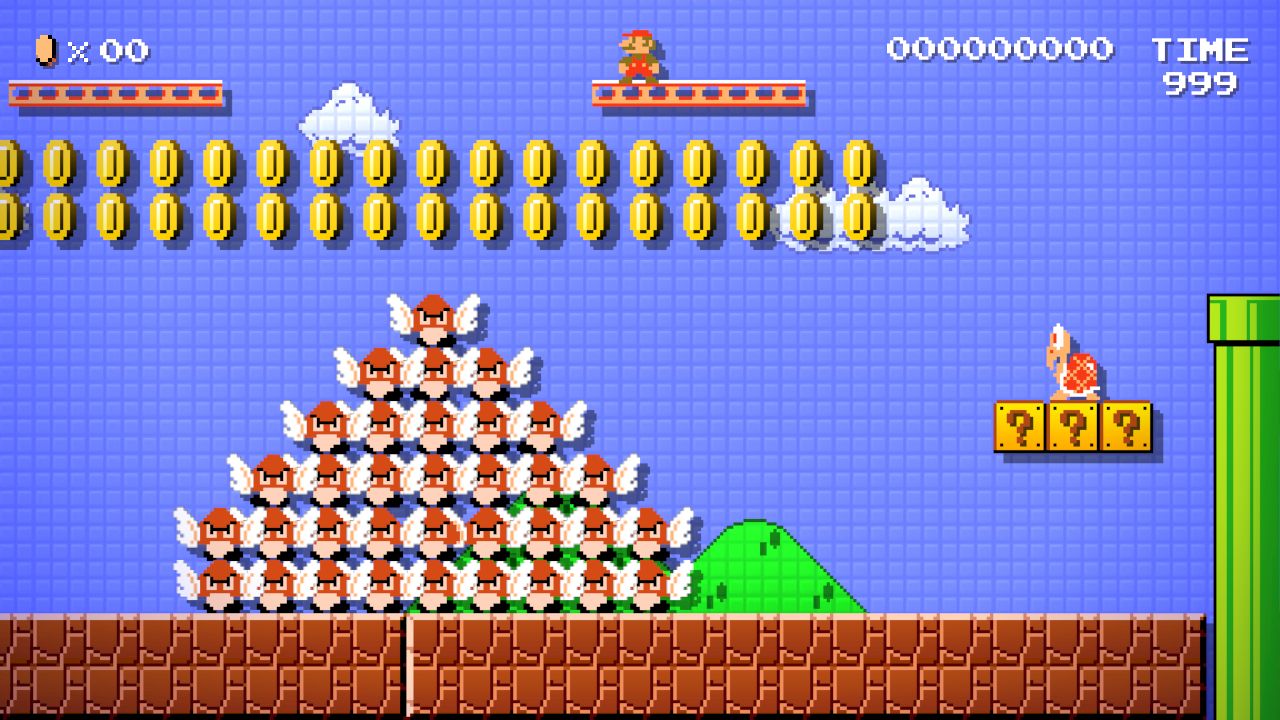
Creative freedom is Super Mario Maker's greatest attraction.
Super Mario Maker is a platform game and level editor initially released for Wii U in 2015 and later converted for 3DS in 2016. The version evaluated in this review is the first, released for Nintendo's home console.
Below is the Super Mario Maker trailer shown to the public during E3 2015.
Because Super Mario Maker is enormous in content and possibilities, Nintendo released videos to help players overcome creative block. Here is an example.
Curiosity: Super Mario Maker found success with the public almost instantly and became a sales hit even on a console that was not especially popular. The title ranks seventh among Wii U's best sellers, with 3.45 million units sold. It did not take a genius to predict that the game would receive a sequel, did it?
Behind the scenes of Super Mario Maker
Everything began when Nintendo employees realized that a program they had developed to create game levels had real potential for use by the public. The project was therefore sent to Takashi Tezuka, who had serious plans to make a sequel to Mario Paint for Wii U using the gameplay advantages provided by the GamePad.
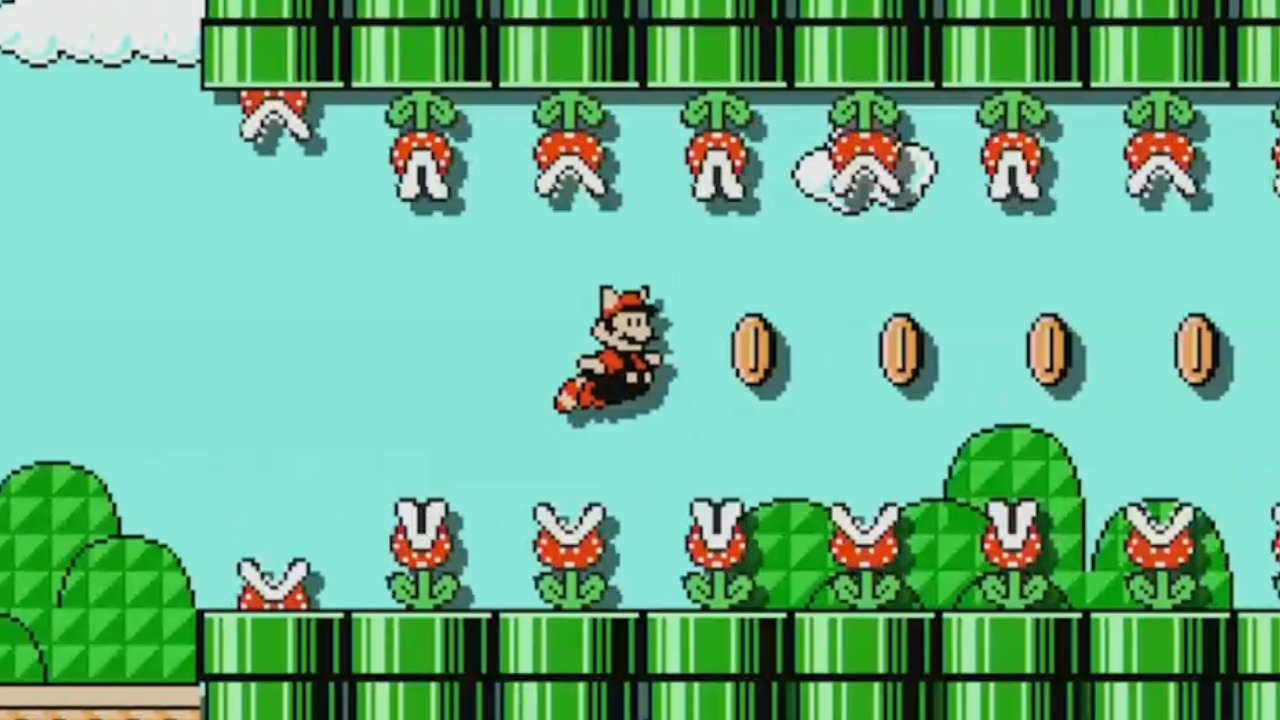
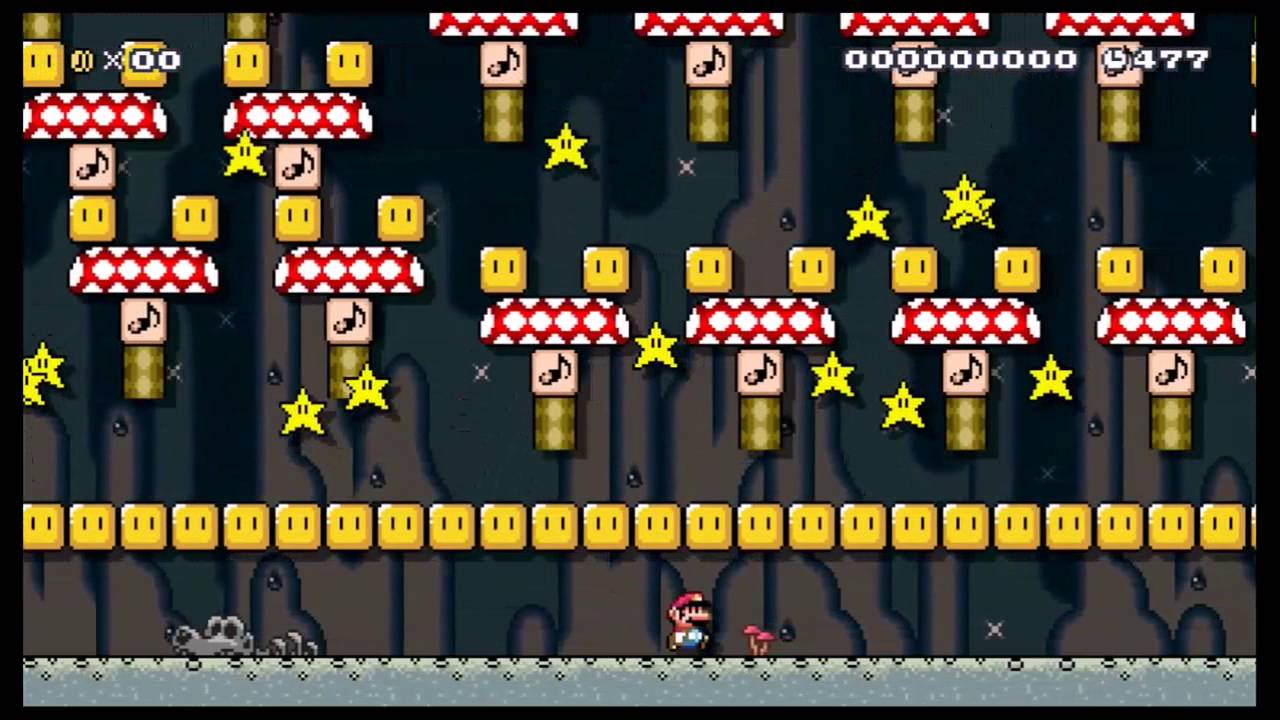
Anyone who played Super Mario Bros. 3 knows the precision needed to pass this section.
Takashi Tezuka soon realized that using this work tool to create a Mario-world level "maker" would be much more profitable for the company than continuing with a sequel to Mario Paint. Following the first tests, Tezuka tried to bring the fun of his art game to the level editor and appointed Yosuke Oshino as the project's director. In 2014, Nintendo announced to the public that it was developing the title, which at the time was called simply Mario Maker.
Curiosity: Super Mario Maker's success extended beyond sales and the public to professional critics. Most websites awarded scores around 9/10, including several 9.5 ratings from outlets such as EGM and Polygon. This acclaim even led the game to compete for Game of the Year at The Game Awards 2015, a title it lost to The Witcher 3. On that occasion, it took home the award for best family game.
Technical review
The essence of Super Mario Maker lies in creating and sharing stages through the GamePad controller. As the foundation for these levels, we can choose from four styles drawn from the franchise's 2D games: Super Mario Bros., Super Mario Bros. 3, Super Mario World, and New Super Mario Bros. U. The differences between these choices go far beyond graphics, extending to specific moves, power-ups, and particular environmental elements. It is worth saying that much was added, including unprecedented appearances by enemies, vehicles, and stage structures.
Among the many new possibilities included in the Super Mario universe are enemy pyramids, with opponents stacked on top of one another, as well as placing them inside the famous question-mark blocks. Bowser's craft can be used as a vehicle and also has a version that shoots fire; some shells can serve as helmets for the protagonist, making him invulnerable to attacks from above; enemies that did not originally fly can do so, while familiar cannons can fire coins or even other opponents. The only limit is unquestionably the creator: anyone with creativity and a desire to produce has no shortage of tools.
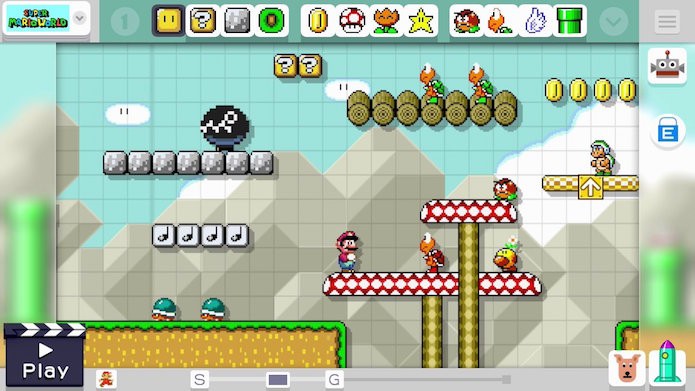
The level editor may be intimidating at first, but we soon become accustomed to it.
The creation process can be somewhat complex and discouraging initially, but an internal manual offers several tips, while original stages were created with the genuine goal of breaking the creative block some people may experience during gameplay. It is worthwhile to play the stages while always paying attention so we can create something equally entertaining.
The items available for creating stages are provided slowly as we use them in levels we create and as real time passes. This may frustrate some players, but it is worth waiting and working to create the best levels with the tools available to us at that point.
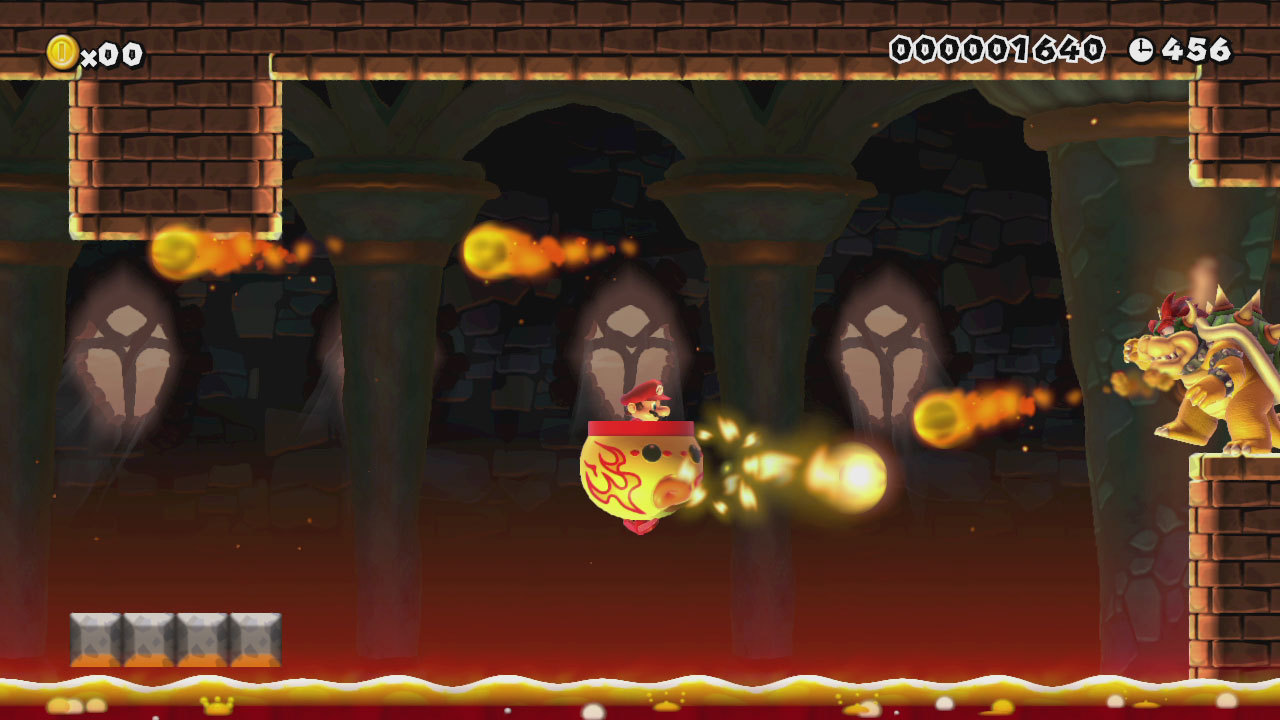
New elements, such as a version of Bowser's vehicle capable of shooting fire, are among the franchise's additions.
It is interesting how this game makes us feel like level designers for platform games. If you have not played it, you will experience just how sensitive the elements we place in a setting can be. The "border" between an easy and difficult stage is quite thin, just as entertainment can become tiresome if the same elements are used excessively or incorrectly. Super Mario Maker truly was another level-design lesson Nintendo created for its audience.
One major highlight of Super Mario Maker is its social element, as the game constantly tells us that people are playing our stages and shows the stars we receive from them. These stars are a kind of congratulation we give to people who make levels we consider entertaining and worthy of being discovered. Another highlight was the ability to leave messages or drawings, including at specific points within stages, making the title almost a Super Mario social network. Unfortunately, messages can no longer be published because Miiverse has gone offline.
The gameplay is excellent, responding well to player commands and honoring the name of the franchise in the title. The interesting aspect here is how gameplay varies according to the type of stage being played. In other words, we have wall jumps only in New Super Mario Bros. U, the Tanooki Suit only in Super Mario Bros. 3, and the ability to walk over spikes with Yoshi in Super Mario World. Everything must be considered when creating the most entertaining stages possible.
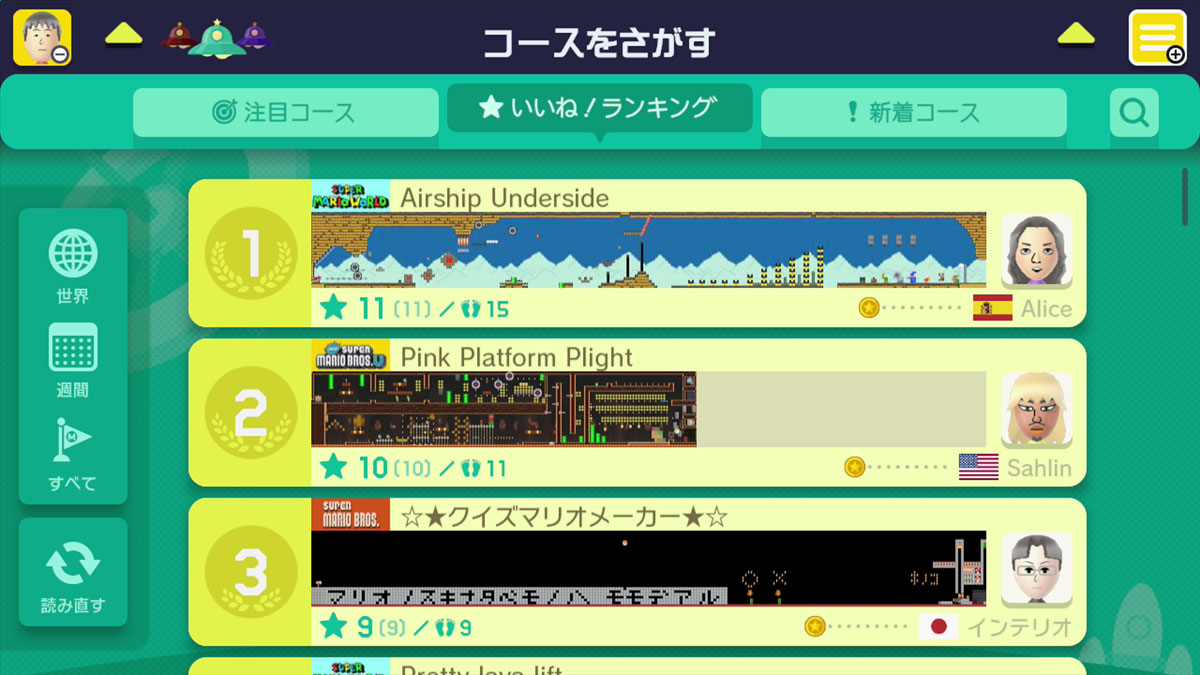
People are ranked according to the success of their stages.
The game's difficulty is highly relative because it depends greatly on the creator's style. Unfortunately, we see some unfairly difficult stages where we must genuinely discover the correct trick to complete them.
The graphics are the ones we all know, remaining faithful to the 8-bit, 16-bit, and modern styles. There are no major complaints here; everything works well and contains few bugs.
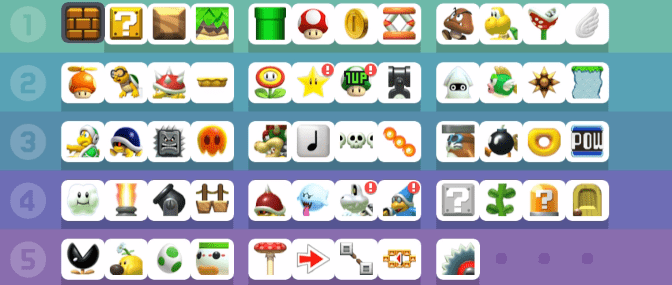
The items available for making stages are unlocked gradually.
Among the most complex stage types—and those most worthy of congratulations—are the musical ones. Some blocks emit different notes depending on their height and the type of object that falls on them. They are genuine masterpieces in the game's catalog, and it is worth searching to see what some creators can do. Simply beautiful.
 One highly creative factor in the game is the skins based on various characters from Nintendo's universe and beyond. They are called Mystery Mushrooms and are acquired through amiibo or the game mode called the 100-10 Mario Challenge, in which we play random stages with adjustable difficulty. If we overcome the challenge before losing 100-10 lives, we receive a skin as a prize. Interestingly, the highly creative community made stages with themes connected to these designs, such as a fire level for controlling Charmander from Pokémon, for example.
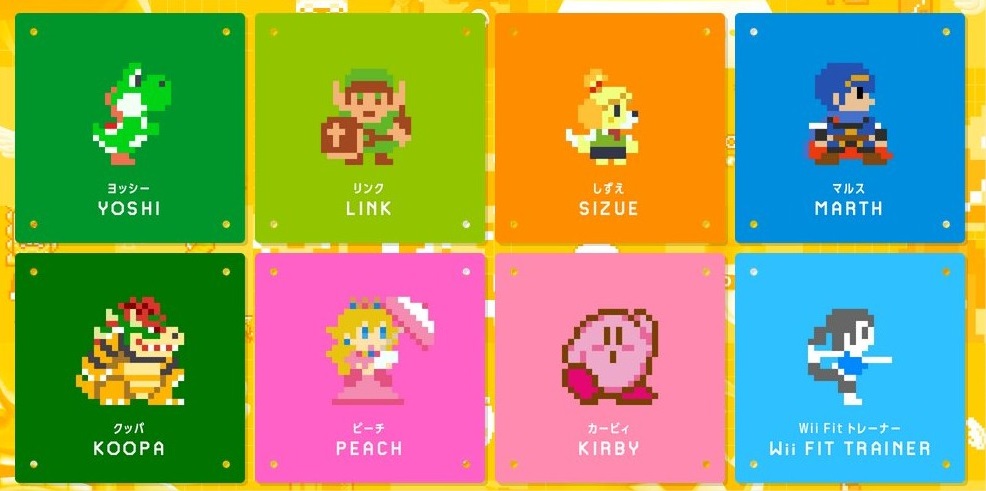
Skins of various characters
The replay value is unquestionably the game's greatest highlight, because its community remains highly active to this day, so every return to the game produces a different experience. For anyone without the money to invest in many games, Super Mario Maker is a great purchase recommendation.
The soundtrack is Super Mario music, which is great but offers no major innovations. In addition to the franchise classics, the sound effects include several customizable options that even produce visual changes in the settings when activated, an element that helps increase the personality of created stages.
Below is the complete Super Mario Maker soundtrack.
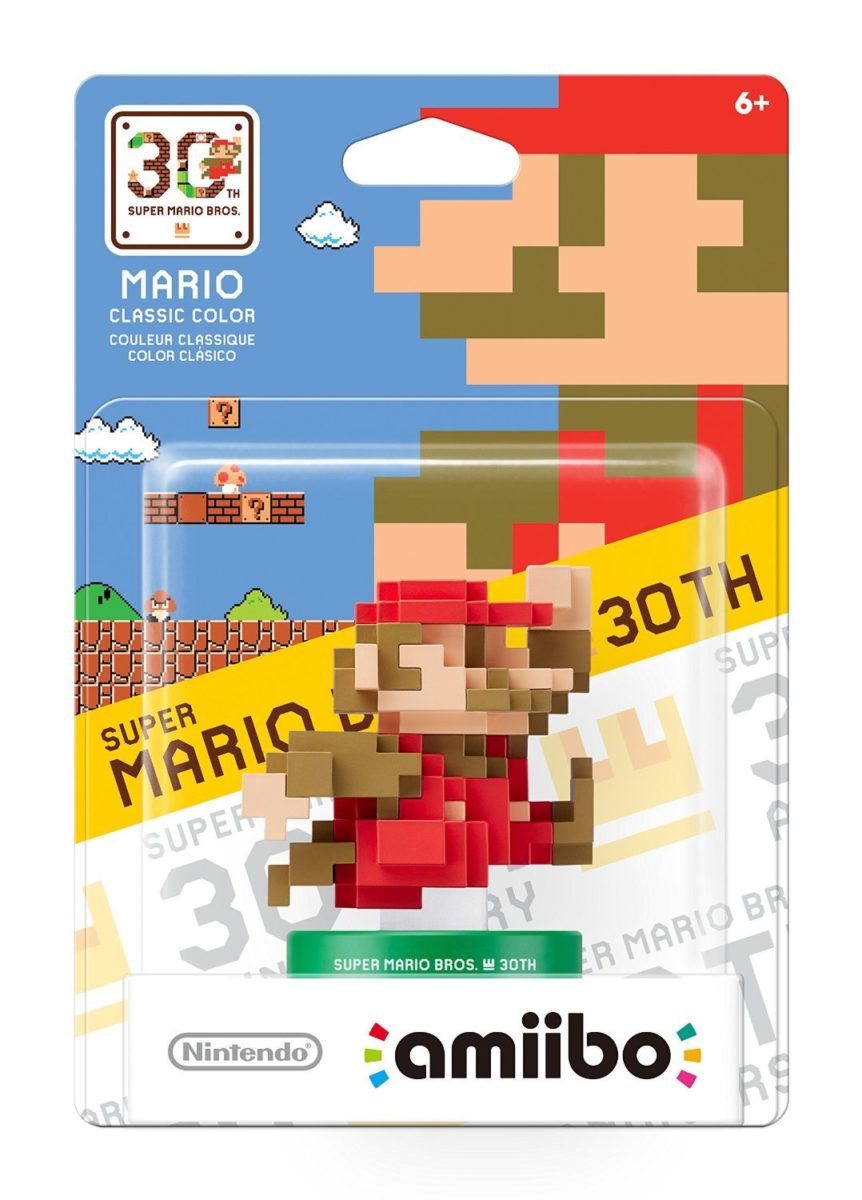
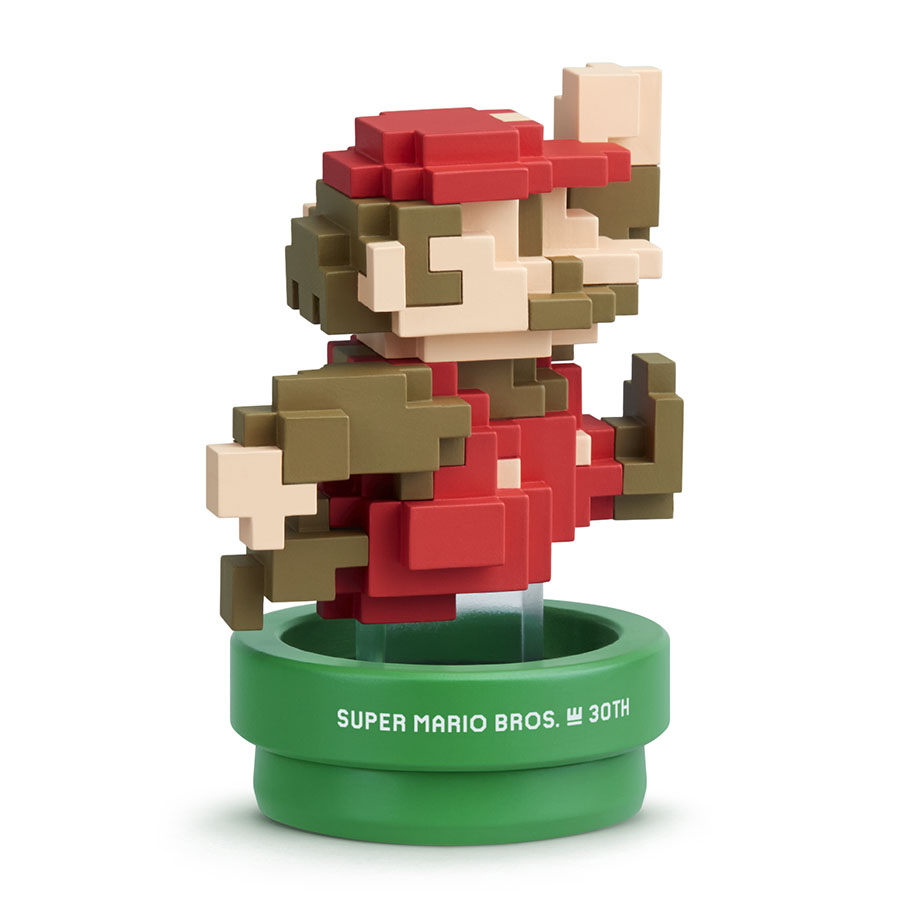
Curiosity: As became customary with Nintendo games, titles receive amiibo, separately sold figures whose function is similar to small pieces of DLC. In Super Mario Maker's case, the game was compatible with almost every amiibo, which provided skins for various characters from Nintendo's universe and beyond. So the game would not be left out, it also received an exclusive figure that generated a giant mushroom in the game and gave enemies mustaches.
Below is the trailer for Super Mario Maker 2, announced for release on Switch on June 28, 2019. The footage shows several new features for the franchise, including the presence of sloped ground, which was widely requested in updates to the first game.
Curiosity: If you think only you enjoy pretending to be Shigeru Miyamoto, you should know that many famous gaming-industry producers also liked the idea. Here are three stages created by three major names. See whether they can make something as entertaining as we expect: Markus Mansson, creator of SteamWorld Dig — 7A48-0000-0052-9CF0; Michael Herbster (Shovel Knight) — 768A-0000-00D4-D0D6; Koji Igarashi (Castlevania) — C392-0000-003D-3672. Have fun.
Played on Wii U