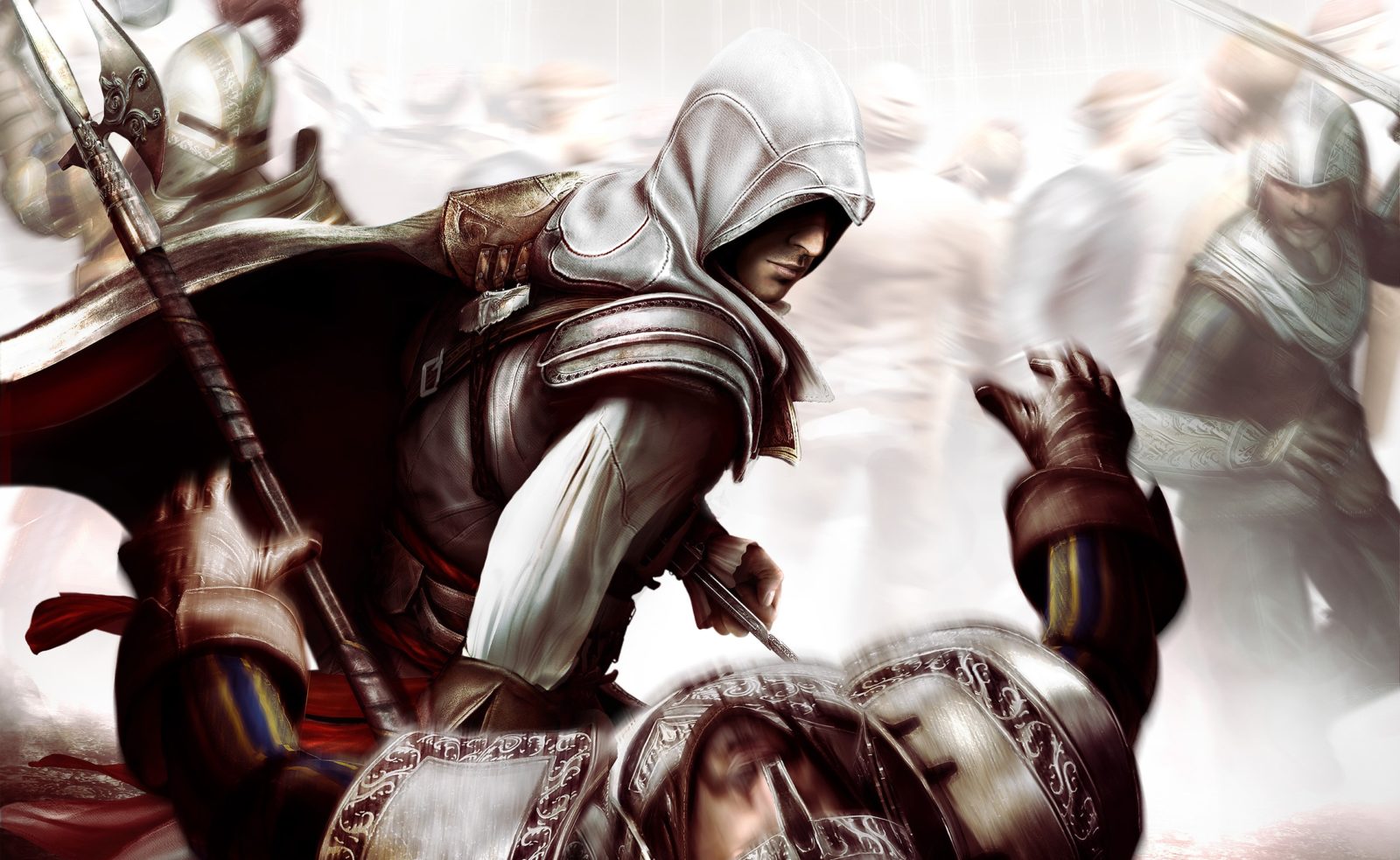
After learning a little about how the Animus works in the first Assassin's Creed and discovering the life of ancestor Altaïr during the Crusades, the second game in the series advances several years and introduces us to Ezio, another ancestor of Desmond Miles, the protagonist who appears less than any other protagonist of all time.
Modern Italy
The story takes place in Renaissance Italy and gives the player a much more solid backdrop than the previous game. If Altaïr killed because he belonged to a brotherhood, Ezio becomes an assassin to avenge the deaths of his father and two brothers. As the plot unfolds, it reveals a great deal about the conspiracy and the Templars' war against the Assassins, which was introduced in the first game in the series.
What is most impressive about the plot is its use of real historical figures such as Leonardo da Vinci, the Borgia and Medici families, and other historical references. It is all very fanciful, of course, but behind the fiction, the game tells us a great deal about these characters, including database entries in the pause menu with more details and information about their lives.
Assassin's Creed II is a lesson in modern history. The dynamics of Italian cities during the Renaissance are very present in the game, as are historical locations such as cathedrals and other monuments, whose history is also told through database entries if the player wishes to access them. Of course it is all fiction and should be viewed critically, but it certainly awakens interest in the period, perhaps encouraging the player to seek more information.
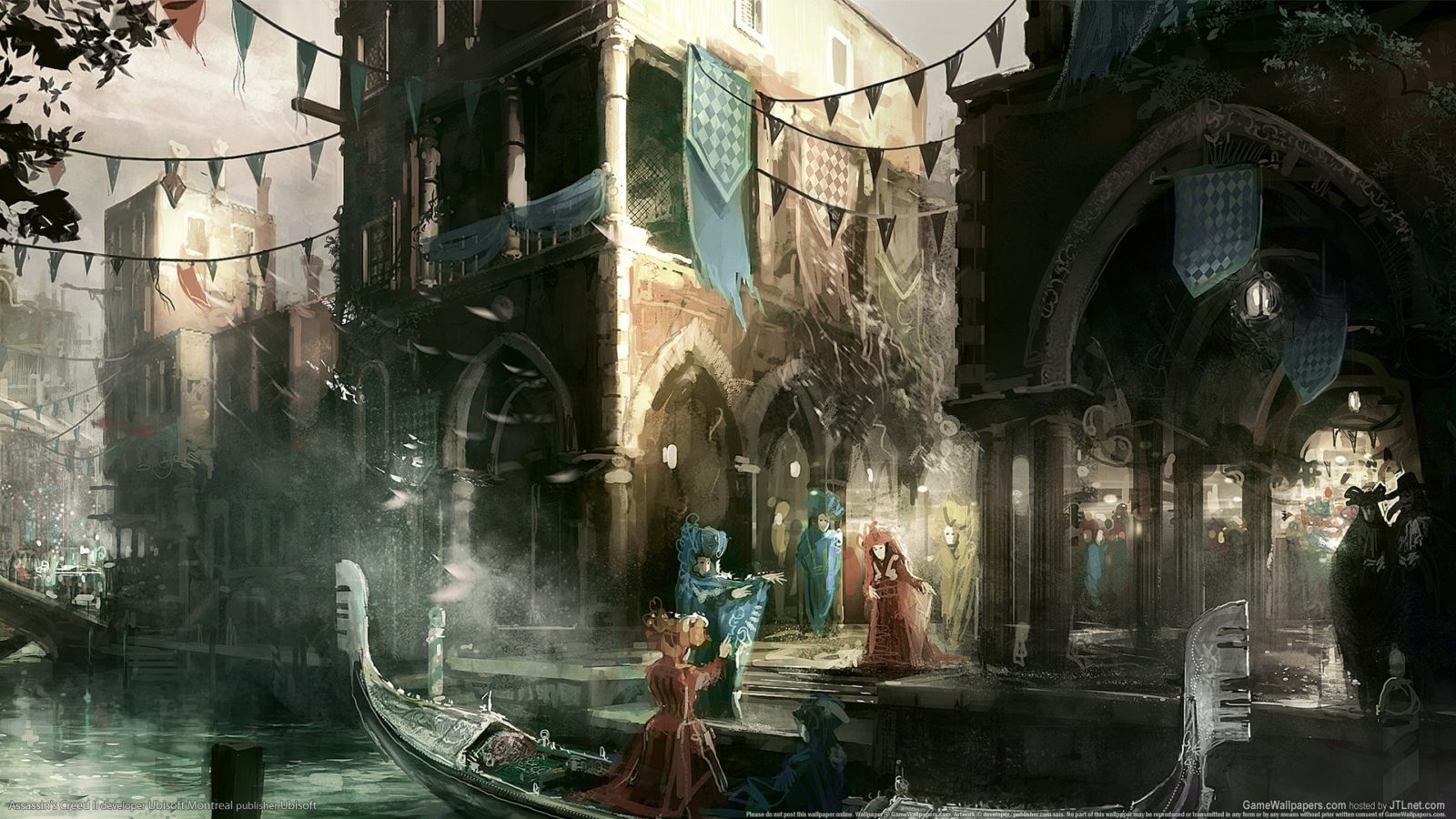 Setting (Source: https://wall.alphacoders.com/big.php?i=516026)
Animus 2.0
The gameplay in Assassin's Creed II is essentially an improved version of that in the first game: everything found in the original appears in its sequel, but has been enhanced. Ubisoft seems to have listened to and understood the criticism of the franchise's first game, delivering an experience that does not leave the player bored.
From climbing tall structures to hiding in crowds, Assassin's Creed II offers far more variety than its older sibling. The missions are simple but varied, ranging from delivering letters to a series of people to assassinating a member of the senior clergy, all while keeping players eager to move forward and discover the outcome of Ezio's adventure—and, consequently, where Desmond's story will lead. Desmond plays a larger role in this game because the new Animus allows him to learn his ancestor's techniques. The player will therefore control Desmond several times and train him for future events in the series.
Combat improved considerably in the second game and is far more varied, with Ezio having access to an enormous range of weapons. The Hidden Blade, the weapon that symbolizes the series, became the Double Hidden Blade, which helps in close-quarters combat because it is no longer used only for stealth kills or counterattacks. In fact, counterattack is the key word in Assassin's Creed II, since it is much easier to remain on the defensive and strike when necessary than to keep attacking the enemy. However, you can always choose the more difficult method, and the game offers several other weapons for this purpose: swords, knives, daggers, axes, and spears, as well as the ability to steal an opponent's weapon, a good addition to the game's combat techniques. Ezio now also has a firearm for long-range attacks, but new bullets must be purchased to continue using it.
Shops and merchants are vital to your survival in Assassin's Creed II. The player's best friends will be blacksmiths and doctors. At the former, you can buy and repair weapons and armor, while the latter can heal injuries immediately for a price and also sell Health Packs, which are used frequently during battles. Money makes the world of Assassin's Creed II go around, and Ezio is a perfect thief. This time, the player can steal valuable coins instead of only stealing knives as in the previous game.
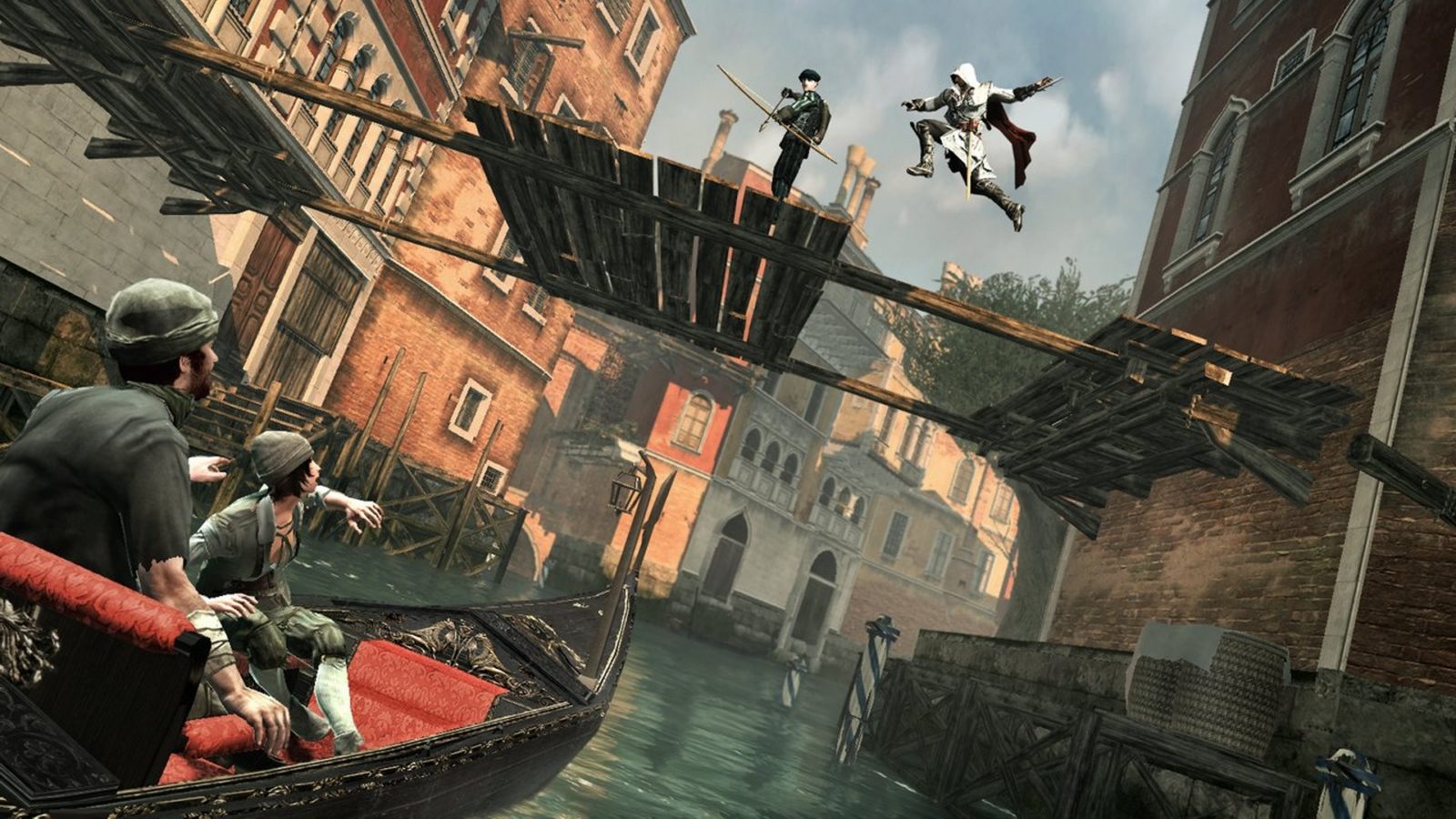 Assassin's Creed 2.
The parkour element, one of the symbols of the series, continues in the second title with greater variety. Climbing is very easy and enjoyable in Assassin's Creed II and is necessary throughout the game to reach your objectives, follow a target, or use Eagle Vision, a special form of sight that reveals who is an enemy and who is the target in question, to look for an essential mission element. There are also some platforming elements, especially when the player enters the Assassins' tombs to collect rewards.
The stealth element advanced considerably in Assassin's Creed II compared with the first game. Ezio can blend into any crowd, making it much easier to pass guards unnoticed and follow someone. In addition to hiding in crowds, Ezio can hire everyone from prostitutes to thieves to distract guards. He can also throw money on the ground and watch people become excited as they pick it up, always exclaiming things such as "Fortuna!," or throw a smoke bomb on the ground and pass by without anyone noticing.
Because it is an open-world game, Assassin's Creed II features long distances between cities and villages. Ezio has two options for covering them: he can either travel on horseback or pay a coachman to cover the distance. Sorry, but walking from one city to another is out of the question in this review. Oh, and Ezio can swim!
Da Vinci Approves
Macaroni English The Assassin's Creed II soundtrack is exquisite. It was composed by Jesper Kyd, who also worked on Hitman. With exciting music and a perfect theme called "Earth," the Assassin's Creed soundtrack generally chooses to leave more ambient sound playing while the player is not on a mission or in a duel, which is common in games of the genre. As for the voice acting, let us call it macaroni English, with the characters speaking English mixed with Italian in nearly every sentence. It may sound cheesy, but it creates a cool effect and even makes the game funny, especially when it comes to profanity. It sounds more natural for an Italian to exclaim "figlio di una putana" than "son of a bitch." And if one of the crucial problems in Assassin's Creed was the lack of subtitles, the second episode of the franchise came to solve it: Assassin's Creed II features subtitles, including translations of the Italian terms spoken by the characters. [iframe id="
"]
Assassin's Creed II features some of the most beautiful graphics of the generation. Its world is not as large as that of Grand Theft Auto IV or Red Dead Redemption, but it is certainly more beautiful than either of them, especially in its lighting, which is simply superb.
The water in Assassin's Creed II is among the most beautiful seen in the generation, and after swimming, you can see a wet effect on Ezio's clothes. The facial-expression work is also very good; the characters do not remain static and expressionless when faced with an event.
Rest in Peace
The truth is written in blood!
Faced with the suspicious gaze of many players frustrated by the first game, Assassin's Creed II presents a much more solid and enjoyable experience than its predecessor. With far more variety in combat and missions, a breathtaking soundtrack, and some of the best graphics of the generation, the game is much more pleasant than the original, making players want to continue not only because of the interesting plot, but also because of the fun it provides. Unfortunately, some players will still turn up their noses and find the game boring and tedious, but you cannot please everyone.
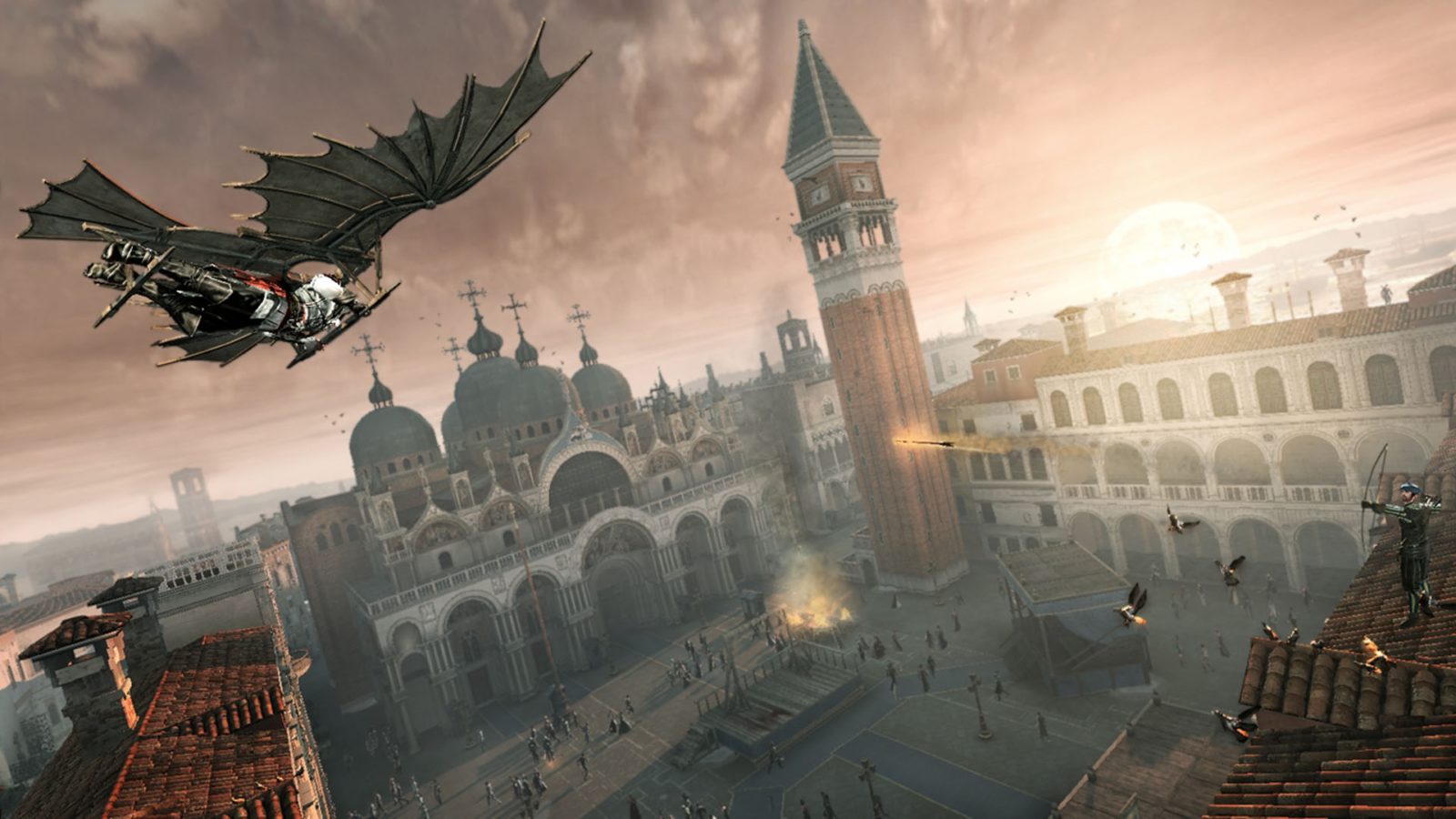 Ezio Auditore da Firenze
Rating: 9
Tested on a PlayStation 3.