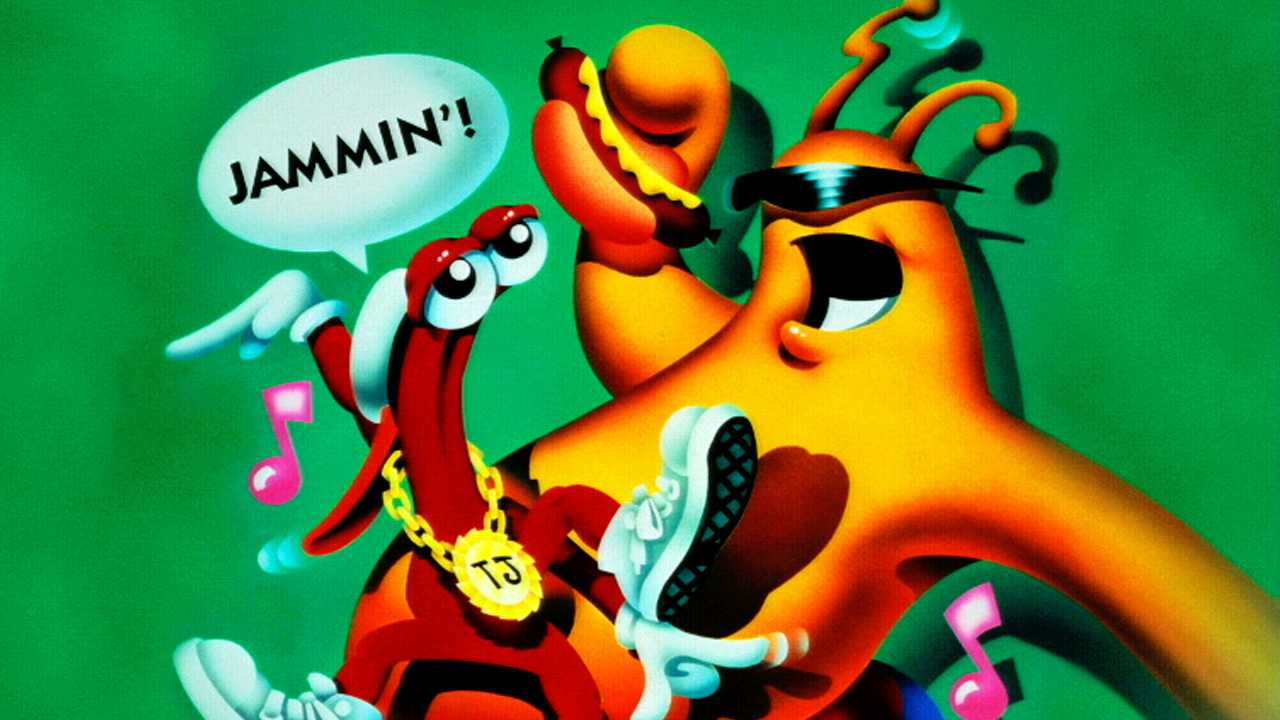
When I still had a Master System in the early 1990s, I heard about a Mega Drive game that was different. It focused on exploration, was great to play with friends, and—most incredibly, something I did not believe at first—its stages changed every time it was played, making it a title that could be enjoyed forever. After playing ToeJam & Earl for the first time, I realized it was all that and more: the fun was immense, and it would easily remain in my memory as one of my favorite games of all time.
A worthy sequel to this first installment recently reached the market, titled ToeJam & Earl: Back on the Groove! This was the main reason I wrote this review. There is therefore nothing better than learning about the origin of the series that returned after so many years.
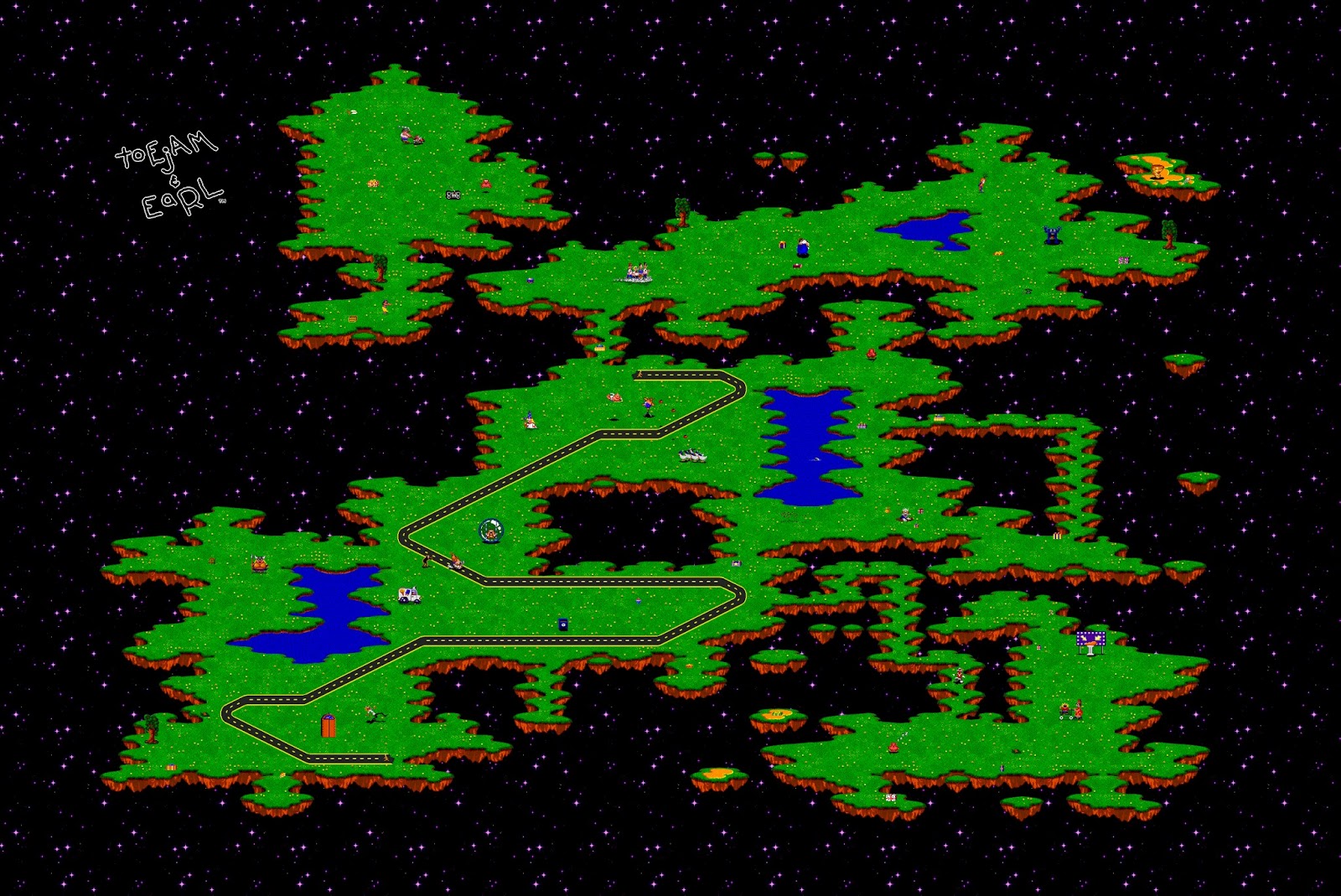
Uncovering ToeJam & Earl's maps was a tremendous pleasure, especially because they were always different.
ToeJam & Earl is a game combining adventure and roguelike elements, released in 1991, developed by Johnson Voorsanger Productions (JVP), and distributed by SEGA.
Fun fact: At a time when video game advertising was strong in Brazil, Tec Toy secured coverage of ToeJam & Earl in the market's leading magazines. It is interesting to see the emphasis placed on the game's Jam Out music mode.
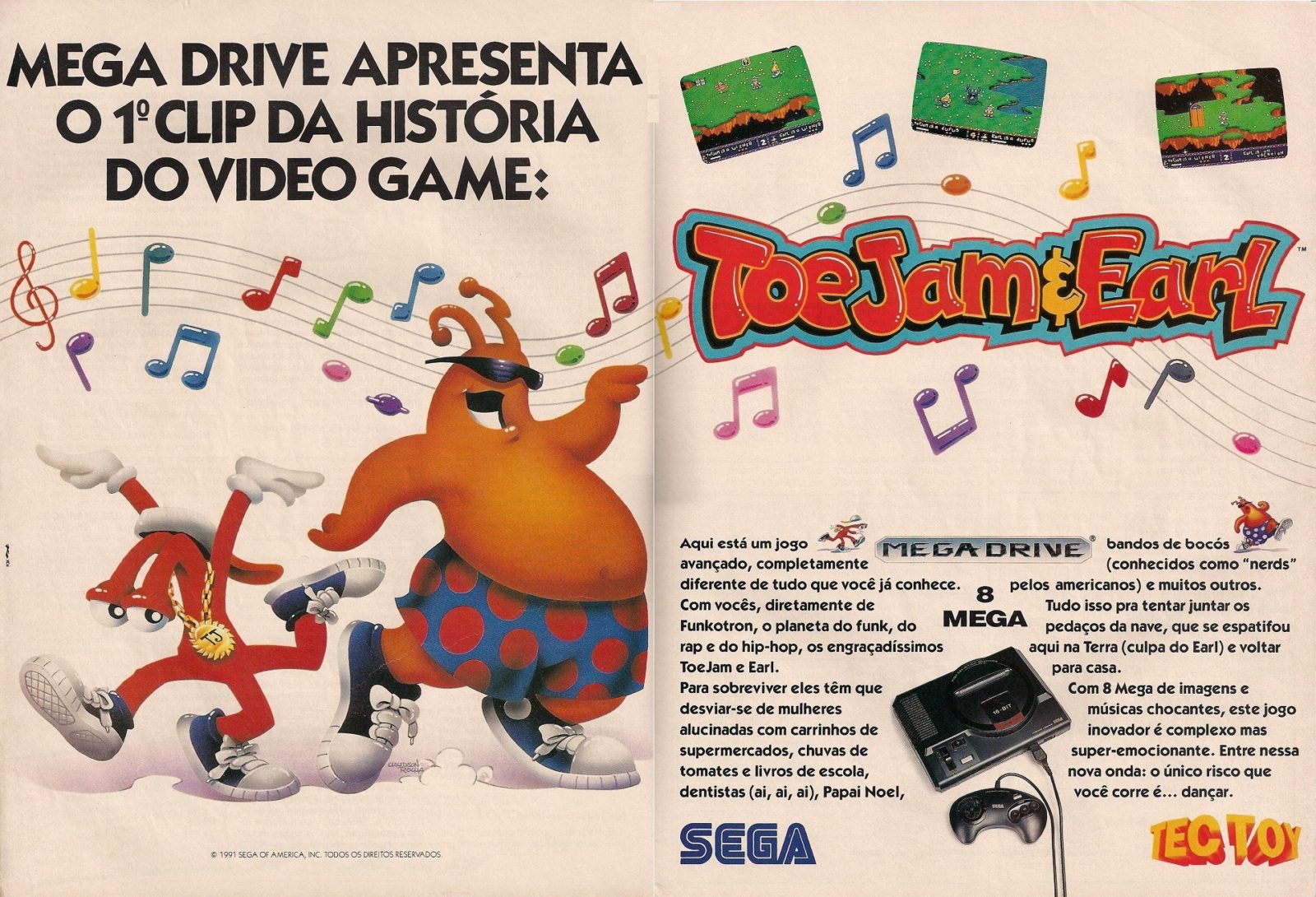
Tec Toy knew it had a quality game on its hands.
Behind the Scenes of ToeJam & Earl

Designer Greg Johnson had already worked on the good but little-known game Starflight.
The year was 1989, and the Mega Drive reached American soil with the goal of pushing Nintendo into second place. One strategy for realizing this ambitious plan involved creating charismatic characters who would become representatives of the brand: mascots. Among the projects intended to boost the Genesis was this one, in which two crazy aliens would crash on the most insane planet in the galaxy, Earth. Conceived by designer Greg Johnson and programmer Mark Voorsanger, the idea was approved by SEGA, which allowed development to proceed.
Greg Johnson reportedly created the characters of ToeJam & Earl during a trip to Hawaii. His idea was based on a mixture of two games: the first was his great passion, the PC game Rogue, while the other drew influence from the Starflight franchise, whose second chapter Greg had recently completed. This fusion of environmental exploration and science fiction attracted programmer Mark Voorsanger, and together they founded Johnson Voorsanger Productions (JVP).
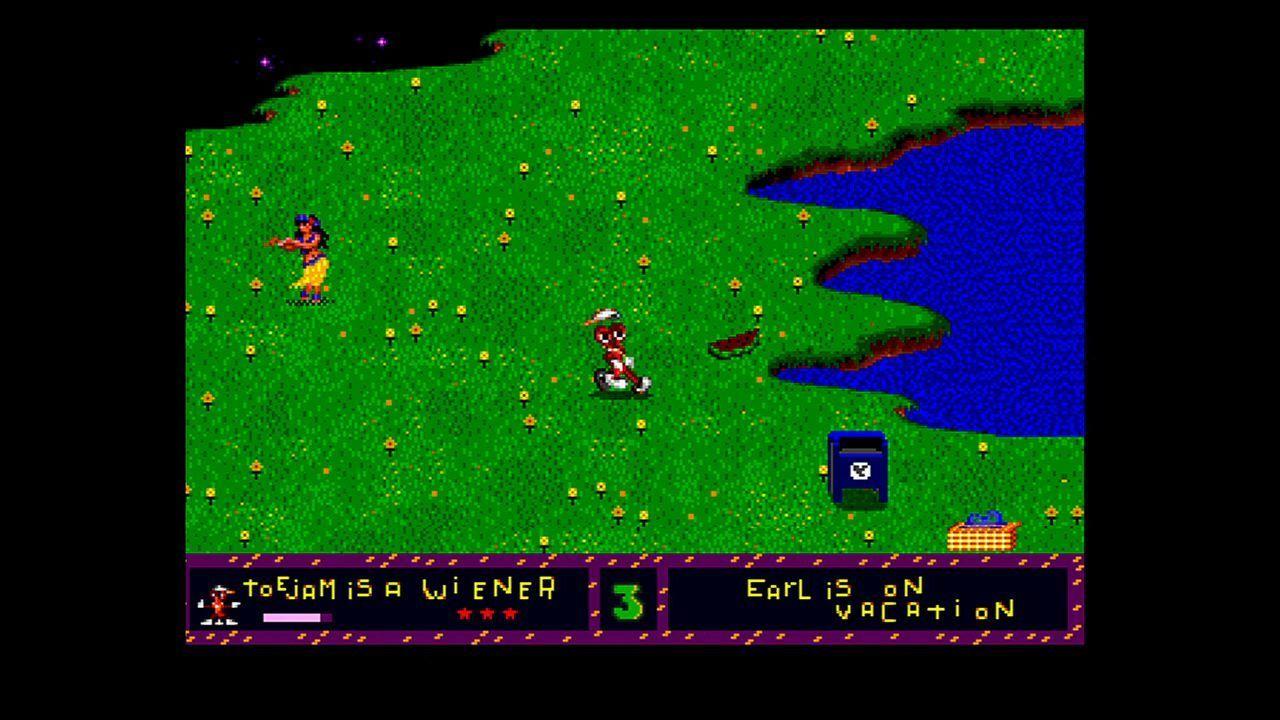
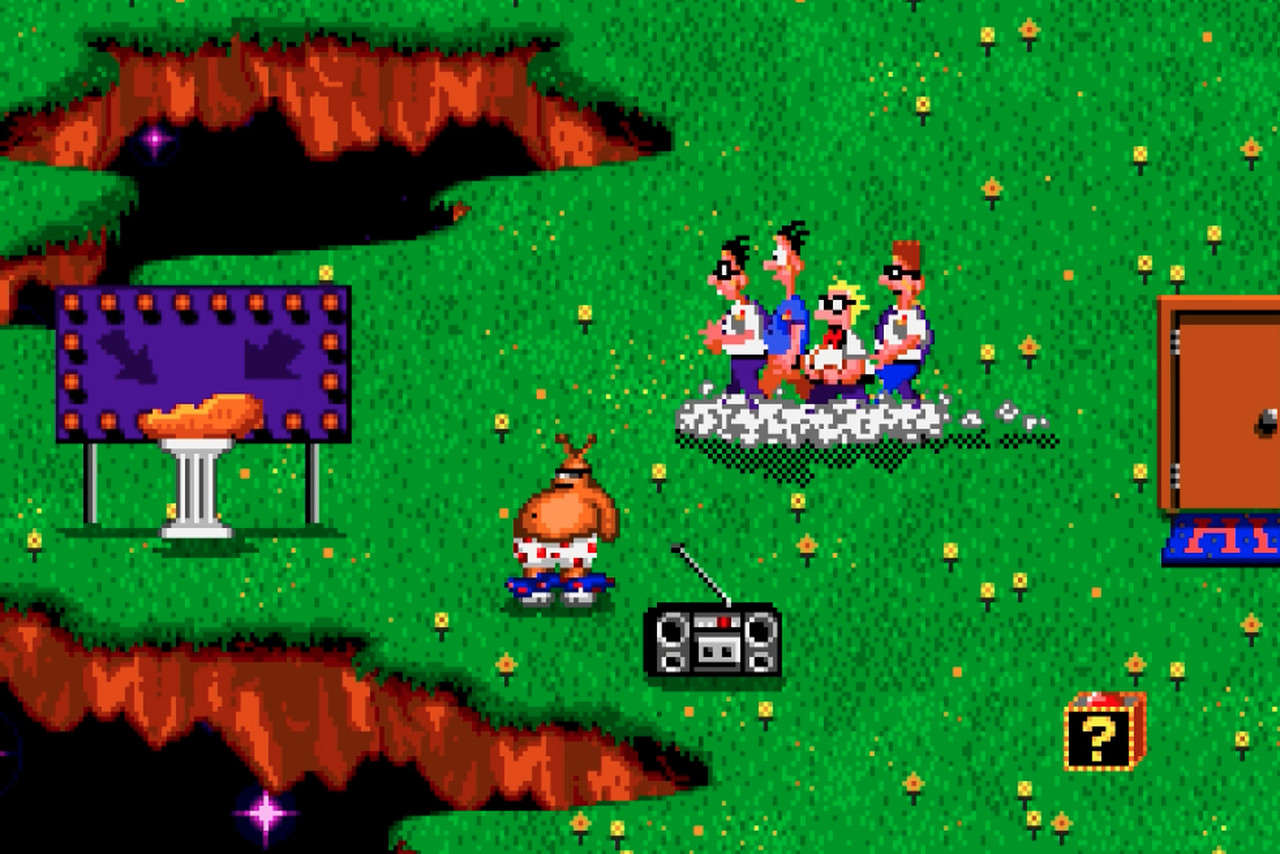
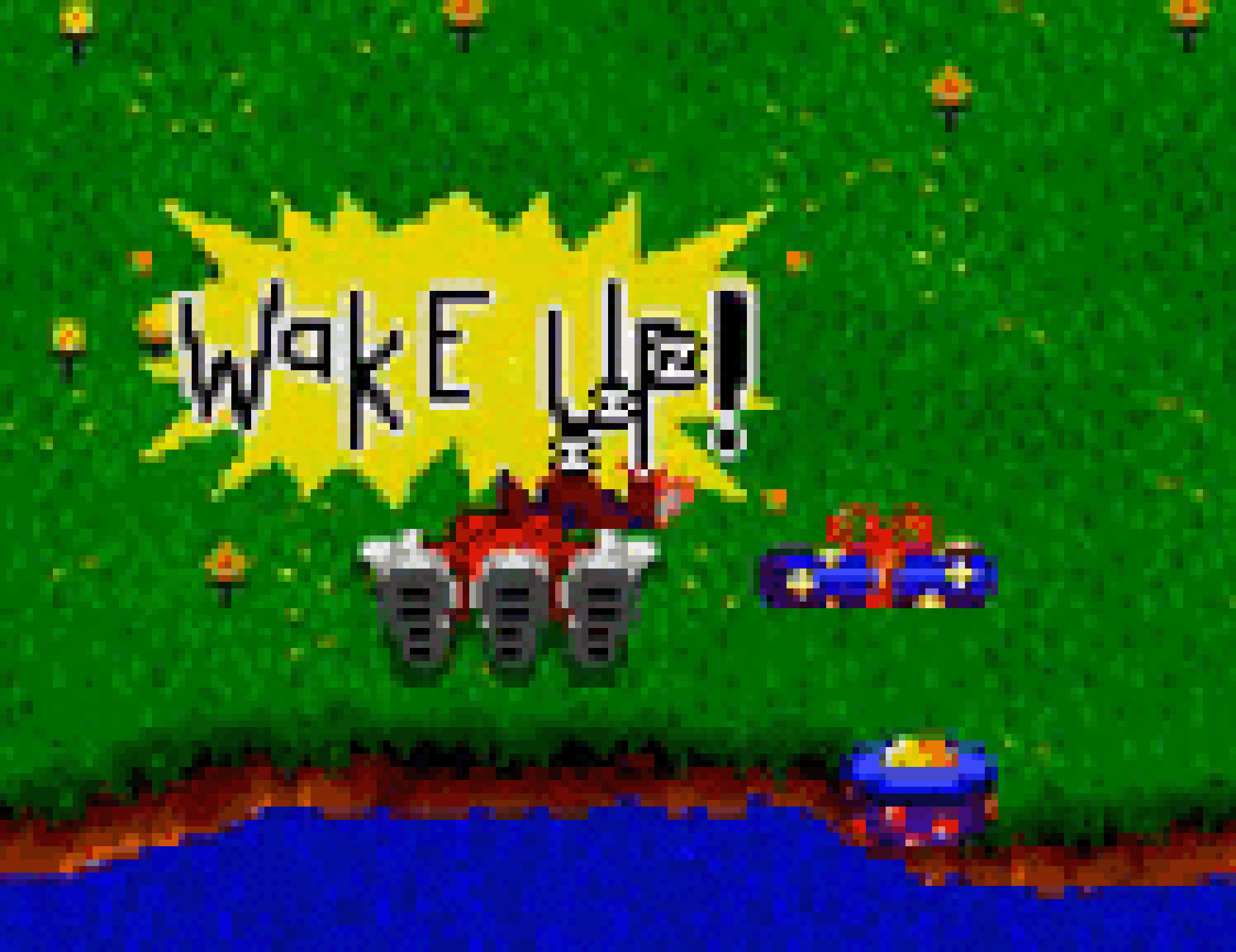
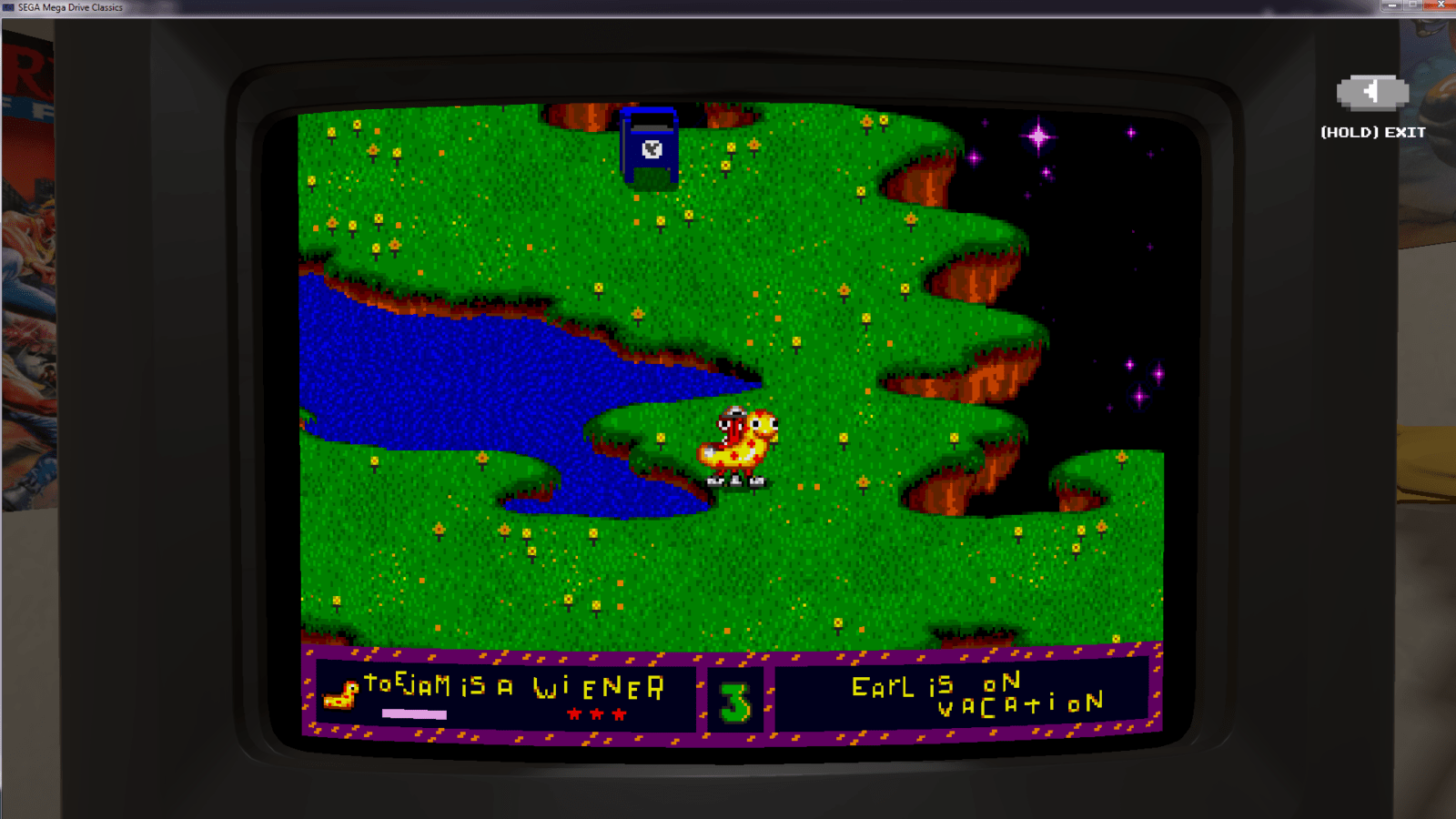
The hula dancer merely distracted us so other enemies could do their work. And that mailbox over there? Suspicious.
The idea of randomly generated settings interested SEGA in the project, especially after the company met the protagonists, allowing development to continue. It is worth noting that the home of Sonic even doubted that Random mode could be implemented satisfactorily; it was wrong. As Greg said during the planning of ToeJam & Earl, the main goals were to make the game original, easy to understand, and immediately responsive to player actions. I believe those goals were achieved, do you agree?
Fun fact: The controversial sequel ToeJam & Earl: Panic on Funkotron reached Mega Drive in 1993. By changing the game's genre to platforming, it failed to win over the public. According to designer Greg, SEGA contacted the team and asked it to restart from scratch the sequel that had already been in development for four months. Despite good reviews, the franchise's first title apparently did not sell well during its first few months, and SEGA's marketing department thought a platform game would be better because the genre sold well at the time. A shame, because we almost received a "true" sequel to this great game on our beloved Mega Drive.
Technical Analysis
The story of ToeJam & Earl is quite simple. Two aliens—one red with three legs, ToeJam, and the other yellow with a slightly prominent belly, Earl—are cruising in the incredible Rapmaster Rocketship while enjoying good funk, a musical genre that originated in the United States and blends elements of jazz, soul, and blues (please do not confuse it with Brazilian funk). All is well until Earl has the terrible idea of asking permission to take control of the ship. As a result, they are hit by asteroids and crash on our beautiful planet, filled with insane Earthlings. The pair must now find the ship's pieces, reassemble it, and return to their home planet, Funkotron.
The game's genre blends adventure and roguelike elements. The map is initially concealed, and we reveal it as we travel through the environment, which must be explored to find spaceship pieces and the elevator door leading to the next level. If you find a telephone in the environment and pick it up before it rings five times, it reveals a portion of the map that had not yet been discovered.

The map of the only stage that is always the same in Random mode. I only recently learned about the island with presents in the upper-right corner.
There are ten ship pieces and 25 floors, meaning that in some locations the characters need only head for the elevator door. When our current floor contains a piece, the game informs us as soon as we arrive, which helps greatly during the adventure.
The game modes include an electronic drum machine, Jam Out, where we can accompany the music with beats and phrases; Fixed World, where the maps are always the same; and, as noted in the introduction, Random World, where the stages are randomly regenerated whenever a game begins. This is one of the game's greatest charms because it creates practically endless replay value.
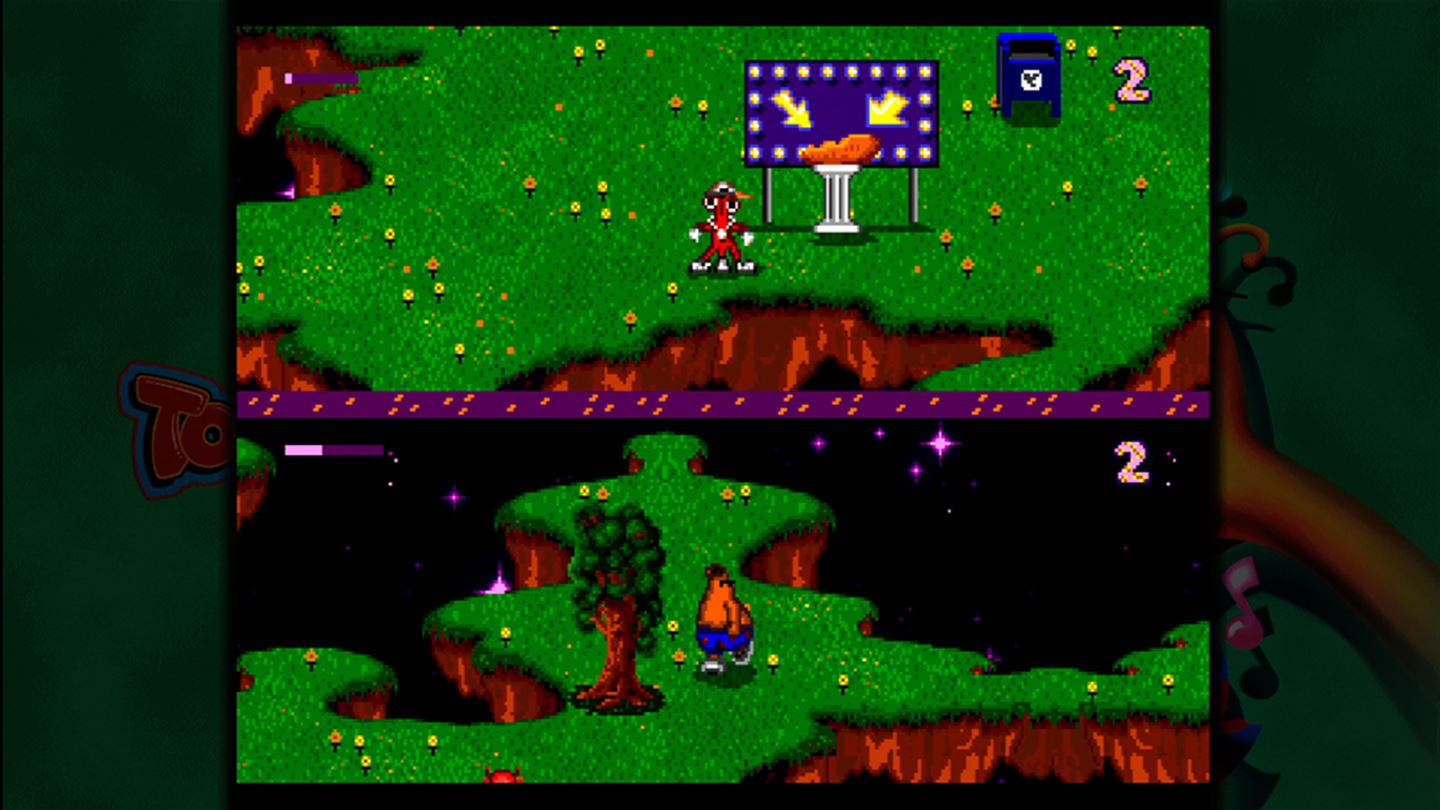
Playing with a friend is wonderful. Besides being more fun, it helps considerably when finding things.
The gameplay of ToeJam & Earl is simple. It consists of an enjoyable exploration across 25 floors where we must find the ten pieces, search for presents that may contain good or bad items, and face enemies. The selectable characters have the usual differences: ToeJam is the classic fast but fragile character, while Earl is slow and strong. The controls respond well most of the time, especially when we use items. Opponents are difficult to defeat with the famous tomatoes at some points in the campaign, so avoiding them really is ideal.
Food found throughout the stages may or may not restore our energy, since some items remove part of the health bar. Curiously, foods considered tasty, such as ice cream and pancakes, are beneficial, while healthy options such as salads are harmful. SEGA plays the antihero once again.
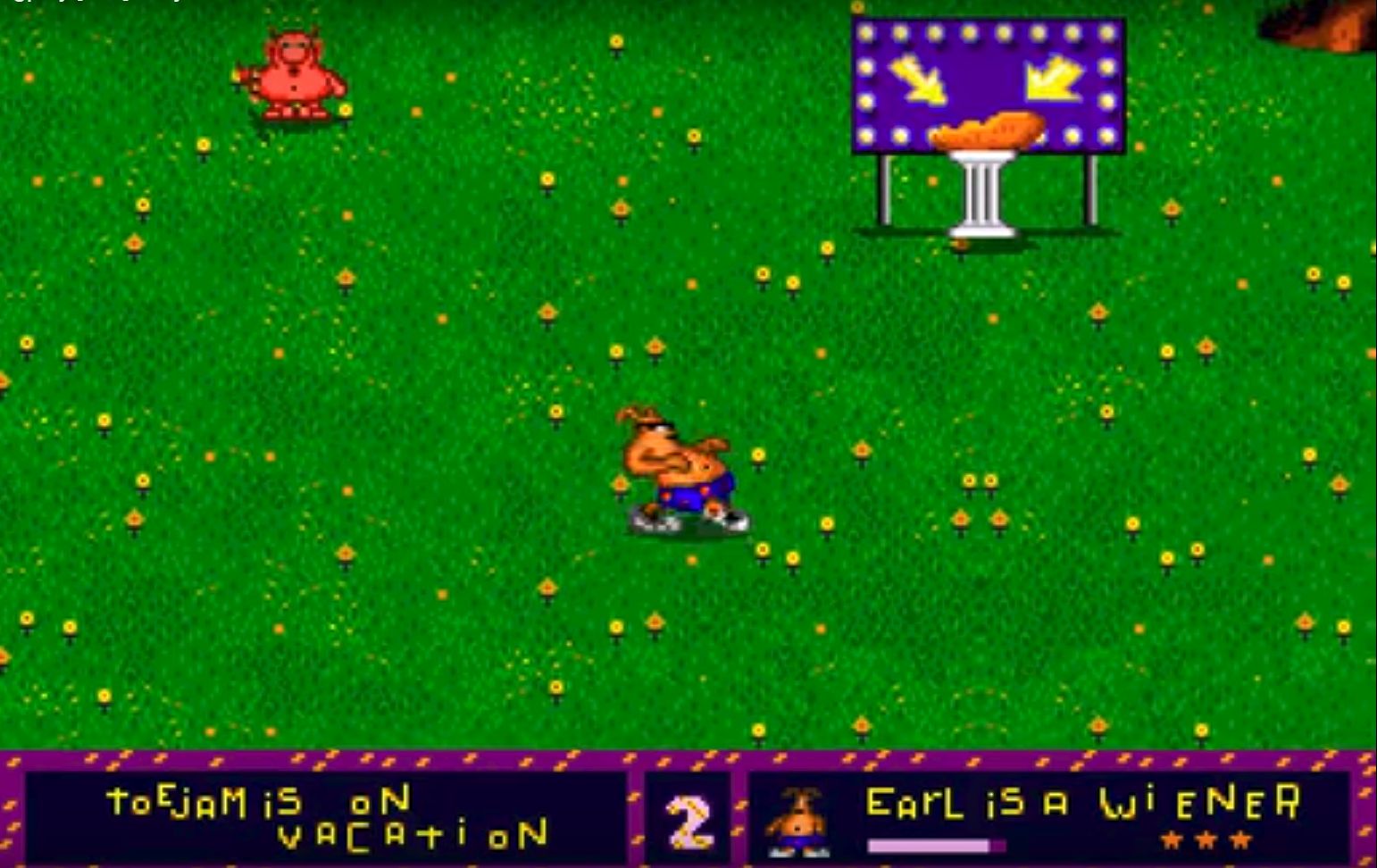
Some enemies fall asleep easily, allowing us to sneak past unnoticed.
Learning the contents of the packages is the secret to success in this game. There are two ways to do this: the first is trial and error, which can be dangerous because some bad items can even kill the protagonists instantly; the second, and ideal method, is to find the Wise Carrot Man, who reveals the contents for a low price. We recommend saving money during the game and celebrating when you find this NPC.
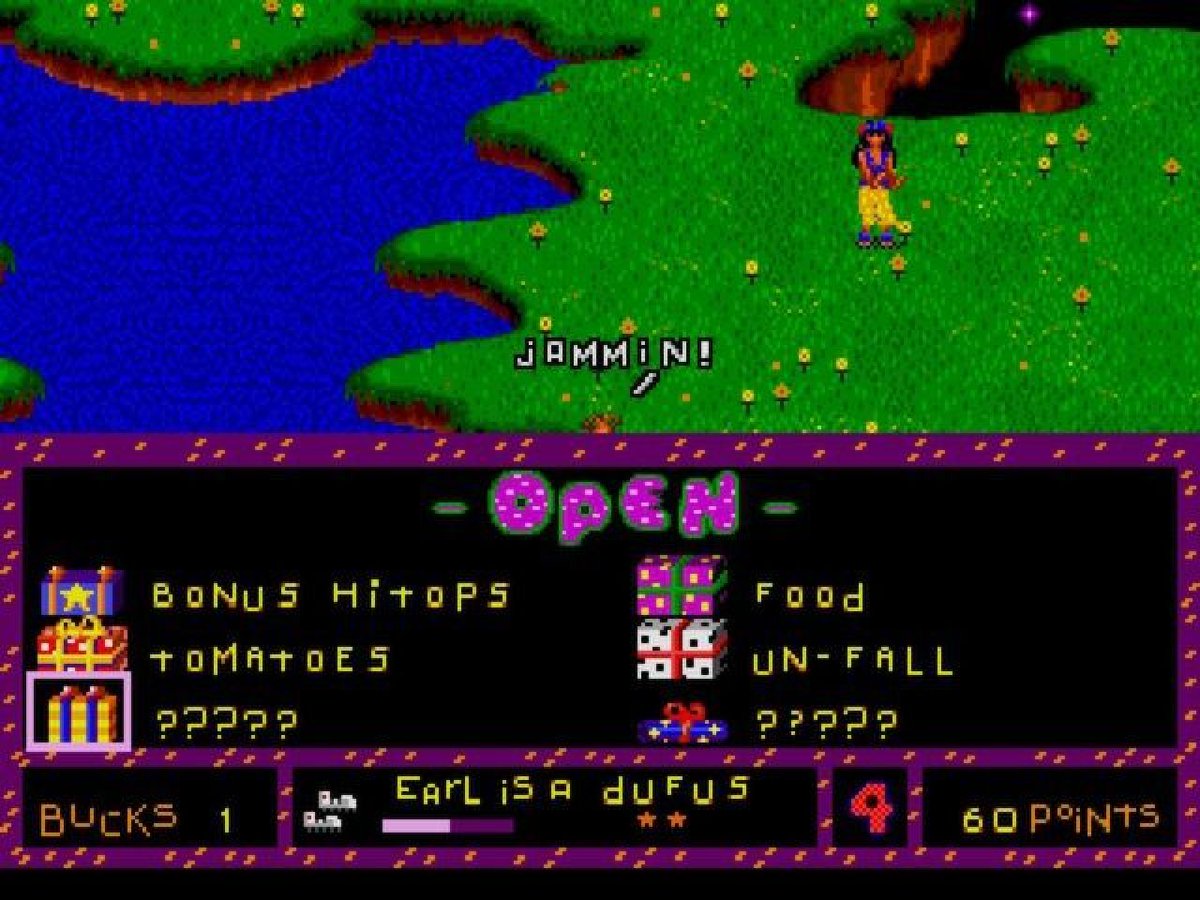
Opening an unidentified present sent a chill down your spine.
One highlight of ToeJam & Earl, and something I value in any game, is the characters' good humor in the widest variety of situations. Everything has a playful, cheerful tone: the caricatured enemies, presents containing items reminiscent of 1980s cartoons, and protagonists who talk during the introduction and whenever they meet in the elevator. Curious situations form part of the adventure, such as the aliens burping after drinking beer and waking sleeping enemies or being chased by an army of chickens that throw tomatoes at us. The characters' personalities and behavior also reveal the distinct audience SEGA had during the period.
The game offers enormous fun, especially in multiplayer. In addition to letting the characters split up during the adventure to search for items, it allows them to exchange presents, share the health bar, and reunite on the map through a specific item.
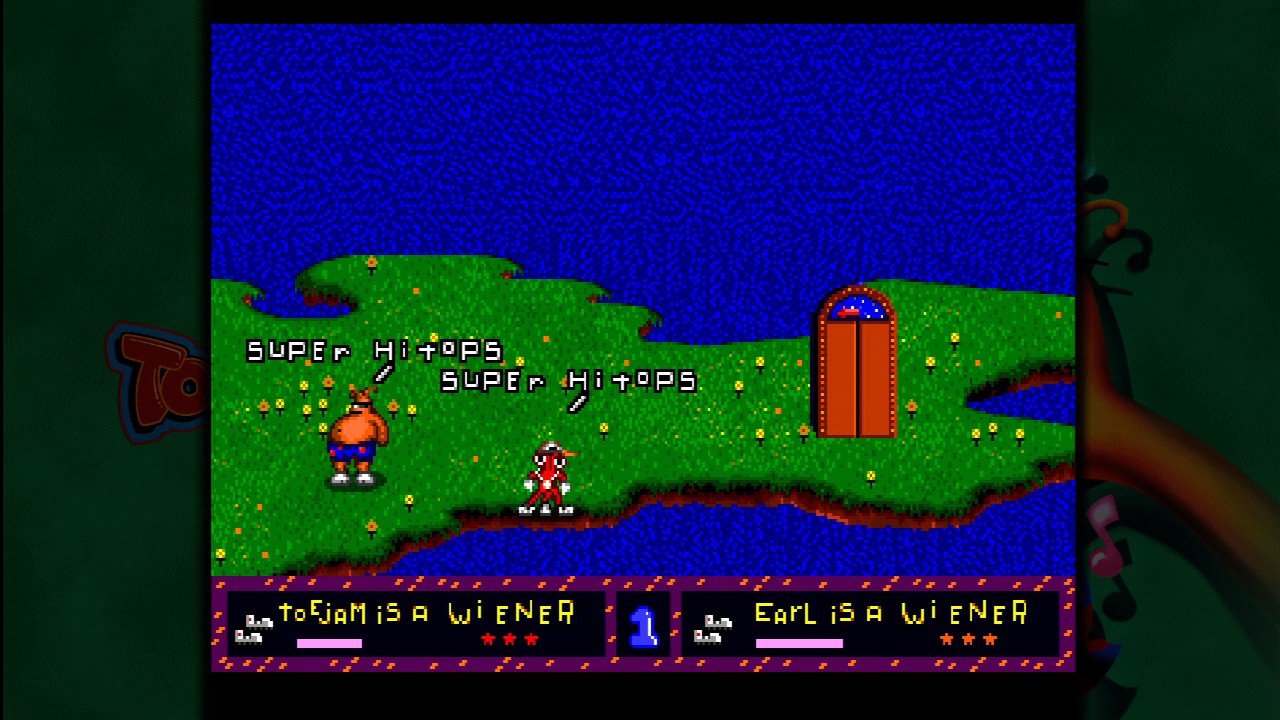
If we use an item while two characters share the screen, it activates for both of them—even the bad ones.
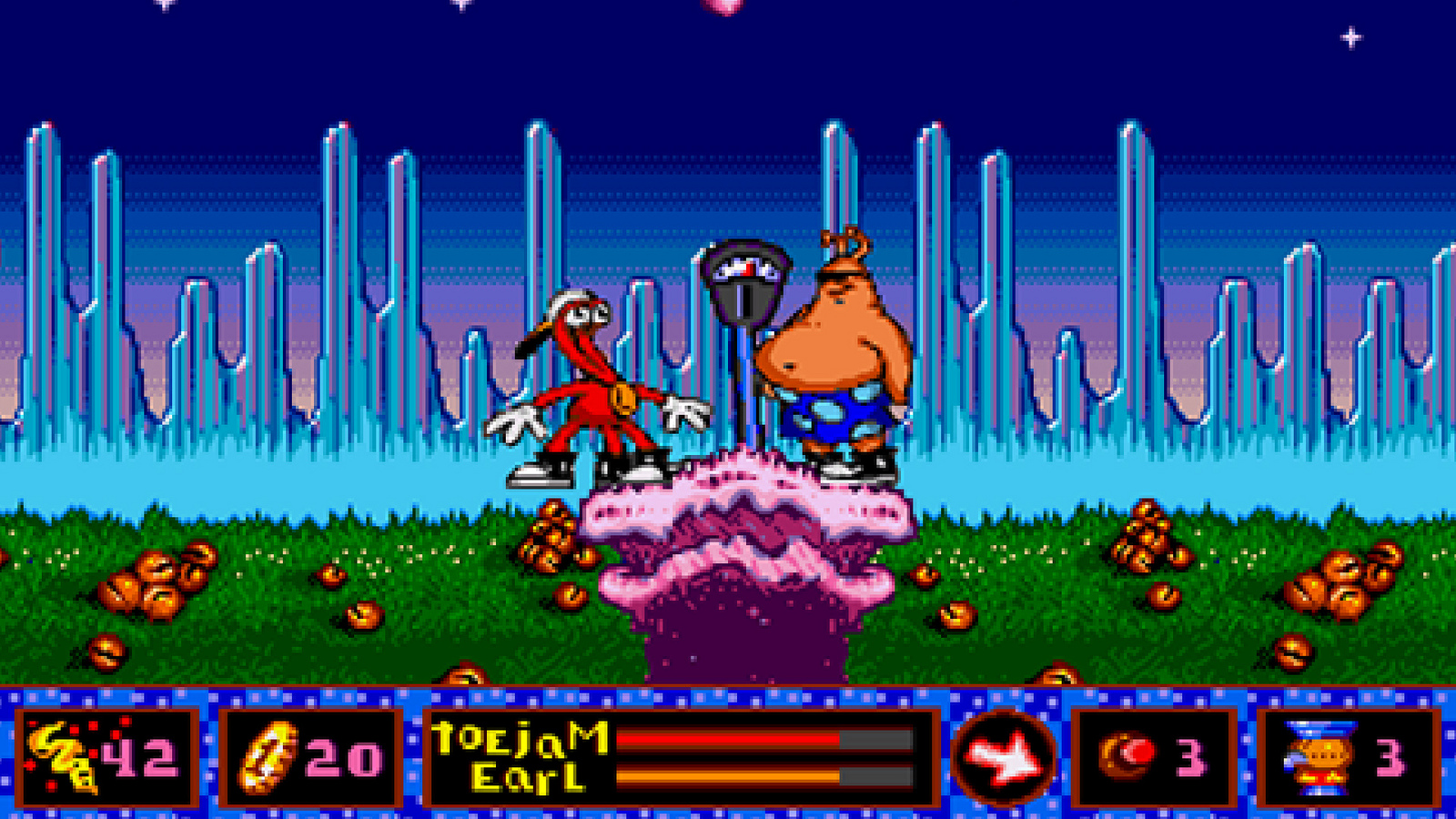
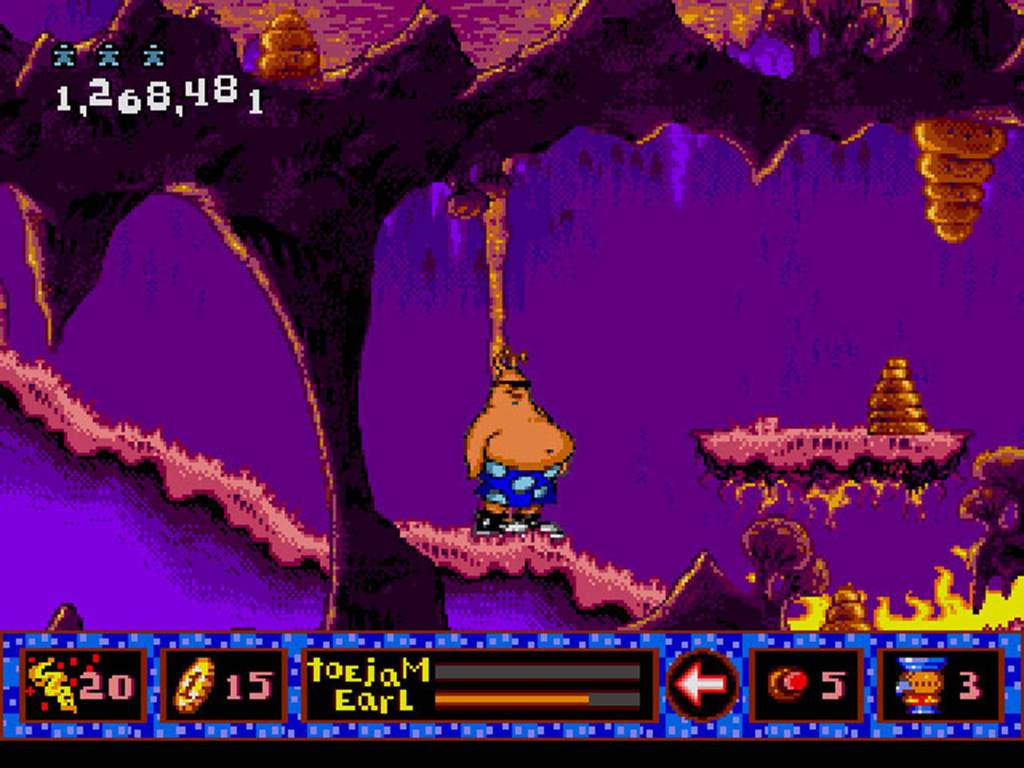
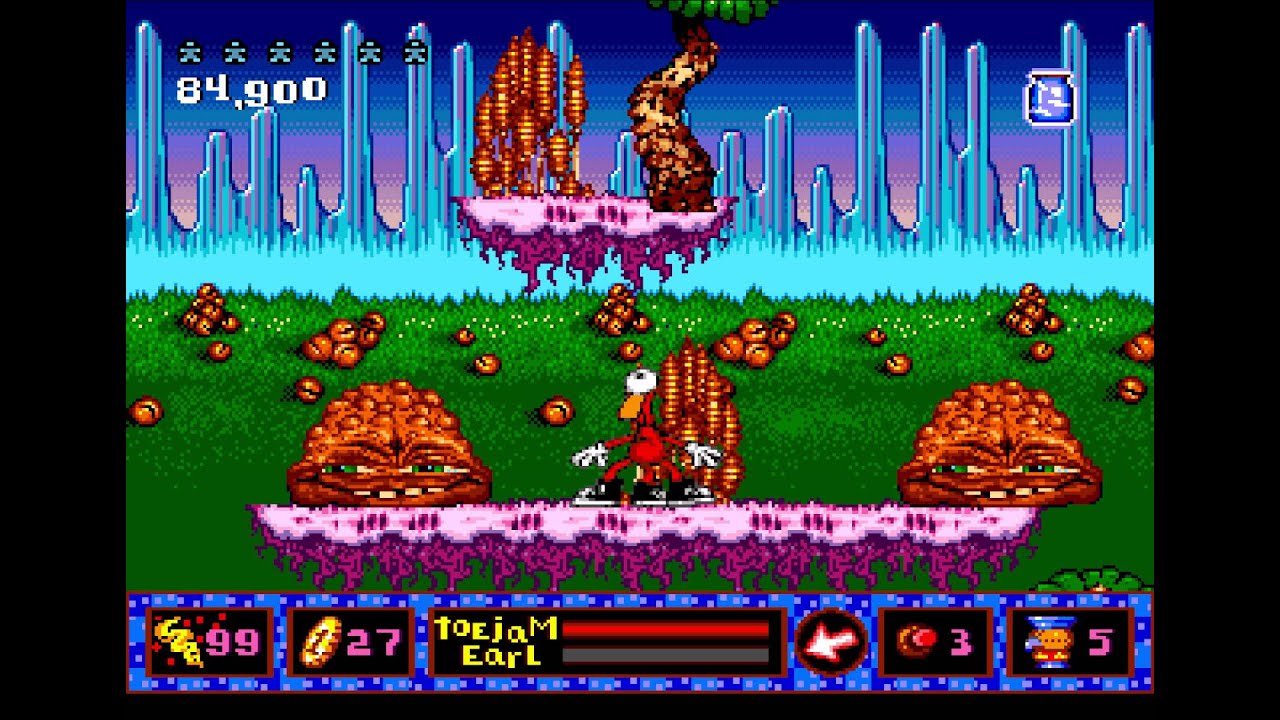
The game's graphics are simple but competent and functional for the period in which they were produced. Its colors draw attention to everything happening on screen without an excess of information, a problem in games of the era.
The game's difficulty is reasonable and becomes much easier when played with a friend. Some luck may be involved when opening the first presents and with the map's random formation, but exploring is so enjoyable that playing another game in pursuit of success will not be a sacrifice. Potential frustrations include being unable to save progress during a game and enemies frequently pushing us off cliffs, making us fall to the floor below and forcing us to find a way back to the upper level.
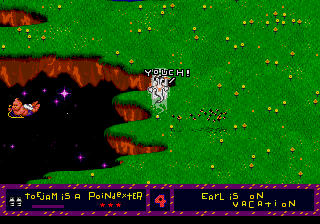
The spirit rising through the environment after the character dies. Alex Kidd sends his regards.
The soundtrack of ToeJam & Earl is incredible, featuring stylish American funk that blends elements of jazz, soul, and blues. The programmers valued this feature so highly that they even included an electronic drum machine so we could play at being DJs. The sound effects are equally good, with the characters producing the widest variety of onomatopoeic sounds during their actions.
Below is the ToeJam & Earl soundtrack.
Fun fact: The producers of ToeJam & Earl wisely did not give SEGA the rights to the franchise and its characters. They are therefore free to make games in the series without needing a publisher's authorization. According to Greg, this was because the developers were not desperate for money when creating the first title.
Game Items
ToeJam & Earl features a wide variety of items. Some, such as food and money, are found throughout the environments, but most are acquired by using presents collected during the game. Initially, we do not know what the packages contain and discover their contents through trial and error or with help from the Carrot Man. Some of these items are bad and cause the widest range of consequences. There are many, so I selected six: five good and one bad.
1) Super Hi-Tops: We start with a few for free. They greatly increase our speed and are among the game's best items. An interesting detail is the "beep beep" the characters make while using them, a clear reference to the Road Runner;
2) Boombox: We turn on a radio playing hypnotic music that makes enemies dance and lets us proceed safely;
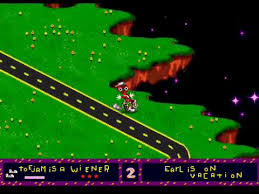
3) Rocket Skates: Jet-powered skates. They move us extremely quickly, including across water. The downside is that they are very difficult to control and can easily send us over a cliff.
4) Book: The only bad item we will describe. If we use it, we fall asleep for a while, becoming vulnerable to attacks and losing precious time;
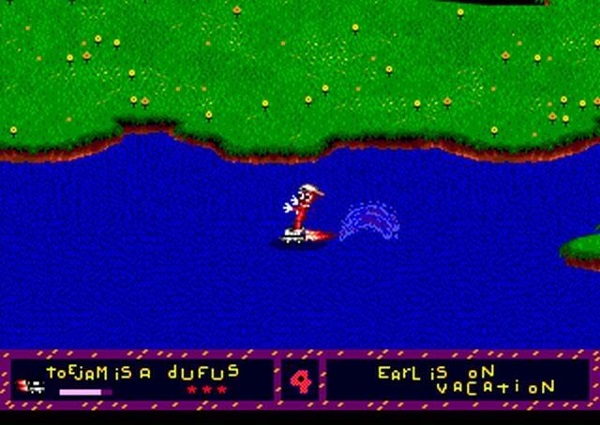
5) Inner Tube: Used for swimming, since the aliens apparently do not know how. It is useful not only for crossing stretches of water but also for avoiding enemies;
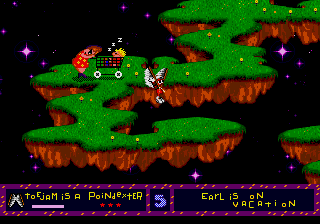
6) Icarus Wings: These give us the ability to fly and may be the game's best item, since they allow us to cross cliffs, lose enemies, and cover long distances. Their only problem is their very short durability.
Fun fact: ToeJam & Earl sold around 350,000 units. Although this is not a particularly impressive figure today, it was considered a success in its time given the game's unusual style by the standards of the period and the way it was overshadowed by Sonic 1's overwhelming success. Unfortunately, it took time to reach these numbers, leading SEGA to require that the franchise's second title be a platform game.
The ToeJam & Earl Bestiary
Without a doubt, one of ToeJam & Earl's most original features is its Earthlings, satirized in the widest variety of ways. Interestingly, not all of them are enemies; some provide tremendous help during our adventure. Below, we describe the four friends found during the campaign and nine examples of enemies, only some of the many spread throughout the environments.
The Friends
1. The Wizard: If you have money, he can heal you with a great shout of hallelujah when you find him. He is extremely useful when our health is at its limit;
2. The Wise Carrot Man: The game's most beloved friend, since for a reasonable price he reveals the contents of each present without our having to open it. This lets us avoid bad presents, especially the one that kills us instantly (Total Bummer) and the greatest nightmare of all, the one that shuffles every present (Randomizer);
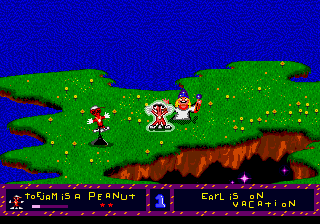
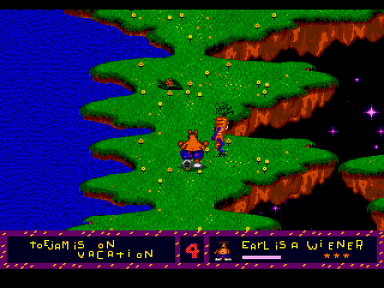
3. Opera Singer: The famous "screen-clearing bomb." She kills every enemy around us. The only problem is that she does so at a rather high price;
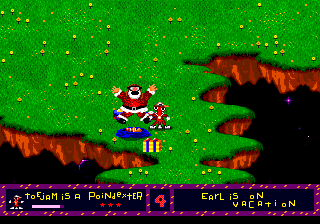
4. Santa Claus: The only friend who does not want our money. While walking through the stages, we may be lucky enough to find the jolly old man rummaging through his sack full of presents. If we manage to sneak up and startle him, he drops a few.
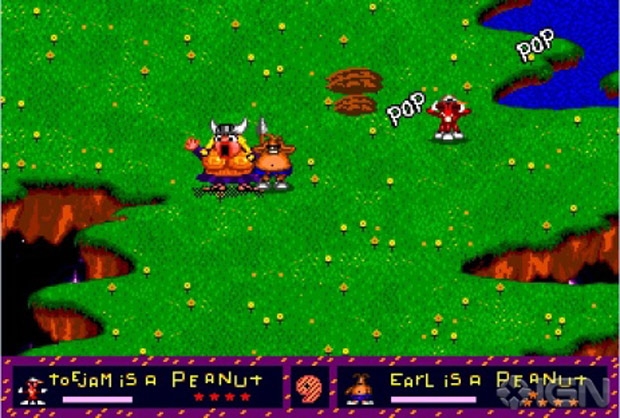
Fun fact: These aliens truly inhabit many people's imaginations. Some years ago, Paramount Pictures acquired a license to produce an animated feature film involving ToeJam & Earl. The project was being developed with Nickelodeon and would have covered the events of the franchise's third game. Sadly for fans, it was ultimately canceled.
The Enemies
According to designer Greg Johnson, when creating enemies he first considered the different kinds of damage and only then their form: someone who stole presents (the mole), delivered a scare (the boogeyman), or could distract (the hula dancer).
1) Devil: The first enemy found in the game. It is very easy to handle when encountered alone: simply move out of its path or even kill it with a few well-aimed tomatoes;
2) Hamster: No one knows where a hamster of this size came from. It apparently wants to play with the protagonists and consequently crush them, removing a substantial share of their health. It is also easy to evade or kill;
3) Mole: This enemy does not reduce our health if we come into contact with it. Instead, it steals our beloved, valuable presents. For this reason, I tend to keep bad presents in the inventory. One way to lose it is with the rosebush.
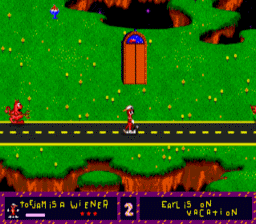
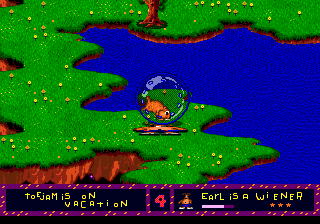
4) Cupid: Another annoying enemy that does not reduce our health. If we are hit by its arrow, however, we fall in love and the controls consequently go haywire, reversing the directional commands. Be careful not to head toward a cliff while confused;
5) Possessed Mailbox: Among the objects found through the stages are good mailboxes where we can buy presents. The problem is that some are extremely well-disguised enemies that remove a great deal of health when they hit us. The tip is to see whether you can spot the box's "eyes" while it is at rest—or perhaps simply ignore them. Note: and there you were thinking the Mimic from Dark Souls was revolutionary;
6) Sadistic Dentist: Apparently, there are dentists on our planet who genuinely enjoy causing people pain. Some are scattered through the environment, and we must take care because they are fairly agile. The laugh these enemies emit after hitting us is a rather iconic sound within the game.
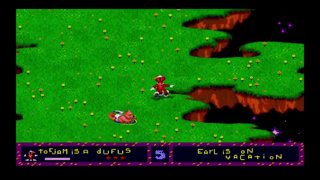
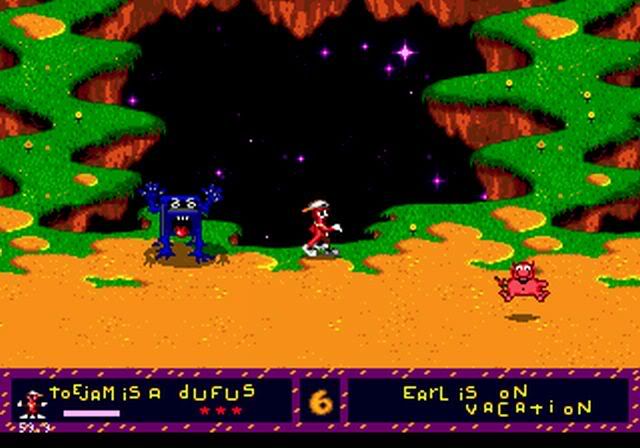
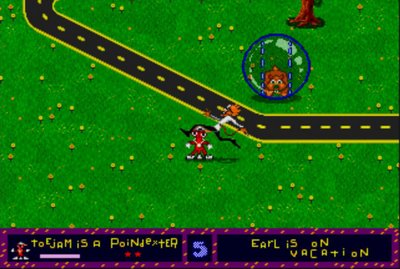
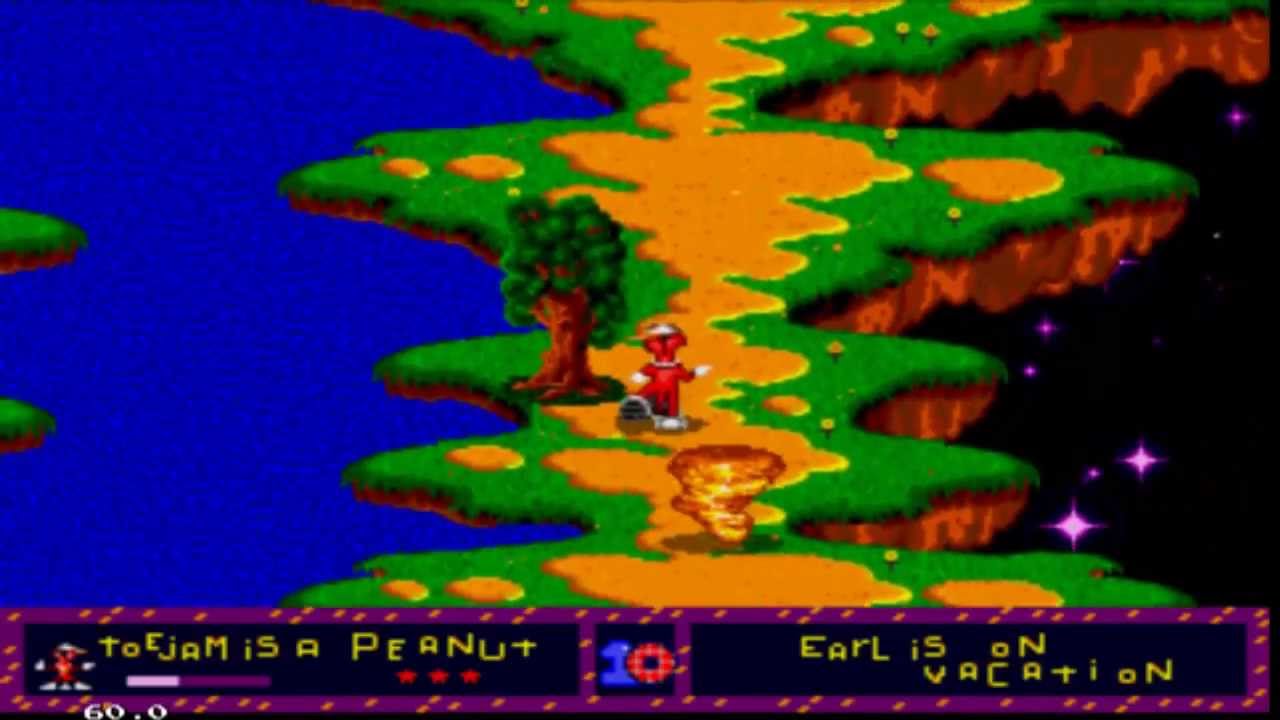
7) Tornado: Another troublesome enemy that does not reduce our health. Appearing in desert areas, this opponent picks us up and carries us wherever it wants. Its path appears random, but most of the time we end up falling off a cliff. Could this be Murphy's Law?
8) Boogeyman: Another terror that already appears in the game's early stages. Besides being fast and removing a reasonable amount of health, it can turn invisible when it is a certain distance away;
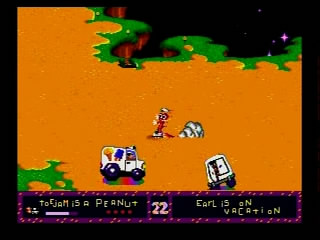
9) Ice Cream Truck: The last enemy introduced during the campaign. It can teleport around the environment and removes considerable health when it runs us over. It is difficult to evade, so using items is always recommended. People say you only need to stand in front of a cliff; I tried and regretted it.
Fun fact: Despite initially modest sales, critics praised ToeJam & Earl extensively. Bill Paris of UGO described its reception as "nearly unanimous critical acclaim." Entertainment Weekly chose it as the best game of 1991; remember that the Mega Drive alone received games such as Golden Axe 2, QuackShot, Streets of Rage, and Sonic that year. GamePro described the game's originality as "incredible" and praised its graphics, music, and humor. These were only a few examples of the positive reception the game enjoyed in its time.
Played on Mega Drive