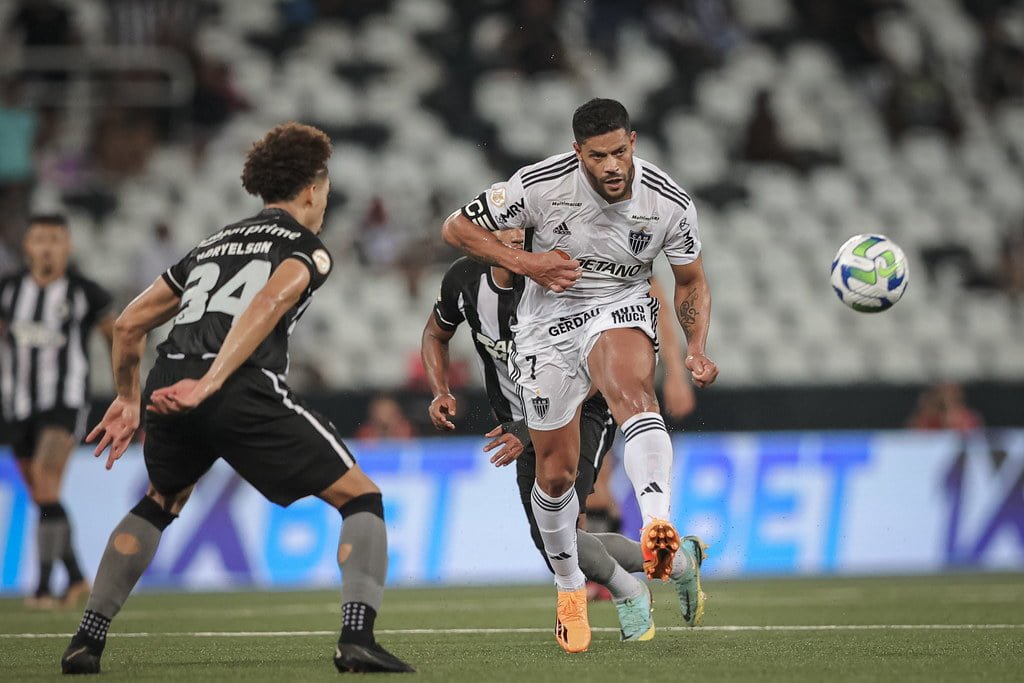
After playing an almost perfect first half of the season and opening a 13-point lead over the runner-up, Botafogo “managed” the feat of collapsing completely, to the point of reaching the final round of the Brasileirão without even a chance to lift the trophy.
We have seen teams collapse in similar fashion in some previous editions, such as in 2009 and 2020, but none came close to what happened to Botafogo this season. The script was as cruel as possible for the supporters: the team lost consecutive matches after unbelievable comebacks and, little by little, succumbed to its rivals.
But what reasons led Botafogo to this infamous moment in its history? From the impressive first-half campaign to second-half numbers resembling those of a relegated team, several factors contributed to the melancholic end of the year for the Rio de Janeiro club. In this article, we will discuss some of them.
Changes in Technical Leadership and a Lack of Leadership
Botafogo's overwhelming start to the Brazilian Championship came while Portuguese coach Luís Castro was in charge of the team. The success of the club's coach attracted the attention of Al Nassr, Cristiano Ronaldo's team. Castro ultimately left Botafogo after 12 rounds of the Brasileirão. The advantage was still large, however: the team had 30 points and was the sole leader.
Interim coach Cláudio Caçapa replaced Castro and amassed four wins in four matches, increasing Botafogo's lead even further. Caçapa's position, however, was that of an interim manager, not a permanent coach. Botafogo therefore pursued Bruno Lage to take command of the team.
It is worth emphasizing that although he is also Portuguese—like Luís Castro—Lage's style is completely different; they are two coaches with distinct profiles. The squad did not adapt to Bruno Lage and results worsened significantly. Friction between the players and the coach led Botafogo to dismiss Lage after a brief but memorable tenure, for negative reasons.
That was when Botafogo's downfall began. The players practically “chose” the new coach: Lúcio Flávio. The management accepted the players' suggestion and made Lúcio Flávio the permanent coach, but, as you might imagine, there were no very clear criteria behind the choice, a fact that characterizes poor football management.
Lúcio Flávio managed to be even worse than Bruno Lage and amassed enormous failures alongside the squad that had chosen him. Already desperate, the board tried one final move by bringing in Thiago Nunes, who had been working in Peruvian football. The damage, however, had already been done. Botafogo reached the final round “dead” in the title race, something unthinkable at the start of the championship.
Shaken Mental State Was Also a Factor
A winning team is made up of winning players. This football maxim may sound like an obvious cliché, but it is not. I say this because dealing with success requires great psychological—as well as technical—preparation, and that is possible only when you have players who have already achieved success at some point in their careers.
When team owner John Textor gave a press conference at the start of the Brazilian Championship, he said Botafogo was a team of “nobodies,” but one that would build its own history. The thing is, football does not forgive mistakes, however small, and none of the athletes in Botafogo's squad had a winning history. For them, this was the great moment of their careers, and not everyone dealt with it well.
The sequence of matches against Palmeiras and Grêmio demonstrated this categorically. Both Palmeiras and Grêmio were steamrolled in the first half of their matches against Botafogo in the second half of the championship. They returned from the locker room determined to change the picture, however, while Botafogo gradually surrendered without showing a response or emotional balance.
A lack of concentration in several other matches also cost Botafogo precious points. The draws conceded against Bragantino, Santos, and Coritiba came from similar concentration errors, typical of a team that had become a passenger to anguish in the final rounds.
It is difficult to explain exactly what happened to this team, which looked unbeatable at certain moments but could not even manage mediocrity at the decisive stage. As mentioned earlier, football does not forgive mistakes, not even from the most skillful teams.
Botafogo supporters will have to wait even longer to see their team lift the Brazilian championship trophy.