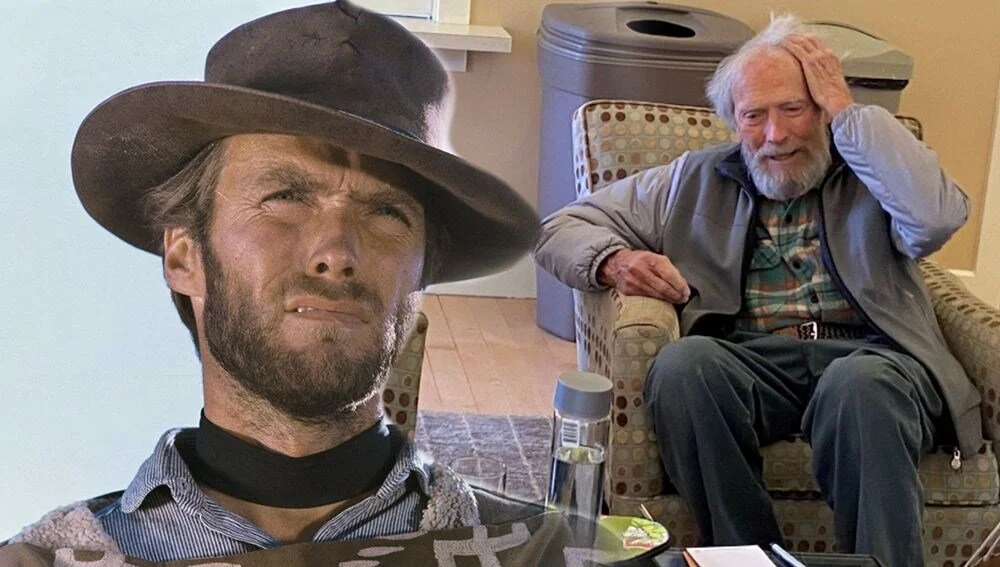
There is no doubt that Clint Eastwood is one of the biggest names in world cinema. His multifaceted talent and presence in memorable films have made his name an indelible part of the history of the seventh art. From his first performances in the 1950s to becoming one of the industry's most respected directors, Clint has taken part in more than 100 productions.
In this article, we will talk more about the career and interesting facts surrounding this important name in the industry, who has received more than 150 awards, including four Oscars over the course of his long career.
An Unlikely Beginning and Clint Eastwood's First Film Role
Born in San Francisco, California, in 1930, Clint Eastwood was the son of a senior executive at Georgia-Pacific, an American pulp and paper company, and a dedicated IBM administrative employee. During his teenage years, Clint had to work in several fields, from serving as a lifeguard and working as a grocery store clerk to working as a forest firefighter. When he turned 18, he was called to serve in the United States Army during the Korean War.
During his service at the former Fort Ord, a United States Army base in Monterey Bay, Clint Eastwood had a chance encounter that would change his destiny. After meeting someone with connections in Hollywood, he had the opportunity to be introduced to several film-industry producers. Once he completed his military service, Clint immersed himself in a series of auditions for film roles, facing numerous rejections along the way. It was only in 1955 that he finally secured his first role, in Arthur Lubin's “Francis in the Navy,” marking the beginning of his journey as an actor.
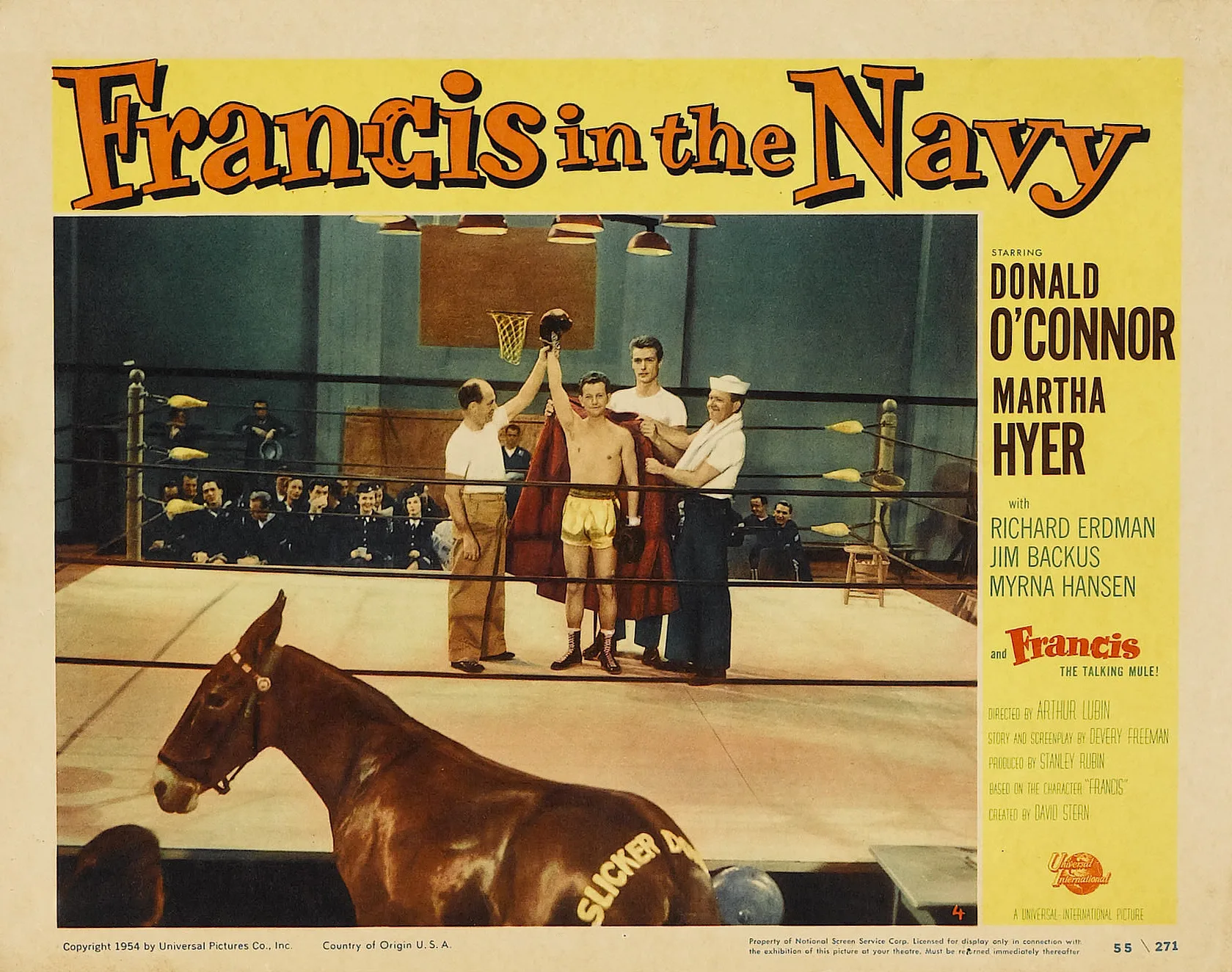
Despite his expectations, Clint Eastwood's start in cinema was not exactly what he had hoped for. Eastwood took his first steps as an actor with modest appearances in lesser-known films such as “Revenge of the Creature” and “Tarantula!” It was only in 1958 that he secured his first prominent role, in “Ambush at Cimarron Pass,” a work that he himself considered below his expectations in terms of cinematic quality.
The 1960s and Clint Eastwood's Rise During the Golden Age of the “Spaghetti Western”
Clint Eastwood's poor start to his career would soon end in the 1960s, when he became the star of the first films by director Sergio Leone, the biggest name in American “Western” films, or “Spaghetti Westerns,” as the industry referred to them pejoratively. The productions “A Fistful of Dollars” (1964), “For a Few Dollars More” (1965) and “The Good, the Bad and the Ugly” (1966) were acclaimed in both Italy and the United States, especially the last of the three, which propelled Eastwood to international stardom.
Even with the popular success and packed theaters Clint Eastwood achieved with these films, the film industry still viewed him with considerable prejudice. To much of Hollywood, he personified the hammy actor, incapable of playing good dramatic roles that were not filled with guns and shooting. But that would soon change.
Films Featuring Clint Eastwood:
- Revenge of the Creature (1955)
- Francis in the Navy (1955)
- Lady Godiva of Coventry (1955)
- Tarantula! (1955)
- Never Say Goodbye (1956)
- Star in the Dust (1956)
- Away All Boats (1956)
- The First Traveling Saleslady (1956)
- Escapade in Japan (1957)
- Lafayette Escadrille (1958)
- Ambush at Cimarron Pass (1958)
- A Fistful of Dollars (1964)
- For a Few Dollars More (1965)
- The Good, the Bad and the Ugly (1966)
- The Witches (1967)
- Hang 'Em High (1968)
- Coogan's Bluff (1968)
- Where Eagles Dare (1968)
- Paint Your Wagon (1969)
- Two Mules for Sister Sara (1970)
- Kelly's Heroes (1970)
- The Beguiled (1971)
- Play Misty for Me (1971)
- Dirty Harry (1971)
- Joe Kidd (1972)
- High Plains Drifter (1973)
- Magnum Force (1973)
- Thunderbolt and Lightfoot (1974)
- The Eiger Sanction (1975)
- The Outlaw Josey Wales (1976)
- The Enforcer (1976)
- The Gauntlet (1977)
- Every Which Way but Loose (1978)
- Escape from Alcatraz (1979)
- Bronco Billy (1980)
- Any Which Way You Can (1980)
- Firefox (1982)
- Honkytonk Man (1982)
- Sudden Impact (1983)
- Tightrope (1984)
- City Heat (1984)
- Pale Rider (1985)
- Heartbreak Ridge (1986)
- The Dead Pool (1988)
- Pink Cadillac (1989)
- White Hunter Black Heart (1990)
- The Rookie (1990)
- Unforgiven (1992)
- In the Line of Fire (1993)
- A Perfect World (1993)
- The Bridges of Madison County (1995)
- Absolute Power (1997)
- True Crime (1999)
- Space Cowboys (2000)
- Blood Work (2002)
- Mystic River (2003)
- Million Dollar Baby (2004)
- Gran Torino (2008)
- The Mule (2018)
- Cry Macho (2021)
Career Changes and His First Film as a Director
As discussed earlier, in his projects as an actor, Clint Eastwood frequently took on characters who were seen as narratively simple figures with little complexity, often filled with clichés such as the famous “ham.” Clint began trying to change this in the works he directed. When writing the scripts, he favored more sensitive roles and stories that departed from those clichés.
His first attempt as a director was the 1971 film “Climbing to Die.” In addition to directing, Eastwood also starred in it, a defining feature of his filmmaking career. Nevertheless, the work was not very successful: critics remained neutral and the public did not make much noise about it.
However, by the time he reached his sixth film as director, Eastwood managed to attract Hollywood's attention in the way he wanted. In the 1977 production “The Gauntlet,” he acts alongside Sandra Locke and brilliantly manages to leave behind his entire persona as a hammy American “antihero.” The film was a box-office success, and specialized critics began to view Clint Eastwood differently, marking his career forever from that point onward.
The 4 Oscars and Hollywood's Definitive Recognition
While still trying to balance work as both an actor and director, Eastwood decided in the 1980s that he would continue solely as a director, acting only in his own films. In 1988, he released “Bird,” which tells the story of legendary jazz saxophonist Charlie Parker, who lost his life when he was only 35. The film won the Best Actor award (Forest Whitaker) at the Cannes Film Festival. This was technically Clint Eastwood's first award for a film he directed, even though it was not presented directly to him.
Clint Eastwood's first Oscar was not long in coming. It arrived as a double win in 1993 for “Unforgiven,” released a year earlier. The film is considered the actor's final work in the “Old West” genre. Despite its similarities to the works of the 1960s that made him popular, in “Unforgiven” violence is not glorious and manifests as a reaction to male insecurity or as an effect of drinking. The women, meanwhile, are not viewed as stereotypes, and the former heroes celebrated by popular literature are shown as inept or fraudulent.
The work earned Eastwood two statuettes: Best Director and Best Picture. Ironically, fate determined that the film industry's highest recognition of Clint Eastwood would come precisely because of a “Western,” a genre so heavily criticized by press specialists and critics in his time.
After a “sabbatical,” Eastwood returned to action to direct “The Bridges of Madison County” (1995), in which he stars opposite Meryl Streep. The film was a box-office success.
In 2005, Clint Eastwood won more statuettes for his brilliant direction of the drama “Million Dollar Baby.” In the film, the actor plays a boxing trainer living in obscurity who sees in a young female boxer the chance to return to the spotlight. The work is a deeply layered drama with fantastic performances by both Clint Eastwood and Hilary Swank. One interesting fact is that, at age 74, Clint Eastwood was the oldest person to receive the award for Best Director. Eastwood was also nominated for Best Actor for the same film, but the award went to Jamie Foxx.
In total, “Million Dollar Baby” won four Oscars, including Best Picture, Best Director (Clint Eastwood), Best Supporting Actress (Hilary Swank) and Best Supporting Actor (Morgan Freeman).
Clint Eastwood's long and successful career also saw him direct other highly successful films, as in the cases of “Flags of Our Fathers” and “Letters from Iwo Jima,” set during World War II but telling stories from different perspectives. The first focused on the man who raised the United States flag atop Mount Suribachi in a photograph that became famous and was widely used during World War II. The second, “Letters from Iwo Jima,” dealt with Japanese tactics and the letters they wrote to their families during the conflict. Both films were very well received and were nominated for Oscars, including Best Director and Best Picture for “Letters from Iwo Jima.”
“Gran Torino,” from 2008, also deserves an honorable mention. The film's plot is captivating, and Clint Eastwood's direction highlights important aspects of the narrative and the actors' performances. This feature, together with “Changeling,” also from 2008, were the last two major commercial successes released under Clint Eastwood's direction and production. He also worked on other good titles after this period, but without matching the box-office results of earlier years.
Eastwood produced most of his films and stood out because nearly all of them had low budgets. Over the years, he developed relationships with other directors and producers, but Clint prefers to work with the same team of producers, editors and technicians. Even after becoming one of the biggest names in the film industry, he encountered many problems and rejections when trying to bring most of his projects to life.
But resilience and persistence, defining traits of his career and persona, allowed him to force his way into the film industry, even during a period when criticism of him was harsh and his older films were labeled “Spaghetti Westerns.” With so much perseverance, director, producer, actor and screenwriter Clint Eastwood undoubtedly established himself as a major cinematic reference.
Films Directed by Clint Eastwood:
- Play Misty for Me (1971)
- High Plains Drifter (1973)
- Breezy (1973)
- The Eiger Sanction (1975)
- The Outlaw Josey Wales (1976)
- The Gauntlet (1977)
- Bronco Billy (1980)
- Firefox (1982)
- Honkytonk Man (1982)
- Sudden Impact (1983)
- Pale Rider (1985)
- Heartbreak Ridge (1986)
- Bird (1988)
- White Hunter Black Heart (1990)
- The Rookie (1990)
- Unforgiven (1992)
- A Perfect World (1993)
- The Bridges of Madison County (1995)
- Absolute Power (1997)
- Midnight in the Garden of Good and Evil (1997)
- True Crime (1999)
- Space Cowboys (2000)
- Blood Work (2002)
- Mystic River (2003)
- Million Dollar Baby (2004)
- Flags of Our Fathers (2006)
- Letters from Iwo Jima (2006)
- Changeling (2008)
- Gran Torino (2008)
- Invictus (2009)
- Hereafter (2010)
- J. Edgar (2011)
- Jersey Boys (2014)
- American Sniper (2014)
- Sully (2016)
- The 15:17 to Paris (2018)
- The Mule (2018)
- Richard Jewell (2019)
- Cry Macho (2021)
- Juror No. 2 (TBA)