In recent years, China has intensified a censorship drive that concerns tourists, foreigners, and fans of Japanese anime and games. What was once only a matter of censorship on streaming platforms appears to have become broader, extending to restrictions involving the import of works of Japanese origin and cosplay.
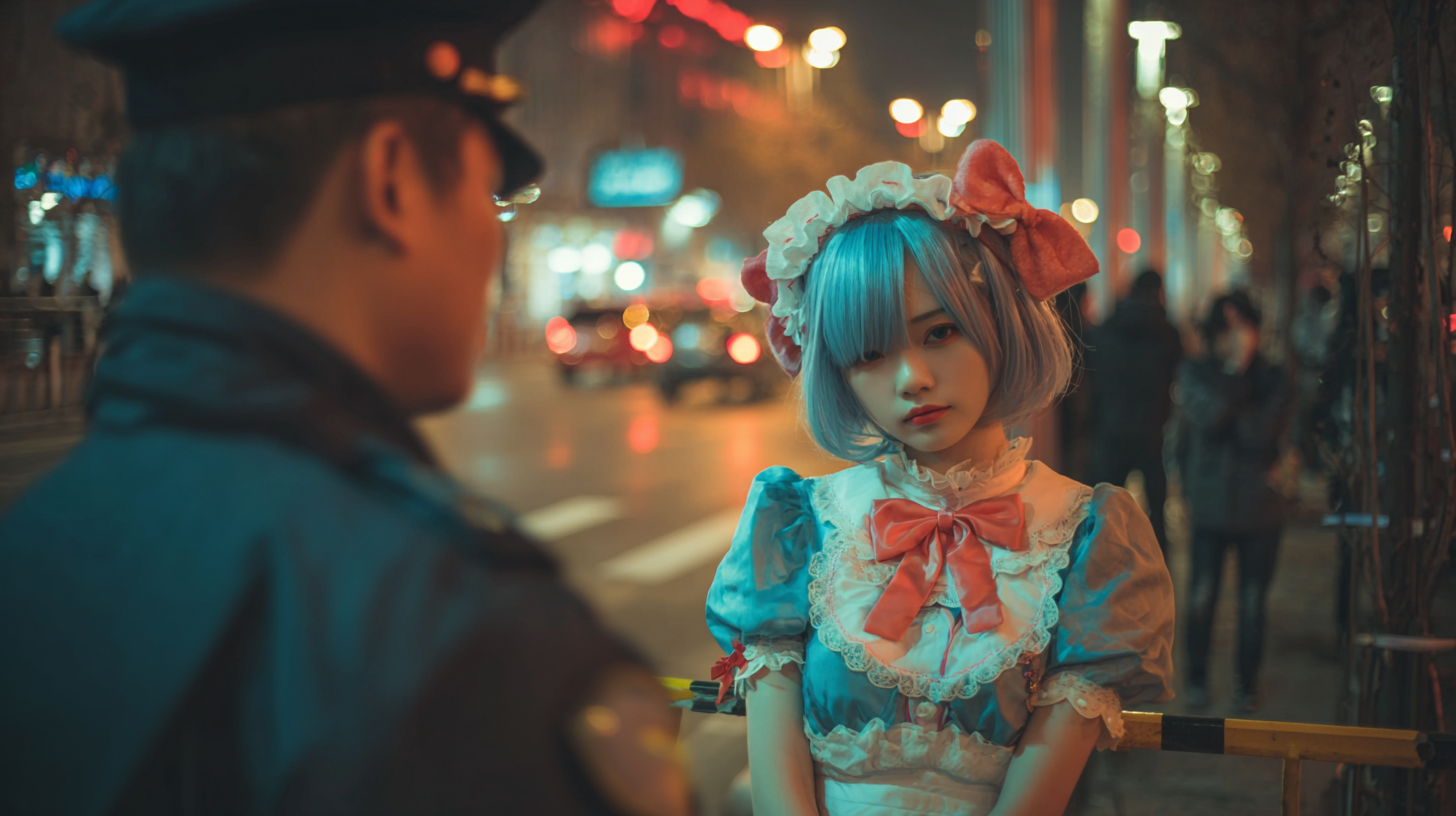
One of the most striking cases occurred in 2022, when a young woman in Suzhou was approached by police for wearing a kimono during an anime-inspired photo shoot. The officer accused her of lacking patriotism, confiscated her clothing, and kept her under interrogation for hours, while also forcing her to delete records of the incident. The situation generated enormous attention on Chinese social networks, but the discussions were soon censored.
The crackdown has also reached official events. In 2025, ChinaJoy — the country's largest pop culture convention — released a list of banned anime and games, including Death Note and Parasyte, claiming they violated fundamental values and public order. Regional conventions, in turn, were canceled following regulatory pressure.
In the same context, in Jiuquan, an armed nationalist assaulted a young cosplayer wearing a kimono, accusing her of promoting a Japanese “cultural invasion.” The episode went viral internationally on social media and received support from some internet users, highlighting the rise of anti-Japanese sentiment in the country.
This video from the "Paahtis" channel shows more cases and footage of Chinese people acting aggressively toward cosplayers and anime fans, who are also Chinese, in public places.
About the Photo Shoot Case
In a video posted on the Chinese social network Weibo, the young woman explained to the police officer that she was only doing a photo shoot. He replied: “If you came here wearing Hanfu, I wouldn't say this. But you are wearing a kimono, as a Chinese person. You are Chinese! Are you?”.
When she calmly asked why she was being reprimanded, she heard in response: “On suspicion of picking quarrels and causing trouble”.
The young woman reported that she was interrogated for about five hours, until 1 a.m., had her phone searched, her photos deleted, and her kimono confiscated. According to her, police also asked her to write a 500-word self-criticism letter and warned her not to discuss the case online.
In a post on Qzone, another Chinese social network, she vented: “I feel that I have no dignity now... I like Japanese culture, European culture, and I also like traditional Chinese culture. I like multiculturalism, I like watching anime; is it wrong for me to like something?”.
Later, she posted on Weibo: “I'm sorry, I shouldn't have disregarded public sentiment by walking the streets in Japanese clothing. This is wrong and dangerous behavior that has hurt our national feelings”.
CNN tried to contact police at the Shishan station, near the street where the incident occurred, but was unsuccessful. The girl involved in the incident also did not respond to the news outlet.
Government Expands Censorship of Anime and Manga
The Chinese government has broadened its criteria for censoring anime. In 2025, restrictions began to emerge against works that portray rebellions against authorities or feature romances between high school teenagers, one of the narrative pillars of many Japanese productions. This creates a scenario that compromises not only the availability of international content but also affects the production of new works, which begin avoiding themes considered sensitive so they are not blocked.
The official justification for these measures is the "protection of young people" and the promotion of content considered healthy by the government, aligned with the moral values defended by the state. Efforts in this direction had already existed since 2021, with the ban on violent cartoons or those with sexual appeal. However, experts point out that the policy goes beyond morality: it is a mechanism of ideological control. Stories that address rebellion, diversity, or even relationships considered “inappropriate” challenge the official narrative and are therefore targeted.
Another example is the campaign against the danmei genre, focused on romances between male characters. Works of this kind have been banned or heavily edited since 2021, and in 2025 several young female authors were arrested for producing erotic fiction with this theme. The government sees this content as a threat to the model of masculinity it seeks to reinforce, expanding the limits of repression even further.
The offensive against anime shows how pop culture in China has ceased to be merely entertainment and has become part of a political dispute. The issue involves not only the right to consume media or dress as characters, but also the preservation of a form of cultural expression connected to diversity, imagination, and, in many cases, social criticism.
While fans seek discreet ways to "survive" in this environment, the question remains as to how far the government intends to go with such restrictions.