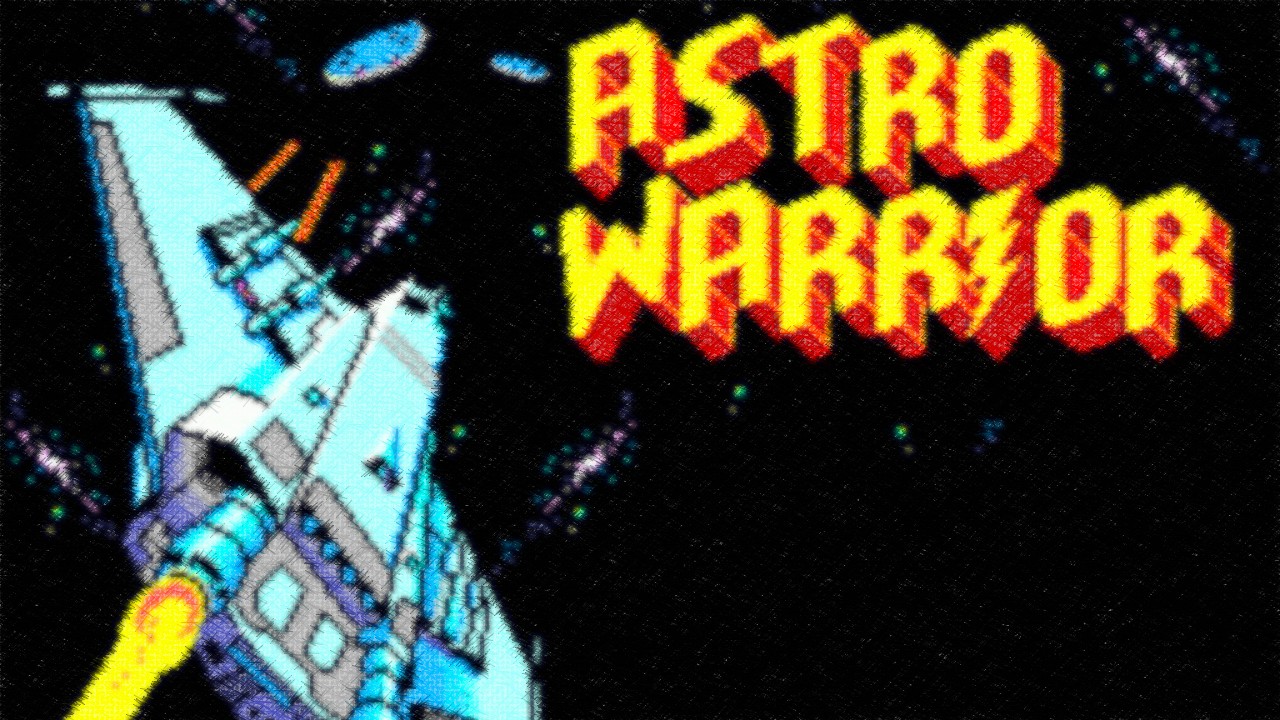
Astro Warrior is the kind of game I usually call a transitional title. Its graphics and soundtrack already belonged to the third generation of consoles, but its depth and gameplay were still rooted in the Atari era. With the potential to begin a beautiful shoot 'em up franchise for SEGA, this game ended up entering console history simply as a good game, known only to fans of the style popularly referred to as "little spaceship games" in Brazil.
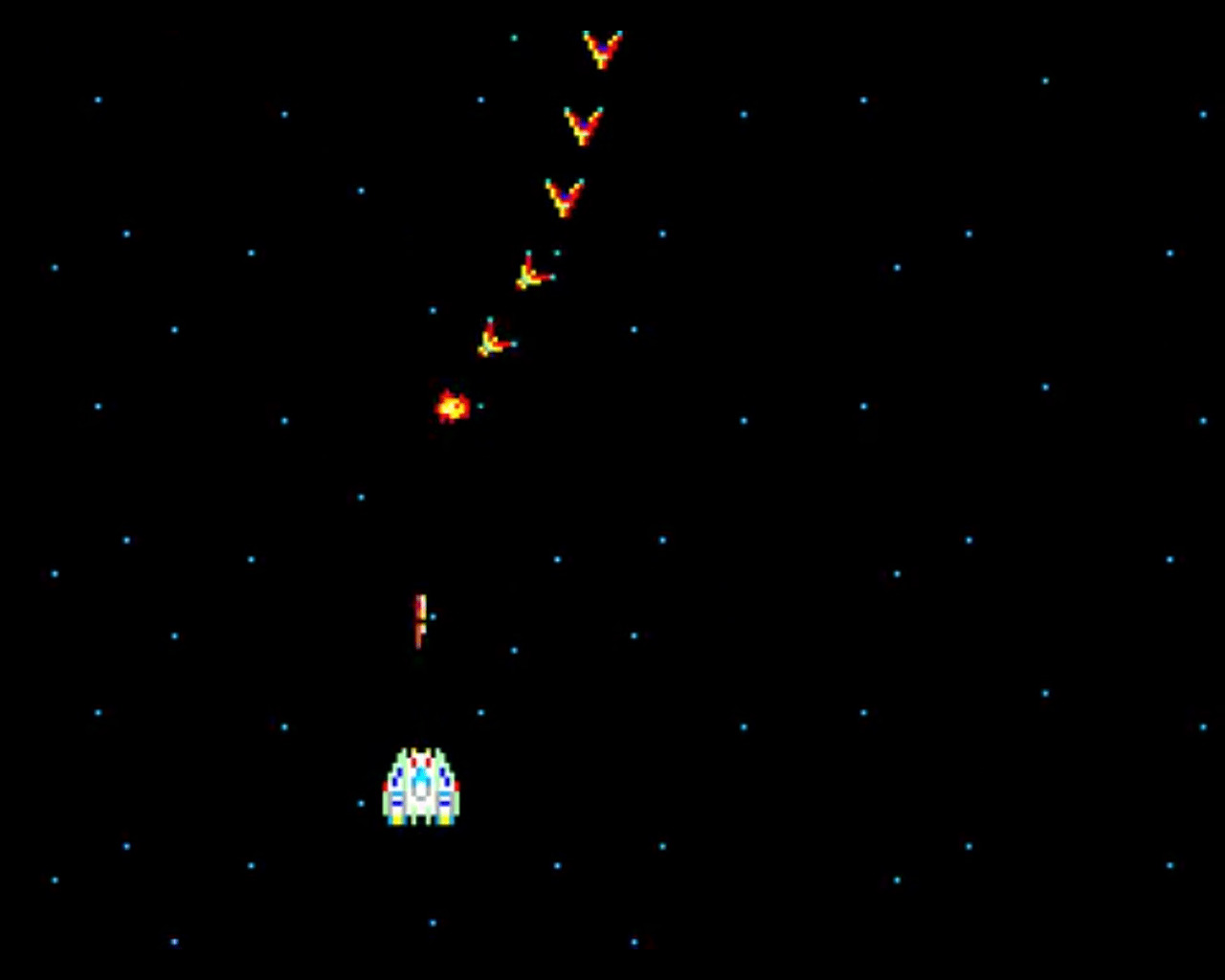
If we hit the first of these enemies, they all die. Accuracy rewarded.
Astro Warrior is a shoot 'em up developed and published by SEGA in 1986 for the Master System, officially reaching Brazil through Tec Toy in 1989.
Fun fact: When Astro Warrior was released in Europe and the United States, its cartridge was distributed in collections called "the combo cartridge." In Europe, Astro Warrior was released alongside Pit Pot, while in the United States it was paired with Hang-On. Unfortunately, we Brazilians received the game by itself.
Technical Analysis of Astro Warrior
The game's plot is more of a simple concept. Here I will reproduce the words from the small, limited manual included with the version released by our fondly remembered Tec Toy: "A group of dangerous bandits called the Imperial Forces of the Devil Star advances through space to invade our galaxy. There is only one hope: you, the Astro Warrior, the invincible warrior of the stars. You command the Allied Forces aboard your Astro Raider spacecraft on a daring mission—to cross a triple defense area, destroy the enemy, and finally seize the enemy mothership." What did you think?
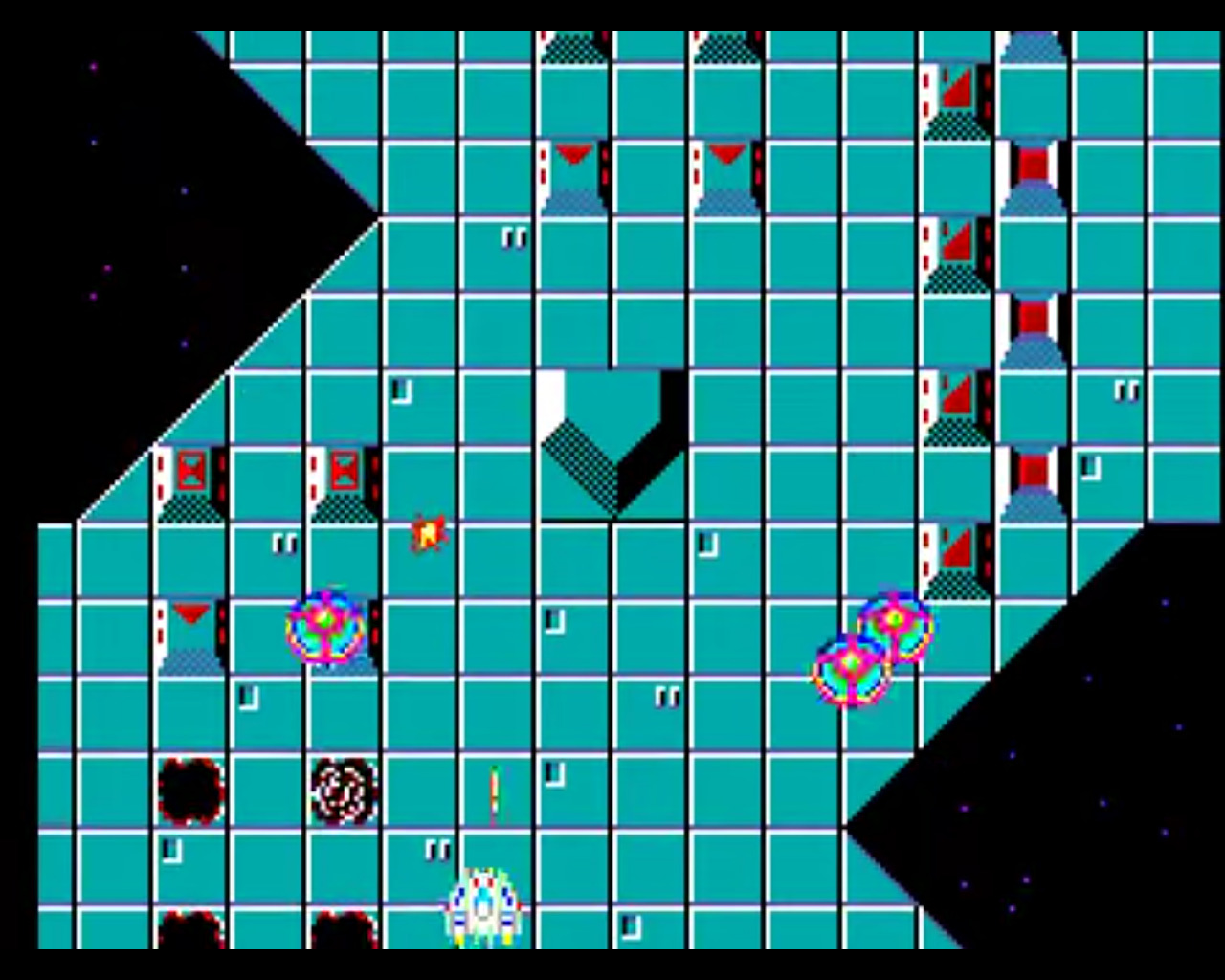
The weapon in its simplest form requires skill from the player.
The graphics in Astro Warrior are very good for the third generation of consoles to which it belongs, far ahead of most games in the genre released for the competing NES, known as Nintendinho to us Brazilians. With details such as a large number of objects being destroyed simultaneously and enormous bosses, the game was impressive.
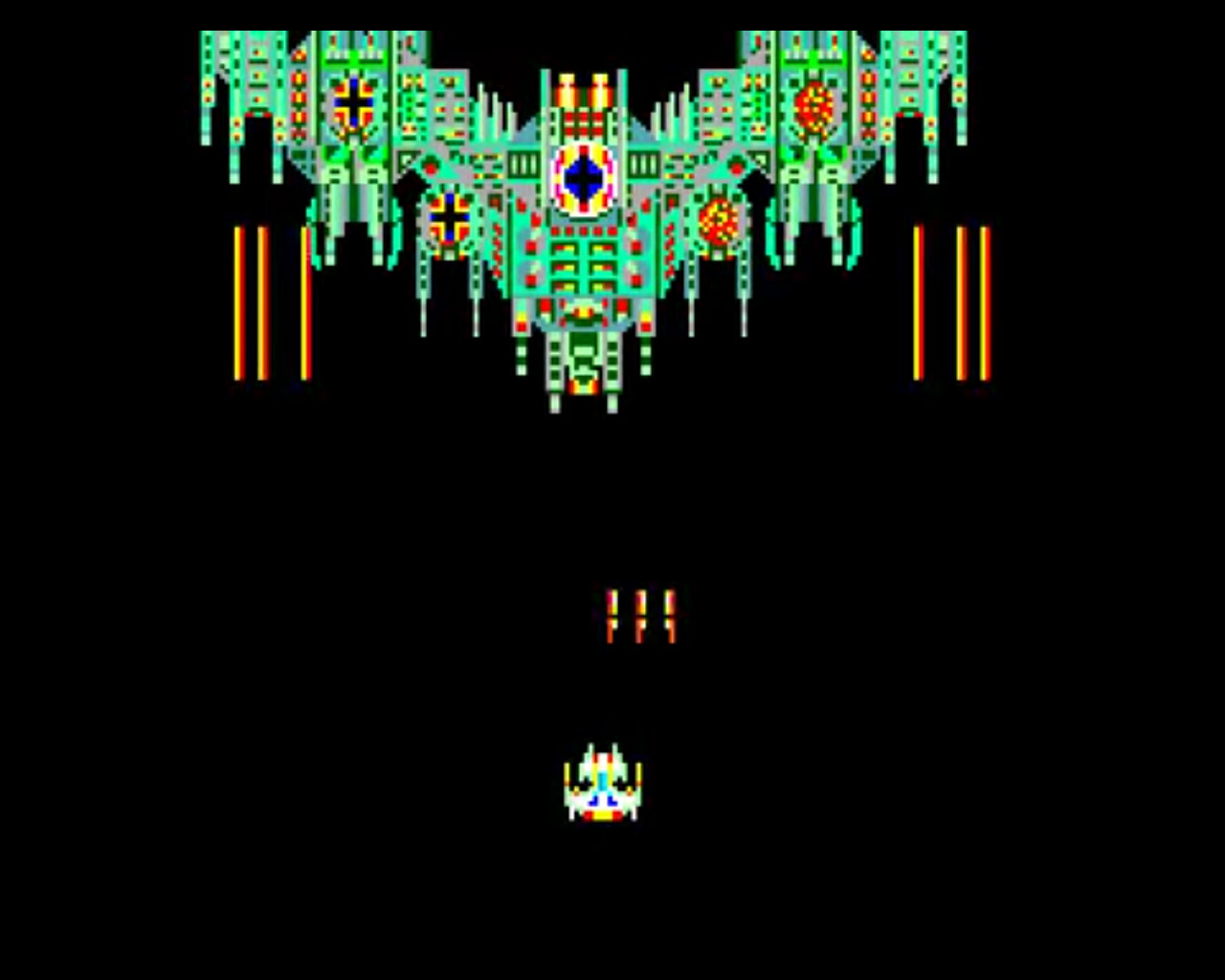
The large bosses were impressive at the time.
The game's power-ups appear as they pass through the center of the screen, and their frequency depends on the score we earn by destroying enemies and the environment. They are divided into three types. 1) Speed: these merely increase the sensitivity of the spacecraft's controls, which is very important because the vehicle is extremely slow at its default speed; 2) Shot: these increase the power of our shots, first changing them to a triple shot and then to a double laser capable of passing through enemies and shields; 3) Helpers: the best kind, these repeat our movements and shots. We can "sweep" the screen when we obtain the best weapon and two helpers, the maximum possible number.
The controls respond very well to the player's commands. Here is even a tip: when we collect speed-increasing power-ups, we often become careless and make the spacecraft too fast, which makes it difficult to control. This was undoubtedly included so that players who are "greedy" for items learn to be less "covetous." Two players can take turns playing the campaign.
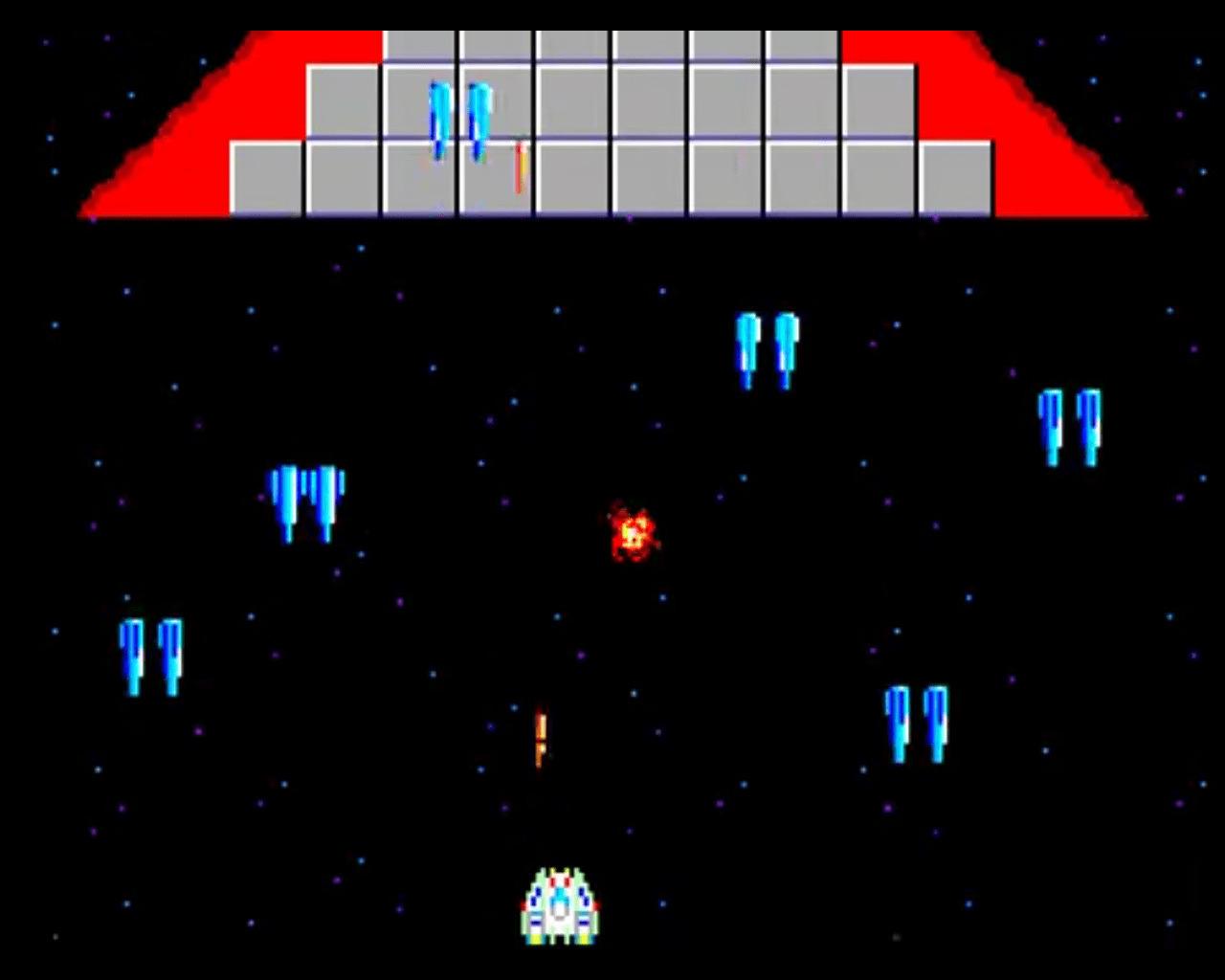
The beginning of the second stage already shows an increase in difficulty.
The bosses are one of Astro Warrior's greatest strengths. They are very large, have personalities expressed through their own names, and feature secondary weak points that must be destroyed before their main core. Another highlight of these battles is that the bosses move toward our spacecraft if we take too long to destroy them, making escape impossible. In other words, do not take too long.
The Astro Warrior campaign has three stages: 1 - Galaxy Zone; 2 - Asteroid Zone; and 3 - Nebula Zone. After they are completed, these stages return in "loops," becoming progressively more difficult with each finished cycle. This feature evokes the game's transitional nature, since it closely resembles the style of several titles from the second generation of consoles.
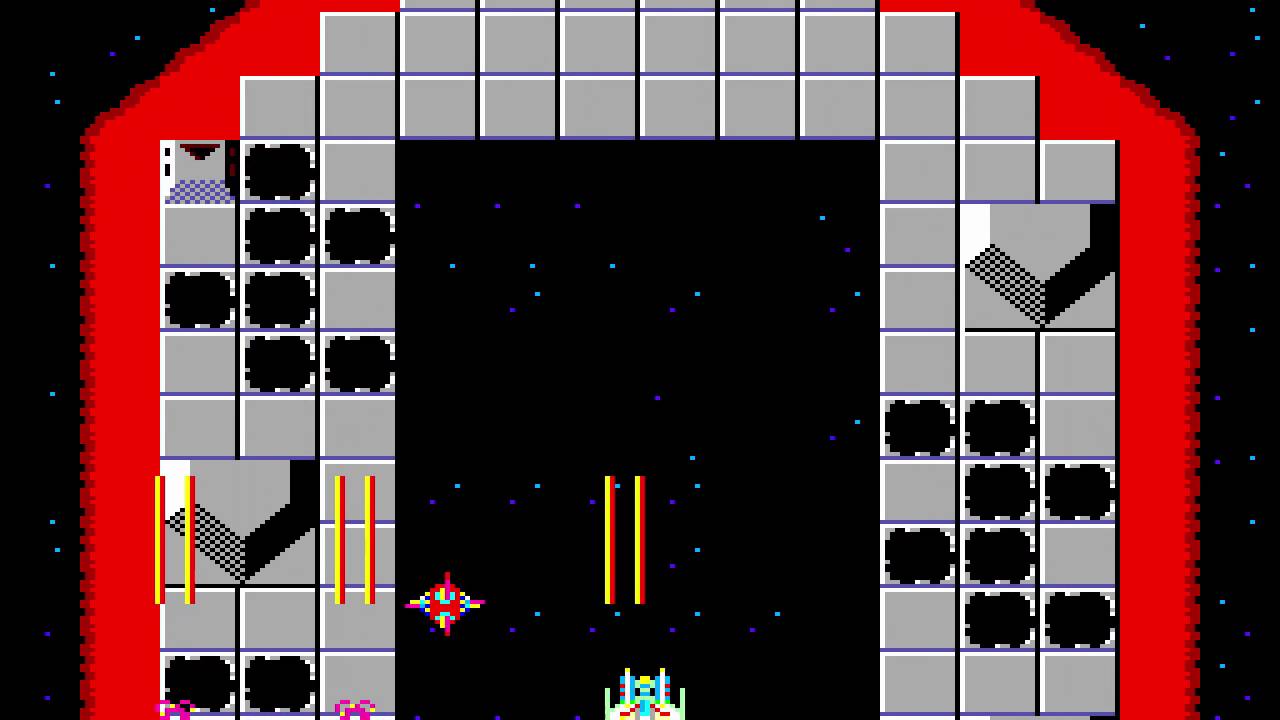
Maximum power. The best shot and both helpers. Dying like this is so sad...
The difficulty is low compared with other games in the same genre. At first, the player will probably have trouble, but as is common in games of this type, everything becomes easier after we memorize enemy behavior patterns and locations. As usual, losing power-ups is a major problem in Astro Warrior, making it practically impossible for an inexperienced player to finish the first cycle if they lose a life after the start of the third stage. Here is a tip: try to destroy everything possible at the beginning of the game, quickly acquiring maximum power while avoiding making the spacecraft excessively fast. After that, learn the enemies' weak points.
Despite having few tracks, the soundtrack fulfills its purpose well, matching the stages to which the music belongs: calm in the first, energetic in the second, and tense in the third. The sound effects are also good and leave nothing to be desired.
Below is the complete Astro Warrior soundtrack.
Fun fact: In 1996, Tec Toy released a Brazilian adaptation of Astro Warrior, replacing its environments, enemies, and character. The game became Sapo Xulé: S.O.S Lagoa Poluída. Space became a polluted lagoon and the enemies became garbage, such as matchsticks, shoes, and food scraps. The soundtrack, gameplay, and level design remained unchanged. Most interesting of all, this version was later released in Portugal, for reasons no one knows.
Our Conclusion
There really are not many reasons to play Astro Warrior today unless you are a fan of SEGA or the shoot 'em up genre. There is no doubt that many far superior titles in the same genre could be tried instead. However, I believe its mild difficulty, short campaign, and strong production make it worth a few minutes of play. SEGA certainly could have paid more attention to the game and the future of a franchise whose potential was barely used.
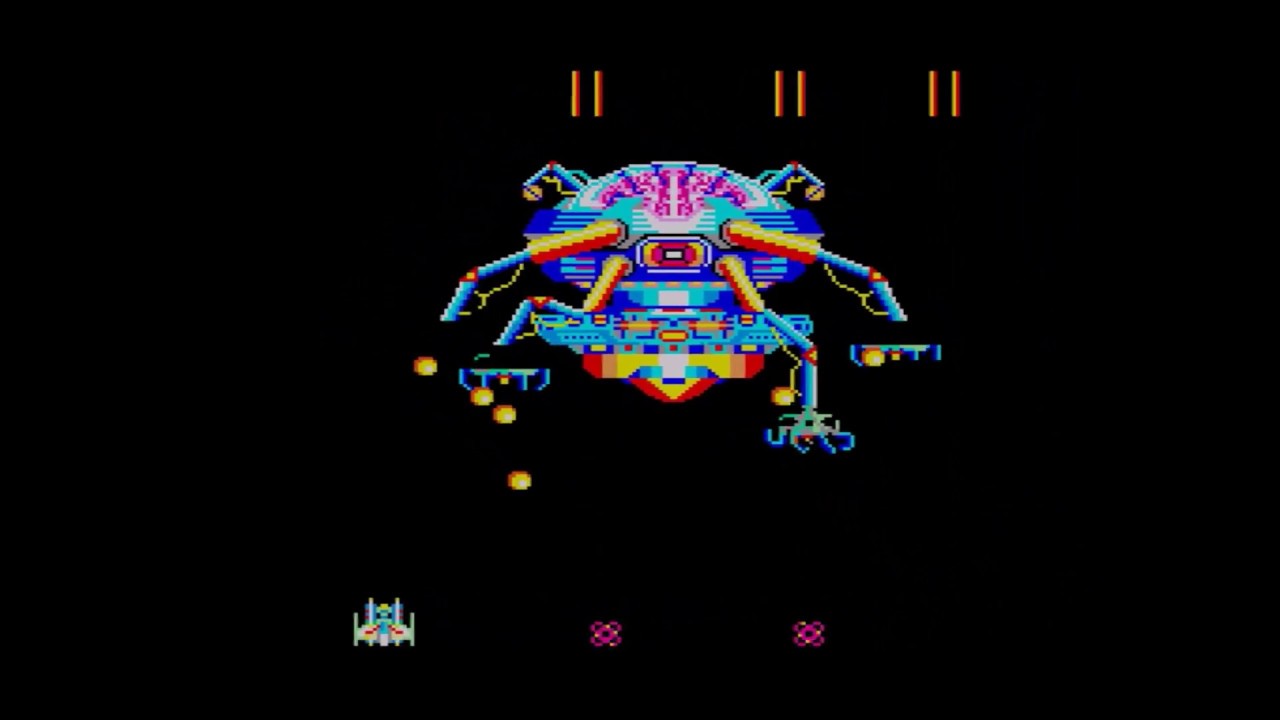
A good game whose potential was barely used.
Rating: 7
Played on Master System