After severalrumors circulated, the gaming market is about to gain a new competitor. Google, recognized globally for services such as Gmail, YouTube, and its search engine, is now entering the electronic-games market to compete directly with Nintendo, Microsoft, Steam, and Sony.
The presentation Google promised at the 2019 Game Developers Conference materialized in the introduction of a new gaming platform, Stadia. Its concept is to offer a “Netflix” of video games. Players will be able to play their games wherever they want, whether on a mobile phone or a computer, requiring a constant internet connection regardless of the device being used. The bet is that a physical console or gaming PC will no longer be necessary, only a fast web connection.
“The Future of Gaming Is No Longer in a Box”
Full presentation about the console, livestreamed on Google's official channel.
Stadia was shown running on various devices, including smartphones, tablets, televisions, and computers using Google's ChromeOS operating system. To use Stadia, the user will only need Google Chrome and a constant internet connection. Games will be processed in real time on a Google server and transmitted to screens for players to control.
The server will use an AMD Radeon card, with the announcement stating that:
“Google selected AMD's optimized datacenter GPUs—with fast and efficient HBM2 memory and essential datacenter capabilities—for the platform.”
With this, Stadia accelerates a future of electronic gaming in which a console or powerful device will not be necessary to run games; the player will need only a constant, fast connection so it does not interfere with the experience.
What Internet Speed Is Needed to Play on Stadia?
During the Stadia presentation, Google CEO Sundar Pichai explained that the speed needed to run a game would be 25 megabits per second (25 Mbps). This speed will allow the game to be streamed at 1080p and 60 frames per second (60 fps). If the player wants to play at 4K quality, however, a 30-megabit-per-second (30 Mbps) connection will be required.
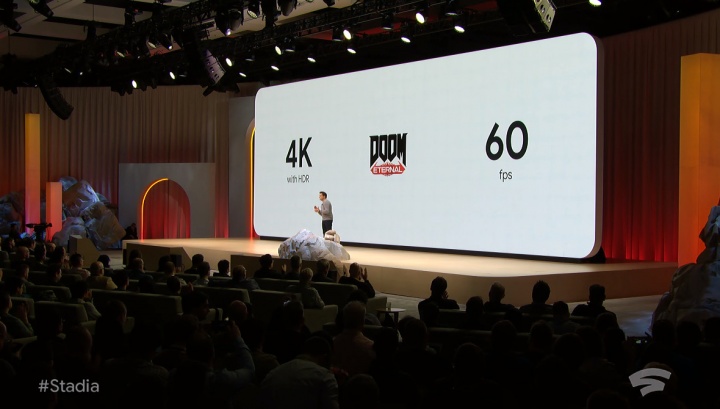 Games can run at 4K with HDR and 60 fps.
One concern some players have with this new style of game delivery is the possibility of slower game responses after pressing a button, with some saying it took around 166 milliseconds for actions to respond to commands. Google later made clear that when using the controller it developed for Stadia, input delay would be only 2 milliseconds.
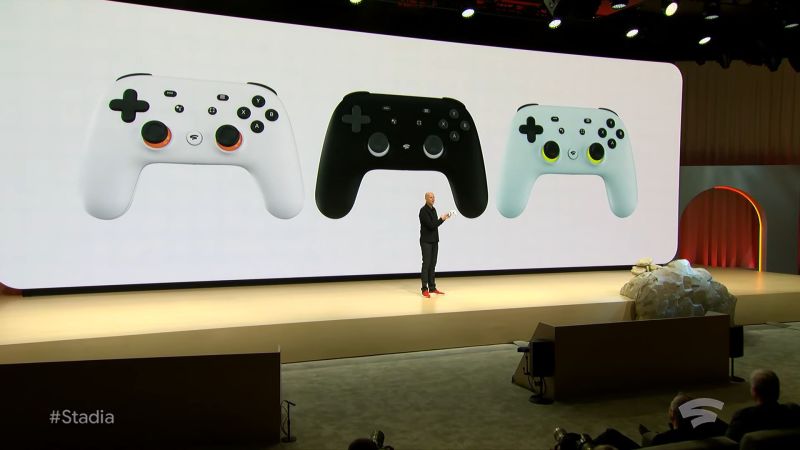 Stadia controllers/joysticks.
Games Already Confirmed for Stadia
To capture consumers' attention, Google will have the support of several developers, including the game Doom Eternal, which will continue the series introduced by id Software, for example. The internet giant also made a point of ensuring that more than 100 game studios already have its development kit for creating new titles.
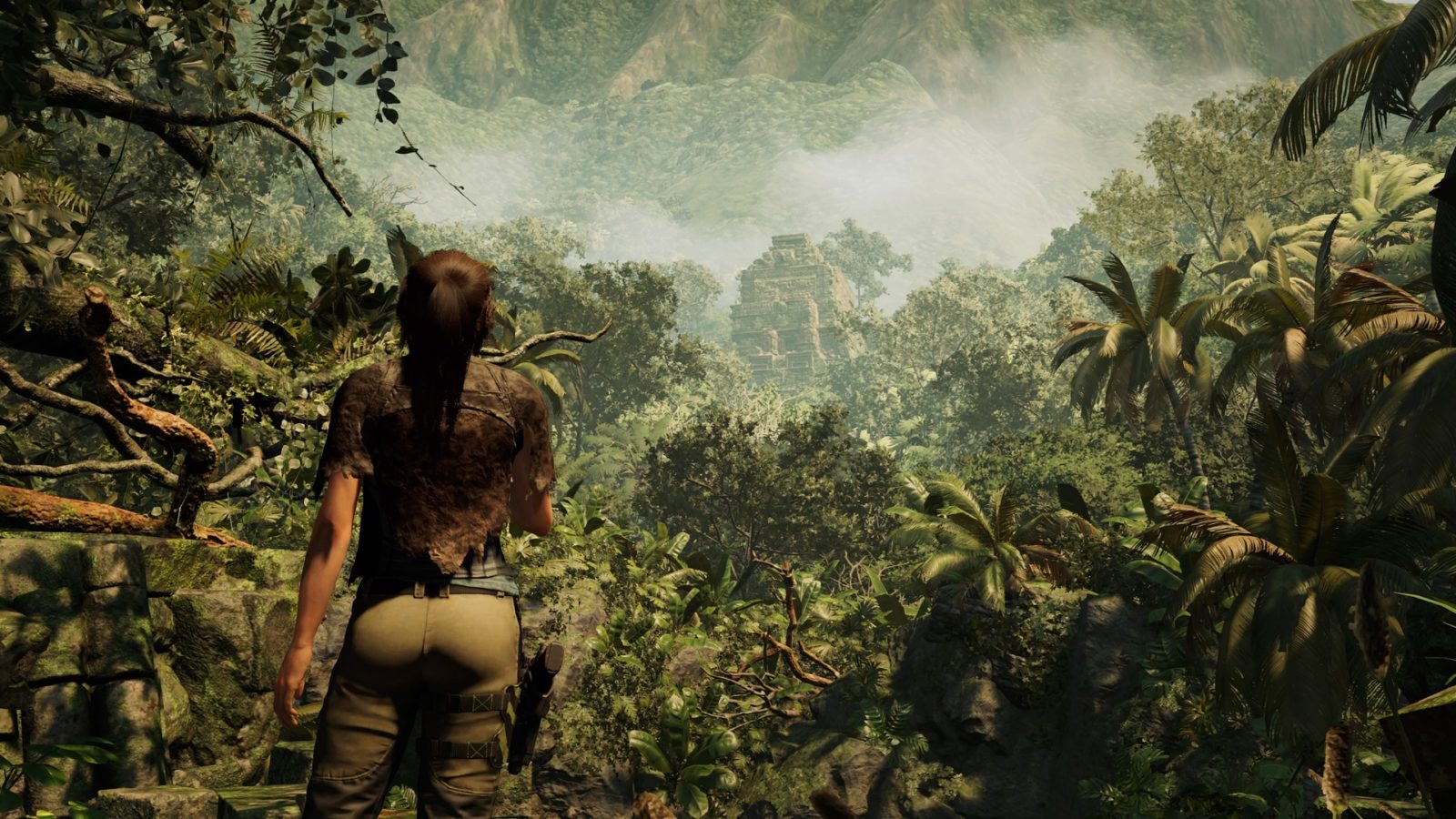
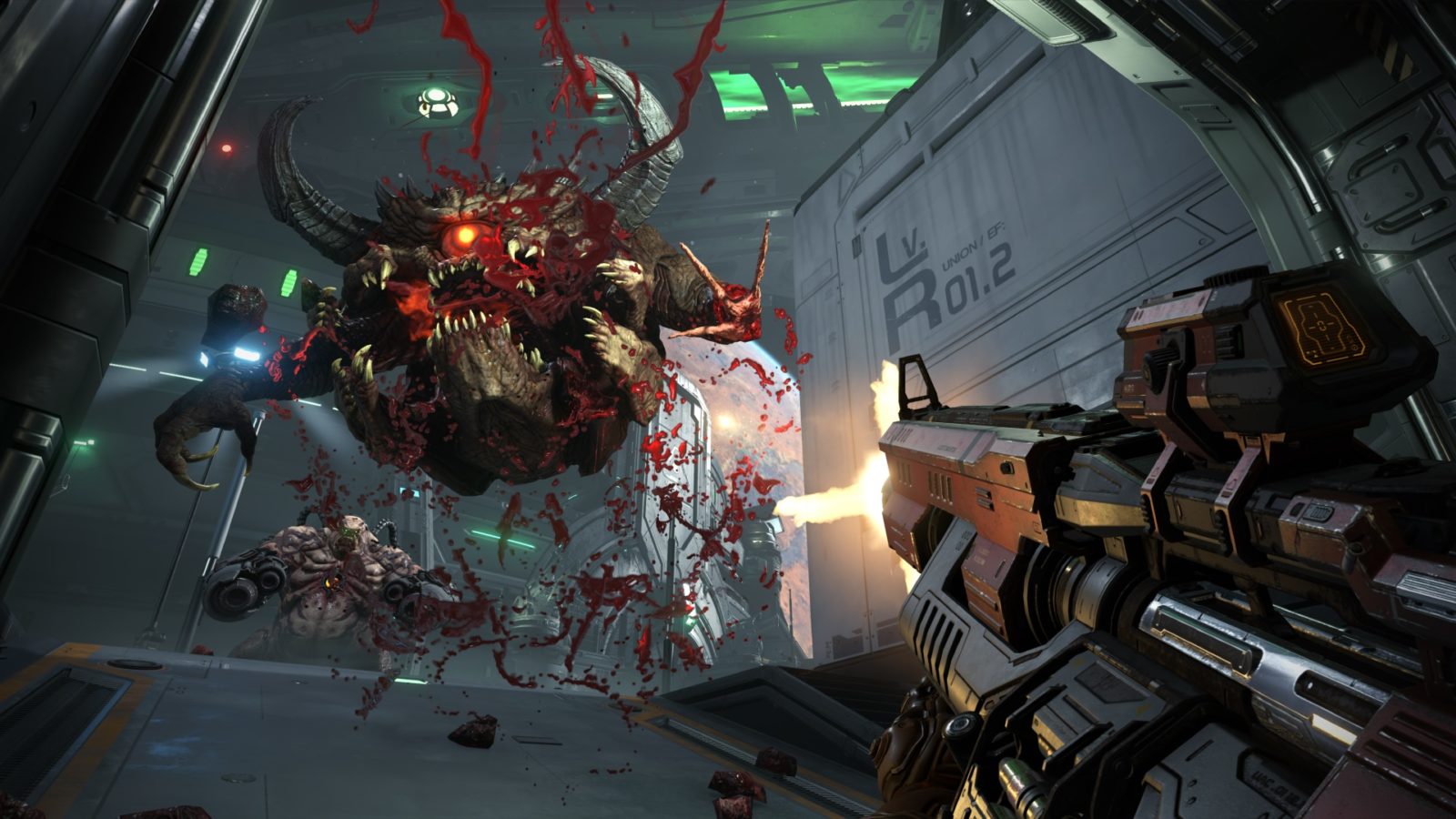
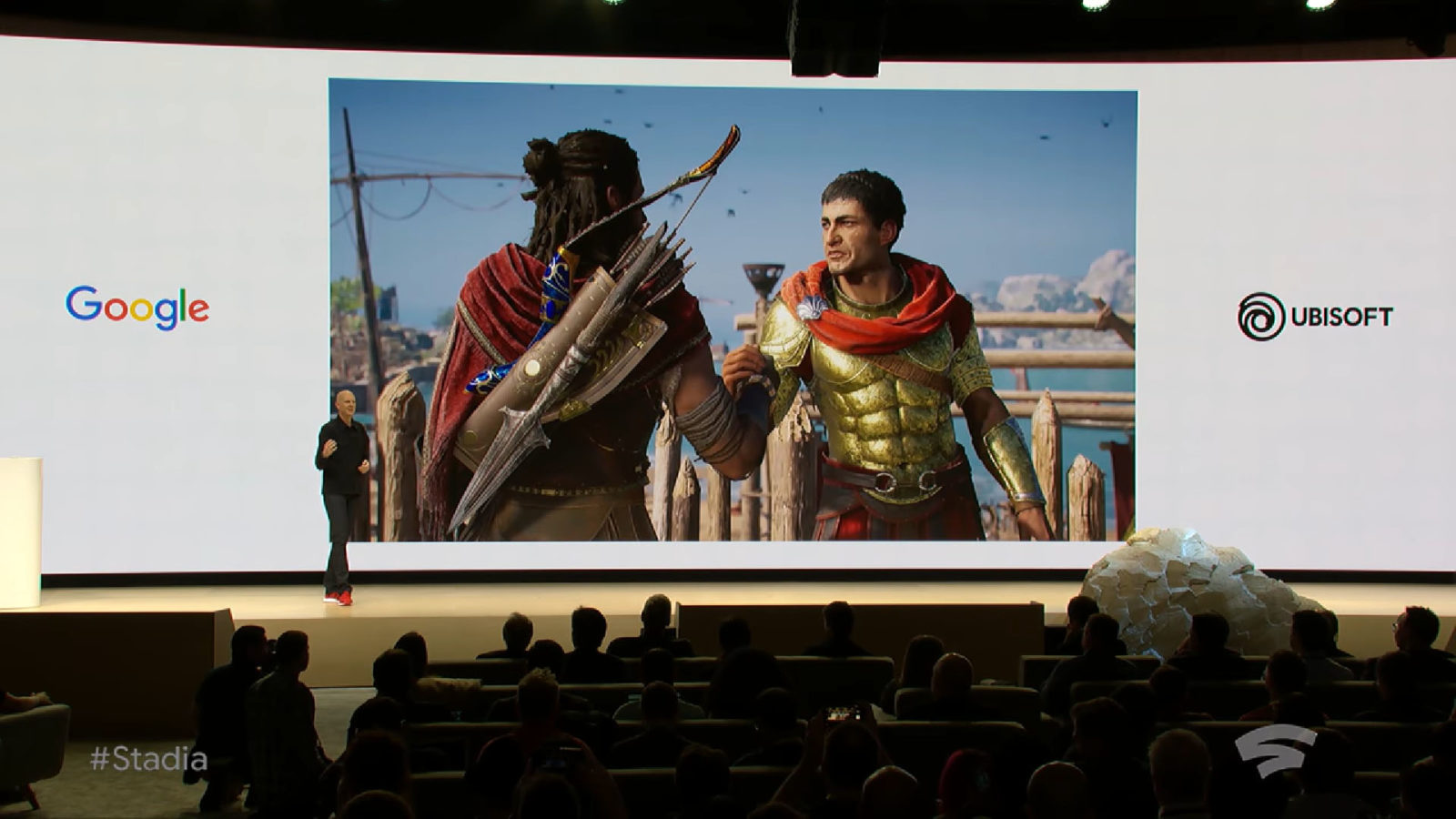
Rime and Shadow of the Tomb Raider were quickly confirmed. Odyssey, Ubisoft's latest Assassin's Creed, also appeared in several images, while a fifth game was announced as being developed by the same team behind Star Fox.
YouTube Is a Strong Promotional “Partner”
Another point Stadia seeks to reinforce is a close connection with YouTube. It envisions a scenario in which users may be watching a video or live stream about a particular game and, upon becoming interested in it, can find a link to play the title through Stadia on the video platform; the person need only click and play. This could bring desired attention to independent developers.
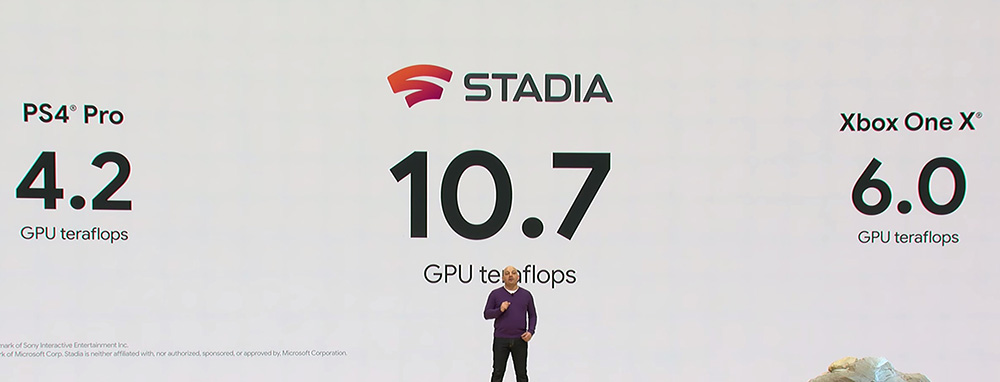 Comparison between Stadia and its competitors.
In short, Stadia brings streaming and cloud technology into a world increasingly surrounded by streaming platforms. Stadia will be available in 2019 in the United States, Canada, and Europe, with releases in other countries planned for the future. Prices were not specified.