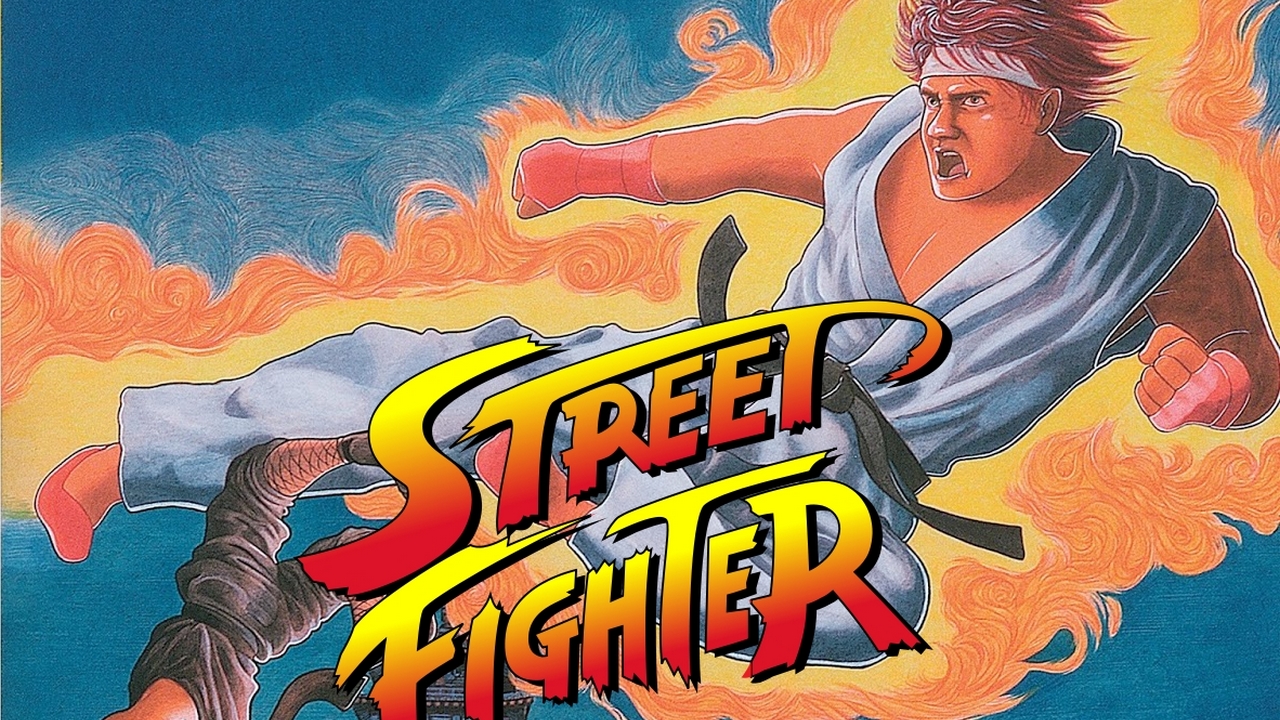
Street Fighter is one of those few franchises that seem to have started with number 2. Although this first installment enjoyed reasonable success in arcades in Japan and the United States, it was largely ignored in Brazil despite being available there, at least as far as I know. Taking advantage of the recent 30th anniversary of what is the greatest fighting game franchise of all time, I decided to honor the series by looking at how it first reached the market. I hope you enjoy learning about the origin of Ryu and his friends' great saga.
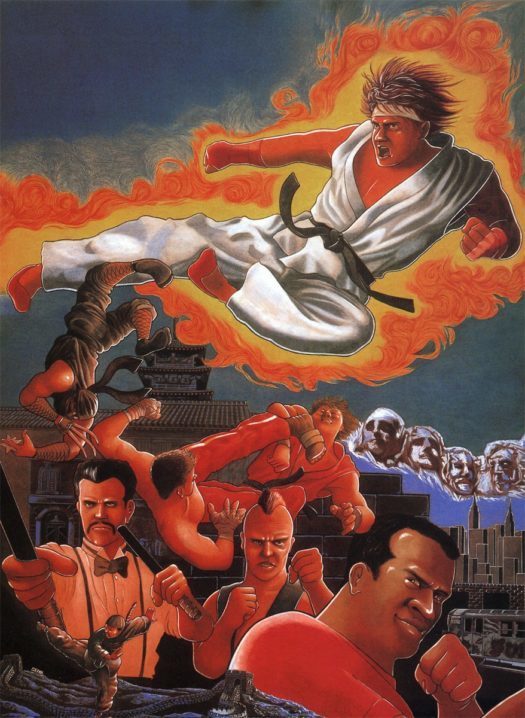
Street Fighter is a fighting game developed and published by Capcom and released for arcades in 1987. Although it received several conversions for the microcomputers of the time, it was never ported to that period's most popular console, the NES.
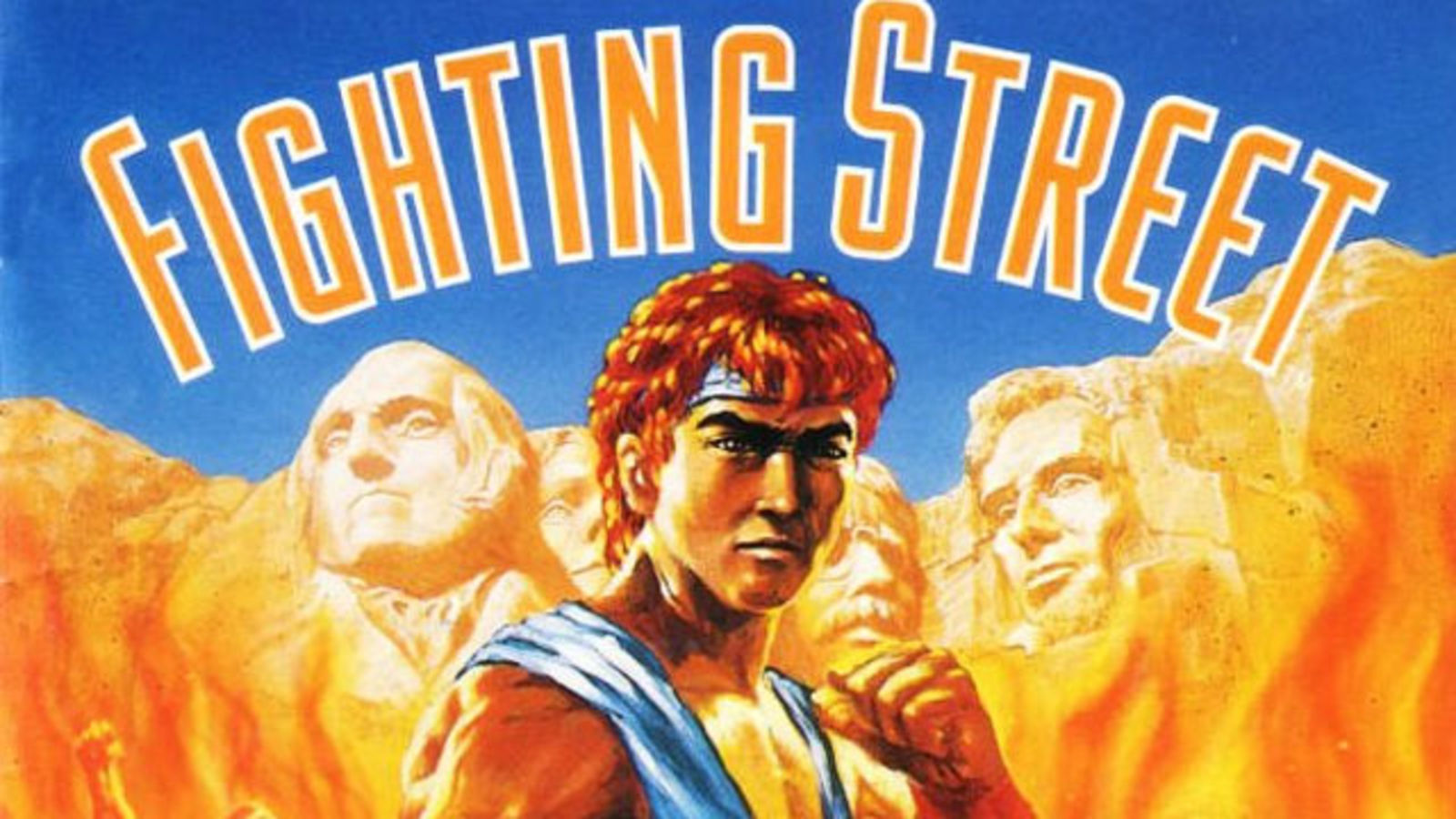
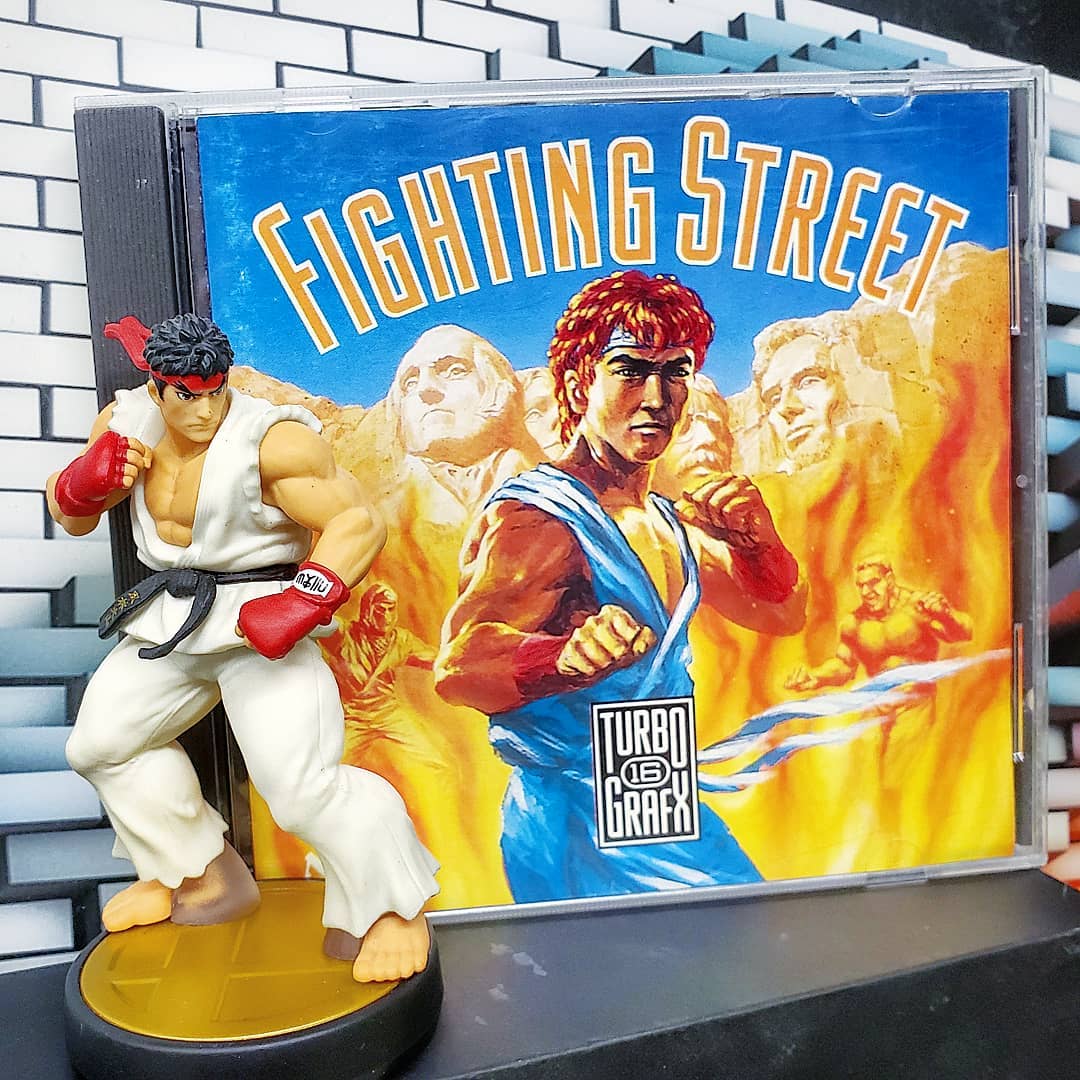
Fun fact: The question is: was Street Fighter never released for a console in the West? The answer is yes, but the platform chosen was the obscure PC Engine CD (TurboGrafx-CD), and the game was even renamed Fighting Street, a common practice at the time. It is worth noting that this version's soundtrack was remastered to take advantage of the CD's potential, while attack strength was determined by how long the buttons were held because of the limited number of buttons on the console's controller.
Behind the Scenes
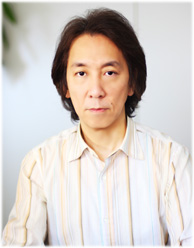
Designer Takashi Nishiyama.
The main name associated with the creation of the Street Fighter franchise is Takashi Nishiyama. His life in gaming began in 1982, when he started working at Irem on classics such as Moon Patrol and Kung Fu Master, regarded by critics as the first beat 'em up in video game history.
Street Fighter already sought to revolutionize the game market with its first installment. One highlight was the complexity and number of moves available to its protagonist. Nishiyama wanted the character to have different attack levels: a weak but fast punch, a strong but slow one, and an intermediate option. To achieve this, he decided to make machines with two buttons—one for punches and one for kicks, both rubber pads—capable of detecting how forcefully the player entered the command.
As was not difficult to predict, these early Street Fighter machines began requiring frequent maintenance. There were also complaints from players who said they were injured after a few matches because they threw real punches at the arcade panel in an attempt to perform the strongest attacks.
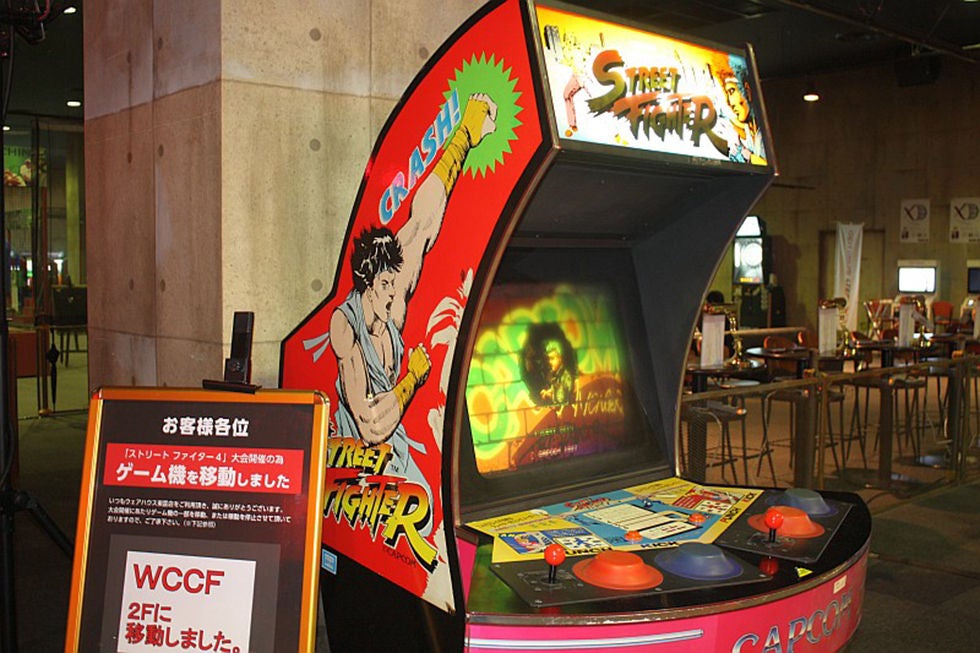
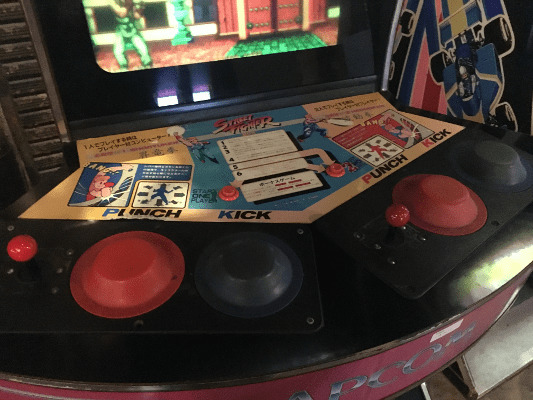
Capcom's solution was both obvious and wonderful: it adopted six buttons on the face of the arcade cabinet—something unbelievable for the period—with each representing the strength of punches or kicks. This system made the machine even more popular and ultimately became the standard not only for the company's future fighting games but also for those of its direct competitors.
After some internal disagreements at Capcom, Nishiyama went to work at SNK in 1988, where he created major rivals to Street Fighter, particularly in Japan, such as Fatal Fury and Art of Fighting. Interestingly, many people consider these games copies of Street Fighter, when they actually deserve to be regarded more as spiritual successors. In 2000, the game designer decided to stop being an employee and founded his own game company, Dimps. Most interestingly of all, Capcom hired Dimps in 2008, and Nishiyama had the pleasure of serving as executive producer on Street Fighter IV, a title that rekindled many people's passion for the franchise. Once again, video games teach us how life can come full circle.
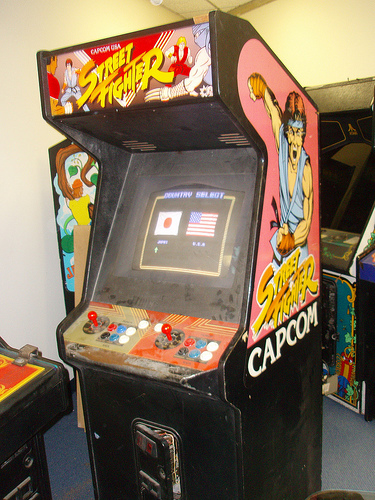
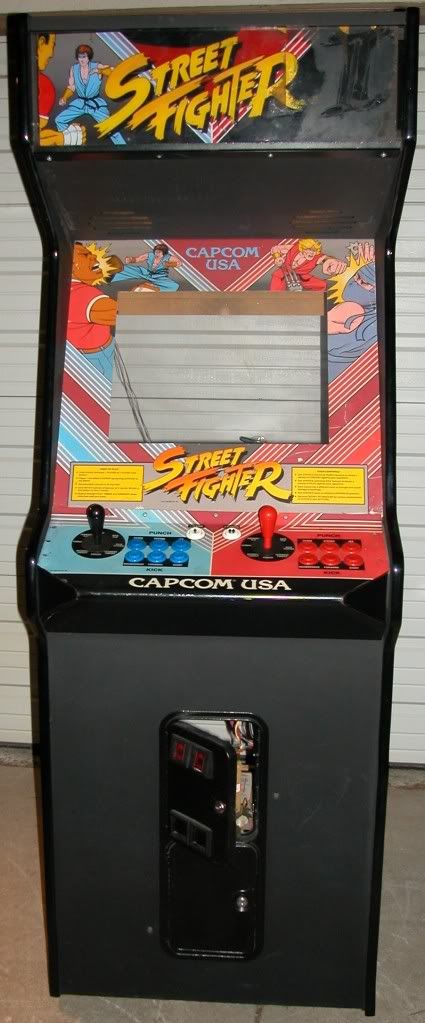
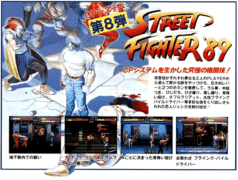
Fun fact: With Street Fighter achieving considerable success in the United States, Capcom's American branch promptly "commissioned" a sequel from the Japanese team. The sequel ended up so different from the original game that its name was changed to Final Fight. Advertisements bearing the title Street Fighter '89 were already circulating. More details can be found in the complete review of Final Fight already published here at Epic Play.
Story
Fans of fighting games know that Street Fighter never placed much importance on its plot, especially compared with one of its greatest rivals, Mortal Kombat. Much of its story therefore took shape over the years, producing some canonical moments and others that were not. I will consequently discuss the current interpretation of the main events that occurred during the first tournament, without spoiling the experience for anyone who has not yet played this title.
The story of Street Fighter begins when Sagat, the reigning world Muay Thai champion, is dissatisfied with his title and decides to organize a tournament open to people from all over the world who specialize in any fighting style. His goal is not only to test his limits but also to show the world that Muay Thai is the supreme fighting style.
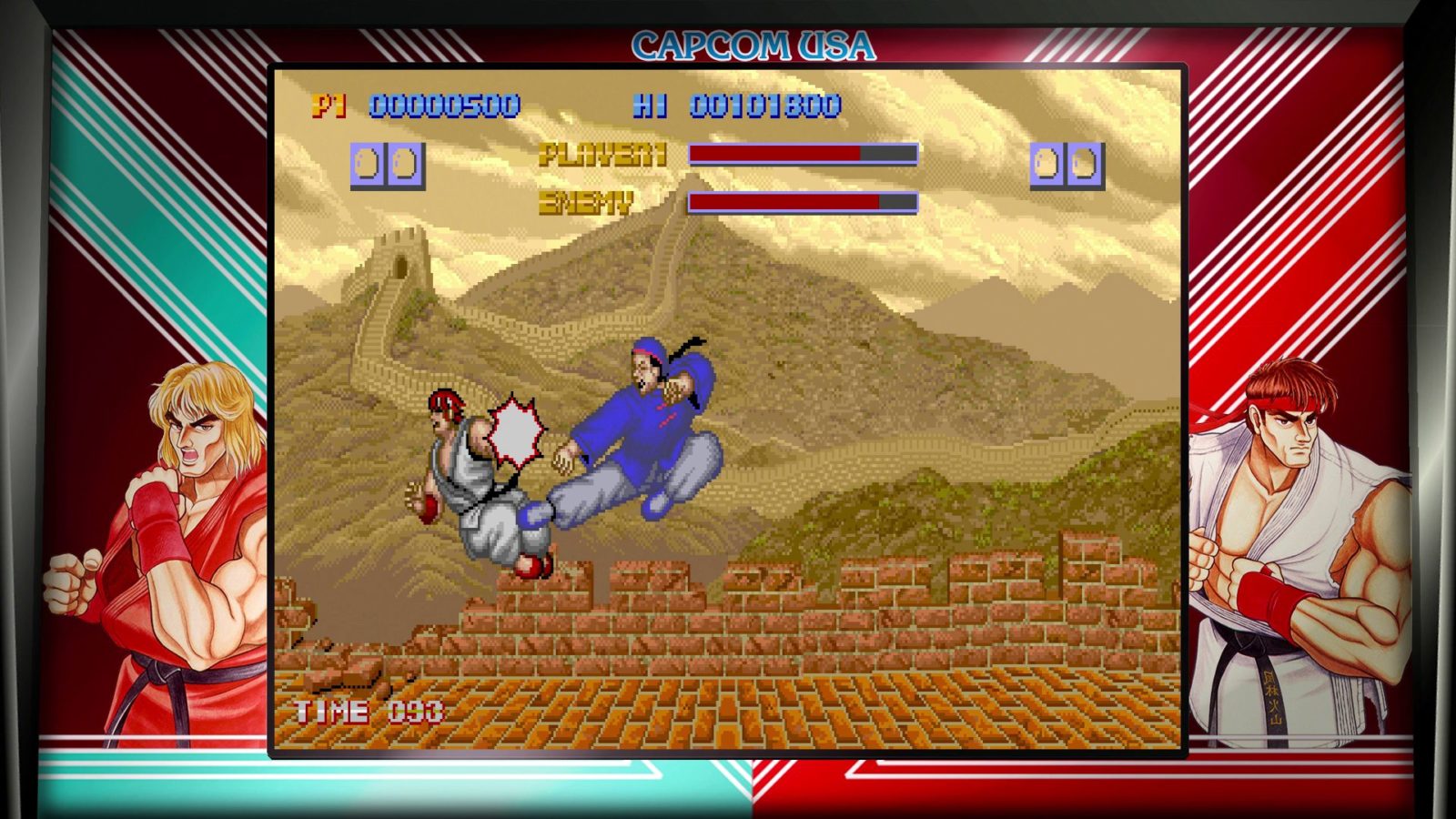
Famous landmarks have been present in the franchise since the first game.
After training alongside Ken under their master Gouken, Ryu learns about the tournament and decides to test his abilities. As expected, the final is Ryu versus Sagat, and the Muay Thai champion gives his karate-practicing rival (Ansatsuken) a beating. When Sagat realizes that Ryu is no longer able to continue fighting, he extends a hand to his fallen opponent as a gesture of mercy and to end the fight. At that moment, the unexpected happens. Ryu involuntarily awakens the Satsui no Hadou and strikes Sagat squarely in the chest with a Metsu Shoryuken, defeating his opponent and leaving him with an enormous scar.
After Ryu is crowned champion of the Street Fighter World Warriors, the winner seeks out his former master for information about what happened during the tournament final. Unfortunately, when he reaches the dojo, he finds Akuma brutally murdering his master Gouken.
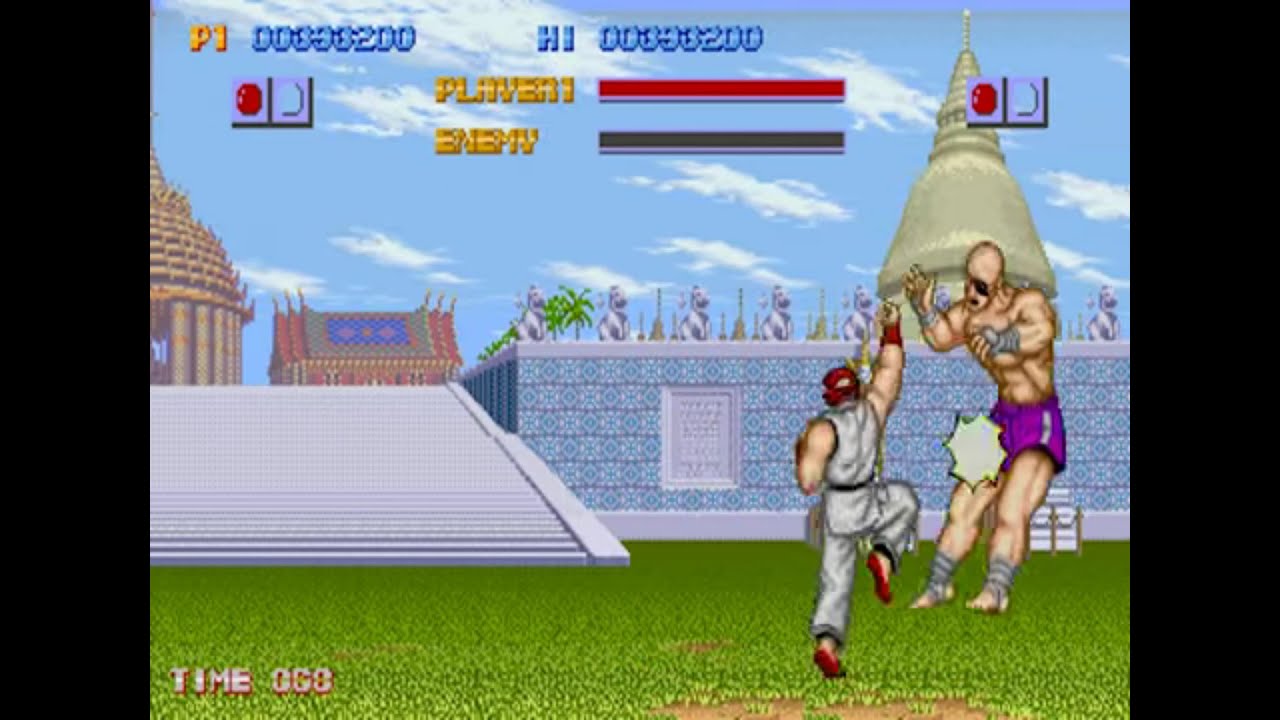
An image that defines the central moment in the first Street Fighter's story.
It is worth noting that although Ken is player two in Street Fighter, he is not canonically present in the tournament. After completing his training, he returns to the United States for a national karate competition, where he meets his future wife, Eliza.
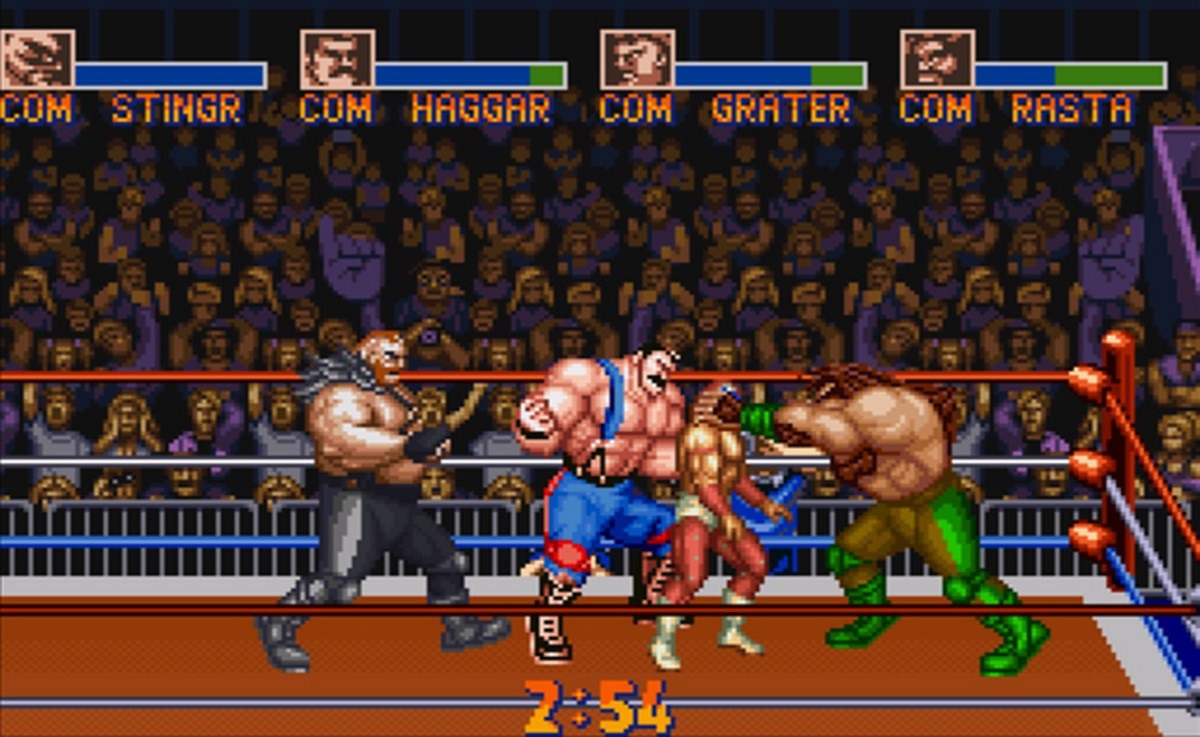
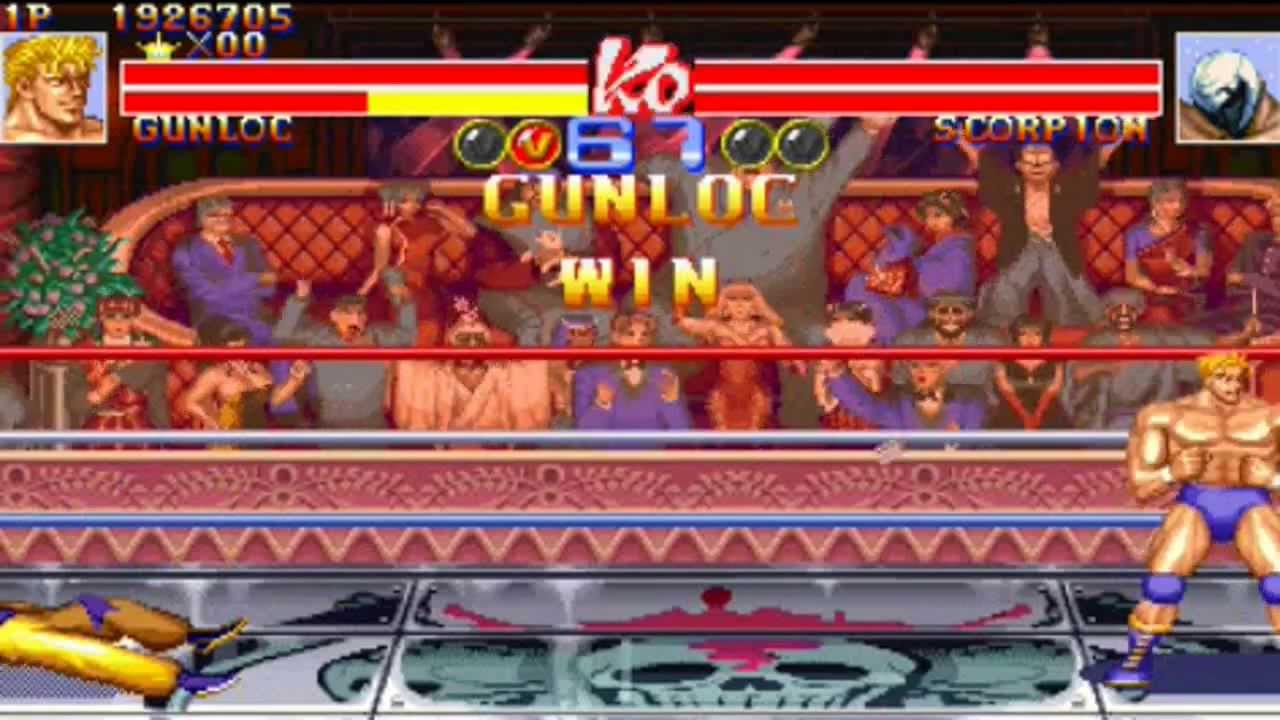
Fun fact: Street Fighter shares its universe with four other Capcom franchises (Slam Master, Final Fight, Rival Schools, and Captain Commando), and, to many people's surprise, the first title in this major fighting series is not where everything begins. Two games in the Slam Master series, famous for featuring Mike Haggar while he was still a professional wrestler, are chronologically the origin of it all: Slam Master and Slam Master 2: Ring of Destruction.
Technical Analysis
Street Fighter was the first fighting game produced by Capcom, so this game still contains features that would be greatly refined in future sequels. Only Ryu can be selected here, and if player two enters the match, they control Ken, a character with the same attributes as the protagonist.
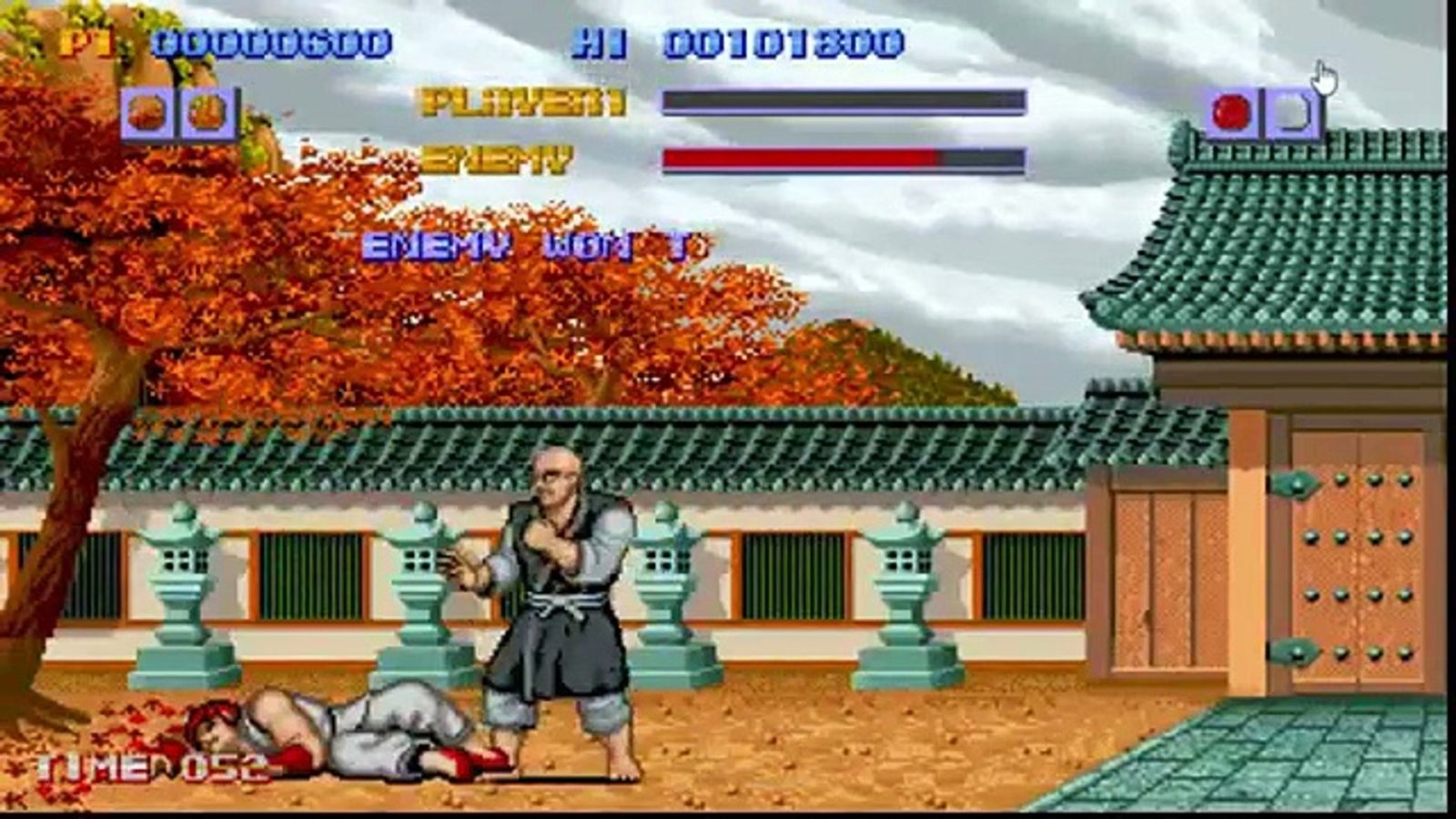
Will we ever see the forgotten characters from the first Street Fighter again?
The graphics in Street Fighter drew considerable attention from players at the time of release, with large characters featuring a rich variety of animations. The detailed backgrounds, representing the country where each fight takes place, also contribute greatly to the game's atmosphere.
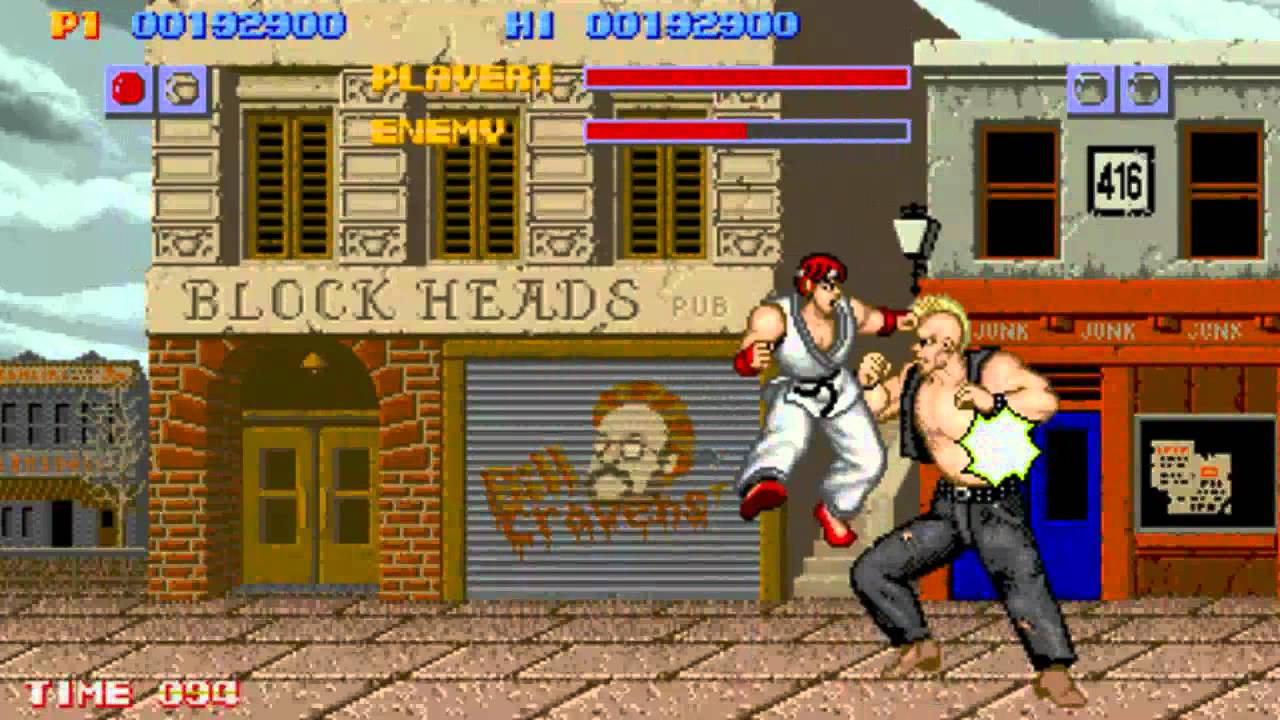
The wealth of detail remains impressive.
The famous bonus stages were already present in the franchise's first game. There are four throughout the campaign, divided into two types: one involves destroying blocks (pictured below) in a way similar to what would later appear in the first Mortal Kombat; in the other, characters hold boards that must be broken with attacks performed using the same movements as in regular fights. Both are fun and contribute to the game's tournament atmosphere.
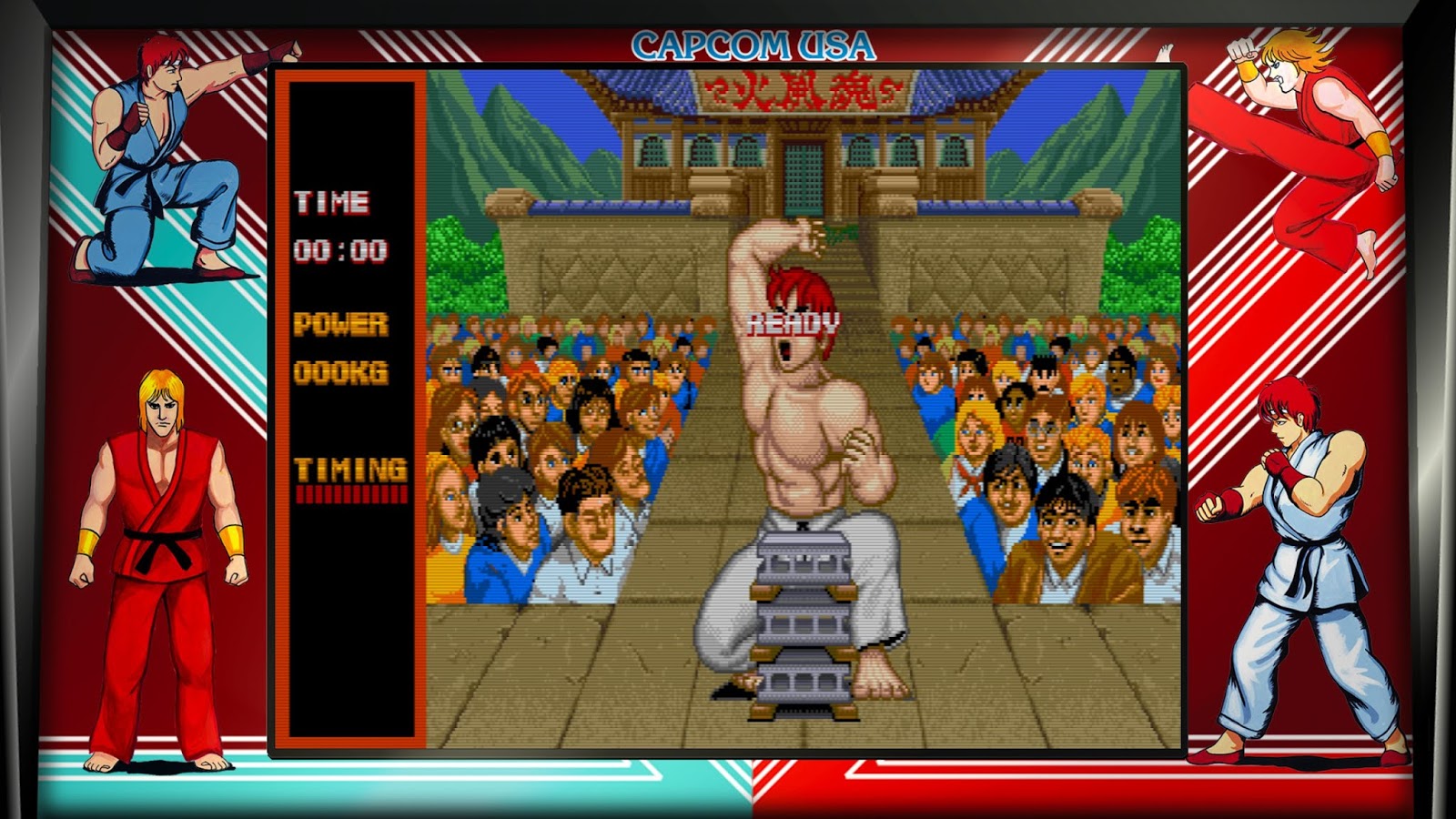
Bonus stages were there from the beginning. Who remembers the first Mortal Kombat?
The game's campaign length is short but in line with fighting genre standards. An experienced player takes between 20 and 30 minutes to reach the ending, provided they do not lose many fights between the beginning and the credits.
Below are promotional flyers for Street Fighter.
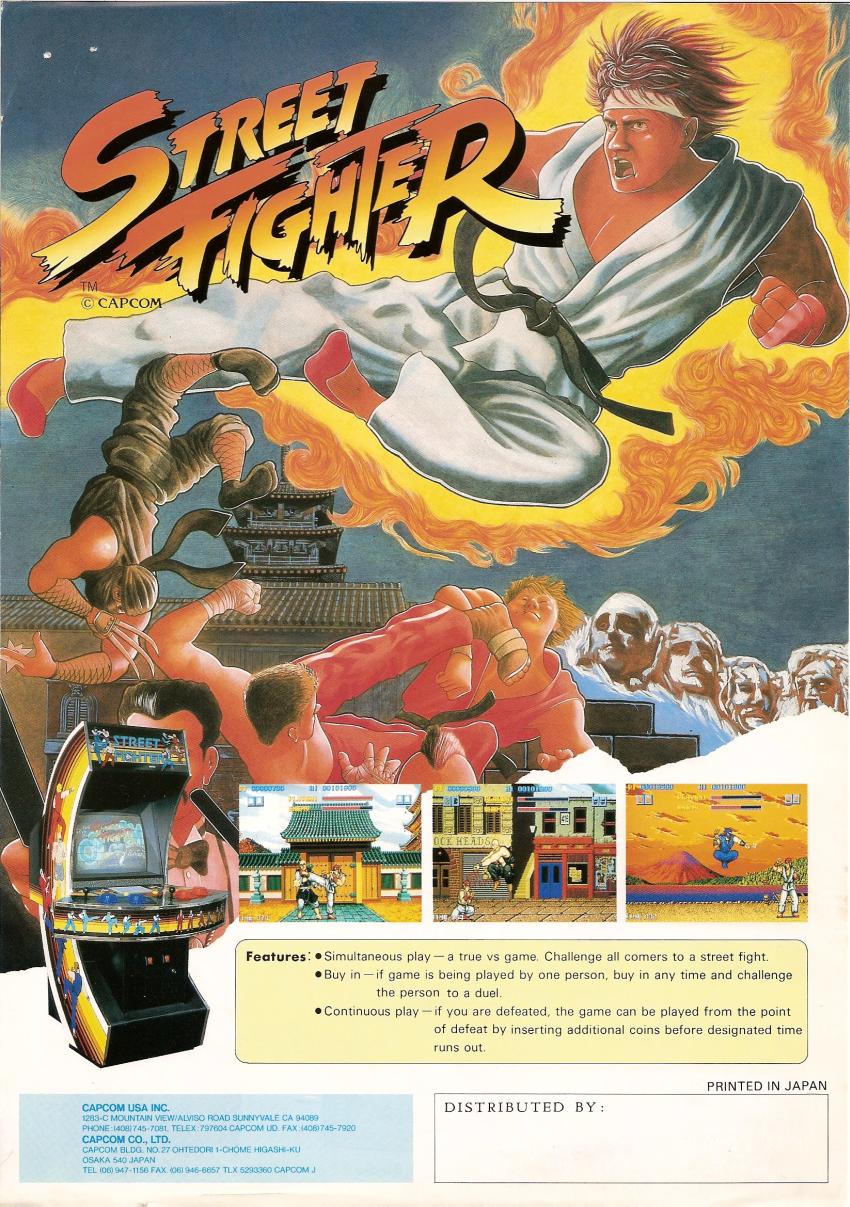
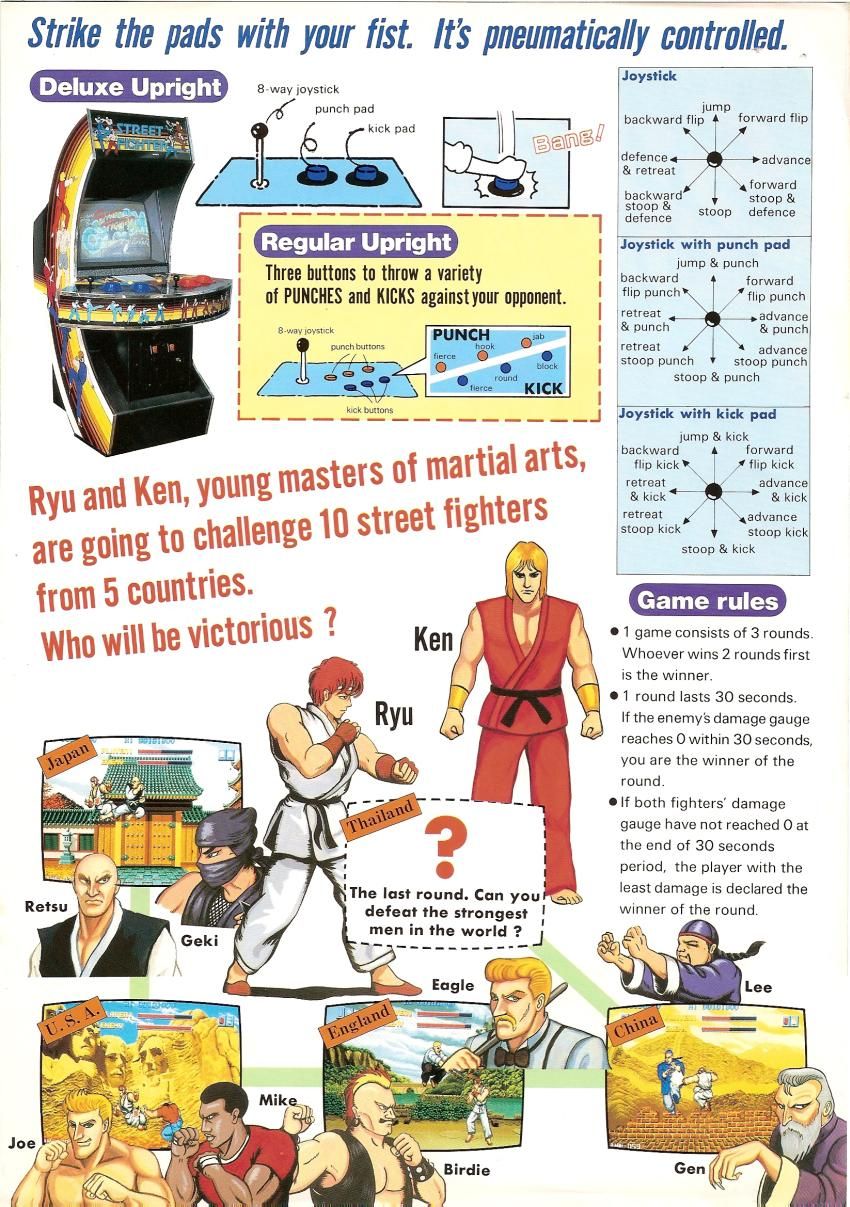
The gameplay can feel quite stiff when we compare Street Fighter with its sequels. Even so, it was quite satisfying at the time. Curiously, the programmers apparently knew how difficult it was to execute special moves accurately, which is why they remove an incredible amount from opponents' health bars. It is worth noting that a well-executed Shoryuken—the famous three-hit version—can defeat an opponent even if they do not have a scratch, securing a "perfect" for us.
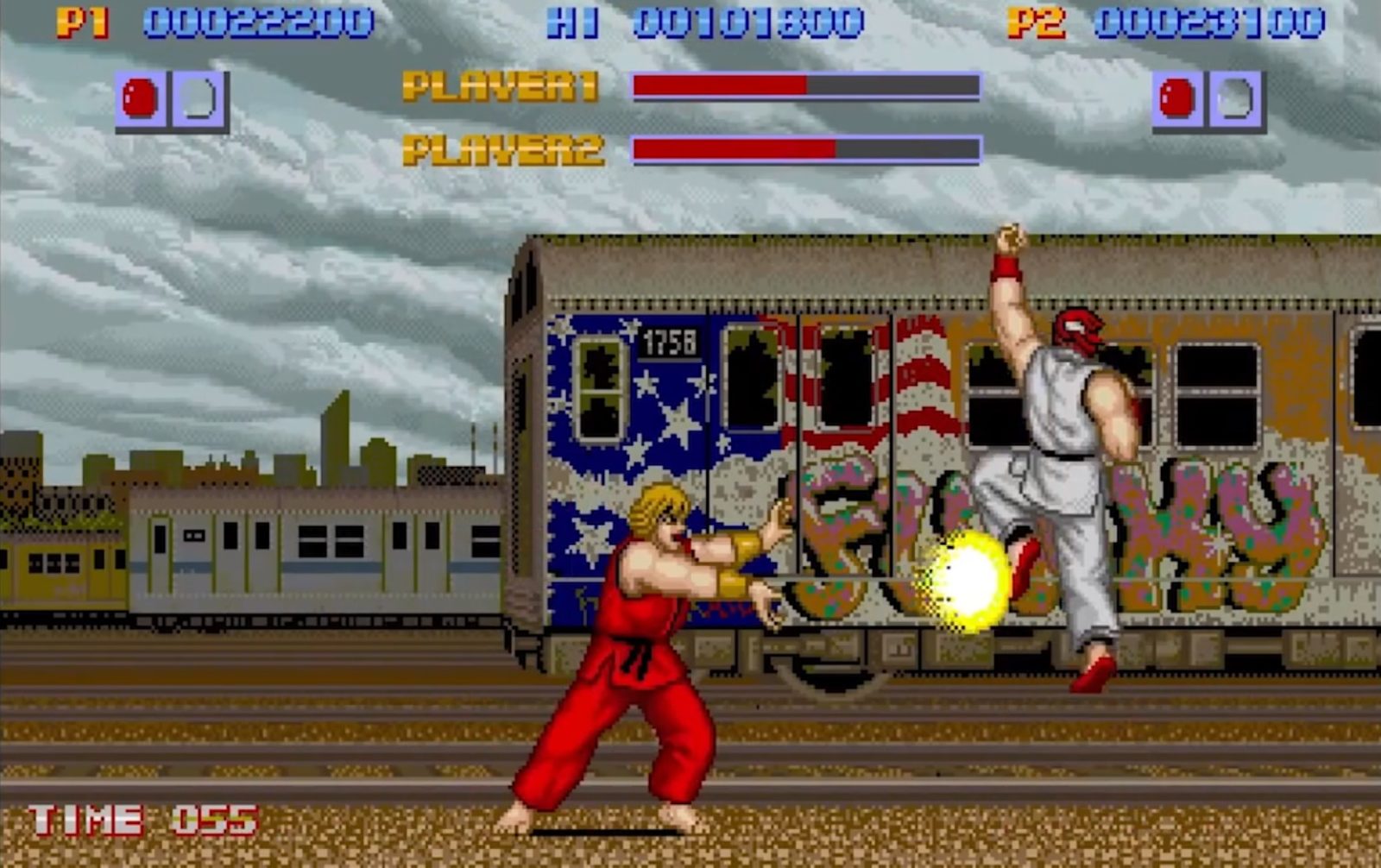
This "versus" was already happening in 1987.
Believe it or not, Street Fighter's difficulty is not particularly high. This is mainly due to the impact our "magic attacks" have on opponents: players only need to master Ryu's three famous special moves to guarantee victory in the first World Warrior.
The replay value is very low because we can play as only one character. After finishing it once, especially from the perspective of a player today, there is unlikely to be any reason for another game of Street Fighter in the near future.
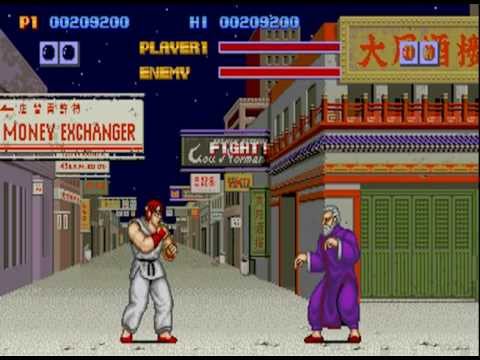
We would learn more about the powerful Gen's story as the Street Fighter years went by.
The fun may be limited when playing Street Fighter today, especially after so many far superior games in the same genre appeared later. As a fighting game player, I say the experience is worthwhile: it lets us discover the origin of what is considered the greatest fighting game franchise in history, encounter iconic characters who would return later, and wonder whether some of those who were "ignored" might still come back, whether in a future Street Fighter or, why not, a new Final Fight.
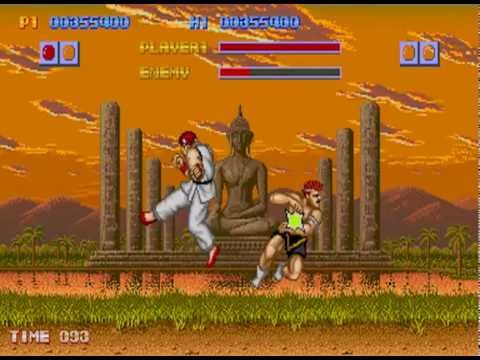
The impact of the special moves makes victory easier.
The soundtrack of Street Fighter, composed by Yoshihiro Sakaguchi, may not be the masterpiece that its sequel would present, but it does not disappoint, helping establish the atmosphere for each opponent and motivating the player to win the match. The sound effects, on the other hand, apparently could have been better and can become tiresome after a few matches.
Below is the complete Street Fighter 1 soundtrack. The CD version was selected.
Fun fact: An Easter egg few people recognize is Bill Cravens' presence in Birdie's stage. He was actually Capcom USA's vice president of sales in the mid-1980s. Bill died in 2007 at the age of 65.
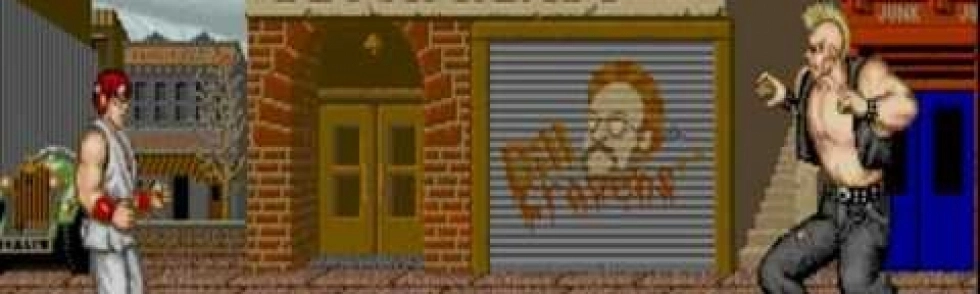
Bill Cravens immortalized in Birdie's stage in England.
Characters
Since the first game in the Street Fighter series, we have seen an effort to create charismatic characters who exemplify different kinds of martial arts. I will not discuss everyone's motivation for entering the tournament, so as not to go on too long. Instead, I selected only a few fighters from the first World Warriors.
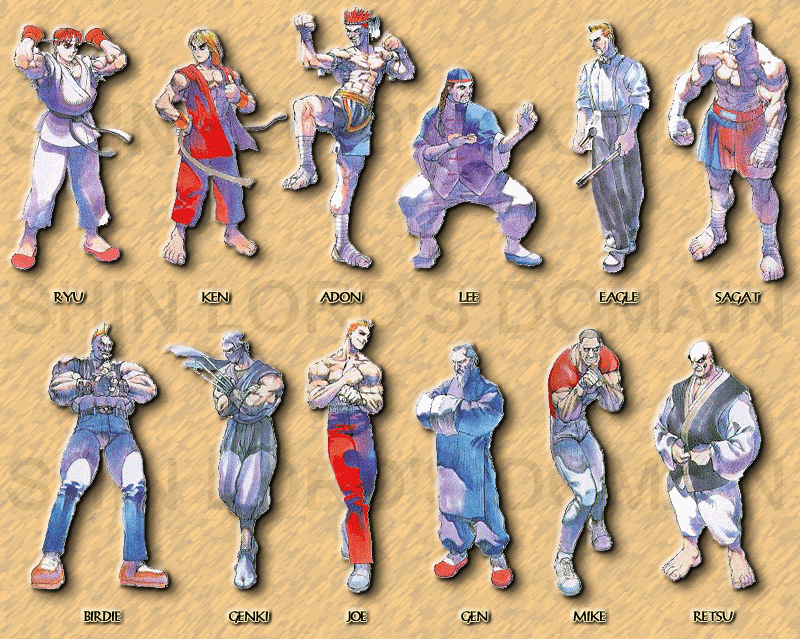
Image featuring all the Street Fighter characters.
- Mike: Mike faced serious financial hardship during childhood, which led him to a life of petty crime to survive. After some larger robberies, he was arrested and learned the art of boxing in prison. Once free, he became a professional but was banned from the sport because of his conduct in the ring. He decides to enter the World Warrior tournament to earn enough money to help underprivileged children in the community where he grew up. His only appearance was in the first Street Fighter, and the developers apparently dropped him because Balrog was also a boxer and had more charisma.
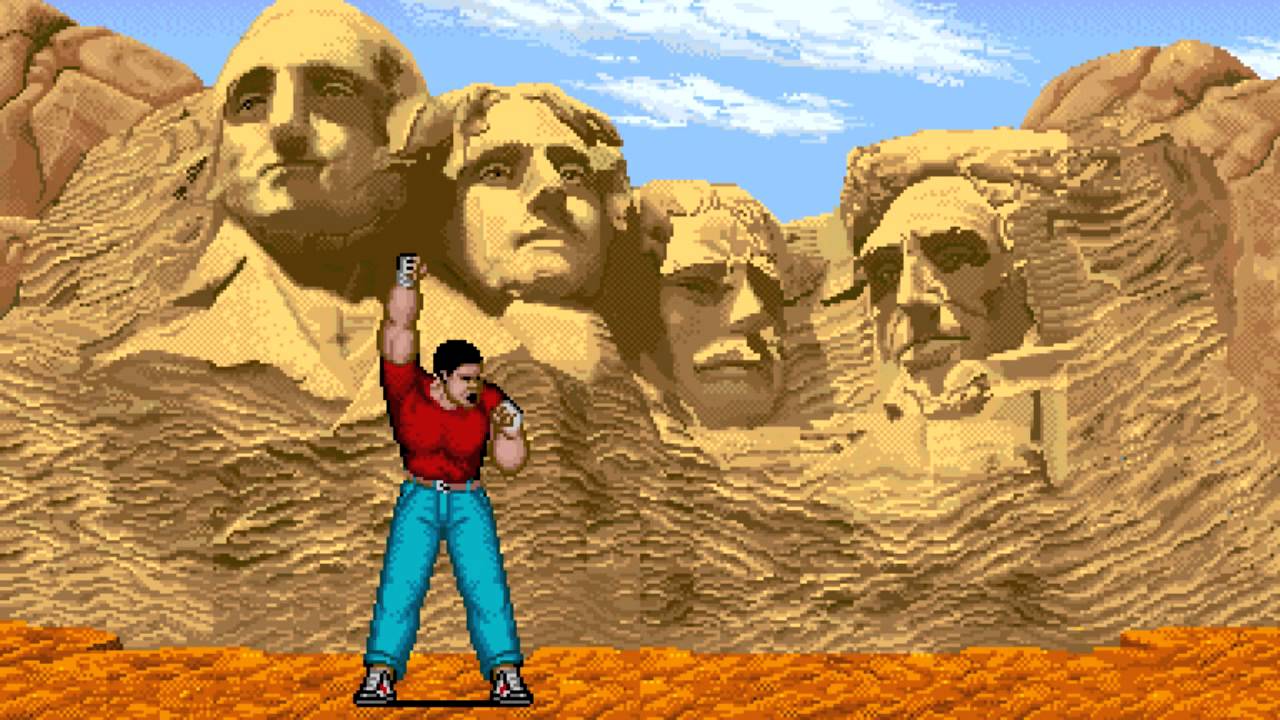
Mike represents boxers in the first Street Fighter.
- Geki: Geki is probably the most mysterious character in the entire Street Fighter franchise. There is no information about his past, and his only reason for entering the tournament is believed to have been testing his Ninjutsu techniques against skilled opponents. Canonically, he reportedly died during a fight in Asia some time after participating in the tournament. His only appearance was in the first Street Fighter, and it is assumed the developers ignored him because there was no need for two characters with claws after Vega was added.
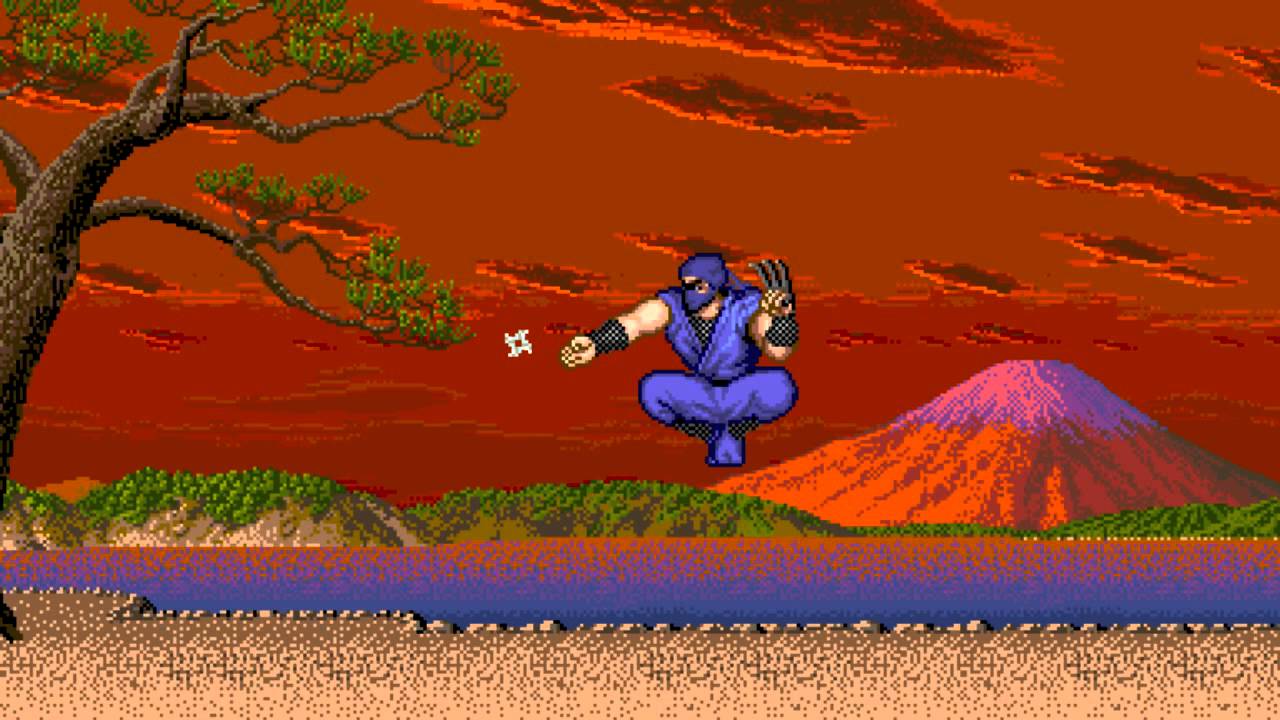
Geki was an appealing choice for ninja fans in the 1980s.
- Eagle: The Englishman Eagle is a bodyguard for a very wealthy family in England. Skilled in the fighting style of Bojutsu, he enters the World Warrior with an assigned mission to defeat Sagat. Although he fails in his objective, he later faces Guile in a battle and emerges victorious. His only appearances were in Street Fighter 1 and Street Fighter Alpha 3. Although Capcom does not officially describe him as such, Eagle is now remembered as one of the first gay characters in video game history.
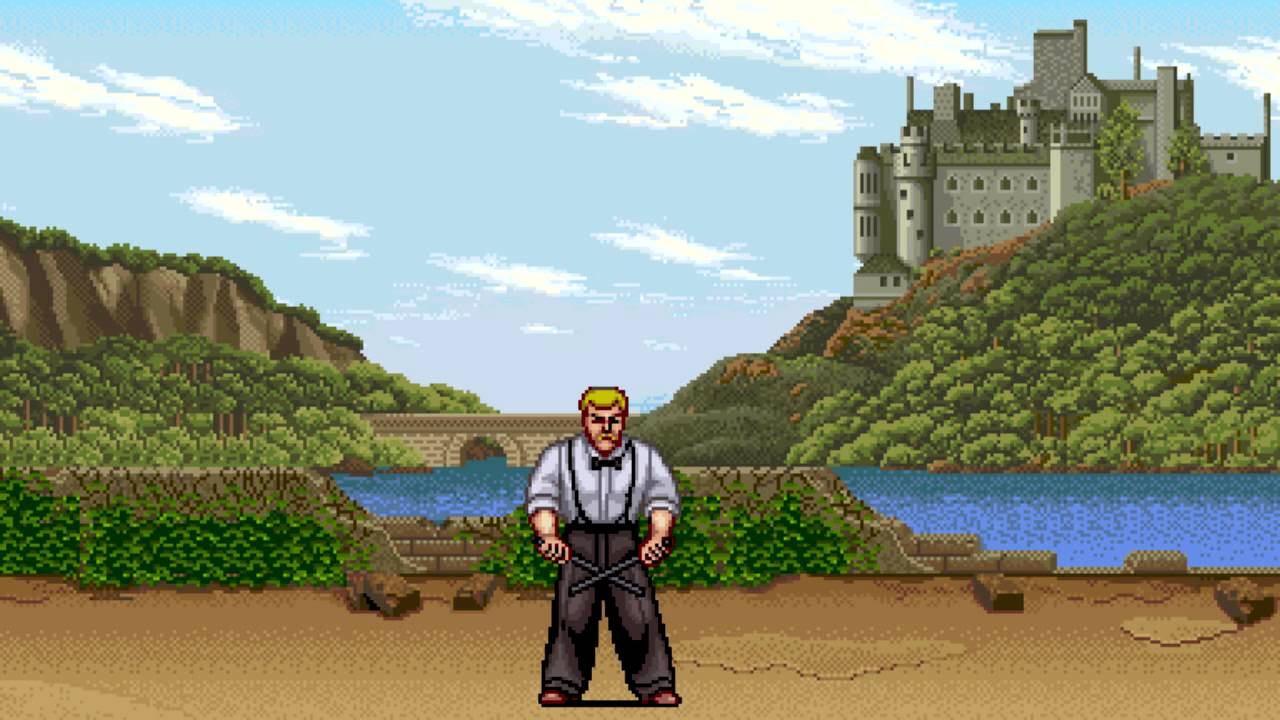
Unlike the others described here, Eagle was eventually brought back in later games.
Fun fact: According to creator Takashi Nishiyama, the inspiration for the famous Hadouken attack came from the classic anime Space Battleship Yamato (Star Blazers), in which the Yamato fires an energy cannon called Hadoho. The names of the other moves, such as Shoryuken, were entirely the designer's ideas.
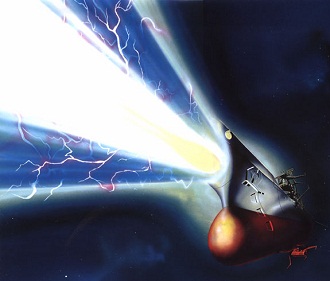
Space Battleship Yamato.